ES 639
  Physicochemical Processes for
 Water and Wastewater Treatment


            Term Paper on

Pre-treatment of Water for
  Thermal Power Plants


                            Prashant Adsul (113184002)
Water for Thermal Power Plants
• Thermal power plants contribute 65.09 % to
  the total power generation of India
• High pressure boilers are used for steam
  generation in thermal power plants
• Ultra pure water is required for the steam
  generation, it is called as Boiler Feedwater
  (BFW)
• BFW is 95 % condensate and 5 % makeup
  water
Water for Boilers
• All natural waters contain varying amounts of
  suspended and dissolved solids as well as
  dissolved gases (O2, CO2)
• The type and amount of impurities in fresh
  water vary with the source (lake, river, well)
• Impurities in water are of importance when
  water is to be used for steam generation.
• For higher-pressure boilers, feedwater must
  be pretreated to remove impurities
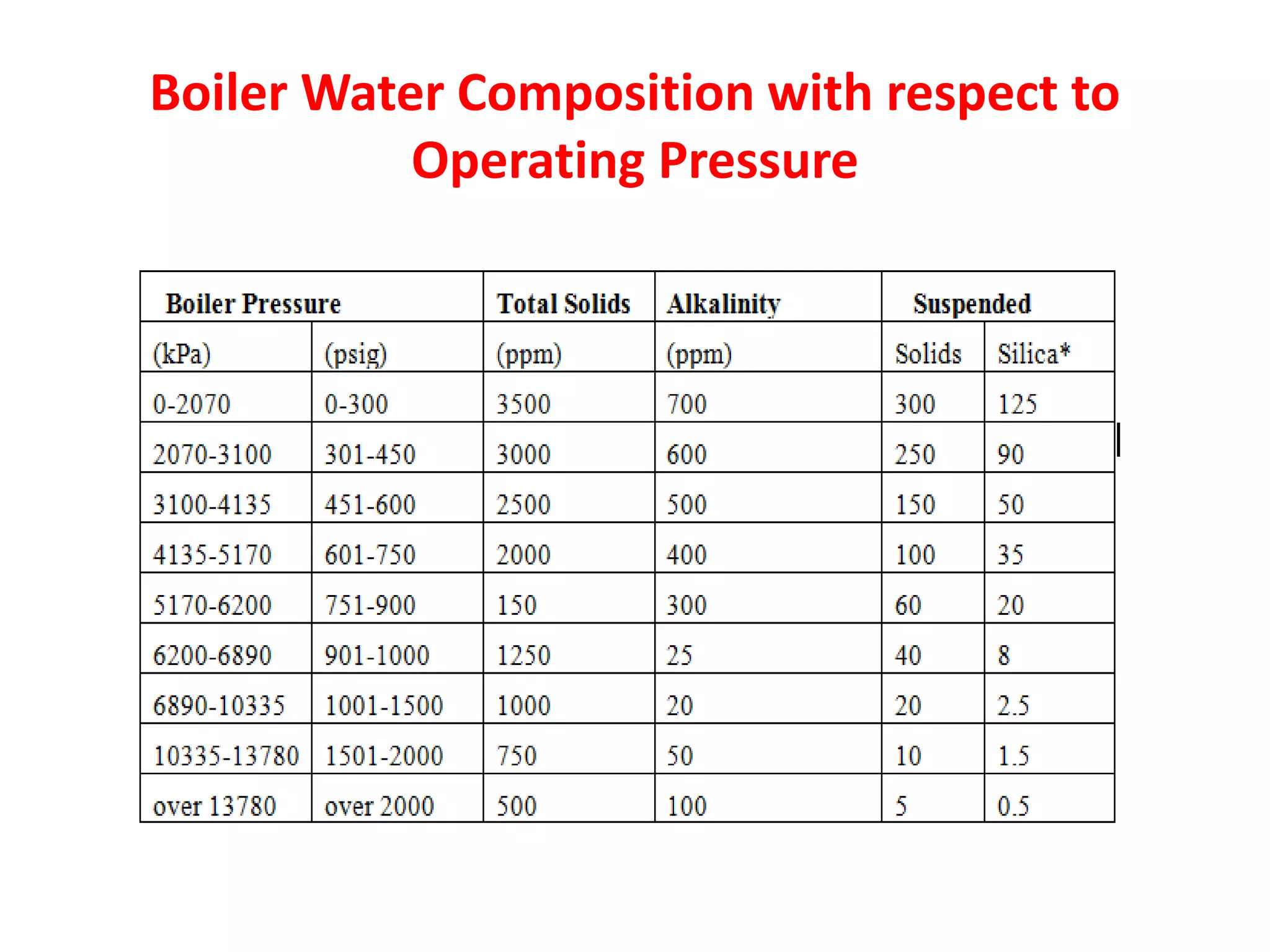
Boiler Water Composition with respect to
           Operating Pressure
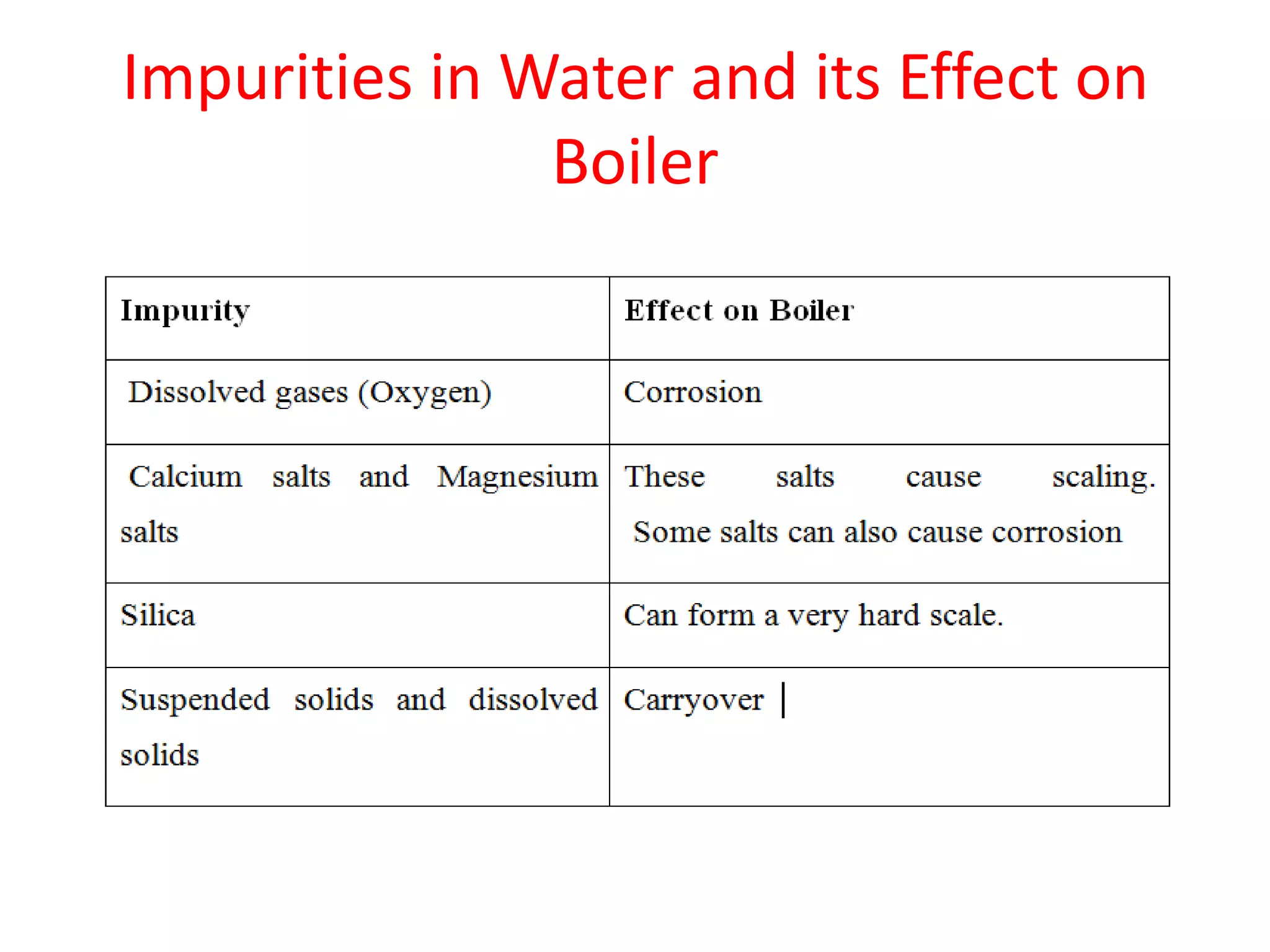
Impurities in Water and its Effect on
               Boiler
Problems Caused by Impurities in the
           Feed Water
• Scaling
• Water Hardness is the primary source of scale in boiler
  equipment, Calcium and Magnesium are main cause of
  hardness in water
• Silica in boiler feedwater can also cause hard dense scale with
  a high resistance to heat transfer.
Boiler Scale on Water Side
Failed Tubes Showing Signs of Both Corrosion
          Failure and Overheating
Corrosion
• Oxygen and Carbon Dioxide cause corrosion
• The carbon dioxide by dissolving in the water
  and forming a weak carbonic acid which
  attacks the metal in boiler
• Oxygen is present in water reacts with Iron to
  form red iron oxide
• Corrosion reduces the thickness of the steam
  pipe metal
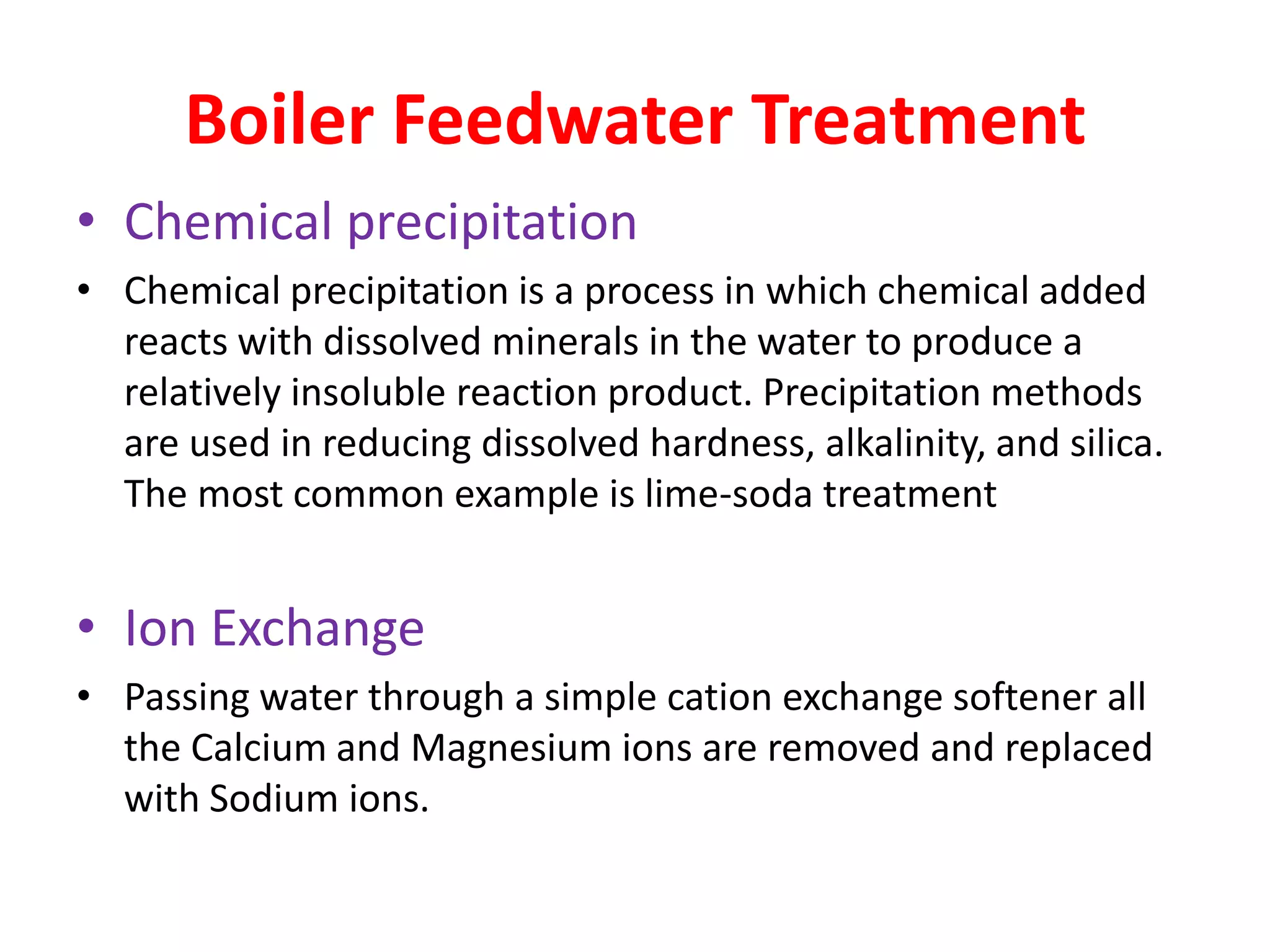
Boiler Feedwater Treatment
• Removing impurities from boiler feedwater
• Feedwater is filtered to remove suspended matter and if the
  suspended solids are very fine, a flocculation step may be
  needed to enable effective filtration

• Filtration
• Filtration is the essential first step before the chemical
  treatment. Filtration minimizes suspended solid impurities. If
  rust, sand (silica) etc. are not filtered out, they lead to severe
  scale formation.

• Coagulation and flocculation
Boiler Feedwater Treatment
• Chemical precipitation
• Chemical precipitation is a process in which chemical added
  reacts with dissolved minerals in the water to produce a
  relatively insoluble reaction product. Precipitation methods
  are used in reducing dissolved hardness, alkalinity, and silica.
  The most common example is lime-soda treatment


• Ion Exchange
• Passing water through a simple cation exchange softener all
  the Calcium and Magnesium ions are removed and replaced
  with Sodium ions.
Boiler Feedwater Treatment
• Deaeration of water
  Dissolved oxygen in water is a major cause of boiler system
  corrosion. It should be removed before the water is put in the
  boiler. Feedwater deaeration removes oxygen by

• Heating the water with steam in a deaerating heater. Part of
  the steam is vented, carrying with it the bulk of the dissolved
  oxygen.

• Oxygen Scavengers
  Corrosion by oxygen in the boiler can be controlled by the
  addition of Sodium Sulfite (Na2SO3) and Hydrazine (N2H4) to
  the preboiler section of the steam generating system.
              N2H4 + O2 → 2 H2O + N2
Deaeration of water
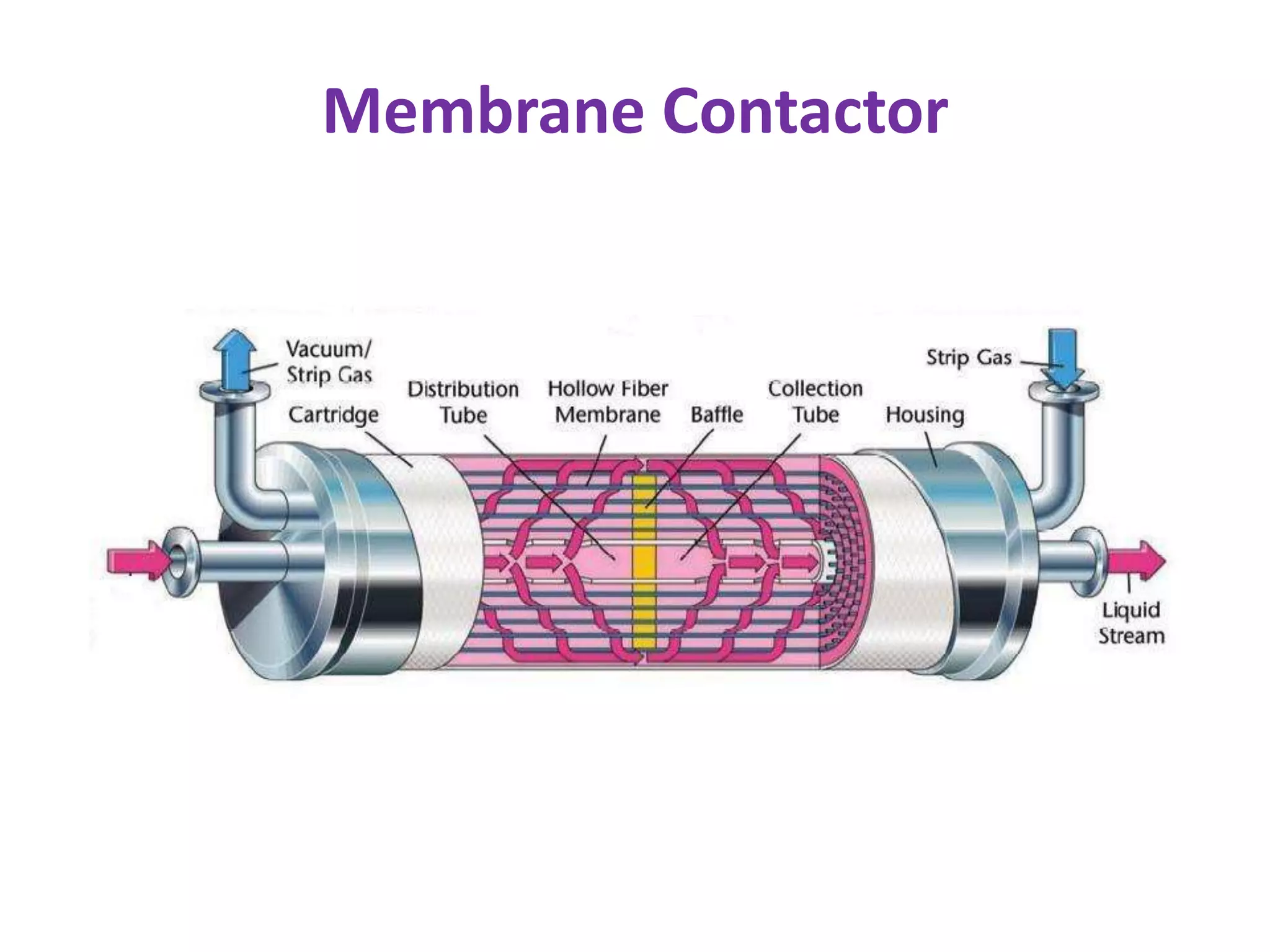
     Membrane Contactors
•   Fabricated with hydrophobic hollow
     fiber microporous membrane
•   Installed to control corrosion in boilers
•   By removing gases such as oxygen and
     Carbon dioxide the amount of corrosion is
    reduced
•   These devices do not require chemicals to
      operate so operating costs are less
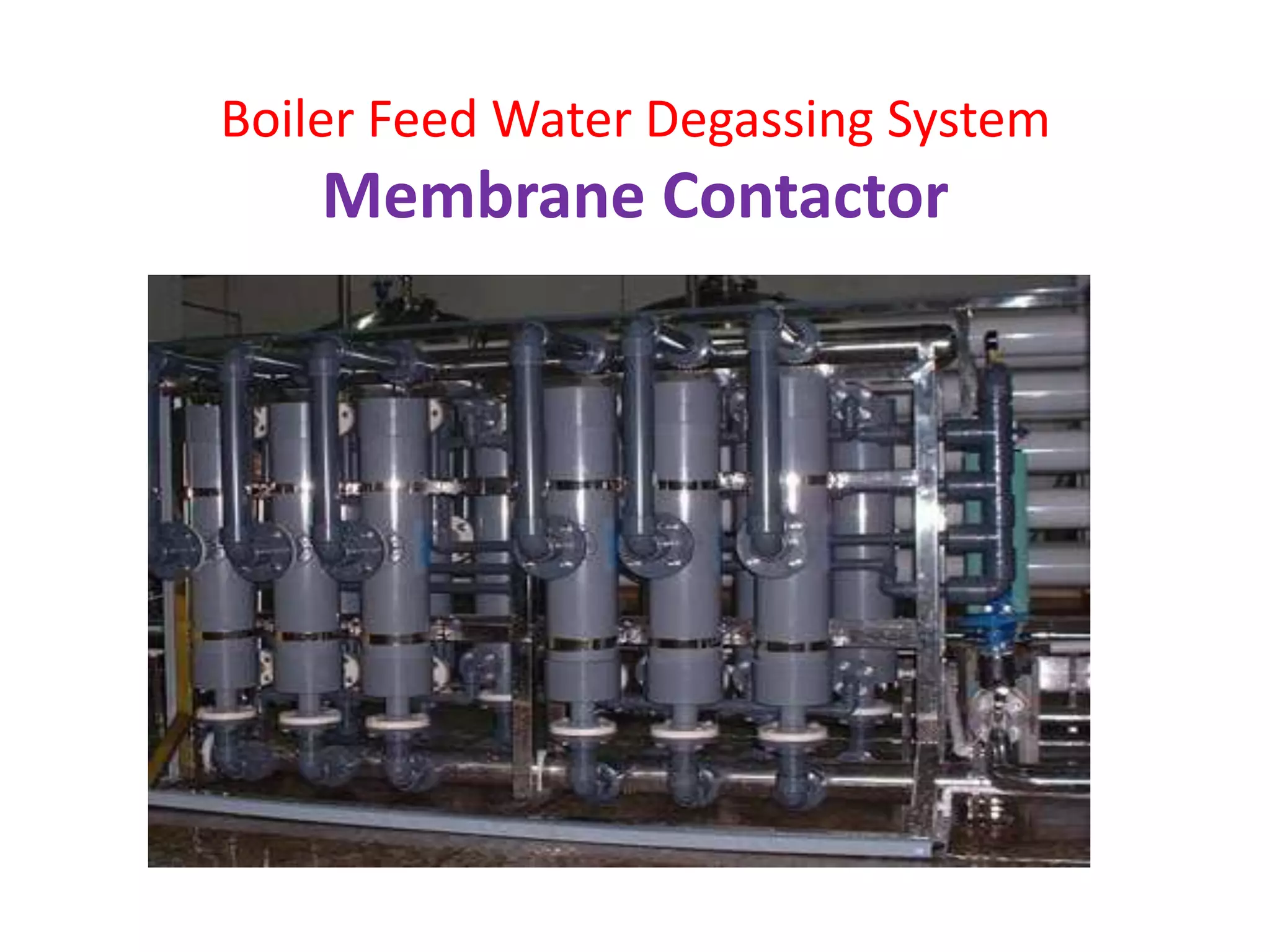
Boiler Feed Water Degassing System
    Membrane Contactor
Membrane Contactor
Boiler Feedwater Treatment
• Reverse Osmosis
 in combination with other advanced technologies, RO is being
 used to treat brackish water, industrial wastewater for Boiler
 feedwater pretreatment.
REFERENCES
• Chai Hoon Koo, Abdul Wahab Mohammad, Fatihah Suja., (2011).Recycling
  of Oleochemical Wastewater for Boiler Feed Water using Reverse Osmosis
  Membranes - A Case Study. Desalination, 271, 178–186
• Cuda P., Petr P., Tenglerova J.,(2006) Reverse Osmosis in Water Treatment
  for Boilers. Desalination 198 (2006) 41–46
• http://www.cip.ukcentre.com
• http://www.lenntech.com
• http://www.water-technology.net
• Nooijen W.F.J.M., Boks P., Vaal P.R. and Suratt W. B.,(1998). Production of
  Boiler Feed Water out of Wastewater with Microfiltration and Reverse
  Osmosis: The New Age Challenge within Reach. Desalination, 118, 263–
  265
• Shao J., Liu H., He Y.,(2008). Boiler Feed Water Deoxygenation using
  Hollow Fiber Membrane Contactor. Desalination 234, 370–377
Boiler feedwater

Boiler feedwater

  • 1.
    ES 639 Physicochemical Processes for Water and Wastewater Treatment Term Paper on Pre-treatment of Water for Thermal Power Plants Prashant Adsul (113184002)
  • 2.
    Water for ThermalPower Plants • Thermal power plants contribute 65.09 % to the total power generation of India • High pressure boilers are used for steam generation in thermal power plants • Ultra pure water is required for the steam generation, it is called as Boiler Feedwater (BFW) • BFW is 95 % condensate and 5 % makeup water
  • 3.
    Water for Boilers •All natural waters contain varying amounts of suspended and dissolved solids as well as dissolved gases (O2, CO2) • The type and amount of impurities in fresh water vary with the source (lake, river, well) • Impurities in water are of importance when water is to be used for steam generation. • For higher-pressure boilers, feedwater must be pretreated to remove impurities
  • 4.
    Boiler Water Compositionwith respect to Operating Pressure
  • 5.
    Impurities in Waterand its Effect on Boiler
  • 6.
    Problems Caused byImpurities in the Feed Water • Scaling • Water Hardness is the primary source of scale in boiler equipment, Calcium and Magnesium are main cause of hardness in water • Silica in boiler feedwater can also cause hard dense scale with a high resistance to heat transfer.
  • 7.
    Boiler Scale onWater Side
  • 8.
    Failed Tubes ShowingSigns of Both Corrosion Failure and Overheating
  • 9.
    Corrosion • Oxygen andCarbon Dioxide cause corrosion • The carbon dioxide by dissolving in the water and forming a weak carbonic acid which attacks the metal in boiler • Oxygen is present in water reacts with Iron to form red iron oxide • Corrosion reduces the thickness of the steam pipe metal
  • 10.
    Boiler Feedwater Treatment •Removing impurities from boiler feedwater • Feedwater is filtered to remove suspended matter and if the suspended solids are very fine, a flocculation step may be needed to enable effective filtration • Filtration • Filtration is the essential first step before the chemical treatment. Filtration minimizes suspended solid impurities. If rust, sand (silica) etc. are not filtered out, they lead to severe scale formation. • Coagulation and flocculation
  • 11.
    Boiler Feedwater Treatment •Chemical precipitation • Chemical precipitation is a process in which chemical added reacts with dissolved minerals in the water to produce a relatively insoluble reaction product. Precipitation methods are used in reducing dissolved hardness, alkalinity, and silica. The most common example is lime-soda treatment • Ion Exchange • Passing water through a simple cation exchange softener all the Calcium and Magnesium ions are removed and replaced with Sodium ions.
  • 12.
    Boiler Feedwater Treatment •Deaeration of water Dissolved oxygen in water is a major cause of boiler system corrosion. It should be removed before the water is put in the boiler. Feedwater deaeration removes oxygen by • Heating the water with steam in a deaerating heater. Part of the steam is vented, carrying with it the bulk of the dissolved oxygen. • Oxygen Scavengers Corrosion by oxygen in the boiler can be controlled by the addition of Sodium Sulfite (Na2SO3) and Hydrazine (N2H4) to the preboiler section of the steam generating system. N2H4 + O2 → 2 H2O + N2
  • 13.
    Deaeration of water Membrane Contactors • Fabricated with hydrophobic hollow fiber microporous membrane • Installed to control corrosion in boilers • By removing gases such as oxygen and Carbon dioxide the amount of corrosion is reduced • These devices do not require chemicals to operate so operating costs are less
  • 14.
    Boiler Feed WaterDegassing System Membrane Contactor
  • 15.
  • 16.
    Boiler Feedwater Treatment •Reverse Osmosis in combination with other advanced technologies, RO is being used to treat brackish water, industrial wastewater for Boiler feedwater pretreatment.
  • 17.
    REFERENCES • Chai HoonKoo, Abdul Wahab Mohammad, Fatihah Suja., (2011).Recycling of Oleochemical Wastewater for Boiler Feed Water using Reverse Osmosis Membranes - A Case Study. Desalination, 271, 178–186 • Cuda P., Petr P., Tenglerova J.,(2006) Reverse Osmosis in Water Treatment for Boilers. Desalination 198 (2006) 41–46 • http://www.cip.ukcentre.com • http://www.lenntech.com • http://www.water-technology.net • Nooijen W.F.J.M., Boks P., Vaal P.R. and Suratt W. B.,(1998). Production of Boiler Feed Water out of Wastewater with Microfiltration and Reverse Osmosis: The New Age Challenge within Reach. Desalination, 118, 263– 265 • Shao J., Liu H., He Y.,(2008). Boiler Feed Water Deoxygenation using Hollow Fiber Membrane Contactor. Desalination 234, 370–377