*
*People in organizations interact with each other.
Relationships develop, which are invisible connecting
links, coloured by emotions of love, hate, repulsion,
respect, fear, anxiety and so on.
*Relationships influence behaviours at work.
Expectations, perceptions, distributions of
assignments, readiness to conform, enthusiasm etc are
outcomes of these relationships.
*Attitudes and motivations are influenced by these
relationships.
*
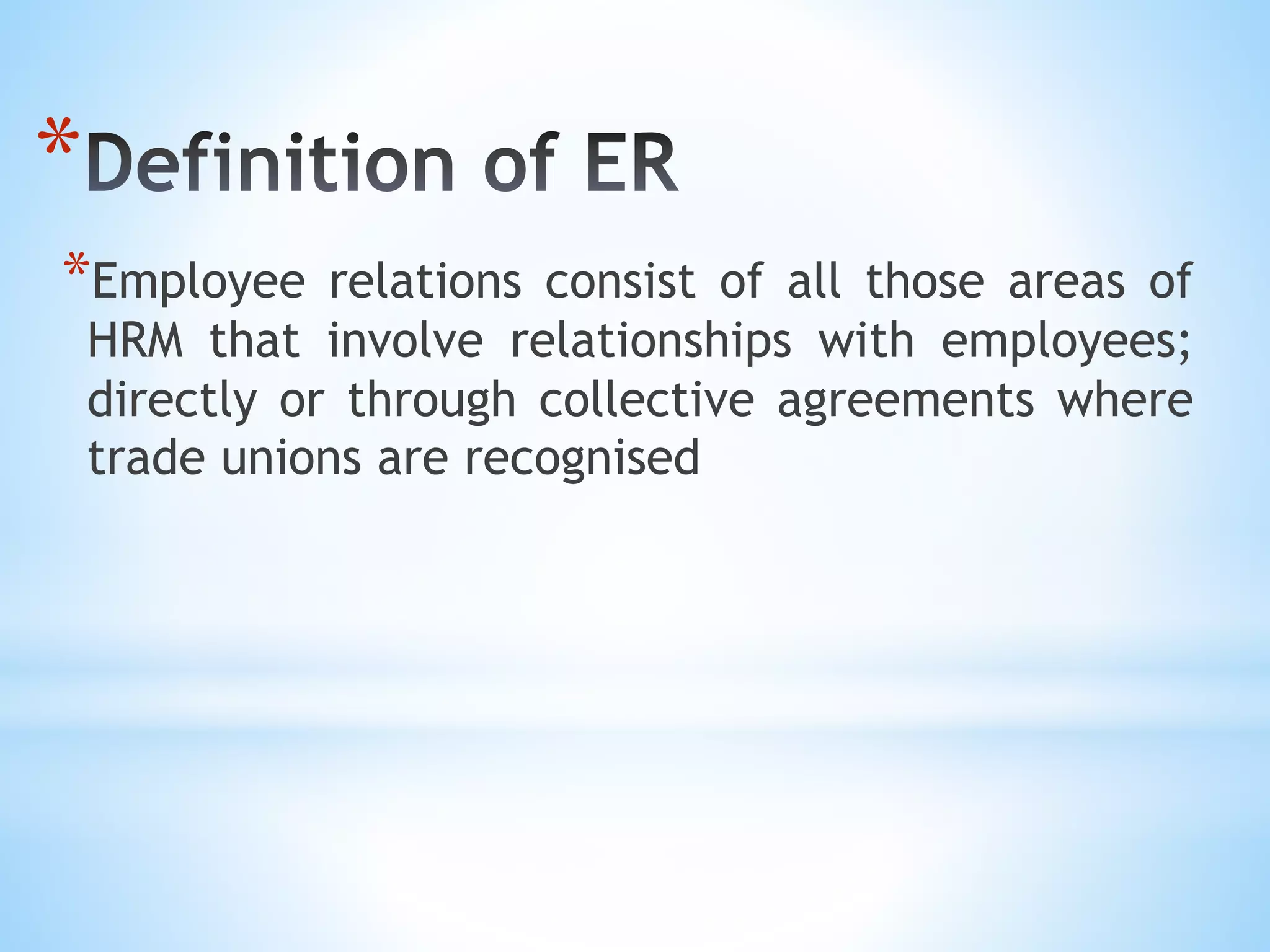
*Employee relations consist of all those areas of
HRM that involve relationships with employees;
directly or through collective agreements where
trade unions are recognised
*
*Unionization
*Poor performance
*Employee absenteeism
*Employee turnover
*Litigation
*
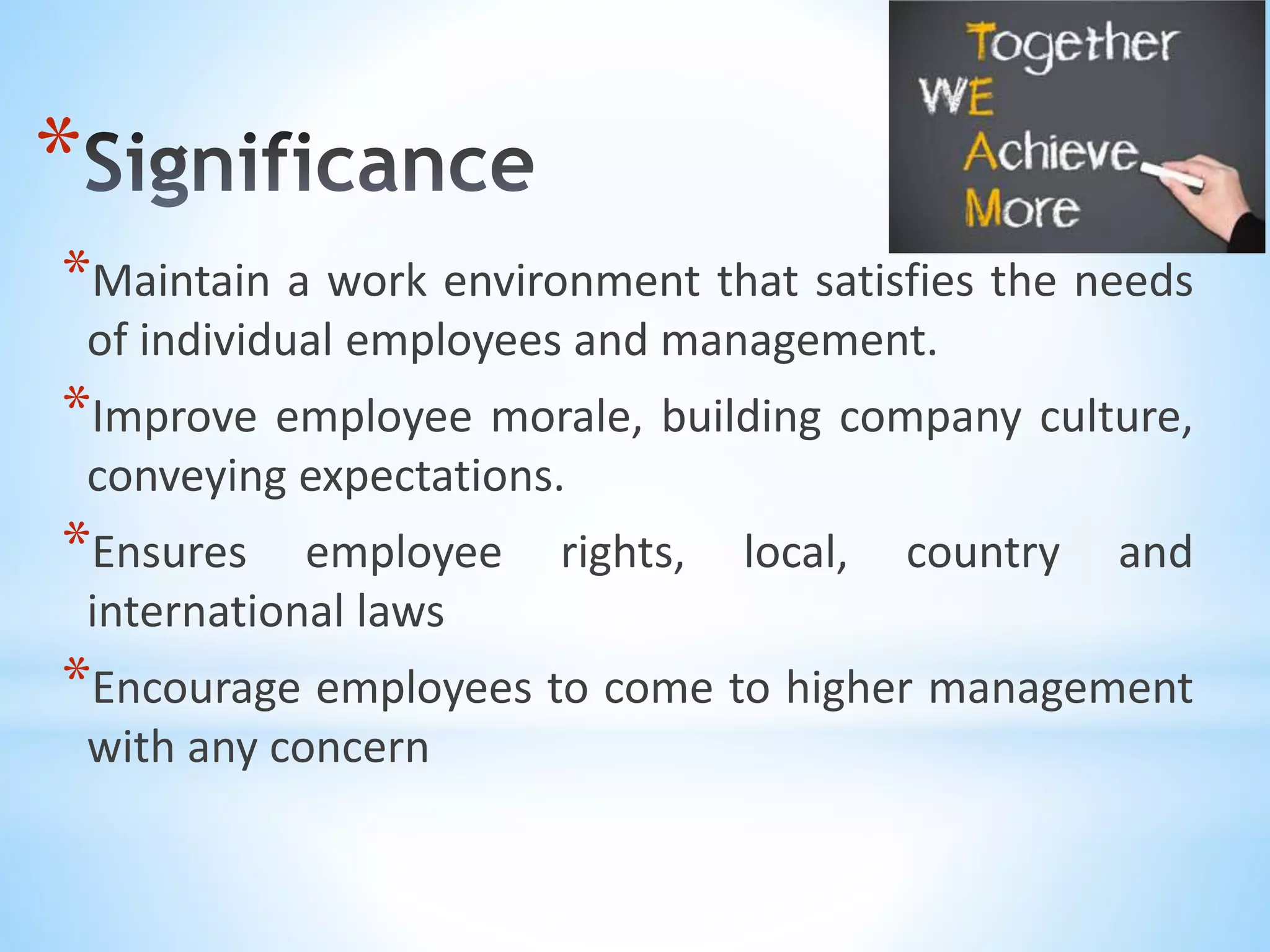
*Maintain a work environment that satisfies the needs
of individual employees and management.
*Improve employee morale, building company culture,
conveying expectations.
*Ensures employee rights, local, country and
international laws
*Encourage employees to come to higher management
with any concern
*
*
Institutional
factor
• HR policies and
practices
• Organizational
climate
• Codes of
conduct
• CB agreements
• Labor unions
Economic factors
• Ownership:
public or private
• Nature of
workforce
• Sources of labor
• Disparity of
wages
• Level of
unemployment
Technological
factors
• Work methods
• Types of
technology
• Rate of changes
• Ability of people
to cope with
changes
*
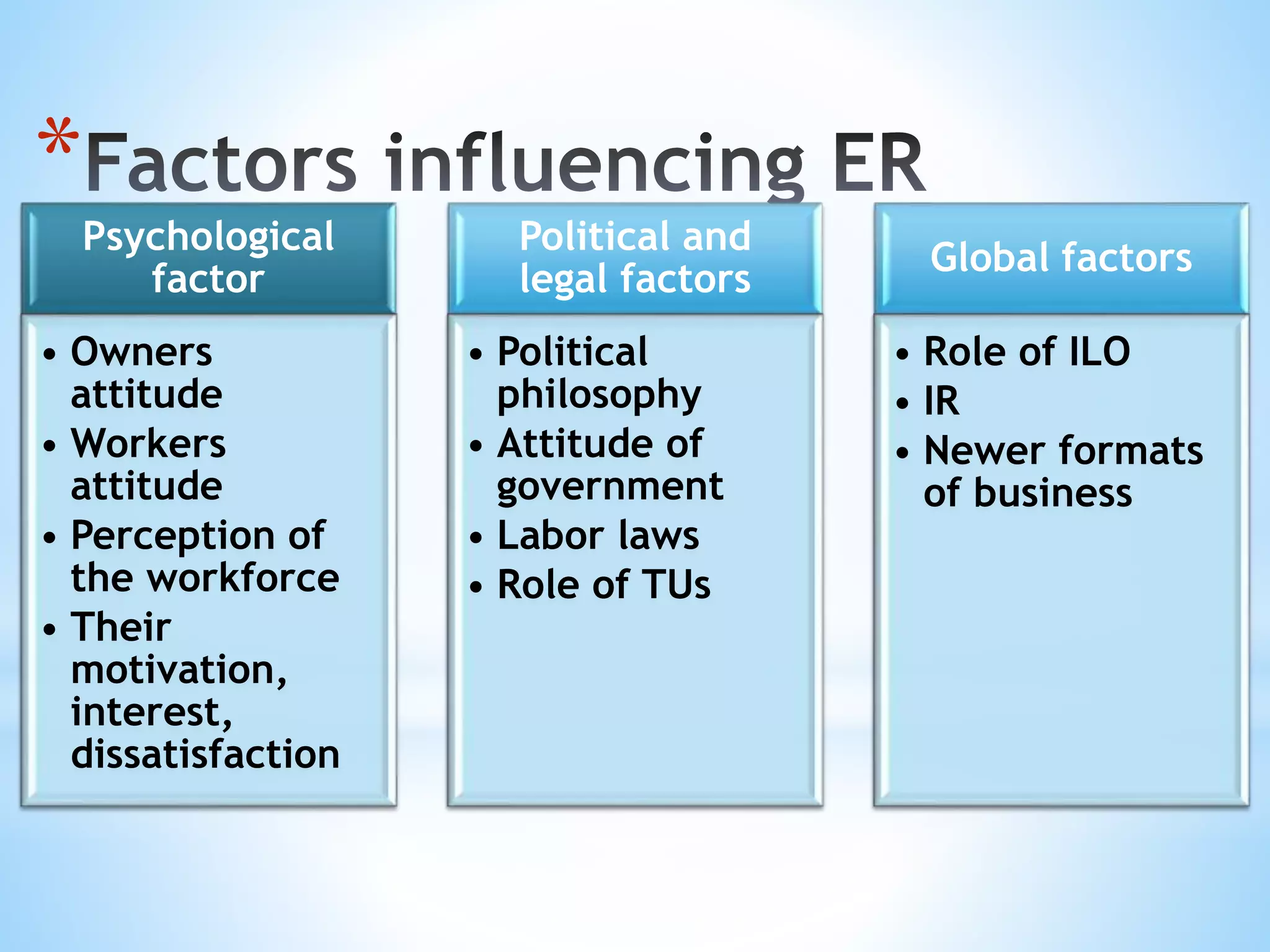
Psychological
factor
• Owners
attitude
• Workers
attitude
• Perception of
the workforce
• Their
motivation,
interest,
dissatisfaction
Political and
legal factors
• Political
philosophy
• Attitude of
government
• Labor laws
• Role of TUs
Global factors
• Role of ILO
• IR
• Newer formats
of business
*Intentions of the organization about what needs
to be done and what needs to be changed in the
ways in which the organization manages its
relationships with employees and their Tus
*ER strategies will flow from the business strategy
but will also aim to support it
*
*
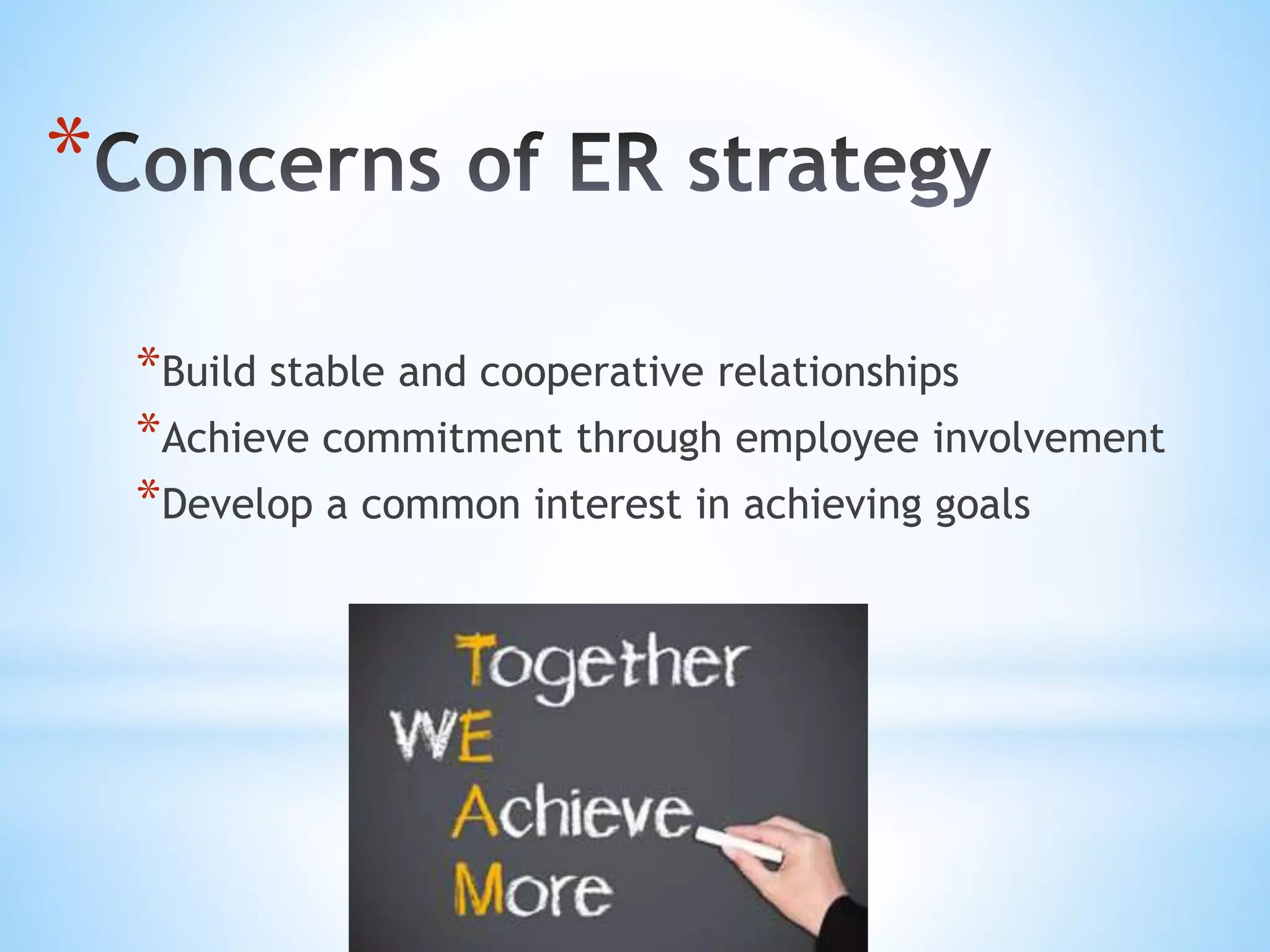
*Build stable and cooperative relationships
*Achieve commitment through employee involvement
*Develop a common interest in achieving goals
*
*Changing forms of recognition
*Changes in the form and content of agreements
*New bargaining structures
*Achievement of increased commitment
*Communicate directly with employees
*Increasing managerial controls of operations
*Improving the employee relations climate
*Developing partnership with trade unions
*
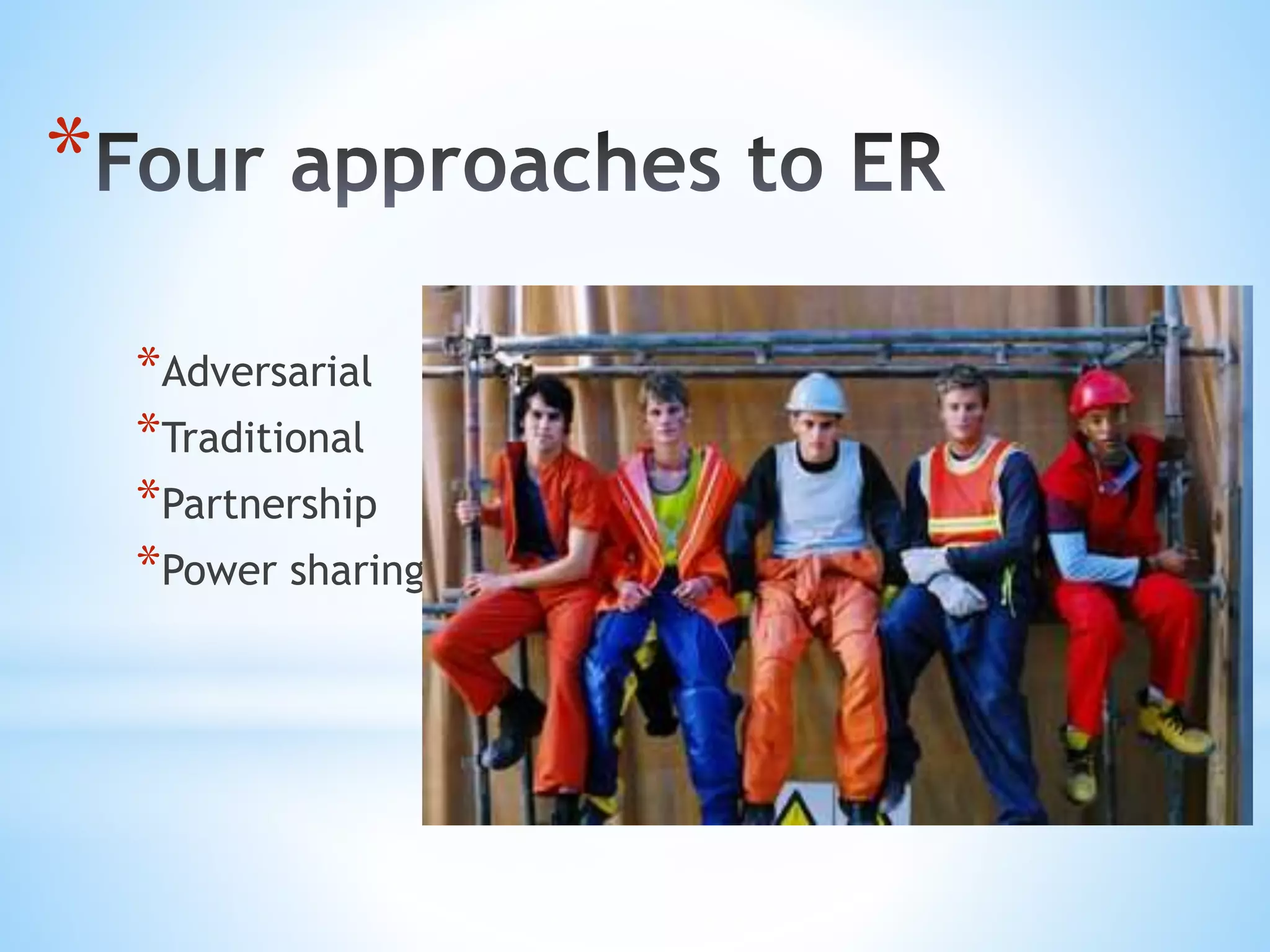
*Adversarial
*Traditional
*Partnership
*Power sharing
*
*Adversarial - the organization decides what it
wants to do, and employees are expected to fit
in. Employees only exercise power by refusing to
cooperate
*
*Traditional - a good day-to-day working
relationship but management proposes and the
workforce reacts through its elected
representatives
*Partnership
*Partnership - the organization involves
employees in the drawing up and execution of
organization policies, but retains the right to
manage
*
*Power sharing - employees are involved in both
day-to-day and strategic decision making
*
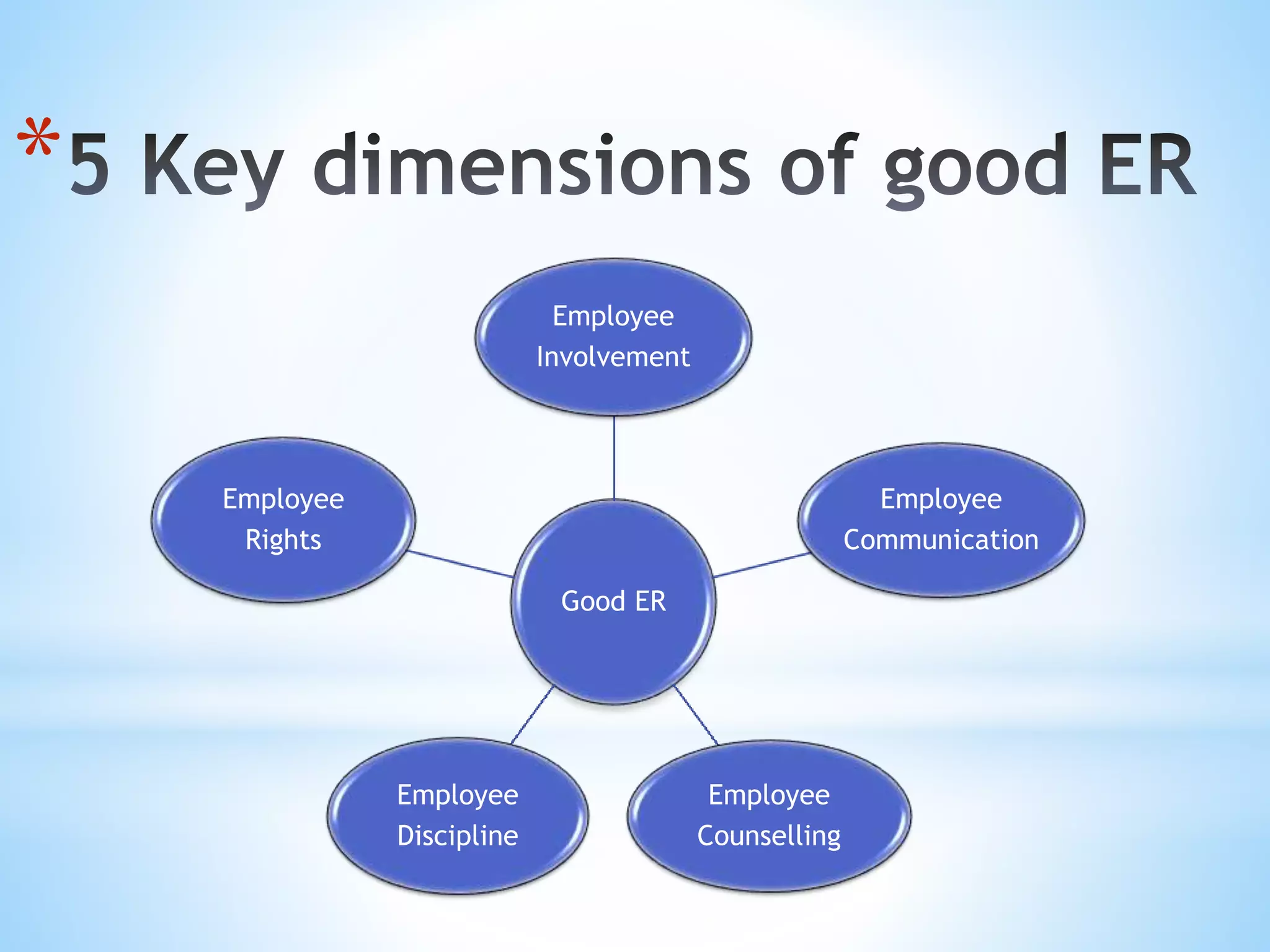
Good ER
Employee
Involvement
Employee
Communication
Employee
Counselling
Employee
Discipline
Employee
Rights
*
*Partnership agreements
*Employee voice strategy
*
*An agreement in which management and TU agree to work
together to their mutual advantages
*Include undertakings from both sides; for example
management may offer job security linked to productivity
and TU may agree to new forms of organization
*Key values:
*Mutual trust and respect
*A joint vision for the future
*Continuous exchange of information
*Recognition of the central role of CB
*Develop decision making
*
1. Shared goals-understanding the business we are in
2. Shared culture-agreed values binding us together
3. Shared learning-continuously improving ourselves
4. Shared effort-one business driven by flexibility
5. Shared information-effective communication
*
*Employee voice is a whole variety of processes
and structures which enable empower employees
to contribute to decision-making in the firm
*Employee voice is the ability of employees to
influence the actions of the employer
*
*
*Reduce absenteeism
*Improve morale and motivation
*Bring harmony in the organization
*Lesser attrition- reduced cost on training
*Create reputation, attract good talent
*Help shared learning and improve efficiency
*Increase productivity, increase profit
*
A well planned ER is a key to success for:
o Healthy work environment
o Balanced relation where employer and employees both are satisfied
o Avoid all the conflicts at workplace to
o Get desired results
To reached the organizational goals
*

Chap 18 employee relations strategy

  • 1.
  • 2.
    *People in organizationsinteract with each other. Relationships develop, which are invisible connecting links, coloured by emotions of love, hate, repulsion, respect, fear, anxiety and so on. *Relationships influence behaviours at work. Expectations, perceptions, distributions of assignments, readiness to conform, enthusiasm etc are outcomes of these relationships. *Attitudes and motivations are influenced by these relationships. *
  • 3.
    *Employee relations consistof all those areas of HRM that involve relationships with employees; directly or through collective agreements where trade unions are recognised *
  • 4.
  • 5.
    *Maintain a workenvironment that satisfies the needs of individual employees and management. *Improve employee morale, building company culture, conveying expectations. *Ensures employee rights, local, country and international laws *Encourage employees to come to higher management with any concern *
  • 6.
    * Institutional factor • HR policiesand practices • Organizational climate • Codes of conduct • CB agreements • Labor unions Economic factors • Ownership: public or private • Nature of workforce • Sources of labor • Disparity of wages • Level of unemployment Technological factors • Work methods • Types of technology • Rate of changes • Ability of people to cope with changes
  • 7.
    * Psychological factor • Owners attitude • Workers attitude •Perception of the workforce • Their motivation, interest, dissatisfaction Political and legal factors • Political philosophy • Attitude of government • Labor laws • Role of TUs Global factors • Role of ILO • IR • Newer formats of business
  • 8.
    *Intentions of theorganization about what needs to be done and what needs to be changed in the ways in which the organization manages its relationships with employees and their Tus *ER strategies will flow from the business strategy but will also aim to support it *
  • 9.
    * *Build stable andcooperative relationships *Achieve commitment through employee involvement *Develop a common interest in achieving goals
  • 10.
    * *Changing forms ofrecognition *Changes in the form and content of agreements *New bargaining structures *Achievement of increased commitment *Communicate directly with employees *Increasing managerial controls of operations *Improving the employee relations climate *Developing partnership with trade unions
  • 11.
  • 12.
    * *Adversarial - theorganization decides what it wants to do, and employees are expected to fit in. Employees only exercise power by refusing to cooperate
  • 13.
    * *Traditional - agood day-to-day working relationship but management proposes and the workforce reacts through its elected representatives
  • 14.
    *Partnership *Partnership - theorganization involves employees in the drawing up and execution of organization policies, but retains the right to manage
  • 15.
    * *Power sharing -employees are involved in both day-to-day and strategic decision making
  • 16.
  • 17.
  • 18.
    * *An agreement inwhich management and TU agree to work together to their mutual advantages *Include undertakings from both sides; for example management may offer job security linked to productivity and TU may agree to new forms of organization *Key values: *Mutual trust and respect *A joint vision for the future *Continuous exchange of information *Recognition of the central role of CB *Develop decision making
  • 19.
    * 1. Shared goals-understandingthe business we are in 2. Shared culture-agreed values binding us together 3. Shared learning-continuously improving ourselves 4. Shared effort-one business driven by flexibility 5. Shared information-effective communication
  • 20.
    * *Employee voice isa whole variety of processes and structures which enable empower employees to contribute to decision-making in the firm *Employee voice is the ability of employees to influence the actions of the employer
  • 21.
  • 22.
    * *Reduce absenteeism *Improve moraleand motivation *Bring harmony in the organization *Lesser attrition- reduced cost on training *Create reputation, attract good talent *Help shared learning and improve efficiency *Increase productivity, increase profit
  • 23.
  • 24.
    A well plannedER is a key to success for: o Healthy work environment o Balanced relation where employer and employees both are satisfied o Avoid all the conflicts at workplace to o Get desired results To reached the organizational goals *