VASUNDHARA
SINGH
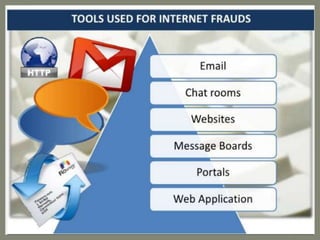
 The term ‘Internet fraud’ refers generally to any type of
fraud scheme that uses one or more components of
the Internet - such as chat rooms, e-mail, message
boards, or Web sites - to present fraudulent
solicitations to prospective victims, to conduct
fraudulent transactions, or to transmit the proceeds of
fraud to financial institutions or to other connected with
the scheme.
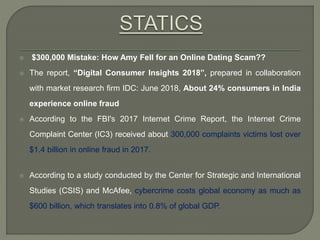
 $300,000 Mistake: How Amy Fell for an Online Dating Scam??
 The report, “Digital Consumer Insights 2018”, prepared in collaboration
with market research firm IDC: June 2018, About 24% consumers in India
experience online fraud
 According to the FBI's 2017 Internet Crime Report, the Internet Crime
Complaint Center (IC3) received about 300,000 complaints victims lost over
$1.4 billion in online fraud in 2017.
 According to a study conducted by the Center for Strategic and International
Studies (CSIS) and McAfee, cybercrime costs global economy as much as
$600 billion, which translates into 0.8% of global GDP.
 Spam is a generic term used to describe electronic
‘junk mail’ or unwanted messages sent to your email
account or mobile phone. These messages vary, but
are essentially commercial and often annoying in their
sheer volume. They may try to persuade you to buy a
product or service, or visit a website where you can
make purchases; or they may attempt to trick you into
divulging your bank account or credit card details.
 The power of the internet and email
communication has made it all too easy for
email scams to flourish. These schemes often
arrive uninvited by email. Many are related to
the well documented Governmental Scam or
Lotto Scams and use similar tactics in one
form or another.
 Spyware is generally considered to be software
that is secretly installed on a computer and takes
things from it without the permission or knowledge
of the user. Spyware may take personal
information, business information, bandwidth or
processing capacity and secretly gives it to
someone else. It is recognized as a growing
problem.
 Phishing is a technique used to gain personal information for the
purpose of identity theft. Phishing involves using a form of spam to
fraudulently gain access to people’s online banking details. As well
as targeting online banking customers, phishing emails may target
online auction sites or other online payment facilities.
 Typically, a phishing email will ask an online banking customer to
follow a link in order to update personal bank details. If the link is
followed the victim downloads a program which captures his or her
banking login details and sends them to a third party.
 A large part of online crime is now centered on
identity theft which is part of identity fraud and
specifically refers to the theft and use of personal
identifying information of an actual person, as
opposed to the use of a fictitious identity.
 Includes the theft and use of identifying personal
information of persons either living or dead.
 Internet banking fraud is a fraud or theft committed
using online technology to illegally remove money
from a bank account and/or transfer money to an
account in a different bank.
 Internet banking fraud is a form of identity theft and
is usually made possible through techniques such
as phishing.
 Counterfeit postal money orders
 Online automotive fraud
 Charity fraud
 Internet ticket fraud
 Gambling fraud
 Online gift card fraud
 Social media and fraud:
A recent study states that 88% of U.S. consumers read online reviews "to determine whether
a local business is a good business" at least occasionally—39% do so regularly. Also, 72%
say positive reviews lead them to trust a business more, while 88% say that in "the right
circumstances", they trust online reviews as much as personal recommendations.
 Consideration of using a low-limit separate credit card
for online purchases to minimize the potential loss if
things go wrong.
 • Limiting the amount of personal information you allow
to be ‘the public domain’ i.e.: social networking sites
that could be used to assist in identity theft.
 • Keeping anti-virus and firewall software up to date.
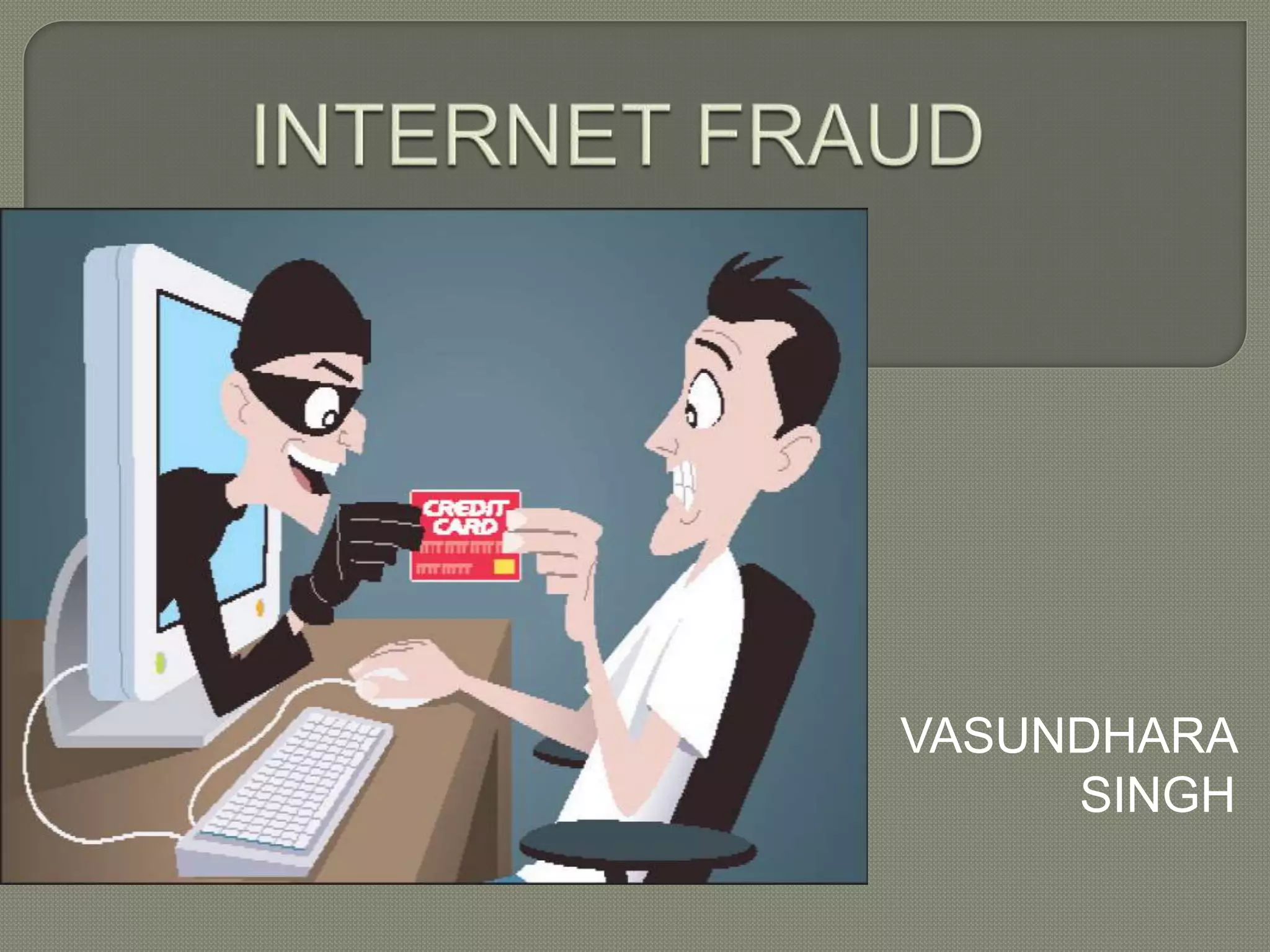
Internet Fraud

Internet Fraud

  • 1.
  • 2.
     The term‘Internet fraud’ refers generally to any type of fraud scheme that uses one or more components of the Internet - such as chat rooms, e-mail, message boards, or Web sites - to present fraudulent solicitations to prospective victims, to conduct fraudulent transactions, or to transmit the proceeds of fraud to financial institutions or to other connected with the scheme.
  • 3.
     $300,000 Mistake:How Amy Fell for an Online Dating Scam??  The report, “Digital Consumer Insights 2018”, prepared in collaboration with market research firm IDC: June 2018, About 24% consumers in India experience online fraud  According to the FBI's 2017 Internet Crime Report, the Internet Crime Complaint Center (IC3) received about 300,000 complaints victims lost over $1.4 billion in online fraud in 2017.  According to a study conducted by the Center for Strategic and International Studies (CSIS) and McAfee, cybercrime costs global economy as much as $600 billion, which translates into 0.8% of global GDP.
  • 5.
     Spam isa generic term used to describe electronic ‘junk mail’ or unwanted messages sent to your email account or mobile phone. These messages vary, but are essentially commercial and often annoying in their sheer volume. They may try to persuade you to buy a product or service, or visit a website where you can make purchases; or they may attempt to trick you into divulging your bank account or credit card details.
  • 6.
     The powerof the internet and email communication has made it all too easy for email scams to flourish. These schemes often arrive uninvited by email. Many are related to the well documented Governmental Scam or Lotto Scams and use similar tactics in one form or another.
  • 7.
     Spyware isgenerally considered to be software that is secretly installed on a computer and takes things from it without the permission or knowledge of the user. Spyware may take personal information, business information, bandwidth or processing capacity and secretly gives it to someone else. It is recognized as a growing problem.
  • 8.
     Phishing isa technique used to gain personal information for the purpose of identity theft. Phishing involves using a form of spam to fraudulently gain access to people’s online banking details. As well as targeting online banking customers, phishing emails may target online auction sites or other online payment facilities.  Typically, a phishing email will ask an online banking customer to follow a link in order to update personal bank details. If the link is followed the victim downloads a program which captures his or her banking login details and sends them to a third party.
  • 9.
     A largepart of online crime is now centered on identity theft which is part of identity fraud and specifically refers to the theft and use of personal identifying information of an actual person, as opposed to the use of a fictitious identity.  Includes the theft and use of identifying personal information of persons either living or dead.
  • 10.
     Internet bankingfraud is a fraud or theft committed using online technology to illegally remove money from a bank account and/or transfer money to an account in a different bank.  Internet banking fraud is a form of identity theft and is usually made possible through techniques such as phishing.
  • 11.
     Counterfeit postalmoney orders  Online automotive fraud  Charity fraud  Internet ticket fraud  Gambling fraud  Online gift card fraud  Social media and fraud: A recent study states that 88% of U.S. consumers read online reviews "to determine whether a local business is a good business" at least occasionally—39% do so regularly. Also, 72% say positive reviews lead them to trust a business more, while 88% say that in "the right circumstances", they trust online reviews as much as personal recommendations.
  • 12.
     Consideration ofusing a low-limit separate credit card for online purchases to minimize the potential loss if things go wrong.  • Limiting the amount of personal information you allow to be ‘the public domain’ i.e.: social networking sites that could be used to assist in identity theft.  • Keeping anti-virus and firewall software up to date.