INFECTION CONTROL
&
STANDARD SAFETYMEASURES
INFECTION CONTROL
• Infection control is the discipline
concerned with preventing nosocomial or
healthcare-associated infections.
• Practical sub-discipline of epidemiology
• Essential part of the infrastructure of
healthcare.
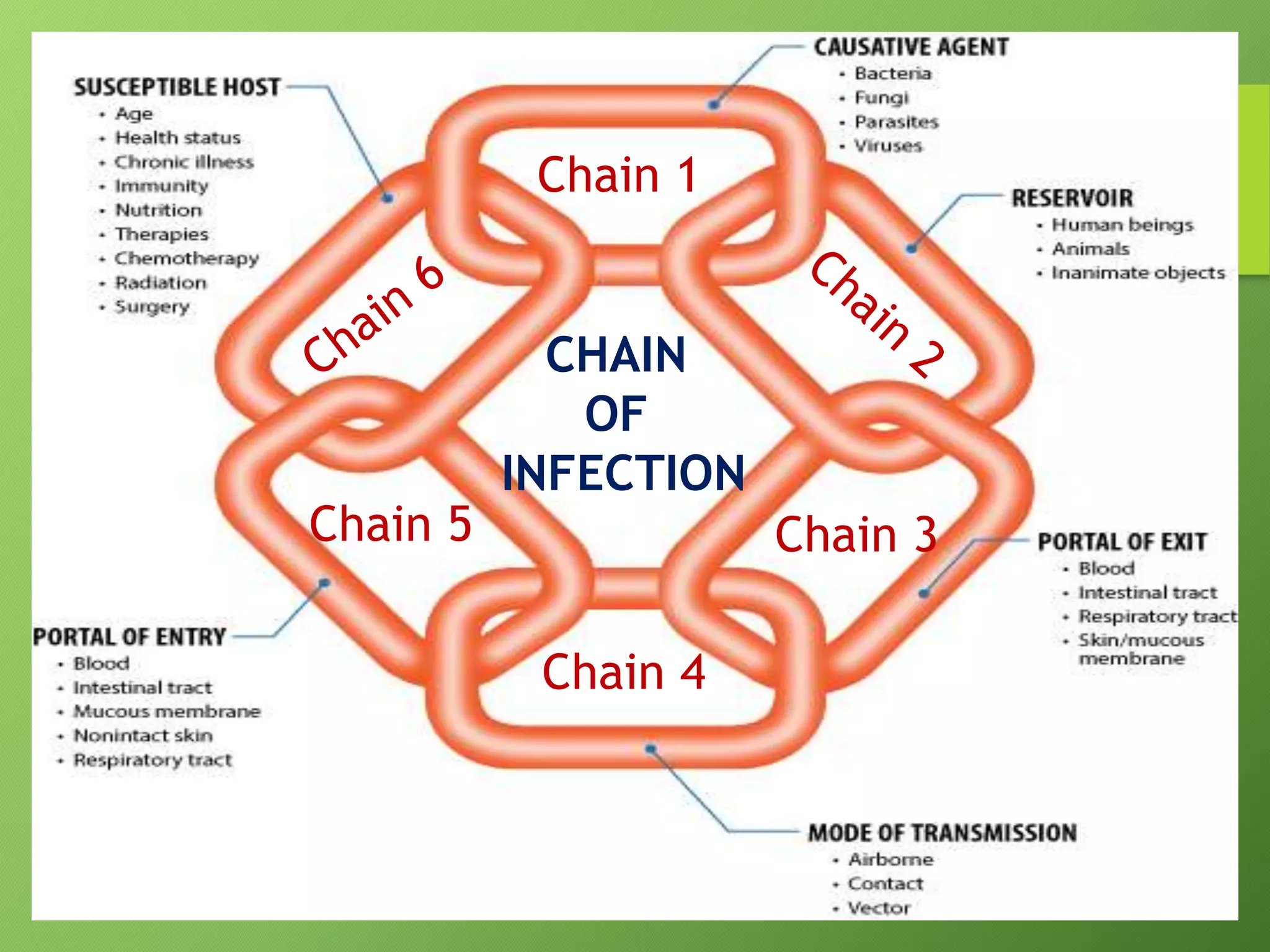
CHAIN
OF
INFECTION
Chain 1
Chain 3
Chain 4
Chain 5
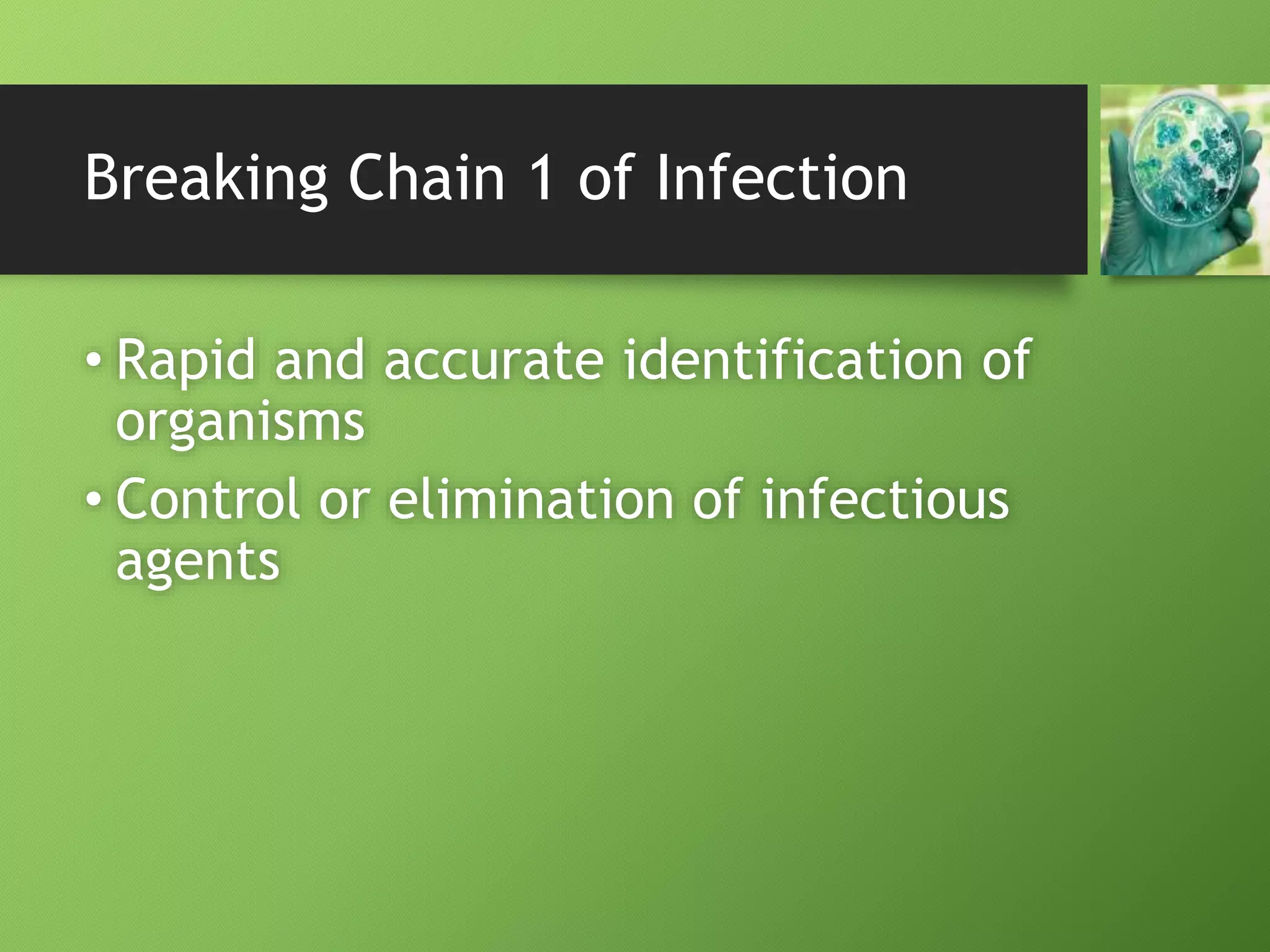
Breaking Chain 1 of Infection
• Rapid and accurate identification of
organisms
• Control or elimination of infectious
agents
Breaking the Chain 2 of the Infection
Measures to control/eliminate reservoir for Infection
1. Employee health
 Immunization
 Regular check up
 Preventing contact with infected person
2. Environmental cleaning
 Cleaning with hospital approved cleaner
disinfectant
 Thorough cleaning of bed and bedside
equipments
 Damp dusting
 Drains should be patent.
Continued…..
3. Handling of linen
 Keep bed sheets dry and clean.
 Do not shake blankets and linen.
 Do not throw them on floor.
 Separate soiled linen.
4. Visitors control
5. Pest control
 Avoid their entry
 Fly trapper
 Pesticide sprays
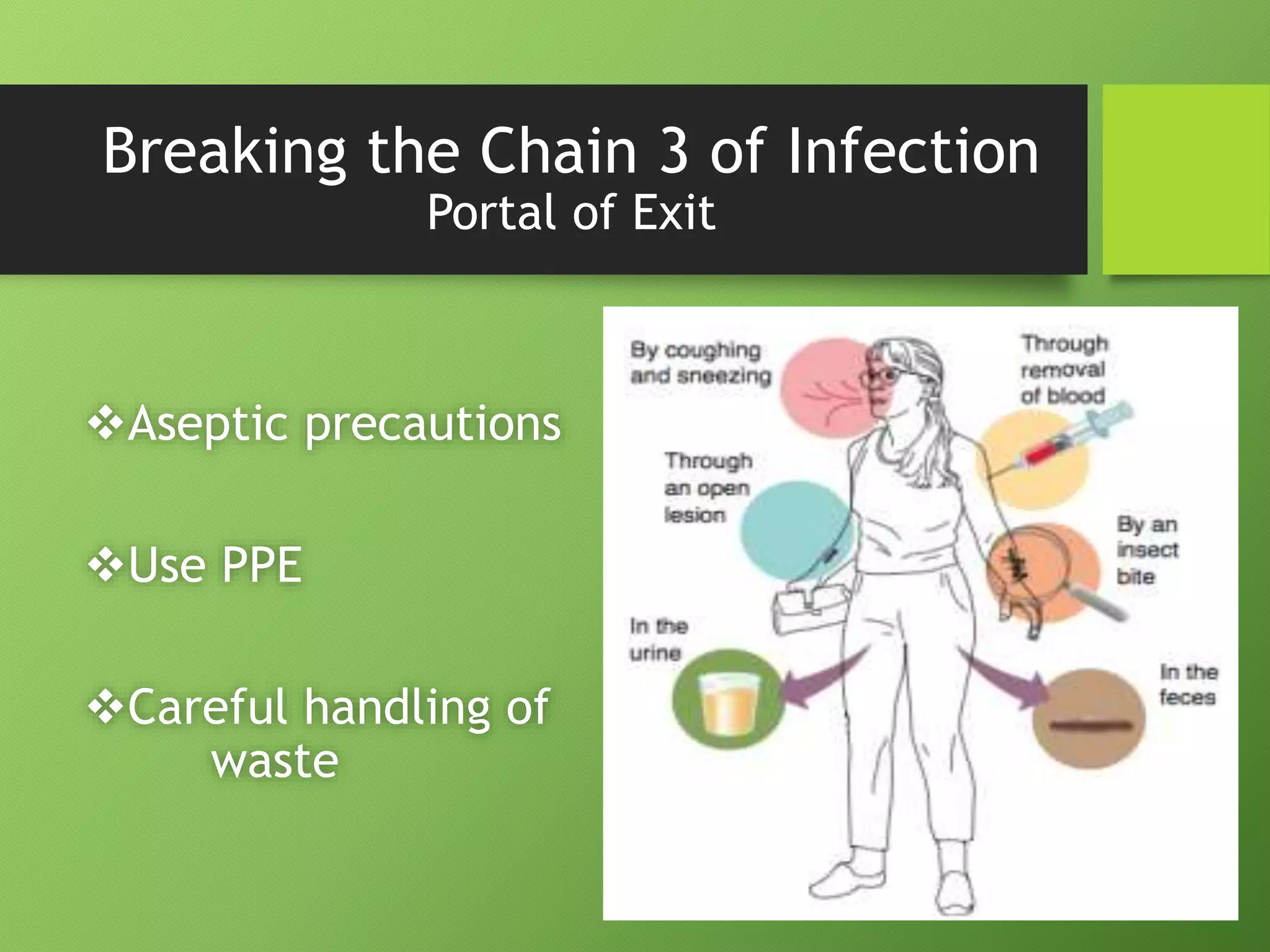
Breaking the Chain 3 of Infection
Portal of Exit
Aseptic precautions
Use PPE
Careful handling of
waste
Breaking the Chain 4 of Infection
Transmission Based Precaution
Airborne/Droplet precautions
Private room, well-ventilated, &
door closed.
Negative air pressure & 6-12 air
changes per hour.
Wear masks
Prevent contact with susceptible
people
Limit movement of client
Continued….
Contact precautions
Client private room
Hand hygiene
Use PPE
Remove PPE in client’s room
Limit movement of client
Practice use of non-critical client care
equipment to a single client or to clients with
same infecting microorganism.
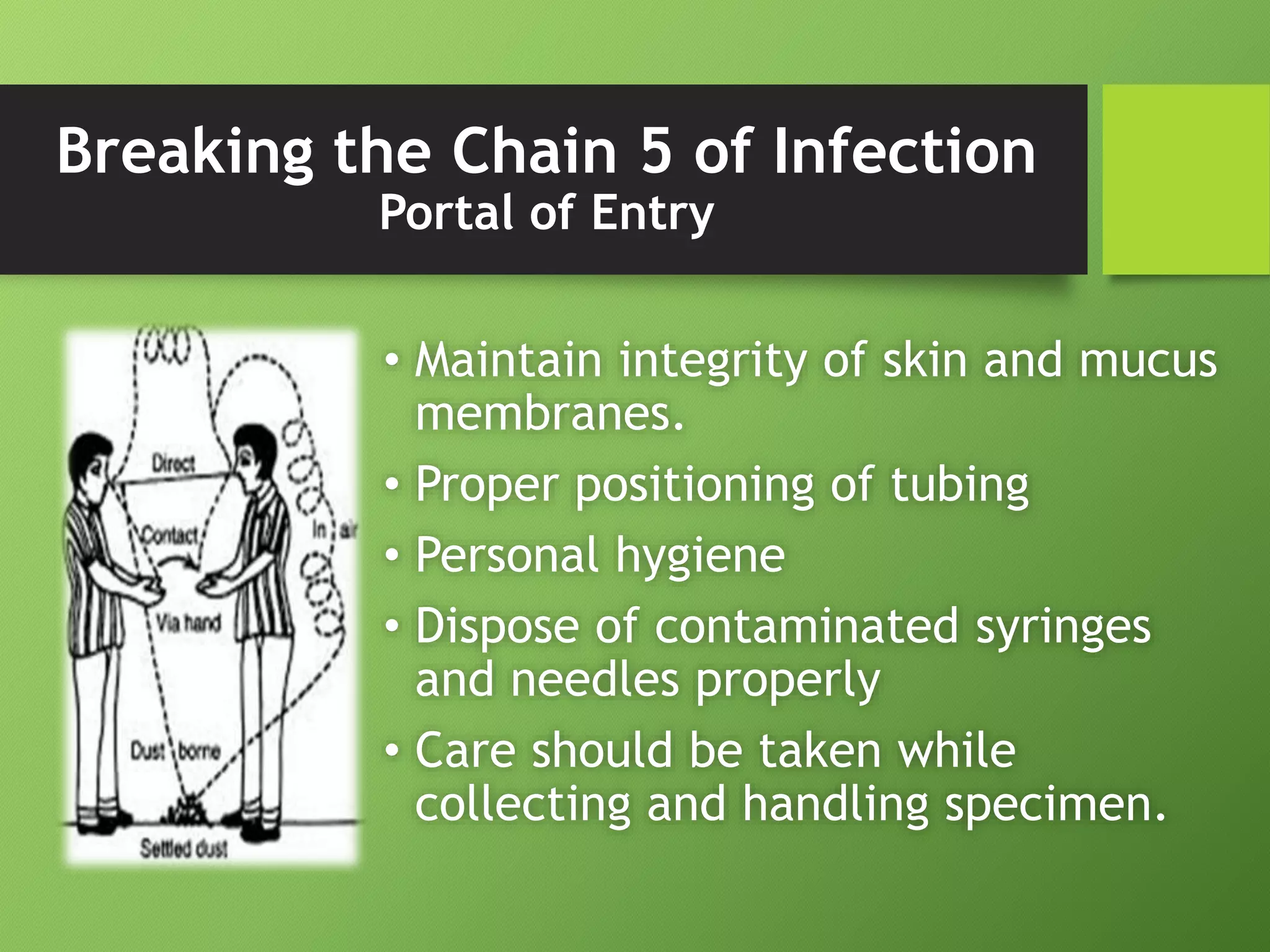
Breaking the Chain 5 of Infection
Portal of Entry
• Maintain integrity of skin and mucus
membranes.
• Proper positioning of tubing
• Personal hygiene
• Dispose of contaminated syringes
and needles properly
• Care should be taken while
collecting and handling specimen.
Breaking the Chain 6 of Infection
Protecting Susceptible Host
Protecting normal
defense mechanisms
• Oral hygiene
• Adequate intake
• Deep breathing and
coughing exercises
• Proper immunization
Maintaining healing
processes
• Well-balanced diet
• Institution of measures
to improve appetite
• Promotion of the
client's comfort and
sleep
• Helping to relieve stress
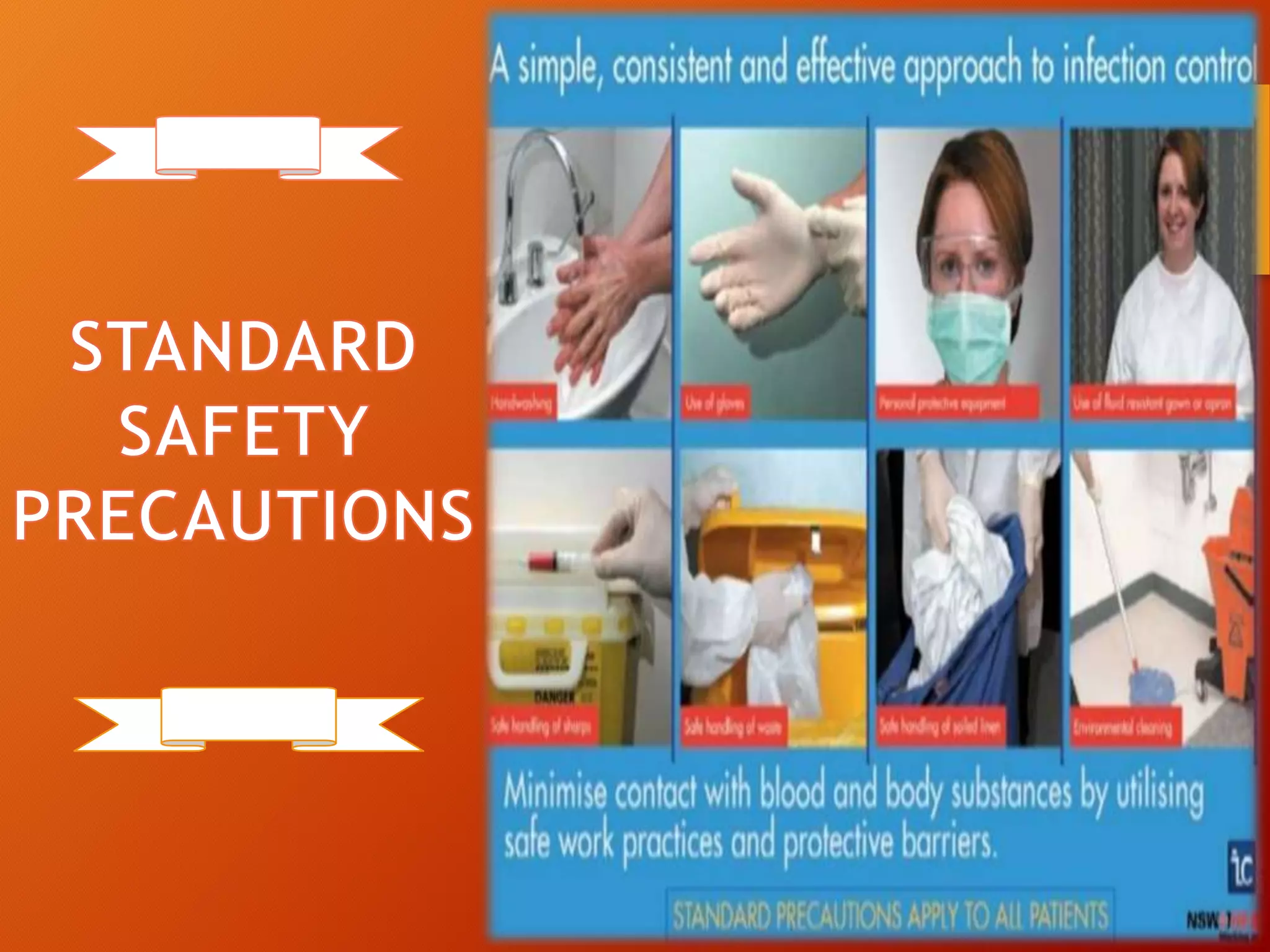
Standard Safety Measures
Standard Safety measures are the minimum infection prevention
practices that should be used in the care of all patients all of
the time. These practices are designed to both protect the
healthcare worker and to prevent the healthcare worker
from spreading infections among patients.
Hand Hygiene
Practicing hand hygiene is a simple yet effective way to
prevent infections.
Cleaning your hands can prevent the spread of germs,
including those that are resistant to antibiotics and are
becoming difficult, if not impossible, to treat.
On average, healthcare providers clean their hands less than
half of the times they should.
On any given day, about one in 31 hospital patients has at least
one healthcare-associated infection.
Continued…..
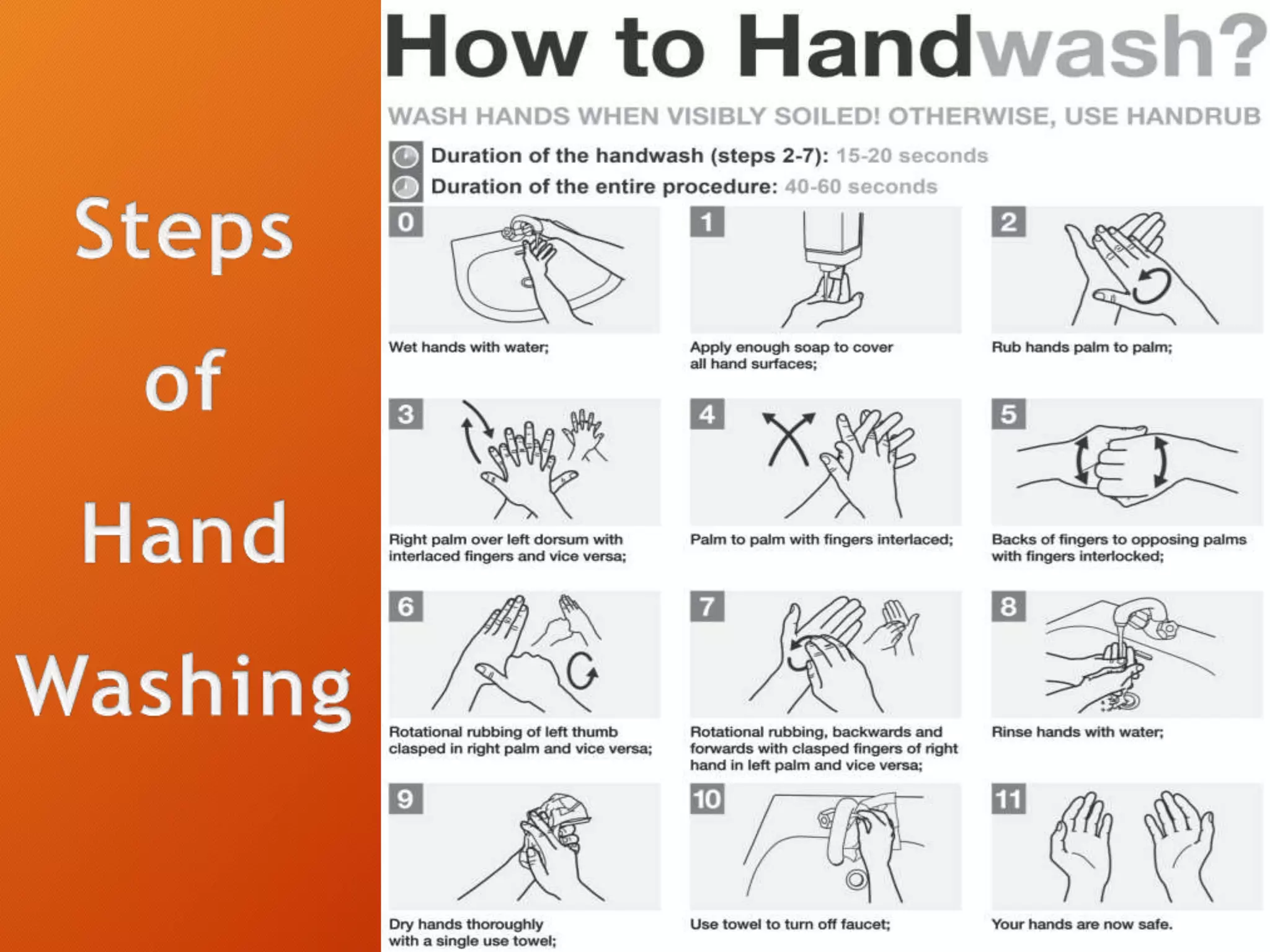
• All the steps of hand washing should be
followed properly.
• Always use liquid soap instead of solid soap for
hand washing.
• Increasing hand-washing compliance by 1.5 – 2
folds would result in a 25-50-% decrease in the
incidence of healthcare associated infections.
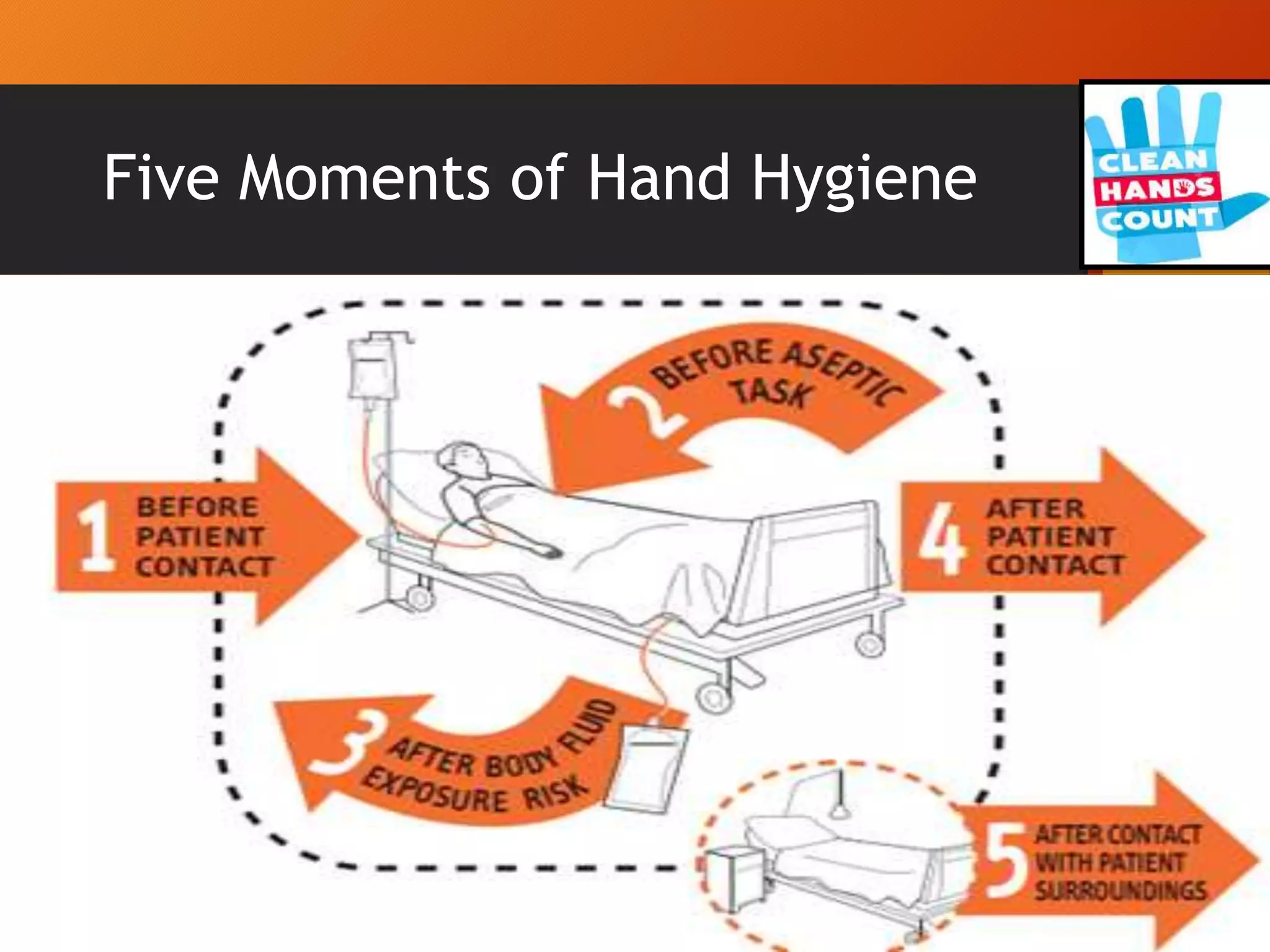
Five Moments of Hand Hygiene
TYPES OF HAND HYGIENE
Methods Agents Purpose Area Time Duration
(min.)
Routine
Hand wash
Water and
plain soap
Remove soil &
transient
microorganisms
All
surfaces of
hands &
fingers
5 Moments
for Hand
Hygiene.
10-15 sec
Anti septic
hand wash
Water and
antimicrobial
soap (e.g.
clorhexidine)
Remove or destroy
transient
microorganisms and
reduce resident flora
All
surfaces of
hands &
fingers
Before all
aseptic
procedures
on the ward.
1 min
Antiseptic
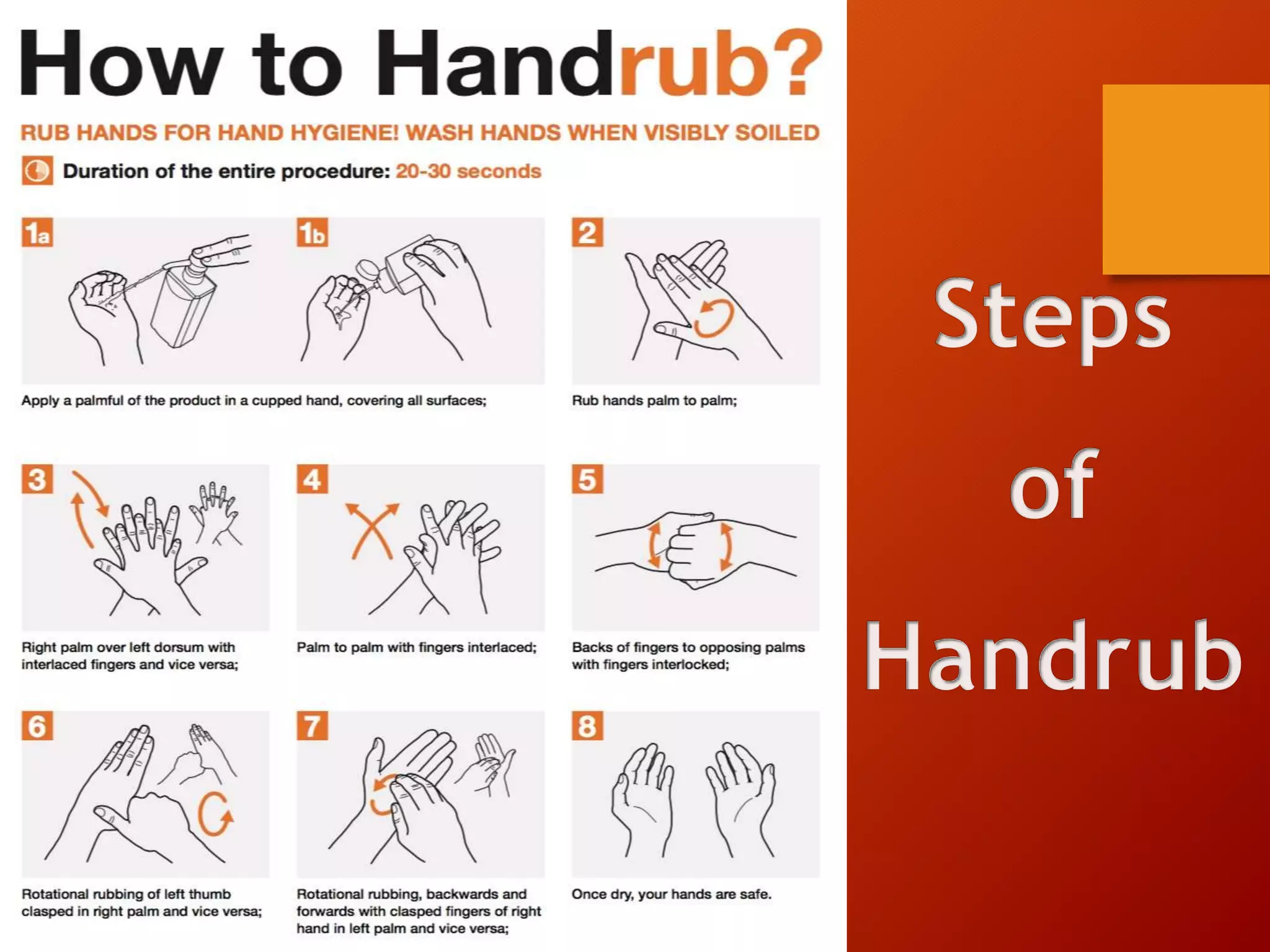
handrub
Alcohol based
handrub
Remove or destroy
transient
microorganisms and
reduce resident flora
All
surfaces of
hands &
fingers
As an
alternative to
antiseptic
hand wash on
visibly clean
hands.
Until hands
are dry
Surgical
Handwash
Water and
antimicrobial
soap (e.g.
clorhexidine)
Remove or destroy
transient
microorganisms and
reduce resident flora
Hands and
forearms
Before all
surgical/inva
sive
procedures.
3-5 min
Personal Protective Equipment
(PPE)
Specialized clothing or equipment
worn by an employee for protection
against infectious materials.
(OSHA)
Needle Stick And Sharps Injury
Prevention
Sharps injury can be defined as injury from needle or
other sharp device contaminated with blood or a
body fluid and penetrates the skin percutaneously
mucosal/ cutaneous exposure.
At what time in the process did you
receive the needle stick injury?
Needle Stick Injury Prophylaxis
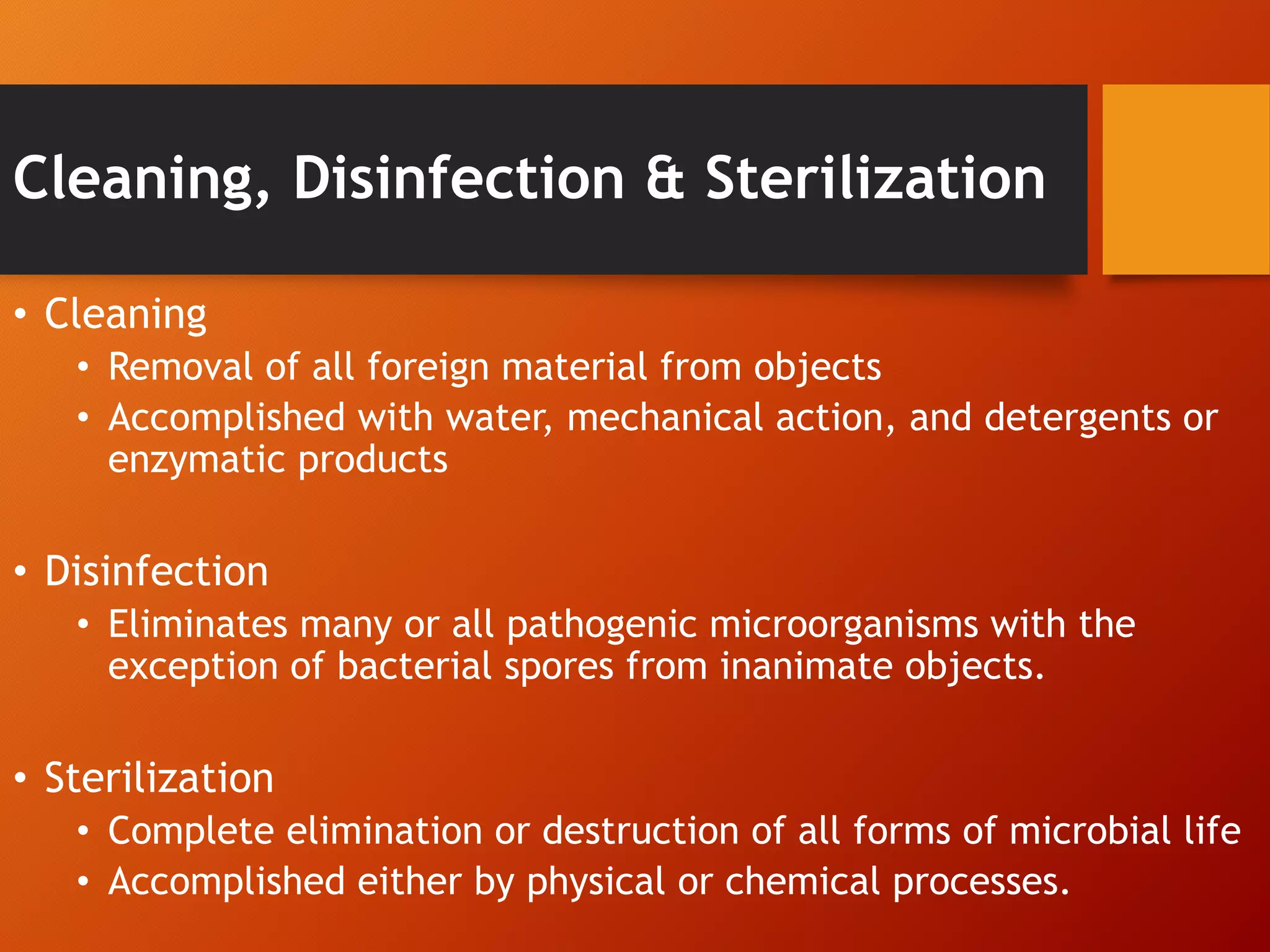
Cleaning, Disinfection & Sterilization
• Cleaning
• Removal of all foreign material from objects
• Accomplished with water, mechanical action, and detergents or
enzymatic products
• Disinfection
• Eliminates many or all pathogenic microorganisms with the
exception of bacterial spores from inanimate objects.
• Sterilization
• Complete elimination or destruction of all forms of microbial life
• Accomplished either by physical or chemical processes.
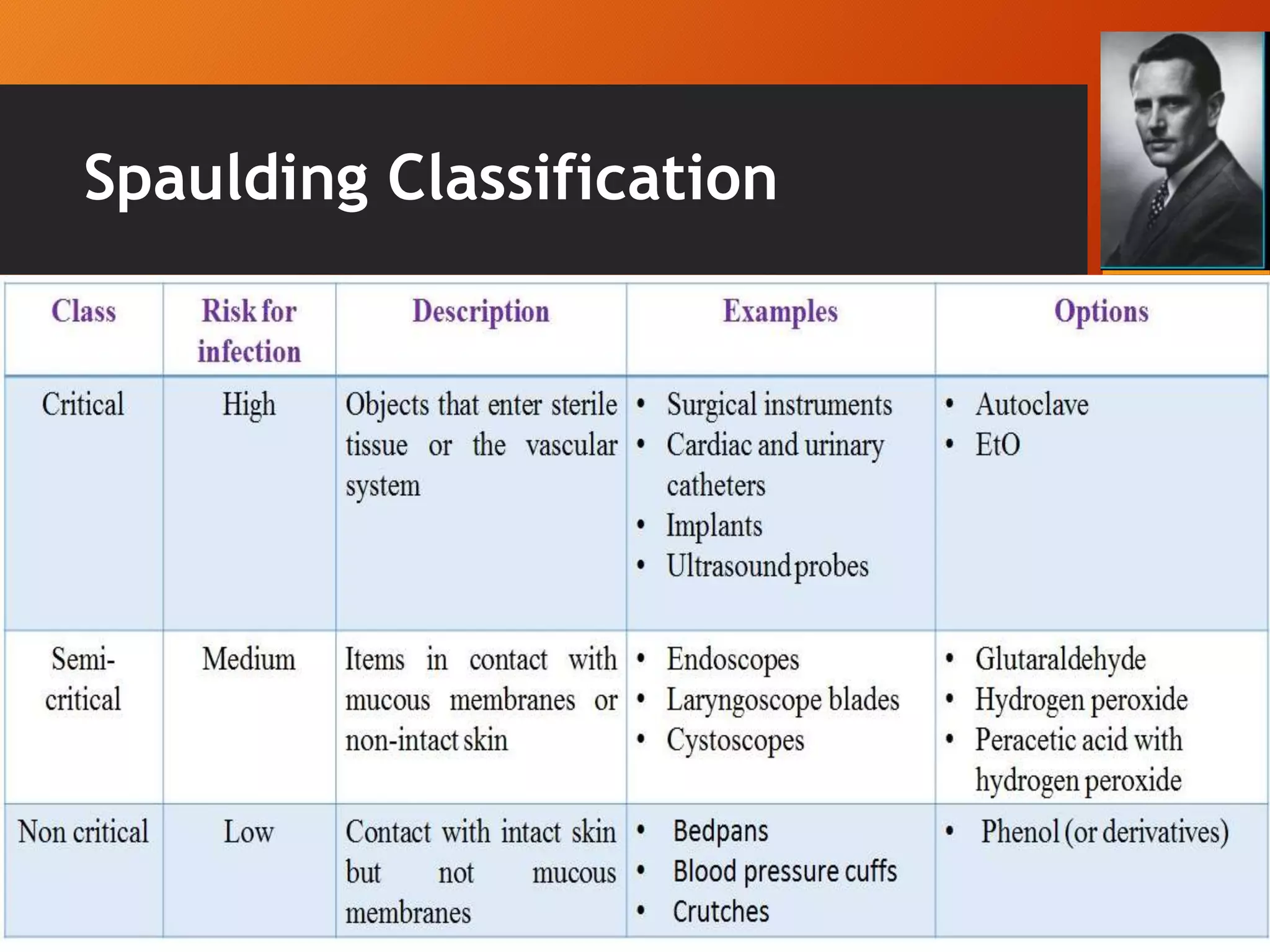
Spaulding Classification
Environment Cleaning
Policy Considerations
• Include in policy all surfaces and equipment that can
reasonably be expected to be contaminated by bacteria
(high touch surfaces).
• Define responsibility and frequency for cleaning and
disinfecting patient care equipment and surfaces.
• Monitor compliance with policy.
• Staff should be able to answer question “How do you know
whether this item has been cleaned and/or disinfected?”
• Cleaned/disinfected items should be labeled (date/time).
Cleaning, Disinfection, and
Sterilization of Medical Instruments &
Devices
One CANNOT achieve disinfection or sterilization without pre-
cleaning
1. Personal Protection
2. Clean all medical instruments and devices
3. Disinfection
• Time-dependent process
• Hospitals must use EPA-approved product for desired level of
disinfection
• Follow manufacturer’s recommendations to achieve disinfection
and to avoid medical device damage method
• Understand employee and environmental safety issues
Continued…..
4. Sterilization
Achieved by:
• Steam
• Dry Heat
• Ethylene Oxide
• Peracetic Acid
• Plasma Gas (vaporized hydrogen
peroxide)
• Glutaraldehyde (using higher
concentrations and exposure
times than for high-level
disinfection)
Monitoring Sterilization
• Mechanical Indicators
• Gauges, displays, printouts
• Indicates if device working properly
• Not indicator of sterility
• Chemical Indicators
• Change color with timed exposure to
heat, steam
• Not indicator of sterility
• Used to show items have gone through
sterilization process
Continued…..
• Biological Indicators
• Indicator of sterility
• Demonstrates bacterial
spores on test strips or in
vials/containers have all
been killed
• Results can be available
in 1 hour
Storage of Sterile Items
• Protect sterility until ready to use
• Store to protect packages from dust, moisture,
falling on floor
• Transport only covered, dry packages
• Handle to protect package integrity
• Refrain from crushing packages or ‘rubber-
banding’ them for storage
• Rotate sterile items first in, first out
• Store and label including expiration date for
effective recall system
Bio-medical Medical Waste
Management
• Bio-Medical waste
• Bio-Medical waste includes all the waste generated from the Health
Care Facility which can have any adverse effect to the health of a
person or to the environment in general if not disposed properly.
• All such waste which can adversely harm the environment or health of a
person is considered as infectious and such waste has to be managed as
per BMWM Rules, 2016.
• Process of Bio Medical Waste Management
• Generation
• Segregation
• Storage
• Collection
• Transportation
• Treatment and disposal
Duties of the Hospital in BMW
Management
• Handle waste as per norms.
• Arrange safe storage of waste.
• Follow onsite pre-treatment of infective waste.
• Replace chlorinated plastic bags, gloves and blood bags with
non chlorinated.
• Provide training to all its health care workers.
• Immunize all its health care workers.
• Establish a Bar- Code System for bags or containers
containing bio-medical waste.
Continue…..
• Establish a committee
• Report major accidents.
• Maintain daily register and upload monthly & annually
records on website.
• Conduct health check up at the time of induction and at
least once in a year for all its health care workers.
• Maintain all records for a period of 05 yrs.
Continue….
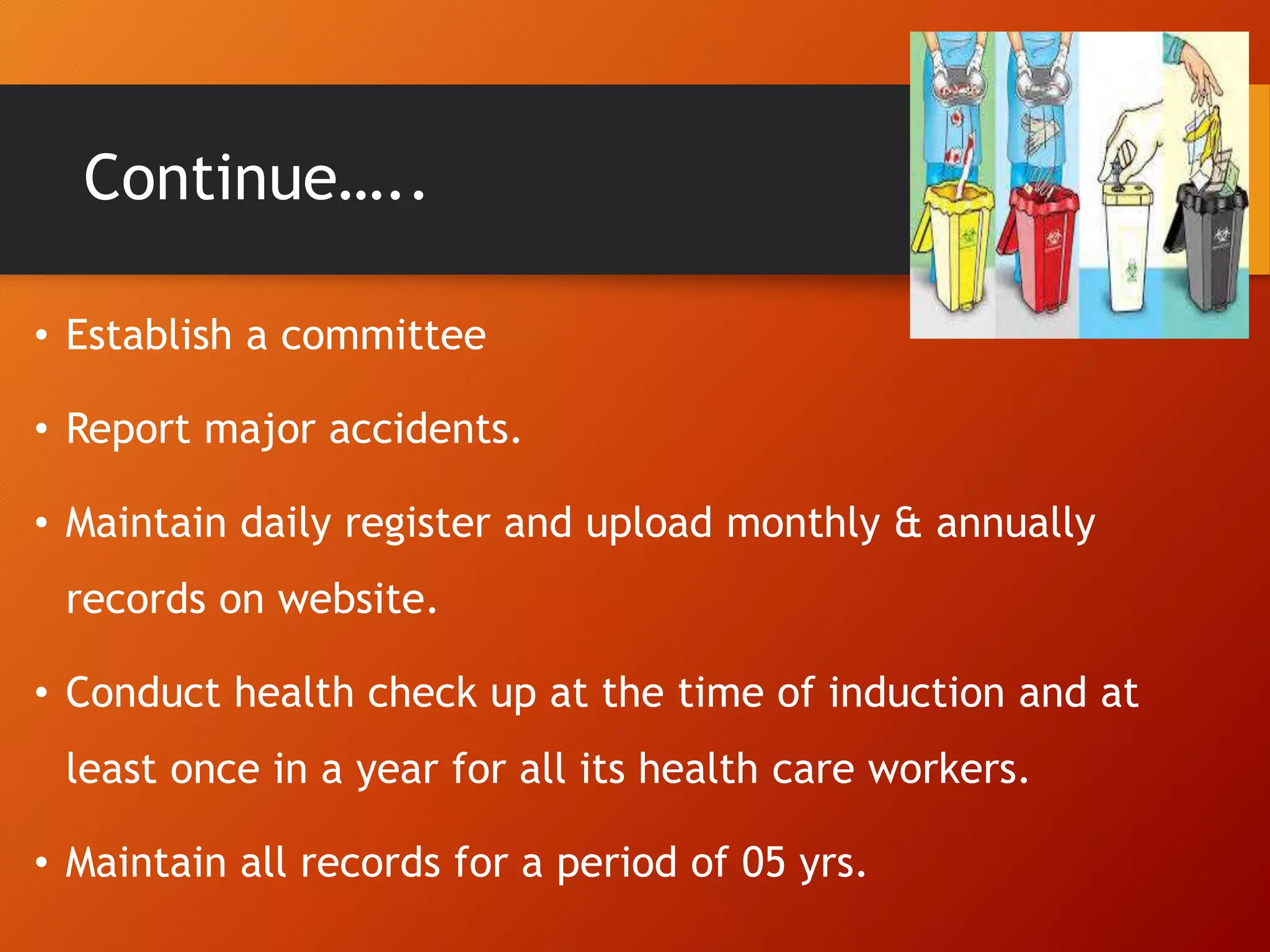
• Treatment and Disposal
• No healthcare facility shall setup onsite BMW treatment facilities
if a CBMWTF exists within 75 kms of distance.
• Segregation, Packing Storage And Transport
• Bio-medical waste classified into 4 categories based on treatment
options.
• No untreated bio-medical waste shall be kept stored beyond a
period of 48 hours.
• If required to store beyond 48 hours, the occupier shall ensure
that it affect human health and inform the State Pollution
Control Board (SPCB) with reason.
Continue…..
• Liquid and Chemical Wastes Management
• Chemical disinfection of the liquid waste, at the areas
of generation e.g., Labor rooms, OTs, labs etc is done.
• These liquid wastes should be disinfected by chemical
treatment using at least 1% sodium hypochlorite
solution for a contact period of 30 Minutes and them
discharged into drains/sewers where it is taken care of
by the principle of dilution and dispersal.
SAFE INJECTION PRACTICES
• Safe injection practices are a set of measures to perform
injections in an optimally safe manner for patients,
healthcare providers and others.
• It includes practices intended to prevent transmission of
infectious diseases between one patient and another, or
between a patient and healthcare provider, and also to
prevent harms such as needle stick injuries.
Continue….
The CDC recommends the following apply to the use of needles,
cannulas that replace needles, and, where applicable intravenous
delivery system:
• Use aseptic technique to avoid contamination of sterile injection
equipment.
• Do not administer medications from a syringe to multiple patients,
even if the needle or cannula on the syringe is changed.
• Needles, cannulas, and syringes are sterile, single-use items; they
should not be reused for another patient nor to access a
medication or solution that might be used for a subsequent
patient.
• Use fluid infusion and administration sets (i.e. intravenous bags,
and connectors) for one patient only and dispose appropriately
after use.
Continue….
• Use single-dose vials for parental medications whenever
possible.
• Do not administer medications from single-dose vials or
ampoules to multiple patients or combine leftover contents
for later use.
• If multi-dose vials must be used, both the needle or cannula
and syringe to access the multi-dose vial must be sterile.
• Do not keep multi-dose vials in the immediate patient
treatment area and store in accordance with the
manufacturer’s recommendations; discard if sterility is
compromised or questionable.
• Do not use bags or bottles of intravenous solution as a
common source of supply for multiple patients.
HOSPITAL INFECTION CONTROL
PROGRAMME
• Prevention of Healthcare-associated infection (HCAI) in
patients is a concern of everyone in the facility and is the
responsibility of all individuals and services providing health
care.
• Risk prevention for patients and staff must be supported at
the level of senior administration. The role of the hospital
infection control committee (HICC) is to implement the
annual infection control programme and policies.
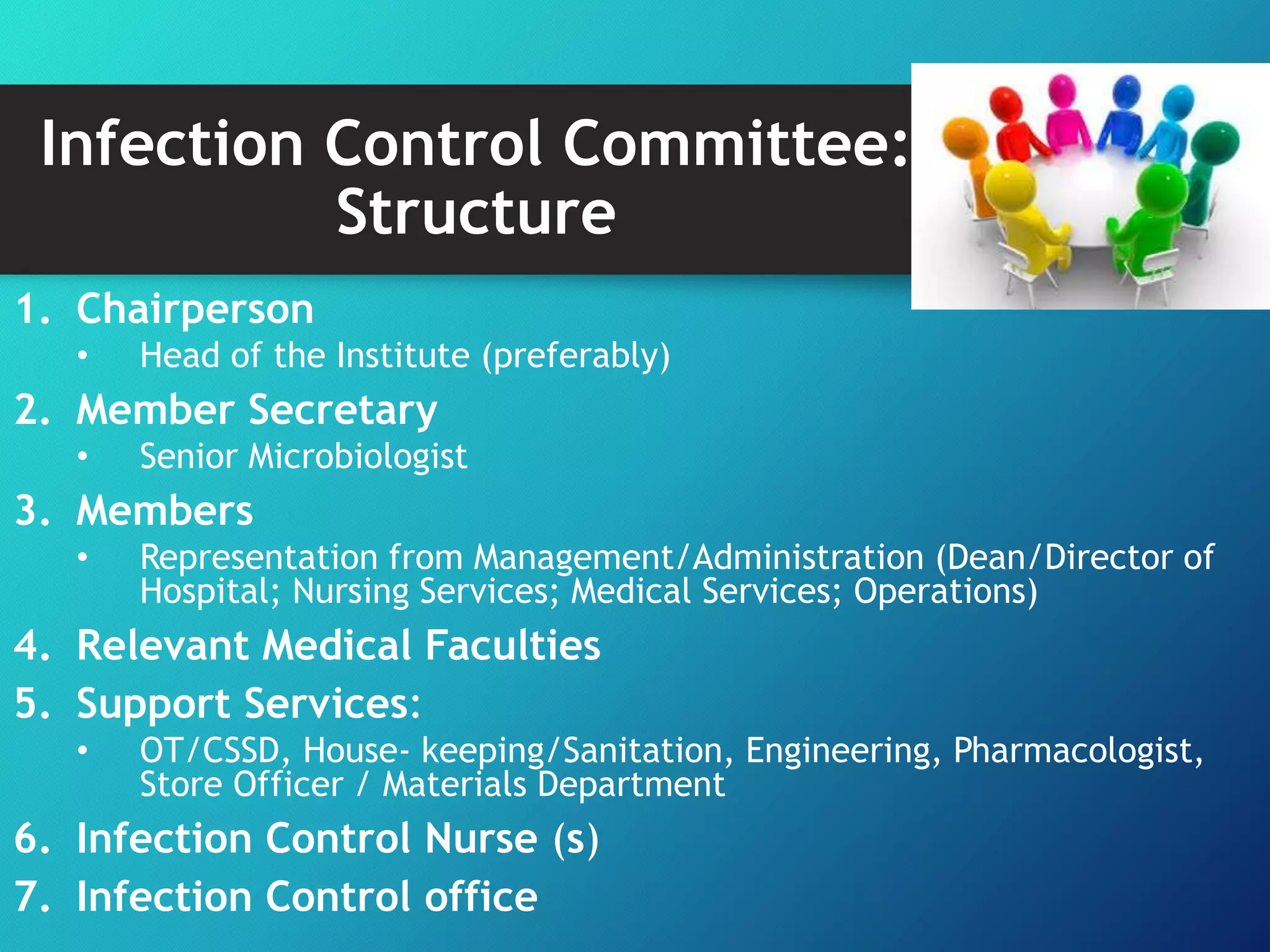
Infection Control Committee:
Structure
1. Chairperson
• Head of the Institute (preferably)
2. Member Secretary
• Senior Microbiologist
3. Members
• Representation from Management/Administration (Dean/Director of
Hospital; Nursing Services; Medical Services; Operations)
4. Relevant Medical Faculties
5. Support Services:
• OT/CSSD, House- keeping/Sanitation, Engineering, Pharmacologist,
Store Officer / Materials Department
6. Infection Control Nurse (s)
7. Infection Control office
Responsibilities of the Infection
Control Team
• Develop a manual of policies and procedures
• Carry out targeted surveillance.
• Advise staff on all aspects of infection control.
• Supervise and monitor cleanliness and hygienic practices.
• Oversee sterilization and disinfection.
• Advise management of at risk patients and supervision of
isolation procedures.
• Investigate outbreaks of infection and take corrective
measures.
Continue…..
• Waste management
• Provide relevant information on infection problems to
management.
• Assist in training of all new employees
• Organize regular training programme for the staff to ensure
implementation of infection control practices.
• Audit infection control procedures and antimicrobial usage
• Monitors Health care workers safety Programme.
Infection control practice and standard safety measures

Infection control practice and standard safety measures

  • 1.
  • 2.
    INFECTION CONTROL • Infectioncontrol is the discipline concerned with preventing nosocomial or healthcare-associated infections. • Practical sub-discipline of epidemiology • Essential part of the infrastructure of healthcare.
  • 3.
  • 5.
    Breaking Chain 1of Infection • Rapid and accurate identification of organisms • Control or elimination of infectious agents
  • 6.
    Breaking the Chain2 of the Infection Measures to control/eliminate reservoir for Infection 1. Employee health  Immunization  Regular check up  Preventing contact with infected person 2. Environmental cleaning  Cleaning with hospital approved cleaner disinfectant  Thorough cleaning of bed and bedside equipments  Damp dusting  Drains should be patent.
  • 7.
    Continued….. 3. Handling oflinen  Keep bed sheets dry and clean.  Do not shake blankets and linen.  Do not throw them on floor.  Separate soiled linen. 4. Visitors control 5. Pest control  Avoid their entry  Fly trapper  Pesticide sprays
  • 8.
    Breaking the Chain3 of Infection Portal of Exit Aseptic precautions Use PPE Careful handling of waste
  • 9.
    Breaking the Chain4 of Infection Transmission Based Precaution Airborne/Droplet precautions Private room, well-ventilated, & door closed. Negative air pressure & 6-12 air changes per hour. Wear masks Prevent contact with susceptible people Limit movement of client
  • 10.
    Continued…. Contact precautions Client privateroom Hand hygiene Use PPE Remove PPE in client’s room Limit movement of client Practice use of non-critical client care equipment to a single client or to clients with same infecting microorganism.
  • 11.
    Breaking the Chain5 of Infection Portal of Entry • Maintain integrity of skin and mucus membranes. • Proper positioning of tubing • Personal hygiene • Dispose of contaminated syringes and needles properly • Care should be taken while collecting and handling specimen.
  • 12.
    Breaking the Chain6 of Infection Protecting Susceptible Host Protecting normal defense mechanisms • Oral hygiene • Adequate intake • Deep breathing and coughing exercises • Proper immunization Maintaining healing processes • Well-balanced diet • Institution of measures to improve appetite • Promotion of the client's comfort and sleep • Helping to relieve stress
  • 14.
    Standard Safety Measures StandardSafety measures are the minimum infection prevention practices that should be used in the care of all patients all of the time. These practices are designed to both protect the healthcare worker and to prevent the healthcare worker from spreading infections among patients.
  • 15.
    Hand Hygiene Practicing handhygiene is a simple yet effective way to prevent infections. Cleaning your hands can prevent the spread of germs, including those that are resistant to antibiotics and are becoming difficult, if not impossible, to treat. On average, healthcare providers clean their hands less than half of the times they should. On any given day, about one in 31 hospital patients has at least one healthcare-associated infection.
  • 16.
    Continued….. • All thesteps of hand washing should be followed properly. • Always use liquid soap instead of solid soap for hand washing. • Increasing hand-washing compliance by 1.5 – 2 folds would result in a 25-50-% decrease in the incidence of healthcare associated infections.
  • 17.
    Five Moments ofHand Hygiene
  • 18.
    TYPES OF HANDHYGIENE Methods Agents Purpose Area Time Duration (min.) Routine Hand wash Water and plain soap Remove soil & transient microorganisms All surfaces of hands & fingers 5 Moments for Hand Hygiene. 10-15 sec Anti septic hand wash Water and antimicrobial soap (e.g. clorhexidine) Remove or destroy transient microorganisms and reduce resident flora All surfaces of hands & fingers Before all aseptic procedures on the ward. 1 min Antiseptic handrub Alcohol based handrub Remove or destroy transient microorganisms and reduce resident flora All surfaces of hands & fingers As an alternative to antiseptic hand wash on visibly clean hands. Until hands are dry Surgical Handwash Water and antimicrobial soap (e.g. clorhexidine) Remove or destroy transient microorganisms and reduce resident flora Hands and forearms Before all surgical/inva sive procedures. 3-5 min
  • 21.
    Personal Protective Equipment (PPE) Specializedclothing or equipment worn by an employee for protection against infectious materials. (OSHA)
  • 24.
    Needle Stick AndSharps Injury Prevention Sharps injury can be defined as injury from needle or other sharp device contaminated with blood or a body fluid and penetrates the skin percutaneously mucosal/ cutaneous exposure.
  • 25.
    At what timein the process did you receive the needle stick injury?
  • 27.
  • 28.
    Cleaning, Disinfection &Sterilization • Cleaning • Removal of all foreign material from objects • Accomplished with water, mechanical action, and detergents or enzymatic products • Disinfection • Eliminates many or all pathogenic microorganisms with the exception of bacterial spores from inanimate objects. • Sterilization • Complete elimination or destruction of all forms of microbial life • Accomplished either by physical or chemical processes.
  • 29.
  • 30.
    Environment Cleaning Policy Considerations •Include in policy all surfaces and equipment that can reasonably be expected to be contaminated by bacteria (high touch surfaces). • Define responsibility and frequency for cleaning and disinfecting patient care equipment and surfaces. • Monitor compliance with policy. • Staff should be able to answer question “How do you know whether this item has been cleaned and/or disinfected?” • Cleaned/disinfected items should be labeled (date/time).
  • 31.
    Cleaning, Disinfection, and Sterilizationof Medical Instruments & Devices One CANNOT achieve disinfection or sterilization without pre- cleaning 1. Personal Protection 2. Clean all medical instruments and devices 3. Disinfection • Time-dependent process • Hospitals must use EPA-approved product for desired level of disinfection • Follow manufacturer’s recommendations to achieve disinfection and to avoid medical device damage method • Understand employee and environmental safety issues
  • 32.
    Continued….. 4. Sterilization Achieved by: •Steam • Dry Heat • Ethylene Oxide • Peracetic Acid • Plasma Gas (vaporized hydrogen peroxide) • Glutaraldehyde (using higher concentrations and exposure times than for high-level disinfection)
  • 33.
    Monitoring Sterilization • MechanicalIndicators • Gauges, displays, printouts • Indicates if device working properly • Not indicator of sterility • Chemical Indicators • Change color with timed exposure to heat, steam • Not indicator of sterility • Used to show items have gone through sterilization process
  • 34.
    Continued….. • Biological Indicators •Indicator of sterility • Demonstrates bacterial spores on test strips or in vials/containers have all been killed • Results can be available in 1 hour
  • 35.
    Storage of SterileItems • Protect sterility until ready to use • Store to protect packages from dust, moisture, falling on floor • Transport only covered, dry packages • Handle to protect package integrity • Refrain from crushing packages or ‘rubber- banding’ them for storage • Rotate sterile items first in, first out • Store and label including expiration date for effective recall system
  • 36.
    Bio-medical Medical Waste Management •Bio-Medical waste • Bio-Medical waste includes all the waste generated from the Health Care Facility which can have any adverse effect to the health of a person or to the environment in general if not disposed properly. • All such waste which can adversely harm the environment or health of a person is considered as infectious and such waste has to be managed as per BMWM Rules, 2016. • Process of Bio Medical Waste Management • Generation • Segregation • Storage • Collection • Transportation • Treatment and disposal
  • 38.
    Duties of theHospital in BMW Management • Handle waste as per norms. • Arrange safe storage of waste. • Follow onsite pre-treatment of infective waste. • Replace chlorinated plastic bags, gloves and blood bags with non chlorinated. • Provide training to all its health care workers. • Immunize all its health care workers. • Establish a Bar- Code System for bags or containers containing bio-medical waste.
  • 39.
    Continue….. • Establish acommittee • Report major accidents. • Maintain daily register and upload monthly & annually records on website. • Conduct health check up at the time of induction and at least once in a year for all its health care workers. • Maintain all records for a period of 05 yrs.
  • 40.
    Continue…. • Treatment andDisposal • No healthcare facility shall setup onsite BMW treatment facilities if a CBMWTF exists within 75 kms of distance. • Segregation, Packing Storage And Transport • Bio-medical waste classified into 4 categories based on treatment options. • No untreated bio-medical waste shall be kept stored beyond a period of 48 hours. • If required to store beyond 48 hours, the occupier shall ensure that it affect human health and inform the State Pollution Control Board (SPCB) with reason.
  • 41.
    Continue….. • Liquid andChemical Wastes Management • Chemical disinfection of the liquid waste, at the areas of generation e.g., Labor rooms, OTs, labs etc is done. • These liquid wastes should be disinfected by chemical treatment using at least 1% sodium hypochlorite solution for a contact period of 30 Minutes and them discharged into drains/sewers where it is taken care of by the principle of dilution and dispersal.
  • 42.
    SAFE INJECTION PRACTICES •Safe injection practices are a set of measures to perform injections in an optimally safe manner for patients, healthcare providers and others. • It includes practices intended to prevent transmission of infectious diseases between one patient and another, or between a patient and healthcare provider, and also to prevent harms such as needle stick injuries.
  • 43.
    Continue…. The CDC recommendsthe following apply to the use of needles, cannulas that replace needles, and, where applicable intravenous delivery system: • Use aseptic technique to avoid contamination of sterile injection equipment. • Do not administer medications from a syringe to multiple patients, even if the needle or cannula on the syringe is changed. • Needles, cannulas, and syringes are sterile, single-use items; they should not be reused for another patient nor to access a medication or solution that might be used for a subsequent patient. • Use fluid infusion and administration sets (i.e. intravenous bags, and connectors) for one patient only and dispose appropriately after use.
  • 44.
    Continue…. • Use single-dosevials for parental medications whenever possible. • Do not administer medications from single-dose vials or ampoules to multiple patients or combine leftover contents for later use. • If multi-dose vials must be used, both the needle or cannula and syringe to access the multi-dose vial must be sterile. • Do not keep multi-dose vials in the immediate patient treatment area and store in accordance with the manufacturer’s recommendations; discard if sterility is compromised or questionable. • Do not use bags or bottles of intravenous solution as a common source of supply for multiple patients.
  • 45.
    HOSPITAL INFECTION CONTROL PROGRAMME •Prevention of Healthcare-associated infection (HCAI) in patients is a concern of everyone in the facility and is the responsibility of all individuals and services providing health care. • Risk prevention for patients and staff must be supported at the level of senior administration. The role of the hospital infection control committee (HICC) is to implement the annual infection control programme and policies.
  • 46.
    Infection Control Committee: Structure 1.Chairperson • Head of the Institute (preferably) 2. Member Secretary • Senior Microbiologist 3. Members • Representation from Management/Administration (Dean/Director of Hospital; Nursing Services; Medical Services; Operations) 4. Relevant Medical Faculties 5. Support Services: • OT/CSSD, House- keeping/Sanitation, Engineering, Pharmacologist, Store Officer / Materials Department 6. Infection Control Nurse (s) 7. Infection Control office
  • 47.
    Responsibilities of theInfection Control Team • Develop a manual of policies and procedures • Carry out targeted surveillance. • Advise staff on all aspects of infection control. • Supervise and monitor cleanliness and hygienic practices. • Oversee sterilization and disinfection. • Advise management of at risk patients and supervision of isolation procedures. • Investigate outbreaks of infection and take corrective measures.
  • 48.
    Continue….. • Waste management •Provide relevant information on infection problems to management. • Assist in training of all new employees • Organize regular training programme for the staff to ensure implementation of infection control practices. • Audit infection control procedures and antimicrobial usage • Monitors Health care workers safety Programme.