
GROUND HANDLING QUICK GUIDE
Apron Handling
Light
planes
Parking during stops shorter than an hour– normal
wind conditions
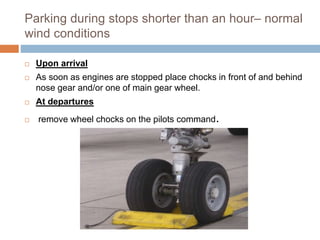
 Upon arrival
 As soon as engines are stopped place chocks in front of and behind
nose gear and/or one of main gear wheel.
 At departures
 remove wheel chocks on the pilots command.
Parking during stops shorter than an hour– unfavorable
wind conditions
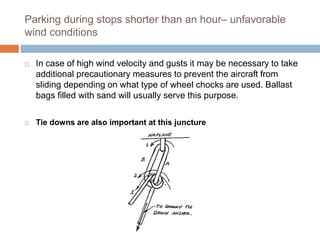
 In case of high wind velocity and gusts it may be necessary to take
additional precautionary measures to prevent the aircraft from
sliding depending on what type of wheel chocks are used. Ballast
bags filled with sand will usually serve this purpose.
 Tie downs are also important at this juncture
Parking during prolonged stops longer than 2
hours
 The aircraft must be parked with the nose against the wind, if possible.
 There must be ample space between the parked aircraft and the nearest runway or
taxi strip. Wheel chocks must be placed in front of and behind the main wheels.
 • If the weather conditions are unfavorable, e.g. strong wind or slippery ground,
special precaution must
 be taken.
 • Make sure that the wheel chocks available serve the purpose, otherwise additional
precautions must
 be taken to secure the aircraft properly. Ballast bags filled with sand can often be
successfully used if
 the ground is slippery.
 • Install covers, plugs and shields as determined by aircraft status and weather
conditions.
 • Equipment, stairs and ladders must be removed to a safe distance from the aircraft.
Aircraft left idle overnight
 Aircraft left idle overnight shall preferably be parked in an
illuminated area.
 Aircraft left parked at unattended areas of an airport or at
unmanned airports shall be sealed according to the Security
Manual.
 The final decision lies with the Commander/ pilot in charge.
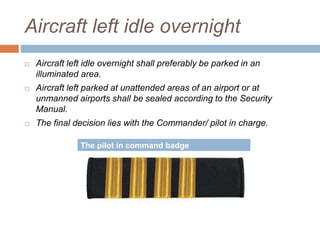
The pilot in command badge
General precautions against fire
 Smoking, use of open fire and any type of activity that can cause
sparks, are strictly forbidden near aircraft and in the fuelling area.
 Ground equipment should - as a general rule - not be positioned or
operated near aircraft and in the fuelling area.
 If, for specific reasons, electrical equipment, combustion engines
and burners
 Ground Staff should acquaint themselves with the method and
operation of the equipment also with the local fire procedures.
Ground Personnel Safety
Precautions
 Ground support equipment, when drive or operated on the apron, particularly in the
vicinity of an aircraft, must be operated with extreme care to avoid any hazard to
personnel and/or any damage to aircraft or load.
 Only adequately trained, qualified / authorized personnel should be permitted to
maneuver aircraft or operate equipment.
 Equipment should never move across the path of taxiing aircraft or
embarking/disembarking
 Passengers, Aircraft and pedestrians should always have the right –or-way.
 Apron equipment (where applicable) is to be positioned behind the equipment
restraint line with the parking Brakes applied prior to the arrival of the aircraft at the
parking position.
 Aircraft being moved from one point to another should be driven not faster than a
walking speed.
 Equipment when approaching or leaving an aircraft should not be driven faster than
walking speed.
 Safety shoes or boots should be worn to prevent foot injuries.
 Personnel working in noise-intensity areas, i.e. on the apron, maintenance lines. etc.,
shall wear approved hearing protection.
 Clothing/Reflective jackets appropriate to the weather conditions should be made
available to personnel
Continued …
 Personnel should keep clear of aircraft engine intake/exhaust areas
 In weather conditions aircraft doors should be closed and secured,
as appropriate
 Ground support equipment should be moved away from the aircraft
vicinity and secured.
 Vehicles MUST NOT be parked under the aircraft wing-trip fuel
vents.
 The ground area beneath exit doors should be kept clear of any
obstructions.
Aircraft marshalling by ground
personnel
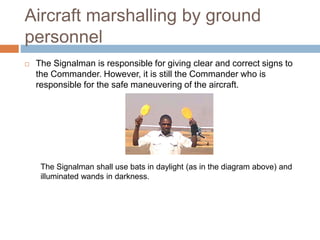
 The Signalman is responsible for giving clear and correct signs to
the Commander. However, it is still the Commander who is
responsible for the safe maneuvering of the aircraft.
The Signalman shall use bats in daylight (as in the diagram above) and
illuminated wands in darkness.
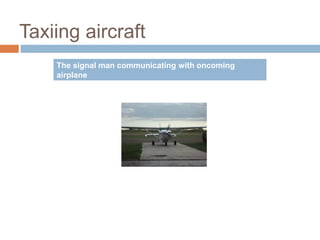
Taxiing aircraft
The signal man communicating with oncoming
airplane
Marshalling Procedure
 The Signalman is in continuous eye contact with the Commander
and shall give clear and distinct signals during the complete
arrival/departure procedure if necessary.
 A recommendable rhythm is 60 arm movements per minute.
 When marshalling has started, it shall continue until the aircraft has
come to a stop.
 The Signalman shall stay in the same position until the chocks are
in place.
 If the Commander does not receive clear and understandable
signals from the signalman he will STOP the aircraft.
 In case the Commander does not follow the directions given by the
signalman, the signalman shall give "STOP" sign.
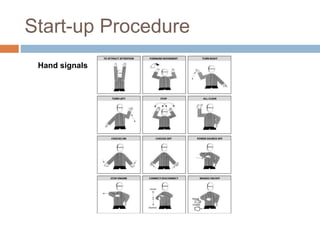
Start-up Procedure
Hand signals
Aircraft towing
 Never tow the airplane while any of its engines are operating.
 Never tow the airplane faster than a slow walk, avoid quick starts and
stops.
 Never tow the airplane near obstacles without having someone walking at
each wing.
 Never allow anyone to enter or leave the airplane while it is moving,
ensure that
 all the doors are closed.
 Never allow persons to stand in or near the path of the airplane.
 Never remove the chocks until ready to tow the airplane.
 Never tow the airplane if wind exceeds 30 knots.
 Pull wheel chocks and keep them readily available for use.
 Never tow without gear pins to be found behind Co-pilots seat.
Refueling and defueling
 General
• The Commander will order the amount of fuel required for the flight.
 Spilled fuel shall be removed or dried up immediately before flight
 When fuelling is in progress, only persons associated with the
handling of the aircraft have admittance to the fuelling area.
Cleaning of aircraft interior
 Aircraft cleaning must be finished and cleaning staff must have left
the aircraft before pilots and passengers are boarded.
 If passengers remain on board during short transit stops (during
charter flights) , cabin cleaning must be performed in such a way
that the passengers are not disturbed.
The End
 Prepared by Tranos Matezhure

GROUND HANDLING QUICK GUIDE

  • 1.
    GROUND HANDLING QUICKGUIDE Apron Handling Light planes
  • 2.
    Parking during stopsshorter than an hour– normal wind conditions  Upon arrival  As soon as engines are stopped place chocks in front of and behind nose gear and/or one of main gear wheel.  At departures  remove wheel chocks on the pilots command.
  • 3.
    Parking during stopsshorter than an hour– unfavorable wind conditions  In case of high wind velocity and gusts it may be necessary to take additional precautionary measures to prevent the aircraft from sliding depending on what type of wheel chocks are used. Ballast bags filled with sand will usually serve this purpose.  Tie downs are also important at this juncture
  • 4.
    Parking during prolongedstops longer than 2 hours  The aircraft must be parked with the nose against the wind, if possible.  There must be ample space between the parked aircraft and the nearest runway or taxi strip. Wheel chocks must be placed in front of and behind the main wheels.  • If the weather conditions are unfavorable, e.g. strong wind or slippery ground, special precaution must  be taken.  • Make sure that the wheel chocks available serve the purpose, otherwise additional precautions must  be taken to secure the aircraft properly. Ballast bags filled with sand can often be successfully used if  the ground is slippery.  • Install covers, plugs and shields as determined by aircraft status and weather conditions.  • Equipment, stairs and ladders must be removed to a safe distance from the aircraft.
  • 5.
    Aircraft left idleovernight  Aircraft left idle overnight shall preferably be parked in an illuminated area.  Aircraft left parked at unattended areas of an airport or at unmanned airports shall be sealed according to the Security Manual.  The final decision lies with the Commander/ pilot in charge. The pilot in command badge
  • 6.
    General precautions againstfire  Smoking, use of open fire and any type of activity that can cause sparks, are strictly forbidden near aircraft and in the fuelling area.  Ground equipment should - as a general rule - not be positioned or operated near aircraft and in the fuelling area.  If, for specific reasons, electrical equipment, combustion engines and burners  Ground Staff should acquaint themselves with the method and operation of the equipment also with the local fire procedures.
  • 7.
    Ground Personnel Safety Precautions Ground support equipment, when drive or operated on the apron, particularly in the vicinity of an aircraft, must be operated with extreme care to avoid any hazard to personnel and/or any damage to aircraft or load.  Only adequately trained, qualified / authorized personnel should be permitted to maneuver aircraft or operate equipment.  Equipment should never move across the path of taxiing aircraft or embarking/disembarking  Passengers, Aircraft and pedestrians should always have the right –or-way.  Apron equipment (where applicable) is to be positioned behind the equipment restraint line with the parking Brakes applied prior to the arrival of the aircraft at the parking position.  Aircraft being moved from one point to another should be driven not faster than a walking speed.  Equipment when approaching or leaving an aircraft should not be driven faster than walking speed.  Safety shoes or boots should be worn to prevent foot injuries.  Personnel working in noise-intensity areas, i.e. on the apron, maintenance lines. etc., shall wear approved hearing protection.  Clothing/Reflective jackets appropriate to the weather conditions should be made available to personnel
  • 8.
    Continued …  Personnelshould keep clear of aircraft engine intake/exhaust areas  In weather conditions aircraft doors should be closed and secured, as appropriate  Ground support equipment should be moved away from the aircraft vicinity and secured.  Vehicles MUST NOT be parked under the aircraft wing-trip fuel vents.  The ground area beneath exit doors should be kept clear of any obstructions.
  • 9.
    Aircraft marshalling byground personnel  The Signalman is responsible for giving clear and correct signs to the Commander. However, it is still the Commander who is responsible for the safe maneuvering of the aircraft. The Signalman shall use bats in daylight (as in the diagram above) and illuminated wands in darkness.
  • 10.
    Taxiing aircraft The signalman communicating with oncoming airplane
  • 11.
    Marshalling Procedure  TheSignalman is in continuous eye contact with the Commander and shall give clear and distinct signals during the complete arrival/departure procedure if necessary.  A recommendable rhythm is 60 arm movements per minute.  When marshalling has started, it shall continue until the aircraft has come to a stop.  The Signalman shall stay in the same position until the chocks are in place.  If the Commander does not receive clear and understandable signals from the signalman he will STOP the aircraft.  In case the Commander does not follow the directions given by the signalman, the signalman shall give "STOP" sign.
  • 12.
  • 13.
    Aircraft towing  Nevertow the airplane while any of its engines are operating.  Never tow the airplane faster than a slow walk, avoid quick starts and stops.  Never tow the airplane near obstacles without having someone walking at each wing.  Never allow anyone to enter or leave the airplane while it is moving, ensure that  all the doors are closed.  Never allow persons to stand in or near the path of the airplane.  Never remove the chocks until ready to tow the airplane.  Never tow the airplane if wind exceeds 30 knots.  Pull wheel chocks and keep them readily available for use.  Never tow without gear pins to be found behind Co-pilots seat.
  • 14.
    Refueling and defueling General • The Commander will order the amount of fuel required for the flight.  Spilled fuel shall be removed or dried up immediately before flight  When fuelling is in progress, only persons associated with the handling of the aircraft have admittance to the fuelling area.
  • 15.
    Cleaning of aircraftinterior  Aircraft cleaning must be finished and cleaning staff must have left the aircraft before pilots and passengers are boarded.  If passengers remain on board during short transit stops (during charter flights) , cabin cleaning must be performed in such a way that the passengers are not disturbed.
  • 16.
    The End  Preparedby Tranos Matezhure