


Happiness for when
you are depressed
When all the happiness lessons don’t
help…
Explore your
depression and find
out why you are
depressed.
Sometimes you can
do this alone with
reflection. Sometimes
it takes talking with a
good friend or family
member who loves
you and can listen
without judging or
advising.
If you avoid your lows,
you cut off your
emotions altogether.
It’s important to have your
feelings without judgment.
Judge your actions
(meaning it’s not okay to act
badly because you feel bad).
Do not judge your feelings,
thoughts or wishes.
Seek help from a
mental health
professional or your
doctor.
Sometimes there is a
physiological problem
that medicine can help
with. Most of the time it
helps to talk.
It’s important to seek
help from someone
you trust and whom
you feel cares about
you and does not
judge you.
Depression takes many forms:
insomnia
numbness
inability to focus
loss of enjoyment
weight loss
anxiety
sadness
guilt
fatigue
hopelessness
anger
little things get you down but the big things don’t
and other forms…
Often depression is
interrupted grief.
Often you have not fully
expressed feelings of loss for:
- something or someone who
is gone,
- something you never had,
- a lost hope,
- a broken dream,
- a hurt or harm done to you
or that you did to someone,
-something that is happening
that you don’t or didn’t want
to happen.
Give yourself the time
and space to
understand your
depression.
Turn towards your
feelings with curiosity
even though they are
really hard. Allow
yourself to express the
thoughts, feelings and
wishes that you may
find unacceptable to
express.
Everything
changes, even this.
If it feels like you
are the depression
and you will never
change, notice how
the depression
shifts in you. Allow
yourself to feel the
shades of the
depression and
notice yourself
allowing yourself to
feel those shades
of depression.
And remember- fully
feeling your lows
opens the door for
you to feel fully
happy.
To recap:
Feel your feelings without
judgment.
Understand what you are
grieving.
Talk with someone you trust.
Seek help (including medicine
from a doctor if your problem is
physiological).
Let’s look a little more at grief.
Denial
Anger
Bargaining
Depression
& then…acceptance.
Remember – feelings are not mutually
exclusive.
There are four phases of grief before
acceptance:
more here on grief You can have
all kinds of
conflicting
feelings at the
same time.
You may cycle
through the stage of
grief in minutes,
days, hours or years
& over and over
again.
Denial can take many forms
Disbelief. Forgetting.
Pretending it did not happen. Refusing to talk or think about it.
Acting super-strong. Huffing and puffing. Minimizing the event.
Diving into work.
Inebriation with drugs or alcohol, excessive TV or reading.
Rationalization, over-analyzing, intellectualizing or
philosophizing.
Blank parts of your life. Not remembering entire events or times.
…& other ways.
Anger can take many forms
Rage, quick to anger or a short fuse. Resentful feelings that won’t go
away. Blame.
Grumpy, discontent, unable to find pleasure in anything.
Self-hatred, not caring about self, destructive or risky actions
Critical of everything and unable to find satisfaction anywhere.
Strong feelings of being right or self-righteousness.
Self justification. Stubbornness. Refusal to listen to another
perspective.
Urgently solving the problem. Taking action to “fix” things.
& other ways…
Bargaining can take many forms
Wishing it was you who suffered instead.
Feeling like trading your life to make things right.
Making imaginary deals in the past of future.
Trying to make things right by actions.
Pleading, promising, threatening.
& other ways…
more here on grief
Grief & depression are not the same thing.
Depression is a stage of grief.
It can last for years, even
decades if the grief process is
interrupted.
Often it takes talking about the
reason for the grief.
Sometimes medication from a
doctor or therapist is helpful in
conjunction with talk-therapy
(rarely without talk-therapy).
Everyone has a few
experiences with
depression in their
lives.
When we fully
process our
depression, we open
the gates to fully
feeling our joy and
happiness again.
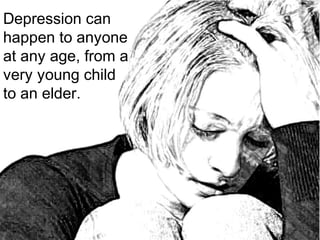
Depression can
happen to anyone
at any age, from a
very young child
to an elder.
Most of us learn lessons
on happiness that focus
on staying positive.
When you are
depressed, take time to
fully process so that you
can really feel good
again. Then you will be
ready for happiness
lessons.
Happiness for the Depressed

Happiness for the Depressed

  • 1.
  • 2.
    When all thehappiness lessons don’t help…
  • 3.
    Explore your depression andfind out why you are depressed. Sometimes you can do this alone with reflection. Sometimes it takes talking with a good friend or family member who loves you and can listen without judging or advising.
  • 4.
    If you avoidyour lows, you cut off your emotions altogether. It’s important to have your feelings without judgment. Judge your actions (meaning it’s not okay to act badly because you feel bad). Do not judge your feelings, thoughts or wishes.
  • 5.
    Seek help froma mental health professional or your doctor. Sometimes there is a physiological problem that medicine can help with. Most of the time it helps to talk. It’s important to seek help from someone you trust and whom you feel cares about you and does not judge you.
  • 6.
    Depression takes manyforms: insomnia numbness inability to focus loss of enjoyment weight loss anxiety sadness guilt fatigue hopelessness anger little things get you down but the big things don’t and other forms…
  • 7.
    Often depression is interruptedgrief. Often you have not fully expressed feelings of loss for: - something or someone who is gone, - something you never had, - a lost hope, - a broken dream, - a hurt or harm done to you or that you did to someone, -something that is happening that you don’t or didn’t want to happen.
  • 8.
    Give yourself thetime and space to understand your depression. Turn towards your feelings with curiosity even though they are really hard. Allow yourself to express the thoughts, feelings and wishes that you may find unacceptable to express.
  • 9.
    Everything changes, even this. Ifit feels like you are the depression and you will never change, notice how the depression shifts in you. Allow yourself to feel the shades of the depression and notice yourself allowing yourself to feel those shades of depression.
  • 10.
    And remember- fully feelingyour lows opens the door for you to feel fully happy. To recap: Feel your feelings without judgment. Understand what you are grieving. Talk with someone you trust. Seek help (including medicine from a doctor if your problem is physiological).
  • 11.
    Let’s look alittle more at grief. Denial Anger Bargaining Depression & then…acceptance. Remember – feelings are not mutually exclusive. There are four phases of grief before acceptance:
  • 12.
    more here ongrief You can have all kinds of conflicting feelings at the same time. You may cycle through the stage of grief in minutes, days, hours or years & over and over again.
  • 13.
    Denial can takemany forms Disbelief. Forgetting. Pretending it did not happen. Refusing to talk or think about it. Acting super-strong. Huffing and puffing. Minimizing the event. Diving into work. Inebriation with drugs or alcohol, excessive TV or reading. Rationalization, over-analyzing, intellectualizing or philosophizing. Blank parts of your life. Not remembering entire events or times. …& other ways.
  • 14.
    Anger can takemany forms Rage, quick to anger or a short fuse. Resentful feelings that won’t go away. Blame. Grumpy, discontent, unable to find pleasure in anything. Self-hatred, not caring about self, destructive or risky actions Critical of everything and unable to find satisfaction anywhere. Strong feelings of being right or self-righteousness. Self justification. Stubbornness. Refusal to listen to another perspective. Urgently solving the problem. Taking action to “fix” things. & other ways…
  • 15.
    Bargaining can takemany forms Wishing it was you who suffered instead. Feeling like trading your life to make things right. Making imaginary deals in the past of future. Trying to make things right by actions. Pleading, promising, threatening. & other ways…
  • 16.
    more here ongrief Grief & depression are not the same thing. Depression is a stage of grief. It can last for years, even decades if the grief process is interrupted. Often it takes talking about the reason for the grief. Sometimes medication from a doctor or therapist is helpful in conjunction with talk-therapy (rarely without talk-therapy).
  • 17.
    Everyone has afew experiences with depression in their lives. When we fully process our depression, we open the gates to fully feeling our joy and happiness again.
  • 18.
    Depression can happen toanyone at any age, from a very young child to an elder.
  • 19.
    Most of uslearn lessons on happiness that focus on staying positive. When you are depressed, take time to fully process so that you can really feel good again. Then you will be ready for happiness lessons.