Pathways to Happiness
for economic well-being
feeling
stress
about
finances
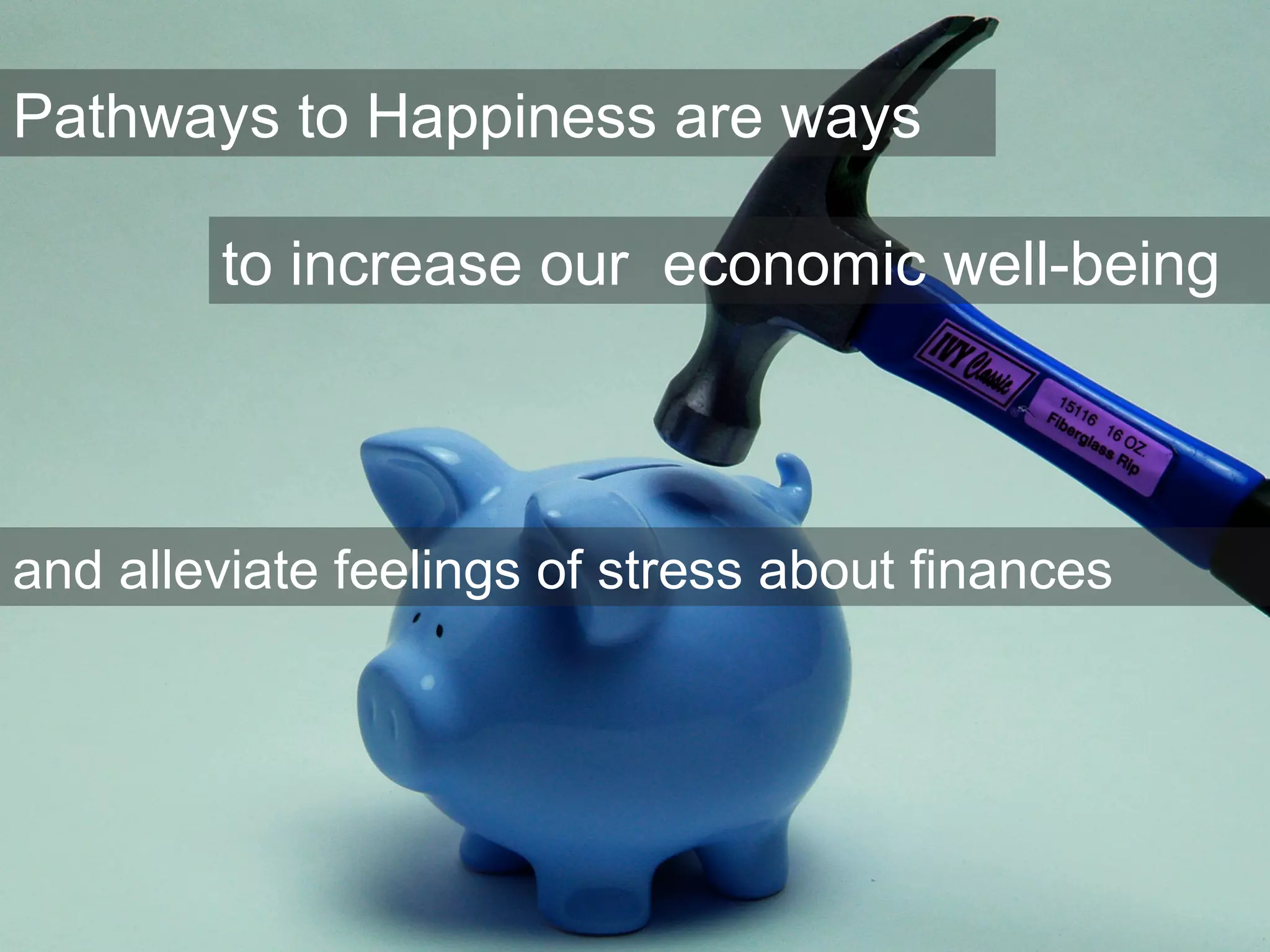
Pathways to Happiness are ways
to increase our economic well-being
and alleviate feelings of stress about finances
We are
doing
well in
the area
of
standard
of living
compared
to other
areas
100= happiest
Let’s look at one aspect of economic well-being:
feelings of stress about finances
A score of 40 and below means we have low levels of stress, and of 60 and above means we feel high levels of stress about our finances
Overall, we feel
moderate levels of
stress about our
finances
Courageous Policies
3 Courageous
policies
Tax incentives for savings for low and
middle income people
Personal savings leads to higher investment in long term
economic societal stability.
Healthy household savings leads to reduced personal stress.
Tax incentives available for low and middle income tax
payers to save are far and few.
Resources for Incentives for Savings
White paper
Better Ways to Promote Saving through the Tax System by Karen Dynan
https://www.brookings.edu/research/better-ways-to-promote-saving-through-the-tax-system/
Article
Brookings Institute’s 5 Ways Rethink the Federal Deficit –(see p. 36)
http://www.hamiltonproject.org/assets/legacy/files/downloads_and_links/THP_15WaysRethinkFedDeficit_Feb13_rev_1.pdf
College Debt forgiveness
Expand college load forgiveness beyond public service, teacher, the poor,
and only certain lenders.
Growing proportion of debt is from higher education.
Encourage enrollment in higher education and students to pursue careers
in areas they love and excel in.
Resources for College Debt Forgiveness
Programs
Article:
Five Countries that Know How to Handle Student Debt by Natalie Abrams and Cody Hounanian
https://www.thenation.com/article/five-countries-that-know-how-to-handle-student-debt/
Example Policies:
National Student Fee and Support Systems in European Higher Education – Eurydice
http://eacea.ec.europa.eu/education/eurydice/documents/facts_and_figures/fees_support.pdf
Student Debt in Selected Countries by E Del Rey
www.eenee.de/dms/EENEE/Analytical_Reports/EENEE_AR25.pdf
Limits on interest rates charged by credit
companies
Credit card companies can charge up 79.9% interest rates.
The poor and middle class suffer more than others from credit card debt, driven to
credit card debt from high housing and medical costs.
Enforcing transparency and easier-to-understand terms by credit card companies is
important, but does not ensure limits on interest rates.
The Credit Card Accountability, Responsibility and Disclosure Act of 2009, or CARD
Act, does not include a control on the interest rate credit card companies can
charge.
Resources for reducing and controlling credit
card interest rates
Usery Laws by State
http://www.loanback.com/category/usury-laws-by-state/
Article:
Proposed Limits on ATM Fees and Credit Card Interest Rates: Counter-Productive
Punishment That Goes Too Far by Robert E. Litan
https://www.brookings.edu/research/proposed-limits-on-atm-fees-and-credit-card-interest-rates-counter-productive-
punishment-that-goes-too-far/
What’s it going to take?
Buy Less, Spend more time on
activities that do not cost money
10% of earnings in savings as a norm
Adopting the goal of 10% of saving 10% of earnings.
Other policies in the Pathways to Happiness tool series
Campaign finance reform
Guaranteed basic income
Media reform
Massive public transportation
Local food reliance
Village living (cities and rural)
Multi-use zoning
Public spaces
Political festivals
Participatory governance
Participatory budgeting
Anti-corruption policies
Transparency in government
Compassion training for police
Community-based monitoring
Sousveillance
Vote holiday
Vacation laws
Family & Sick leave laws
Flex time and job share laws
Telecommuting policies
Babies at work policies
Intergenerational care
Department of Neighborhoods
Volunteer programs
Conservation Easements
Expansion of Parks
Adult & Kid Park Programs
Parent Support Program
Self-Discovery Programs
Job Placement Programs
Urban Growth Boundary Ordinances
Urban Stream Daylighting
Green and Living building ordinances
Solar and Green Energy Development
Same Sex Marriage Laws
Public child care
Age-friendly cities
Loneliness awareness campaign
Heritage Programs
Rural Colleges
Arts & Culture Policy
Lifelong Learning Programs
War on Adult illiteracy
Low Cost & Tuition Free College
Mindfulness practice in schools
Social justice awareness raising
Mental health –priority counseling
Part time worker choice protection
Compassionate Charter & Games
Ban on Advertising to Children
Elimination of Food Deserts
Zero Waste Restaurant and Supermarket
Limits on Rates Charged by Credit Card Companies
College Loan Forgiveness
Savings Tax Incentives for Low and Middle Income
We envision a world where all beings can thrive.
Can you envision it too?
happycounts.org

Pathways To Happiness for Reducing Stress About Finances

  • 1.
    Pathways to Happiness foreconomic well-being feeling stress about finances
  • 2.
    Pathways to Happinessare ways to increase our economic well-being and alleviate feelings of stress about finances
  • 3.
    We are doing well in thearea of standard of living compared to other areas 100= happiest
  • 4.
    Let’s look atone aspect of economic well-being: feelings of stress about finances
  • 5.
    A score of40 and below means we have low levels of stress, and of 60 and above means we feel high levels of stress about our finances Overall, we feel moderate levels of stress about our finances
  • 6.
  • 7.
    Tax incentives forsavings for low and middle income people Personal savings leads to higher investment in long term economic societal stability. Healthy household savings leads to reduced personal stress. Tax incentives available for low and middle income tax payers to save are far and few.
  • 8.
    Resources for Incentivesfor Savings White paper Better Ways to Promote Saving through the Tax System by Karen Dynan https://www.brookings.edu/research/better-ways-to-promote-saving-through-the-tax-system/ Article Brookings Institute’s 5 Ways Rethink the Federal Deficit –(see p. 36) http://www.hamiltonproject.org/assets/legacy/files/downloads_and_links/THP_15WaysRethinkFedDeficit_Feb13_rev_1.pdf
  • 9.
    College Debt forgiveness Expandcollege load forgiveness beyond public service, teacher, the poor, and only certain lenders. Growing proportion of debt is from higher education. Encourage enrollment in higher education and students to pursue careers in areas they love and excel in.
  • 10.
    Resources for CollegeDebt Forgiveness Programs Article: Five Countries that Know How to Handle Student Debt by Natalie Abrams and Cody Hounanian https://www.thenation.com/article/five-countries-that-know-how-to-handle-student-debt/ Example Policies: National Student Fee and Support Systems in European Higher Education – Eurydice http://eacea.ec.europa.eu/education/eurydice/documents/facts_and_figures/fees_support.pdf Student Debt in Selected Countries by E Del Rey www.eenee.de/dms/EENEE/Analytical_Reports/EENEE_AR25.pdf
  • 11.
    Limits on interestrates charged by credit companies Credit card companies can charge up 79.9% interest rates. The poor and middle class suffer more than others from credit card debt, driven to credit card debt from high housing and medical costs. Enforcing transparency and easier-to-understand terms by credit card companies is important, but does not ensure limits on interest rates. The Credit Card Accountability, Responsibility and Disclosure Act of 2009, or CARD Act, does not include a control on the interest rate credit card companies can charge.
  • 12.
    Resources for reducingand controlling credit card interest rates Usery Laws by State http://www.loanback.com/category/usury-laws-by-state/ Article: Proposed Limits on ATM Fees and Credit Card Interest Rates: Counter-Productive Punishment That Goes Too Far by Robert E. Litan https://www.brookings.edu/research/proposed-limits-on-atm-fees-and-credit-card-interest-rates-counter-productive- punishment-that-goes-too-far/
  • 13.
  • 14.
    Buy Less, Spendmore time on activities that do not cost money
  • 15.
    10% of earningsin savings as a norm Adopting the goal of 10% of saving 10% of earnings.
  • 16.
    Other policies inthe Pathways to Happiness tool series Campaign finance reform Guaranteed basic income Media reform Massive public transportation Local food reliance Village living (cities and rural) Multi-use zoning Public spaces Political festivals Participatory governance Participatory budgeting Anti-corruption policies Transparency in government Compassion training for police Community-based monitoring Sousveillance Vote holiday Vacation laws Family & Sick leave laws Flex time and job share laws Telecommuting policies Babies at work policies Intergenerational care Department of Neighborhoods Volunteer programs Conservation Easements Expansion of Parks Adult & Kid Park Programs Parent Support Program Self-Discovery Programs Job Placement Programs Urban Growth Boundary Ordinances Urban Stream Daylighting Green and Living building ordinances Solar and Green Energy Development Same Sex Marriage Laws Public child care Age-friendly cities Loneliness awareness campaign Heritage Programs Rural Colleges Arts & Culture Policy Lifelong Learning Programs War on Adult illiteracy Low Cost & Tuition Free College Mindfulness practice in schools Social justice awareness raising Mental health –priority counseling Part time worker choice protection Compassionate Charter & Games Ban on Advertising to Children Elimination of Food Deserts Zero Waste Restaurant and Supermarket Limits on Rates Charged by Credit Card Companies College Loan Forgiveness Savings Tax Incentives for Low and Middle Income
  • 17.
    We envision aworld where all beings can thrive. Can you envision it too? happycounts.org