Photosensitive Epilepsy
By Oshia Fen RajuTo Dr. Uma Saha
Photosensitive Epilepsy
People with photosensitive epilepsy have seizures
that are triggered by:
• Flashing lights
• Bold, contrasting visual patterns (such as
stripes or checks)
• Overexposure to video games
Anti-epileptic medicines are available to reduce
the risk of a seizure.
But people with photosensitive epilepsy should
take steps to minimize their exposure to seizure
triggers.
What Causes Epilepsy?
Epilepsy is a brain disorder that causes recurrent
seizures (more than two).A seizure is caused by
abnormal electrical activity in the brain.
Epilepsy may be the result of:
• Irregularity in the wiring of the brain
• Imbalance of neurotransmitters (chemical
messengers in the brain)
• Combination of these factors
• In photosensitive epilepsy, genetics also
plays a role
Epilepsy?
Children and adolescents ages 7 to 19 are more likely
to have photosensitive epilepsy. Girls are affected by
the condition more often than boys. But boys tend
to have more seizures.That's probably because they
spend more time playing video games, a common
seizure trigger.
What Causes Seizures in People With
Photosensitive Epilepsy?
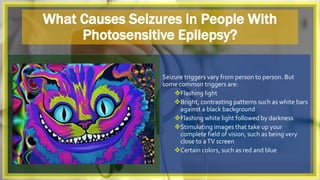
Seizure triggers vary from person to person. But
some common triggers are:
Flashing light
Bright, contrasting patterns such as white bars
against a black background
Flashing white light followed by darkness
Stimulating images that take up your
complete field of vision, such as being very
close to aTV screen
Certain colors, such as red and blue
What Causes Seizures in People With
Photosensitive Epilepsy?
Some specific examples of situations or events that
can trigger seizures in people with photosensitive
epilepsy are:
Nightclub and theater lights, including strobe
lights
TV screens and computer monitors
Flashing lights on police cars, fire trucks,
ambulances, and safety alarms
Visual effects in movies,TV shows, and video
games
Bold, striped wallpaper and fabric
Cameras with multiple flashes or many
cameras flashing at the same time
Fireworks
What Causes Seizures in People With
Photosensitive Epilepsy?
Also, people with photosensitive epilepsy may be at
increased risk for a seizure if they are:
Tired
Intoxicated
Play video games too long without a break
What Are the Symptoms of Photosensitive
Epilepsy?
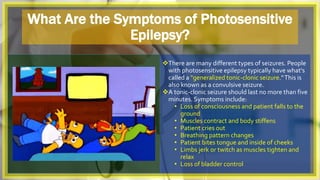
There are many different types of seizures. People
with photosensitive epilepsy typically have what's
called a "generalized tonic-clonic seizure."This is
also known as a convulsive seizure.
A tonic-clonic seizure should last no more than five
minutes. Symptoms include:
• Loss of consciousness and patient falls to the
ground
• Muscles contract and body stiffens
• Patient cries out
• Breathing pattern changes
• Patient bites tongue and inside of cheeks
• Limbs jerk or twitch as muscles tighten and
relax
• Loss of bladder control
What Are the Symptoms of Photosensitive
Epilepsy?
When the seizure ends, the muscles relax and the
person slowly regains consciousness.After the
seizure, the person may:
Be confused
Feel tired
Have memory loss for a short time
Have a headache
Feel sore
Recovery time varies. Some people are able to
return to normal activity soon after a seizure.
Others may need to rest.
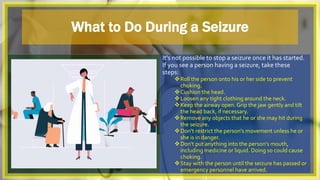
What to Do During a Seizure
It's not possible to stop a seizure once it has started.
If you see a person having a seizure, take these
steps:
Roll the person onto his or her side to prevent
choking.
Cushion the head.
Loosen any tight clothing around the neck.
Keep the airway open. Grip the jaw gently and tilt
the head back, if necessary.
Remove any objects that he or she may hit during
the seizure.
Don't restrict the person's movement unless he or
she is in danger.
Don't put anything into the person's mouth,
including medicine or liquid. Doing so could cause
choking.
Stay with the person until the seizure has passed or
emergency personnel have arrived.
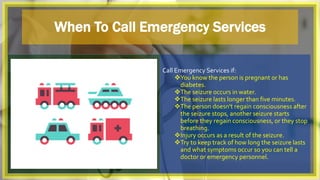
When To Call Emergency Services
Call Emergency Services if:
You know the person is pregnant or has
diabetes.
The seizure occurs in water.
The seizure lasts longer than five minutes.
The person doesn't regain consciousness after
the seizure stops, another seizure starts
before they regain consciousness, or they stop
breathing.
Injury occurs as a result of the seizure.
Try to keep track of how long the seizure lasts
and what symptoms occur so you can tell a
doctor or emergency personnel.
How Is Photosensitive Epilepsy Treated?
There is no cure for photosensitive epilepsy.
However, anti-epileptic medicines may reduce the
frequency of seizures.
People with photosensitive epilepsy can also
reduce the likelihood of having a seizure by
avoiding stimuli that could trigger a seizure. If you
are inadvertently exposed to a trigger, cover one
eye completely and turn your head away from the
source of disturbance.
How Is Photosensitive Epilepsy Treated?
If you or a loved one has a seizure, talk to your
doctor.Your doctor can perform an EEG
(electroencephalogram) to test for the
An EEG records brain activity and can detect
abnormalities in the brain's electrical system.
During the test, a flashing light test can show if
you or your child is photosensitive, without
triggering a seizure.
Living with photosensitive epilepsy can be
unnerving and frustrating.You never know when
you will have a seizure. But many people with
photosensitive epilepsy live productive and
relatively normal lives. Most people find that over
time, they have fewer seizures.
Thank You

Photosensitive epilepsy

  • 1.
    Photosensitive Epilepsy By OshiaFen RajuTo Dr. Uma Saha
  • 2.
    Photosensitive Epilepsy People withphotosensitive epilepsy have seizures that are triggered by: • Flashing lights • Bold, contrasting visual patterns (such as stripes or checks) • Overexposure to video games Anti-epileptic medicines are available to reduce the risk of a seizure. But people with photosensitive epilepsy should take steps to minimize their exposure to seizure triggers.
  • 3.
    What Causes Epilepsy? Epilepsyis a brain disorder that causes recurrent seizures (more than two).A seizure is caused by abnormal electrical activity in the brain. Epilepsy may be the result of: • Irregularity in the wiring of the brain • Imbalance of neurotransmitters (chemical messengers in the brain) • Combination of these factors • In photosensitive epilepsy, genetics also plays a role
  • 4.
    Epilepsy? Children and adolescentsages 7 to 19 are more likely to have photosensitive epilepsy. Girls are affected by the condition more often than boys. But boys tend to have more seizures.That's probably because they spend more time playing video games, a common seizure trigger.
  • 5.
    What Causes Seizuresin People With Photosensitive Epilepsy? Seizure triggers vary from person to person. But some common triggers are: Flashing light Bright, contrasting patterns such as white bars against a black background Flashing white light followed by darkness Stimulating images that take up your complete field of vision, such as being very close to aTV screen Certain colors, such as red and blue
  • 6.
    What Causes Seizuresin People With Photosensitive Epilepsy? Some specific examples of situations or events that can trigger seizures in people with photosensitive epilepsy are: Nightclub and theater lights, including strobe lights TV screens and computer monitors Flashing lights on police cars, fire trucks, ambulances, and safety alarms Visual effects in movies,TV shows, and video games Bold, striped wallpaper and fabric Cameras with multiple flashes or many cameras flashing at the same time Fireworks
  • 7.
    What Causes Seizuresin People With Photosensitive Epilepsy? Also, people with photosensitive epilepsy may be at increased risk for a seizure if they are: Tired Intoxicated Play video games too long without a break
  • 8.
    What Are theSymptoms of Photosensitive Epilepsy? There are many different types of seizures. People with photosensitive epilepsy typically have what's called a "generalized tonic-clonic seizure."This is also known as a convulsive seizure. A tonic-clonic seizure should last no more than five minutes. Symptoms include: • Loss of consciousness and patient falls to the ground • Muscles contract and body stiffens • Patient cries out • Breathing pattern changes • Patient bites tongue and inside of cheeks • Limbs jerk or twitch as muscles tighten and relax • Loss of bladder control
  • 9.
    What Are theSymptoms of Photosensitive Epilepsy? When the seizure ends, the muscles relax and the person slowly regains consciousness.After the seizure, the person may: Be confused Feel tired Have memory loss for a short time Have a headache Feel sore Recovery time varies. Some people are able to return to normal activity soon after a seizure. Others may need to rest.
  • 10.
    What to DoDuring a Seizure It's not possible to stop a seizure once it has started. If you see a person having a seizure, take these steps: Roll the person onto his or her side to prevent choking. Cushion the head. Loosen any tight clothing around the neck. Keep the airway open. Grip the jaw gently and tilt the head back, if necessary. Remove any objects that he or she may hit during the seizure. Don't restrict the person's movement unless he or she is in danger. Don't put anything into the person's mouth, including medicine or liquid. Doing so could cause choking. Stay with the person until the seizure has passed or emergency personnel have arrived.
  • 11.
    When To CallEmergency Services Call Emergency Services if: You know the person is pregnant or has diabetes. The seizure occurs in water. The seizure lasts longer than five minutes. The person doesn't regain consciousness after the seizure stops, another seizure starts before they regain consciousness, or they stop breathing. Injury occurs as a result of the seizure. Try to keep track of how long the seizure lasts and what symptoms occur so you can tell a doctor or emergency personnel.
  • 12.
    How Is PhotosensitiveEpilepsy Treated? There is no cure for photosensitive epilepsy. However, anti-epileptic medicines may reduce the frequency of seizures. People with photosensitive epilepsy can also reduce the likelihood of having a seizure by avoiding stimuli that could trigger a seizure. If you are inadvertently exposed to a trigger, cover one eye completely and turn your head away from the source of disturbance.
  • 13.
    How Is PhotosensitiveEpilepsy Treated? If you or a loved one has a seizure, talk to your doctor.Your doctor can perform an EEG (electroencephalogram) to test for the An EEG records brain activity and can detect abnormalities in the brain's electrical system. During the test, a flashing light test can show if you or your child is photosensitive, without triggering a seizure. Living with photosensitive epilepsy can be unnerving and frustrating.You never know when you will have a seizure. But many people with photosensitive epilepsy live productive and relatively normal lives. Most people find that over time, they have fewer seizures.
  • 14.