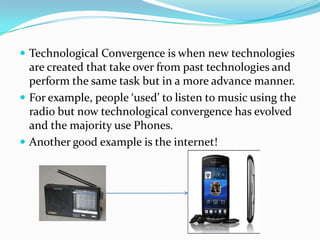
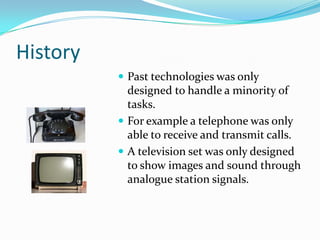
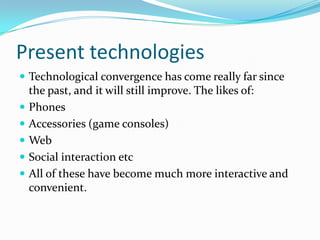
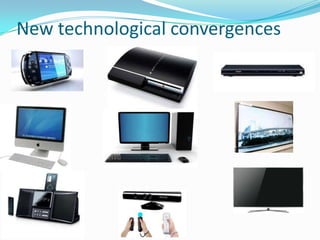
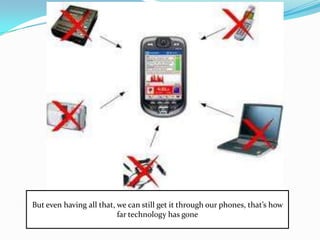
Technological convergence refers to the tendency of different technologies to perform similar functions. It occurs when new technologies develop that take over tasks previously handled by older technologies. Examples include phones replacing radios for listening to music and the internet allowing access to services once separate such as communication, entertainment, and social interaction. Convergence has advantages for both audiences and institutions but also disadvantages. It provides more convenient access to content and services for audiences while allowing institutions more opportunities for promotion and profit. However, convergence technologies can be expensive both for audiences to access and institutions to develop, potentially limiting their adoption and returns.