Applications of pulsed
power technologies

Dr. Sergey Korenev

1
2
Time scale










Milliseconds: 10-3 sec
Microseconds: 10-6 sec
Nanoseconds: 10-9 sec
Picoseconds: 10-12 sec
Femtoseconds: 10-15 sec
Attoseconds: 10-18 sec
Zeptoseconds: 10-21 sec
Ioktoseconds: 10-24 sec
3
Main directions of R&D for PPT

1. Production of max power in pulse.
2. Transfer to short pulses duration
(picoseconds, femtoseconds).

4
Main directions of R&D for PPT
It related to R&D of:
 new capacitor and induction energy storages;
 new switches.
Capacitors:
New materials: solid, liquid for receiving of max
electrical field.
Induction:
Superconductors: High Temperature
Superconductors.


5
Reminder
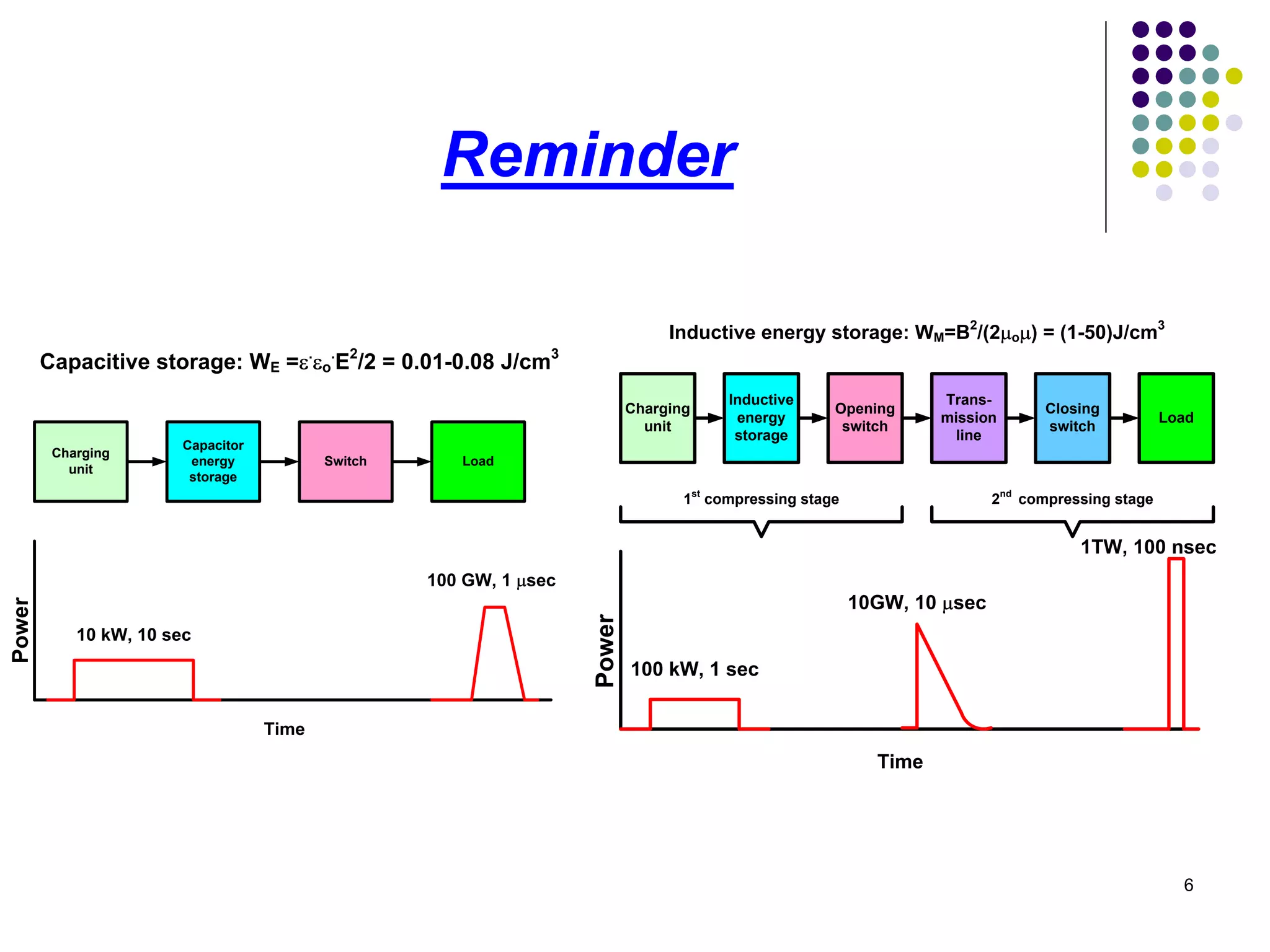
Inductive energy storage: WM=B2/(2o) = (1-50)J/cm3

Capacitive storage: WE =.o.E2/2 = 0.01-0.08 J/cm3
Charging
unit
Charging
unit

Capacitor
energy
storage

Switch

Inductive
energy
storage

Opening
switch

Transmission
line

Closing
switch

Load

Load

1st compressing stage

2nd compressing stage

1TW, 100 nsec
10GW, 10 sec

Power

Power

100 GW, 1 sec
10 kW, 10 sec

100 kW, 1 sec

Time

Time

6
Switch
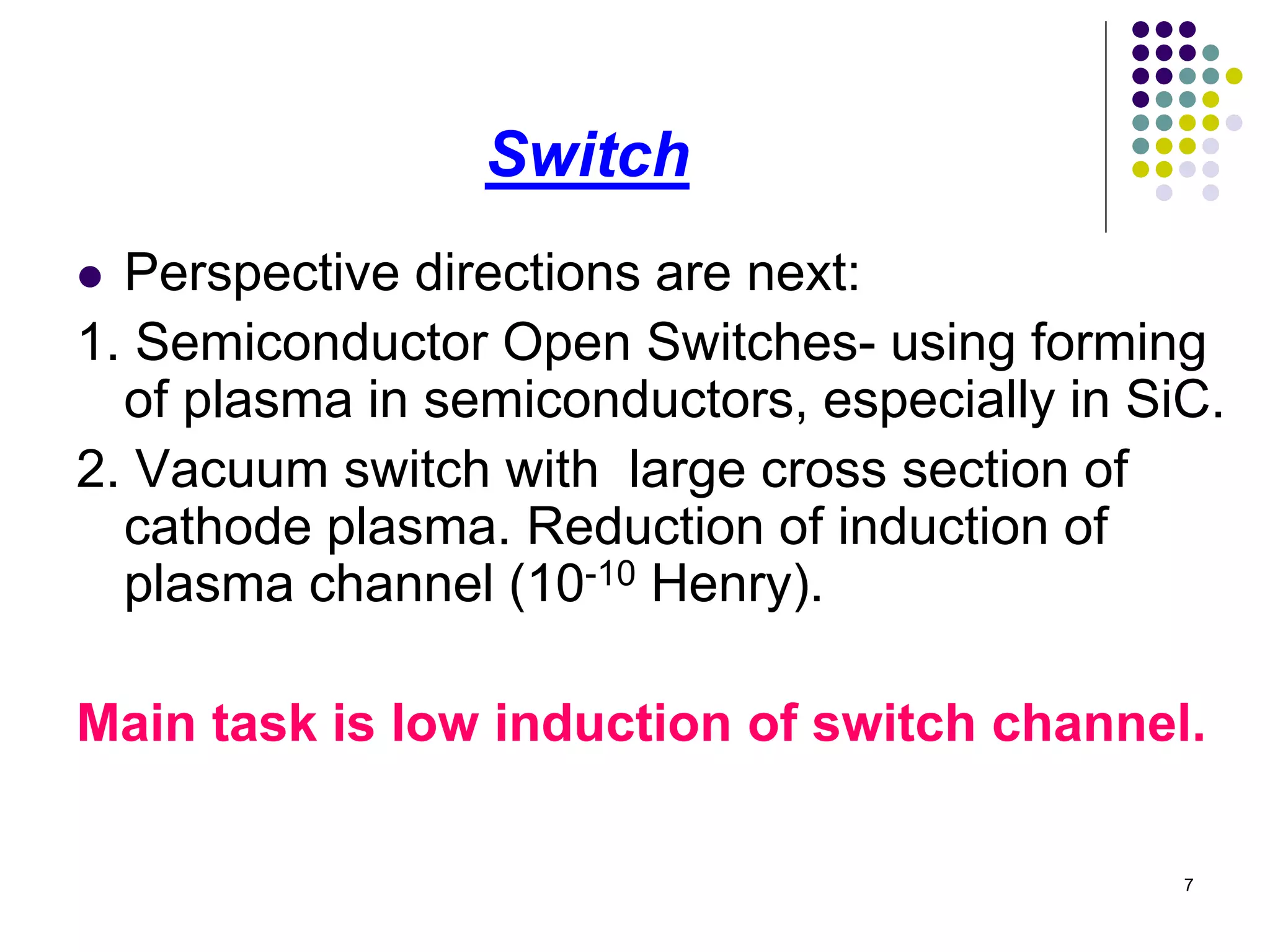
Perspective directions are next:
1. Semiconductor Open Switches- using forming
of plasma in semiconductors, especially in SiC.
2. Vacuum switch with large cross section of
cathode plasma. Reduction of induction of
plasma channel (10-10 Henry).


Main task is low induction of switch channel.
7
Industrial products








Marx generators with pulse duration from 20
ns to till 100 microseconds.
Induction generators with pulse duration from
1 ns to till 1,0 microseconds..
Fast switches ( 5-20 nsec rise time).
High current pulsed switches for converters.
Diagnostics: High voltage probes, current
transformers.
8
Radar Applications




UWB Radars
UWB Ground Penetration Radars
UWB Electromagnetic Influence Systems –
ECM

9
Conclusion


It is short introduction to main applications of
Pulsed Power Technologies.

10

Applications of pulsed power

  • 1.
    Applications of pulsed powertechnologies Dr. Sergey Korenev 1
  • 2.
  • 3.
    Time scale         Milliseconds: 10-3sec Microseconds: 10-6 sec Nanoseconds: 10-9 sec Picoseconds: 10-12 sec Femtoseconds: 10-15 sec Attoseconds: 10-18 sec Zeptoseconds: 10-21 sec Ioktoseconds: 10-24 sec 3
  • 4.
    Main directions ofR&D for PPT 1. Production of max power in pulse. 2. Transfer to short pulses duration (picoseconds, femtoseconds). 4
  • 5.
    Main directions ofR&D for PPT It related to R&D of:  new capacitor and induction energy storages;  new switches. Capacitors: New materials: solid, liquid for receiving of max electrical field. Induction: Superconductors: High Temperature Superconductors.  5
  • 6.
    Reminder Inductive energy storage:WM=B2/(2o) = (1-50)J/cm3 Capacitive storage: WE =.o.E2/2 = 0.01-0.08 J/cm3 Charging unit Charging unit Capacitor energy storage Switch Inductive energy storage Opening switch Transmission line Closing switch Load Load 1st compressing stage 2nd compressing stage 1TW, 100 nsec 10GW, 10 sec Power Power 100 GW, 1 sec 10 kW, 10 sec 100 kW, 1 sec Time Time 6
  • 7.
    Switch Perspective directions arenext: 1. Semiconductor Open Switches- using forming of plasma in semiconductors, especially in SiC. 2. Vacuum switch with large cross section of cathode plasma. Reduction of induction of plasma channel (10-10 Henry).  Main task is low induction of switch channel. 7
  • 8.
    Industrial products      Marx generatorswith pulse duration from 20 ns to till 100 microseconds. Induction generators with pulse duration from 1 ns to till 1,0 microseconds.. Fast switches ( 5-20 nsec rise time). High current pulsed switches for converters. Diagnostics: High voltage probes, current transformers. 8
  • 9.
    Radar Applications    UWB Radars UWBGround Penetration Radars UWB Electromagnetic Influence Systems – ECM 9
  • 10.
    Conclusion  It is shortintroduction to main applications of Pulsed Power Technologies. 10