Total Employee
 Involvement
Total Employee Involvement (TEI)

   Total employee involvement is a system for direct
participation of employees to organizational success, by
letting them take responsibilities. It enables everyone
deeply involved, using own brain power, in problem
solving, learning, continuous improvement activities, &
systematic search for opportunities.
TQM principles & strategies pertaining to
    employee involvement are:

•   Motivation
•   Team work
•   Training & mentoring
•   Recognition & Rewards
•   Performance appraisal & feed back
•   Empowerment
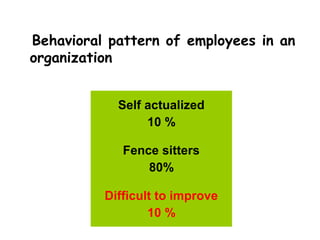
Behavioral pattern of employees in an
organization


            Self actualized
                 10 %

             Fence sitters
                 80%

          Difficult to improve
                  10 %
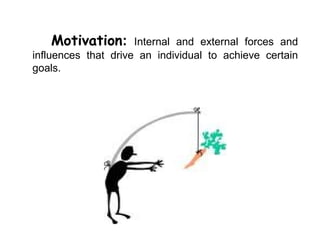
Motivation:       Internal and external forces and
influences that drive an individual to achieve certain
goals.
Motivation theories of individual employees:


    Theory ‘X’: (Sigmund Frend)
     This theory assumes that the employees can not be trusted
    and they have to be supervised all the time. Theory X
    characterizes employees as follow:
o   Avoid work
o   No ambition
o   No initiative
o   Do not take responsibilities
o   Needs security
Theory ‘Y’: (Douglas Mc Gregor)
        According to this theory employees seek freedom to do
    difficult and challenging jobs, all by themselves. Theory Y
    characterizes employees as follow:
o   Want to learn
o   Work is a natural activity
o   Have self discipline
o   Develop themselves
o   Have self confidence
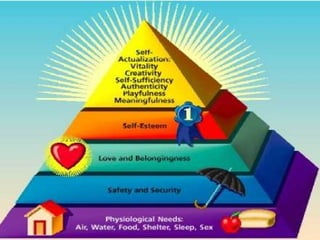
Theory ‘Z’: (Abraham Maslow)
     Abraham Maslow believes that good qualities are inherent in
    people atleast at birth, although later on they are gradually
    lost. He believes that five basic human needs that motivate the
    employees are:

o   Self actualization needs
o   Esteem needs
o   Love needs
o   Safety needs
o   Physiological needs
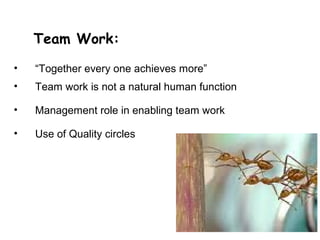
Team Work:
•   “Together every one achieves more”
•   Team work is not a natural human function

•   Management role in enabling team work

•   Use of Quality circles
Training & Development:
•    Necessity for orientation training:
    Training enables employees in understanding;
o    Objectives of the organization
o    His role
o    His responsibilities
o    His authority
o    Familiarity in understanding nature of job
•    Experienced recruits need more orientation
•    Training is not a one time activity
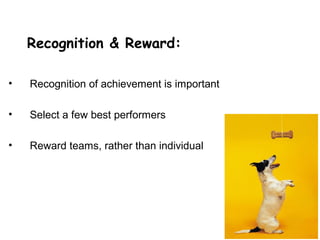
Recognition & Reward:

•   Recognition of achievement is important

•   Select a few best performers

•   Reward teams, rather than individual
Performance Appraisal:
•   Used for the development of employees
•   Each dept. head should prepare a action plan for each
    individual for whole year.
•   Performance of each employee should be reviewed on
    quarterly basis & reports submitted to mgnt.
•   Appraisals are used for several purposes as
o   Promotion
o   Granting of additional increments
o   Transfers
o   Training
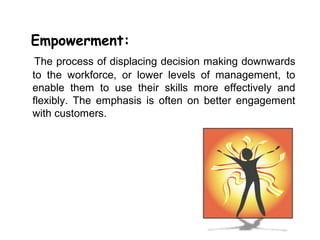
Empowerment:
 The process of displacing decision making downwards
to the workforce, or lower levels of management, to
enable them to use their skills more effectively and
flexibly. The emphasis is often on better engagement
with customers.

Total employee involvement

  • 1.
  • 2.
    Total Employee Involvement(TEI) Total employee involvement is a system for direct participation of employees to organizational success, by letting them take responsibilities. It enables everyone deeply involved, using own brain power, in problem solving, learning, continuous improvement activities, & systematic search for opportunities.
  • 3.
    TQM principles &strategies pertaining to employee involvement are: • Motivation • Team work • Training & mentoring • Recognition & Rewards • Performance appraisal & feed back • Empowerment
  • 4.
    Behavioral pattern ofemployees in an organization Self actualized 10 % Fence sitters 80% Difficult to improve 10 %
  • 5.
    Motivation: Internal and external forces and influences that drive an individual to achieve certain goals.
  • 6.
    Motivation theories ofindividual employees: Theory ‘X’: (Sigmund Frend) This theory assumes that the employees can not be trusted and they have to be supervised all the time. Theory X characterizes employees as follow: o Avoid work o No ambition o No initiative o Do not take responsibilities o Needs security
  • 7.
    Theory ‘Y’: (DouglasMc Gregor) According to this theory employees seek freedom to do difficult and challenging jobs, all by themselves. Theory Y characterizes employees as follow: o Want to learn o Work is a natural activity o Have self discipline o Develop themselves o Have self confidence
  • 8.
    Theory ‘Z’: (AbrahamMaslow) Abraham Maslow believes that good qualities are inherent in people atleast at birth, although later on they are gradually lost. He believes that five basic human needs that motivate the employees are: o Self actualization needs o Esteem needs o Love needs o Safety needs o Physiological needs
  • 10.
    Team Work: • “Together every one achieves more” • Team work is not a natural human function • Management role in enabling team work • Use of Quality circles
  • 11.
    Training & Development: • Necessity for orientation training: Training enables employees in understanding; o Objectives of the organization o His role o His responsibilities o His authority o Familiarity in understanding nature of job • Experienced recruits need more orientation • Training is not a one time activity
  • 12.
    Recognition & Reward: • Recognition of achievement is important • Select a few best performers • Reward teams, rather than individual
  • 13.
    Performance Appraisal: • Used for the development of employees • Each dept. head should prepare a action plan for each individual for whole year. • Performance of each employee should be reviewed on quarterly basis & reports submitted to mgnt. • Appraisals are used for several purposes as o Promotion o Granting of additional increments o Transfers o Training
  • 14.
    Empowerment: The processof displacing decision making downwards to the workforce, or lower levels of management, to enable them to use their skills more effectively and flexibly. The emphasis is often on better engagement with customers.

Editor's Notes

  • #9 Self actualized needs: unlike other needs these needs will never be fully satisfied. It is all about quest of reaching ones full potential. Be what ever u want to be!