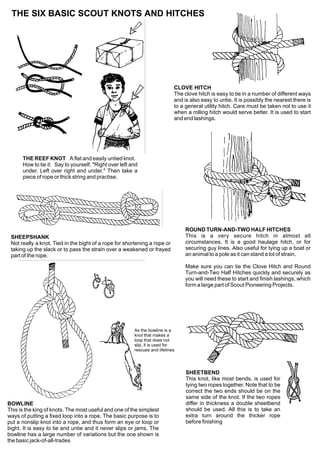
THE SIX BASIC SCOUT KNOTS AND HITCHES


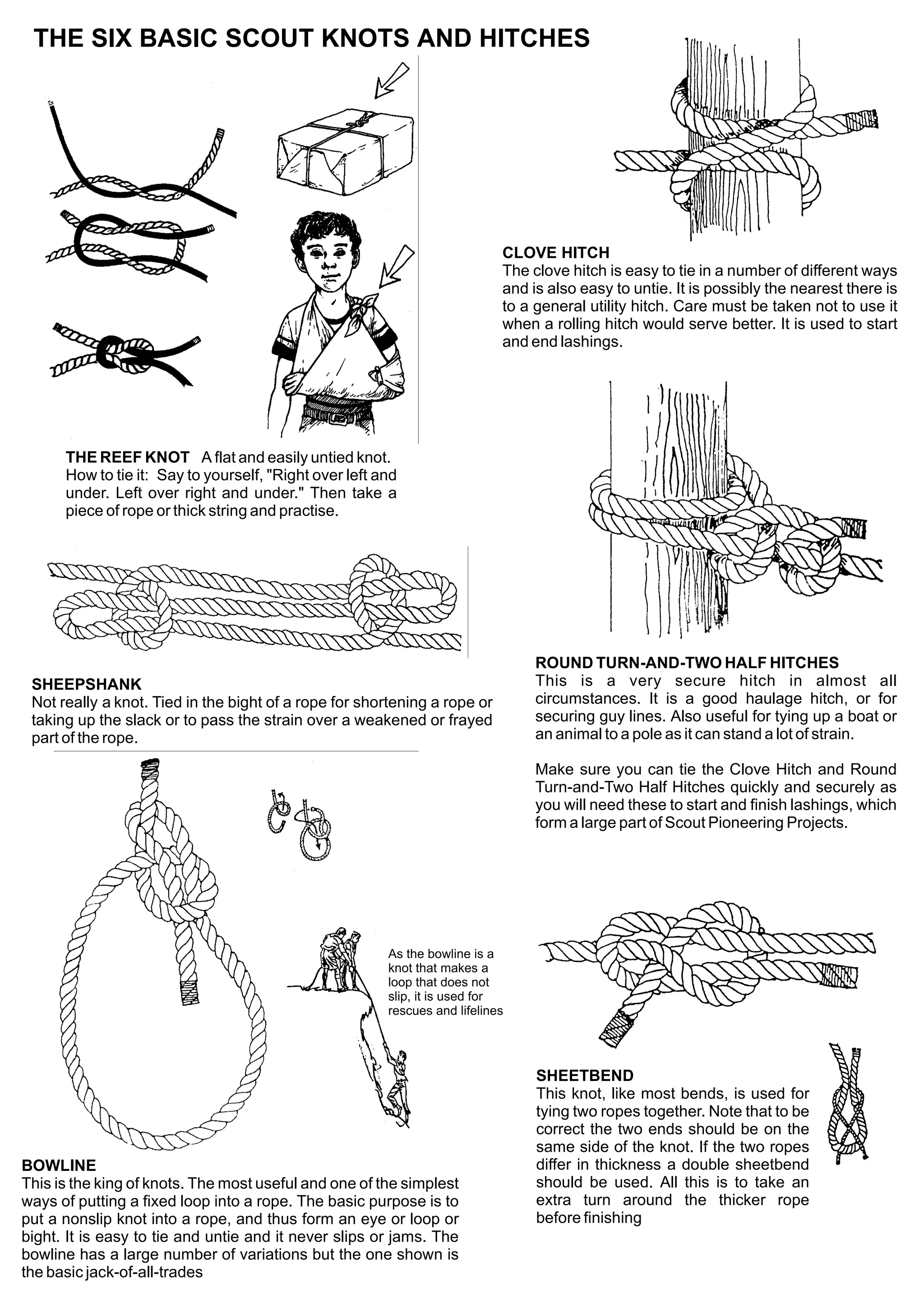
                                                                            CLOVE HITCH
                                                                            The clove hitch is easy to tie in a number of different ways
                                                                            and is also easy to untie. It is possibly the nearest there is
                                                                            to a general utility hitch. Care must be taken not to use it
                                                                            when a rolling hitch would serve better. It is used to start
                                                                            and end lashings.


      THE REEF KNOT A flat and easily untied knot.
      How to tie it: Say to yourself, "Right over left and
      under. Left over right and under." Then take a
      piece of rope or thick string and practise.


                                                                                 ROUND TURN-AND-TWO HALF HITCHES
 SHEEPSHANK                                                                      This is a very secure hitch in almost all
 Not really a knot. Tied in the bight of a rope for shortening a rope or         circumstances. It is a good haulage hitch, or for
 taking up the slack or to pass the strain over a weakened or frayed             securing guy lines. Also useful for tying up a boat or
 part of the rope.                                                               an animal to a pole as it can stand a lot of strain.

                                                                                 Make sure you can tie the Clove Hitch and Round
                                                                                 Turn-and-Two Half Hitches quickly and securely as
                                                                                 you will need these to start and finish lashings, which
                                                                                 form a large part of Scout Pioneering Projects.


                                                        As the bowline is a
                                                        knot that makes a
                                                        loop that does not
                                                        slip, it is used for
                                                        rescues and lifelines


                                                                                 SHEETBEND
                                                                                 This knot, like most bends, is used for
                                                                                 tying two ropes together. Note that to be
                                                                                 correct the two ends should be on the
                                                                                 same side of the knot. If the two ropes
BOWLINE                                                                          differ in thickness a double sheetbend
This is the king of knots. The most useful and one of the simplest               should be used. All this is to take an
ways of putting a fixed loop into a rope. The basic purpose is to                extra turn around the thicker rope
put a nonslip knot into a rope, and thus form an eye or loop or                  before finishing
bight. It is easy to tie and untie and it never slips or jams. The
bowline has a large number of variations but the one shown is
the basic jack-of-all-trades

Six basic knots for Scout

  • 1.
    THE SIX BASICSCOUT KNOTS AND HITCHES CLOVE HITCH The clove hitch is easy to tie in a number of different ways and is also easy to untie. It is possibly the nearest there is to a general utility hitch. Care must be taken not to use it when a rolling hitch would serve better. It is used to start and end lashings. THE REEF KNOT A flat and easily untied knot. How to tie it: Say to yourself, "Right over left and under. Left over right and under." Then take a piece of rope or thick string and practise. ROUND TURN-AND-TWO HALF HITCHES SHEEPSHANK This is a very secure hitch in almost all Not really a knot. Tied in the bight of a rope for shortening a rope or circumstances. It is a good haulage hitch, or for taking up the slack or to pass the strain over a weakened or frayed securing guy lines. Also useful for tying up a boat or part of the rope. an animal to a pole as it can stand a lot of strain. Make sure you can tie the Clove Hitch and Round Turn-and-Two Half Hitches quickly and securely as you will need these to start and finish lashings, which form a large part of Scout Pioneering Projects. As the bowline is a knot that makes a loop that does not slip, it is used for rescues and lifelines SHEETBEND This knot, like most bends, is used for tying two ropes together. Note that to be correct the two ends should be on the same side of the knot. If the two ropes BOWLINE differ in thickness a double sheetbend This is the king of knots. The most useful and one of the simplest should be used. All this is to take an ways of putting a fixed loop into a rope. The basic purpose is to extra turn around the thicker rope put a nonslip knot into a rope, and thus form an eye or loop or before finishing bight. It is easy to tie and untie and it never slips or jams. The bowline has a large number of variations but the one shown is the basic jack-of-all-trades