RISK MANAGEMENT
“Mitigating the Risk in the Corporate World
for Global Competence.”
Michael A. Alonzo
A presentation for MSEUF BSBA Class Seminar
We all know what “risk” means right?
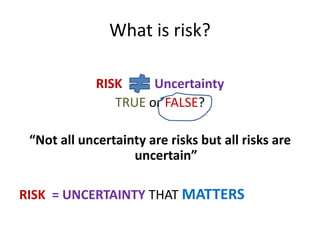
What is risk?
RISK Uncertainty
TRUE or FALSE?
“Not all uncertainty are risks but all risks are
uncertain”
RISK = UNCERTAINTY THAT MATTERS
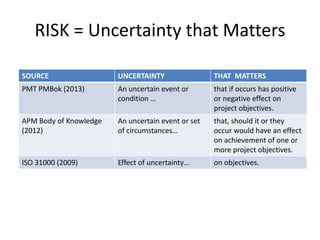
RISK = Uncertainty that Matters
SOURCE UNCERTAINTY THAT MATTERS
PMT PMBok (2013) An uncertain event or
condition …
that if occurs has positive
or negative effect on
project objectives.
APM Body of Knowledge
(2012)
An uncertain event or set
of circumstances…
that, should it or they
occur would have an effect
on achievement of one or
more project objectives.
ISO 31000 (2009) Effect of uncertainty… on objectives.
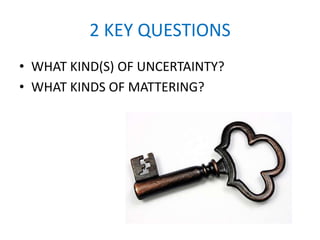
2 KEY QUESTIONS
• WHAT KIND(S) OF UNCERTAINTY?
• WHAT KINDS OF MATTERING?
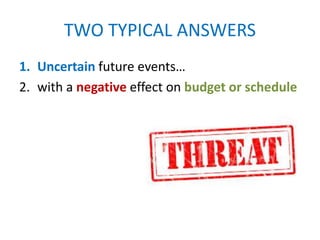
TWO TYPICAL ANSWERS
1. Uncertain future events…
2. with a negative effect on budget or schedule
Is that all?
Risk in projects is much more than THREATS,
i.e. bad uncertain future events that, if they
happen, would have a negative effect on the
project budget and/or schedule.
Any uncertainty that matters is a risk that
needs to be identified, assessed and managed
What are we missing?
• RISK = uncertainty that matters
Different types of uncertainty
- Not just uncertain future events
Different types of effect
-not just threats to time and cost
WHICH IMPACTS MATTER?
Opportunities as well as Threats
• Both need managing proactively
• Managing risk means…
– Not only preventing potential problems
• “stop things going wrong”
– …but also finding potential benefits
• “making things go right”
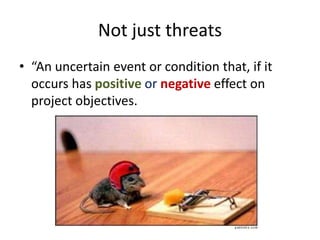
Not just threats
• “An uncertain event or condition that, if it
occurs has positive or negative effect on
project objectives.
Which objectives?
Not just time and cost
Any objective can be affected by risk (positive
or negative):
Technical Performance Market share
Health and Safety Reputation
Regulatory Compliance Customer satisfaction
Profitability/margin
Risk = uncertainty that matters
• On the “mattering” side:
Positive as well as negative impacts
– Opportunities as well as threats
All project objectives are in scope
– Not just time and cost
What kind of Uncertainty?
Not just uncertain future events:
• “An uncertain event or condition that, if occurs,
has a positive or negative effect on project’s
objectives” -PMBOK
• An uncertain event or set of circumstances that,
should it or they occur, will have an effect on
achievement of one or more project objectives” -
APM
What kind of Uncertainty?
Any uncertainty that matters, including:
1. Event Risk (Stochastic)
2. Variability Risk (Aleatoric)
3. Ambiguity Risk (Epistemic)
4. Emergent Risk (Ontological)
If it matters,
it must be managed.
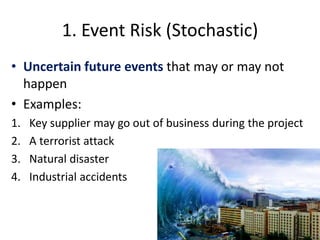
1. Event Risk (Stochastic)
• Uncertain future events that may or may not
happen
• Examples:
1. Key supplier may go out of business during the project
2. A terrorist attack
3. Natural disaster
4. Industrial accidents
2. Variability Risk (Aleatoric)
• Certain future events with variable characteristics
 Examples:
– Productivity may be above or below target
– Cost of raw materials may rise of fall
– Unseasonal weather condition may occur
3. Ambiguity Risk (epistemic)
• Certain future events with ambiguous characteristics
 Example:
– Competitors reaction to a new product launch
– Client demands use of new technology outside company’s
experience
– New regulations are expected but scope of change is
unknown
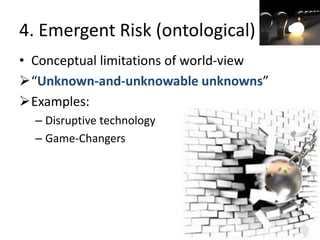
4. Emergent Risk (ontological)
• Conceptual limitations of world-view
“Unknown-and-unknowable unknowns”
Examples:
– Disruptive technology
– Game-Changers
DISRUPTIVE TECHNOLOGIES
Sometimes a technology and resulting business
innovation comes along to radically change the
business landscape and environment.
Why manage risks?
Phases of Risk Management
• Risk Management can be broken down into four
main elements
Risk Identification
-brainstorming, interviews, research, observation etc
Risk Assessment
– Qualitative or Quantitative
Risk Response
– using risk information to make decision
Risk Monitoring/Control
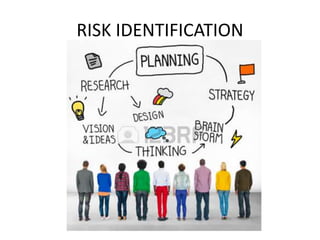
RISK IDENTIFICATION
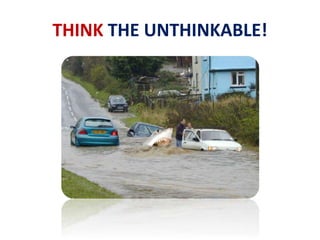
THINK THE UNTHINKABLE!
RISK ASSESSMENT
• Qualitative
RESPONSE to
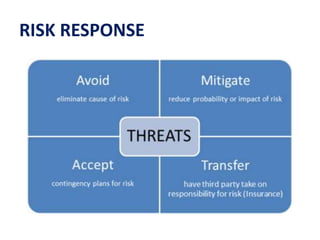
RISK RESPONSE
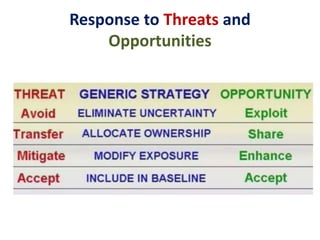
Response to Threats and
Opportunities
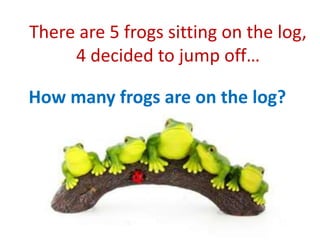
How many frogs are on the log?
There are 5 frogs sitting on the log,
4 decided to jump off…
RISK MONITORING/CONTROL
• Implement the strategy
• Adjust strategy
• Periodic risk review
• Learn from the past actions
• Learn to handle risk safely

Risk management

  • 1.
    RISK MANAGEMENT “Mitigating theRisk in the Corporate World for Global Competence.” Michael A. Alonzo A presentation for MSEUF BSBA Class Seminar
  • 2.
    We all knowwhat “risk” means right?
  • 3.
    What is risk? RISKUncertainty TRUE or FALSE? “Not all uncertainty are risks but all risks are uncertain” RISK = UNCERTAINTY THAT MATTERS
  • 4.
    RISK = Uncertaintythat Matters SOURCE UNCERTAINTY THAT MATTERS PMT PMBok (2013) An uncertain event or condition … that if occurs has positive or negative effect on project objectives. APM Body of Knowledge (2012) An uncertain event or set of circumstances… that, should it or they occur would have an effect on achievement of one or more project objectives. ISO 31000 (2009) Effect of uncertainty… on objectives.
  • 5.
    2 KEY QUESTIONS •WHAT KIND(S) OF UNCERTAINTY? • WHAT KINDS OF MATTERING?
  • 6.
    TWO TYPICAL ANSWERS 1.Uncertain future events… 2. with a negative effect on budget or schedule
  • 7.
    Is that all? Riskin projects is much more than THREATS, i.e. bad uncertain future events that, if they happen, would have a negative effect on the project budget and/or schedule. Any uncertainty that matters is a risk that needs to be identified, assessed and managed
  • 8.
    What are wemissing? • RISK = uncertainty that matters Different types of uncertainty - Not just uncertain future events Different types of effect -not just threats to time and cost
  • 9.
    WHICH IMPACTS MATTER? Opportunitiesas well as Threats • Both need managing proactively • Managing risk means… – Not only preventing potential problems • “stop things going wrong” – …but also finding potential benefits • “making things go right”
  • 10.
    Not just threats •“An uncertain event or condition that, if it occurs has positive or negative effect on project objectives.
  • 11.
    Which objectives? Not justtime and cost Any objective can be affected by risk (positive or negative): Technical Performance Market share Health and Safety Reputation Regulatory Compliance Customer satisfaction Profitability/margin
  • 12.
    Risk = uncertaintythat matters • On the “mattering” side: Positive as well as negative impacts – Opportunities as well as threats All project objectives are in scope – Not just time and cost
  • 13.
    What kind ofUncertainty? Not just uncertain future events: • “An uncertain event or condition that, if occurs, has a positive or negative effect on project’s objectives” -PMBOK • An uncertain event or set of circumstances that, should it or they occur, will have an effect on achievement of one or more project objectives” - APM
  • 14.
    What kind ofUncertainty? Any uncertainty that matters, including: 1. Event Risk (Stochastic) 2. Variability Risk (Aleatoric) 3. Ambiguity Risk (Epistemic) 4. Emergent Risk (Ontological) If it matters, it must be managed.
  • 15.
    1. Event Risk(Stochastic) • Uncertain future events that may or may not happen • Examples: 1. Key supplier may go out of business during the project 2. A terrorist attack 3. Natural disaster 4. Industrial accidents
  • 16.
    2. Variability Risk(Aleatoric) • Certain future events with variable characteristics  Examples: – Productivity may be above or below target – Cost of raw materials may rise of fall – Unseasonal weather condition may occur
  • 17.
    3. Ambiguity Risk(epistemic) • Certain future events with ambiguous characteristics  Example: – Competitors reaction to a new product launch – Client demands use of new technology outside company’s experience – New regulations are expected but scope of change is unknown
  • 18.
    4. Emergent Risk(ontological) • Conceptual limitations of world-view “Unknown-and-unknowable unknowns” Examples: – Disruptive technology – Game-Changers
  • 19.
    DISRUPTIVE TECHNOLOGIES Sometimes atechnology and resulting business innovation comes along to radically change the business landscape and environment.
  • 20.
  • 21.
    Phases of RiskManagement • Risk Management can be broken down into four main elements Risk Identification -brainstorming, interviews, research, observation etc Risk Assessment – Qualitative or Quantitative Risk Response – using risk information to make decision Risk Monitoring/Control
  • 22.
  • 23.
  • 24.
  • 25.
  • 26.
  • 27.
    Response to Threatsand Opportunities
  • 28.
    How many frogsare on the log? There are 5 frogs sitting on the log, 4 decided to jump off…
  • 29.
    RISK MONITORING/CONTROL • Implementthe strategy • Adjust strategy • Periodic risk review • Learn from the past actions • Learn to handle risk safely