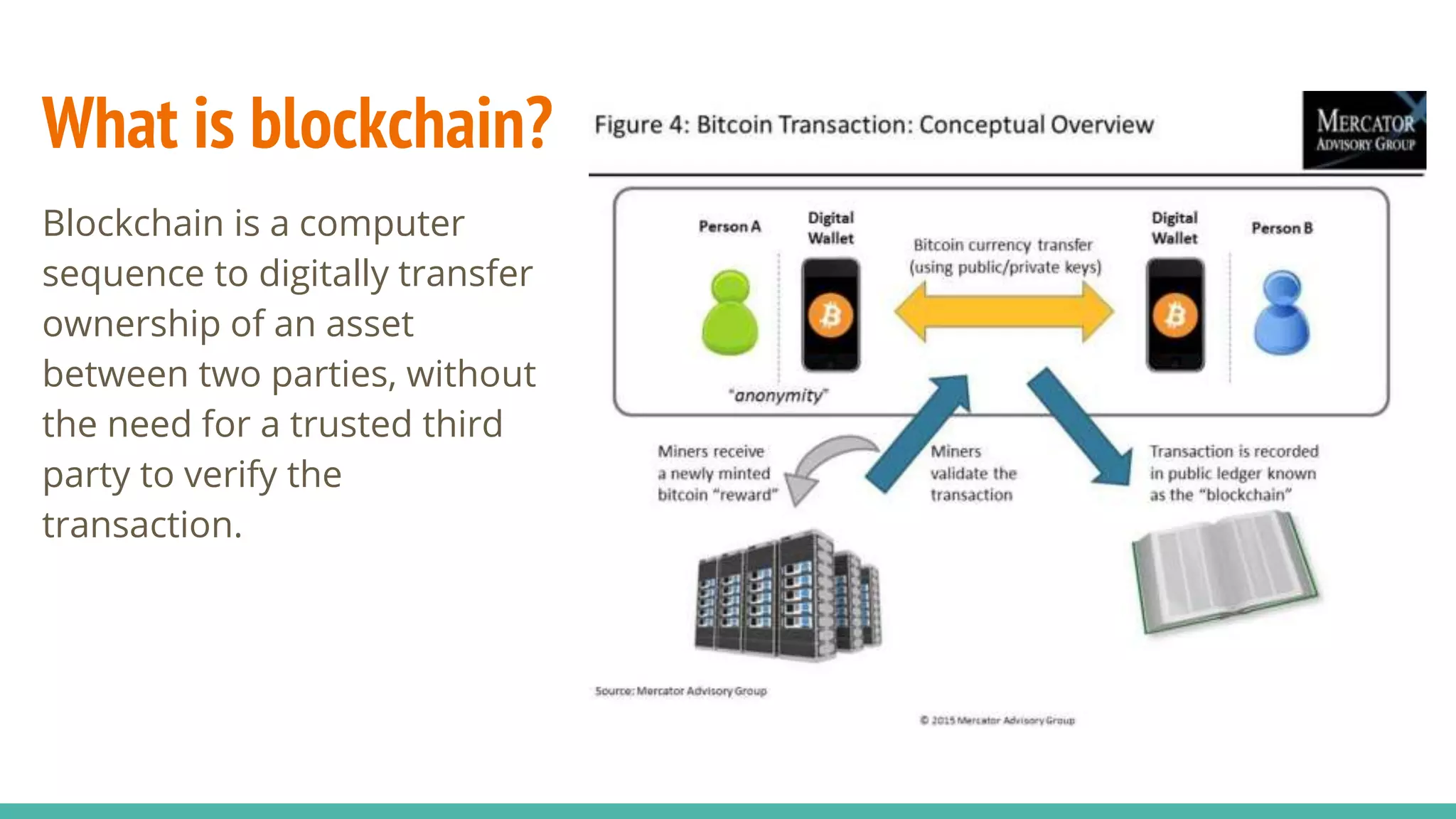
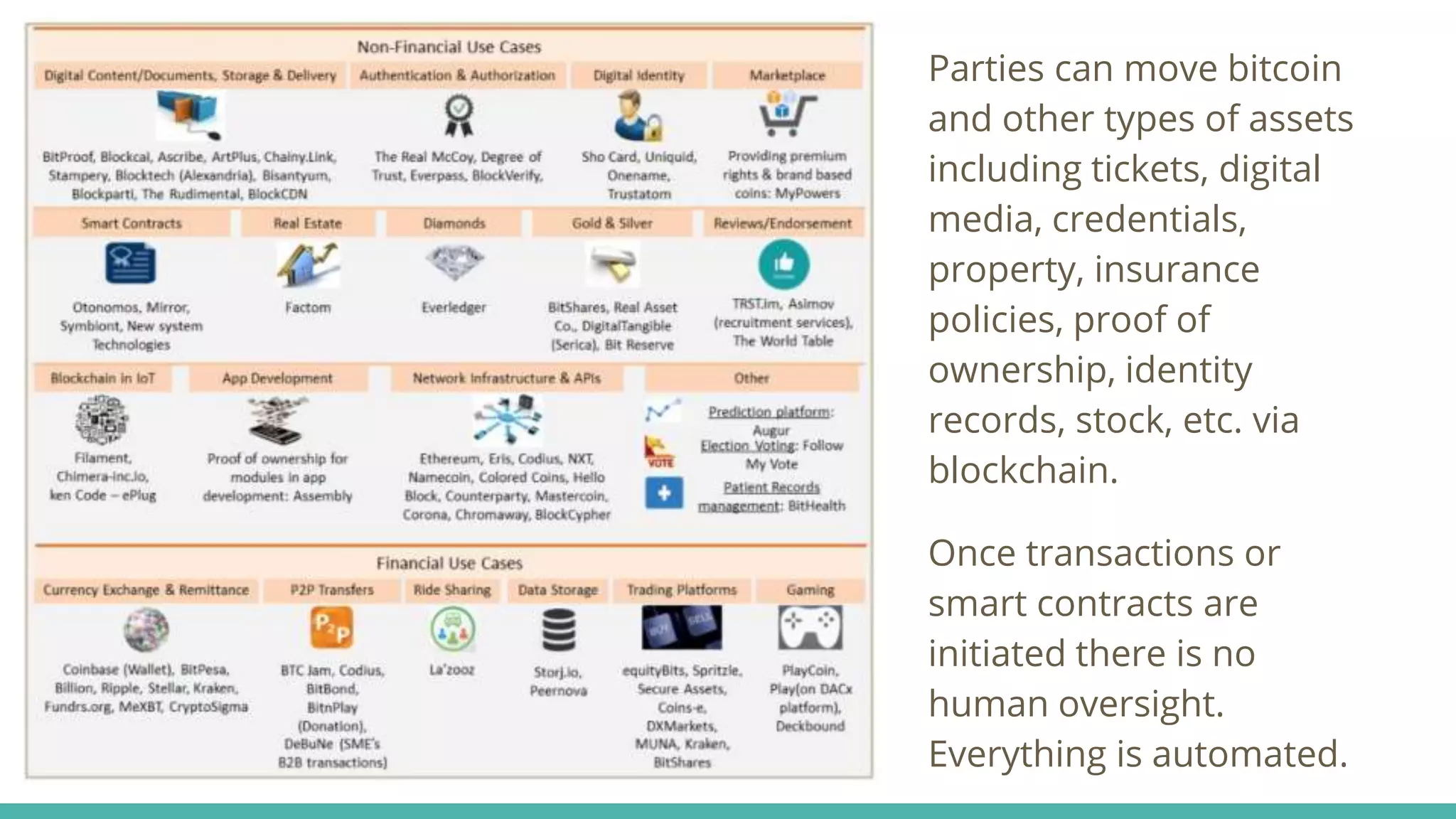
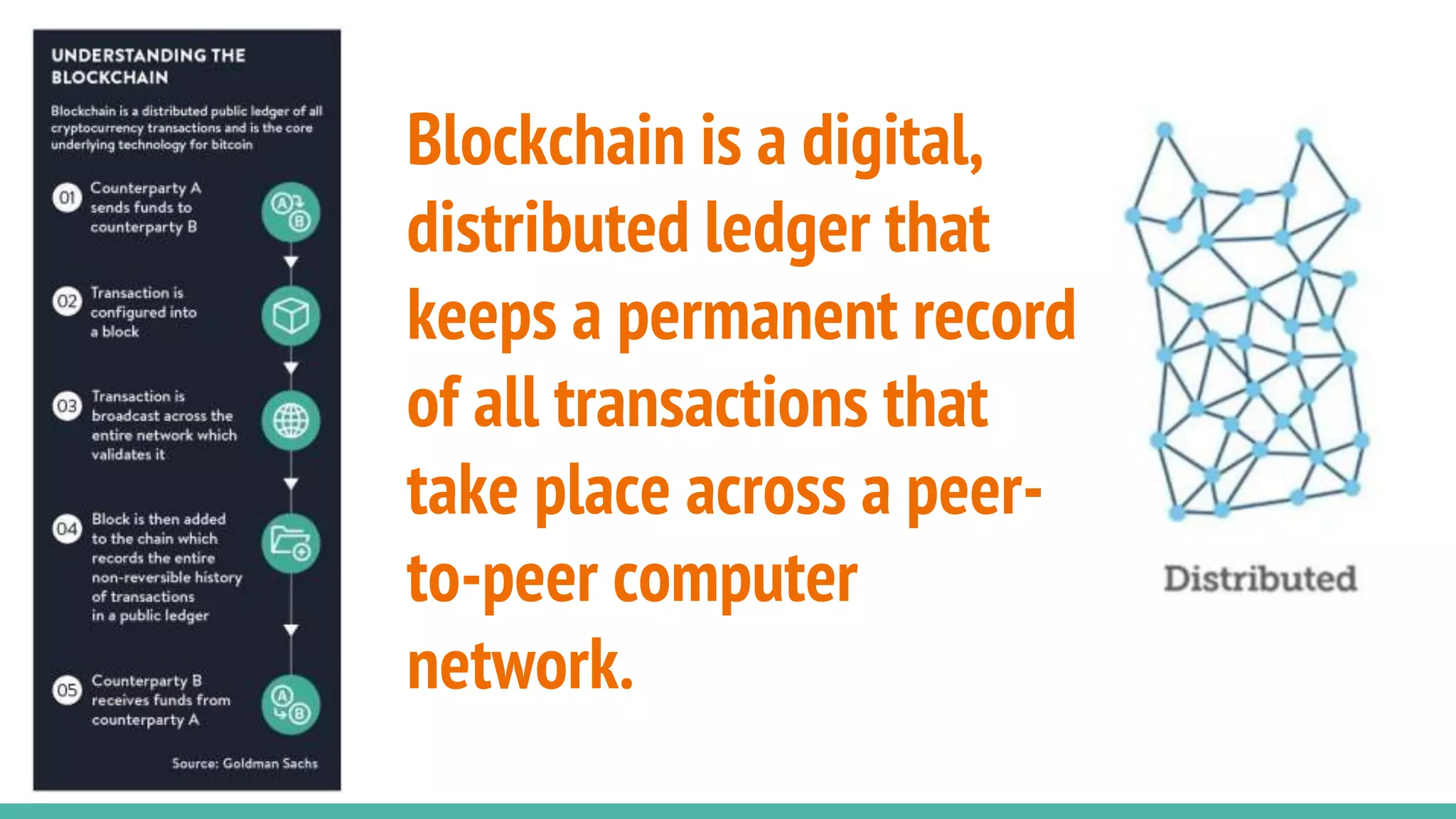
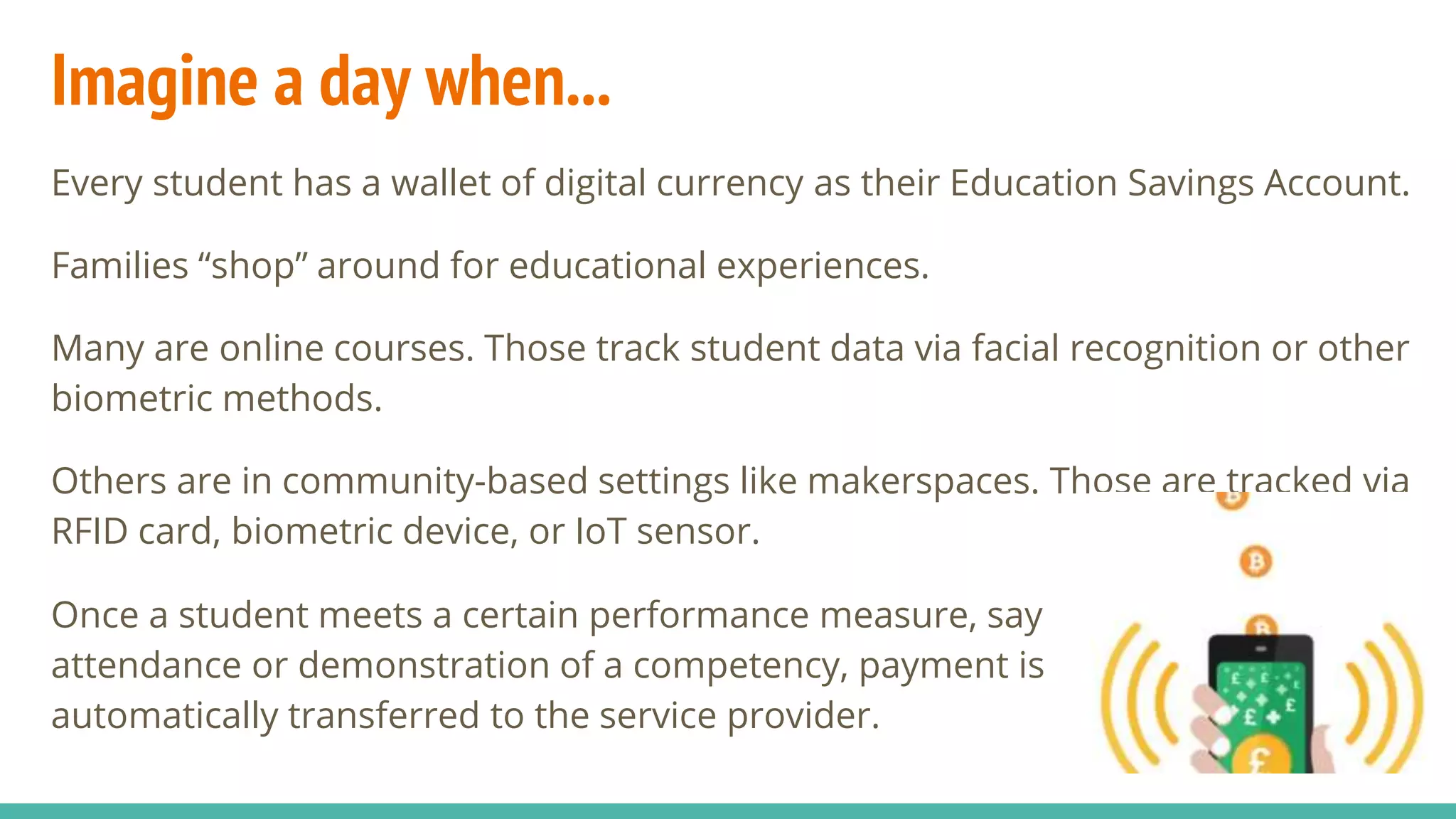
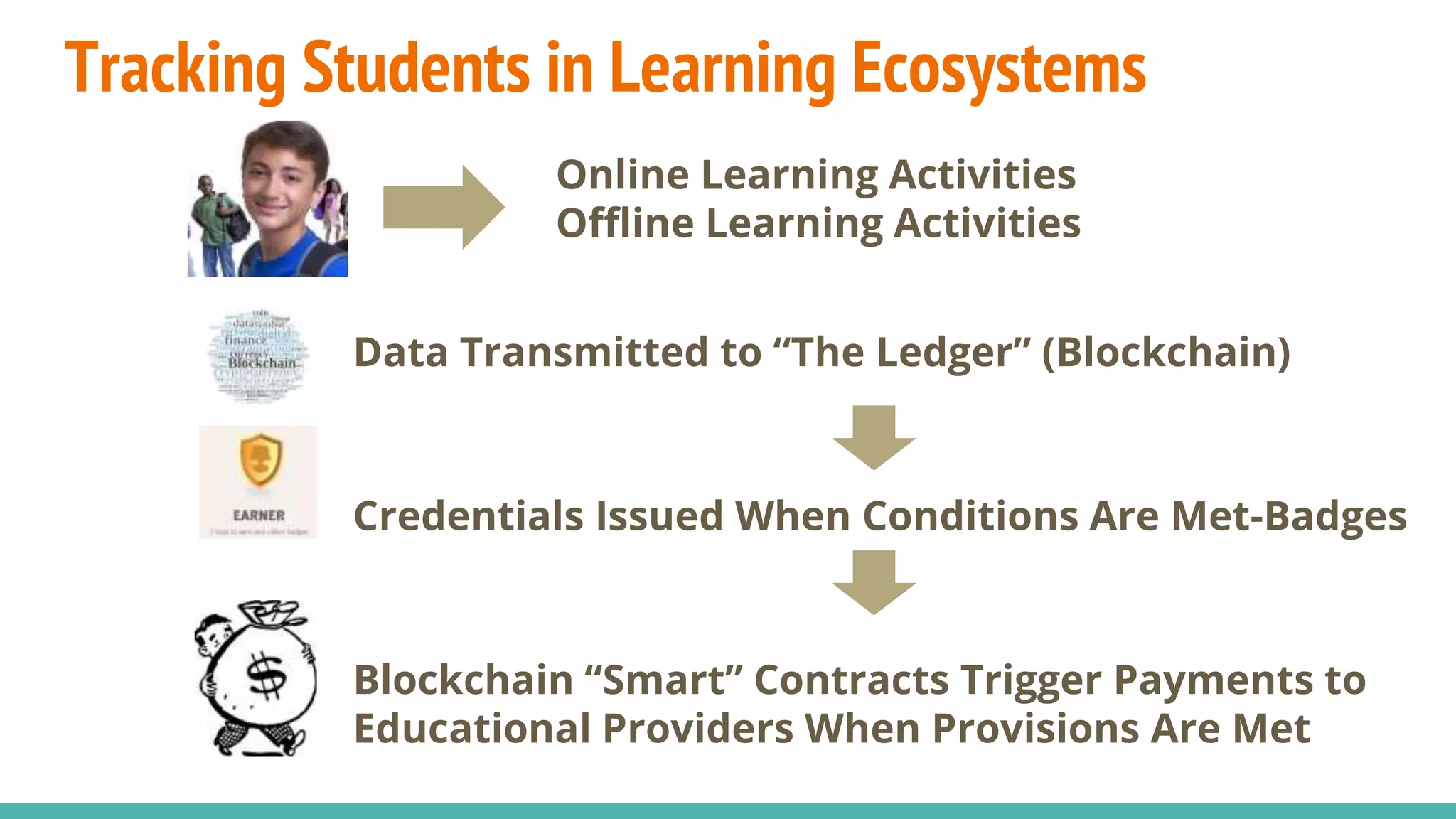
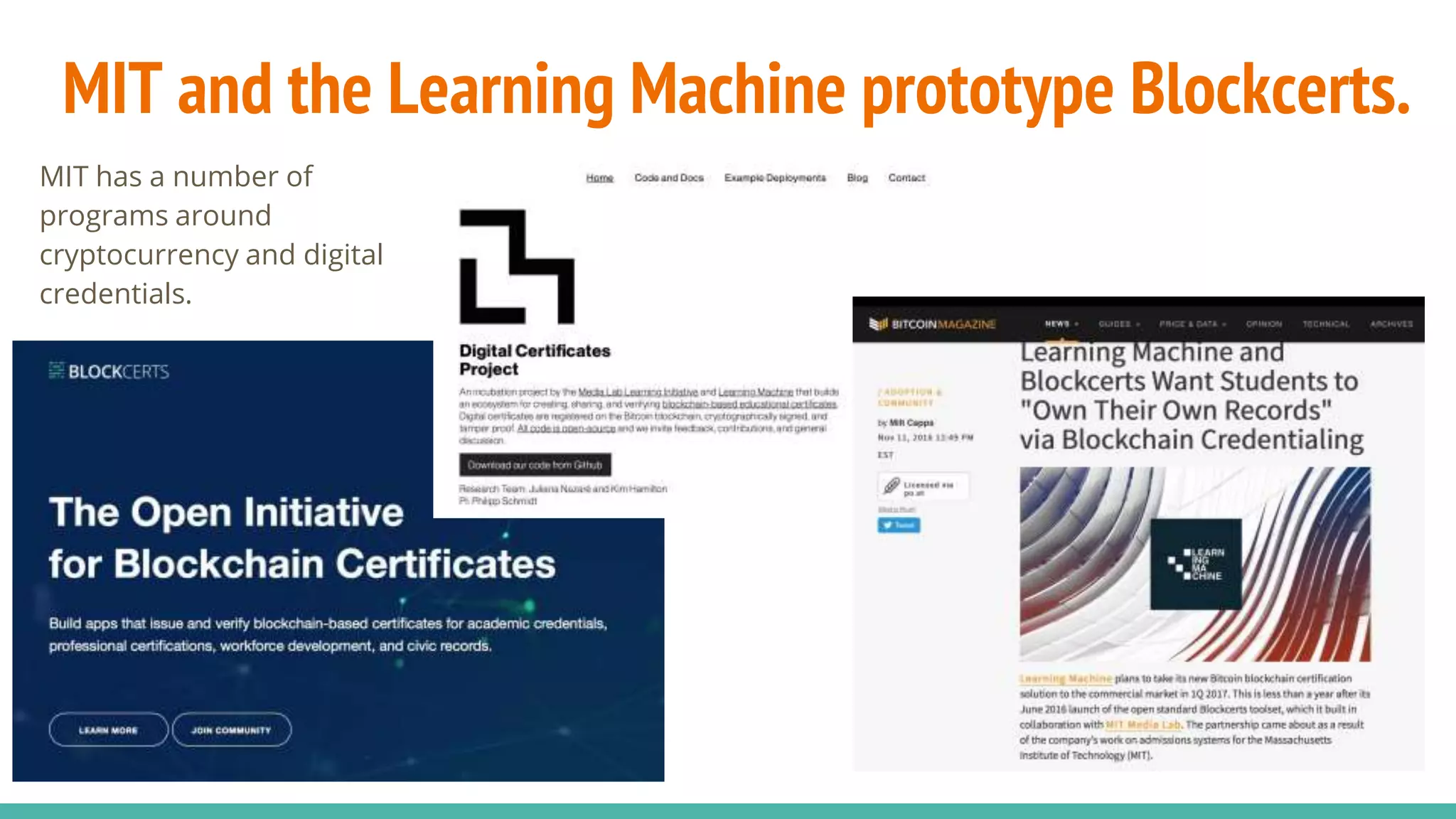
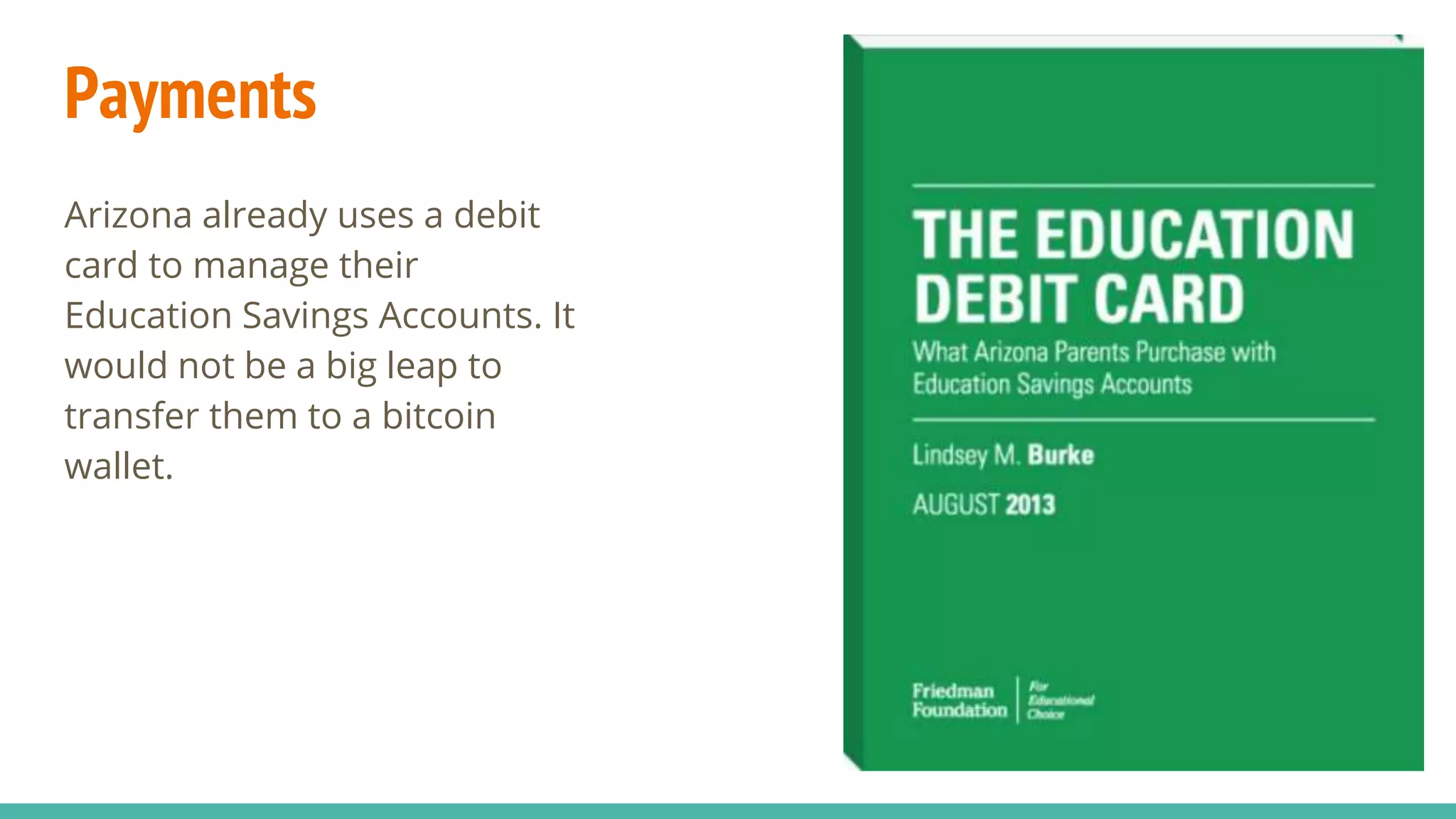
Blockchain technology uses distributed ledgers and encryption to allow digital assets and credentials to be transferred between parties without an intermediary. Some envision using blockchain ledgers to track students' learning activities and credentials, facilitate micropayments to educational providers based on competencies demonstrated, and potentially manage students' education savings accounts. However, concerns exist that this could fractured education, privilege certain types of learning, and create a permanent record that follows students. Proponents believe blockchain has the potential to revolutionize education funding and the delivery of educational services, while critics worry it could undermine public education obligations and equity.