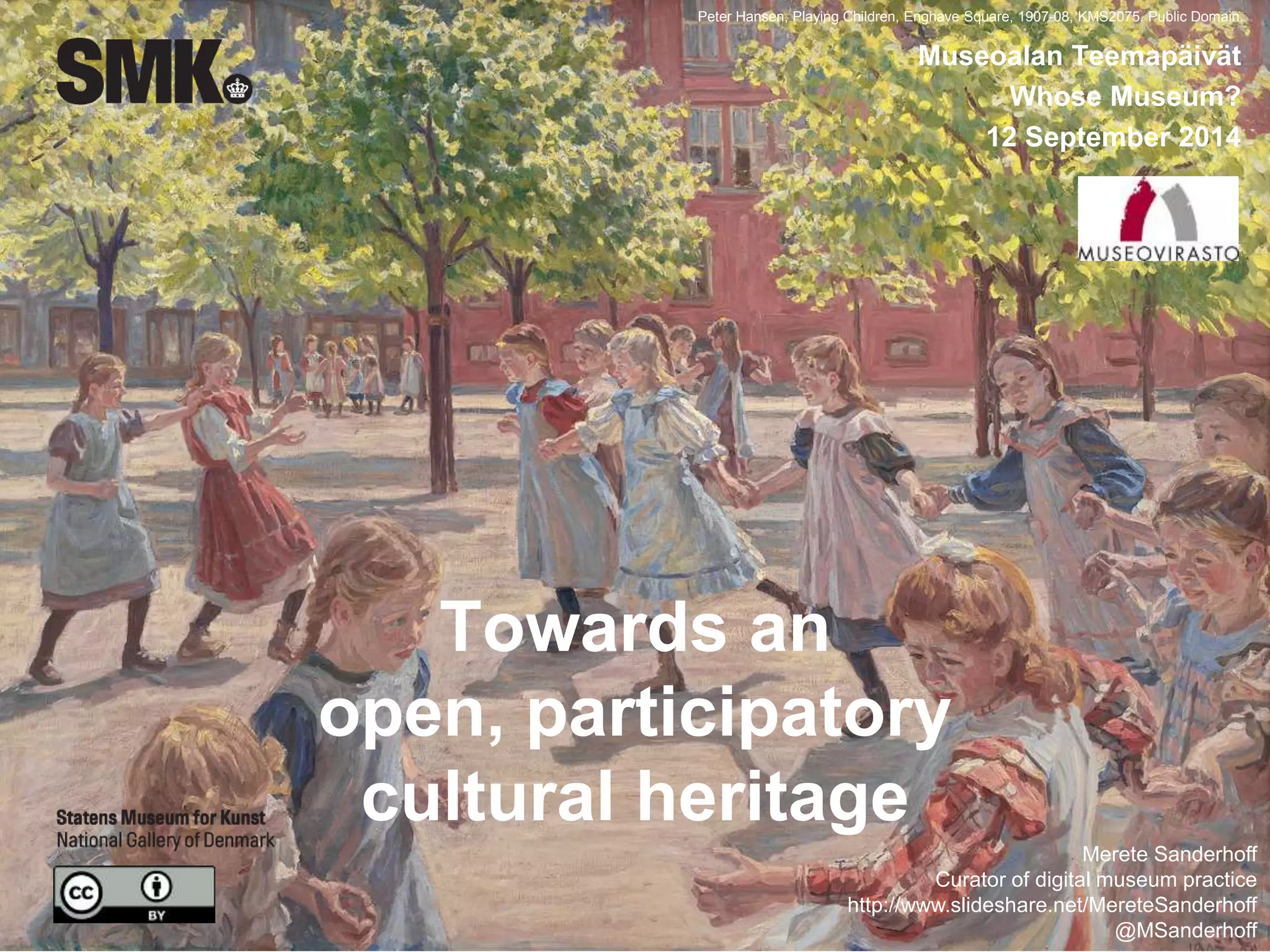
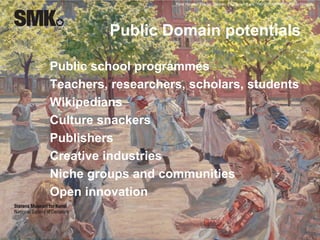
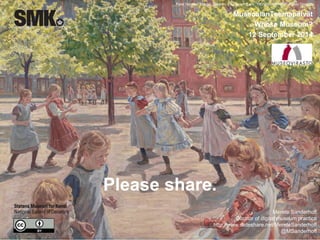
Peter Hansen, Playing Children, Enghave Square, 1907-08, KMS2075. Public Domain. 
Towards an 
Museoalan Teemapäivät 
open, participatory 
cultural heritage 
Whose Museum? 
12 September 2014 
Merete Sanderhoff 
Curator of digital museum practice 
http://www.slideshare.net/MereteSanderhoff 
@MSanderhoff
3 parts 
1. The big picture – inspiration and 
influences 
2. What we’re doing at SMK – some 
examples 
3. Recommendations – based on 
what we’ve learned
Where I’m coming from 
SMK is the National Gallery of Denmark 
Visitors 2013 
Physical 355,000 
Online 615,000 
220 people work there, all included 
10,000 paintings and scultures 
245,000 prints and drawings 
3,000 plaster casts
1. The big picture
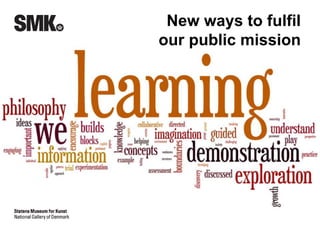
New ways to fulfil 
our public mission
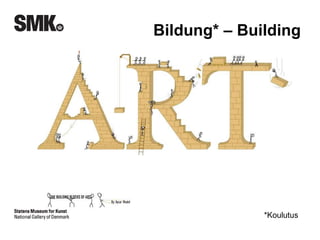
Bildung* – Building 
*Koulutus
New approaches 
to being a museum 
Galleries 
Libraries 
Archives 
Museums 
http://openglam.org/
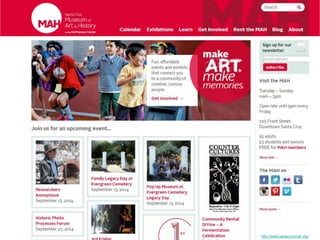
http://www.santacruzmah.org/
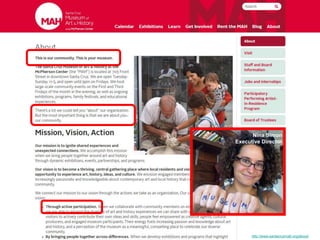
Nina Simon 
Executive Director 
http://www.santacruzmah.org/about/
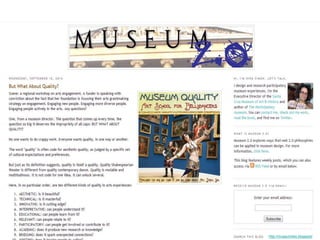
http://museumtwo.blogspot/
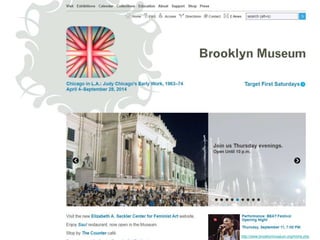
http://www.brooklynmuseum.org/home.php
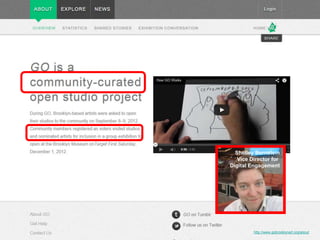
Shelley Bernstein 
Vice Director for 
Digital Engagement 
http://www.gobrooklynart.org/about
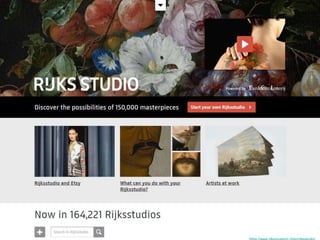
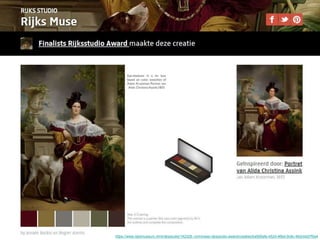
https://www.rijksmuseum.nl/en/rijksstudio/
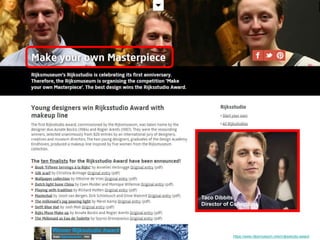
Taco Dibbits 
Director of Collections 
https://www.rijksmuseum.nl/en/rijksstudio-award
https://www.rijksmuseum.nl/nl/rijksstudio/142328--nominees-rijksstudio-award/creaties/ba595afe-452d-46bd-9c8c-48dcbdd7f0a4
Were our collections formed to 
inspire design of makeup lines?
We are not owners, 
but stewards 
of our collections
“Our understanding of research, 
education, artistic creativity, and the 
progress of knowledge is built upon the 
axiom that no idea stands alone, and 
that all innovation is built on the ideas 
and innovation of others.” 
Smithsonian Web and New Media Strategy, Version 1.0, 2009 
http://www.si.edu/content/pdf/about/web-new-media-strategy_v1.0.pdf
“The preservation, transmission, and 
advancement of knowledge in the 
digital age are promoted by the 
unencumbered use and reuse of 
digitized content for research, teaching, 
learning, and creative activities.” 
Memo on open access to digital representations of works in the public domain from 
museum, library, and archive collections at Yale University, May 2011 
http://odai.yale.edu/sites/default/files/OpenAccessLAMSFinal.pdf
“To be a public museum your digital data should be 
free. And digital data is not a threat to the real data, 
it’s just an advertisement that only increases the 
aura of the original. People go to the Louvre 
because they’ve seen the Mona Lisa; the reason 
people might not be going to an institution is 
because they don’t know what’s in your institution. 
Digitization is a way to address that issue, in a way 
that simply wasn’t possible before.” 
William Noel, former curator, Walter’s Art Museum, 2012
“Our primary mission is to ‘tell the truth’. 
We put as much quality in our work as 
possible. That is why we share the best 
quality we have. If people google ‘The 
Milkmaid’ by Vermeer then we want them to 
find our good quality image, not all the bad 
and deformed versions of this beautiful 
painting.” 
Lizzy Jongma, data manager, Rijksmuseum, 2012
“If they want to have a Vermeer 
on their toilet paper, I’d rather 
have a very high-quality image of 
Vermeer on toilet paper than a 
very bad reproduction.” 
Taco Dibbits, Director of Collections, Rijksmuseum, 2013 
http://www.nytimes.com/2013/05/29/arts/design/museums-mull-public-use-of-online-art-images.html?pagewanted=all&_r=0
But wait… 
aren’t we 
making money 
on images?
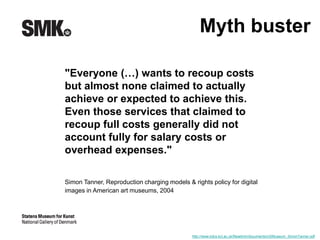
Myth buster 
"Everyone (…) wants to recoup costs 
but almost none claimed to actually 
achieve or expected to achieve this. 
Even those services that claimed to 
recoup full costs generally did not 
account fully for salary costs or 
overhead expenses." 
Simon Tanner, Reproduction charging models & rights policy for digital 
images in American art museums, 2004 
http://www.kdcs.kcl.ac.uk/fileadmin/documents/USMuseum_SimonTanner.pdf
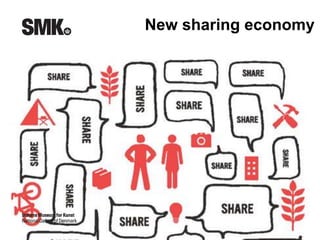
New sharing economy
forcesofgeek.com/
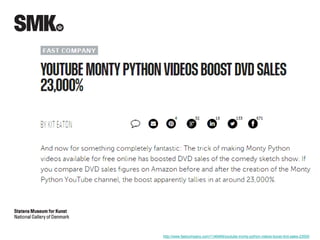
http://www.fastcompany.com/1146469/youtube-monty-python-videos-boost-dvd-sales-23000
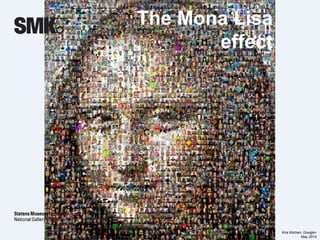
The Mona Lisa 
effect 
Kris Kitchen, Google+ 
May 2014
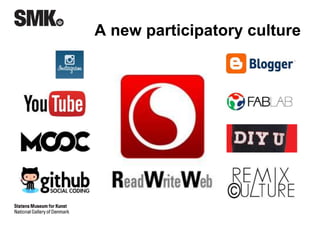
A new participatory culture
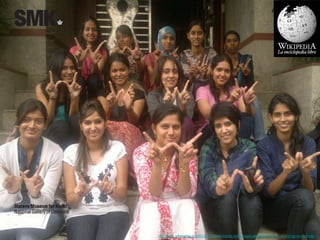
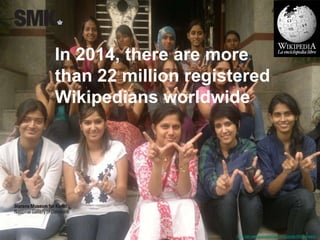
http://blog.wikimedia.org/2012/11/19/wikimedia-india-hosts-wikipedia-women-workshop-in-mumbai/
In 2014, there are more 
than 22 million registered 
Wikipedians worldwide 
http://en.wikipedia.org/wiki/Wikipedia:Wikipedians
How can museums support 
– and benefit from – 
this cognitive surplus*? 
*
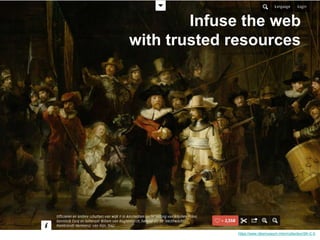
Infuse the web 
with trusted resources 
https://www.rijksmuseum.nl/en/collection/SK-C-5
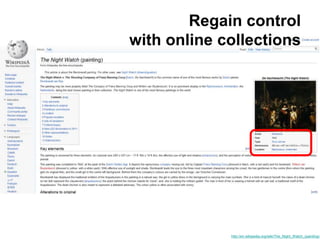
Regain control 
with online collections 
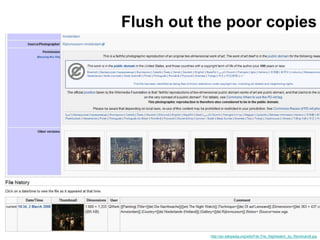
http://en.wikipedia.org/wiki/The_Night_Watch_(painting)
http://en.wikipedia.org/wiki/File:The_Nightwatch_by_Rembrandt.jpg
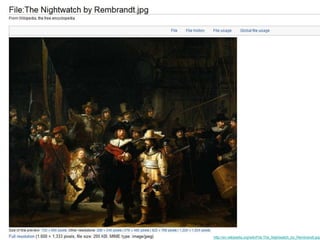
Flush out the poor copies 
http://en.wikipedia.org/wiki/File:The_Nightwatch_by_Rembrandt.jpg
2. What we’re doing at SMK
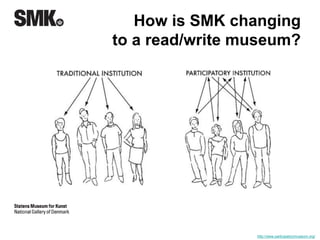
How is SMK changing 
to a read/write museum? 
http://www.participatorymuseum.org/
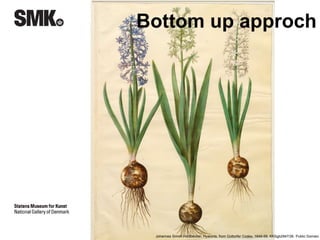
Bottom up approch 
Johannes Simon Holzbecker, Hyacints, from Gottorfer Codex, 1649-59, KKSgb2947/26. Public Domain.
Bottom up approch 
* 
*Advice from Shelley Bernstein, Brooklyn Museum 
Johannes Simon Holzbecker, Hyacints, from Gottorfer Codex, 1649-59, KKSgb2947/26. Public Domain.
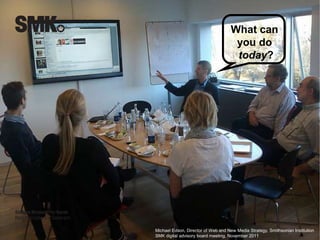
What can 
you do 
today? 
Michael Edson, Director of Web and New Media Strategy, Smithsonian Institution 
SMK digital advisory board meeting, November 2011
160 hires images
https://creativecommons.org/licenses/by/4.0/
Sharing authority 
to experience 
to interpret 
to reuse 
to build on 
– some examples
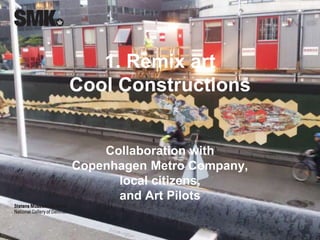
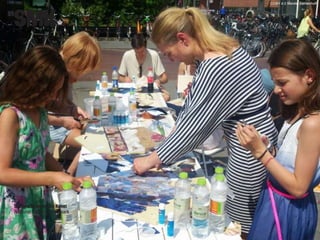
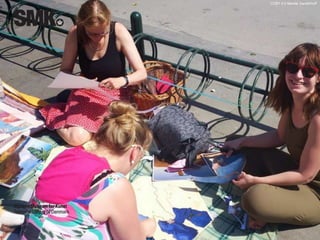
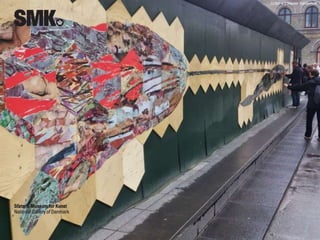
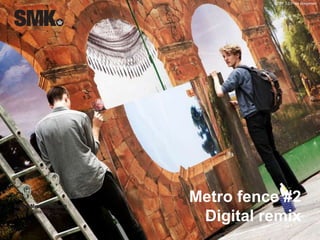
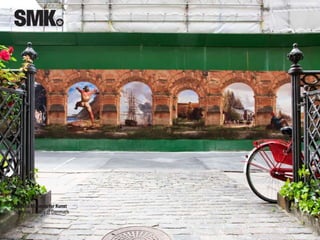
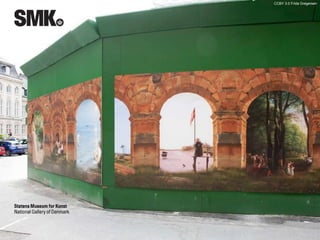
1. Remix art 
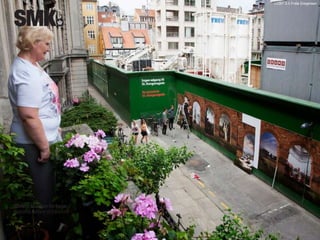
Cool Constructions 
Collaboration with 
Copenhagen Metro Company, 
local citizens, 
and Art Pilots 
CCBY 4.0 Merete Sanderhoff
CCBY 4.0 Merete Sanderhoff 
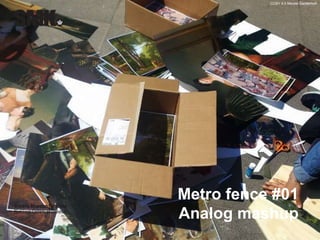
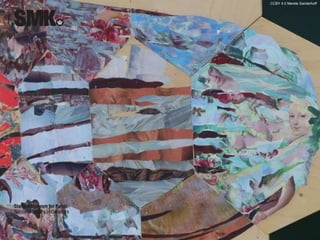
Metro fence #01 
Analog mashup
CCBY 4.0 Merete Sanderhoff
CCBY 3.0 Frida Gregersen 
Metro fence #2 
Digital remix
CCBY 3.0 Frida Gregersen
CCBY 3.0 Frida Gregersen 
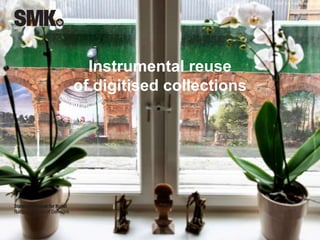
Instrumental reuse 
of digitised collections
CCBY 3.0 Frida Gregersen
CCBY 4.0 Merete Sanderhoff 
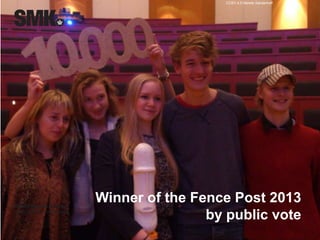
Winner of the Fence Post 2013 
by public vote
CCBY 4.0 Merete Sanderhoff 
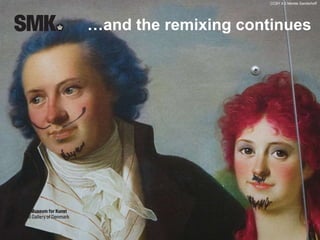
…and the remixing continues
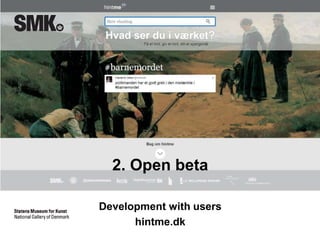
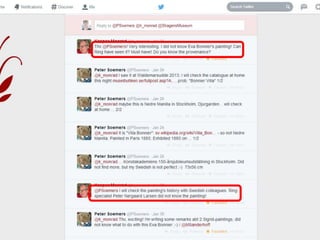
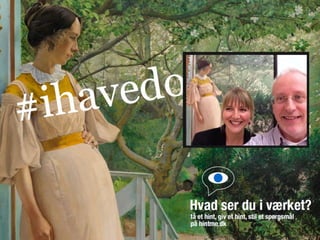
2. Open beta 
Development with users 
hintme.dk
Many museums 
One platform
Twitter-based 
Users are equal 
Democratic, multivocal dialogue 
Tapping into existing communities 
Learning together about participatory media
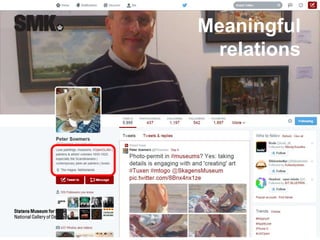
Meaningful 
relations
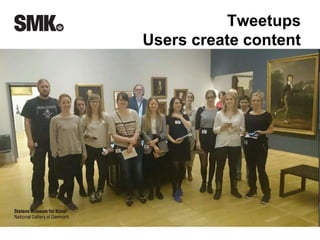
Tweetups 
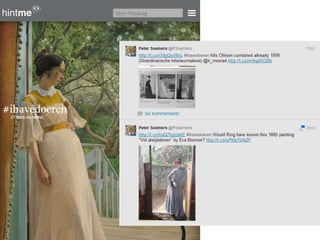
Users create content
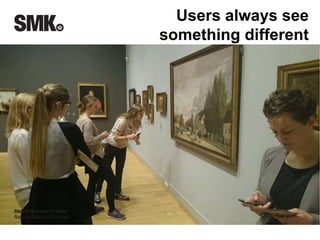
Users always see 
something different
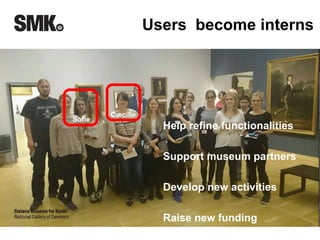
Users become interns 
Sofie 
Cæcilie 
Help refine functionalities 
Support museum partners 
Develop new activities 
Raise new funding
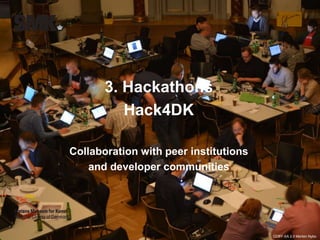
3. Hackathons 
Hack4DK 
Collaboration with peer institutions 
and developer communities 
CCBY-SA 2.0 Morten Nybo
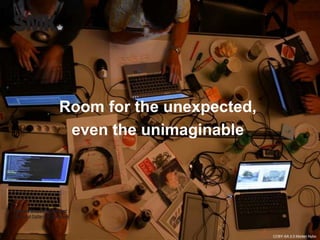
Room for the unexpected, 
even the unimaginable 
CCBY-SA 2.0 Morten Nybo
http://hack4dk.wordpress.com/ 
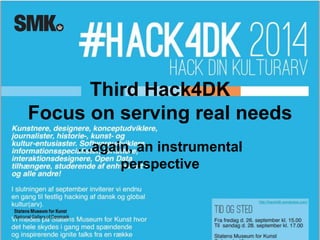
Third Hack4DK 
Focus on serving real needs 
…again, an instrumental 
perspective
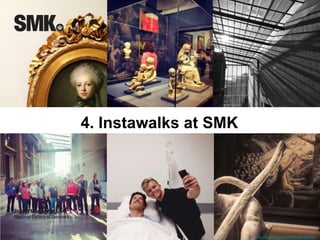
4. Instawalks at SMK 
http://iconosquare.com/tag/emptysmk
http://iconosquare.com/tag/emptysmk 
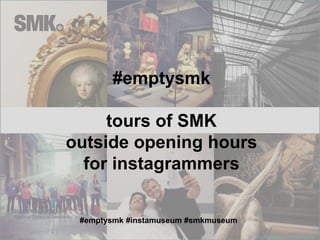
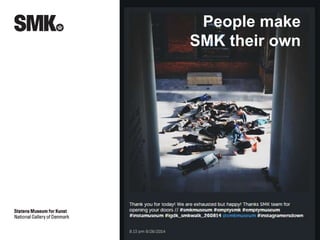
#emptysmk 
tours of SMK 
outside opening hours 
for instagrammers 
#emptysmk #instamuseum #smkmuseum
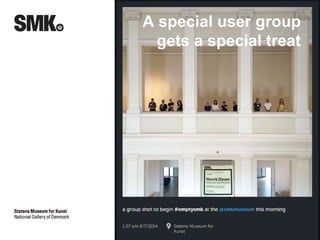
A special user group 
gets a special treat
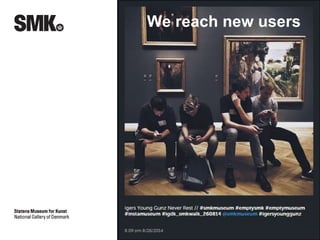
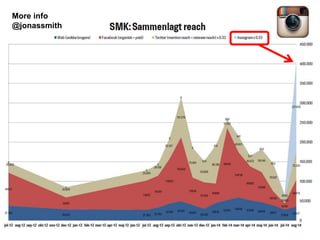
We reach new users
People make 
SMK their own
More info 
@jonassmith
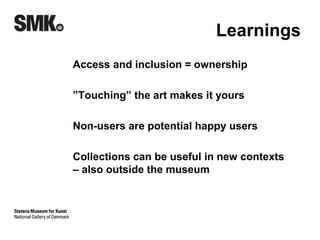
Learnings 
Access and inclusion = ownership 
”Touching” the art makes it yours 
Non-users are potential happy users 
Collections can be useful in new contexts 
– also outside the museum
Now we’re ready to go 
Public Domain 
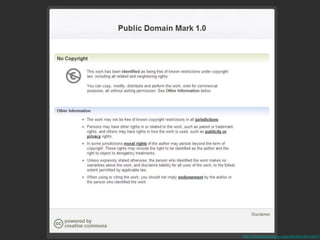
http://creativecommons.org/publicdomain/zero/1.0/ 
Creative Commons Public Domain dedication
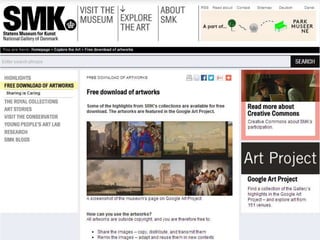
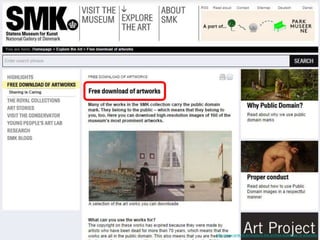
http://www.smk.dk/en/explore-the-art/free-download-of-artworks/
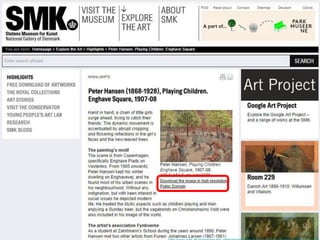
http://www.smk.dk/en/explore-the-art/highlights/peter-hansen-playing-children-enghave-square/
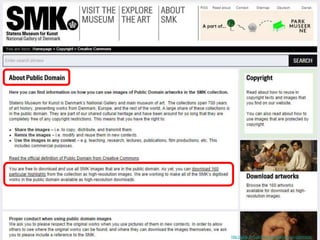
http://www.smk.dk/en/copyright/creative-commons/
http://creativecommons.org/publicdomain/zero/1.0/
Peter Hansen, Playing Children, Enghave Square, 1907-08, KMS2075. Public Domain. 
Public Domain potentials 
Public school programmes 
Teachers, researchers, scholars, students 
Wikipedians 
Culture snackers 
Publishers 
Creative industries 
Niche groups and communities 
Open innovation
Cultural heritage needs to be here
Cultural heritage needs to be here 
If it it isn’t online, 
it doesn’t exist
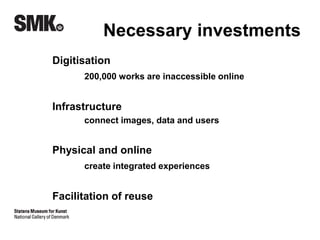
Necessary investments 
Digitisation 
200,000 works are inaccessible online 
Infrastructure 
connect images, data and users 
Physical and online 
create integrated experiences 
Facilitation of reuse
3. Recommendations
Think big, start small, move fast* 
Share ownership of your collections 
Be a catalyst for users’ knowledge and creativity 
Different users need different things 
Technology is not a goal, but a precondition 
Digital is a state of mind 
Be human, be yourself 
Work together, learn, grow – and share 
*Michael Edson
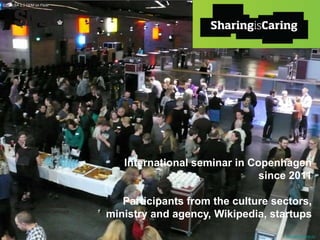
CCBY-SA 2.0 ODM on Flickr 
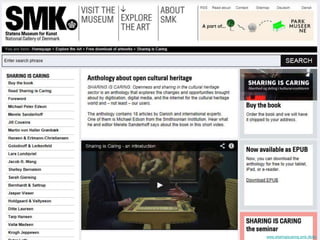
International seminar in Copenhagen 
since 2011 
Participants from the culture sectors, 
ministry and agency, Wikipedia, startups 
www.sharecare.nu
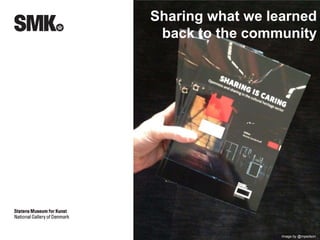
Sharing what we learned 
back to the community 
Image by @mpedson
www.sharingiscaring.smk.dk/en
What’s next?
I dream of… 
all Danish school kids 
becoming Art Pilots* 
more Danish art collections 
embracing the Public Domain 
measuring the impact that openness has 
on people’s lives, opportunities, and wellbeing** 
open museums that support 
people’s own Bildung and Building 
*Peter Leth, Lær IT 
**Simon Tanner, King’s College
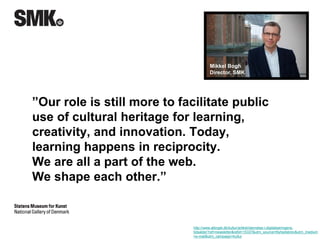
Mikkel Bogh 
Director, SMK 
”Our role is still more to facilitate public 
use of cultural heritage for learning, 
creativity, and innovation. Today, 
learning happens in reciprocity. 
We are all a part of the web. 
We shape each other.” 
http://www.altinget.dk/kultur/artikel/dannelse-i-digitaliseringens-tidsalder? 
ref=newsletter&refid=15337&utm_source=Nyhedsbrev&utm_medium 
=e-mail&utm_campaign=kultur
Peter Hansen, Playing Children, Enghave Square, 1907-08, KMS2075. Public Domain. 
Please share. 
MuseoalanTeemapäivät 
Whose Museum? 
12 September 2014 
Merete Sanderhoff 
Curator of digital museum practice 
http://www.slideshare.net/MereteSanderhoff 
@MSanderhoff

Towards an open, participatory cultural heritage