Harvard Business School Case
Launching Krispy Natural:
Cracking The Product
Management Code
About Pemberton Products….
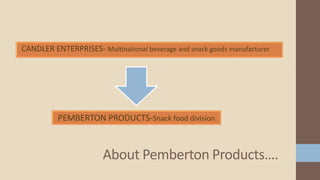
CANDLER ENTERPRISES- Multinational beverage and snack goods manufacturer.
PEMBERTON PRODUCTS-Snack food division
Snack food division.
Sold packaged food bars, cookies and other sweet baked goods.
Market leader brands were-Softies cookies and Homestyle muffin and
doughnuts.
Market leader in US cookie and bakery snacks segment of the sweet market.
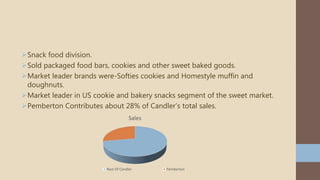
Pemberton Contributes about 28% of Candler’s total sales.
Sales
Rest Of Candler Pemberton
 Building strong brand values in salty snack categories.
 Building a collection of attractive ,durable brands.
 Applying leadership marketing and DSD- Direct Store Distribution system to
increase the revenues and overall profits.
 Building a good brand image in the market.
 Building or acquiring capabilities in salty snack categories.
Strategic Priorities Of Pemberton
Pemberton took the first step
to enter the salty cracker market.
Why?
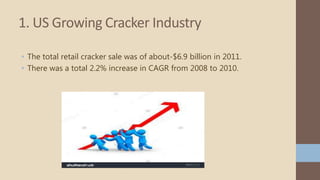
• The total retail cracker sale was of about-$6.9 billion in 2011.
• There was a total 2.2% increase in CAGR from 2008 to 2010.
1. US Growing Cracker Industry
74% of respondents consumed cracker
on a daily basis.
Crackers were the top salty snacks ahead
of potato chips.
Desire of healthy products was driving
cracker industry.
2. Research Of Salty Snacks In US
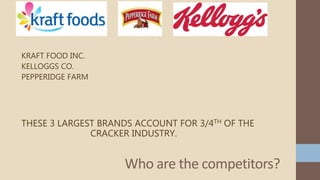
KRAFT FOOD INC.
KELLOGGS CO.
PEPPERIDGE FARM
THESE 3 LARGEST BRANDS ACCOUNT FOR 3/4TH OF THE
CRACKER INDUSTRY.
Who are the competitors?
1. In 2008 Pemberton entered the salty snack market with
the acquisition of Krispy Inc who was a manufacturer of
single-serve cracker packages that competed in the
cracker-with-filling and “all other” cracker segment.
2. Their Offering: A package containing 6 round
toasted cracker sandwiches with cheese filling available
in 3 flavor options.
3. Marketing: They marketed it as “Grab and Go” with
a major presence in vending machines and convenience
stores.
THE KRISPY PRODUCT LINE
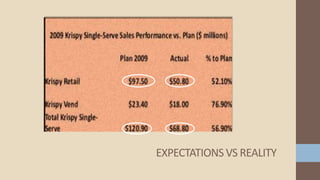
EXPECTATIONS VS REALITY
 Limited product line – hence no command over
supermarkets.
 Taste- A taste survey showed that the product
did not deliver the flavor scores that were
expected.
WHY DID IT NOT WORK?
 The overall scenario and numbers of the cracker market
were still attractive.
 The overall market was huge and was expected to grow
at 10-14% every year.
 Competitors were not capitalizing on the market
available.
THE RELAUNCH-WHY?
ALL OF THE SHORTCOMINGS WERE ADDRESSED:-
1. R&D Labs were engaged to improve the taste.
1. Product line extended beyond single serve packaging-
to introduce multiple-serving package sizes.
2. It was repositioned as KRISPY NATURAL which was
more indicative to its targeted customer base.
THE RELAUNCH-HOW?
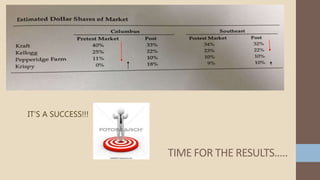
IT’S A SUCCESS!!!
TIME FOR THE RESULTS…..
THE MARKETING STRATEGY THAT LED TO
ITS SUCCESS….
1. NEW FLAVOURS.
2. MULTIPLE SERVE PACKAGING
3. USE OF 100% WHOLE WHEAT AND NATURAL
INGRIDIENTS.
1. PRODUCT STRATEGY
RESULTS:-
1.77-92% Positive purchase intent for its new flavors.
2.Four-to-one preference over the leading competitive cracker.
1.Emphasized on heavy advertisement
and promotion.
2.Effective adoption of pull marketing
strategy.
-Hence price discounts offered initially.
2. MARKETING STRATEGY
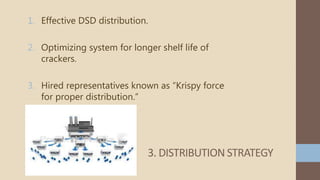
1. Effective DSD distribution.
2. Optimizing system for longer shelf life of
crackers.
3. Hired representatives known as “Krispy force
for proper distribution.”
3. DISTRIBUTION STRATEGY
1. Krispy went for a premium pricing strategy.
2. But on the retail side they matched the prices of
their competitor on a “visual price basis” that is less
quantity or weight for the same price so as to
maintain their premium product image.
4. PRICING STRATEGY
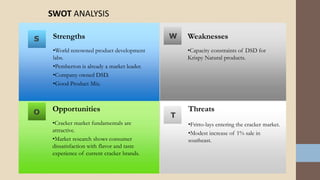
Strengths
•World renowned product development
labs.
•Pemberton is already a market leader.
•Company owned DSD.
•Good Product Mix.
Opportunities
•Cracker market fundamentals are
attractive.
•Market research shows consumer
dissatisfaction with flavor and taste
experience of current cracker brands.
Threats
•Fritto-lays entering the cracker market.
•Modest increase of 1% sale in
southeast.
Weaknesses
•Capacity constraints of DSD for
Krispy Natural products.
S W
TO
SWOT ANALYSIS
Created by Mayank Deepak Thar of JIIT
Noida, during a marketing internship
Under Prof. Sameer Mathur,
IIM Lucknow.
DISCLAIMER

Launching Krispy Natural: Cracking the product management code

  • 1.
    Harvard Business SchoolCase Launching Krispy Natural: Cracking The Product Management Code
  • 2.
    About Pemberton Products…. CANDLERENTERPRISES- Multinational beverage and snack goods manufacturer. PEMBERTON PRODUCTS-Snack food division
  • 3.
    Snack food division. Soldpackaged food bars, cookies and other sweet baked goods. Market leader brands were-Softies cookies and Homestyle muffin and doughnuts. Market leader in US cookie and bakery snacks segment of the sweet market. Pemberton Contributes about 28% of Candler’s total sales. Sales Rest Of Candler Pemberton
  • 4.
     Building strongbrand values in salty snack categories.  Building a collection of attractive ,durable brands.  Applying leadership marketing and DSD- Direct Store Distribution system to increase the revenues and overall profits.  Building a good brand image in the market.  Building or acquiring capabilities in salty snack categories. Strategic Priorities Of Pemberton
  • 5.
    Pemberton took thefirst step to enter the salty cracker market. Why?
  • 6.
    • The totalretail cracker sale was of about-$6.9 billion in 2011. • There was a total 2.2% increase in CAGR from 2008 to 2010. 1. US Growing Cracker Industry
  • 7.
    74% of respondentsconsumed cracker on a daily basis. Crackers were the top salty snacks ahead of potato chips. Desire of healthy products was driving cracker industry. 2. Research Of Salty Snacks In US
  • 8.
    KRAFT FOOD INC. KELLOGGSCO. PEPPERIDGE FARM THESE 3 LARGEST BRANDS ACCOUNT FOR 3/4TH OF THE CRACKER INDUSTRY. Who are the competitors?
  • 9.
    1. In 2008Pemberton entered the salty snack market with the acquisition of Krispy Inc who was a manufacturer of single-serve cracker packages that competed in the cracker-with-filling and “all other” cracker segment. 2. Their Offering: A package containing 6 round toasted cracker sandwiches with cheese filling available in 3 flavor options. 3. Marketing: They marketed it as “Grab and Go” with a major presence in vending machines and convenience stores. THE KRISPY PRODUCT LINE
  • 10.
  • 11.
     Limited productline – hence no command over supermarkets.  Taste- A taste survey showed that the product did not deliver the flavor scores that were expected. WHY DID IT NOT WORK?
  • 12.
     The overallscenario and numbers of the cracker market were still attractive.  The overall market was huge and was expected to grow at 10-14% every year.  Competitors were not capitalizing on the market available. THE RELAUNCH-WHY?
  • 13.
    ALL OF THESHORTCOMINGS WERE ADDRESSED:- 1. R&D Labs were engaged to improve the taste. 1. Product line extended beyond single serve packaging- to introduce multiple-serving package sizes. 2. It was repositioned as KRISPY NATURAL which was more indicative to its targeted customer base. THE RELAUNCH-HOW?
  • 14.
    IT’S A SUCCESS!!! TIMEFOR THE RESULTS…..
  • 15.
    THE MARKETING STRATEGYTHAT LED TO ITS SUCCESS….
  • 16.
    1. NEW FLAVOURS. 2.MULTIPLE SERVE PACKAGING 3. USE OF 100% WHOLE WHEAT AND NATURAL INGRIDIENTS. 1. PRODUCT STRATEGY RESULTS:- 1.77-92% Positive purchase intent for its new flavors. 2.Four-to-one preference over the leading competitive cracker.
  • 17.
    1.Emphasized on heavyadvertisement and promotion. 2.Effective adoption of pull marketing strategy. -Hence price discounts offered initially. 2. MARKETING STRATEGY
  • 18.
    1. Effective DSDdistribution. 2. Optimizing system for longer shelf life of crackers. 3. Hired representatives known as “Krispy force for proper distribution.” 3. DISTRIBUTION STRATEGY
  • 19.
    1. Krispy wentfor a premium pricing strategy. 2. But on the retail side they matched the prices of their competitor on a “visual price basis” that is less quantity or weight for the same price so as to maintain their premium product image. 4. PRICING STRATEGY
  • 20.
    Strengths •World renowned productdevelopment labs. •Pemberton is already a market leader. •Company owned DSD. •Good Product Mix. Opportunities •Cracker market fundamentals are attractive. •Market research shows consumer dissatisfaction with flavor and taste experience of current cracker brands. Threats •Fritto-lays entering the cracker market. •Modest increase of 1% sale in southeast. Weaknesses •Capacity constraints of DSD for Krispy Natural products. S W TO SWOT ANALYSIS
  • 21.
    Created by MayankDeepak Thar of JIIT Noida, during a marketing internship Under Prof. Sameer Mathur, IIM Lucknow. DISCLAIMER

Editor's Notes

  • #22 So in this presentation we focused on how IKEA understood the consumer market well. I am very thankful to Professor Sameer Mathur for giving me this Oppurtunity to intern under his guidance.