SIEMENS ELECTRIC 
MOTORS 
MANAGEMENT ACCOUNTING 
GROUP 12: 
MATTEO DE ANNA 
MARSHELLA OOSTERBEEK 
MARTIN RANDBY 
MARTIN RODIAN PEDERSEN 
MARIKA TORCITTO 
MARTA ZUGLIANO 
MT
AGENDA 
• Current situation: 1987 
• Change in strategy 
• Traditional costing system 
• Problem 
• Solution 
• Conclusion 
MT
SIEMENS: EMW FROM 1937 TO 
1987 
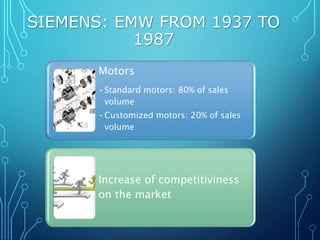
Motors 
•Standard motors: 80% of sales 
volume 
•Customized motors: 20% of sales 
volume 
Increase of competitiviness 
on the market 
MT
CHANGE IN STRATEGY 
EMW could not lower its costs 
sufficiently 
CHANGE 
IN 
STRATEGY 
They changed their main focus to 
customized engine 
They decreased their overall 
volume 
However standard motors still 
accounted for half of the total 
annual output 
MT
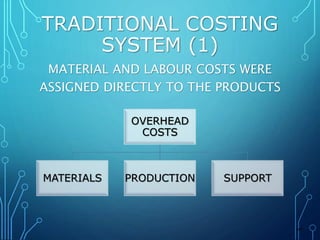
TRADITIONAL COSTING 
SYSTEM (1) 
MATERIAL AND LABOUR COSTS WERE 
ASSIGNED DIRECTLY TO THE PRODUCTS 
OVERHEAD 
COSTS 
MATERIALS PRODUCTION SUPPORT 
MT
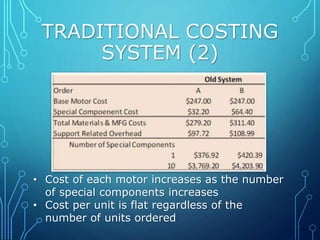
TRADITIONAL COSTING 
SYSTEM (2) 
• Cost of each motor increases as the number 
of special components increases 
• Cost per unit is flat regardless of the 
number of units ordered 
MT
MT
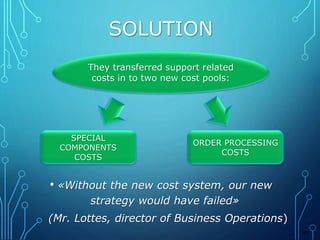
SOLUTION 
They transferred support related 
costs in to two new cost pools: 
SPECIAL 
COMPONENTS 
COSTS 
ORDER PROCESSING 
COSTS 
• «Without the new cost system, our new 
strategy would have failed» 
(Mr. Lottes, director of Business Operations) 
MT
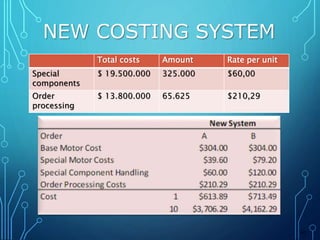
NEW COSTING SYSTEM 
Total costs Amount Rate per unit 
Special 
components 
$ 19.500.000 325.000 $60,00 
Order 
processing 
$ 13.800.000 65.625 $210,29 
MT
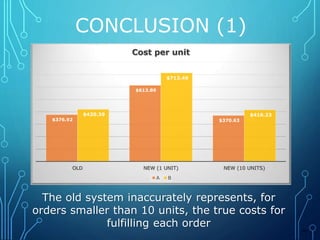
CONCLUSION (1) 
$376.92 
Cost per unit 
$613.89 
$370.63 
$420.39 
$713.49 
$416.23 
OLD NEW (1 UNIT) NEW (10 UNITS) 
A B 
The old system inaccurately represents, for 
orders smaller than 10 units, the true costs for 
fulfilling each order 
MT
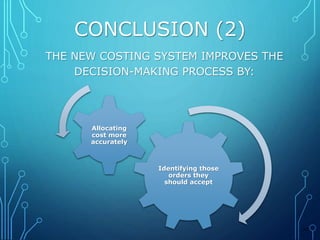
CONCLUSION (2) 
THE NEW COSTING SYSTEM IMPROVES THE 
DECISION-MAKING PROCESS BY: 
Identifying those 
orders they 
should accept 
Allocating 
cost more 
accurately 
MT
QUESTIONS? 
MT

Siemens case history

  • 1.
    SIEMENS ELECTRIC MOTORS MANAGEMENT ACCOUNTING GROUP 12: MATTEO DE ANNA MARSHELLA OOSTERBEEK MARTIN RANDBY MARTIN RODIAN PEDERSEN MARIKA TORCITTO MARTA ZUGLIANO MT
  • 2.
    AGENDA • Currentsituation: 1987 • Change in strategy • Traditional costing system • Problem • Solution • Conclusion MT
  • 3.
    SIEMENS: EMW FROM1937 TO 1987 Motors •Standard motors: 80% of sales volume •Customized motors: 20% of sales volume Increase of competitiviness on the market MT
  • 4.
    CHANGE IN STRATEGY EMW could not lower its costs sufficiently CHANGE IN STRATEGY They changed their main focus to customized engine They decreased their overall volume However standard motors still accounted for half of the total annual output MT
  • 5.
    TRADITIONAL COSTING SYSTEM(1) MATERIAL AND LABOUR COSTS WERE ASSIGNED DIRECTLY TO THE PRODUCTS OVERHEAD COSTS MATERIALS PRODUCTION SUPPORT MT
  • 6.
    TRADITIONAL COSTING SYSTEM(2) • Cost of each motor increases as the number of special components increases • Cost per unit is flat regardless of the number of units ordered MT
  • 7.
  • 8.
    SOLUTION They transferredsupport related costs in to two new cost pools: SPECIAL COMPONENTS COSTS ORDER PROCESSING COSTS • «Without the new cost system, our new strategy would have failed» (Mr. Lottes, director of Business Operations) MT
  • 9.
    NEW COSTING SYSTEM Total costs Amount Rate per unit Special components $ 19.500.000 325.000 $60,00 Order processing $ 13.800.000 65.625 $210,29 MT
  • 10.
    CONCLUSION (1) $376.92 Cost per unit $613.89 $370.63 $420.39 $713.49 $416.23 OLD NEW (1 UNIT) NEW (10 UNITS) A B The old system inaccurately represents, for orders smaller than 10 units, the true costs for fulfilling each order MT
  • 11.
    CONCLUSION (2) THENEW COSTING SYSTEM IMPROVES THE DECISION-MAKING PROCESS BY: Identifying those orders they should accept Allocating cost more accurately MT
  • 12.