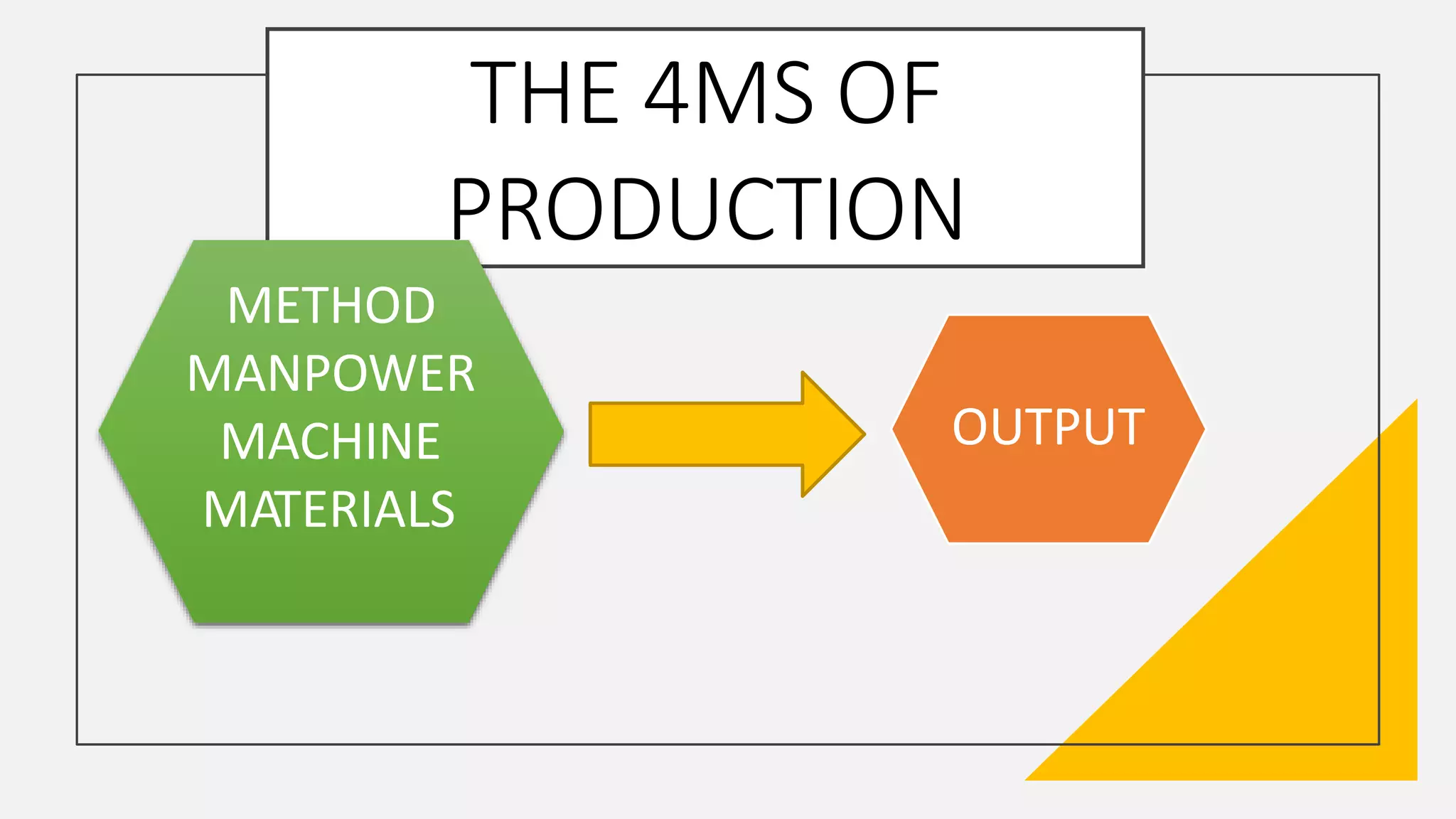
The document discusses the 4Ms of operations - method, manpower, materials, and machines. It focuses on manufacturing operations and processes, including inputs, transformation of inputs, and outputs. Key aspects covered include manufacturing site selection, facility layout, manufacturing and service delivery process flows, distribution channels, and establishing a payment process. The 4Ms provide a framework for effectively planning and managing all operational aspects of a business.
Discusses the critical aspects of developing a business plan, focusing on the operations plan and the significance of the 4Ms: Method, Manpower, Machine, and Materials.
Explains the 4Ms of production in detail: Methods (process), Manpower (human resources), Machine (equipment), and Materials (raw inputs), as well as their relationship to manufacturing.
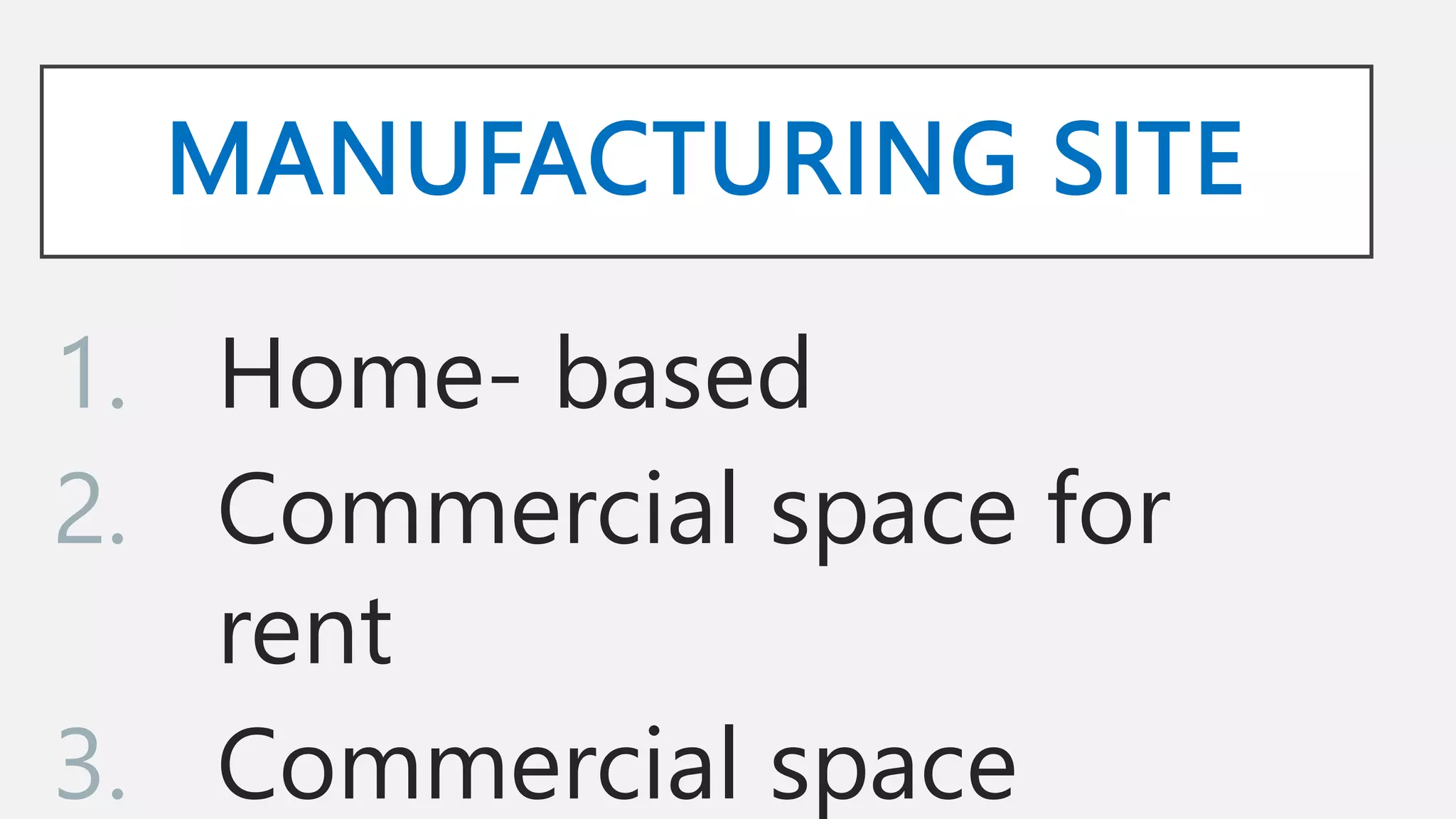
Analyzes various manufacturing site options: Home-based (cost-effective), Commercial space for rent, and Commercial space purchase, outlining their pros and cons.
Highlights the importance of efficient transportation routes for raw materials and finished goods, and discusses internal layout options: Product-based and Process-based.
Describes the manufacturing process flow as a step-by-step guide ensuring the right inputs and standards are maintained for producing quality outputs.
Focuses on service delivery nuances, emphasizing the service blueprint and identifying bottlenecks to improve customer experience and operational efficiency.
Explores the distribution process from manufacturers to customers, detailing supply chains, roles of distributors and agents, and logistics involved.
Describes how distributors and agents assist manufacturers by providing market insights, regulatory knowledge, and fostering business relationships.
Emphasizes the need for establishing a seamless payment process, addressing customer preferences for varied payment options like credit cards and installment plans.
In developinga Business Plan,
we also must consider the
essential of the 4Ms of
Operation in all business
opportunities & strengths.
3.
OPERATIONS PLAN
•an importantpart of the
business plan because it
simply states the details in
operating the business
4.
OPERATIONS MANAGEMENT
•controls theimplementation of
the business plan. A strong
operations plan should have
the four operational aspects
called the 4Ms of Operations.
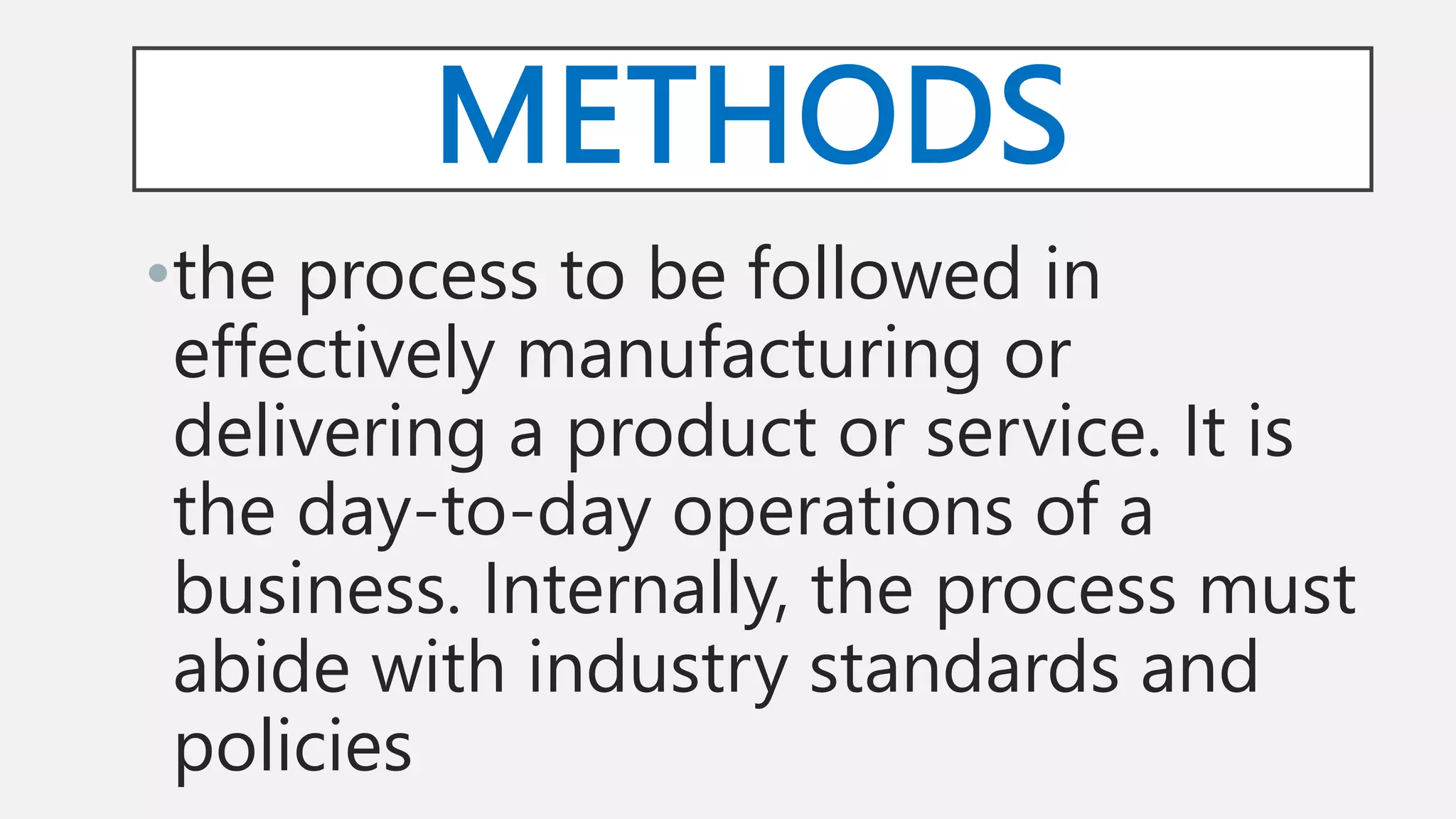
METHODS
•the process tobe followed in
effectively manufacturing or
delivering a product or service. It is
the day-to-day operations of a
business. Internally, the process must
abide with industry standards and
policies
7.
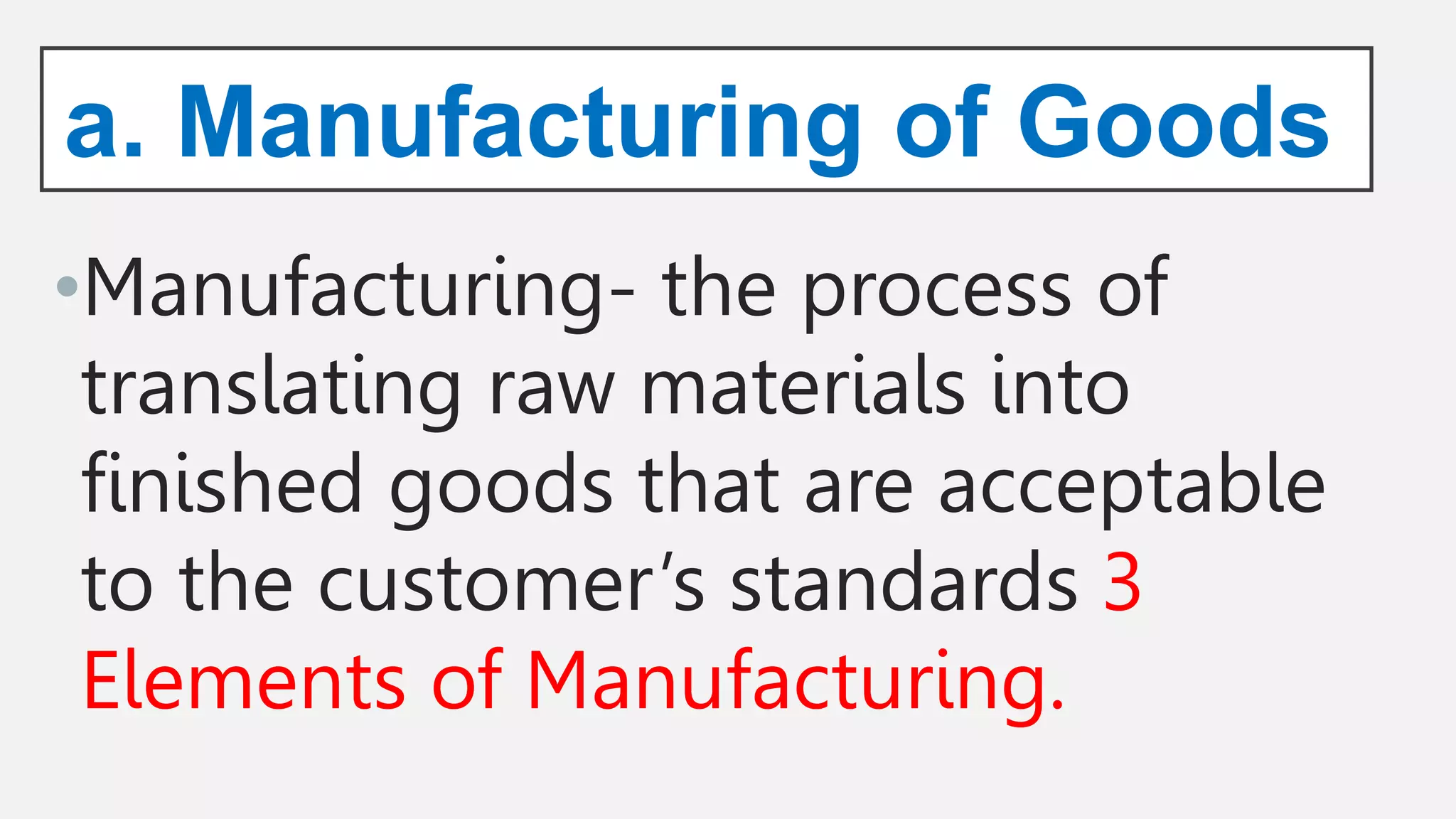
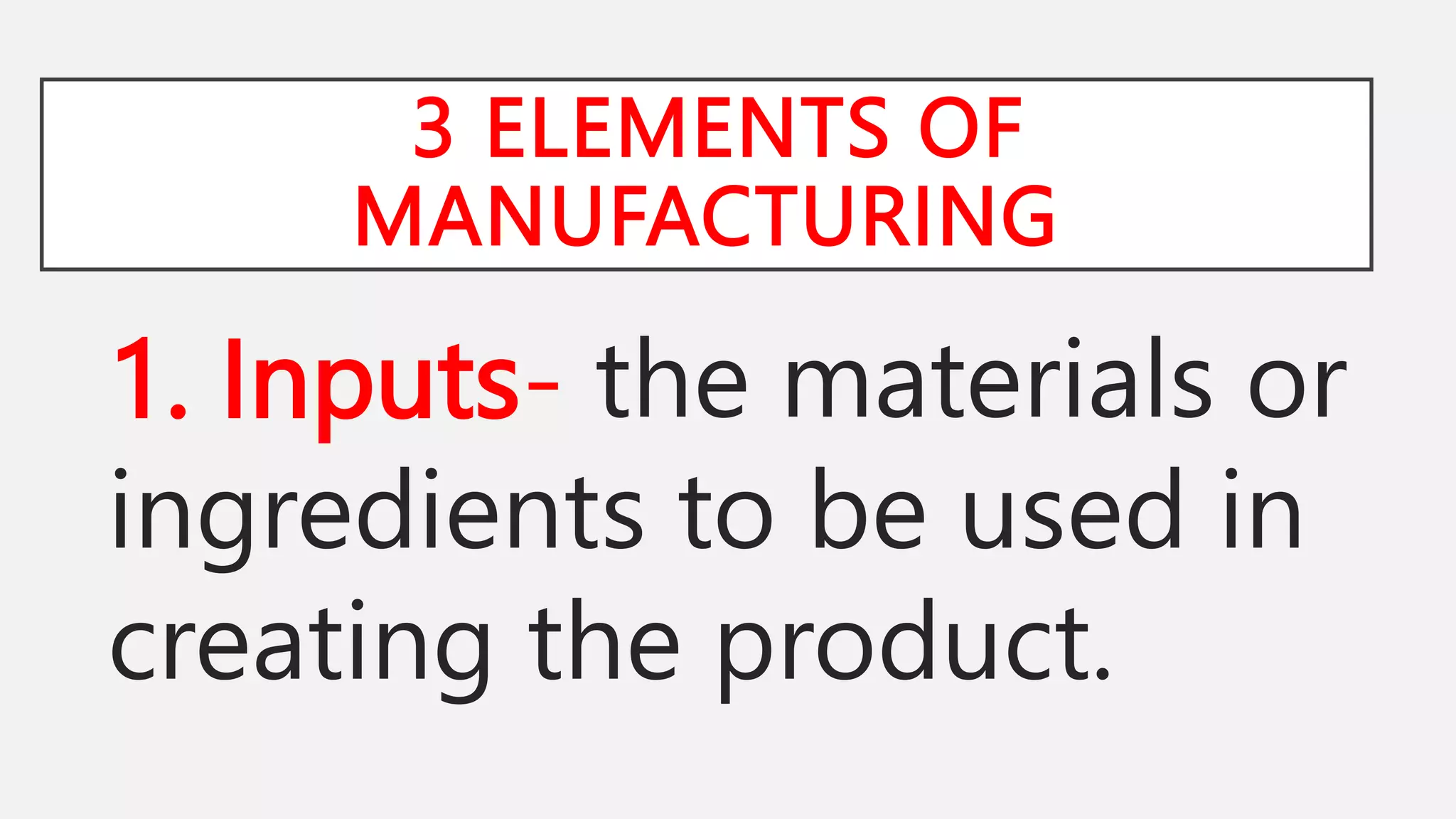
a. Manufacturing ofGoods
•Manufacturing- the process of
translating raw materials into
finished goods that are acceptable
to the customer’s standards 3
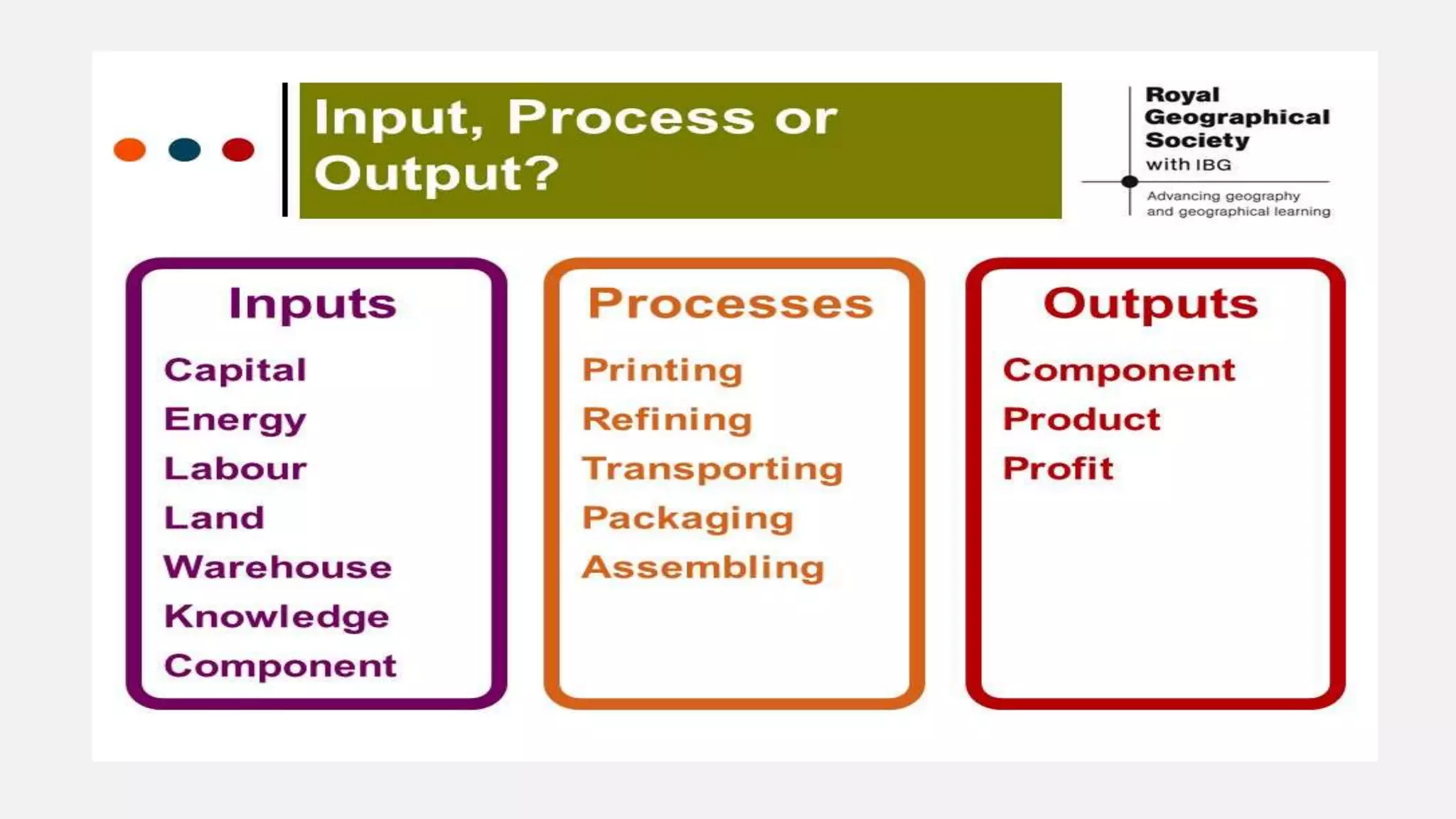
Elements of Manufacturing.
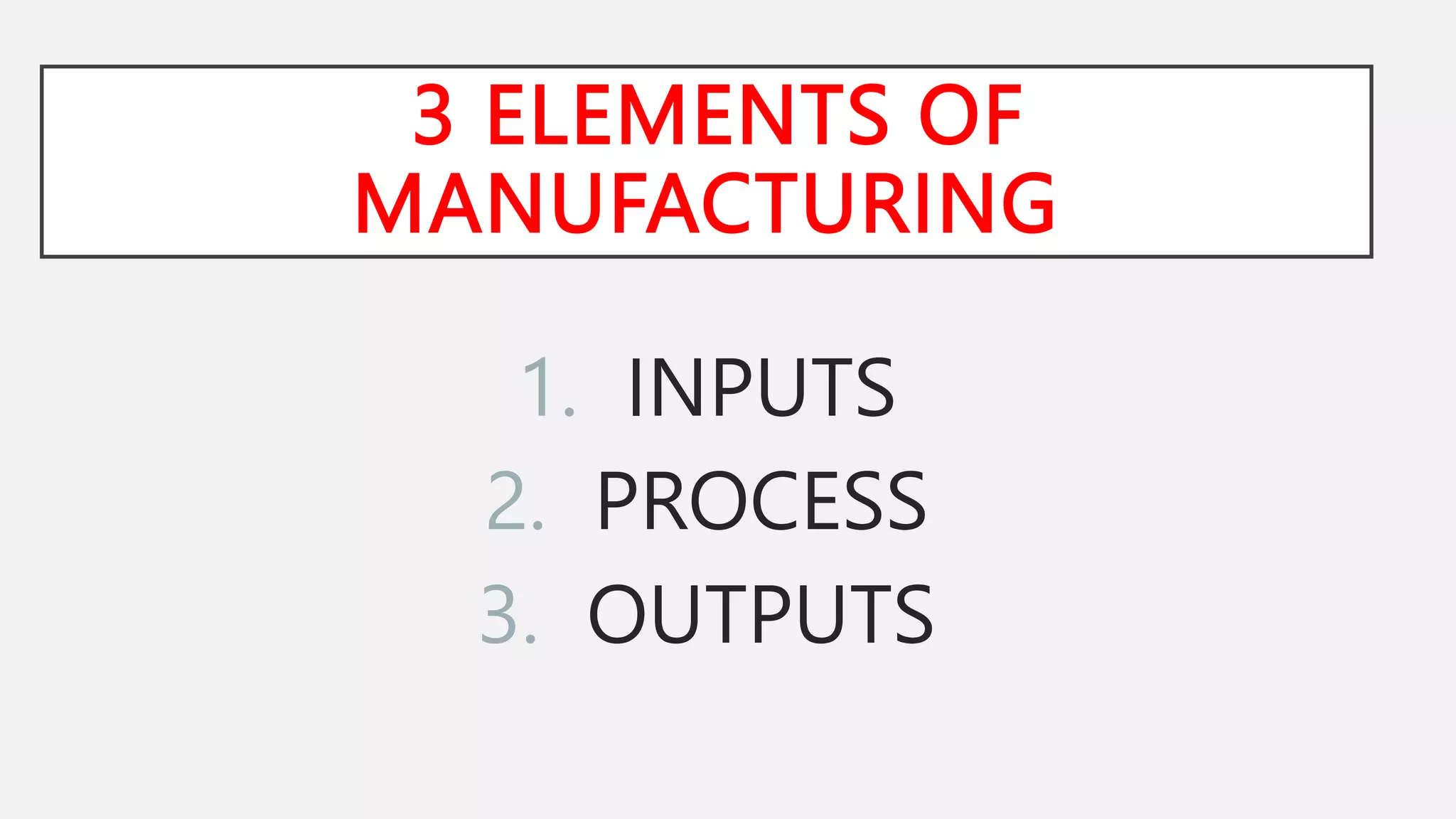
3 ELEMENTS OF
MANUFACTURING
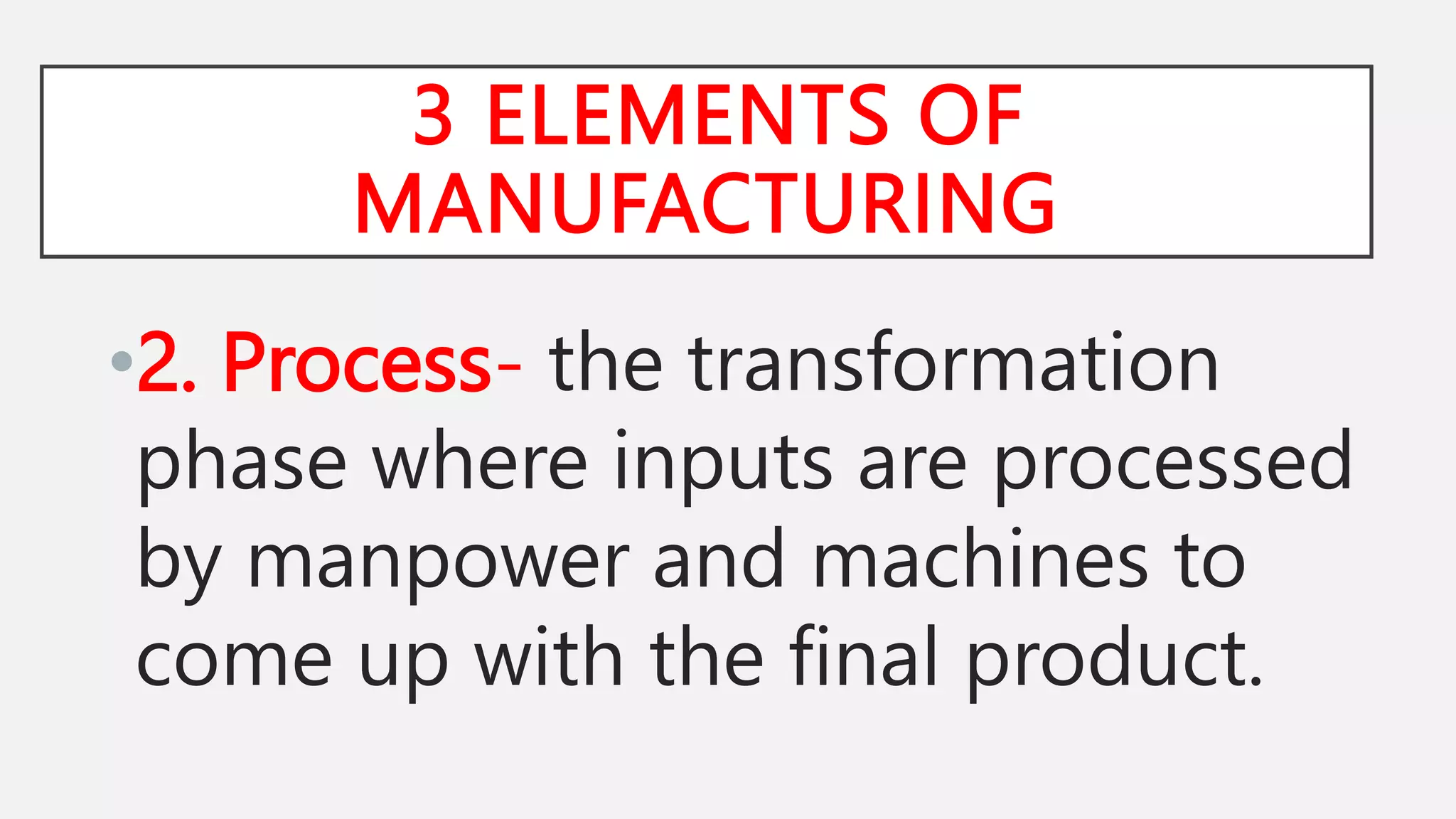
•2.Process- the transformation
phase where inputs are processed
by manpower and machines to
come up with the final product.
11.
3 ELEMENTS OF
MANUFACTURING
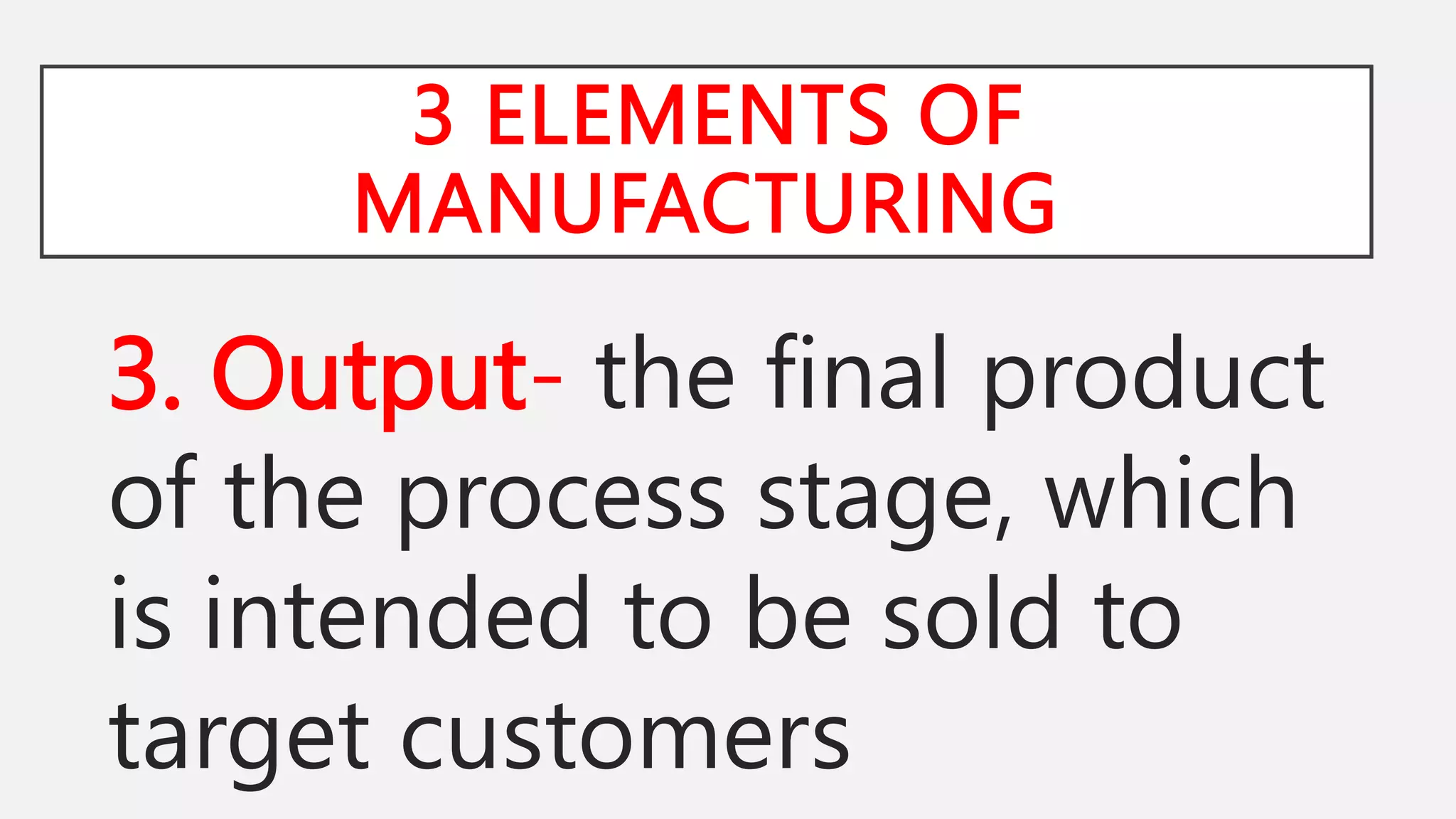
3.Output- the final product
of the process stage, which
is intended to be sold to
target customers
MANUFACTURING SITE
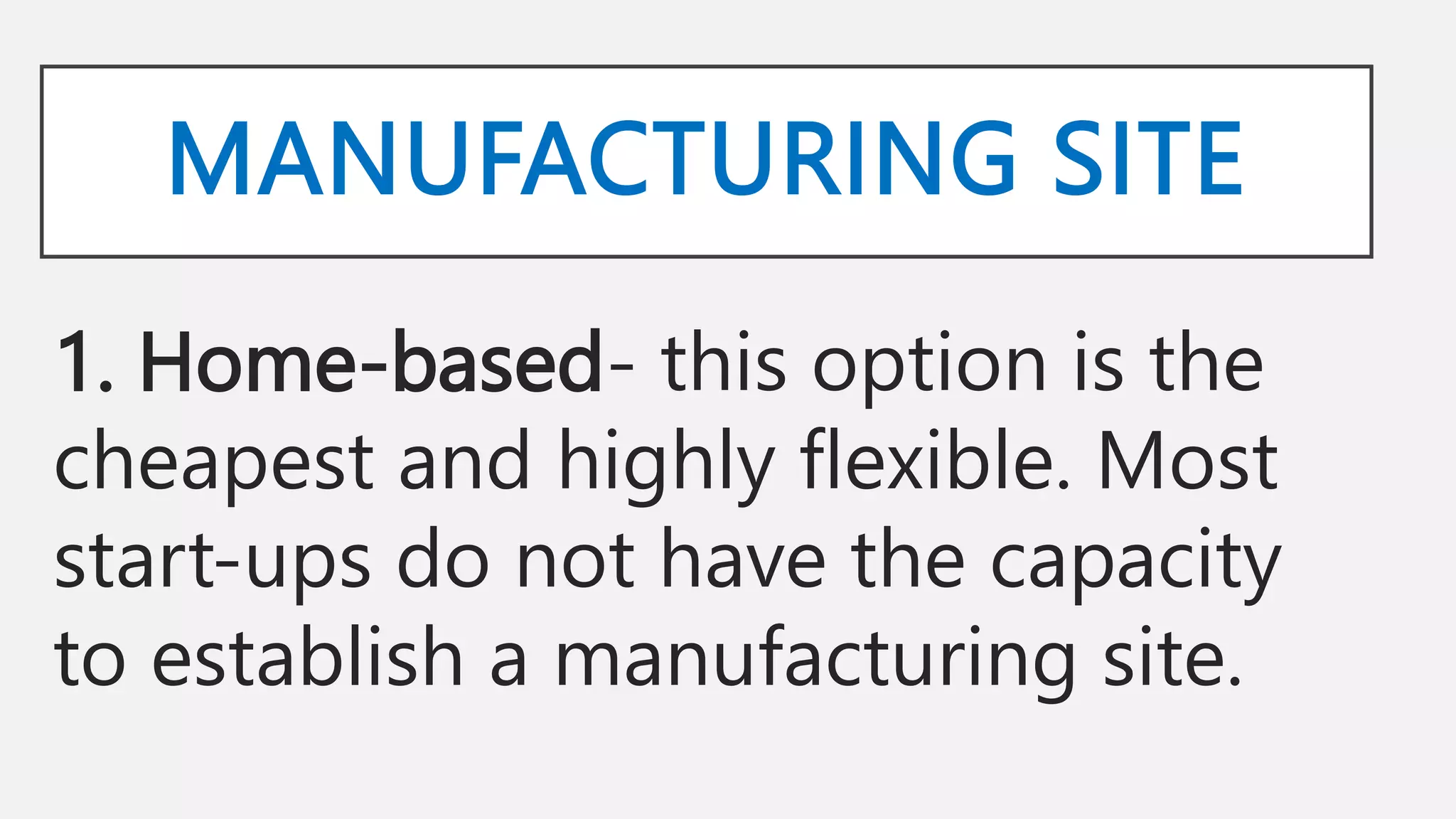
1. Home-based-this option is the
cheapest and highly flexible. Most
start-ups do not have the capacity
to establish a manufacturing site.
16.
MANUFACTURING SITE
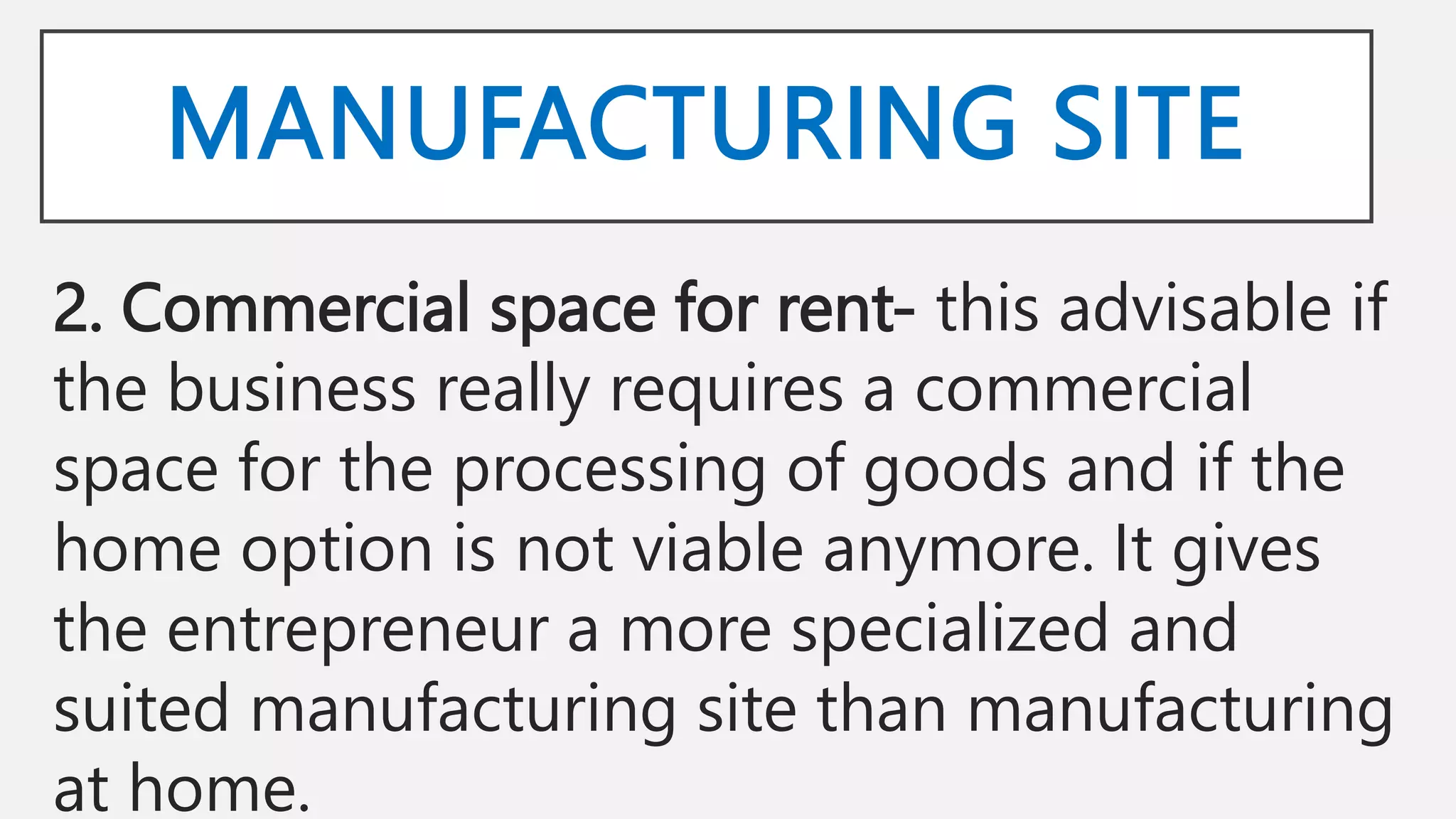
2. Commercialspace for rent- this advisable if
the business really requires a commercial
space for the processing of goods and if the
home option is not viable anymore. It gives
the entrepreneur a more specialized and
suited manufacturing site than manufacturing
at home.
17.
MANUFACTURING SITE
3. Commercialspace purchase- this
option requires the biggest amount of
capital expenditure, but it also provides
the entrepreneur substantial freedom and
flexibility to design and run the
commercial space.
18.
LOCATION
•for delivery ofraw materials and finished
goods, the transportation routes from
manufacturing site should be efficient. It
should be accessible to major types of
transportation vehicles. It must operate
in an environmental- friendly manner.
MANUFACTURING PROCESS
FLOW
•a stepby step guide of the employees and
the manufacturing equipment. The
objective of The Process flow is to ensure
that the right inputs are properly used in
production, that the process is performed
according to the set standards, and that
the acceptable outputs are produced.
23.
MANUFACTURING PROCESS
FLOW
•ULTIMATE OBJECTIVE:To ensure
that maximum efficiency are met-
from the requisition of materials to
processing them into finished
goods up to the distribution to the
24.
B. SERVICE DELIVERYPROCESS
•The entrepreneur who will engage in a
service business must be more meticulous
when it comes to the service delivery process
because services are intangible, and the only
way the customer can appreciate the service
is by remembering how pleasant his or her
experience was. It is cost efficient.
25.
B. SERVICE DELIVERYPROCESS
•Service blueprint- detailed flowchart of the
service business. Every process in the
blueprint should be relevant to the service
business to minimize wastage.
•Bottleneck- part of the process where there
is an apparent inefficiency and where the
customers wait longer
26.
C. DISTRIBUTION OFGOODS AND
SERVICES
•Distribution- it is the process of bringing
products or services to customers. In selling
physical goods, the entrepreneur should plan
the location, the processes, and the
distribution of the products to the customers.
It is not a straight process from the
entrepreneur to customers.
27.
C. DISTRIBUTION OFGOODS AND
SERVICES
•Supply Chain/ Distribution Channel- the
manufacturer will deliver the products to
the distributors, to the wholesalers, to
the retailers, and then finally to the
customers.
•
28.
C. DISTRIBUTION OFGOODS AND
SERVICES
•Manufacturer- handles the invention,
development and production of the
product or service. Take charge of
acquiring materials, production and
delivery schedules, product quality, and
inventory or safety management.
29.
C. DISTRIBUTION OFGOODS AND
SERVICES
•Distributors- are entrepreneurs
who often buy products or services
from the manufacturers and sell
them at a markup price to either
wholesalers or retailers
30.
C. DISTRIBUTION OFGOODS AND
SERVICES
•Agents- don’t own the products or services
because they do not buy these from the
manufacturer. Instead, they negotiate with
buyers as to how much or how many are to be
sold, so the manufacturer will be able to deliver
the goods directly to the buyer. They will get
commission for every product sold.
31.
THE DISTRIBUTOR ORAGENT CAN HELP THE
MANUFACTURER IN ANY OF THE FF.
Sharing industry knowledge, behavior
and activities of the primary target
market.
Pertinent rules and regulations imposed
by the government.
Best practices in operating the business
32.
THE DISTRIBUTOR ORAGENT CAN HELP THE
MANUFACTURER IN ANY OF THE FF.
Best practices in operating the
business
Their respective sticky relationship
with business associates such as
suppliers, financial institutions or
retailers.
33.
D. PAYMENT PROCESS
•theentrepreneur must also establish a
seamless payment process. There are
instances when the customers do not want
to pay in cash and are usually attracted by
flexible and customer-friendly payment
terms such as credit cards, installment plans,
or simple accounts payable or pautang.