Understanding driver interactions
        with In-Vehicle Technologies
                             Closing summary
                               Nick Reed (TRL)


INTERACTION Final Event
22 November 2012, Brussels
Summary of the project
• Broad study of driver behaviour with in-
  vehicle technologies
• Overcome numerous challenges to
  collect and analyse data
• Produced novel insights into driver
  behaviour and IVT use – built on the
  application of a range of techniques


             Final event – November 22, 2012 - Brussels   2
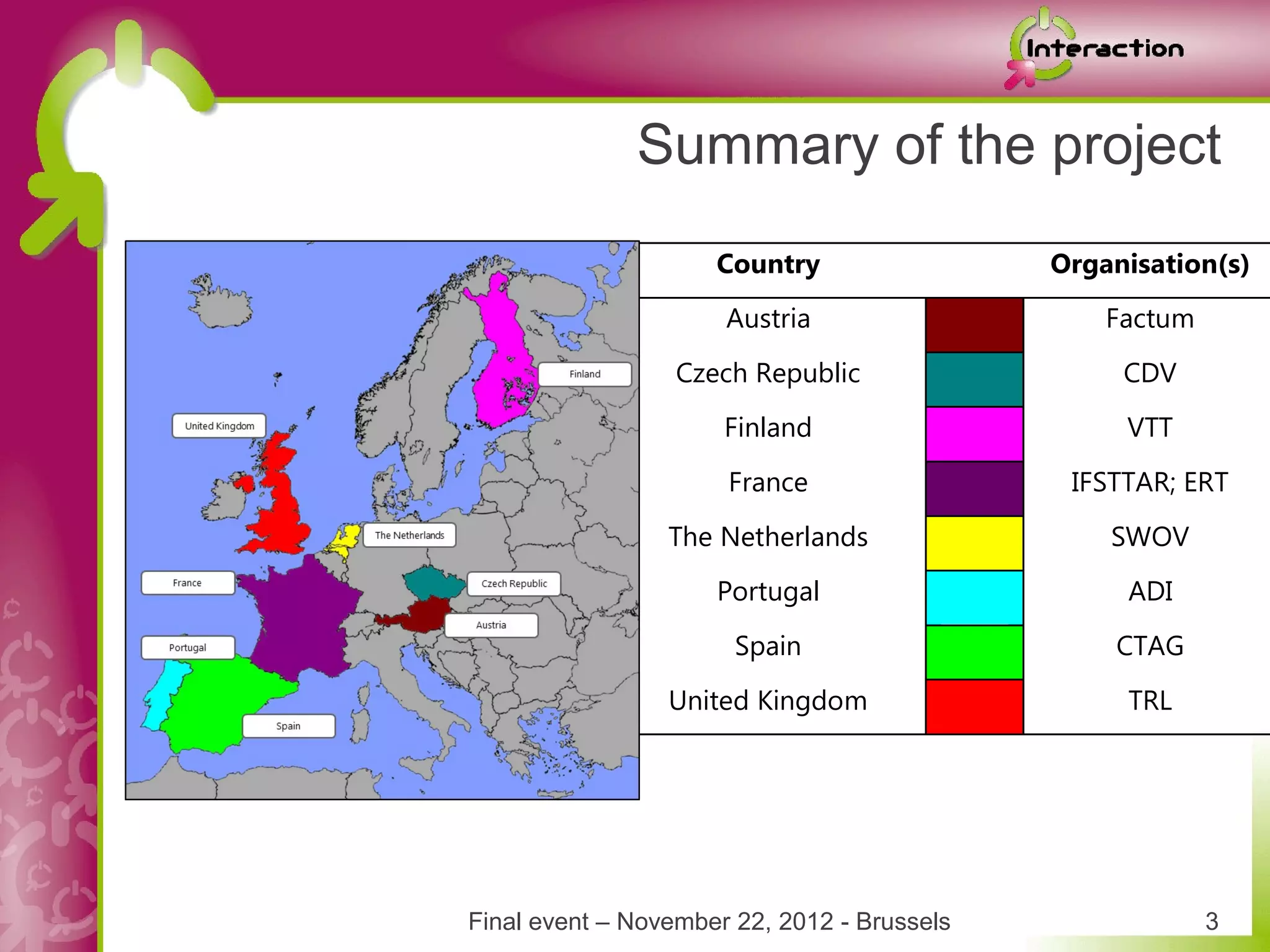
Summary of the project
                     Country                 Organisation(s)
                      Austria                    Factum
                  Czech Republic                  CDV
                      Finland                     VTT
                      France                  IFSTTAR; ERT
                 The Netherlands                 SWOV
                     Portugal                     ADI
                       Spain                     CTAG
                 United Kingdom                   TRL


Final event – November 22, 2012 - Brussels                3
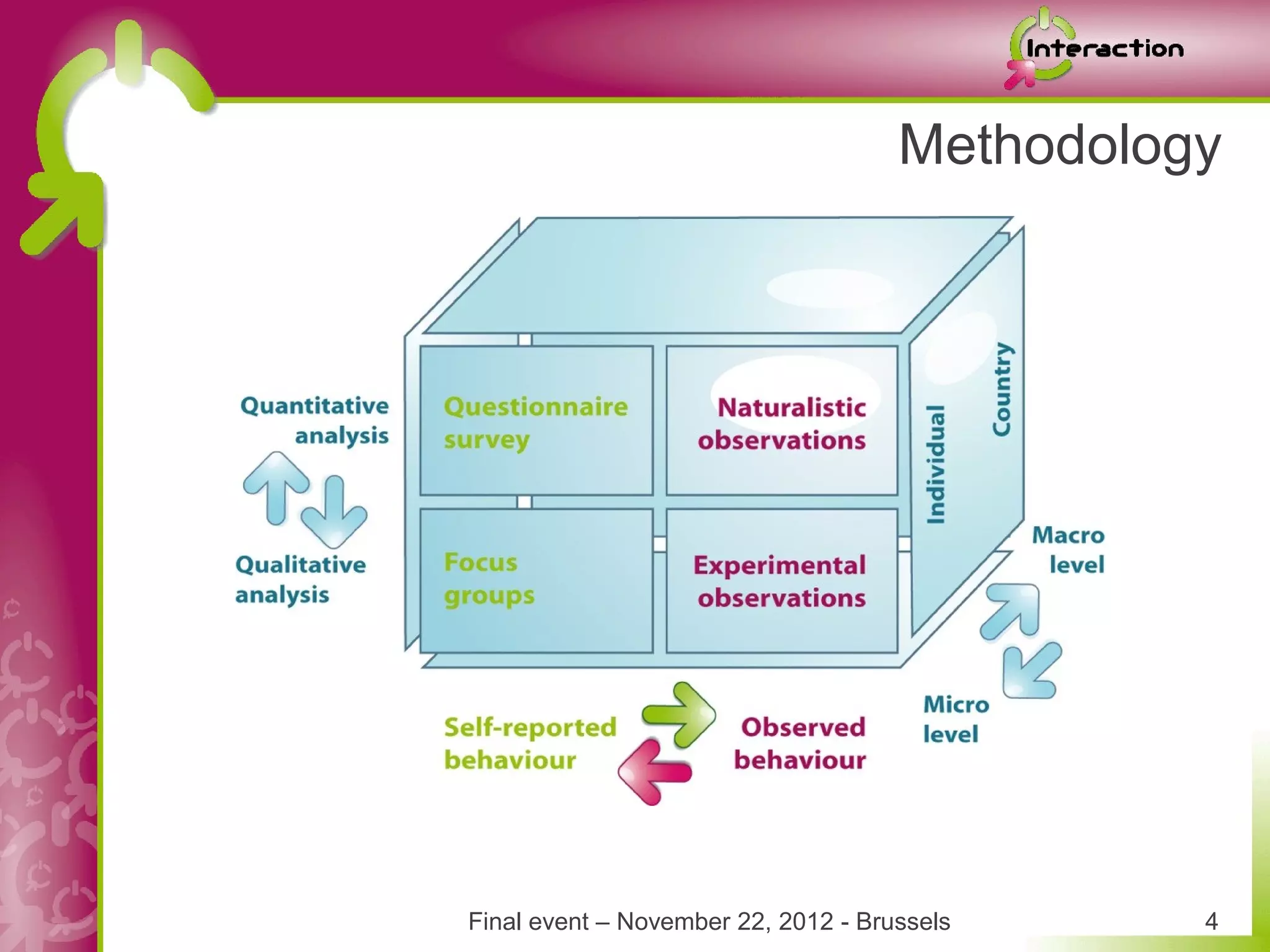
Methodology


Final event – November 22, 2012 - Brussels     4
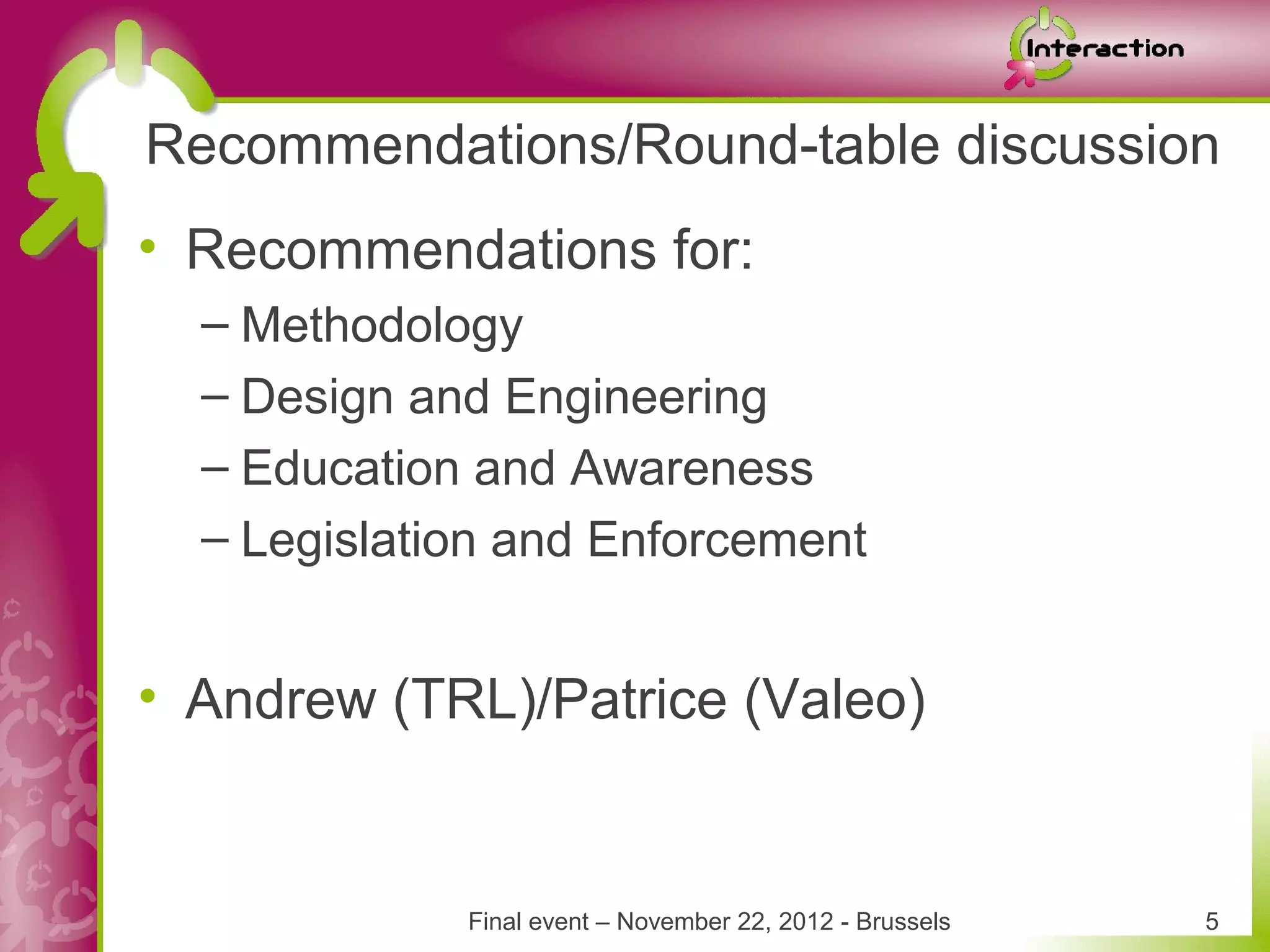
Recommendations/Round-table discussion
• Recommendations for:
  – Methodology
  – Design and Engineering
  – Education and Awareness
  – Legislation and Enforcement


• Andrew (TRL)/Patrice (Valeo)


             Final event – November 22, 2012 - Brussels   5
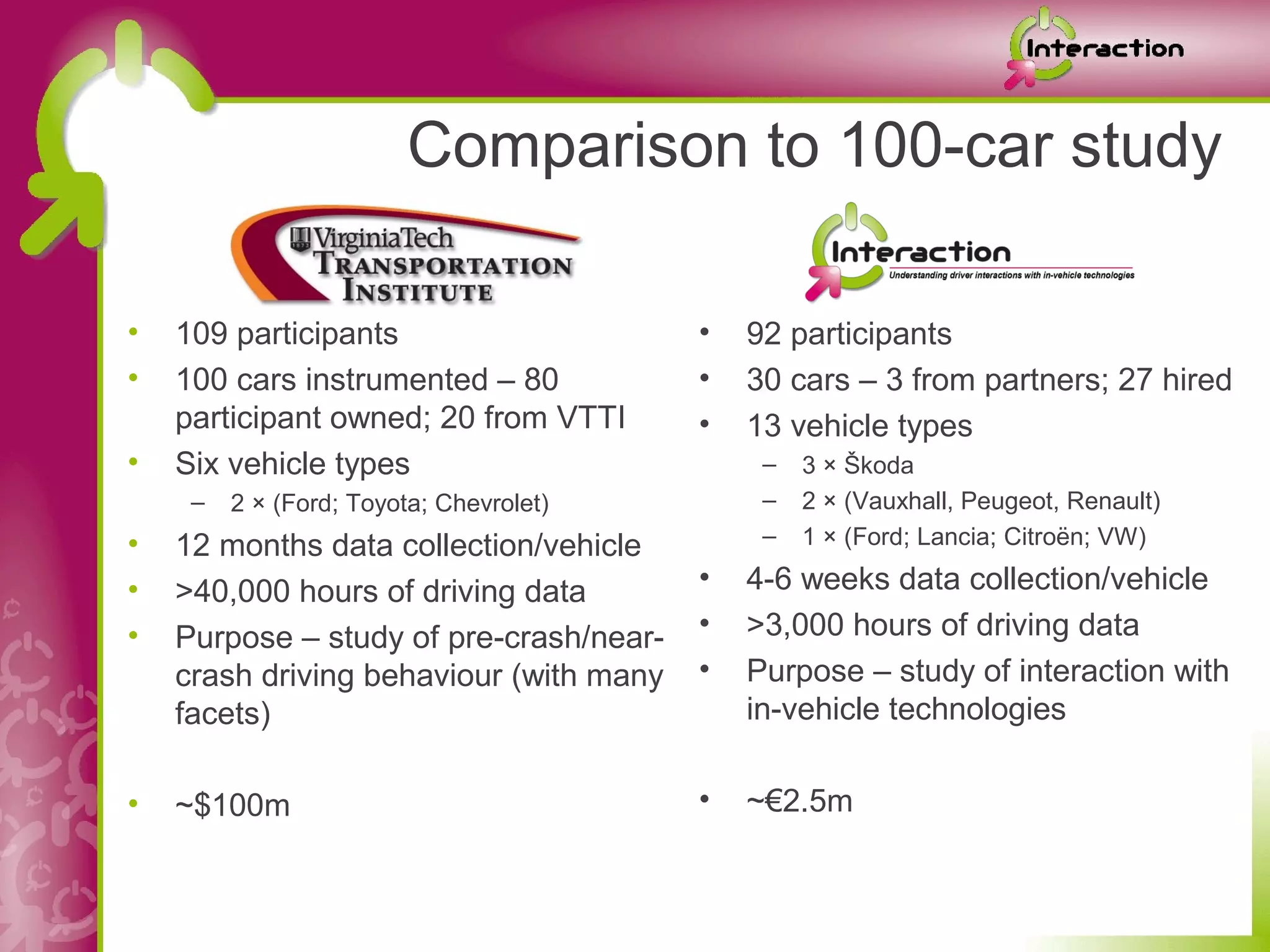
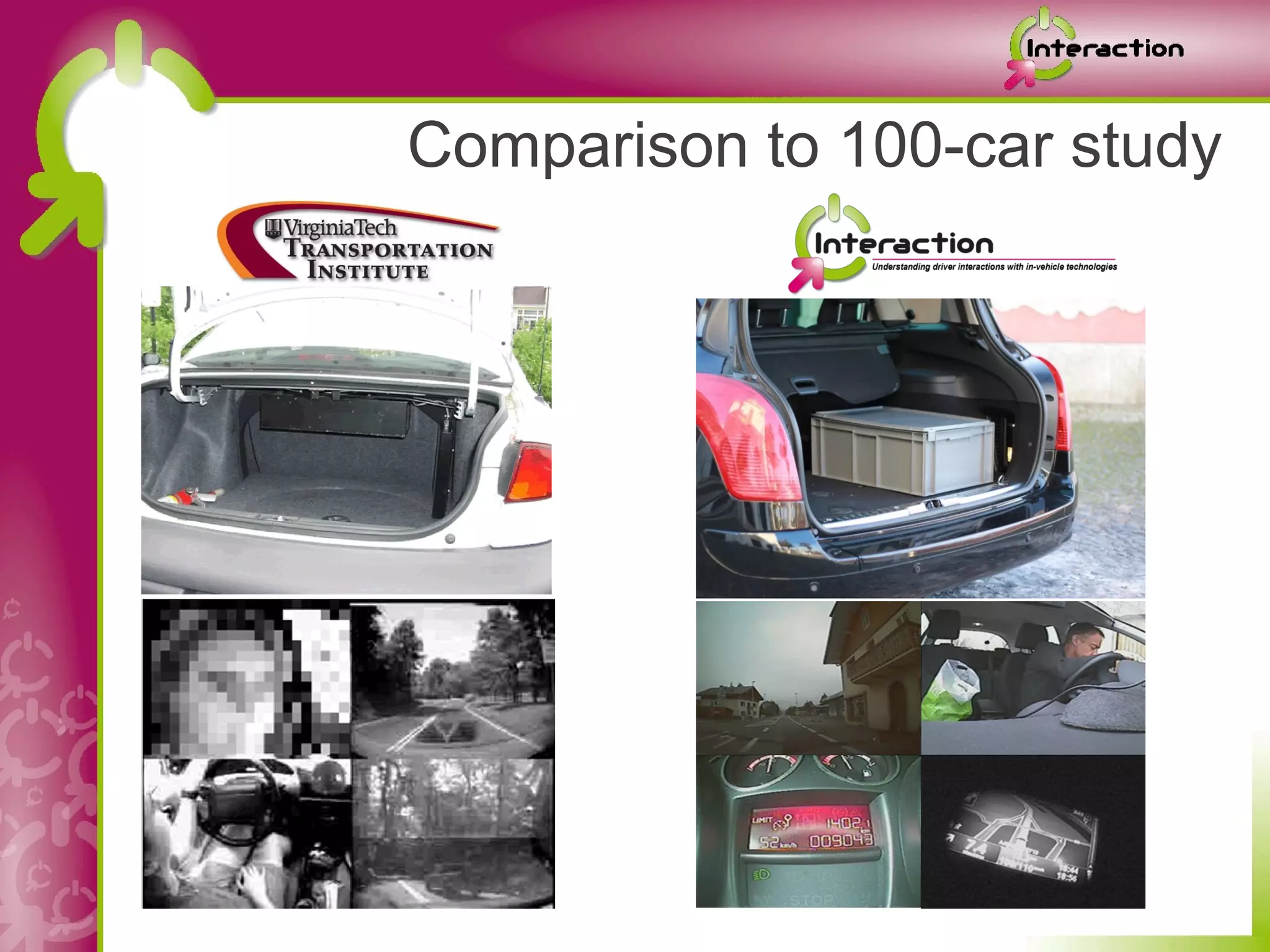
Comparison to 100-car study

•   109 participants                     •   92 participants
•   100 cars instrumented – 80           •   30 cars – 3 from partners; 27 hired
    participant owned; 20 from VTTI      •   13 vehicle types
•   Six vehicle types                         –   3 × Škoda
     –   2 × (Ford; Toyota; Chevrolet)        –   2 × (Vauxhall, Peugeot, Renault)
•   12 months data collection/vehicle         –   1 × (Ford; Lancia; Citroën; VW)

•   >40,000 hours of driving data        •   4-6 weeks data collection/vehicle
•   Purpose – study of pre-crash/near-   •   >3,000 hours of driving data
    crash driving behaviour (with many   •   Purpose – study of interaction with
    facets)                                  in-vehicle technologies

•   ~$100m                               •   ~€2.5m
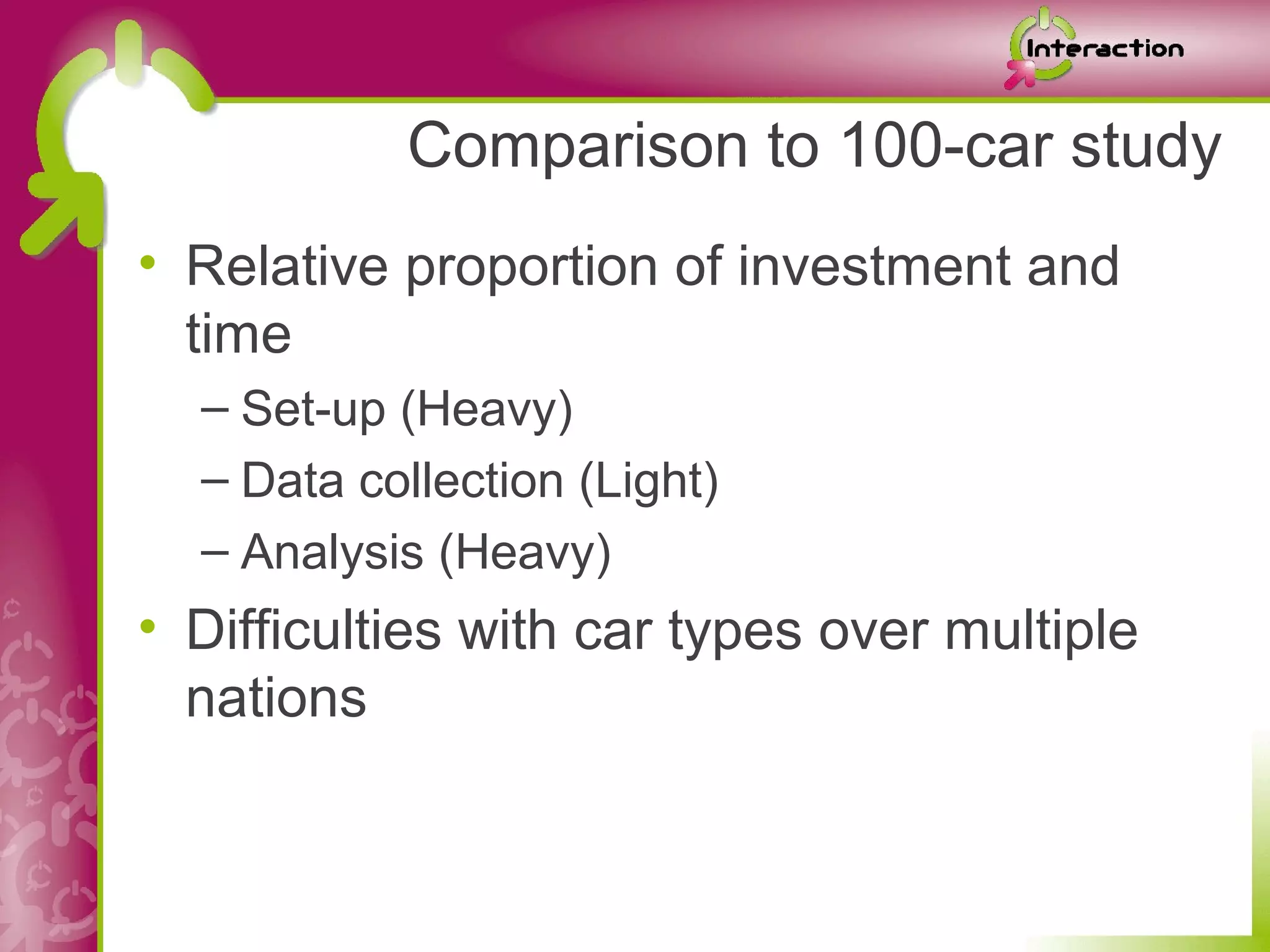
Comparison to 100-car study
• Relative proportion of investment and
  time
  – Set-up (Heavy)
  – Data collection (Light)
  – Analysis (Heavy)
• Difficulties with car types over multiple
  nations
Limitations
• Naturalistic driving data
  – Associations between events – not causal links
  – More data leads to higher confidence in
    association but does not prove link
  – Focus group, questionnaire, observed driving
    techniques strengthen results
• Progress of technology
  – Smartphones/Apps
  – Integration of handsfree functionality
  – Additional ADAS
Future prospects
• Radar data
• ‘Black box’ insurance policies
• Naturalistic data
  – in-vehicle technology vs. odds ratios
• IVT
  – Semi- and full-autonomy (ACC + LKAS = Super-
    Cruise)
  – HUDs; haptic displays
  – Do these enable use of other IVTs?

              Final event – November 22, 2012 - Brussels   10
Future prospects
• Interaction lives on!
• Exploitation beyond the life of the project
  –   Further studies planned by partners
  –   DAS systems can be re-used
  –   Database will eventually be publicly available
  –   Resource for researchers to interrogate to test
      different hypotheses


                  Final event – November 22, 2012 - Brussels   11
We hope you enjoyed
today’s interaction!


   Final event – November 22, 2012 - Brussels   12

(11) INTERACTION Final event - Wrap-up

  • 1.
    Understanding driver interactions with In-Vehicle Technologies Closing summary Nick Reed (TRL) INTERACTION Final Event 22 November 2012, Brussels
  • 2.
    Summary of theproject • Broad study of driver behaviour with in- vehicle technologies • Overcome numerous challenges to collect and analyse data • Produced novel insights into driver behaviour and IVT use – built on the application of a range of techniques Final event – November 22, 2012 - Brussels 2
  • 3.
    Summary of theproject Country Organisation(s) Austria Factum Czech Republic CDV Finland VTT France IFSTTAR; ERT The Netherlands SWOV Portugal ADI Spain CTAG United Kingdom TRL Final event – November 22, 2012 - Brussels 3
  • 4.
    Methodology Final event –November 22, 2012 - Brussels 4
  • 5.
    Recommendations/Round-table discussion • Recommendationsfor: – Methodology – Design and Engineering – Education and Awareness – Legislation and Enforcement • Andrew (TRL)/Patrice (Valeo) Final event – November 22, 2012 - Brussels 5
  • 6.
    Comparison to 100-carstudy • 109 participants • 92 participants • 100 cars instrumented – 80 • 30 cars – 3 from partners; 27 hired participant owned; 20 from VTTI • 13 vehicle types • Six vehicle types – 3 × Škoda – 2 × (Ford; Toyota; Chevrolet) – 2 × (Vauxhall, Peugeot, Renault) • 12 months data collection/vehicle – 1 × (Ford; Lancia; Citroën; VW) • >40,000 hours of driving data • 4-6 weeks data collection/vehicle • Purpose – study of pre-crash/near- • >3,000 hours of driving data crash driving behaviour (with many • Purpose – study of interaction with facets) in-vehicle technologies • ~$100m • ~€2.5m
  • 7.
  • 8.
    Comparison to 100-carstudy • Relative proportion of investment and time – Set-up (Heavy) – Data collection (Light) – Analysis (Heavy) • Difficulties with car types over multiple nations
  • 9.
    Limitations • Naturalistic drivingdata – Associations between events – not causal links – More data leads to higher confidence in association but does not prove link – Focus group, questionnaire, observed driving techniques strengthen results • Progress of technology – Smartphones/Apps – Integration of handsfree functionality – Additional ADAS
  • 10.
    Future prospects • Radardata • ‘Black box’ insurance policies • Naturalistic data – in-vehicle technology vs. odds ratios • IVT – Semi- and full-autonomy (ACC + LKAS = Super- Cruise) – HUDs; haptic displays – Do these enable use of other IVTs? Final event – November 22, 2012 - Brussels 10
  • 11.
    Future prospects • Interactionlives on! • Exploitation beyond the life of the project – Further studies planned by partners – DAS systems can be re-used – Database will eventually be publicly available – Resource for researchers to interrogate to test different hypotheses Final event – November 22, 2012 - Brussels 11
  • 12.
    We hope youenjoyed today’s interaction! Final event – November 22, 2012 - Brussels 12