

GFC AND SOVEREIGN RISK- MITIGATING MEASURES
AND SOLUTIONS FROM DOWN UNDER
Professor the Hon Stephen Martin
Chief Executive


INTERNATIONAL FEDERATION OF ACCOUNTANTS
CONFERENCE
THE SOVEREIGN DEBT CRISIS, A MATTER OF
URGENCY―FROM LESSONS TO REFORM
March 19-20, 2012
Vienna, Austria
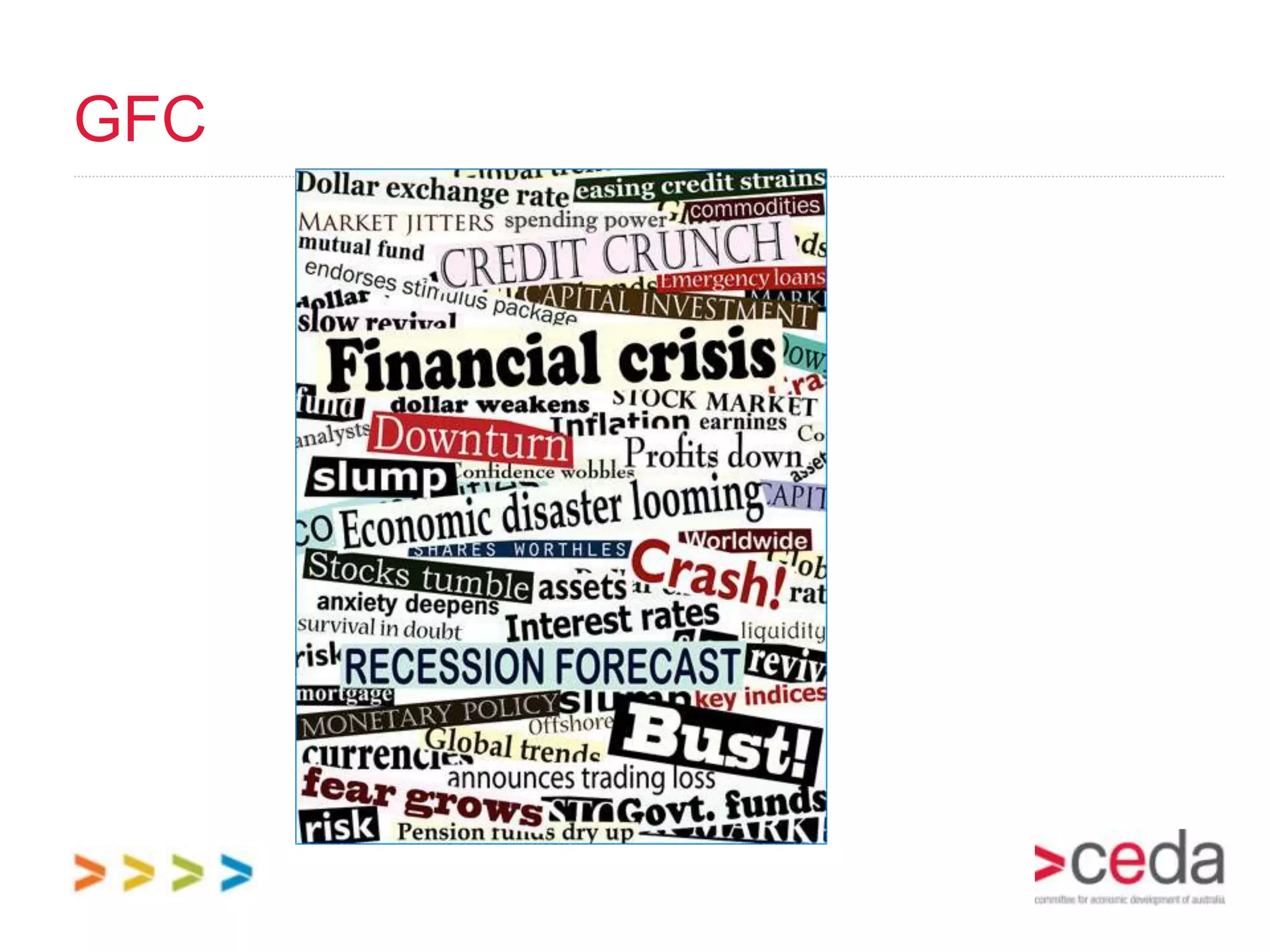
GFC
GFC- a re-cap
 Northern hemisphere problem?
 Global savings/borrowing imbalances
 US encouragement of home ownership, sub-prime crisis and credit
    crisis and US monetary policy
   Lack of regulatory oversight and corporate risk management
   Financial institutions collapse in US and Europe (Lehmann – the
    financial world stopped)
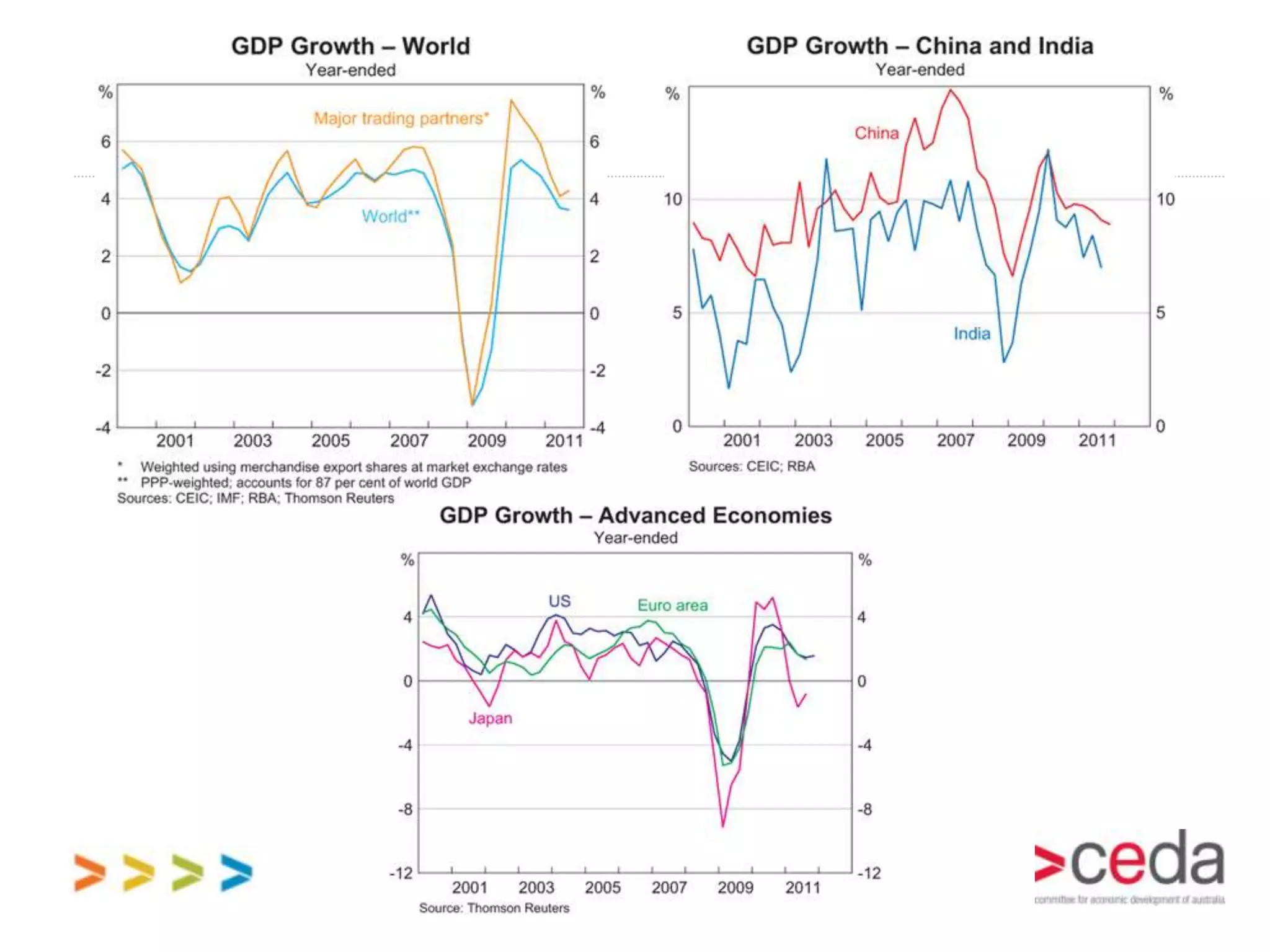
   World GDP falls, global trade collapses
   Business/Consumer confidence plummets, unemployment rises
   Massive fiscal/monetary stimuli
   Huge support for financial markets from central banks
Australia and the GFC

 Not nearly as bad as other developed economies
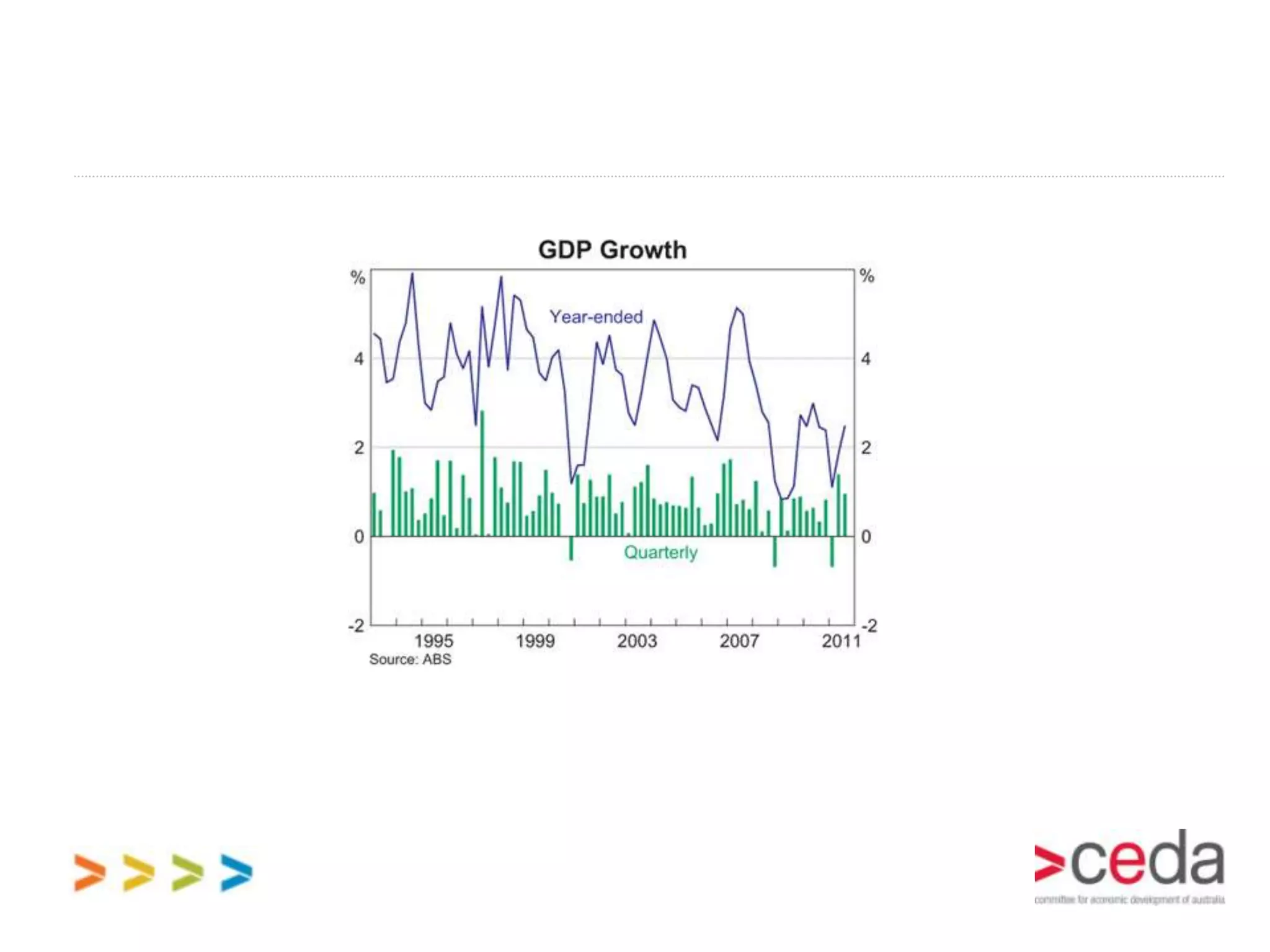
 Growth rate slowed
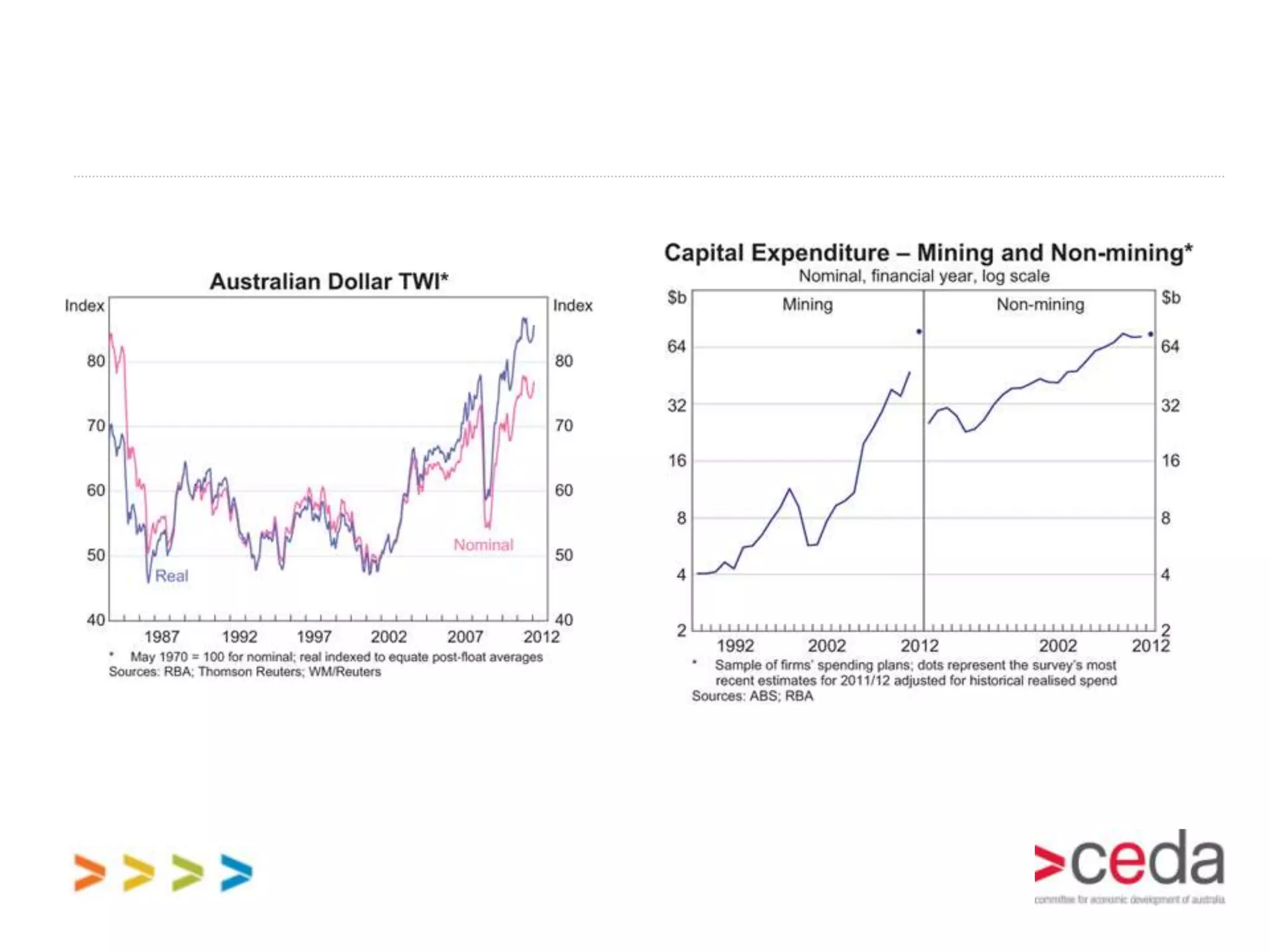
 Exports fell, commodity prices fell, terms of trade
  contracted, exchange rate fell
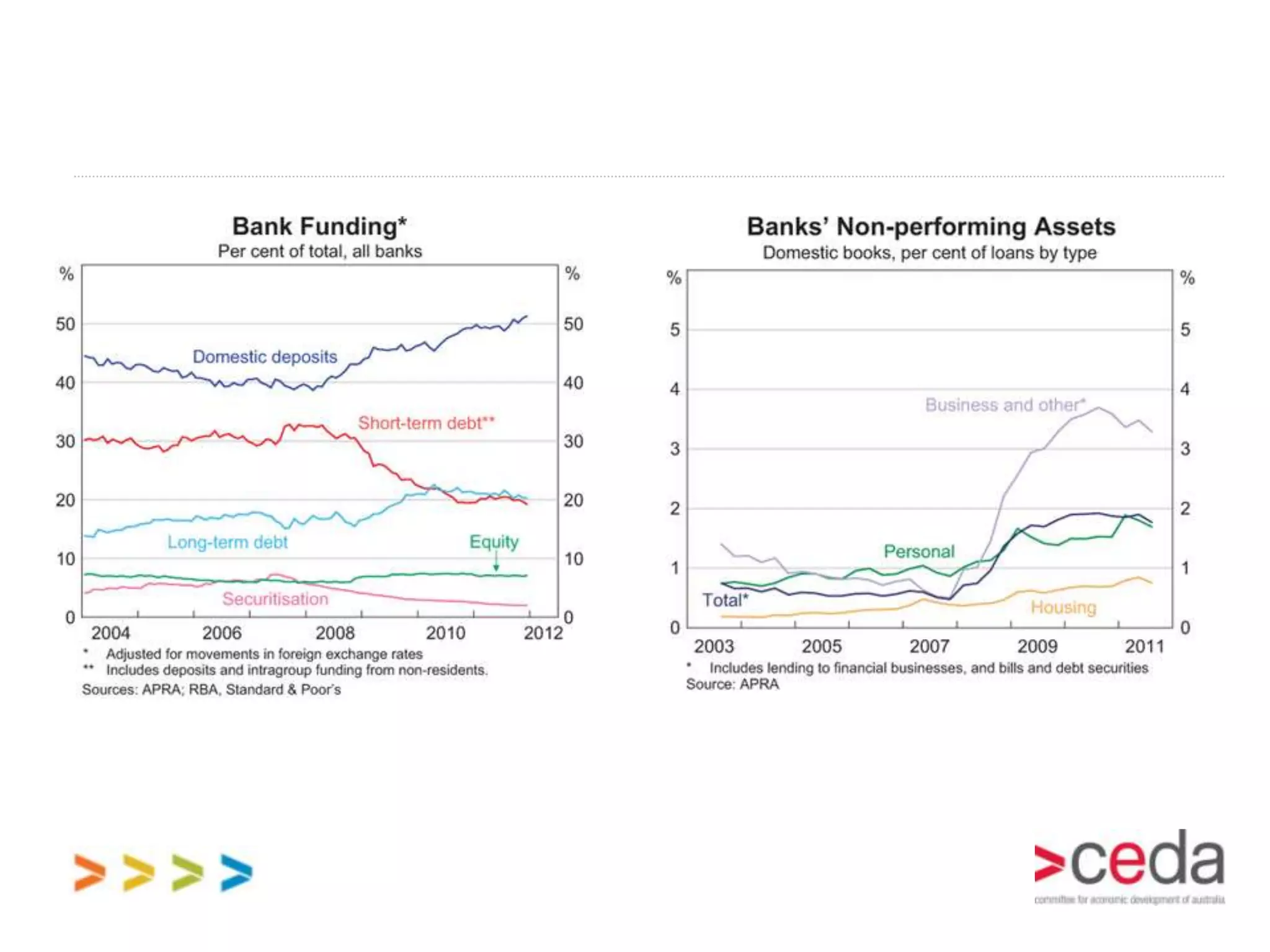
 Credit provision tightened
 Consumer and business confidence fell
 Unemployment rose slightly
 Share market fell
 No banks or financial institutions failed
Government response to GFC
 Hard, early, households
 Massive surplus of $21b available for injection into the economy
 Support for the finance sector through bank guarantees, funding
  housing mortgages through government securities, consumer
  protection
 RBA movement on interest rates
 Major economic stimulus through
    social security system (pensions and family allowance) $8.8b
    increasing first home buyers grants $1.5b
    Education and training programs $187m
    Nation Building and Jobs Plan (including Building the Education
     Revolution, energy efficiency, infrastructure, housing) $42b
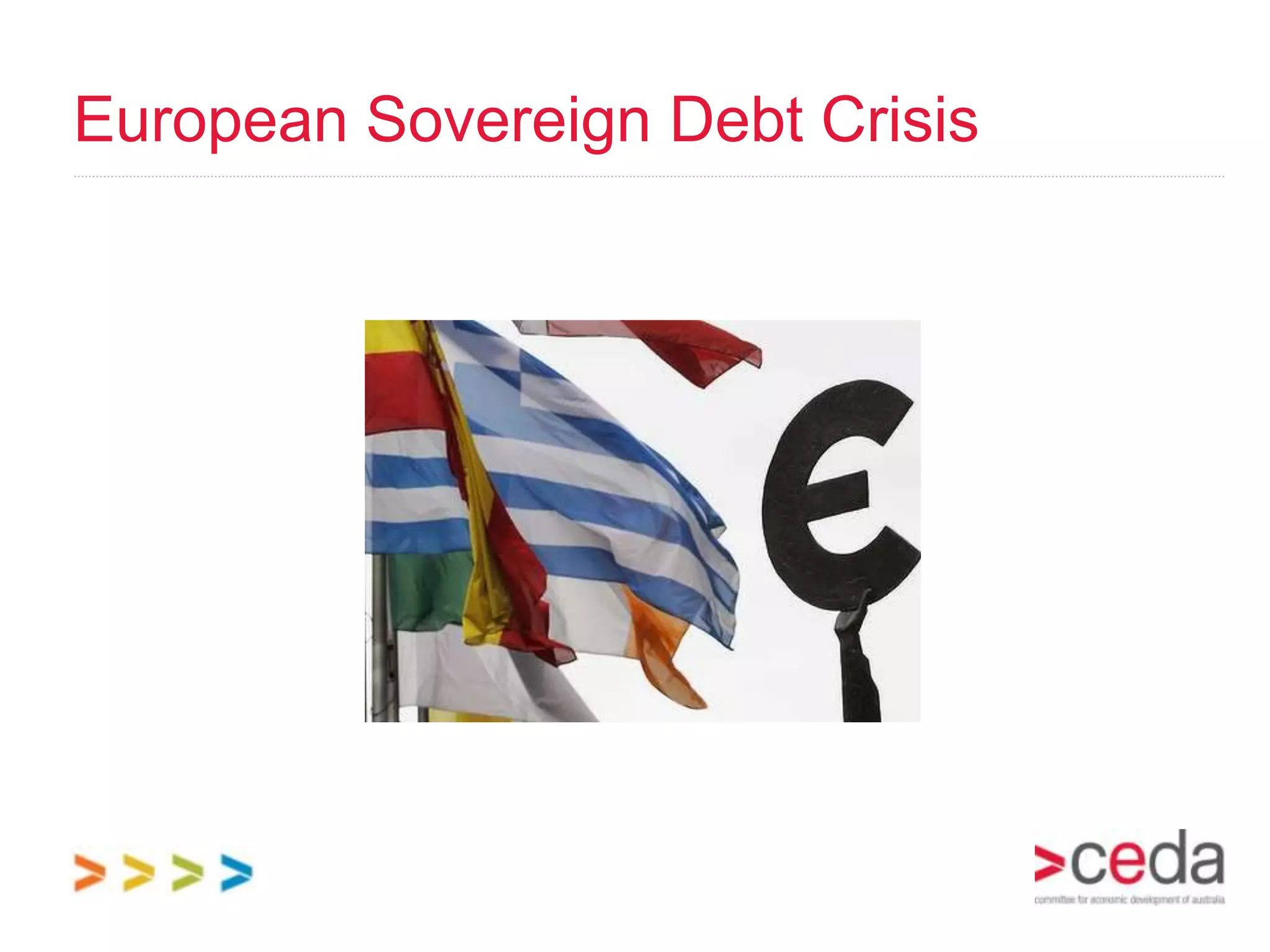
European Sovereign Debt Crisis
European sovereign debt crisis- causes
and solutions
 globalization of finance
 easy credit conditions during the 2002-2008 period that encouraged
    high-risk lending and borrowing practices
   international trade imbalances
   real-estate bubbles that have since burst
   slow growth economic conditions 2008 and after
   fiscal policy choices related to government revenues and expenses
   policy responses used by nations to bail-out troubled banking
    industries and private bondholders, assuming private debt burdens or
    socializing losses.
   Greek tragedy, potential contagion, Germany the boss, hopeful signs,
    more meetings, financial bailout, white knights?
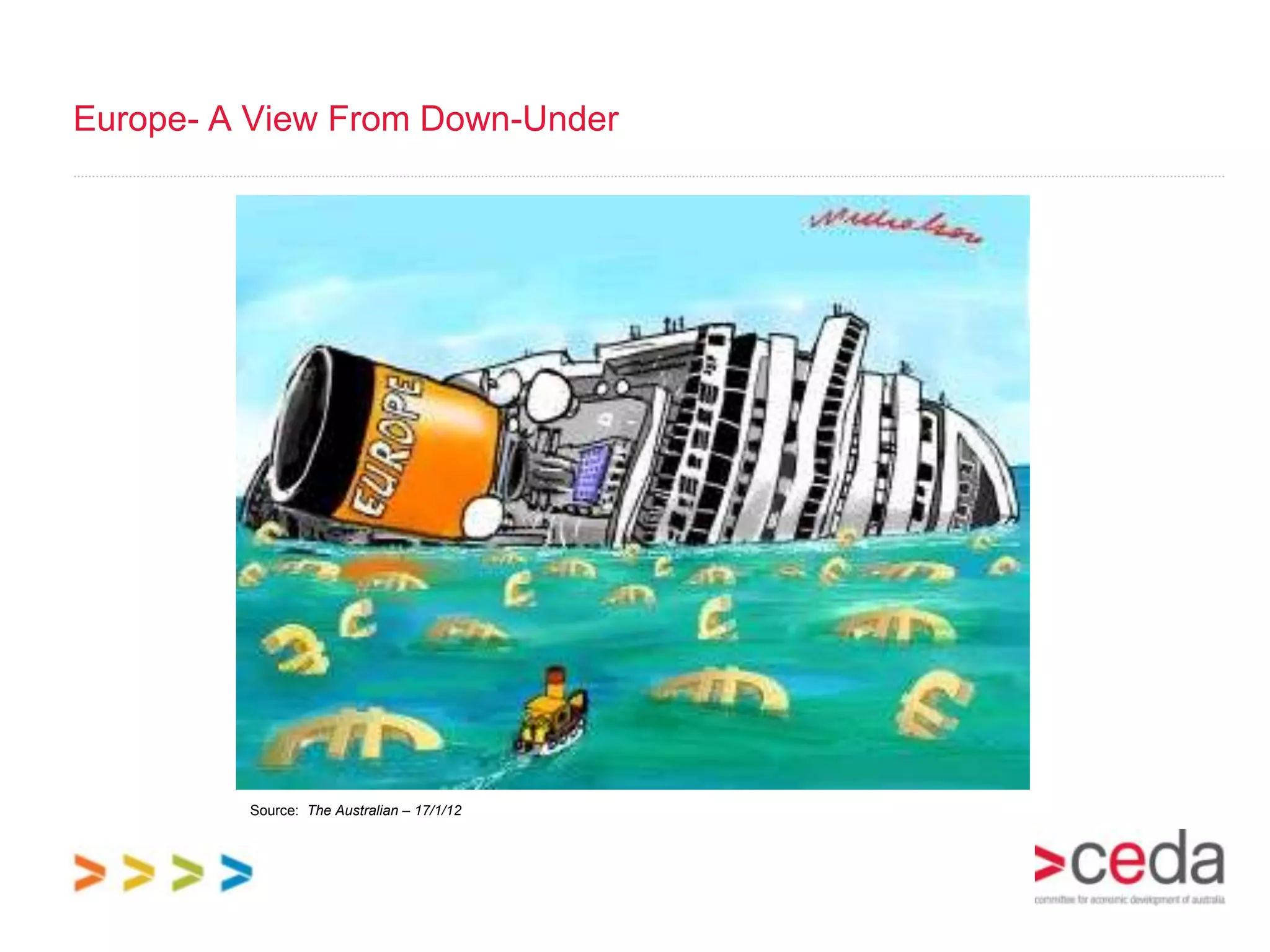
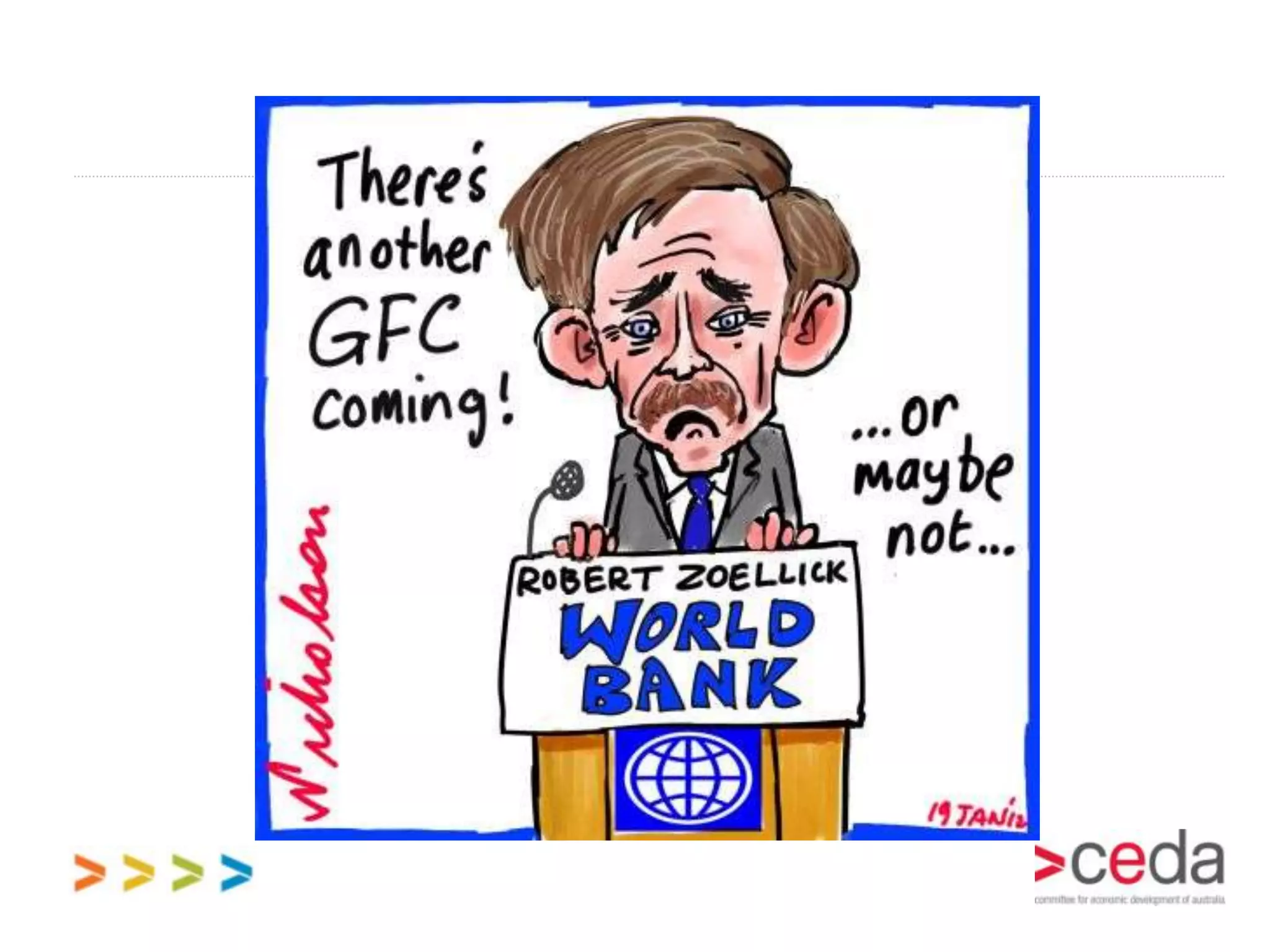
I’m gonna make her an offer she can’t
refuse
Europe- A View From Down-Under


         Source: The Australian – 17/1/12
Australia’s preparedness for the GFC
and European sovereign debt crisis
 Commonwealth of Australia 1901- economic, political and monetary
    union
   Economic and political history since the early 1980’s
   Trade liberalisation
   Financial deregulation coupled with improved and coordinated
    prudential supervision
   Labour market deregulation
   Taxation reforms
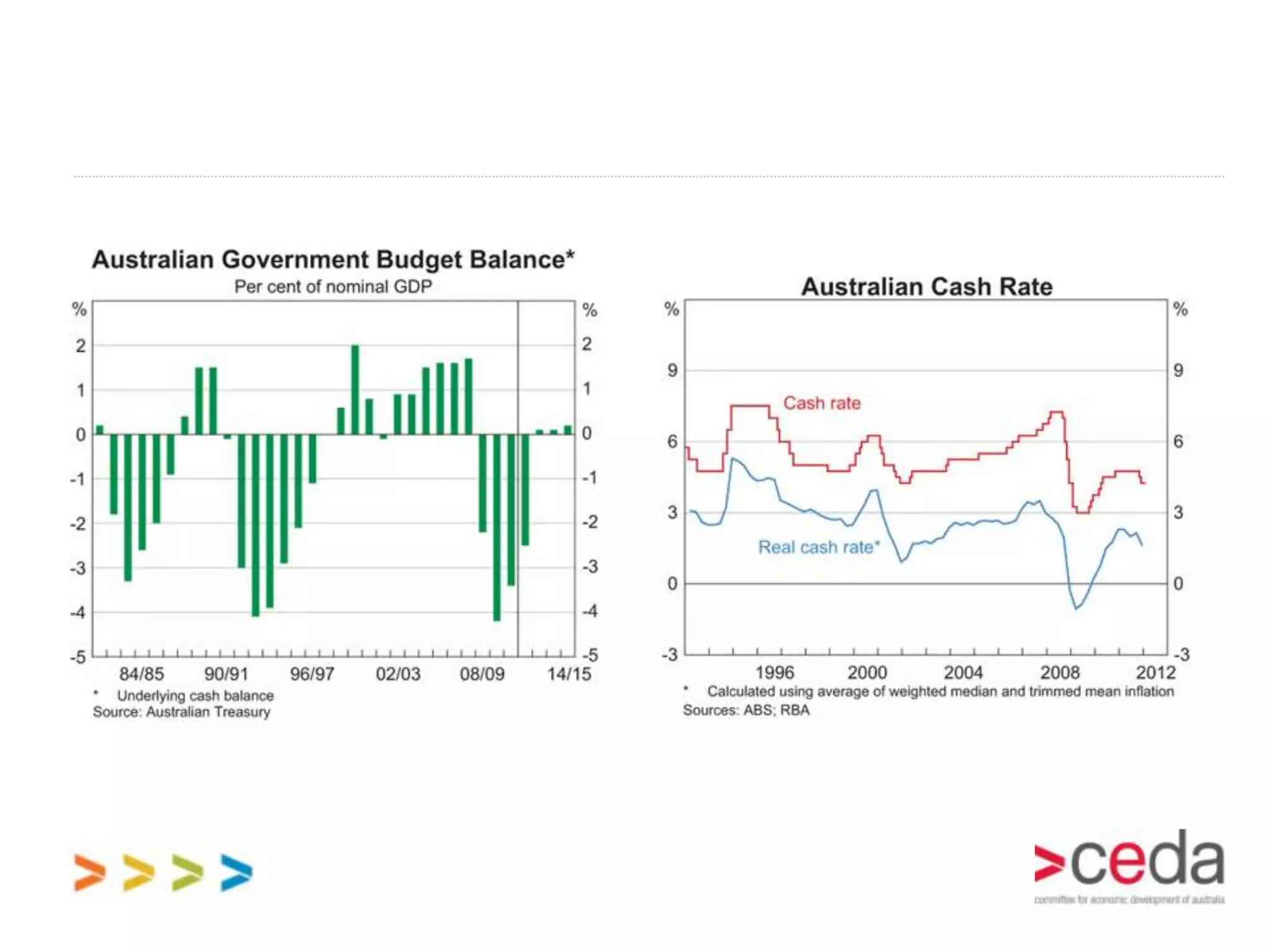
   Macroeconomic policy- inflation targets, budget deficit and fiscal
    consolidation strategies
   Superannuation
   Health care and social security reforms
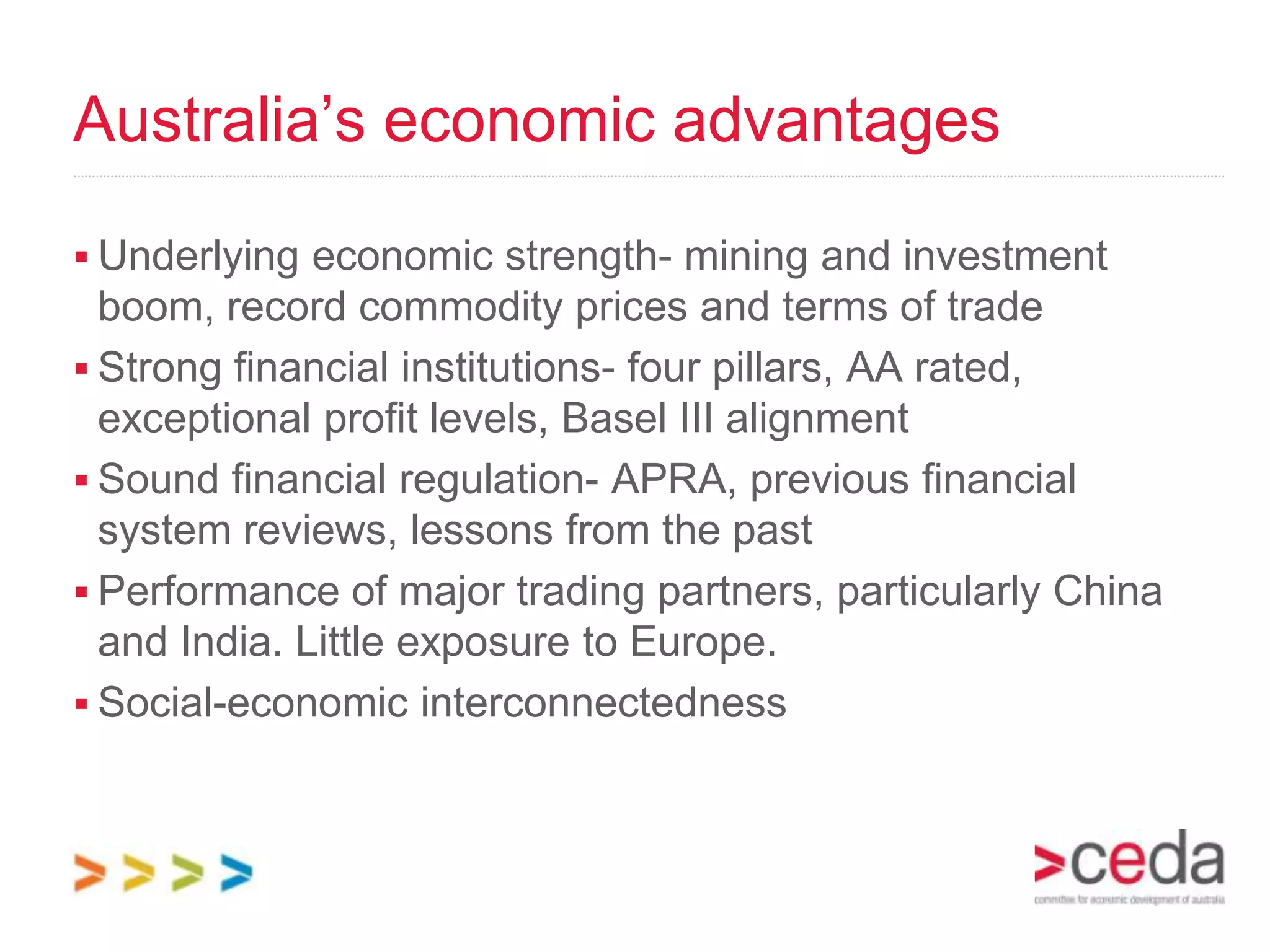
Australia’s economic advantages

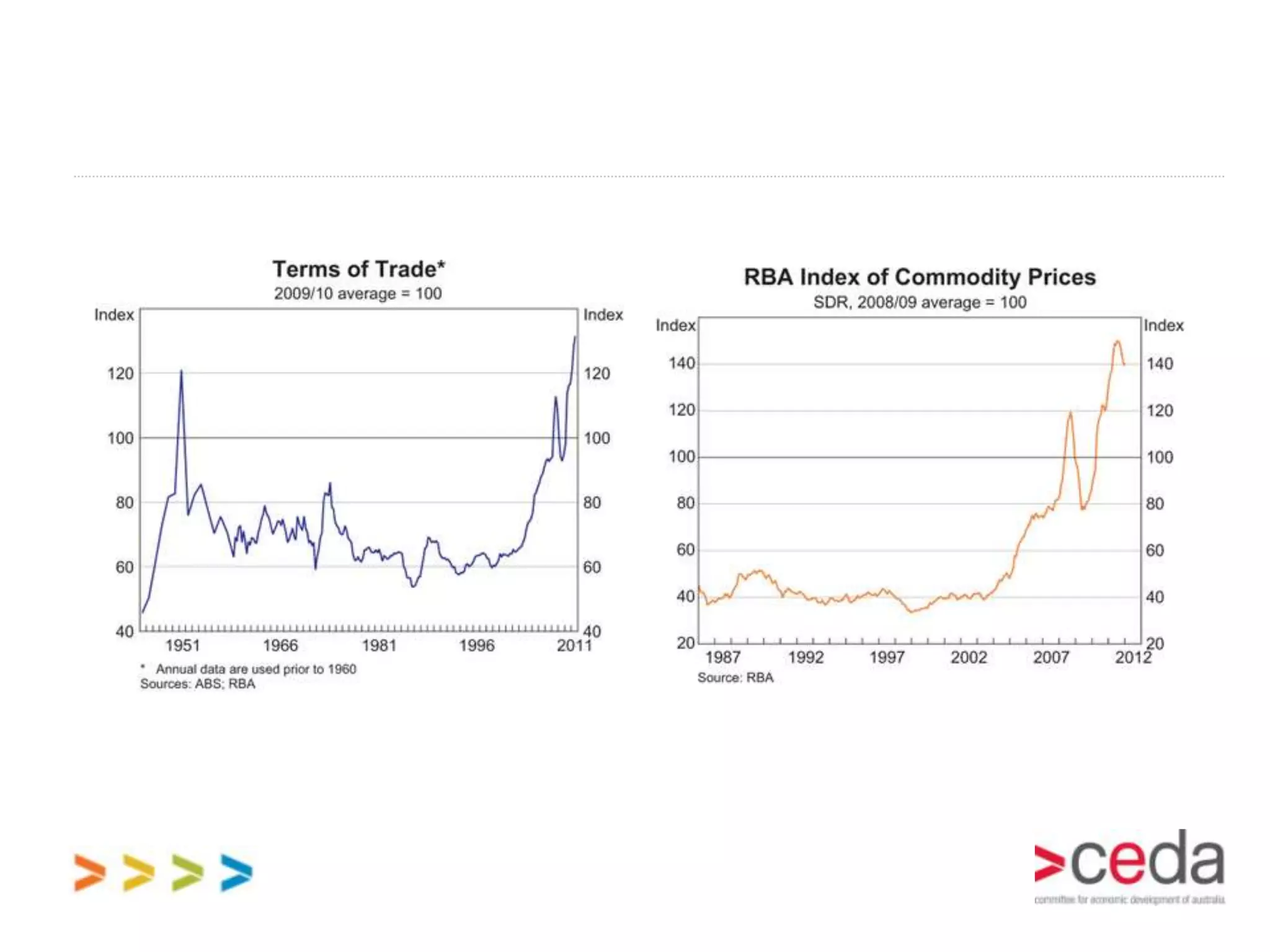
 Underlying economic strength- mining and investment
  boom, record commodity prices and terms of trade
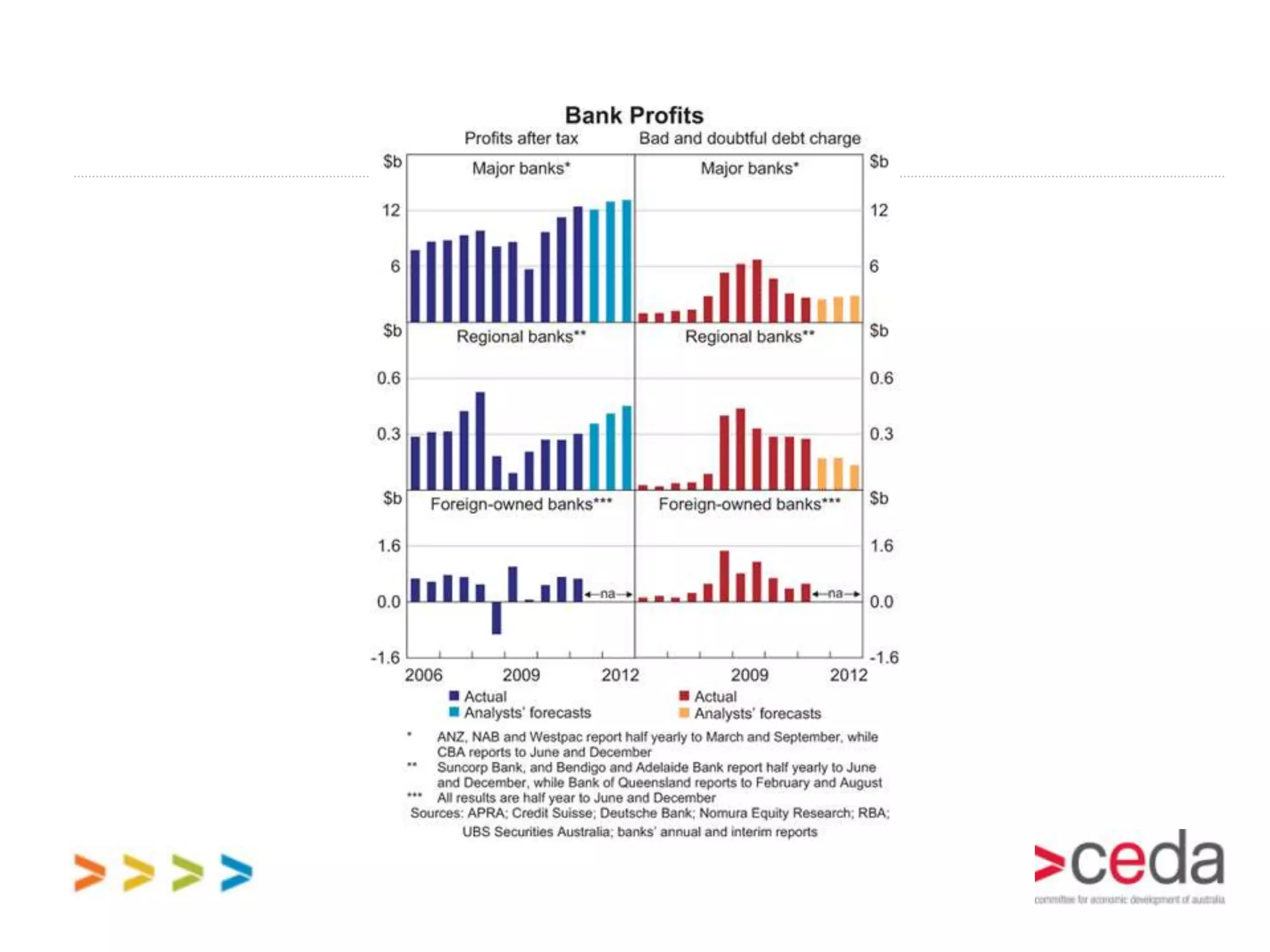
 Strong financial institutions- four pillars, AA rated,
  exceptional profit levels, Basel III alignment
 Sound financial regulation- APRA, previous financial
  system reviews, lessons from the past
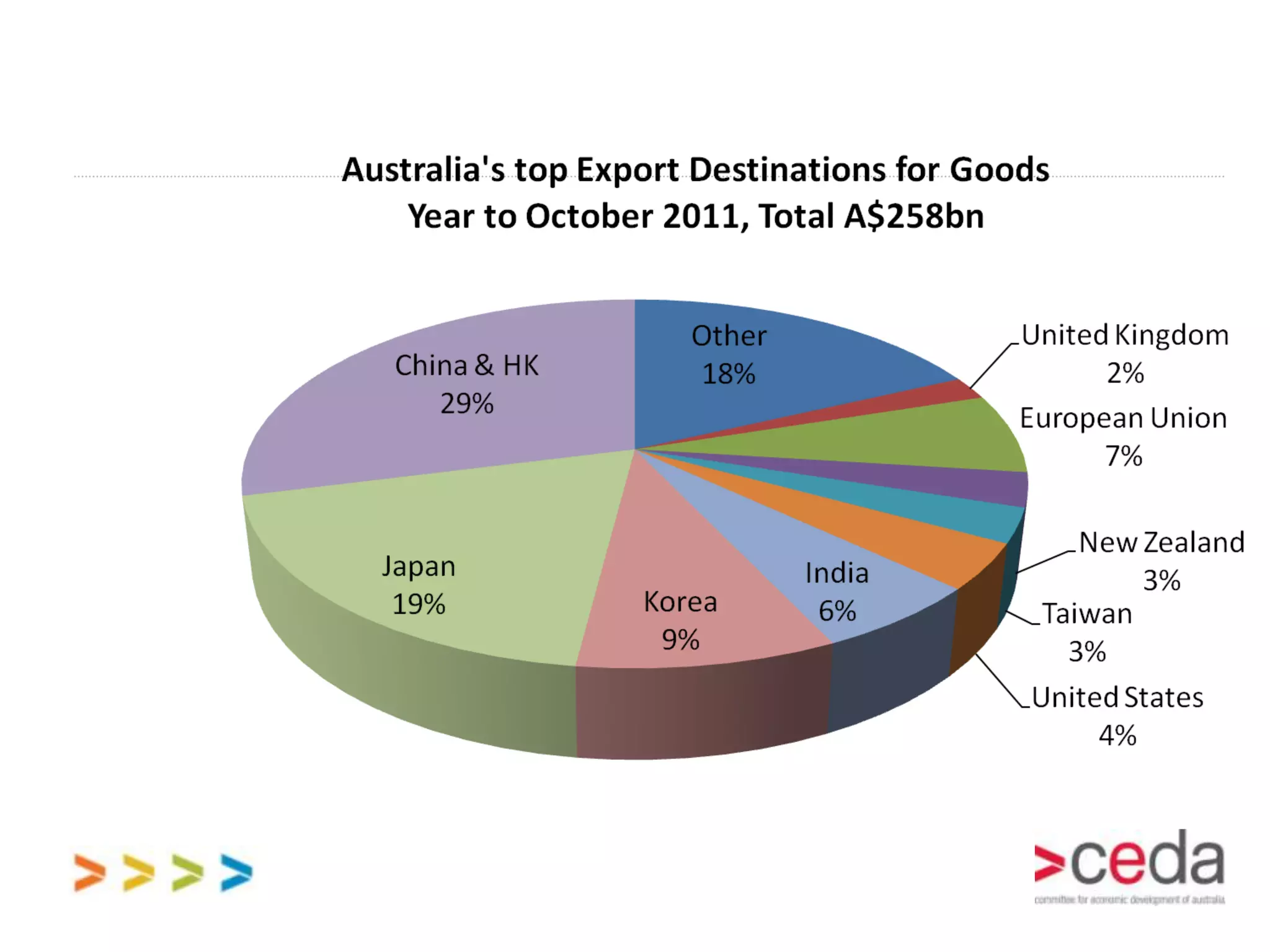
 Performance of major trading partners, particularly China
  and India. Little exposure to Europe.
 Social-economic interconnectedness
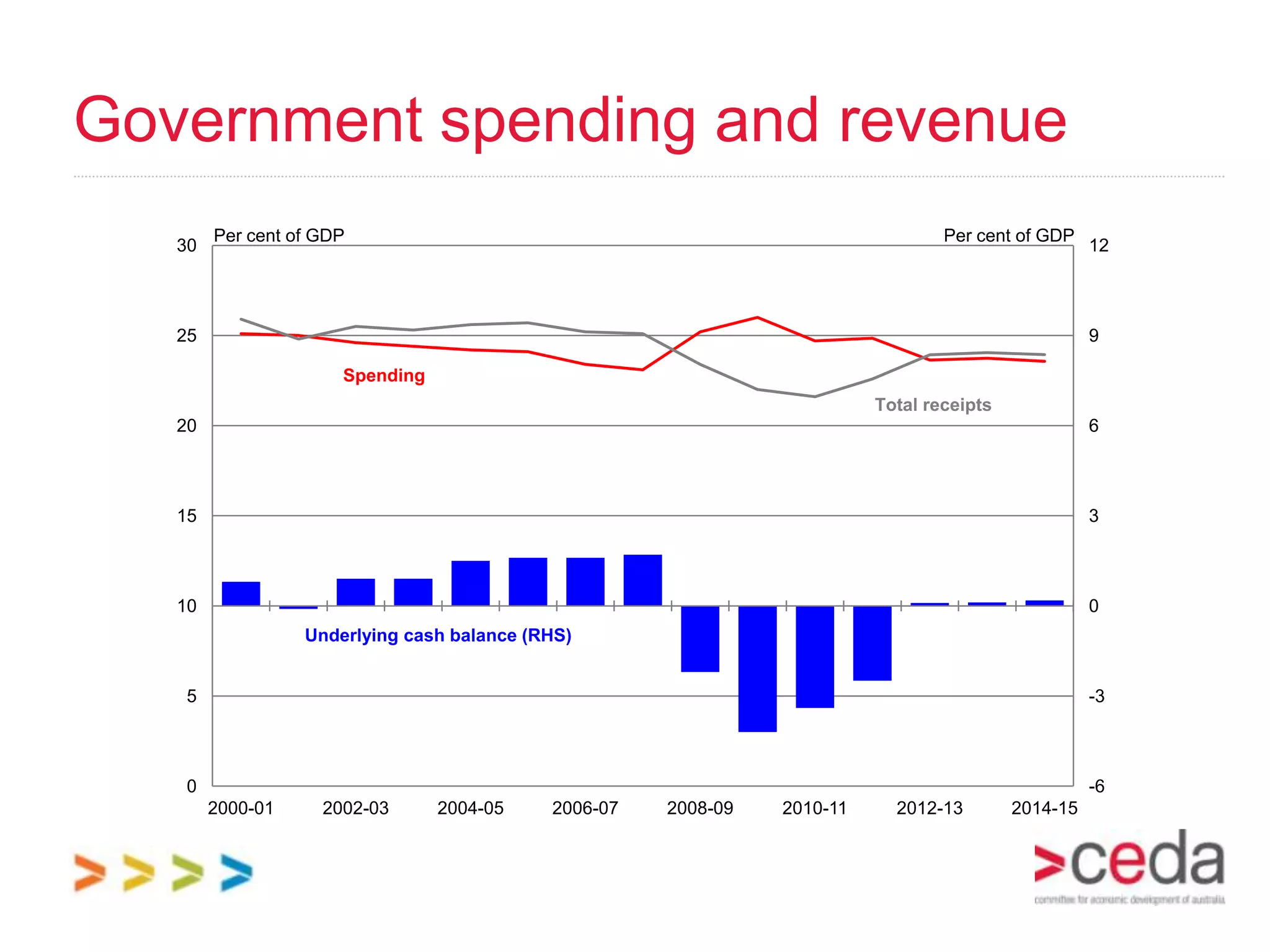
Government spending and revenue
        Per cent of GDP                                                           Per cent of GDP
   30                                                                                                12


   25                                                                                                9

                      Spending
                                                                          Total receipts
   20                                                                                                6


   15                                                                                                3


   10                                                                                                0
                  Underlying cash balance (RHS)


    5                                                                                                -3


    0                                                                                                -6
        2000-01     2002-03      2004-05    2006-07   2008-09   2010-11     2012-13        2014-15
Factors affecting Australia’s current and
future economic performance
 IMF/Government forecasts for world growth and implications for
    Australia and its trading partners
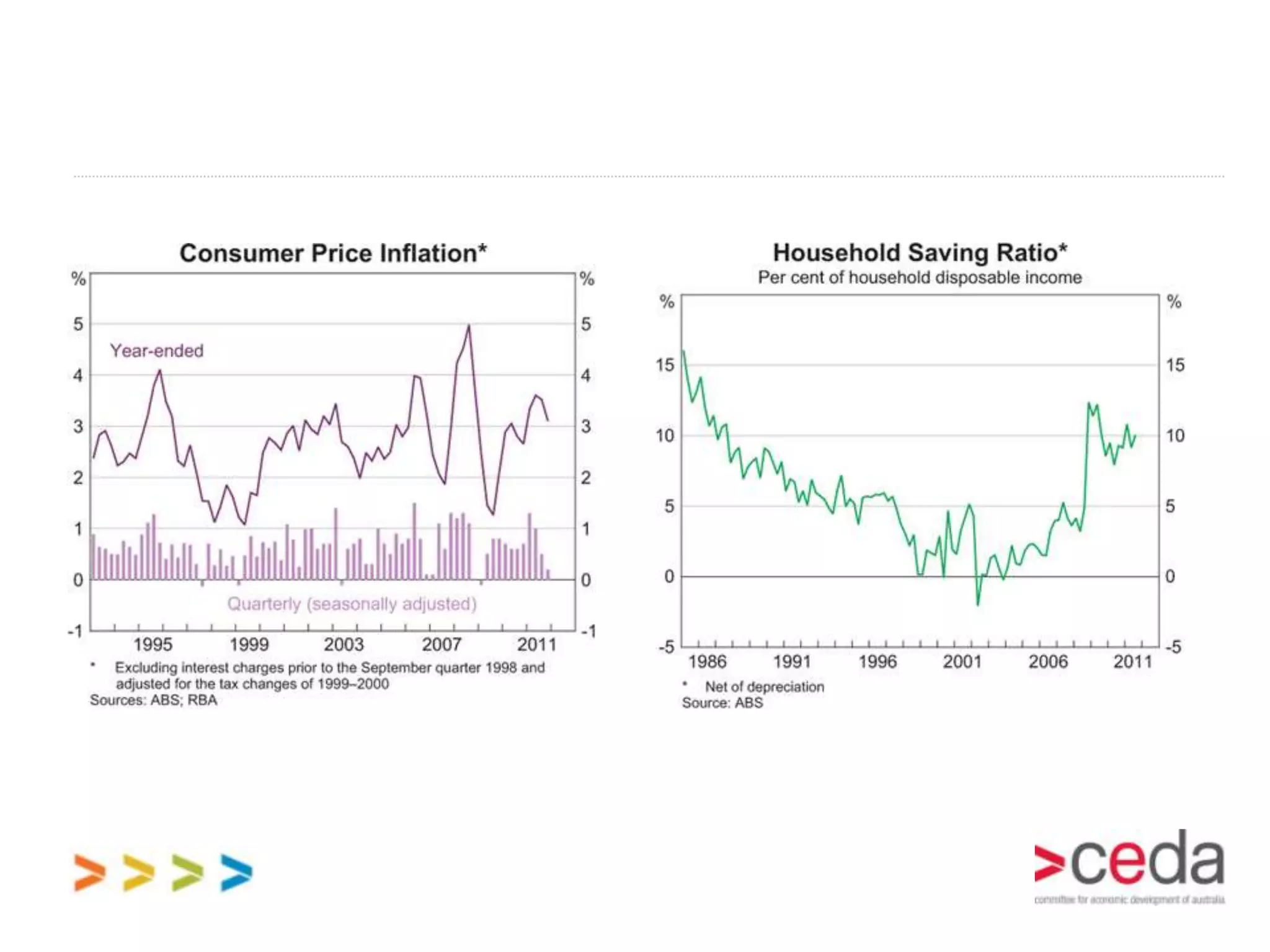
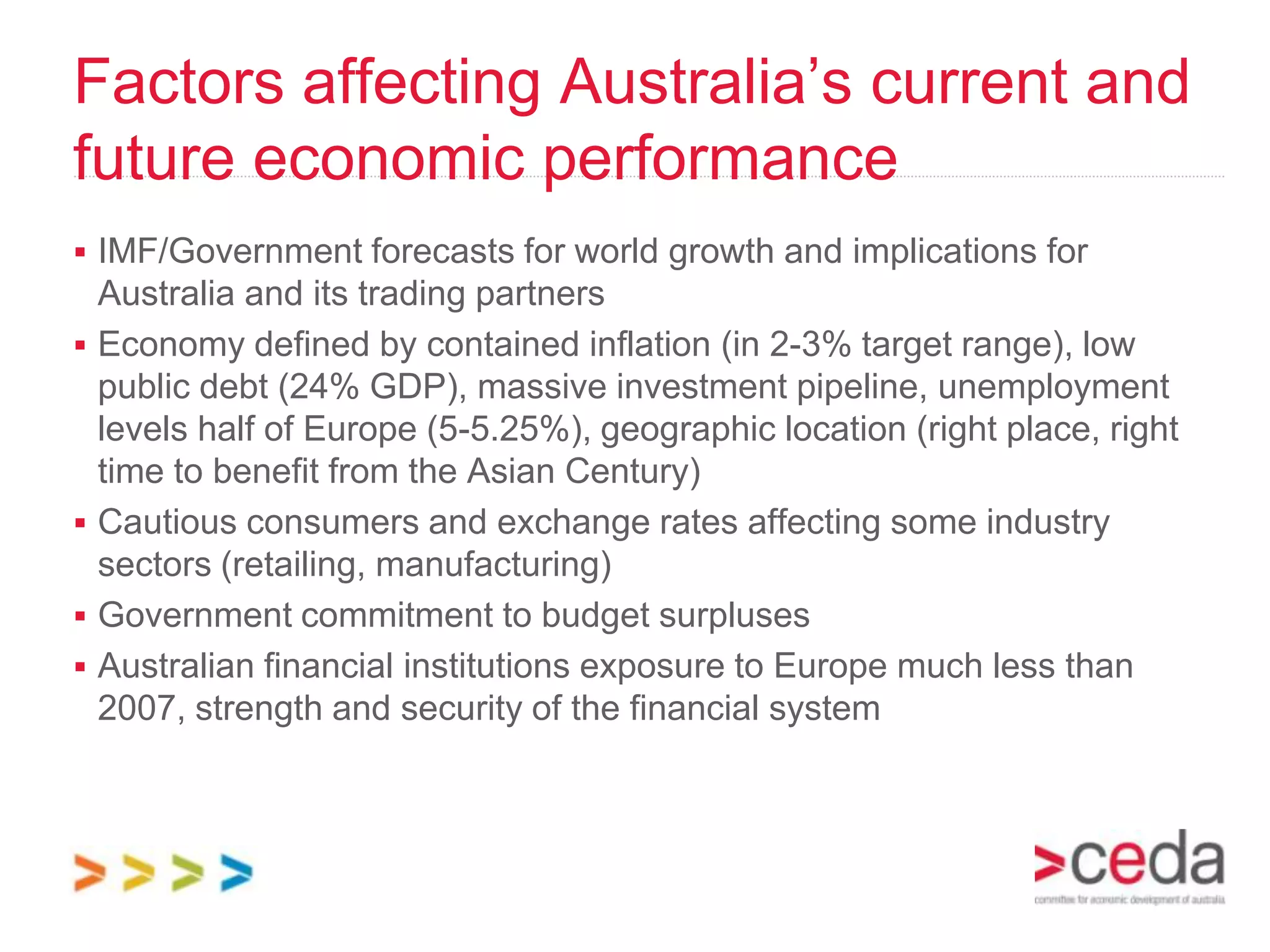
   Economy defined by contained inflation (in 2-3% target range), low
    public debt (24% GDP), massive investment pipeline, unemployment
    levels half of Europe (5-5.25%), geographic location (right place, right
    time to benefit from the Asian Century)
   Cautious consumers and exchange rates affecting some industry
    sectors (retailing, manufacturing)
   Government commitment to budget surpluses
   Australian financial institutions exposure to Europe much less than
    2007, strength and security of the financial system
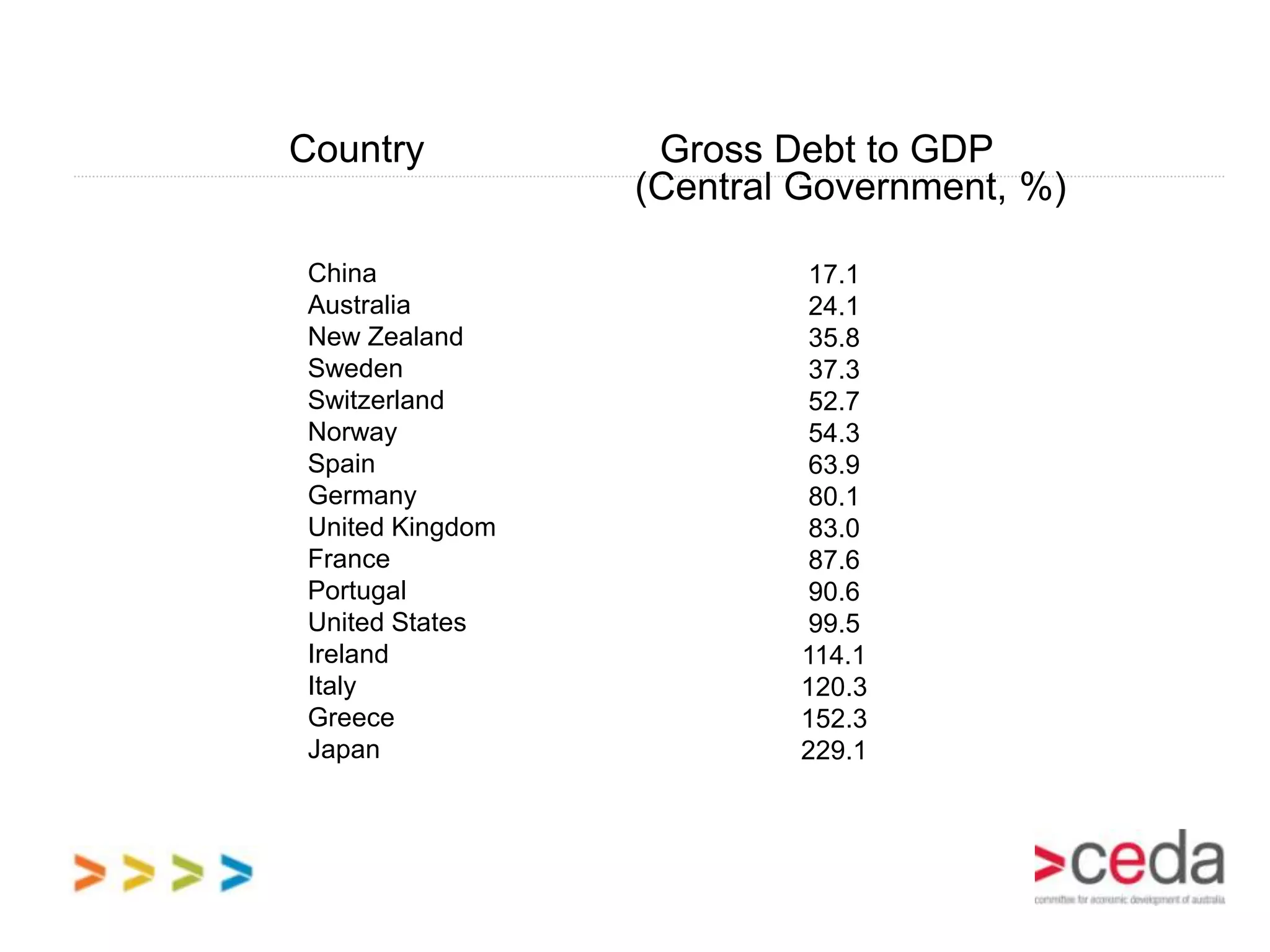
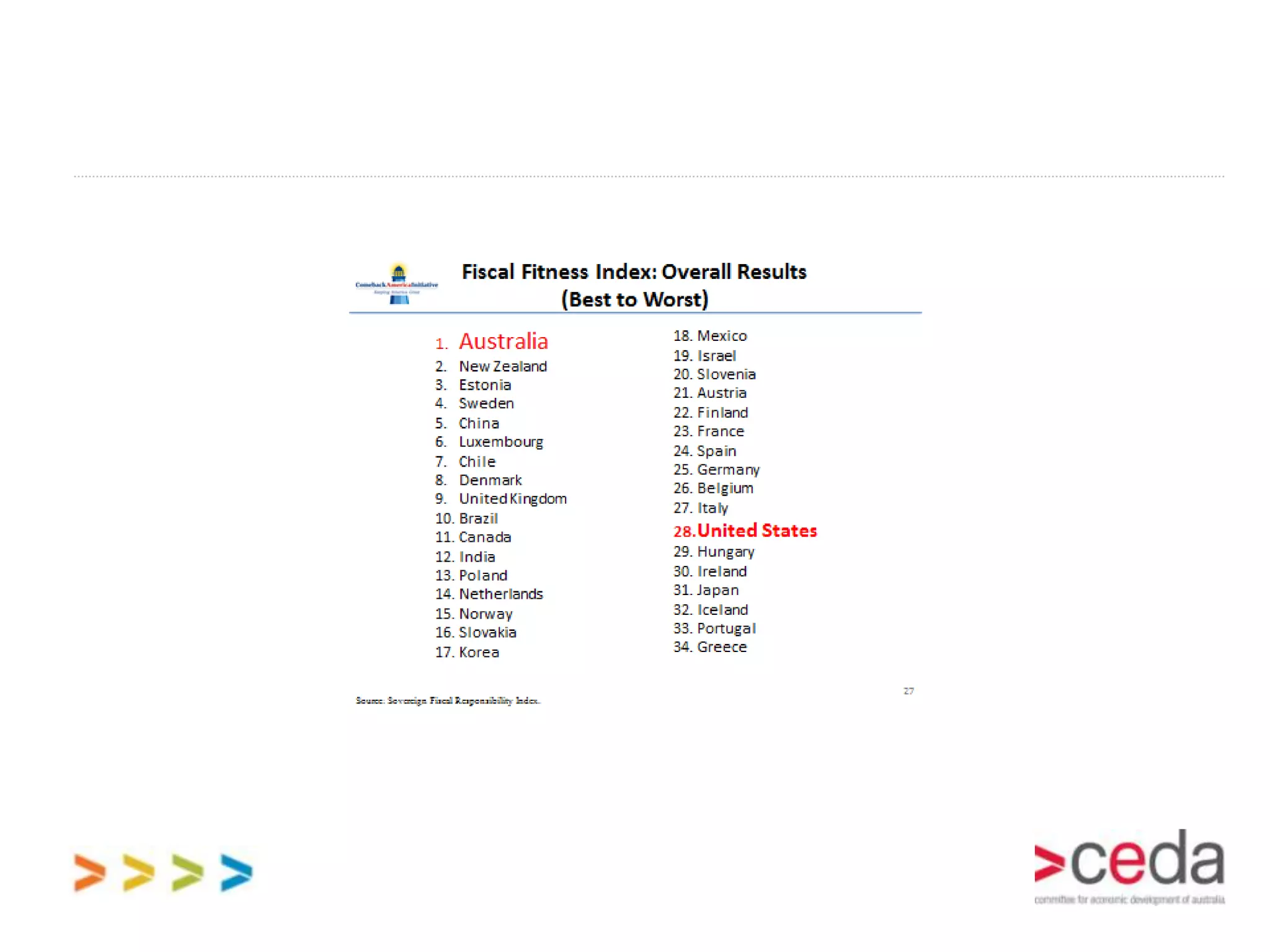
Country           Gross Debt to GDP
                 (Central Government, %)

China                     17.1
Australia                 24.1
New Zealand               35.8
Sweden                    37.3
Switzerland               52.7
Norway                    54.3
Spain                     63.9
Germany                   80.1
United Kingdom            83.0
France                    87.6
Portugal                  90.6
United States             99.5
Ireland                  114.1
Italy                    120.3
Greece                   152.3
Japan                    229.1
Lessons from Australia

 Currency union without fiscal union is an accident waiting
  to happen
 Low, single-digit inflation a goal that must be pursued
 Fiscal consolidation is essential, along with tight prudential
  regulatory regimes that still allow for deregulatory
  outcomes
 Underlying economic fundamentals must be right
 Political will must permit governments to take hard,
  unpopular decisions and pursue appropriate policies
THANK YOU

Professor the Honourable Stephen Martin - IFAC Sovereign Debt Seminar Presentation

  • 1.
    GFC AND SOVEREIGNRISK- MITIGATING MEASURES AND SOLUTIONS FROM DOWN UNDER Professor the Hon Stephen Martin Chief Executive INTERNATIONAL FEDERATION OF ACCOUNTANTS CONFERENCE THE SOVEREIGN DEBT CRISIS, A MATTER OF URGENCY―FROM LESSONS TO REFORM March 19-20, 2012 Vienna, Austria
  • 2.
  • 3.
    GFC- a re-cap Northern hemisphere problem?  Global savings/borrowing imbalances  US encouragement of home ownership, sub-prime crisis and credit crisis and US monetary policy  Lack of regulatory oversight and corporate risk management  Financial institutions collapse in US and Europe (Lehmann – the financial world stopped)  World GDP falls, global trade collapses  Business/Consumer confidence plummets, unemployment rises  Massive fiscal/monetary stimuli  Huge support for financial markets from central banks
  • 5.
    Australia and theGFC  Not nearly as bad as other developed economies  Growth rate slowed  Exports fell, commodity prices fell, terms of trade contracted, exchange rate fell  Credit provision tightened  Consumer and business confidence fell  Unemployment rose slightly  Share market fell  No banks or financial institutions failed
  • 7.
    Government response toGFC  Hard, early, households  Massive surplus of $21b available for injection into the economy  Support for the finance sector through bank guarantees, funding housing mortgages through government securities, consumer protection  RBA movement on interest rates  Major economic stimulus through  social security system (pensions and family allowance) $8.8b  increasing first home buyers grants $1.5b  Education and training programs $187m  Nation Building and Jobs Plan (including Building the Education Revolution, energy efficiency, infrastructure, housing) $42b
  • 8.
  • 9.
    European sovereign debtcrisis- causes and solutions  globalization of finance  easy credit conditions during the 2002-2008 period that encouraged high-risk lending and borrowing practices  international trade imbalances  real-estate bubbles that have since burst  slow growth economic conditions 2008 and after  fiscal policy choices related to government revenues and expenses  policy responses used by nations to bail-out troubled banking industries and private bondholders, assuming private debt burdens or socializing losses.  Greek tragedy, potential contagion, Germany the boss, hopeful signs, more meetings, financial bailout, white knights?
  • 10.
    I’m gonna makeher an offer she can’t refuse
  • 11.
    Europe- A ViewFrom Down-Under Source: The Australian – 17/1/12
  • 12.
    Australia’s preparedness forthe GFC and European sovereign debt crisis  Commonwealth of Australia 1901- economic, political and monetary union  Economic and political history since the early 1980’s  Trade liberalisation  Financial deregulation coupled with improved and coordinated prudential supervision  Labour market deregulation  Taxation reforms  Macroeconomic policy- inflation targets, budget deficit and fiscal consolidation strategies  Superannuation  Health care and social security reforms
  • 14.
    Australia’s economic advantages Underlying economic strength- mining and investment boom, record commodity prices and terms of trade  Strong financial institutions- four pillars, AA rated, exceptional profit levels, Basel III alignment  Sound financial regulation- APRA, previous financial system reviews, lessons from the past  Performance of major trading partners, particularly China and India. Little exposure to Europe.  Social-economic interconnectedness
  • 19.
    Government spending andrevenue Per cent of GDP Per cent of GDP 30 12 25 9 Spending Total receipts 20 6 15 3 10 0 Underlying cash balance (RHS) 5 -3 0 -6 2000-01 2002-03 2004-05 2006-07 2008-09 2010-11 2012-13 2014-15
  • 20.
    Factors affecting Australia’scurrent and future economic performance  IMF/Government forecasts for world growth and implications for Australia and its trading partners  Economy defined by contained inflation (in 2-3% target range), low public debt (24% GDP), massive investment pipeline, unemployment levels half of Europe (5-5.25%), geographic location (right place, right time to benefit from the Asian Century)  Cautious consumers and exchange rates affecting some industry sectors (retailing, manufacturing)  Government commitment to budget surpluses  Australian financial institutions exposure to Europe much less than 2007, strength and security of the financial system
  • 21.
    Country Gross Debt to GDP (Central Government, %) China 17.1 Australia 24.1 New Zealand 35.8 Sweden 37.3 Switzerland 52.7 Norway 54.3 Spain 63.9 Germany 80.1 United Kingdom 83.0 France 87.6 Portugal 90.6 United States 99.5 Ireland 114.1 Italy 120.3 Greece 152.3 Japan 229.1
  • 26.
    Lessons from Australia Currency union without fiscal union is an accident waiting to happen  Low, single-digit inflation a goal that must be pursued  Fiscal consolidation is essential, along with tight prudential regulatory regimes that still allow for deregulatory outcomes  Underlying economic fundamentals must be right  Political will must permit governments to take hard, unpopular decisions and pursue appropriate policies
  • 28.