APPROACH TO PROTEINURIA
TRAN MINH HOANG, M.D.
Pham Ngoc Thach University of Medicine
Ho Chi Minh city, Viet Nam
bacsitranminhhoang@gmail.com
Content
Quantitative and qualitative assays of
urine protein
Causes of proteinuria
Approach to proteinuria
1
2
3
Physiological urine protein
Tamm-Horsfall protein Blood group related antigen
Albumin Mucopolysaccharide
Immunoglobulins Hormones and enzymes
Urine protein < 150 mg/day
Urine albumin < 30 mg/day
Children : urine protein < 4 mg/m2 /hr or < 100 mg/m2 /24hr
Definition
• Proteinuria
– Urinary protein excretion > 150 mg/24h
• Albuminuria
– Urinary albumin excretion > 30 mg/24h
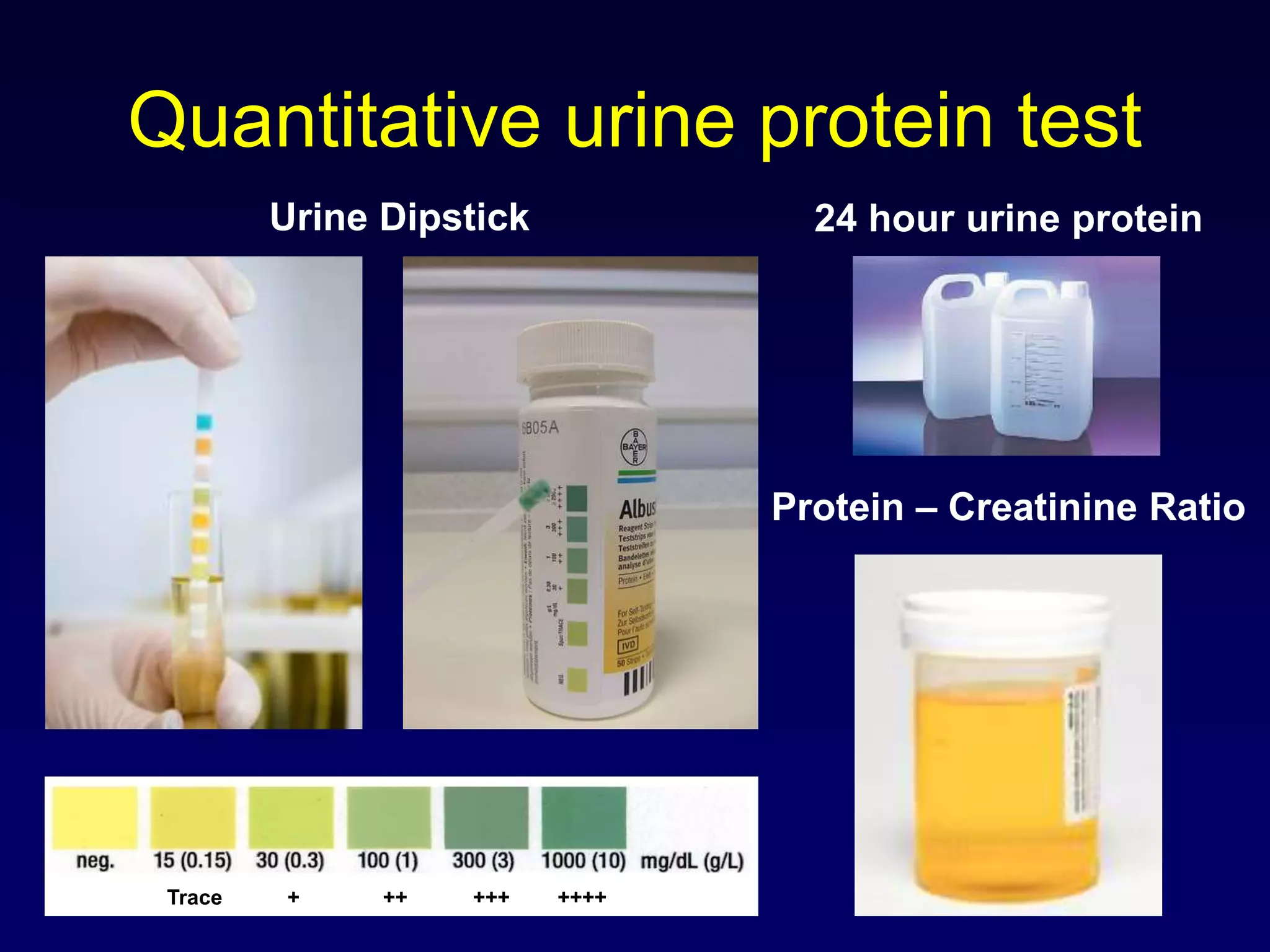
Quantitative urine protein test
Urine Dipstick 24 hour urine protein
Protein – Creatinine Ratio
Trace + ++ +++ ++++
Urine protein tests
PER (mg/24h) 150 500
PCR (mg/g)
(mg/mmol)
150
15
500
50
AER (mg/24h) 30 300
ACR (mg/g)
(mg/mmol)
30
3
300
30
Protein/Urinalysis - trace 1+ 2+,3+ 4+
Creatinine excretion rate ~ 10 mmol/day ~ 1 g/day
Urine protein electrophoresis
Kowsalya R et al., J Cancer Res Ther 2015, 3(6):72-76
Pathological proteinuria
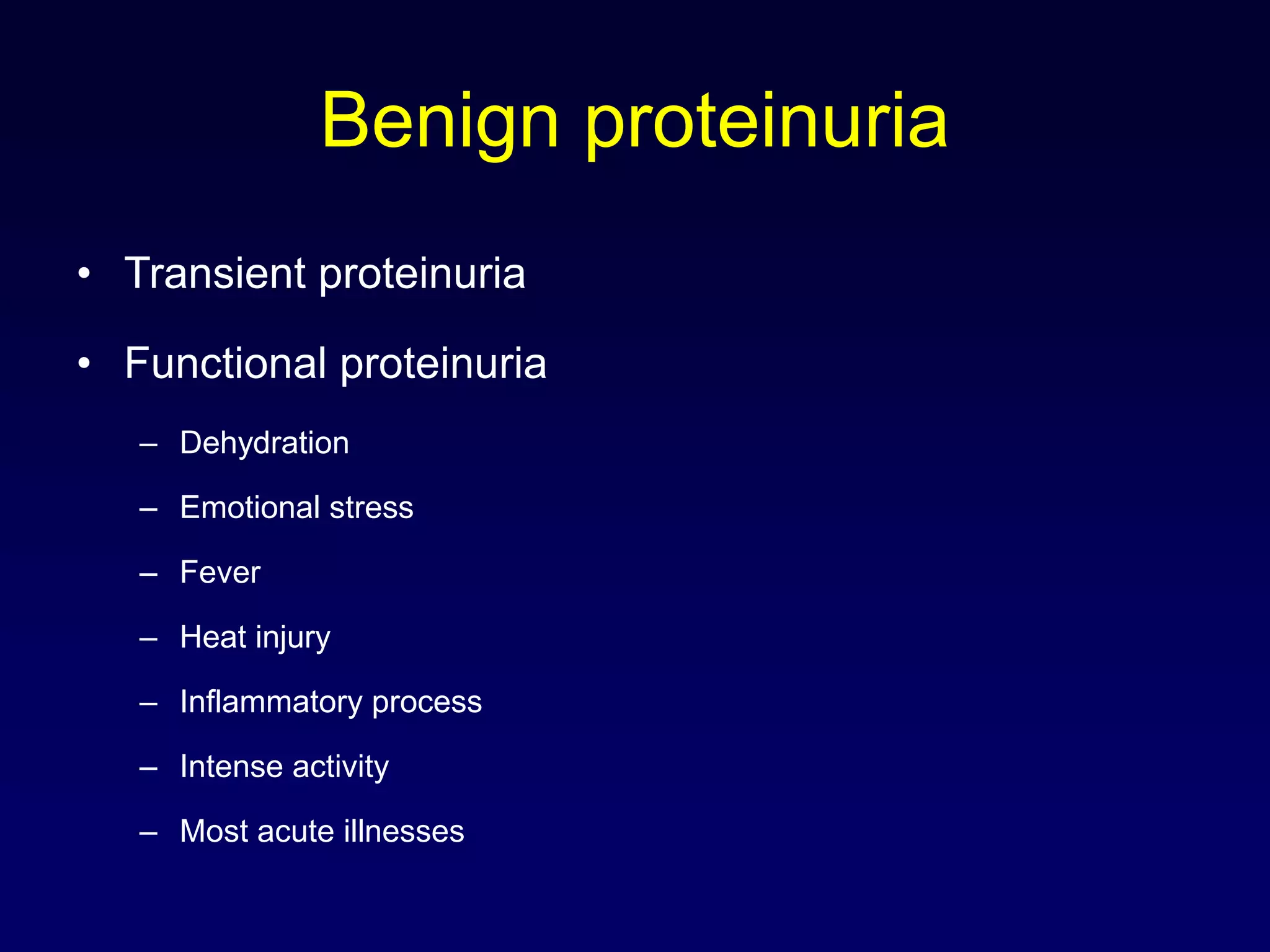
Benign proteinuria
• Transient proteinuria
• Functional proteinuria
– Dehydration
– Emotional stress
– Fever
– Heat injury
– Inflammatory process
– Intense activity
– Most acute illnesses
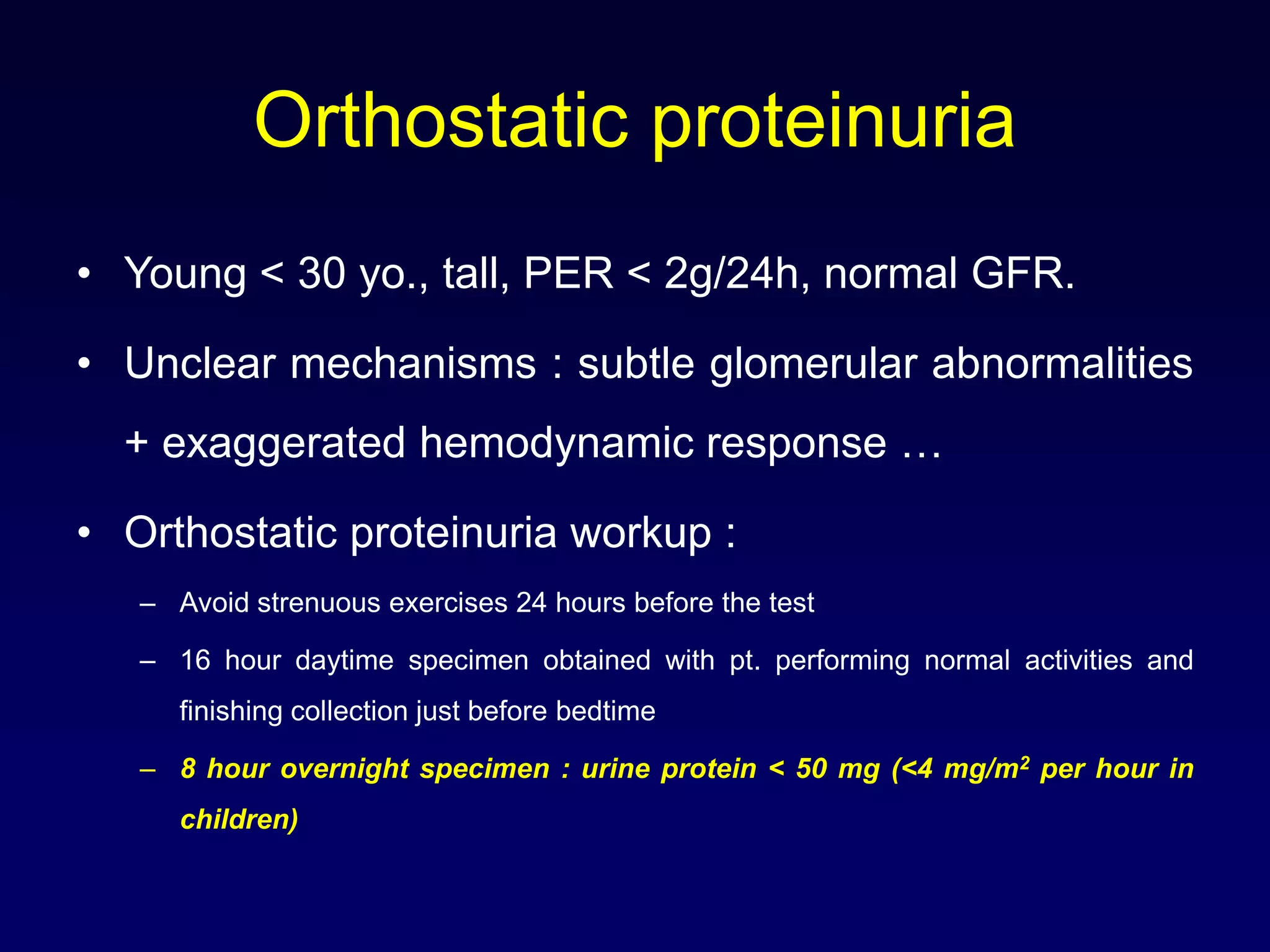
Orthostatic proteinuria
• Young < 30 yo., tall, PER < 2g/24h, normal GFR.
• Unclear mechanisms : subtle glomerular abnormalities
+ exaggerated hemodynamic response …
• Orthostatic proteinuria workup :
– Avoid strenuous exercises 24 hours before the test
– 16 hour daytime specimen obtained with pt. performing normal activities and
finishing collection just before bedtime
– 8 hour overnight specimen : urine protein < 50 mg (<4 mg/m2 per hour in
children)
Clinical approach
• Past medical history : systemic illnesses, arterial
hypertension, diabetes mellitus…
• Clinical examination : edema, signs of systemic
diseases (cutaneous lesions…)
• Urinary sediment : RBC casts (++), waxy cast, broad
cast, fat oval bodies, WBC cast (eosi.)
• Biological, immunologic blood and urine tests
Laboratory tests
• CBC, creatinin, urea, FBG, lipid panel
• Uric acid, serum electrolytes (Na+, K+, Cl-, HCO3-,
Ca2+, PO43-)
• Serum, urine protein electrophoresis
• HIV, hepatitis serologic test, VDRL
• ANA, anti-dsDNA, C3, C4, ASO, ANCA (±)
• Renal ultrasonography
• Chest radiograph
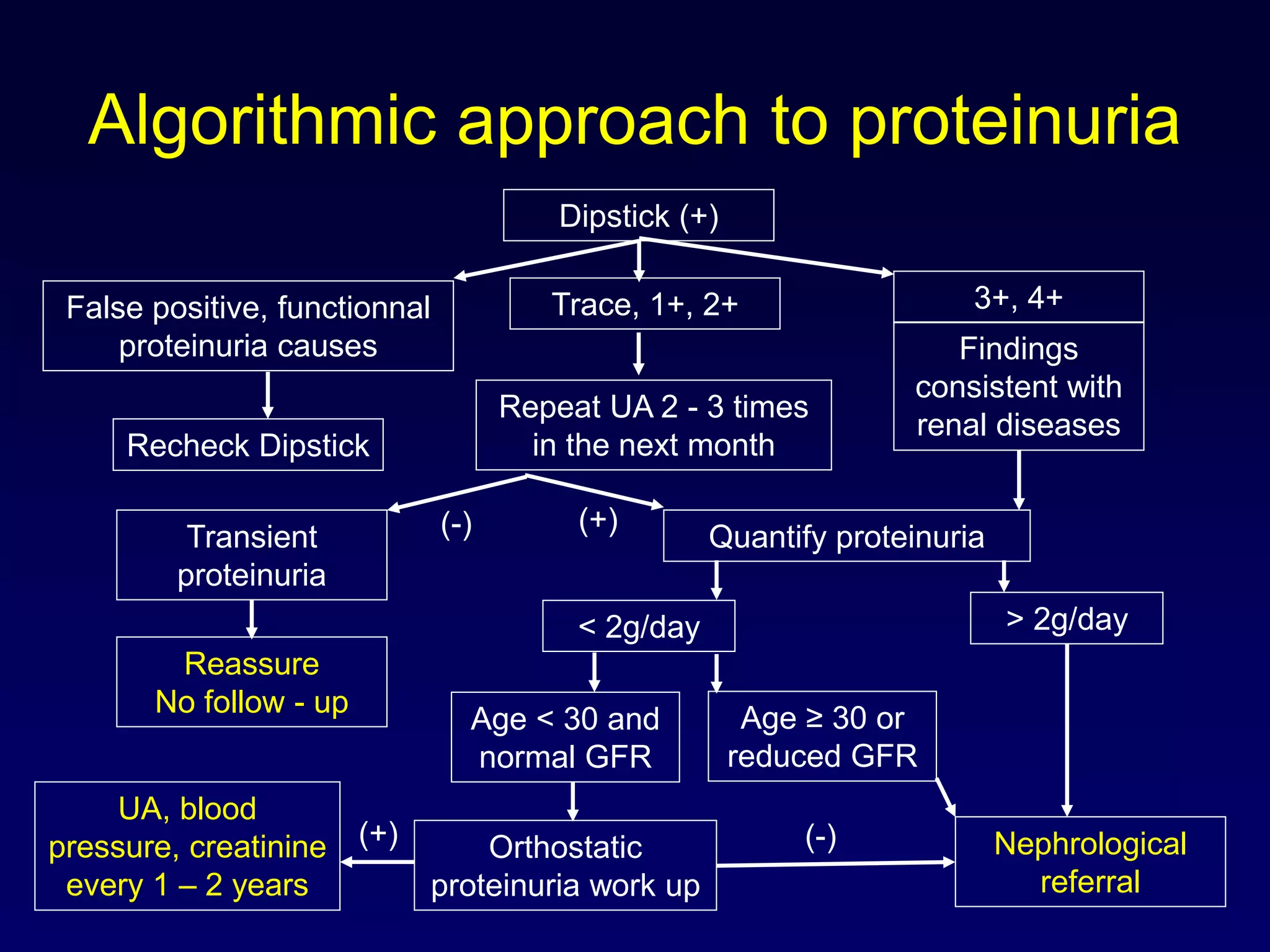
Algorithmic approach to proteinuria
Dipstick (+)
False positive, functionnal
proteinuria causes
Recheck Dipstick
Nephrological
referral
Trace, 1+, 2+ 3+, 4+
Repeat UA 2 - 3 times
in the next month
Transient
proteinuria
< 2g/day
Quantify proteinuria
Findings
consistent with
renal diseases
Reassure
No follow - up
> 2g/day
Age < 30 and
normal GFR
Orthostatic
proteinuria work up
Age ≥ 30 or
reduced GFR
UA, blood
pressure, creatinine
every 1 – 2 years
(-) (+)
(+) (-)
Nephrological approach
Nephrotic range
Pu
PER 1 – 3 g/24h
PER < 1 g/24h
Hypoalbuminemia
Glomerular hematuria
Hypertension, acutely
reduced GFR
± reduced GFR
(acute/chronic)
± uremia
Nephrotic syndrome
Nephritic syndrome
Acute kidney injury
Chronic renal failure
Follow up every 6
months : blood
pressure, UA,
creatininIsolated proteinuria
?
Normal GFR, urine sediment,
no hypertension, no diabete
Explorations
Kidney biopsy (±)
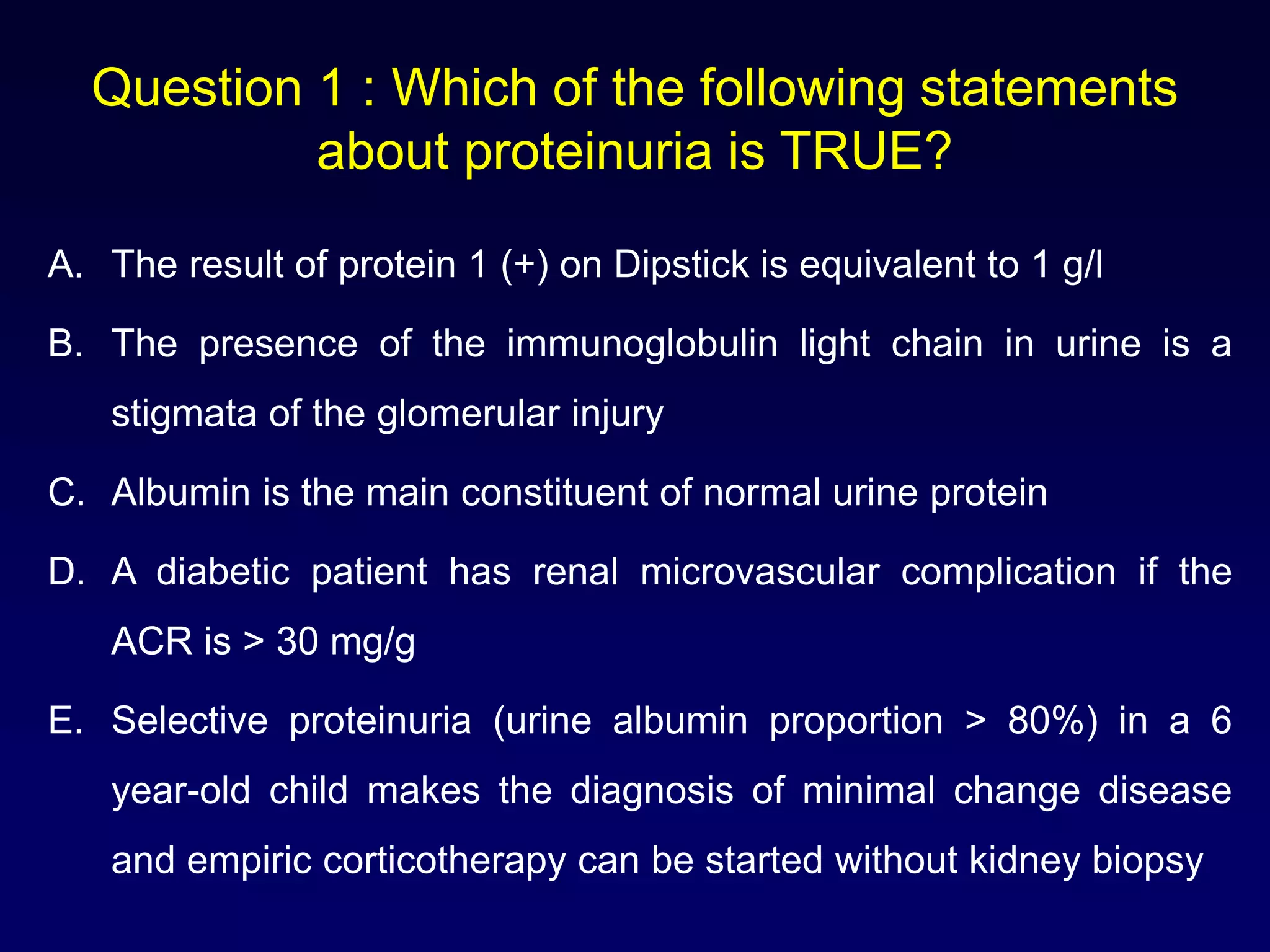
Question 1 : Which of the following statements
about proteinuria is TRUE?
A. The result of protein 1 (+) on Dipstick is equivalent to 1 g/l
B. The presence of the immunoglobulin light chain in urine is a
stigmata of the glomerular injury
C. Albumin is the main constituent of normal urine protein
D. A diabetic patient has renal microvascular complication if the
ACR is > 30 mg/g
E. Selective proteinuria (urine albumin proportion > 80%) in a 6
year-old child makes the diagnosis of minimal change disease
and empiric corticotherapy can be started without kidney biopsy
Question 2 : Who of the following patients should
be referred to a nephrologist ? (multiple answers)
A. 65-year-old man, arterial hypertension, asymptomatic,
proteinuria 2.5 g/24h, blood (-), GFR 65 ml/min/1.73m2
B. 25-year-old female patient, systemic lupus erythomatosus,
proteinuria 700 mg/24h, blood (+), GFR 95 ml/min/1.73m2
C. 30-year-old patient, 33 weeks pregnant, asymptomatic,
protein (+), blood (+), leucocyte (+)
D. 58-year-old female patient, diabetes mellitus 3 years,
ACR 35 mg/g, blood (-), GFR 35 ml/min/1.73m2
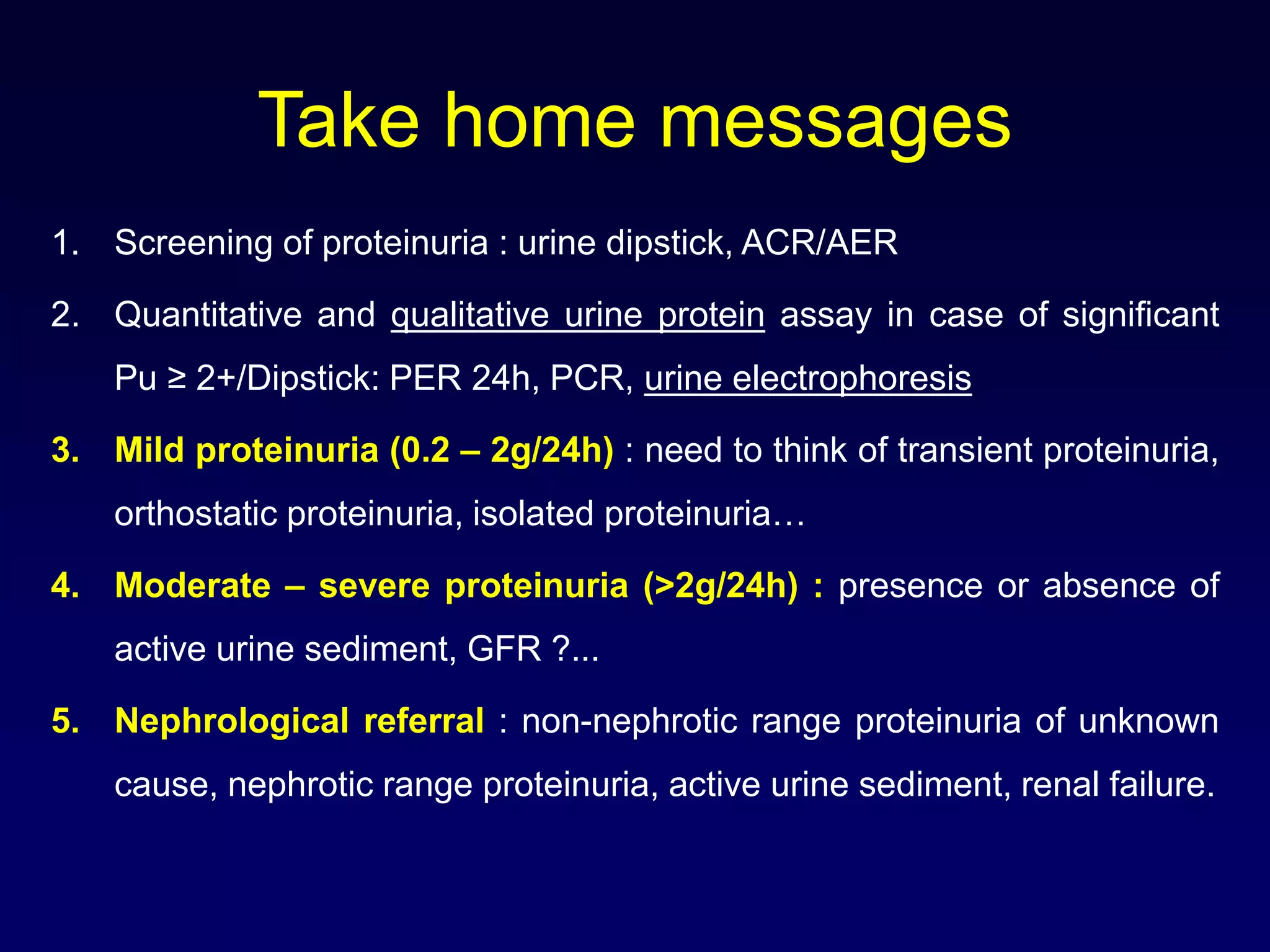
Take home messages
1. Screening of proteinuria : urine dipstick, ACR/AER
2. Quantitative and qualitative urine protein assay in case of significant
Pu ≥ 2+/Dipstick: PER 24h, PCR, urine electrophoresis
3. Mild proteinuria (0.2 – 2g/24h) : need to think of transient proteinuria,
orthostatic proteinuria, isolated proteinuria…
4. Moderate – severe proteinuria (>2g/24h) : presence or absence of
active urine sediment, GFR ?...
5. Nephrological referral : non-nephrotic range proteinuria of unknown
cause, nephrotic range proteinuria, active urine sediment, renal failure.
THANK YOU FOR YOUR ATTENTION

APPROACH TO PROTEINURIA

  • 1.
    APPROACH TO PROTEINURIA TRANMINH HOANG, M.D. Pham Ngoc Thach University of Medicine Ho Chi Minh city, Viet Nam bacsitranminhhoang@gmail.com
  • 2.
    Content Quantitative and qualitativeassays of urine protein Causes of proteinuria Approach to proteinuria 1 2 3
  • 3.
    Physiological urine protein Tamm-Horsfallprotein Blood group related antigen Albumin Mucopolysaccharide Immunoglobulins Hormones and enzymes Urine protein < 150 mg/day Urine albumin < 30 mg/day Children : urine protein < 4 mg/m2 /hr or < 100 mg/m2 /24hr
  • 4.
    Definition • Proteinuria – Urinaryprotein excretion > 150 mg/24h • Albuminuria – Urinary albumin excretion > 30 mg/24h
  • 5.
    Quantitative urine proteintest Urine Dipstick 24 hour urine protein Protein – Creatinine Ratio Trace + ++ +++ ++++
  • 6.
    Urine protein tests PER(mg/24h) 150 500 PCR (mg/g) (mg/mmol) 150 15 500 50 AER (mg/24h) 30 300 ACR (mg/g) (mg/mmol) 30 3 300 30 Protein/Urinalysis - trace 1+ 2+,3+ 4+ Creatinine excretion rate ~ 10 mmol/day ~ 1 g/day
  • 7.
    Urine protein electrophoresis KowsalyaR et al., J Cancer Res Ther 2015, 3(6):72-76
  • 8.
  • 9.
    Benign proteinuria • Transientproteinuria • Functional proteinuria – Dehydration – Emotional stress – Fever – Heat injury – Inflammatory process – Intense activity – Most acute illnesses
  • 10.
    Orthostatic proteinuria • Young< 30 yo., tall, PER < 2g/24h, normal GFR. • Unclear mechanisms : subtle glomerular abnormalities + exaggerated hemodynamic response … • Orthostatic proteinuria workup : – Avoid strenuous exercises 24 hours before the test – 16 hour daytime specimen obtained with pt. performing normal activities and finishing collection just before bedtime – 8 hour overnight specimen : urine protein < 50 mg (<4 mg/m2 per hour in children)
  • 11.
    Clinical approach • Pastmedical history : systemic illnesses, arterial hypertension, diabetes mellitus… • Clinical examination : edema, signs of systemic diseases (cutaneous lesions…) • Urinary sediment : RBC casts (++), waxy cast, broad cast, fat oval bodies, WBC cast (eosi.) • Biological, immunologic blood and urine tests
  • 12.
    Laboratory tests • CBC,creatinin, urea, FBG, lipid panel • Uric acid, serum electrolytes (Na+, K+, Cl-, HCO3-, Ca2+, PO43-) • Serum, urine protein electrophoresis • HIV, hepatitis serologic test, VDRL • ANA, anti-dsDNA, C3, C4, ASO, ANCA (±) • Renal ultrasonography • Chest radiograph
  • 13.
    Algorithmic approach toproteinuria Dipstick (+) False positive, functionnal proteinuria causes Recheck Dipstick Nephrological referral Trace, 1+, 2+ 3+, 4+ Repeat UA 2 - 3 times in the next month Transient proteinuria < 2g/day Quantify proteinuria Findings consistent with renal diseases Reassure No follow - up > 2g/day Age < 30 and normal GFR Orthostatic proteinuria work up Age ≥ 30 or reduced GFR UA, blood pressure, creatinine every 1 – 2 years (-) (+) (+) (-)
  • 14.
    Nephrological approach Nephrotic range Pu PER1 – 3 g/24h PER < 1 g/24h Hypoalbuminemia Glomerular hematuria Hypertension, acutely reduced GFR ± reduced GFR (acute/chronic) ± uremia Nephrotic syndrome Nephritic syndrome Acute kidney injury Chronic renal failure Follow up every 6 months : blood pressure, UA, creatininIsolated proteinuria ? Normal GFR, urine sediment, no hypertension, no diabete Explorations Kidney biopsy (±)
  • 15.
    Question 1 :Which of the following statements about proteinuria is TRUE? A. The result of protein 1 (+) on Dipstick is equivalent to 1 g/l B. The presence of the immunoglobulin light chain in urine is a stigmata of the glomerular injury C. Albumin is the main constituent of normal urine protein D. A diabetic patient has renal microvascular complication if the ACR is > 30 mg/g E. Selective proteinuria (urine albumin proportion > 80%) in a 6 year-old child makes the diagnosis of minimal change disease and empiric corticotherapy can be started without kidney biopsy
  • 16.
    Question 2 :Who of the following patients should be referred to a nephrologist ? (multiple answers) A. 65-year-old man, arterial hypertension, asymptomatic, proteinuria 2.5 g/24h, blood (-), GFR 65 ml/min/1.73m2 B. 25-year-old female patient, systemic lupus erythomatosus, proteinuria 700 mg/24h, blood (+), GFR 95 ml/min/1.73m2 C. 30-year-old patient, 33 weeks pregnant, asymptomatic, protein (+), blood (+), leucocyte (+) D. 58-year-old female patient, diabetes mellitus 3 years, ACR 35 mg/g, blood (-), GFR 35 ml/min/1.73m2
  • 17.
    Take home messages 1.Screening of proteinuria : urine dipstick, ACR/AER 2. Quantitative and qualitative urine protein assay in case of significant Pu ≥ 2+/Dipstick: PER 24h, PCR, urine electrophoresis 3. Mild proteinuria (0.2 – 2g/24h) : need to think of transient proteinuria, orthostatic proteinuria, isolated proteinuria… 4. Moderate – severe proteinuria (>2g/24h) : presence or absence of active urine sediment, GFR ?... 5. Nephrological referral : non-nephrotic range proteinuria of unknown cause, nephrotic range proteinuria, active urine sediment, renal failure.
  • 18.
    THANK YOU FORYOUR ATTENTION