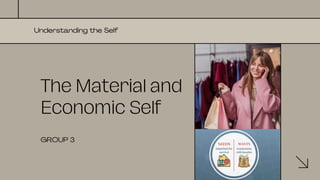
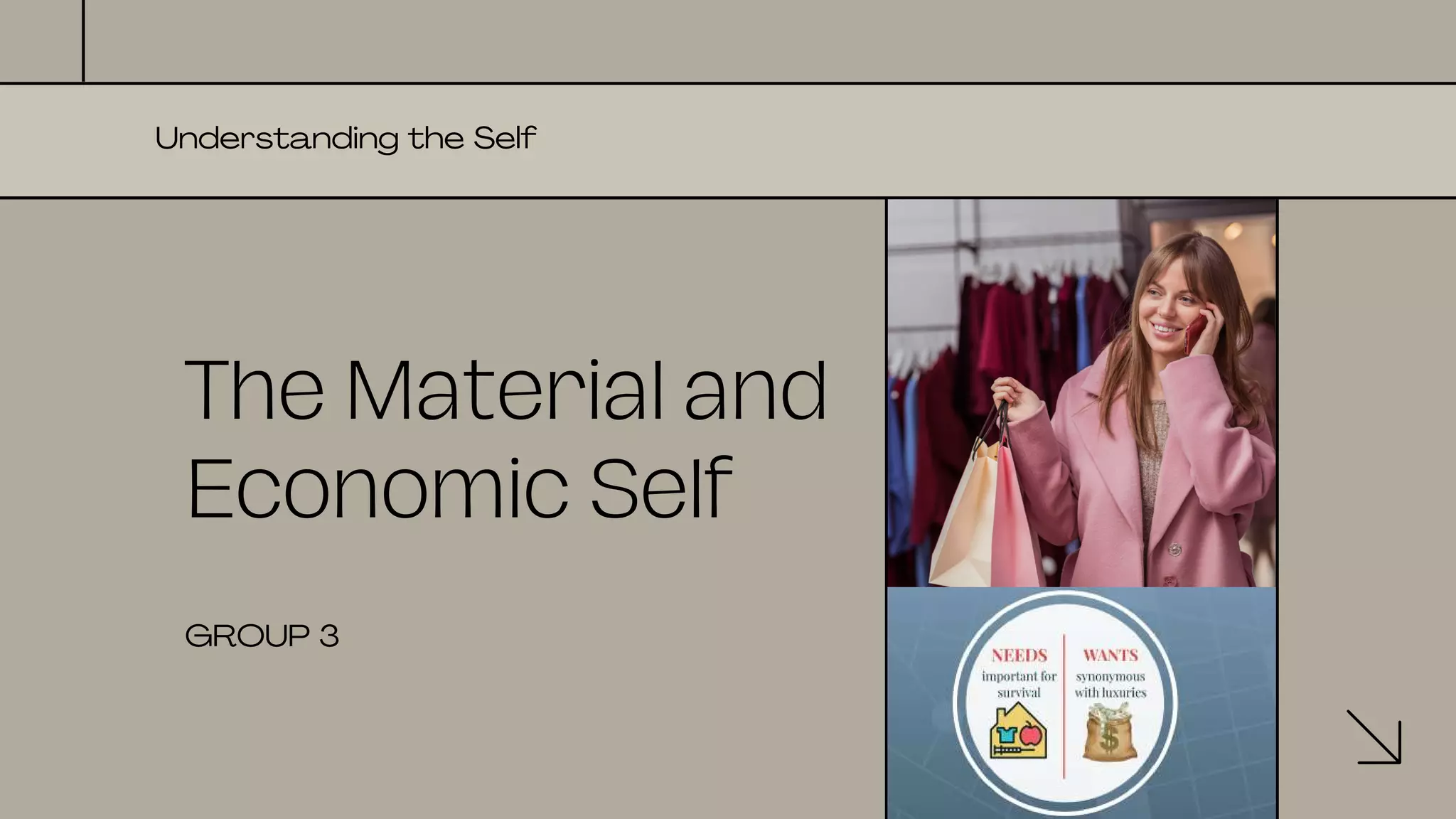
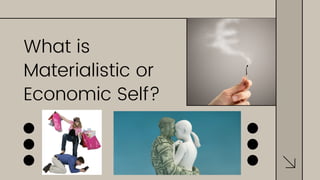
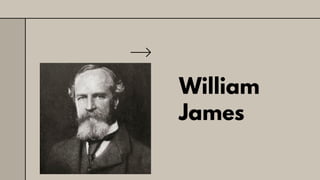
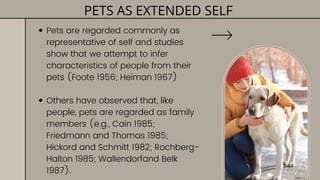
The document discusses the concept of the material or economic self. It defines the material self as consisting of all physical elements that reflect a person, including possessions, home, body, and clothes. It discusses how William James viewed the self as including external possessions. Having more possessions can influence how people view themselves and others. Money can impact thoughts, actions, and sense of self in ways people are often unaware of. The document examines how wealth can change behaviors and ethics and influence addiction and consumption. It explores how collections and pets can also become part of people's extended sense of self.