P R E S E N T E D B Y :
P R A J J A V A L R A O C H I N T A L
Interface in Java
What is an interface
 An interface in java is a blueprint of a class. It has
static constants and abstract methods.
 The interface in Java is a mechanism to achieve
abstraction.
 It is used to achieve abstraction and multiple
inheritance in Java.
Why use Java interface?
 It is used to achieve abstraction.
 By interface, we can support the functionality of
multiple inheritance.
 It can be used to achieve loose coupling.
Multiple inheritance is not supported
through class in java, but it is possible by
an interface, why?
 multiple inheritance is not supported in the case of
class because of ambiguity.
 However, it is supported in case of an interface
because there is no ambiguity. It is because its
implementation is provided by the implementation
class.
How to declare an interface?
 An interface is declared by using the interface
keyword.
 all the methods in an interface are declared with the
empty body, and all the fields are public, static and
final by default.
 A class that implements an interface must
implement all the methods declared in the interface.
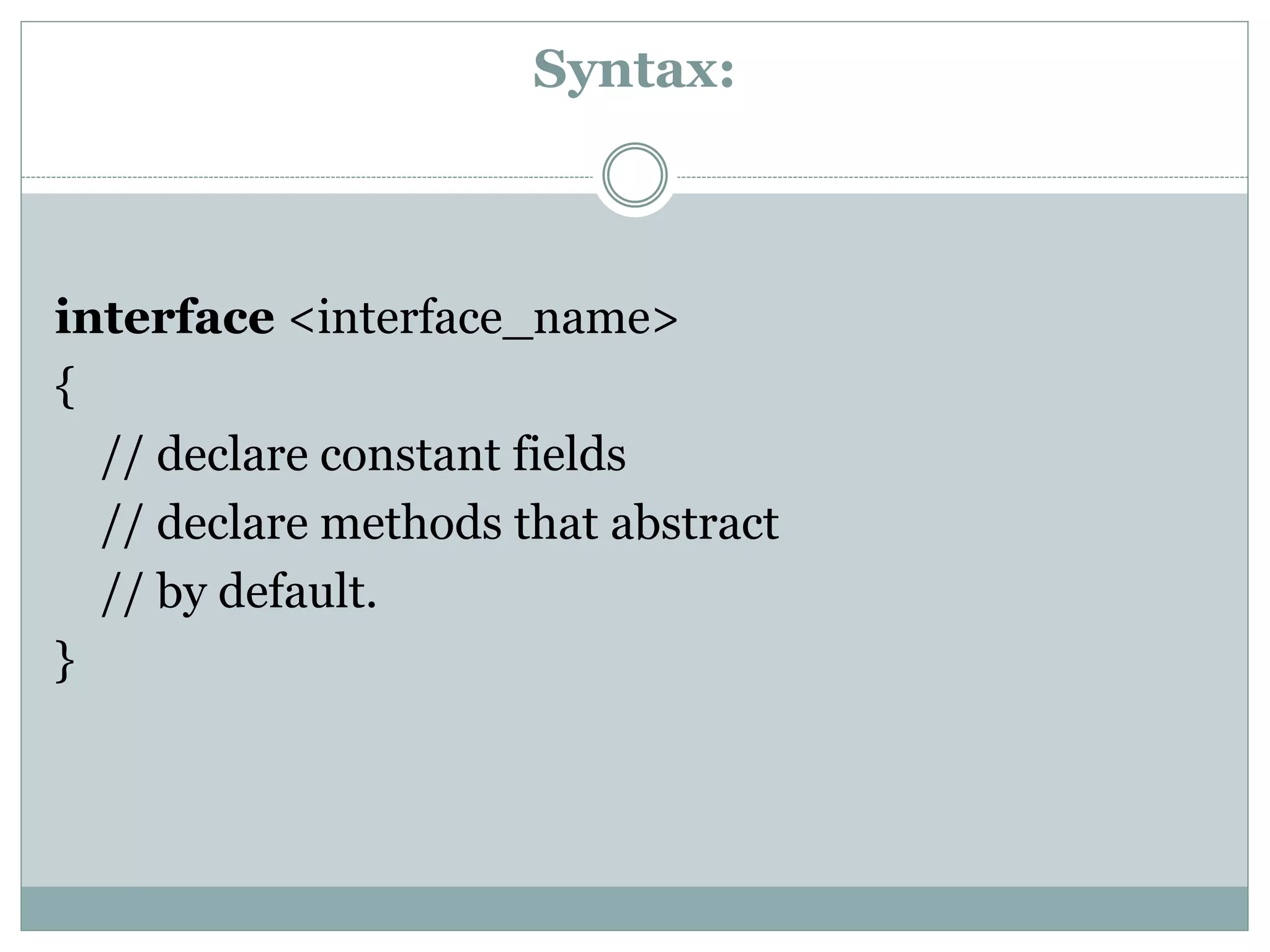
Syntax:
interface <interface_name>
{
// declare constant fields
// declare methods that abstract
// by default.
}
Working of compiler
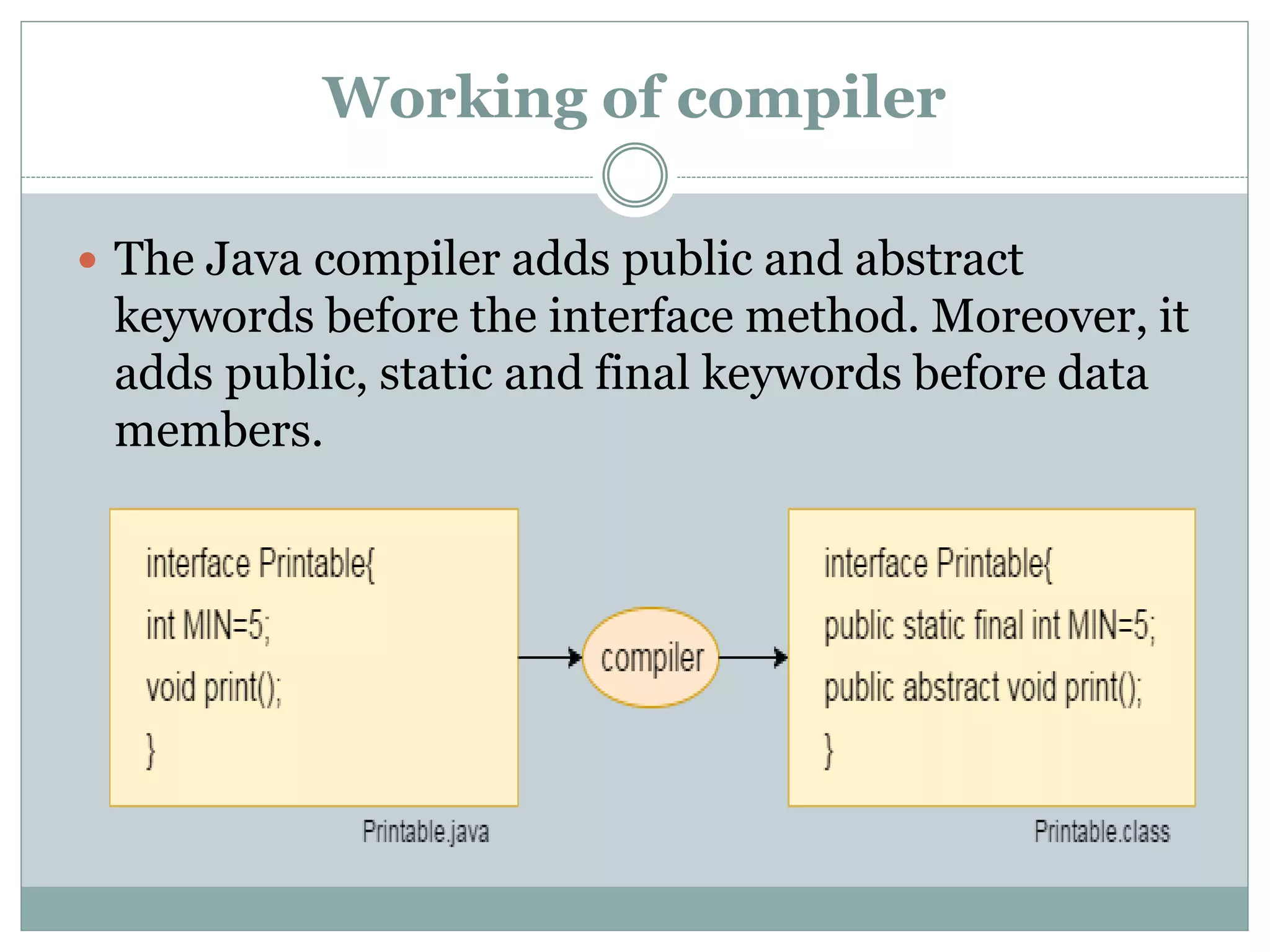
 The Java compiler adds public and abstract
keywords before the interface method. Moreover, it
adds public, static and final keywords before data
members.
The relationship between classes and
interfaces
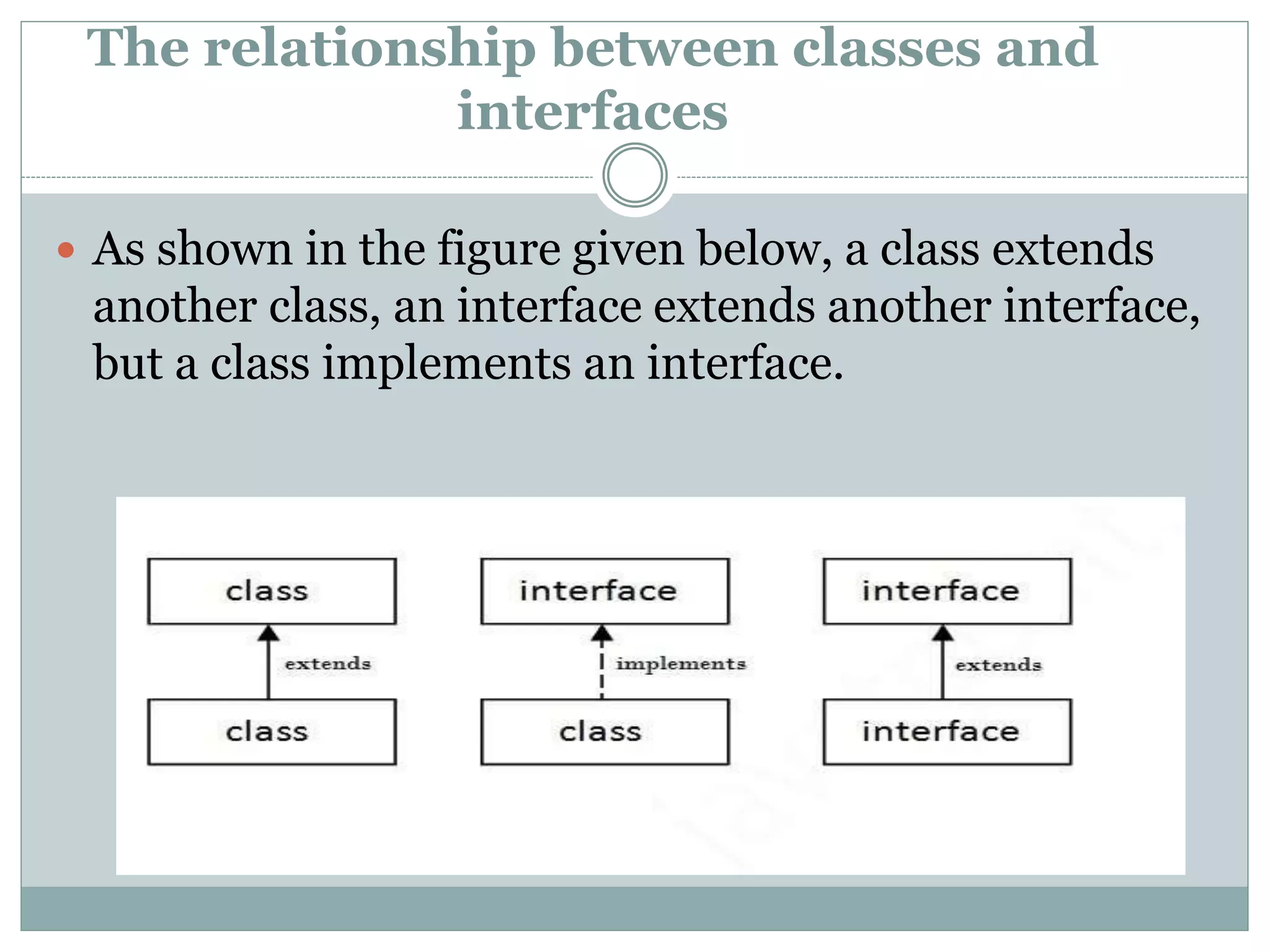
 As shown in the figure given below, a class extends
another class, an interface extends another interface,
but a class implements an interface.
Java Interface Example
//Interface declaration: by first user
interface Drawable
{
void draw();
}
//Implementation: by second user
class Rectangle implements Drawable
{
public void draw()
{
System.out.println("drawing
rectangle");
}
}
class Circle implements Drawable
{
public void draw()
{
System.out.println("drawing circle");
}
}
//Using interface: by third user
public class TestInterface1
{
public static void main(String args[])
{
Drawable d=new Circle();//In real
scenario, object is provided by
method e.g. getDrawable()
Drawable r=new Rectangle();
d.draw();
r.draw();
}
}
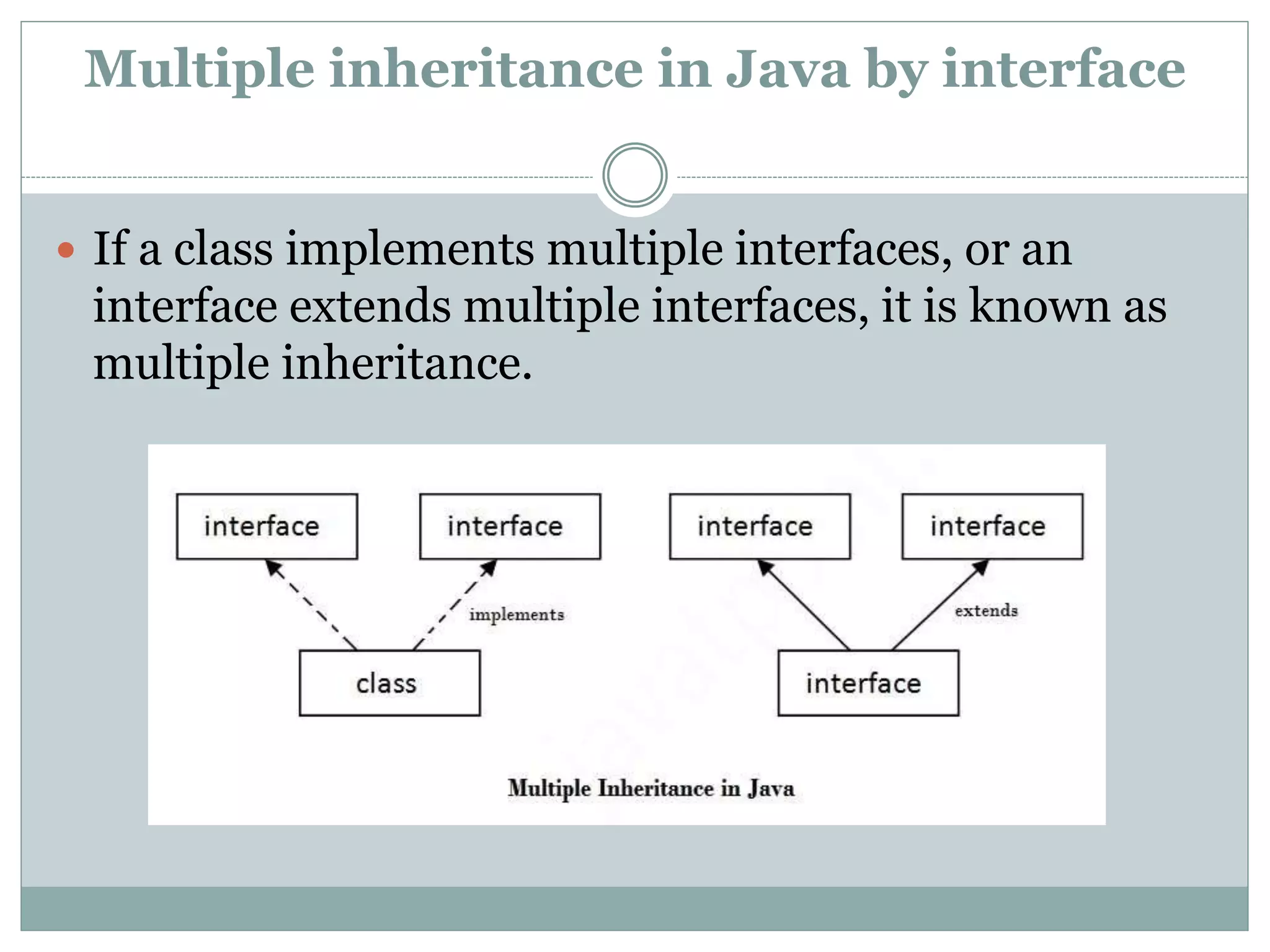
Multiple inheritance in Java by interface
 If a class implements multiple interfaces, or an
interface extends multiple interfaces, it is known as
multiple inheritance.
Multiple inheritance using interface
interface Printable
{
void print();
}
interface Showable
{
void show();
}
public class A7 implements
Printable,Showable
{
public void print()
{
System.out.println("Hello");
}
public void show()
{
System.out.println("Welcome");
}
public static void main(String
args[])
{
A7 obj = new A7();
obj.print();
obj.show();
}
}

Interface in java ,multiple inheritance in java, interface implementation

  • 1.
    P R ES E N T E D B Y : P R A J J A V A L R A O C H I N T A L Interface in Java
  • 2.
    What is aninterface  An interface in java is a blueprint of a class. It has static constants and abstract methods.  The interface in Java is a mechanism to achieve abstraction.  It is used to achieve abstraction and multiple inheritance in Java.
  • 3.
    Why use Javainterface?  It is used to achieve abstraction.  By interface, we can support the functionality of multiple inheritance.  It can be used to achieve loose coupling.
  • 4.
    Multiple inheritance isnot supported through class in java, but it is possible by an interface, why?  multiple inheritance is not supported in the case of class because of ambiguity.  However, it is supported in case of an interface because there is no ambiguity. It is because its implementation is provided by the implementation class.
  • 5.
    How to declarean interface?  An interface is declared by using the interface keyword.  all the methods in an interface are declared with the empty body, and all the fields are public, static and final by default.  A class that implements an interface must implement all the methods declared in the interface.
  • 6.
    Syntax: interface <interface_name> { // declareconstant fields // declare methods that abstract // by default. }
  • 7.
    Working of compiler The Java compiler adds public and abstract keywords before the interface method. Moreover, it adds public, static and final keywords before data members.
  • 8.
    The relationship betweenclasses and interfaces  As shown in the figure given below, a class extends another class, an interface extends another interface, but a class implements an interface.
  • 9.
    Java Interface Example //Interfacedeclaration: by first user interface Drawable { void draw(); } //Implementation: by second user class Rectangle implements Drawable { public void draw() { System.out.println("drawing rectangle"); } } class Circle implements Drawable { public void draw() { System.out.println("drawing circle"); } } //Using interface: by third user public class TestInterface1 { public static void main(String args[]) { Drawable d=new Circle();//In real scenario, object is provided by method e.g. getDrawable() Drawable r=new Rectangle(); d.draw(); r.draw(); } }
  • 10.
    Multiple inheritance inJava by interface  If a class implements multiple interfaces, or an interface extends multiple interfaces, it is known as multiple inheritance.
  • 11.
    Multiple inheritance usinginterface interface Printable { void print(); } interface Showable { void show(); } public class A7 implements Printable,Showable { public void print() { System.out.println("Hello"); } public void show() { System.out.println("Welcome"); } public static void main(String args[]) { A7 obj = new A7(); obj.print(); obj.show(); } }