
How To Manage…
Restructure, Redundancy & Change
Mitigate Risks With Critical Employment Law & Effective Employee Management To Ensure
Seamless Internal Change.
Heather Whitaker
People Strategies Ltd
Change ….
• Is constant
• Can be positive – and still difficult
TODAY
People process - planning and execution – before, during and after - and
finish with an opportunity for questions
Every situation is different and you need to be thoughtful and creative
Maintain
product
quality
Minimise
disruptive
behaviour
Reduce
risk of
legal
issues
Retain
those you
wish to
keep
Maintain
your
brand /
reputation
Keep
productivi
ty up
Retain
leavers
until they
go
It’s about managing risk, helping the company and employees re-engage
and resume productive working asap
The Case
Part of a global acquisition, a small site was to be closed. World renown in
their field, non unionised with no employee representative body
Highly qualified employees who could move companies very easily locally.
10 year gap in product pipeline
Note – no issues of selection for redundancy
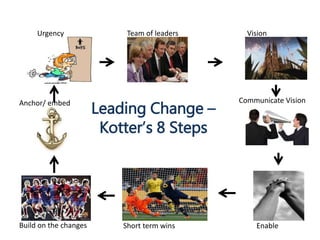
Leading Change –
Kotter’s 8 Steps
Urgency Team of leaders Vision
Communicate Vision
EnableShort term winsBuild on the changes
Anchor/ embed
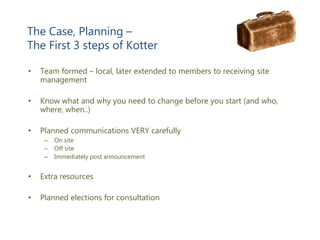
The Case, Planning –
The First 3 steps of Kotter
• Team formed – local, later extended to members to receiving site
management
• Know what and why you need to change before you start (and who,
where, when..)
• Planned communications VERY carefully
– On site
– Off site
– Immediately post announcement
• Extra resources
• Planned elections for consultation
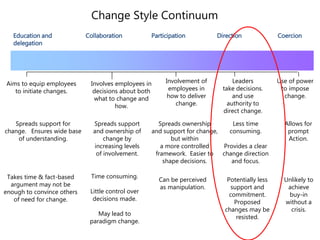
Change Style Continuum
Education and Collaboration Participation Direction Coercion
delegation
Involves employees in
decisions about both
what to change and
how.
Aims to equip employees
to initiate changes.
Involvement of
employees in
how to deliver
change.
Leaders
take decisions.
and use
authority to
direct change.
Use of power
to impose
change.
Spreads support for
change. Ensures wide base
of understanding.
Spreads support
and ownership of
change by
increasing levels
of involvement.
Spreads ownership
and support for change,
but within
a more controlled
framework. Easier to
shape decisions.
Less time
consuming.
Provides a clear
change direction
and focus.
Allows for
prompt
Action.
Takes time & fact-based
argument may not be
enough to convince others
of need for change.
Time consuming.
Little control over
decisions made.
May lead to
paradigm change.
Can be perceived
as manipulation.
Potentially less
support and
commitment.
Proposed
changes may be
resisted.
Unlikely to
achieve
buy-in
without a
crisis.
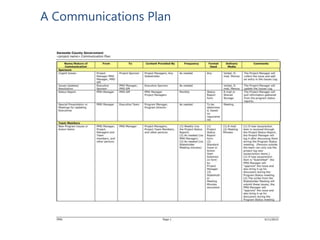
A Communications Plan
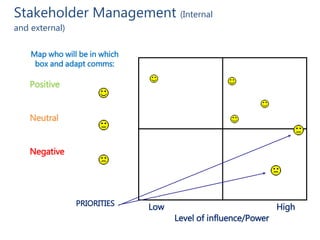
Stakeholder Management (Internal
and external)
Map who will be in which
box and adapt comms:
Positive
Neutral
Negative
Low High
Level of influence/Power
PRIORITIES
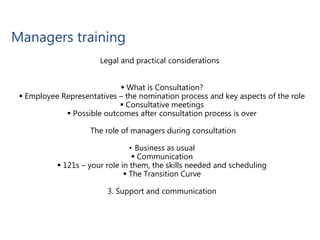
Managers training
Legal and practical considerations
 What is Consultation?
 Employee Representatives – the nomination process and key aspects of the role
 Consultative meetings
 Possible outcomes after consultation process is over
The role of managers during consultation
• Business as usual
 Communication
 121s – your role in them, the skills needed and scheduling
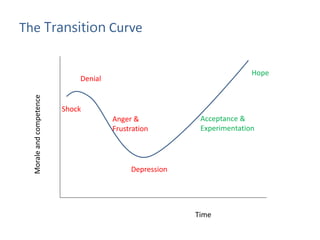
 The Transition Curve
3. Support and communication
The Transition Curve
Denial
Shock
Anger &
Frustration
Depression
Acceptance &
Experimentation
Hope
Moraleandcompetence
Time
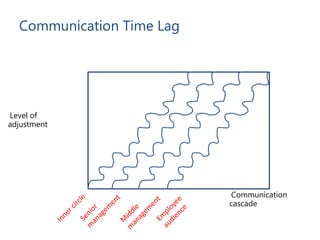
Communication Time Lag
Level of
adjustment
Communication
cascade
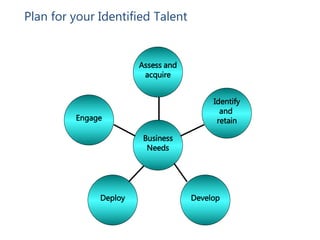
Business
Needs
Assess and
acquire
Identify
and
retain
DevelopDeploy
Engage
Plan for your Identified Talent
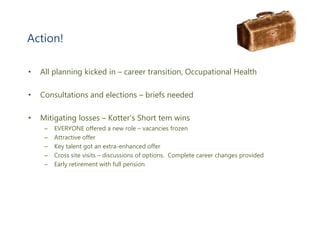
• All planning kicked in – career transition, Occupational Health
• Consultations and elections – briefs needed
• Mitigating losses – Kotter’s Short tem wins
– EVERYONE offered a new role – vacancies frozen
– Attractive offer
– Key talent got an extra-enhanced offer
– Cross site visits – discussions of options. Complete career changes provided
– Early retirement with full pension
Action!
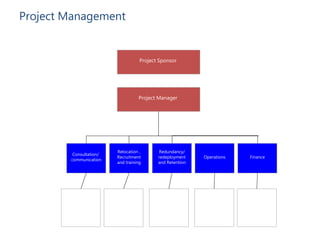
Project Management
Project Manager
Relocation ,
Recruitment
and training
Redundancy/
redeployment
and Retention
Operations Finance
Consultation/
communication
Project Sponsor
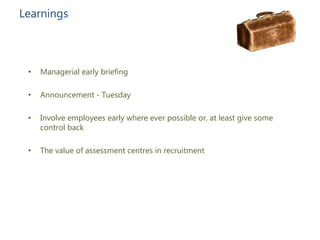
• Managerial early briefing
• Announcement - Tuesday
• Involve employees early where ever possible or, at least give some
control back
• The value of assessment centres in recruitment
Learnings
© Motivational Maps Limited 2014 All
rights reserved.
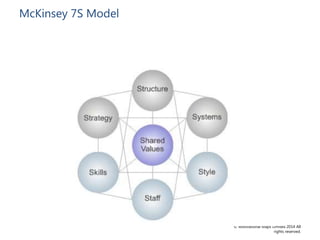
McKinsey 7S Model
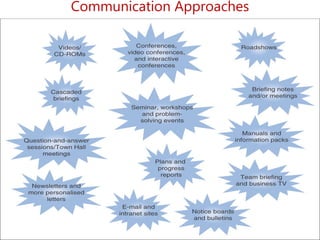
Communication Approaches
• People either:
• Relocated getting new roles, generous relocation packages, full
induction, career transition for partners, etc. This was “survivor care”
• Or
• Redundancy payment with career transition. Periodically we
announced landed figures
• One group asked for something different – funds for a start up
The Case
• … Did OK too!
• Full pipeline
• Became biggest and most successful area of research
• Kept much of the top talent – some in the start up
And the Company …
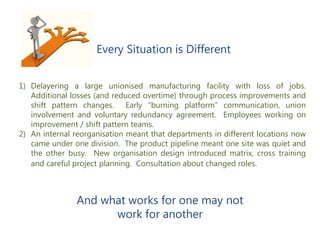
1) Delayering a large unionised manufacturing facility with loss of jobs.
Additional losses (and reduced overtime) through process improvements and
shift pattern changes. Early “burning platform” communication, union
involvement and voluntary redundancy agreement. Employees working on
improvement / shift pattern teams.
2) An internal reorganisation meant that departments in different locations now
came under one division. The product pipeline meant one site was quiet and
the other busy. New organisation design introduced matrix, cross training
and careful project planning. Consultation about changed roles.
Every Situation is Different
And what works for one may not
work for another
In summary
Legal and project management are absolutely key
Plan long – involve the best people – and get internal sponsorship
Activity spikes when you go live – additional support frees you to communicate
and reassure
Involve line managers – train in the process and key stages
Know your people - 121s have to be legally right and supportive of BAU
Do it in an emotionally intelligent way – support, empathise and communicate
Restructure, Redundancy & Change
Any Questions?
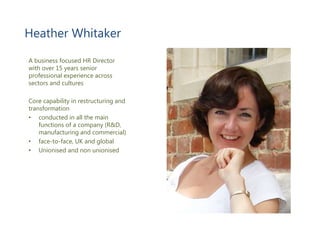
A business focused HR Director
with over 15 years senior
professional experience across
sectors and cultures
Core capability in restructuring and
transformation
• conducted in all the main
functions of a company (R&D,
manufacturing and commercial)
• face-to-face, UK and global
• Unionised and non unionised
Heather Whitaker

Restructure redundancy and change

  • 1.
    How To Manage… Restructure,Redundancy & Change Mitigate Risks With Critical Employment Law & Effective Employee Management To Ensure Seamless Internal Change. Heather Whitaker People Strategies Ltd
  • 2.
    Change …. • Isconstant • Can be positive – and still difficult TODAY People process - planning and execution – before, during and after - and finish with an opportunity for questions Every situation is different and you need to be thoughtful and creative
  • 3.
    Maintain product quality Minimise disruptive behaviour Reduce risk of legal issues Retain those you wishto keep Maintain your brand / reputation Keep productivi ty up Retain leavers until they go It’s about managing risk, helping the company and employees re-engage and resume productive working asap
  • 4.
    The Case Part ofa global acquisition, a small site was to be closed. World renown in their field, non unionised with no employee representative body Highly qualified employees who could move companies very easily locally. 10 year gap in product pipeline Note – no issues of selection for redundancy
  • 6.
    Leading Change – Kotter’s8 Steps Urgency Team of leaders Vision Communicate Vision EnableShort term winsBuild on the changes Anchor/ embed
  • 7.
    The Case, Planning– The First 3 steps of Kotter • Team formed – local, later extended to members to receiving site management • Know what and why you need to change before you start (and who, where, when..) • Planned communications VERY carefully – On site – Off site – Immediately post announcement • Extra resources • Planned elections for consultation
  • 8.
    Change Style Continuum Educationand Collaboration Participation Direction Coercion delegation Involves employees in decisions about both what to change and how. Aims to equip employees to initiate changes. Involvement of employees in how to deliver change. Leaders take decisions. and use authority to direct change. Use of power to impose change. Spreads support for change. Ensures wide base of understanding. Spreads support and ownership of change by increasing levels of involvement. Spreads ownership and support for change, but within a more controlled framework. Easier to shape decisions. Less time consuming. Provides a clear change direction and focus. Allows for prompt Action. Takes time & fact-based argument may not be enough to convince others of need for change. Time consuming. Little control over decisions made. May lead to paradigm change. Can be perceived as manipulation. Potentially less support and commitment. Proposed changes may be resisted. Unlikely to achieve buy-in without a crisis.
  • 9.
  • 10.
    Stakeholder Management (Internal andexternal) Map who will be in which box and adapt comms: Positive Neutral Negative Low High Level of influence/Power PRIORITIES
  • 12.
    Managers training Legal andpractical considerations  What is Consultation?  Employee Representatives – the nomination process and key aspects of the role  Consultative meetings  Possible outcomes after consultation process is over The role of managers during consultation • Business as usual  Communication  121s – your role in them, the skills needed and scheduling  The Transition Curve 3. Support and communication
  • 13.
    The Transition Curve Denial Shock Anger& Frustration Depression Acceptance & Experimentation Hope Moraleandcompetence Time
  • 14.
    Communication Time Lag Levelof adjustment Communication cascade
  • 15.
  • 16.
    • All planningkicked in – career transition, Occupational Health • Consultations and elections – briefs needed • Mitigating losses – Kotter’s Short tem wins – EVERYONE offered a new role – vacancies frozen – Attractive offer – Key talent got an extra-enhanced offer – Cross site visits – discussions of options. Complete career changes provided – Early retirement with full pension Action!
  • 17.
    Project Management Project Manager Relocation, Recruitment and training Redundancy/ redeployment and Retention Operations Finance Consultation/ communication Project Sponsor
  • 18.
    • Managerial earlybriefing • Announcement - Tuesday • Involve employees early where ever possible or, at least give some control back • The value of assessment centres in recruitment Learnings
  • 20.
    © Motivational MapsLimited 2014 All rights reserved. McKinsey 7S Model
  • 21.
  • 22.
    • People either: •Relocated getting new roles, generous relocation packages, full induction, career transition for partners, etc. This was “survivor care” • Or • Redundancy payment with career transition. Periodically we announced landed figures • One group asked for something different – funds for a start up The Case
  • 23.
    • … DidOK too! • Full pipeline • Became biggest and most successful area of research • Kept much of the top talent – some in the start up And the Company …
  • 24.
    1) Delayering alarge unionised manufacturing facility with loss of jobs. Additional losses (and reduced overtime) through process improvements and shift pattern changes. Early “burning platform” communication, union involvement and voluntary redundancy agreement. Employees working on improvement / shift pattern teams. 2) An internal reorganisation meant that departments in different locations now came under one division. The product pipeline meant one site was quiet and the other busy. New organisation design introduced matrix, cross training and careful project planning. Consultation about changed roles. Every Situation is Different And what works for one may not work for another
  • 25.
    In summary Legal andproject management are absolutely key Plan long – involve the best people – and get internal sponsorship Activity spikes when you go live – additional support frees you to communicate and reassure Involve line managers – train in the process and key stages Know your people - 121s have to be legally right and supportive of BAU Do it in an emotionally intelligent way – support, empathise and communicate
  • 26.
    Restructure, Redundancy &Change Any Questions?
  • 27.
    A business focusedHR Director with over 15 years senior professional experience across sectors and cultures Core capability in restructuring and transformation • conducted in all the main functions of a company (R&D, manufacturing and commercial) • face-to-face, UK and global • Unionised and non unionised Heather Whitaker

Editor's Notes

  • #7 Establishing a Sense of Urgency Forming a Powerful Guiding Coalition  Creating a Vision  Communicating the Vision  Empowering Others to Act on the Vision  Planning for and Creating Short-Term Wins  Consolidating Improvements and Producing Still More Change  Institutionalising New Approaches