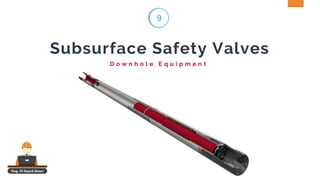
Subsurface Safety Valves
D o w n h o l e E q u i p m e n t
Eng. El Sayed Amer
9
Eng. El Sayed Amer
Page 101
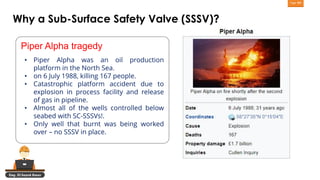
Why a Sub-Surface Safety Valve (SSSV)?
applications
• Piper Alpha was an oil production
platform in the North Sea.
• on 6 July 1988, killing 167 people.
• Catastrophic platform accident due to
explosion in process facility and release
of gas in pipeline.
• Almost all of the wells controlled below
seabed with SC-SSSVs!.
• Only well that burnt was being worked
over – no SSSV in place.
Piper Alpha tragedy
Eng. El Sayed Amer
Page 102
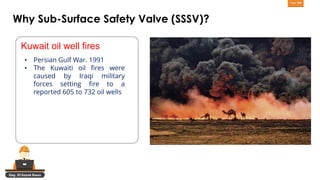
Why Sub-Surface Safety Valve (SSSV)?
applications
• Persian Gulf War. 1991
• The Kuwaiti oil fires were
caused by Iraqi military
forces setting fire to a
reported 605 to 732 oil wells
Kuwait oil well fires
Eng. El Sayed Amer
Page 103
Kuwaiti
oil fires
Eng. El Sayed Amer
Page 104
Kuwaiti
oil fires
Eng. El Sayed Amer
Page 105
Kuwaiti
oil fires
Eng. El Sayed Amer
Page 106
Kuwaiti
oil fires
Eng. El Sayed Amer
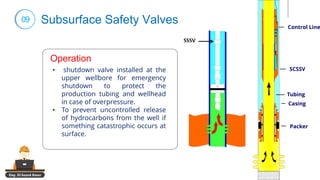
09 Subsurface Safety Valves
applications
• shutdown valve installed at the
upper wellbore for emergency
shutdown to protect the
production tubing and wellhead
in case of overpressure.
• To prevent uncontrolled release
of hydrocarbons from the well if
something catastrophic occurs at
surface.
Operation
Control Line
Casing
SCSSV
Tubing
Packer
Eng. El Sayed Amer
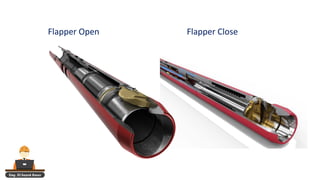
Flapper Open Flapper Close
Eng. El Sayed Amer
109
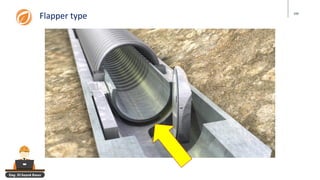
Flapper type
Eng. El Sayed Amer
Eng. El Sayed Amer
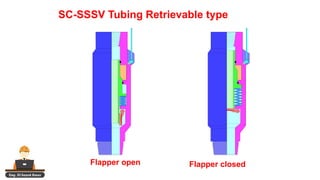
SC-SSSV Tubing Retrievable type
Flapper closedFlapper open
Eng. El Sayed Amer
112
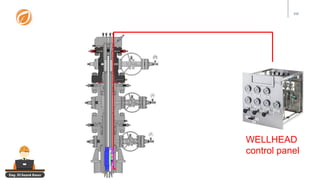
WELLHEAD
control panel
Eng. El Sayed Amer
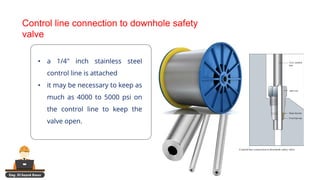
Control line connection to downhole safety
valve
applications
• a 1/4″ inch stainless steel
control line is attached
• it may be necessary to keep as
much as 4000 to 5000 psi on
the control line to keep the
valve open.
Eng. El Sayed Amer
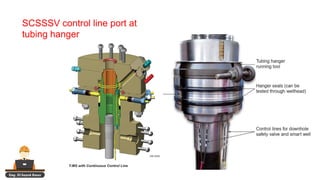
SCSSSV control line port at
tubing hanger
Eng. El Sayed Amer
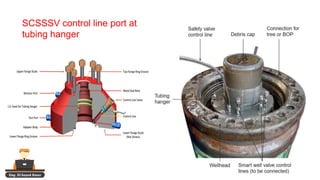
SCSSSV control line port at
tubing hanger
Eng. El Sayed Amer
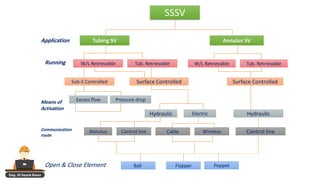
SSSV
Annulus SV
W/L Retrievable Tub. Retrievable
Surface Controlled
Hydraulic
Control line
Tubing SV
W/L Retrievable Tub. Retrievable
Surface ControlledSub-S Controlled
Hydraulic
WirelessCableControl lineAnnulus
Electric
Excess flow Pressure drop
Ball Flapper
Application
Running
Means of
Activation
Communication
route
Open & Close Element Poppet
Eng. El Sayed Amer
09 Subsurface Safety Valves
applications
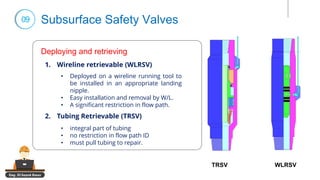
1. Wireline retrievable (WLRSV)
Deploying and retrieving
• Deployed on a wireline running tool to
be installed in an appropriate landing
nipple.
• Easy installation and removal by W/L.
• A significant restriction in flow path.
2. Tubing Retrievable (TRSV)
• integral part of tubing
• no restriction in flow path ID
• must pull tubing to repair.
TRSV WLRSV
Eng. El Sayed Amer
09 Subsurface Safety Valves
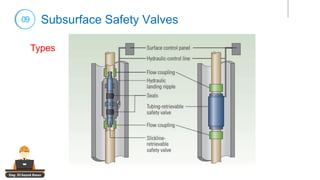
Types
Eng. El Sayed Amer
119
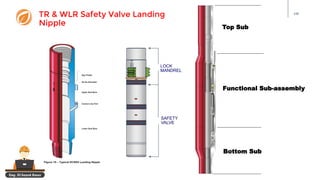
TR & WLR Safety Valve Landing
Nipple Top Sub
Functional Sub-assembly
Bottom Sub
LOCK
MANDREL
SAFETY
VALVE
Eng. El Sayed Amer
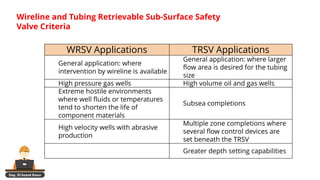
WRSV Applications TRSV Applications
General application: where
intervention by wireline is available
General application: where larger
flow area is desired for the tubing
size
High pressure gas wells High volume oil and gas wells
Extreme hostile environments
where well fluids or temperatures
tend to shorten the life of
component materials
Subsea completions
High velocity wells with abrasive
production
Multiple zone completions where
several flow control devices are
set beneath the TRSV
Greater depth setting capabilities
Wireline and Tubing Retrievable Sub-Surface Safety
Valve Criteria
Eng. El Sayed Amer
121
Flapper type
Eng. El Sayed Amer
122
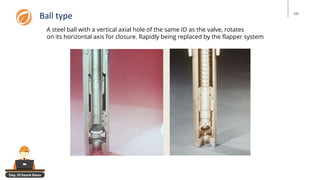
Ball type
A steel ball with a vertical axial hole of the same ID as the valve, rotates
on its horizontal axis for closure. Rapidly being replaced by the flapper system
Eng. El Sayed Amer
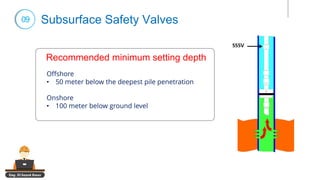
09 Subsurface Safety Valves
applications
Offshore
• 50 meter below the deepest pile penetration
Onshore
• 100 meter below ground level
Recommended minimum setting depth
Eng. El Sayed Amer
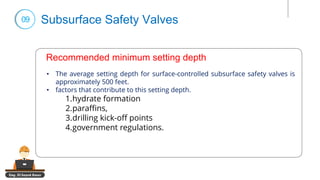
09 Subsurface Safety Valves
applications
• The average setting depth for surface-controlled subsurface safety valves is
approximately 500 feet.
• factors that contribute to this setting depth.
1.hydrate formation
2.paraffins,
3.drilling kick-off points
4.government regulations.
Recommended minimum setting depth
Eng. El Sayed Amer
Eng. El Sayed Amer
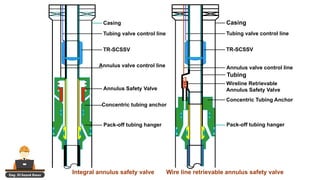
Casing
Tubing valve control line
TR-SCSSV
Annulus valve control line
Annulus Safety Valve
Concentric tubing anchor
Pack-off tubing hanger
Integral annulus safety valve
Casing
Tubing valve control line
TR-SCSSV
Annulus valve control line
Wireline Retrievable
Annulus Safety Valve
Concentric Tubing Anchor
Pack-off tubing hanger
Tubing
Wire line retrievable annulus safety valve
Eng. El Sayed Amer
127
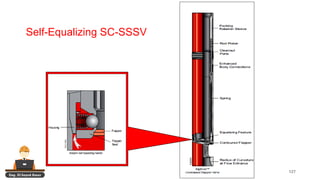
Self-Equalizing SC-SSSV

Scsssv surface control subsurface safety valve

  • 1.
    Subsurface Safety Valves Do w n h o l e E q u i p m e n t Eng. El Sayed Amer 9
  • 2.
    Eng. El SayedAmer Page 101 Why a Sub-Surface Safety Valve (SSSV)? applications • Piper Alpha was an oil production platform in the North Sea. • on 6 July 1988, killing 167 people. • Catastrophic platform accident due to explosion in process facility and release of gas in pipeline. • Almost all of the wells controlled below seabed with SC-SSSVs!. • Only well that burnt was being worked over – no SSSV in place. Piper Alpha tragedy
  • 3.
    Eng. El SayedAmer Page 102 Why Sub-Surface Safety Valve (SSSV)? applications • Persian Gulf War. 1991 • The Kuwaiti oil fires were caused by Iraqi military forces setting fire to a reported 605 to 732 oil wells Kuwait oil well fires
  • 4.
    Eng. El SayedAmer Page 103 Kuwaiti oil fires
  • 5.
    Eng. El SayedAmer Page 104 Kuwaiti oil fires
  • 6.
    Eng. El SayedAmer Page 105 Kuwaiti oil fires
  • 7.
    Eng. El SayedAmer Page 106 Kuwaiti oil fires
  • 8.
    Eng. El SayedAmer 09 Subsurface Safety Valves applications • shutdown valve installed at the upper wellbore for emergency shutdown to protect the production tubing and wellhead in case of overpressure. • To prevent uncontrolled release of hydrocarbons from the well if something catastrophic occurs at surface. Operation Control Line Casing SCSSV Tubing Packer
  • 9.
    Eng. El SayedAmer Flapper Open Flapper Close
  • 10.
    Eng. El SayedAmer 109 Flapper type
  • 11.
  • 12.
    Eng. El SayedAmer SC-SSSV Tubing Retrievable type Flapper closedFlapper open
  • 13.
    Eng. El SayedAmer 112 WELLHEAD control panel
  • 14.
    Eng. El SayedAmer Control line connection to downhole safety valve applications • a 1/4″ inch stainless steel control line is attached • it may be necessary to keep as much as 4000 to 5000 psi on the control line to keep the valve open.
  • 15.
    Eng. El SayedAmer SCSSSV control line port at tubing hanger
  • 16.
    Eng. El SayedAmer SCSSSV control line port at tubing hanger
  • 17.
    Eng. El SayedAmer SSSV Annulus SV W/L Retrievable Tub. Retrievable Surface Controlled Hydraulic Control line Tubing SV W/L Retrievable Tub. Retrievable Surface ControlledSub-S Controlled Hydraulic WirelessCableControl lineAnnulus Electric Excess flow Pressure drop Ball Flapper Application Running Means of Activation Communication route Open & Close Element Poppet
  • 18.
    Eng. El SayedAmer 09 Subsurface Safety Valves applications 1. Wireline retrievable (WLRSV) Deploying and retrieving • Deployed on a wireline running tool to be installed in an appropriate landing nipple. • Easy installation and removal by W/L. • A significant restriction in flow path. 2. Tubing Retrievable (TRSV) • integral part of tubing • no restriction in flow path ID • must pull tubing to repair. TRSV WLRSV
  • 19.
    Eng. El SayedAmer 09 Subsurface Safety Valves Types
  • 20.
    Eng. El SayedAmer 119 TR & WLR Safety Valve Landing Nipple Top Sub Functional Sub-assembly Bottom Sub LOCK MANDREL SAFETY VALVE
  • 21.
    Eng. El SayedAmer WRSV Applications TRSV Applications General application: where intervention by wireline is available General application: where larger flow area is desired for the tubing size High pressure gas wells High volume oil and gas wells Extreme hostile environments where well fluids or temperatures tend to shorten the life of component materials Subsea completions High velocity wells with abrasive production Multiple zone completions where several flow control devices are set beneath the TRSV Greater depth setting capabilities Wireline and Tubing Retrievable Sub-Surface Safety Valve Criteria
  • 22.
    Eng. El SayedAmer 121 Flapper type
  • 23.
    Eng. El SayedAmer 122 Ball type A steel ball with a vertical axial hole of the same ID as the valve, rotates on its horizontal axis for closure. Rapidly being replaced by the flapper system
  • 24.
    Eng. El SayedAmer 09 Subsurface Safety Valves applications Offshore • 50 meter below the deepest pile penetration Onshore • 100 meter below ground level Recommended minimum setting depth
  • 25.
    Eng. El SayedAmer 09 Subsurface Safety Valves applications • The average setting depth for surface-controlled subsurface safety valves is approximately 500 feet. • factors that contribute to this setting depth. 1.hydrate formation 2.paraffins, 3.drilling kick-off points 4.government regulations. Recommended minimum setting depth
  • 26.
  • 27.
    Eng. El SayedAmer Casing Tubing valve control line TR-SCSSV Annulus valve control line Annulus Safety Valve Concentric tubing anchor Pack-off tubing hanger Integral annulus safety valve Casing Tubing valve control line TR-SCSSV Annulus valve control line Wireline Retrievable Annulus Safety Valve Concentric Tubing Anchor Pack-off tubing hanger Tubing Wire line retrievable annulus safety valve
  • 28.
    Eng. El SayedAmer 127 Self-Equalizing SC-SSSV