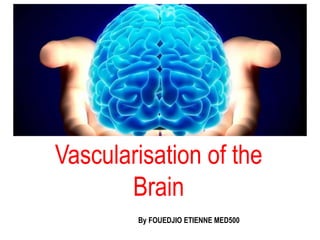
Vascularisation of the
Brain
By FOUEDJIO ETIENNE MED500
Plan
Introduction
1- Arterial supply of the brain
2- venous drainage of the brain
3- choroid plexus and CSF circulation
conclusion
Plan
Introduction
1- Arterial supply of the brain
2- venous drainage of the brain
3- choroid plexus and CSF circulation
conclusion
* The brain is a highly vascular organ.
* It has a high metabolic rate that reflects the
energy requirements of constant neural activity.
* It receives about 15% of the cardiac output and
utilizes 25% of the total oxygen consumption of
the body.
Plan
Introduction
1- Arterial supply of the brain
2- venous drainage of the brain
3- choroid plexus and CSF circulation
conclusion
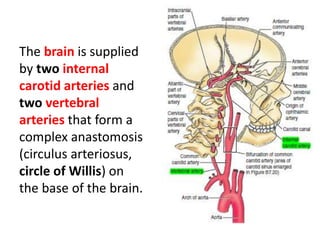
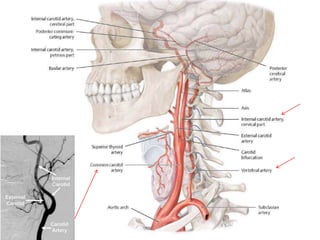
The brain is supplied
by two internal
carotid arteries and
two vertebral
arteries that form a
complex anastomosis
(circulus arteriosus,
circle of Willis) on
the base of the brain.
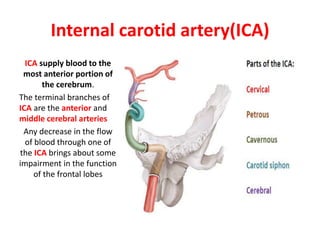
Internal carotid artery(ICA)
ICA supply blood to the
most anterior portion of
the cerebrum.
The terminal branches of
ICA are the anterior and
middle cerebral arteries
Any decrease in the flow
of blood through one of
the ICA brings about some
impairment in the function
of the frontal lobes
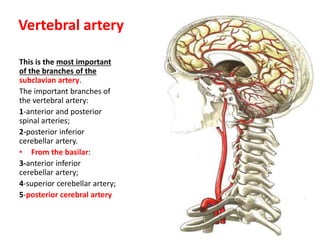
This is the most important
of the branches of the
subclavian artery.
The important branches of
the vertebral artery:
1-anterior and posterior
spinal arteries;
2-posterior inferior
cerebellar artery.
• From the basilar:
3-anterior inferior
cerebellar artery;
4-superior cerebellar artery;
5-posterior cerebral artery
Vertebral artery
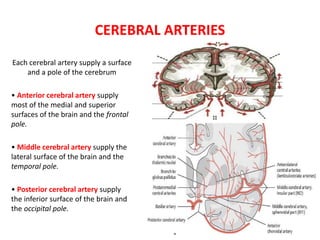
CEREBRAL ARTERIES
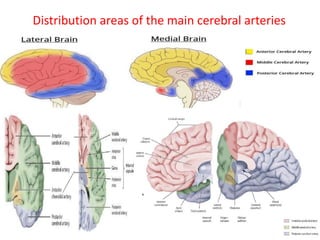
Each cerebral artery supply a surface
and a pole of the cerebrum
• Anterior cerebral artery supply
most of the medial and superior
surfaces of the brain and the frontal
pole.
• Middle cerebral artery supply the
lateral surface of the brain and the
temporal pole.
• Posterior cerebral artery supply
the inferior surface of the brain and
the occipital pole.
Distribution areas of the main cerebral arteries
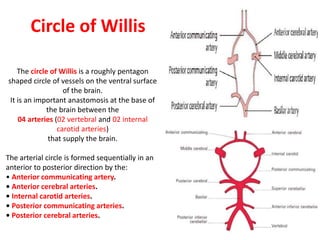
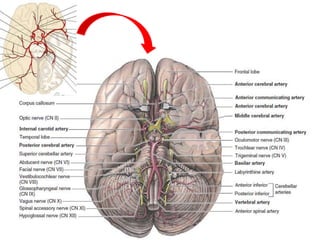
Circle of Willis
The circle of Willis is a roughly pentagon
shaped circle of vessels on the ventral surface
of the brain.
It is an important anastomosis at the base of
the brain between the
04 arteries (02 vertebral and 02 internal
carotid arteries)
that supply the brain.
The arterial circle is formed sequentially in an
anterior to posterior direction by the:
• Anterior communicating artery.
• Anterior cerebral arteries.
• Internal carotid arteries.
• Posterior communicating arteries.
• Posterior cerebral arteries.
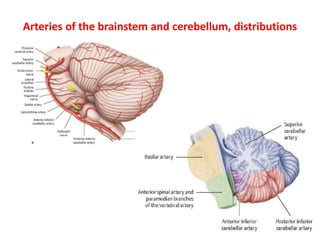
Arteries of the brainstem and cerebellum, distributions
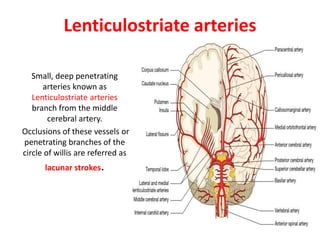
Lenticulostriate arteries
Small, deep penetrating
arteries known as
Lenticulostriate arteries
branch from the middle
cerebral artery.
Occlusions of these vessels or
penetrating branches of the
circle of willis are referred as
lacunar strokes.
Plan
Introduction
1- Arterial supply of the brain
2- venous drainage of the brain
3- choroid plexus and CSF circulation
conclusion
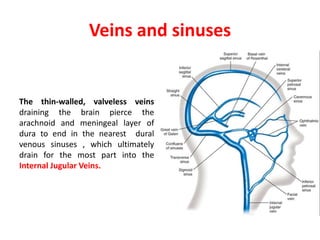
Veins and sinuses
The thin-walled, valveless veins
draining the brain pierce the
arachnoid and meningeal layer of
dura to end in the nearest dural
venous sinuses , which ultimately
drain for the most part into the
Internal Jugular Veins.
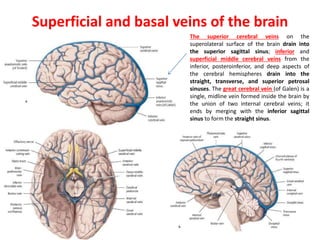
Superficial and basal veins of the brain
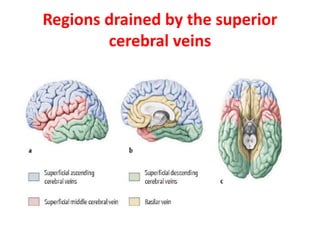
The superior cerebral veins on the
superolateral surface of the brain drain into
the superior sagittal sinus; inferior and
superficial middle cerebral veins from the
inferior, posteroinferior, and deep aspects of
the cerebral hemispheres drain into the
straight, transverse, and superior petrosal
sinuses. The great cerebral vein (of Galen) is a
single, midline vein formed inside the brain by
the union of two internal cerebral veins; it
ends by merging with the inferior sagittal
sinus to form the straight sinus.
Regions drained by the superior
cerebral veins
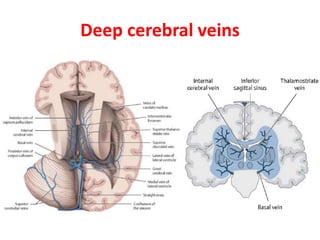
Deep cerebral veins
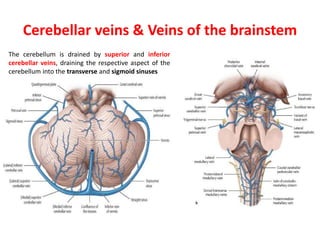
Cerebellar veins & Veins of the brainstem
The cerebellum is drained by superior and inferior
cerebellar veins, draining the respective aspect of the
cerebellum into the transverse and sigmoid sinuses
Plan
Introduction
1- Arterial supply of the brain
2- venous drainage of the brain
3- choroid plexus and CSF circulation
conclusion
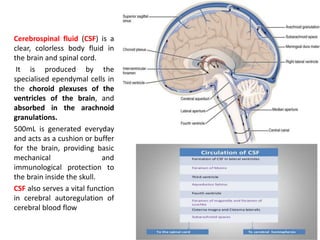
Cerebrospinal fluid (CSF) is a
clear, colorless body fluid in
the brain and spinal cord.
It is produced by the
specialised ependymal cells in
the choroid plexuses of the
ventricles of the brain, and
absorbed in the arachnoid
granulations.
500mL is generated everyday
and acts as a cushion or buffer
for the brain, providing basic
mechanical and
immunological protection to
the brain inside the skull.
CSF also serves a vital function
in cerebral autoregulation of
cerebral blood flow
Plan
Introduction
1- Arterial supply of the brain
2- venous drainage of the brain
3- choroid plexus and CSF circulation
conclusion
Arterial supply and venous drainage of brain: A continuous supply of
oxygen and nutrients is essential for brain function.
• The brain receives a dual blood supply from the cerebral branches
of the bilaterally paired internal carotid and vertebral arteries.
• Anastomoses between these arteries form the cerebral arterial
circle (circle of Willis).
• Anastomoses also occur between the branches of the three
cerebral arteries on the surface of the brain.
In adults, if one of the 04 arteries delivering blood to the brain is
blocked, the remaining 03 are not usually capable of providing
adequate collateral circulation; consequently, impaired cerebral blood
flow (ischemia) and an ischemic stroke result.
* Venous drainage from the brain occurs via the dural venous
sinuses and internal jugular veins.
Brain vascularisation

Brain vascularisation

  • 1.
    Vascularisation of the Brain ByFOUEDJIO ETIENNE MED500
  • 2.
    Plan Introduction 1- Arterial supplyof the brain 2- venous drainage of the brain 3- choroid plexus and CSF circulation conclusion
  • 3.
    Plan Introduction 1- Arterial supplyof the brain 2- venous drainage of the brain 3- choroid plexus and CSF circulation conclusion
  • 4.
    * The brainis a highly vascular organ. * It has a high metabolic rate that reflects the energy requirements of constant neural activity. * It receives about 15% of the cardiac output and utilizes 25% of the total oxygen consumption of the body.
  • 5.
    Plan Introduction 1- Arterial supplyof the brain 2- venous drainage of the brain 3- choroid plexus and CSF circulation conclusion
  • 6.
    The brain issupplied by two internal carotid arteries and two vertebral arteries that form a complex anastomosis (circulus arteriosus, circle of Willis) on the base of the brain.
  • 8.
    Internal carotid artery(ICA) ICAsupply blood to the most anterior portion of the cerebrum. The terminal branches of ICA are the anterior and middle cerebral arteries Any decrease in the flow of blood through one of the ICA brings about some impairment in the function of the frontal lobes
  • 9.
    This is themost important of the branches of the subclavian artery. The important branches of the vertebral artery: 1-anterior and posterior spinal arteries; 2-posterior inferior cerebellar artery. • From the basilar: 3-anterior inferior cerebellar artery; 4-superior cerebellar artery; 5-posterior cerebral artery Vertebral artery
  • 10.
    CEREBRAL ARTERIES Each cerebralartery supply a surface and a pole of the cerebrum • Anterior cerebral artery supply most of the medial and superior surfaces of the brain and the frontal pole. • Middle cerebral artery supply the lateral surface of the brain and the temporal pole. • Posterior cerebral artery supply the inferior surface of the brain and the occipital pole.
  • 11.
    Distribution areas ofthe main cerebral arteries
  • 12.
    Circle of Willis Thecircle of Willis is a roughly pentagon shaped circle of vessels on the ventral surface of the brain. It is an important anastomosis at the base of the brain between the 04 arteries (02 vertebral and 02 internal carotid arteries) that supply the brain. The arterial circle is formed sequentially in an anterior to posterior direction by the: • Anterior communicating artery. • Anterior cerebral arteries. • Internal carotid arteries. • Posterior communicating arteries. • Posterior cerebral arteries.
  • 14.
    Arteries of thebrainstem and cerebellum, distributions
  • 15.
    Lenticulostriate arteries Small, deeppenetrating arteries known as Lenticulostriate arteries branch from the middle cerebral artery. Occlusions of these vessels or penetrating branches of the circle of willis are referred as lacunar strokes.
  • 16.
    Plan Introduction 1- Arterial supplyof the brain 2- venous drainage of the brain 3- choroid plexus and CSF circulation conclusion
  • 17.
    Veins and sinuses Thethin-walled, valveless veins draining the brain pierce the arachnoid and meningeal layer of dura to end in the nearest dural venous sinuses , which ultimately drain for the most part into the Internal Jugular Veins.
  • 18.
    Superficial and basalveins of the brain The superior cerebral veins on the superolateral surface of the brain drain into the superior sagittal sinus; inferior and superficial middle cerebral veins from the inferior, posteroinferior, and deep aspects of the cerebral hemispheres drain into the straight, transverse, and superior petrosal sinuses. The great cerebral vein (of Galen) is a single, midline vein formed inside the brain by the union of two internal cerebral veins; it ends by merging with the inferior sagittal sinus to form the straight sinus.
  • 19.
    Regions drained bythe superior cerebral veins
  • 20.
  • 21.
    Cerebellar veins &Veins of the brainstem The cerebellum is drained by superior and inferior cerebellar veins, draining the respective aspect of the cerebellum into the transverse and sigmoid sinuses
  • 22.
    Plan Introduction 1- Arterial supplyof the brain 2- venous drainage of the brain 3- choroid plexus and CSF circulation conclusion
  • 23.
    Cerebrospinal fluid (CSF)is a clear, colorless body fluid in the brain and spinal cord. It is produced by the specialised ependymal cells in the choroid plexuses of the ventricles of the brain, and absorbed in the arachnoid granulations. 500mL is generated everyday and acts as a cushion or buffer for the brain, providing basic mechanical and immunological protection to the brain inside the skull. CSF also serves a vital function in cerebral autoregulation of cerebral blood flow
  • 24.
    Plan Introduction 1- Arterial supplyof the brain 2- venous drainage of the brain 3- choroid plexus and CSF circulation conclusion
  • 25.
    Arterial supply andvenous drainage of brain: A continuous supply of oxygen and nutrients is essential for brain function. • The brain receives a dual blood supply from the cerebral branches of the bilaterally paired internal carotid and vertebral arteries. • Anastomoses between these arteries form the cerebral arterial circle (circle of Willis). • Anastomoses also occur between the branches of the three cerebral arteries on the surface of the brain. In adults, if one of the 04 arteries delivering blood to the brain is blocked, the remaining 03 are not usually capable of providing adequate collateral circulation; consequently, impaired cerebral blood flow (ischemia) and an ischemic stroke result. * Venous drainage from the brain occurs via the dural venous sinuses and internal jugular veins.