A Correlational Study Examining Institutional Culture and Faculty Perceptions
of Online Learning in Chiropractic Higher Education
Background Conclusion
• Technological advances challenge universities to explore
alternative teaching paradigms to allow students an
opportunity to learn in online environments
• Healthcare higher education in clinical disciplines, such
as chiropractic medicine, offer minimal online education
opportunities
• Awareness among higher education leadership of
institutional culture and its influence on faculty
perceptions of online learning aids in successful planning
and implementation of strategic innovative initiatives
(Windes & Lesht, 2014)
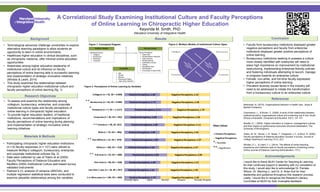
• This study examined the relationships between
chiropractic higher education institutional culture and
faculty perceptions of online learning (fig. 1)
• Faculty from bureaucracy institutions displayed greater
negative perceptions and faculty from enterprise
institutions displayed greater positive perceptions of
online learning
• Bureaucracy institutions seeking to possess a culture
more closely identified with enterprise will need to
place high importance on improvement by institutional
restructuring, implementing enterprise-friendly policies
and fostering individuals attempting to launch, manage,
or progress towards an enterprise culture
• Female, non-white, and full-time faculty expressed
higher perceptions of online learning
• Prevalent diversity issues faced in the industry will
need to be addressed to initiate the transformation
from a bureaucracy culture to an enterprise culture
Research Objectives
• To assess and examine the relationship among
collegium, bureaucracy, enterprise, and corporate
institutional culture types and faculty perceptions of
online learning in chiropractic higher education
• To provide higher education leaders, of traditional
institutions, recommendations and implications of
faculty perceptions of online learning during planning
and implementation of strategic innovative online
learning initiatives
References
Borkowski, N. (2015). Organizational behavior in health care. Jones &
Bartlett Publishers.
Czerniewicz, L., & Brown, C. (2009). A study of the relationship between
institutional policy, organisational culture and e-learning use in four South
African universities. Computers & Education, 53(1), 121-131.
Nauffal, D. I. (2004). Higher education in Lebanon: management cultures
and their impact on performance outcomes (Doctoral dissertation, The
University of Birmingham).
Totaro, M. W., Tanner, J. R., Noser, T., Fitzgerald, J. F., & Birch, R. (2005).
Faculty perceptions of distance education courses: A survey. Journal of
College Teaching & Learning (TLC), 2(7).
Windes, D. L., & Lesht, F. L. (2014). The effects of online teaching
experience and institution type on faculty perceptions of teaching online.
Online Journal of Distance Learning Administration, 17(1).
Acknowledgements
I would like to thank MUIH Center for Teaching & Learning
for their continued support in assisting with my completion of
this study. I would also like to acknowledge Dr. Pamela
Wilson, Dr. Wenling Li, and Dr. A. Brian Ault for their
leadership and guidance throughout this research process.
Lastly, I would like to recognize the Research Literacy
Committee at MUIH for their invaluable feedback.
Keyonda M. Smith, PhD
Maryland University of Integrative Health
Materials & Methods
• Participating chiropractic higher education institutions
(n = 6) faculty responses (n = 131) were utilized to
measure McNay’s collegium, bureaucracy, enterprise,
and corporate institutional cultures (fig. 2)
• Data were collected by use of Totaro et al (2005)
Faculty Perceptions of Distance Education and
Nauffal’s (2004) Institutional Culture web-based survey
validated instruments
• Pearson’s (r), analysis of variance (ANOVA), and
multiple regression statistical tests were conducted to
examine plausible relationships among the variables
Results
Figure 1: Conceptual Diagram Figure 2: McNay’s Models of Institutional Culture Types
Figure 3: Perceptions of Online Learning by Variables

Research Symposium Poster

  • 1.
    A Correlational StudyExamining Institutional Culture and Faculty Perceptions of Online Learning in Chiropractic Higher Education Background Conclusion • Technological advances challenge universities to explore alternative teaching paradigms to allow students an opportunity to learn in online environments • Healthcare higher education in clinical disciplines, such as chiropractic medicine, offer minimal online education opportunities • Awareness among higher education leadership of institutional culture and its influence on faculty perceptions of online learning aids in successful planning and implementation of strategic innovative initiatives (Windes & Lesht, 2014) • This study examined the relationships between chiropractic higher education institutional culture and faculty perceptions of online learning (fig. 1) • Faculty from bureaucracy institutions displayed greater negative perceptions and faculty from enterprise institutions displayed greater positive perceptions of online learning • Bureaucracy institutions seeking to possess a culture more closely identified with enterprise will need to place high importance on improvement by institutional restructuring, implementing enterprise-friendly policies and fostering individuals attempting to launch, manage, or progress towards an enterprise culture • Female, non-white, and full-time faculty expressed higher perceptions of online learning • Prevalent diversity issues faced in the industry will need to be addressed to initiate the transformation from a bureaucracy culture to an enterprise culture Research Objectives • To assess and examine the relationship among collegium, bureaucracy, enterprise, and corporate institutional culture types and faculty perceptions of online learning in chiropractic higher education • To provide higher education leaders, of traditional institutions, recommendations and implications of faculty perceptions of online learning during planning and implementation of strategic innovative online learning initiatives References Borkowski, N. (2015). Organizational behavior in health care. Jones & Bartlett Publishers. Czerniewicz, L., & Brown, C. (2009). A study of the relationship between institutional policy, organisational culture and e-learning use in four South African universities. Computers & Education, 53(1), 121-131. Nauffal, D. I. (2004). Higher education in Lebanon: management cultures and their impact on performance outcomes (Doctoral dissertation, The University of Birmingham). Totaro, M. W., Tanner, J. R., Noser, T., Fitzgerald, J. F., & Birch, R. (2005). Faculty perceptions of distance education courses: A survey. Journal of College Teaching & Learning (TLC), 2(7). Windes, D. L., & Lesht, F. L. (2014). The effects of online teaching experience and institution type on faculty perceptions of teaching online. Online Journal of Distance Learning Administration, 17(1). Acknowledgements I would like to thank MUIH Center for Teaching & Learning for their continued support in assisting with my completion of this study. I would also like to acknowledge Dr. Pamela Wilson, Dr. Wenling Li, and Dr. A. Brian Ault for their leadership and guidance throughout this research process. Lastly, I would like to recognize the Research Literacy Committee at MUIH for their invaluable feedback. Keyonda M. Smith, PhD Maryland University of Integrative Health Materials & Methods • Participating chiropractic higher education institutions (n = 6) faculty responses (n = 131) were utilized to measure McNay’s collegium, bureaucracy, enterprise, and corporate institutional cultures (fig. 2) • Data were collected by use of Totaro et al (2005) Faculty Perceptions of Distance Education and Nauffal’s (2004) Institutional Culture web-based survey validated instruments • Pearson’s (r), analysis of variance (ANOVA), and multiple regression statistical tests were conducted to examine plausible relationships among the variables Results Figure 1: Conceptual Diagram Figure 2: McNay’s Models of Institutional Culture Types Figure 3: Perceptions of Online Learning by Variables