SCREENSHOTS TO SUPPORT MY
QUESTION SEVEN RESPONSE
Connor Southwell
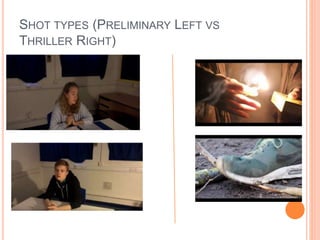
SHOT TYPES (PRELIMINARY LEFT VS
THRILLER RIGHT)
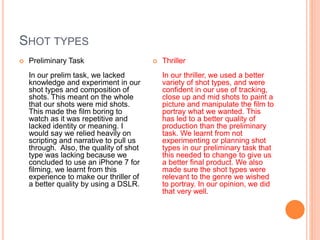
SHOT TYPES
 Preliminary Task
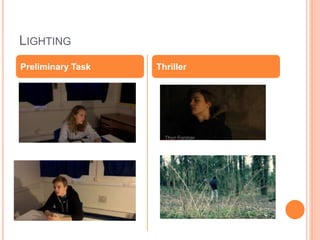
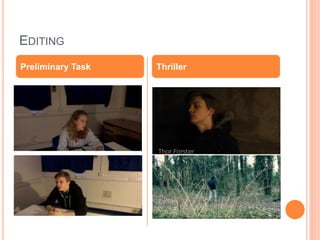
In our prelim task, we lacked
knowledge and experiment in our
shot types and composition of
shots. This meant on the whole
that our shots were mid shots.
This made the film boring to
watch as it was repetitive and
lacked identity or meaning. I
would say we relied heavily on
scripting and narrative to pull us
through. Also, the quality of shot
type was lacking because we
concluded to use an iPhone 7 for
filming, we learnt from this
experience to make our thriller of
a better quality by using a DSLR.
 Thriller
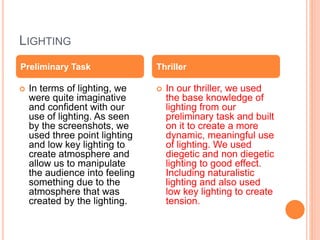
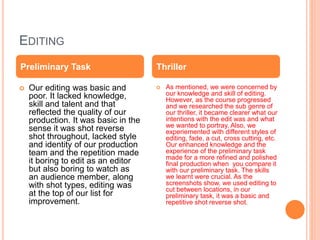
In our thriller, we used a better
variety of shot types, and were
confident in our use of tracking,
close up and mid shots to paint a
picture and manipulate the film to
portray what we wanted. This
has led to a better quality of
production than the preliminary
task. We learnt from not
experimenting or planning shot
types in our preliminary task that
this needed to change to give us
a better final product. We also
made sure the shot types were
relevant to the genre we wished
to portray. In our opinion, we did
that very well.
LIGHTING
Preliminary Task Thriller
LIGHTING
 In terms of lighting, we
were quite imaginative
and confident with our
use of lighting. As seen
by the screenshots, we
used three point lighting
and low key lighting to
create atmosphere and
allow us to manipulate
the audience into feeling
something due to the
atmosphere that was
created by the lighting.
 In our thriller, we used
the base knowledge of
lighting from our
preliminary task and built
on it to create a more
dynamic, meaningful use
of lighting. We used
diegetic and non diegetic
lighting to good effect.
Including naturalistic
lighting and also used
low key lighting to create
tension.
Preliminary Task Thriller
EDITING
Preliminary Task Thriller
EDITING
 Our editing was basic and
poor. It lacked knowledge,
skill and talent and that
reflected the quality of our
production. It was basic in the
sense it was shot reverse
shot throughout, lacked style
and identity of our production
team and the repetition made
it boring to edit as an editor
but also boring to watch as
an audience member, along
with shot types, editing was
at the top of our list for
improvement.
 As mentioned, we were concerned by
our knowledge and skill of editing.
However, as the course progressed
and we researched the sub genre of
our thriller, it became clearer what our
intentions with the edit was and what
we wanted to portray. Also, we
experiemented with different styles of
editing, fade, a cut, cross cutting, etc.
Our enhanced knowledge and the
experience of the preliminary task
made for a more refined and polished
final production when you compare it
with our preliminary task. The skills
we learnt were crucial. As the
screenshots show, we used editing to
cut between locations, in our
preliminary task, it was a basic and
repetitive shot reverse shot.
Preliminary Task Thriller

Q7 screenshots

  • 1.
    SCREENSHOTS TO SUPPORTMY QUESTION SEVEN RESPONSE Connor Southwell
  • 2.
    SHOT TYPES (PRELIMINARYLEFT VS THRILLER RIGHT)
  • 3.
    SHOT TYPES  PreliminaryTask In our prelim task, we lacked knowledge and experiment in our shot types and composition of shots. This meant on the whole that our shots were mid shots. This made the film boring to watch as it was repetitive and lacked identity or meaning. I would say we relied heavily on scripting and narrative to pull us through. Also, the quality of shot type was lacking because we concluded to use an iPhone 7 for filming, we learnt from this experience to make our thriller of a better quality by using a DSLR.  Thriller In our thriller, we used a better variety of shot types, and were confident in our use of tracking, close up and mid shots to paint a picture and manipulate the film to portray what we wanted. This has led to a better quality of production than the preliminary task. We learnt from not experimenting or planning shot types in our preliminary task that this needed to change to give us a better final product. We also made sure the shot types were relevant to the genre we wished to portray. In our opinion, we did that very well.
  • 4.
  • 5.
    LIGHTING  In termsof lighting, we were quite imaginative and confident with our use of lighting. As seen by the screenshots, we used three point lighting and low key lighting to create atmosphere and allow us to manipulate the audience into feeling something due to the atmosphere that was created by the lighting.  In our thriller, we used the base knowledge of lighting from our preliminary task and built on it to create a more dynamic, meaningful use of lighting. We used diegetic and non diegetic lighting to good effect. Including naturalistic lighting and also used low key lighting to create tension. Preliminary Task Thriller
  • 6.
  • 7.
    EDITING  Our editingwas basic and poor. It lacked knowledge, skill and talent and that reflected the quality of our production. It was basic in the sense it was shot reverse shot throughout, lacked style and identity of our production team and the repetition made it boring to edit as an editor but also boring to watch as an audience member, along with shot types, editing was at the top of our list for improvement.  As mentioned, we were concerned by our knowledge and skill of editing. However, as the course progressed and we researched the sub genre of our thriller, it became clearer what our intentions with the edit was and what we wanted to portray. Also, we experiemented with different styles of editing, fade, a cut, cross cutting, etc. Our enhanced knowledge and the experience of the preliminary task made for a more refined and polished final production when you compare it with our preliminary task. The skills we learnt were crucial. As the screenshots show, we used editing to cut between locations, in our preliminary task, it was a basic and repetitive shot reverse shot. Preliminary Task Thriller