1 |www.bridgesom.com
BREAKING IT DOWN: HOW THE DELHI METRO WAS DELIVERED BEFORE TIME & ON BUDGET
Traveling in the Delhi Metro during peak hours can be a painstaking task for over 2.7 million daily
commuters. However, it has proved to be a cost-effective solution for the city’s rising pollution and
transport woes. Over the years, the metro has transformed Delhi, becoming its very own pulse.
The Delhi Metro Rail Corporation’s projects are carried out in
phases, Phases I and II are now complete. The first section of
Phase I opened in 2002. Phases III and IV should become
operational in 2016 and 2021 respectively.
The team that did all this made it look simple. However,
building a new metro system in a crowded capital city
required complex planning and execution.
The Metro project faced numerous technical and systemic hurdles. Despite these, it delivered the
first phase nearly 3 years ahead of schedule and within budget, thanks to comprehensive planning,
effective project design, and a professional work culture.
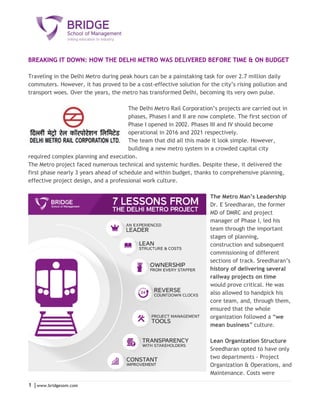
The Metro Man’s Leadership
Dr. E Sreedharan, the former
MD of DMRC and project
manager of Phase I, led his
team through the important
stages of planning,
construction and subsequent
commissioning of different
sections of track. Sreedharan’s
history of delivering several
railway projects on time
would prove critical. He was
also allowed to handpick his
core team, and, through them,
ensured that the whole
organization followed a “we
mean business” culture.
Lean Organization Structure
Sreedharan opted to have only
two departments - Project
Organization & Operations, and
Maintenance. Costs were
2 |www.bridgesom.com
limited to just three heads: energy, manpower, and materials & maintenance to control
expenditure.
Ownership in the Project
DMRC used a system in which every individual was aware of
their accountabilities. Every employee prepared a detailed
report on the work assigned to them. In case of a delay or
deviation from the plan he/she had to give valid reasons and
see that the problem was resolved.
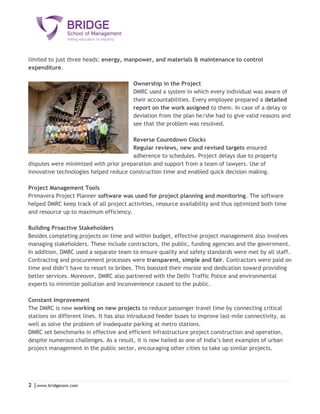
Reverse Countdown Clocks
Regular reviews, new and revised targets ensured
adherence to schedules. Project delays due to property
disputes were minimized with prior preparation and support from a team of lawyers. Use of
innovative technologies helped reduce construction time and enabled quick decision making.
Project Management Tools
Primavera Project Planner software was used for project planning and monitoring. The software
helped DMRC keep track of all project activities, resource availability and thus optimized both time
and resource up to maximum efficiency.
Building Proactive Stakeholders
Besides completing projects on time and within budget, effective project management also involves
managing stakeholders. These include contractors, the public, funding agencies and the government.
In addition, DMRC used a separate team to ensure quality and safety standards were met by all staff.
Contracting and procurement processes were transparent, simple and fair. Contractors were paid on
time and didn’t have to resort to bribes. This boosted their morale and dedication toward providing
better services. Moreover, DMRC also partnered with the Delhi Traffic Police and environmental
experts to minimize pollution and inconvenience caused to the public.
Constant Improvement
The DMRC is now working on new projects to reduce passenger travel time by connecting critical
stations on different lines. It has also introduced feeder buses to improve last-mile connectivity, as
well as solve the problem of inadequate parking at metro stations.
DMRC set benchmarks in effective and efficient infrastructure project construction and operation,
despite numerous challenges. As a result, it is now hailed as one of India’s best examples of urban
project management in the public sector, encouraging other cities to take up similar projects.

Delhi metro case study

  • 1.
    1 |www.bridgesom.com BREAKING ITDOWN: HOW THE DELHI METRO WAS DELIVERED BEFORE TIME & ON BUDGET Traveling in the Delhi Metro during peak hours can be a painstaking task for over 2.7 million daily commuters. However, it has proved to be a cost-effective solution for the city’s rising pollution and transport woes. Over the years, the metro has transformed Delhi, becoming its very own pulse. The Delhi Metro Rail Corporation’s projects are carried out in phases, Phases I and II are now complete. The first section of Phase I opened in 2002. Phases III and IV should become operational in 2016 and 2021 respectively. The team that did all this made it look simple. However, building a new metro system in a crowded capital city required complex planning and execution. The Metro project faced numerous technical and systemic hurdles. Despite these, it delivered the first phase nearly 3 years ahead of schedule and within budget, thanks to comprehensive planning, effective project design, and a professional work culture. The Metro Man’s Leadership Dr. E Sreedharan, the former MD of DMRC and project manager of Phase I, led his team through the important stages of planning, construction and subsequent commissioning of different sections of track. Sreedharan’s history of delivering several railway projects on time would prove critical. He was also allowed to handpick his core team, and, through them, ensured that the whole organization followed a “we mean business” culture. Lean Organization Structure Sreedharan opted to have only two departments - Project Organization & Operations, and Maintenance. Costs were
  • 2.
    2 |www.bridgesom.com limited tojust three heads: energy, manpower, and materials & maintenance to control expenditure. Ownership in the Project DMRC used a system in which every individual was aware of their accountabilities. Every employee prepared a detailed report on the work assigned to them. In case of a delay or deviation from the plan he/she had to give valid reasons and see that the problem was resolved. Reverse Countdown Clocks Regular reviews, new and revised targets ensured adherence to schedules. Project delays due to property disputes were minimized with prior preparation and support from a team of lawyers. Use of innovative technologies helped reduce construction time and enabled quick decision making. Project Management Tools Primavera Project Planner software was used for project planning and monitoring. The software helped DMRC keep track of all project activities, resource availability and thus optimized both time and resource up to maximum efficiency. Building Proactive Stakeholders Besides completing projects on time and within budget, effective project management also involves managing stakeholders. These include contractors, the public, funding agencies and the government. In addition, DMRC used a separate team to ensure quality and safety standards were met by all staff. Contracting and procurement processes were transparent, simple and fair. Contractors were paid on time and didn’t have to resort to bribes. This boosted their morale and dedication toward providing better services. Moreover, DMRC also partnered with the Delhi Traffic Police and environmental experts to minimize pollution and inconvenience caused to the public. Constant Improvement The DMRC is now working on new projects to reduce passenger travel time by connecting critical stations on different lines. It has also introduced feeder buses to improve last-mile connectivity, as well as solve the problem of inadequate parking at metro stations. DMRC set benchmarks in effective and efficient infrastructure project construction and operation, despite numerous challenges. As a result, it is now hailed as one of India’s best examples of urban project management in the public sector, encouraging other cities to take up similar projects.