Teenagers in the 1950s
Anneka, Antonio, Jordan
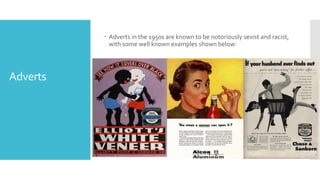
Adverts
 Adverts in the 1950s are known to be notoriously sexist and racist,
with some well known examples shown below:
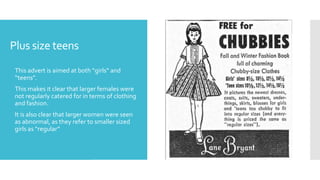
Plus size teens
 This advert is aimed at both “girls” and
“teens”.
 This makes it clear that larger females were
not regularly catered for in terms of clothing
and fashion.
 It is also clear that larger women were seen
as abnormal, as they refer to smaller sized
girls as “regular”
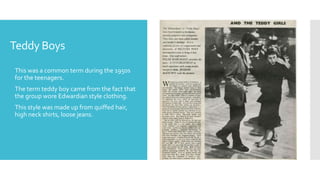
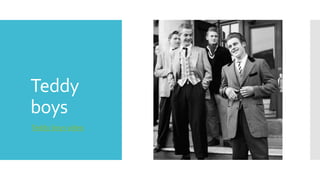
Teddy Boys
 This was a common term during the 1950s
for the teenagers.
 The term teddy boy came from the fact that
the group wore Edwardian style clothing.
 This style was made up from quiffed hair,
high neck shirts, loose jeans.
Fashion
 https://www.
youtube.com
/watch?v=Y1
PJLeMRF-U
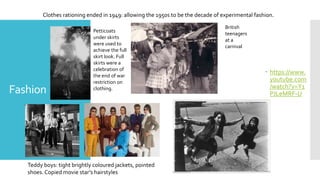
Teddy boys: tight brightly coloured jackets, pointed
shoes. Copied movie star’s hairstyles
Clothes rationing ended in 1949: allowing the 1950s to be the decade of experimental fashion.
Petticoats
under skirts
were used to
achieve the full
skirt look. Full
skirts were a
celebration of
the end of war
restriction on
clothing.
British
teenagers
at a
carnival
Fads: games
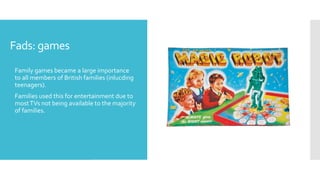
 Family games became a large importance
to all members of British families (inlucding
teenagers).
 Families used this for entertainment due to
mostTVs not being available to the majority
of families.
Fads: telephone
box stuffing
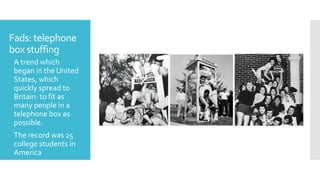
 A trend which
began in the United
States, which
quickly spread to
Britain: to fit as
many people in a
telephone box as
possible.
 The record was 25
college students in
America
Fads:
hairstyles
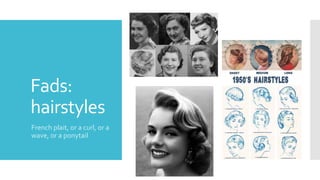
French plait, or a curl, or a
wave, or a ponytail
Role models
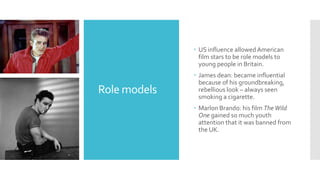
 US influence allowedAmerican
film stars to be role models to
young people in Britain.
 James dean: became influential
because of his groundbreaking,
rebellious look – always seen
smoking a cigarette.
 Marlon Brando: his film TheWild
One gained so much youth
attention that it was banned from
the UK.
Role models:Audrey
Hepburn
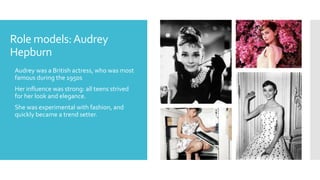
 Audrey was a British actress, who was most
famous during the 1950s
 Her influence was strong: all teens strived
for her look and elegance.
 She was experimental with fashion, and
quickly became a trend setter.
Subcultures
Beatniks
Teddy boys
Teddy girls
mods
Mods
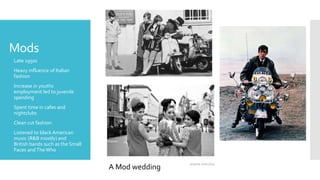
 Late 1950s
 Heavy influence of Italian
fashion
 Increase in youths
employment led to juvenile
spending
 Spent time in cafes and
nightclubs
 Clean cut fashion
 Listened to black American
music (R&B mostly) and
British bands such as the Small
Faces andTheWho
A Mod wedding
Beatniks
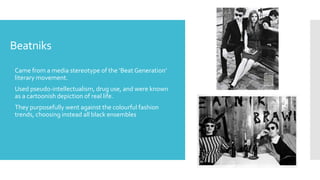
 Came from a media stereotype of the ‘Beat Generation’
literary movement.
 Used pseudo-intellectualism, drug use, and were known
as a cartoonish depiction of real life.
 They purposefully went against the colourful fashion
trends, choosing instead all black ensembles
Teddy
boys
Teddy boys video
Mainstream
teenagers

1950s teenagers

  • 1.
    Teenagers in the1950s Anneka, Antonio, Jordan
  • 2.
    Adverts  Adverts inthe 1950s are known to be notoriously sexist and racist, with some well known examples shown below:
  • 3.
    Plus size teens This advert is aimed at both “girls” and “teens”.  This makes it clear that larger females were not regularly catered for in terms of clothing and fashion.  It is also clear that larger women were seen as abnormal, as they refer to smaller sized girls as “regular”
  • 4.
    Teddy Boys  Thiswas a common term during the 1950s for the teenagers.  The term teddy boy came from the fact that the group wore Edwardian style clothing.  This style was made up from quiffed hair, high neck shirts, loose jeans.
  • 5.
    Fashion  https://www. youtube.com /watch?v=Y1 PJLeMRF-U Teddy boys:tight brightly coloured jackets, pointed shoes. Copied movie star’s hairstyles Clothes rationing ended in 1949: allowing the 1950s to be the decade of experimental fashion. Petticoats under skirts were used to achieve the full skirt look. Full skirts were a celebration of the end of war restriction on clothing. British teenagers at a carnival
  • 6.
    Fads: games  Familygames became a large importance to all members of British families (inlucding teenagers).  Families used this for entertainment due to mostTVs not being available to the majority of families.
  • 7.
    Fads: telephone box stuffing A trend which began in the United States, which quickly spread to Britain: to fit as many people in a telephone box as possible.  The record was 25 college students in America
  • 8.
    Fads: hairstyles French plait, ora curl, or a wave, or a ponytail
  • 9.
    Role models  USinfluence allowedAmerican film stars to be role models to young people in Britain.  James dean: became influential because of his groundbreaking, rebellious look – always seen smoking a cigarette.  Marlon Brando: his film TheWild One gained so much youth attention that it was banned from the UK.
  • 10.
    Role models:Audrey Hepburn  Audreywas a British actress, who was most famous during the 1950s  Her influence was strong: all teens strived for her look and elegance.  She was experimental with fashion, and quickly became a trend setter.
  • 11.
  • 12.
    Mods  Late 1950s Heavy influence of Italian fashion  Increase in youths employment led to juvenile spending  Spent time in cafes and nightclubs  Clean cut fashion  Listened to black American music (R&B mostly) and British bands such as the Small Faces andTheWho A Mod wedding
  • 13.
    Beatniks  Came froma media stereotype of the ‘Beat Generation’ literary movement.  Used pseudo-intellectualism, drug use, and were known as a cartoonish depiction of real life.  They purposefully went against the colourful fashion trends, choosing instead all black ensembles
  • 14.
  • 15.