Curriculum Vitae
• Dr. Andri,SpKJ,FAPM
• Lulus Dokter dari FKUI tahun 2003
• Lulus Psikiater dari FKUI tahun 2008
• Fellow of Academy of Psychosomatic Medicine, USA (2013)
• Jabatan :
– Dosen FK UKRIDA (2008 – sekarang)
– Ketua Sub Kredensial Komite Medik Omni Hospitals Alam Sutera
(2014 – sekarang)
– Kepala Klinik Psikosomatik OMNI Hospitals (2008 – sekarang)
• Organisasi :
– Ikatan Dokter Indonesia (IDI)
– Perhimpunan Dokter Spesialis Kedokteran Jiwa Indonesia
(PDSKJI)
– American Psychosomatic Society (Faculty Leader of
Psychosomatic Medicine Interest Group in Indonesia)
– Academy of Psychosomatic Medicine (Fellow Member)
PSYCHOSOMATIC DISORDER
IN DAILY PRACTICE :
DIAGNOSIS AND THERAPY
dr.Andri,SpKJ,FAPM
Psychiatrist, Fellow of Academy of Psychosomatic Medicine
Faculty of Medicine, UKRIDA
Psychosomatic Clinic Omni Hospitals Alam Sutera, Tangerang Selatan
• What is Psychosomatic?
• Somatic complaints in clinical practice
• Somatic complaints in psychiatric disorder
• Treatment strategy (Using Pharmacology and
Non-Pharmacology approach)
• Conclusion
Outline for today’s talk
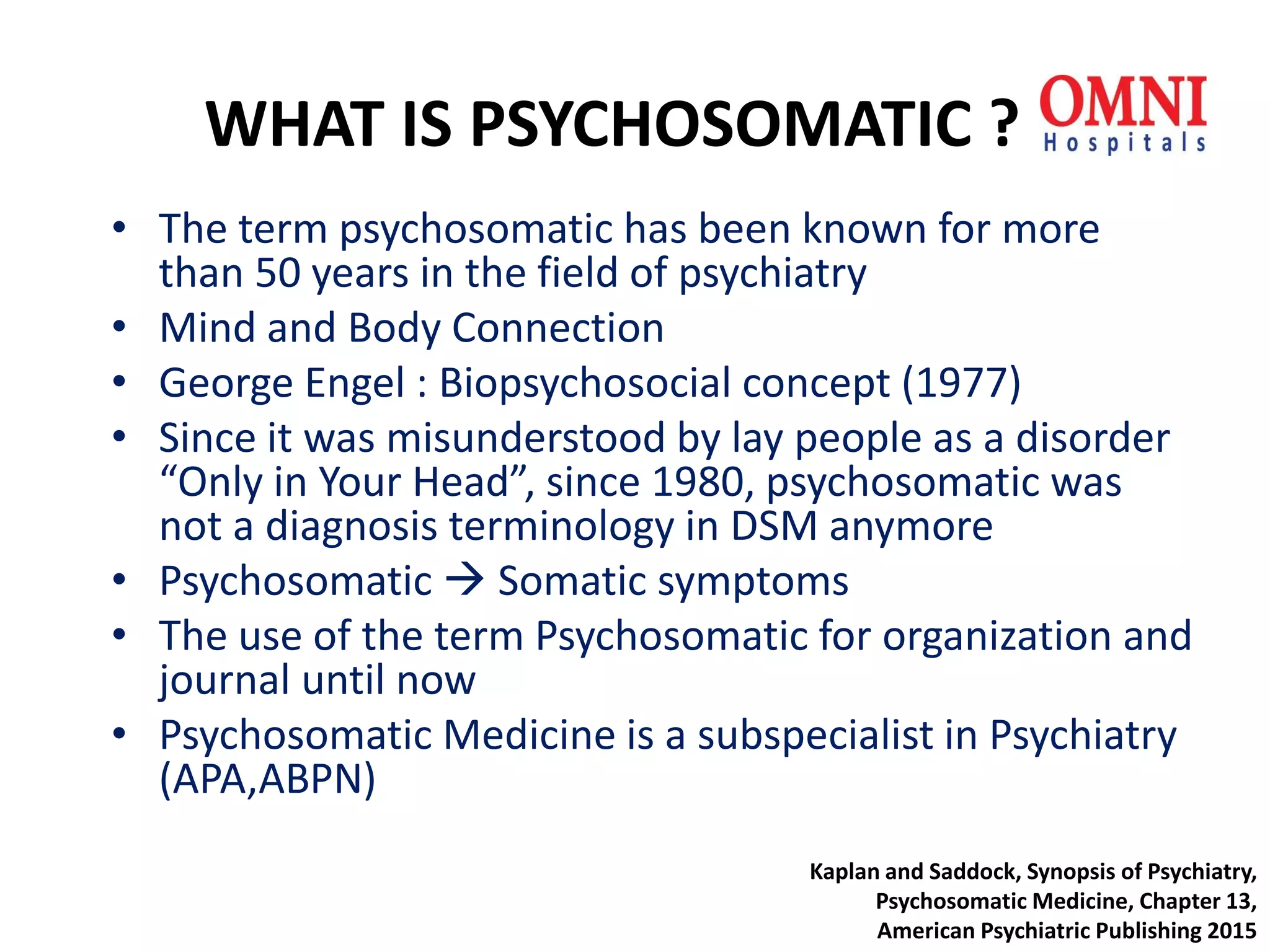
WHAT IS PSYCHOSOMATIC ?
• The term psychosomatic has been known for more
than 50 years in the field of psychiatry
• Mind and Body Connection
• George Engel : Biopsychosocial concept (1977)
• Since it was misunderstood by lay people as a disorder
“Only in Your Head”, since 1980, psychosomatic was
not a diagnosis terminology in DSM anymore
• Psychosomatic  Somatic symptoms
• The use of the term Psychosomatic for organization and
journal until now
• Psychosomatic Medicine is a subspecialist in Psychiatry
(APA,ABPN)
Kaplan and Saddock, Synopsis of Psychiatry,
Psychosomatic Medicine, Chapter 13,
American Psychiatric Publishing 2015
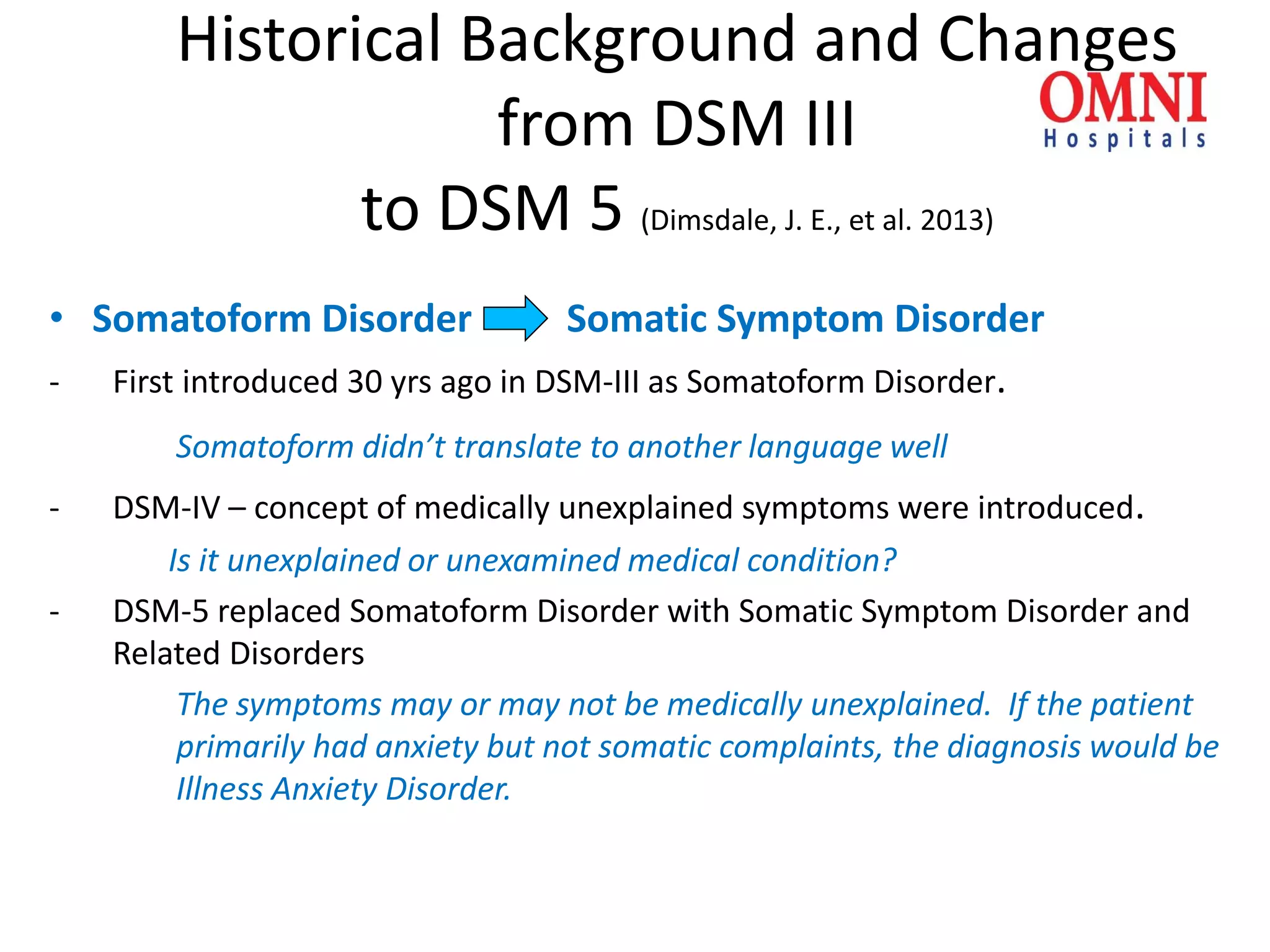
Historical Background and Changes
from DSM III
to DSM 5 (Dimsdale, J. E., et al. 2013)
• Somatoform Disorder Somatic Symptom Disorder
- First introduced 30 yrs ago in DSM-III as Somatoform Disorder.
Somatoform didn’t translate to another language well
- DSM-IV – concept of medically unexplained symptoms were introduced.
Is it unexplained or unexamined medical condition?
- DSM-5 replaced Somatoform Disorder with Somatic Symptom Disorder and
Related Disorders
The symptoms may or may not be medically unexplained. If the patient
primarily had anxiety but not somatic complaints, the diagnosis would be
Illness Anxiety Disorder.
Case Illustration
• A 29 years old man complaint discomfort feeling
in his left chest. He often felt palpitation that
made him visit ER more than once.
• He also felt bloating and fear of losing control at
the same time. Physical examination and
laboratory workup found nothing was wrong. He
had already done ECG, Echo and Stress Test
(Treadmil)
• What was wrong with this patient?
Somatic symptoms in Clinical Practice
• 25-50% No serious medical cause found
• 30-75% Remain medically unexplained
• 16-33% “bothered the patient a lot” but
remain unexplained
• Schneider R
• A 39 years old woman complaint about her uneasy feeling
in her stomach. She frequently felt bloating, sometimes
accompanied by palpitation and feeling imbalance.
• She had already visited her internist and had done regular
examination and specific workup (gastroscopy).
• All the findings were normal. She was afraid of her
condition and still thinking about having severe disease
related to her complaints.
• She was a manager in one of the telecommunication
company. A very strong and persistent woman. She thought
about her stress in her work but she thought they were all
regular stress until 6 months ago she started complaint
about her stomach
Case Illustration
Somatic Complaints
• Somatic complaint is a poorly understood “blind spot” of
medicine
• Somatic complaints and somatoform disorder (now is
somatic symptoms disorder based on DSM 5 ) remain
neglected by psychiatrist and also primary care physician
• It can be conceptualized in a variety of different ways but
fundamentally it appears to be a way of responding stress
• Not all somatizing patients have a diagnosis of somatoform
disorder, many have another Axis 1 disorder or transiently
somatize in the context of significant life stress
Abbey, Wulsin and Levenson in Somatization and Somatoform
Disorder, Textbook of Psychosomatic Medicine, 2nd ed, 2011
Somatic Complaints
• Patients commonly present to their primary care
physician complaining of physical symptoms.
• More often than not, appropriate medical work-up
fails to reveal a clear underlying physical etiology
• The prevalence of somatic symptoms that are
multiple, chronic, and associated with medical help-
seeking—but do not meet full criteria for a DSM-IV
somatization disorder :19.7% – 22%
Psychosomatics 42:3, May-June 2001
1. palpitations (pounding heart) : 90.52%,
2. ache or discomfort in the abdomen : 84.94%
3. lack of energy (weakness) much of the time : 84.41%,
4. pain or tension in neck or shoulder : 82.86%
5. feeling giddy or dizzy : 81.88%
6. feeling tired even when are not working : 81.39%
7. suffered from excessive wind (gas) or belching : 73.6%
8. pain in the chest or heart : 73%
9. trembling or shaking : 72.7%
10. buzzing noise in ears or head : 71.34%.
Top 10 Somatic Symptoms
Unpublished data. Survey conducted by Andri
from Psychosomatic Clinic Omni Hospital
Data 2009 di Puskesmas di Jakarta
Dan Hidayat, dkk. Majalah Kedokteran Indonesia, Vo. 60 No.10 Oktober 2010
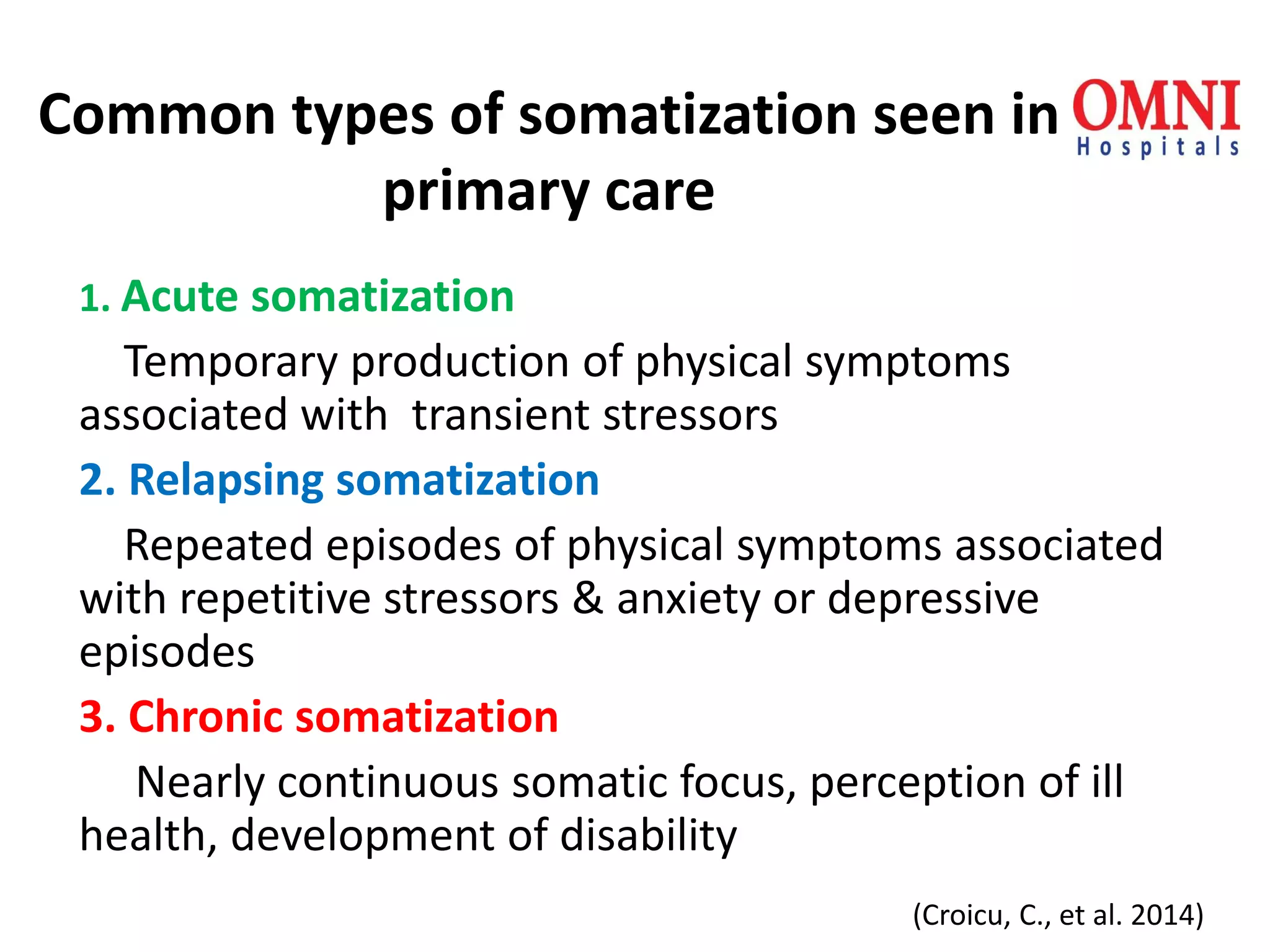
Common types of somatization seen in
primary care
1. Acute somatization
Temporary production of physical symptoms
associated with transient stressors
2. Relapsing somatization
Repeated episodes of physical symptoms associated
with repetitive stressors & anxiety or depressive
episodes
3. Chronic somatization
Nearly continuous somatic focus, perception of ill
health, development of disability
(Croicu, C., et al. 2014)
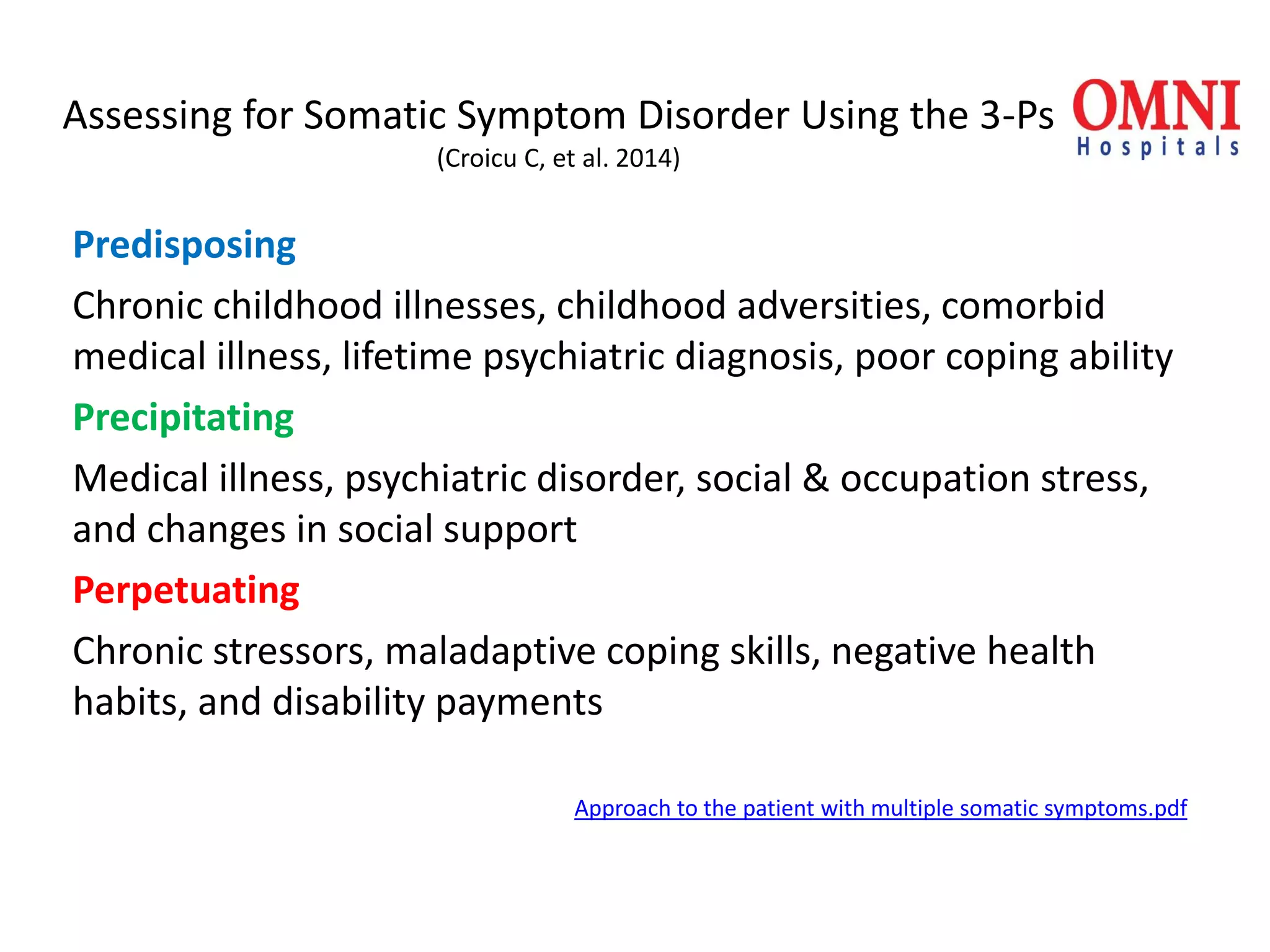
Assessing for Somatic Symptom Disorder Using the 3-Ps
(Croicu C, et al. 2014)
Predisposing
Chronic childhood illnesses, childhood adversities, comorbid
medical illness, lifetime psychiatric diagnosis, poor coping ability
Precipitating
Medical illness, psychiatric disorder, social & occupation stress,
and changes in social support
Perpetuating
Chronic stressors, maladaptive coping skills, negative health
habits, and disability payments
Approach to the patient with multiple somatic symptoms.pdf
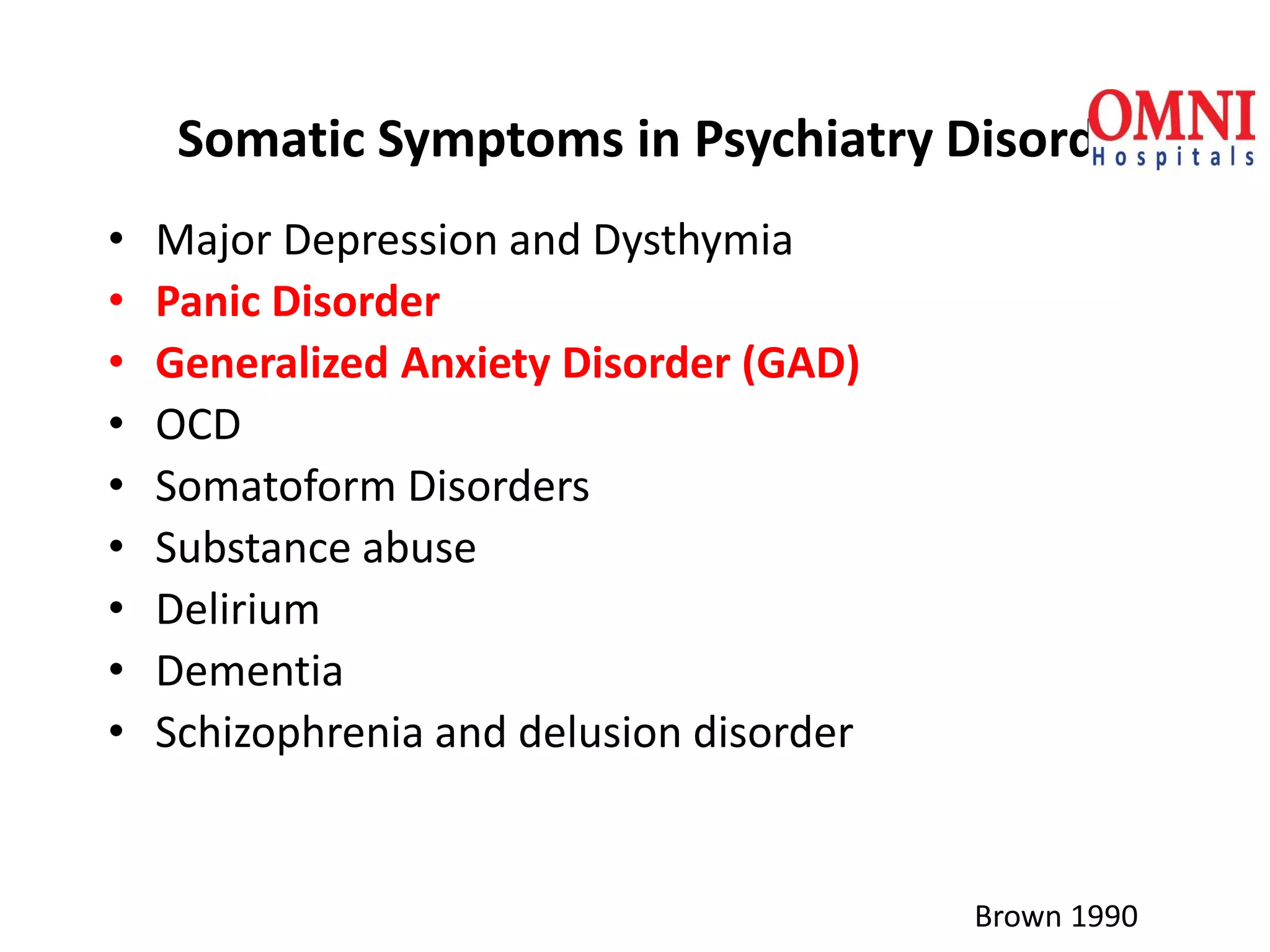
Somatic Symptoms in Psychiatry Disorder
• Major Depression and Dysthymia
• Panic Disorder
• Generalized Anxiety Disorder (GAD)
• OCD
• Somatoform Disorders
• Substance abuse
• Delirium
• Dementia
• Schizophrenia and delusion disorder
Brown 1990
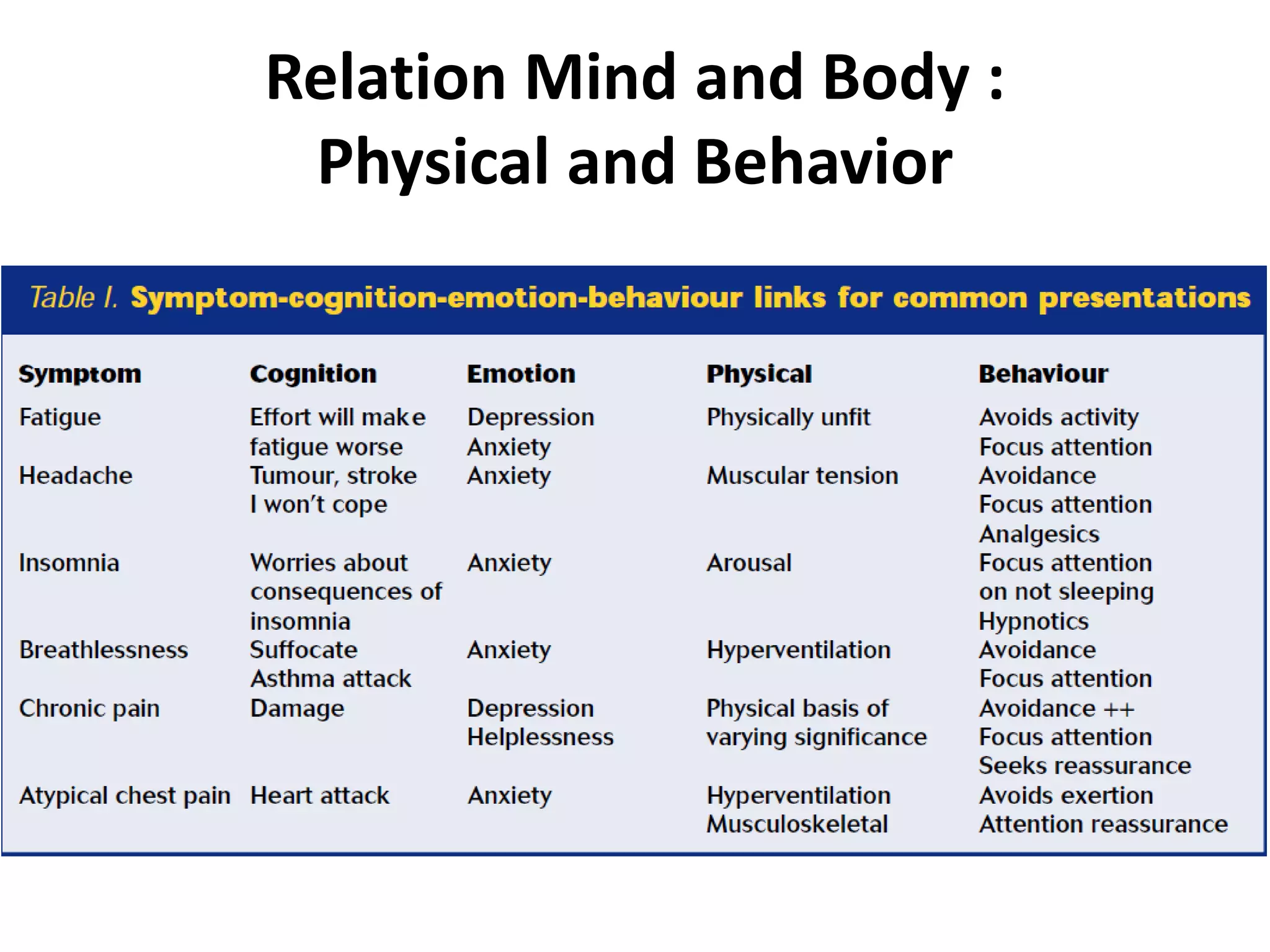
Relation Mind and Body :
Physical and Behavior
Somatic Comorbidities of Anxiety Disorders
Inflammatory
Bowel Disease
DiabetesHypertension
Cardiovascular
Disease
Anxiety
Disorder
s
Pharmacotherapy
and
Cognitive-Behavioral Therapy
Effective Treatment of Anxiety Disorders Both
Removes Symptoms and Prevents Relapse
Anxiety Disorder Treatment
Bandelow B, et al. Int J Psychiatry Clin Pract. 2012;16(2):77-84.
Goals of treatment:
 Removal of symptoms
 Prevention of relapse
Essential Treatment Approaches for Patients with
Somatic Symptom Disorder
• Avoid the temptation to order unnecessary, repetitive, or
invasive investigations
• Educate the patient on how to cope with their symptoms
instead of focusing on a cure
• Evaluate somatic symptom burden
• Collaborate with the patient in setting treatment goals
• Screen for common psychiatric conditions associated with
somatic complaints such as depression and anxiety
• Treat identified comorbid psychiatric disorders
(Croicu, C., et al. 2014)
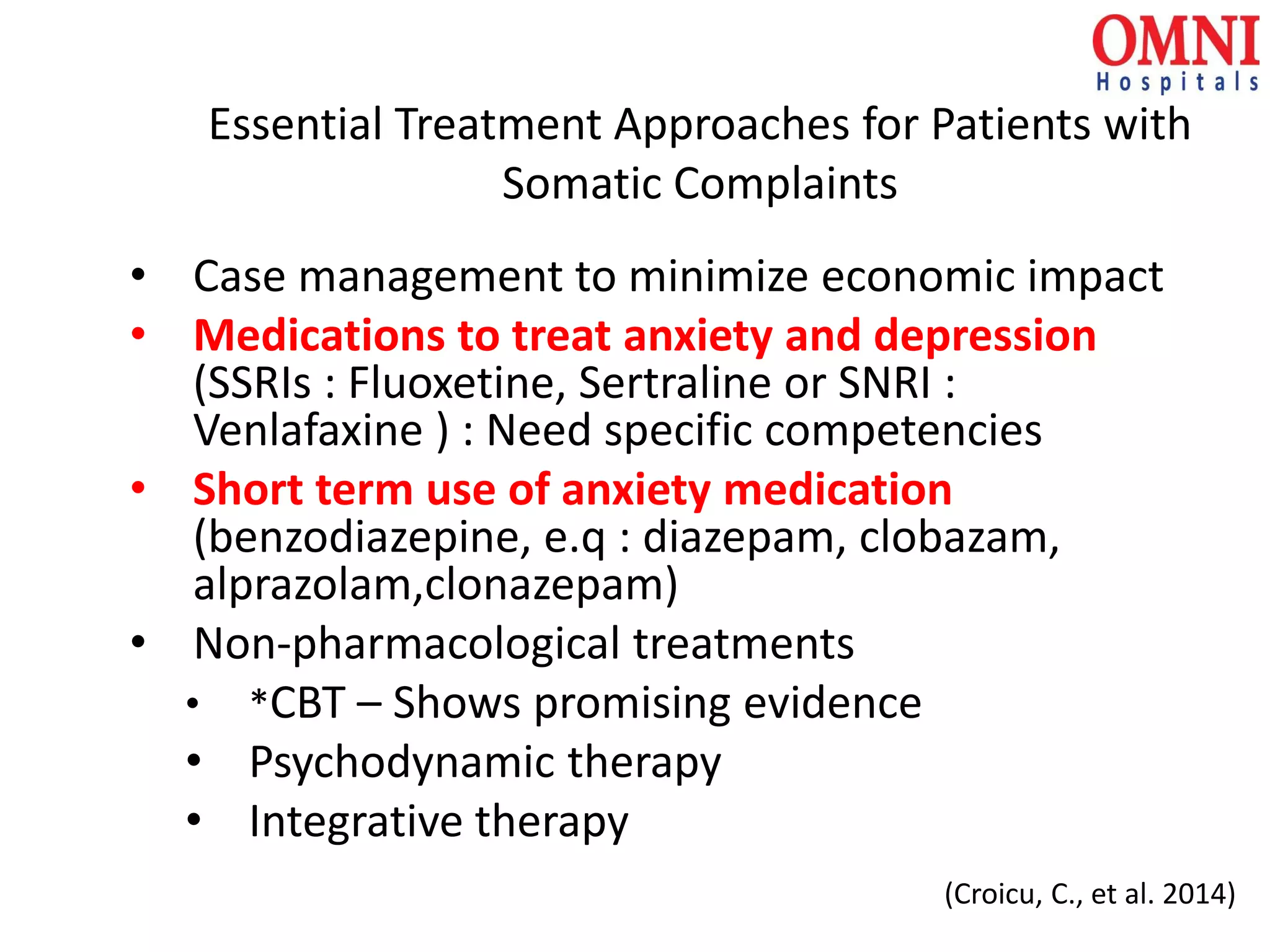
Essential Treatment Approaches for Patients with
Somatic Complaints
• Case management to minimize economic impact
• Medications to treat anxiety and depression
(SSRIs : Fluoxetine, Sertraline or SNRI :
Venlafaxine ) : Need specific competencies
• Short term use of anxiety medication
(benzodiazepine, e.q : diazepam, clobazam,
alprazolam,clonazepam)
• Non-pharmacological treatments
• *CBT – Shows promising evidence
• Psychodynamic therapy
• Integrative therapy
(Croicu, C., et al. 2014)
Treatment options for anxiety disorders
Psychological treatment
• Consider treatments that have been most thoroughly
evaluated first
• If response inadequate, adapt treatment to the
individual
Pharmacological treatment
• Refer to section for diagnosed disorder for specific medication
choices
• Consider short-term benzodiazepines if severe anxiety or agitation
or acute functional impairment
Step 1: First-line agent
Optimize dosage and duration
Step 2: If inadequate response or side effects, switch to alternate first-line agent. If partial
response, adding another agent may be preferred over switching
Step 3: Consider referral to specialist, or consider combination treatment, or switch to second- or
third-line agents
Potential combinations
• Psychological treatment + pharmacological treatment
• SSRI-SNRI + benzodiazepines (short-term)
• SSRI-SNRI + anticonvulsant or atypical antipsychotic
• Refer to section for disorder for augmenting agents
Contraindicated combinations
• SSRI-SNRI-TCA + MAOI
• Buspirone + MAOI
Follow up
• Response may take 8-12 weeks
• Pharmacotherapy may be needed for 1-2 years or longer
Can J Psychiatry, Vol 51, Suppl 2, July 2006
http://www.psychiatrictimes.com/articles/achievin
g-remission-generalized-anxiety-disorder
By Laura A. Mandos, PharmD, Jennifer A. Reinhold, PharmD, BCPS, BCPP, and Karl Rickels, MD -
See more at: http://www.psychiatrictimes.com/articles/achieving-remission-generalized-
anxiety-disorder#sthash.pLl7TBKm.dpuf
Clobazam is Effective
• Clobazam has the same effectiveness compare to
diazepam, lorazepam, chlordiazepoxide, bromazepam and
alprazolam
• Maximum anxiolytic response seen one to two weeks
• Clobazam was generally well tolerated.
• Drowsiness was reported less frequently with clobazam
than with diazepam or lorazepam.
• No objective evidence of any sedative or amnestic effects
or impairment of psychomotor function with clobazam.
• Clobazam is a useful agent in the treatment of outpatients
and patients in general practice with anxiety disorders.
Clobazam: Epilepsy, Anxiety and General Psychopharmacology . Human
Psychopharmacology: Clinical and Experimental. Volume 10, Issue
Supplement 1, pages S27–S41, July 1995
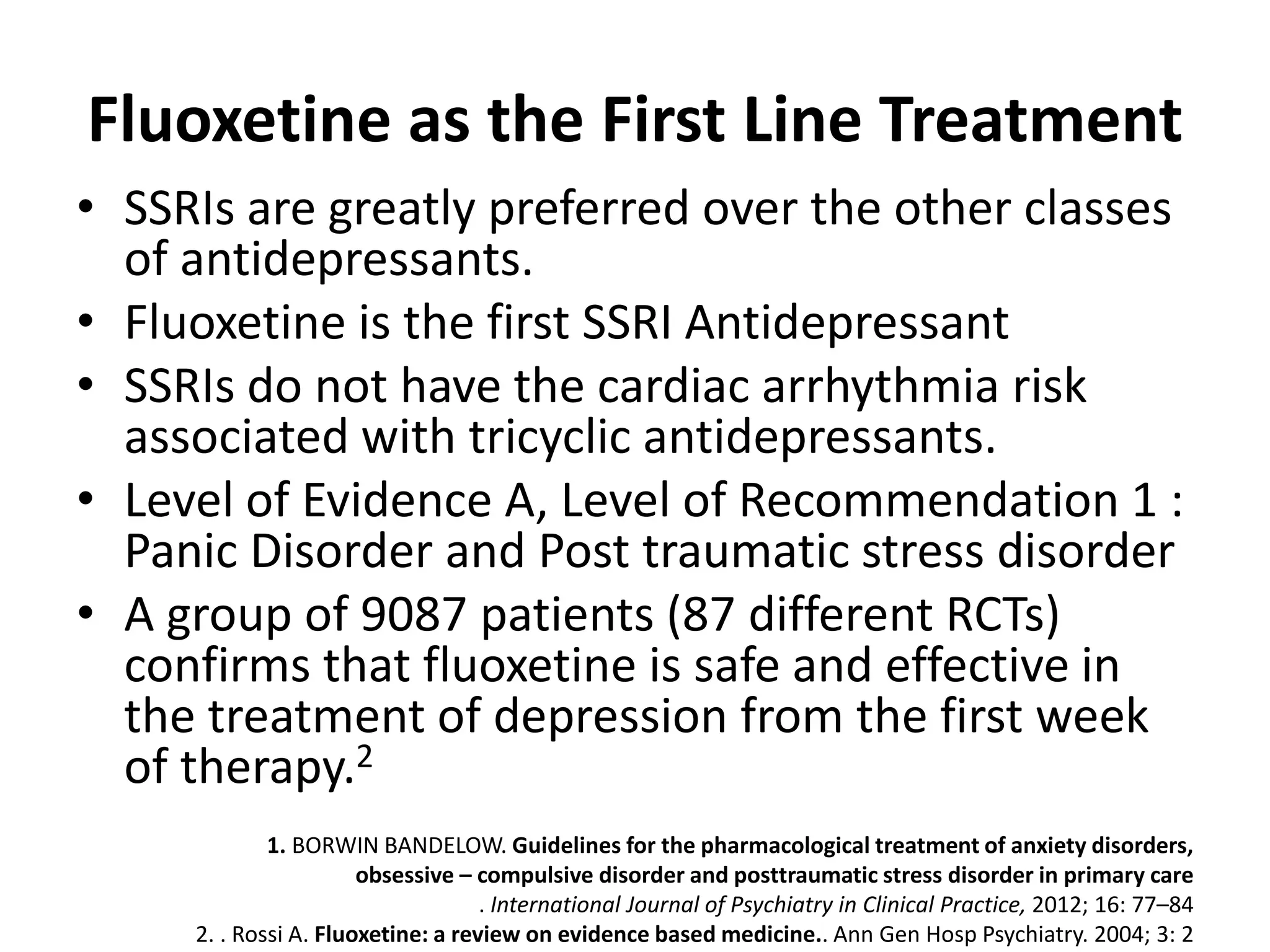
Fluoxetine as the First Line Treatment
• SSRIs are greatly preferred over the other classes
of antidepressants.
• Fluoxetine is the first SSRI Antidepressant
• SSRIs do not have the cardiac arrhythmia risk
associated with tricyclic antidepressants.
• Level of Evidence A, Level of Recommendation 1 :
Panic Disorder and Post traumatic stress disorder
• A group of 9087 patients (87 different RCTs)
confirms that fluoxetine is safe and effective in
the treatment of depression from the first week
of therapy.2
1. BORWIN BANDELOW. Guidelines for the pharmacological treatment of anxiety disorders,
obsessive – compulsive disorder and posttraumatic stress disorder in primary care
. International Journal of Psychiatry in Clinical Practice, 2012; 16: 77–84
2. . Rossi A. Fluoxetine: a review on evidence based medicine.. Ann Gen Hosp Psychiatry. 2004; 3: 2
Essential Treatment Approaches for Patients with
Somatic Symptom Disorder (Croicu, C., et al. 2014)
• Schedule time-limited regular appointments (e.g. 4-6 weeks) to
address complaints
• Explain that although there may not be a reason for their
symptoms, you will work together to improve their functioning
as much as possible
• Educate patients how psychosocial stressors and symptoms
interact
• Avoid comments like “Your symptoms are all psychological.” or
“There is nothing wrong with you medically.”
• Relief their symptoms with appropriate and effective drug.
Consider to ask about drug history and alcohol use
Summary
• Acknowledge the patients symptoms
• Non-pharmacological interventions such as CBT has shown
evidence in decreasing somatic symptom disorder.
• Initial treatment must be effective and relief patient’s symptoms
• Therapeutic alliance with the patient with somatic complaints
improves outcomes.
• Know our competencies, refer the patients with somatic
symptoms if you think they need further assessment and
therapy
“Healing” painting by Devin Sutanujaya (2016)
Buku PSIKOSOMATIK
Twitter : @mbahndi
IG : andripsikosomatik

Diagnosis and Treatment of Psychosomatic Disorder (Educational Slides)

  • 1.
    Curriculum Vitae • Dr.Andri,SpKJ,FAPM • Lulus Dokter dari FKUI tahun 2003 • Lulus Psikiater dari FKUI tahun 2008 • Fellow of Academy of Psychosomatic Medicine, USA (2013) • Jabatan : – Dosen FK UKRIDA (2008 – sekarang) – Ketua Sub Kredensial Komite Medik Omni Hospitals Alam Sutera (2014 – sekarang) – Kepala Klinik Psikosomatik OMNI Hospitals (2008 – sekarang) • Organisasi : – Ikatan Dokter Indonesia (IDI) – Perhimpunan Dokter Spesialis Kedokteran Jiwa Indonesia (PDSKJI) – American Psychosomatic Society (Faculty Leader of Psychosomatic Medicine Interest Group in Indonesia) – Academy of Psychosomatic Medicine (Fellow Member)
  • 2.
    PSYCHOSOMATIC DISORDER IN DAILYPRACTICE : DIAGNOSIS AND THERAPY dr.Andri,SpKJ,FAPM Psychiatrist, Fellow of Academy of Psychosomatic Medicine Faculty of Medicine, UKRIDA Psychosomatic Clinic Omni Hospitals Alam Sutera, Tangerang Selatan
  • 3.
    • What isPsychosomatic? • Somatic complaints in clinical practice • Somatic complaints in psychiatric disorder • Treatment strategy (Using Pharmacology and Non-Pharmacology approach) • Conclusion Outline for today’s talk
  • 4.
    WHAT IS PSYCHOSOMATIC? • The term psychosomatic has been known for more than 50 years in the field of psychiatry • Mind and Body Connection • George Engel : Biopsychosocial concept (1977) • Since it was misunderstood by lay people as a disorder “Only in Your Head”, since 1980, psychosomatic was not a diagnosis terminology in DSM anymore • Psychosomatic  Somatic symptoms • The use of the term Psychosomatic for organization and journal until now • Psychosomatic Medicine is a subspecialist in Psychiatry (APA,ABPN) Kaplan and Saddock, Synopsis of Psychiatry, Psychosomatic Medicine, Chapter 13, American Psychiatric Publishing 2015
  • 5.
    Historical Background andChanges from DSM III to DSM 5 (Dimsdale, J. E., et al. 2013) • Somatoform Disorder Somatic Symptom Disorder - First introduced 30 yrs ago in DSM-III as Somatoform Disorder. Somatoform didn’t translate to another language well - DSM-IV – concept of medically unexplained symptoms were introduced. Is it unexplained or unexamined medical condition? - DSM-5 replaced Somatoform Disorder with Somatic Symptom Disorder and Related Disorders The symptoms may or may not be medically unexplained. If the patient primarily had anxiety but not somatic complaints, the diagnosis would be Illness Anxiety Disorder.
  • 6.
    Case Illustration • A29 years old man complaint discomfort feeling in his left chest. He often felt palpitation that made him visit ER more than once. • He also felt bloating and fear of losing control at the same time. Physical examination and laboratory workup found nothing was wrong. He had already done ECG, Echo and Stress Test (Treadmil) • What was wrong with this patient?
  • 7.
    Somatic symptoms inClinical Practice • 25-50% No serious medical cause found • 30-75% Remain medically unexplained • 16-33% “bothered the patient a lot” but remain unexplained • Schneider R
  • 8.
    • A 39years old woman complaint about her uneasy feeling in her stomach. She frequently felt bloating, sometimes accompanied by palpitation and feeling imbalance. • She had already visited her internist and had done regular examination and specific workup (gastroscopy). • All the findings were normal. She was afraid of her condition and still thinking about having severe disease related to her complaints. • She was a manager in one of the telecommunication company. A very strong and persistent woman. She thought about her stress in her work but she thought they were all regular stress until 6 months ago she started complaint about her stomach Case Illustration
  • 9.
    Somatic Complaints • Somaticcomplaint is a poorly understood “blind spot” of medicine • Somatic complaints and somatoform disorder (now is somatic symptoms disorder based on DSM 5 ) remain neglected by psychiatrist and also primary care physician • It can be conceptualized in a variety of different ways but fundamentally it appears to be a way of responding stress • Not all somatizing patients have a diagnosis of somatoform disorder, many have another Axis 1 disorder or transiently somatize in the context of significant life stress Abbey, Wulsin and Levenson in Somatization and Somatoform Disorder, Textbook of Psychosomatic Medicine, 2nd ed, 2011
  • 10.
    Somatic Complaints • Patientscommonly present to their primary care physician complaining of physical symptoms. • More often than not, appropriate medical work-up fails to reveal a clear underlying physical etiology • The prevalence of somatic symptoms that are multiple, chronic, and associated with medical help- seeking—but do not meet full criteria for a DSM-IV somatization disorder :19.7% – 22% Psychosomatics 42:3, May-June 2001
  • 11.
    1. palpitations (poundingheart) : 90.52%, 2. ache or discomfort in the abdomen : 84.94% 3. lack of energy (weakness) much of the time : 84.41%, 4. pain or tension in neck or shoulder : 82.86% 5. feeling giddy or dizzy : 81.88% 6. feeling tired even when are not working : 81.39% 7. suffered from excessive wind (gas) or belching : 73.6% 8. pain in the chest or heart : 73% 9. trembling or shaking : 72.7% 10. buzzing noise in ears or head : 71.34%. Top 10 Somatic Symptoms Unpublished data. Survey conducted by Andri from Psychosomatic Clinic Omni Hospital
  • 12.
    Data 2009 diPuskesmas di Jakarta Dan Hidayat, dkk. Majalah Kedokteran Indonesia, Vo. 60 No.10 Oktober 2010
  • 13.
    Common types ofsomatization seen in primary care 1. Acute somatization Temporary production of physical symptoms associated with transient stressors 2. Relapsing somatization Repeated episodes of physical symptoms associated with repetitive stressors & anxiety or depressive episodes 3. Chronic somatization Nearly continuous somatic focus, perception of ill health, development of disability (Croicu, C., et al. 2014)
  • 14.
    Assessing for SomaticSymptom Disorder Using the 3-Ps (Croicu C, et al. 2014) Predisposing Chronic childhood illnesses, childhood adversities, comorbid medical illness, lifetime psychiatric diagnosis, poor coping ability Precipitating Medical illness, psychiatric disorder, social & occupation stress, and changes in social support Perpetuating Chronic stressors, maladaptive coping skills, negative health habits, and disability payments Approach to the patient with multiple somatic symptoms.pdf
  • 15.
    Somatic Symptoms inPsychiatry Disorder • Major Depression and Dysthymia • Panic Disorder • Generalized Anxiety Disorder (GAD) • OCD • Somatoform Disorders • Substance abuse • Delirium • Dementia • Schizophrenia and delusion disorder Brown 1990
  • 16.
    Relation Mind andBody : Physical and Behavior
  • 17.
    Somatic Comorbidities ofAnxiety Disorders Inflammatory Bowel Disease DiabetesHypertension Cardiovascular Disease Anxiety Disorder s
  • 18.
    Pharmacotherapy and Cognitive-Behavioral Therapy Effective Treatmentof Anxiety Disorders Both Removes Symptoms and Prevents Relapse Anxiety Disorder Treatment Bandelow B, et al. Int J Psychiatry Clin Pract. 2012;16(2):77-84. Goals of treatment:  Removal of symptoms  Prevention of relapse
  • 19.
    Essential Treatment Approachesfor Patients with Somatic Symptom Disorder • Avoid the temptation to order unnecessary, repetitive, or invasive investigations • Educate the patient on how to cope with their symptoms instead of focusing on a cure • Evaluate somatic symptom burden • Collaborate with the patient in setting treatment goals • Screen for common psychiatric conditions associated with somatic complaints such as depression and anxiety • Treat identified comorbid psychiatric disorders (Croicu, C., et al. 2014)
  • 20.
    Essential Treatment Approachesfor Patients with Somatic Complaints • Case management to minimize economic impact • Medications to treat anxiety and depression (SSRIs : Fluoxetine, Sertraline or SNRI : Venlafaxine ) : Need specific competencies • Short term use of anxiety medication (benzodiazepine, e.q : diazepam, clobazam, alprazolam,clonazepam) • Non-pharmacological treatments • *CBT – Shows promising evidence • Psychodynamic therapy • Integrative therapy (Croicu, C., et al. 2014)
  • 21.
    Treatment options foranxiety disorders Psychological treatment • Consider treatments that have been most thoroughly evaluated first • If response inadequate, adapt treatment to the individual Pharmacological treatment • Refer to section for diagnosed disorder for specific medication choices • Consider short-term benzodiazepines if severe anxiety or agitation or acute functional impairment Step 1: First-line agent Optimize dosage and duration Step 2: If inadequate response or side effects, switch to alternate first-line agent. If partial response, adding another agent may be preferred over switching Step 3: Consider referral to specialist, or consider combination treatment, or switch to second- or third-line agents Potential combinations • Psychological treatment + pharmacological treatment • SSRI-SNRI + benzodiazepines (short-term) • SSRI-SNRI + anticonvulsant or atypical antipsychotic • Refer to section for disorder for augmenting agents Contraindicated combinations • SSRI-SNRI-TCA + MAOI • Buspirone + MAOI Follow up • Response may take 8-12 weeks • Pharmacotherapy may be needed for 1-2 years or longer Can J Psychiatry, Vol 51, Suppl 2, July 2006
  • 22.
    http://www.psychiatrictimes.com/articles/achievin g-remission-generalized-anxiety-disorder By Laura A.Mandos, PharmD, Jennifer A. Reinhold, PharmD, BCPS, BCPP, and Karl Rickels, MD - See more at: http://www.psychiatrictimes.com/articles/achieving-remission-generalized- anxiety-disorder#sthash.pLl7TBKm.dpuf
  • 23.
    Clobazam is Effective •Clobazam has the same effectiveness compare to diazepam, lorazepam, chlordiazepoxide, bromazepam and alprazolam • Maximum anxiolytic response seen one to two weeks • Clobazam was generally well tolerated. • Drowsiness was reported less frequently with clobazam than with diazepam or lorazepam. • No objective evidence of any sedative or amnestic effects or impairment of psychomotor function with clobazam. • Clobazam is a useful agent in the treatment of outpatients and patients in general practice with anxiety disorders. Clobazam: Epilepsy, Anxiety and General Psychopharmacology . Human Psychopharmacology: Clinical and Experimental. Volume 10, Issue Supplement 1, pages S27–S41, July 1995
  • 24.
    Fluoxetine as theFirst Line Treatment • SSRIs are greatly preferred over the other classes of antidepressants. • Fluoxetine is the first SSRI Antidepressant • SSRIs do not have the cardiac arrhythmia risk associated with tricyclic antidepressants. • Level of Evidence A, Level of Recommendation 1 : Panic Disorder and Post traumatic stress disorder • A group of 9087 patients (87 different RCTs) confirms that fluoxetine is safe and effective in the treatment of depression from the first week of therapy.2 1. BORWIN BANDELOW. Guidelines for the pharmacological treatment of anxiety disorders, obsessive – compulsive disorder and posttraumatic stress disorder in primary care . International Journal of Psychiatry in Clinical Practice, 2012; 16: 77–84 2. . Rossi A. Fluoxetine: a review on evidence based medicine.. Ann Gen Hosp Psychiatry. 2004; 3: 2
  • 25.
    Essential Treatment Approachesfor Patients with Somatic Symptom Disorder (Croicu, C., et al. 2014) • Schedule time-limited regular appointments (e.g. 4-6 weeks) to address complaints • Explain that although there may not be a reason for their symptoms, you will work together to improve their functioning as much as possible • Educate patients how psychosocial stressors and symptoms interact • Avoid comments like “Your symptoms are all psychological.” or “There is nothing wrong with you medically.” • Relief their symptoms with appropriate and effective drug. Consider to ask about drug history and alcohol use
  • 26.
    Summary • Acknowledge thepatients symptoms • Non-pharmacological interventions such as CBT has shown evidence in decreasing somatic symptom disorder. • Initial treatment must be effective and relief patient’s symptoms • Therapeutic alliance with the patient with somatic complaints improves outcomes. • Know our competencies, refer the patients with somatic symptoms if you think they need further assessment and therapy
  • 27.
    “Healing” painting byDevin Sutanujaya (2016)
  • 28.
  • 29.
    Twitter : @mbahndi IG: andripsikosomatik