The non-living components
ABIOTIC COMPONENTS
 in the ecosystem such as
  (physical factor)
 air, water, soil temperature
 and light intensity
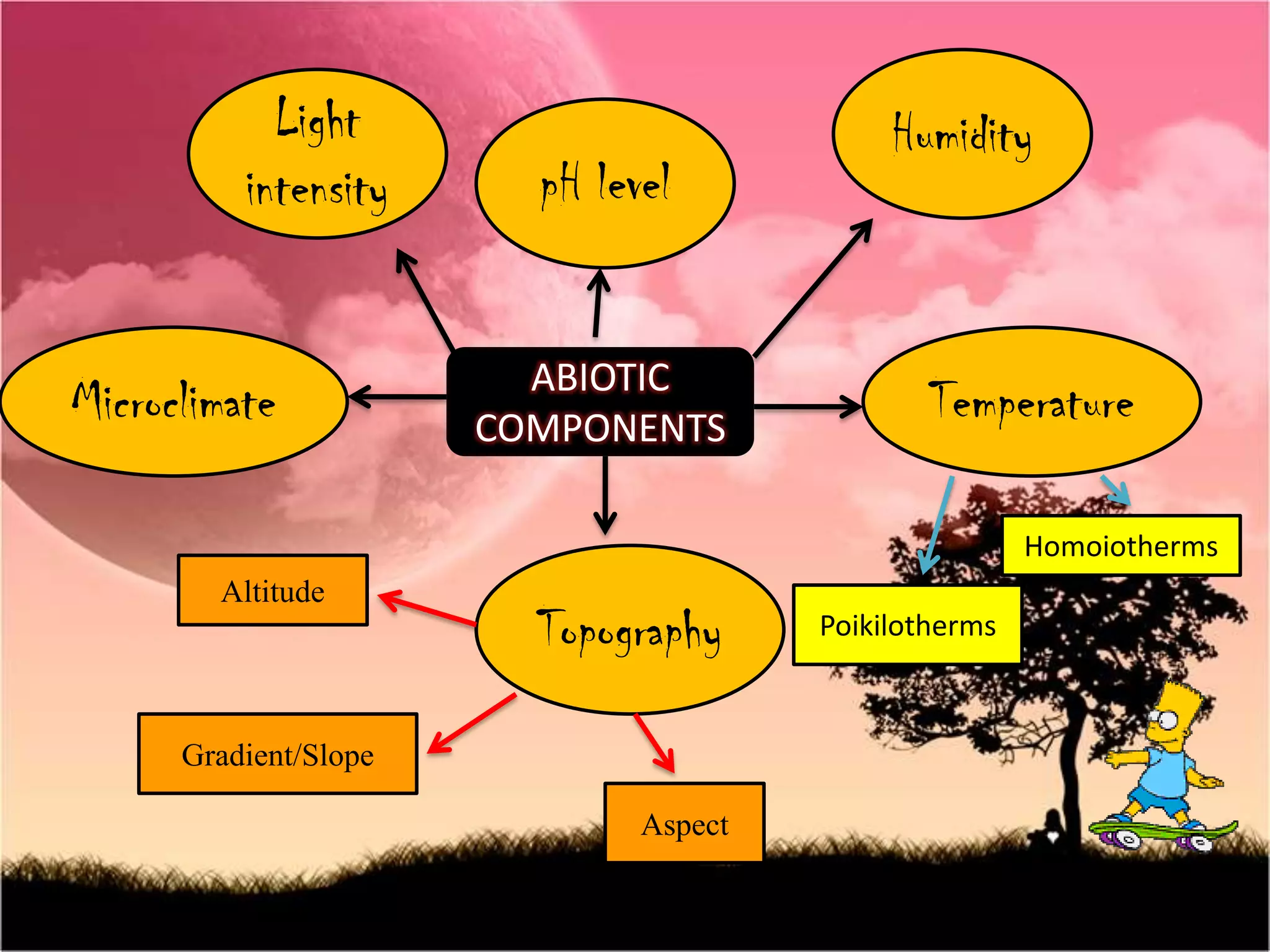
Light                            Humidity
          intensity      pH level


                         ABIOTIC
Microclimate           COMPONENTS
                                                Temperature

                                                        Homoiotherms
        Altitude
                         Topography     Poikilotherms


      Gradient/Slope

                               Aspect
pH VALUE
Most organisms live in a neutral or nearly
neutral environment.
Some plants, like maize, grows well in an
acidic condition.
while coconuts grow well in an alkaline
condition.
TEMPERATURE
  POIKILOTHERMS
- Are animals that cannot control their body
  temperature with the environmental
  temperature.
  HOMOITHERMS
- Are animals that can maintain their body
  temperature
HUMIDITY
The amount of water vapour present in the air.
The humidity of air affects the rate of water loss
by plants and animals.
When humidity is low, water evaporates from the
moist surfaces at a faster rates.
Humidity is usually higher at night but lower
during the day.
Organisms such as frogs, snails, earthworms and
moss that cannot control the rate of water loss
are more suited to live in damp places.
Altitude
 -There are less organisms at high altitudes because
  temperature, atmospheric pressure an air humidity are law.
-Different plants are found at different altitudes.
  Gradient/slope
-The gradient of a place affects the rate of water flow.
-In steep areas, the swift flow of water causes soil erosion while in flat
  areas, the water is stagnant.(these 2 areas are not suitable for plants and
  animals to live)
  Aspect
-Aspect refers to the direction facing or opposing the wind and sunlight.
-Areas facing aspects are not suitable for living and hence, have less
  organisms.
MICROCLIMATE

Refers to the climate in a microhabitat.
Microclimate includes humidity, light
intensity and atmospheric conditions in which the
organisms live.
Influences the number and distribution of
organisms.
Biology - Abiotic Components

Biology - Abiotic Components

  • 2.
    The non-living components ABIOTICCOMPONENTS in the ecosystem such as (physical factor) air, water, soil temperature and light intensity
  • 3.
    Light Humidity intensity pH level ABIOTIC Microclimate COMPONENTS Temperature Homoiotherms Altitude Topography Poikilotherms Gradient/Slope Aspect
  • 4.
    pH VALUE Most organismslive in a neutral or nearly neutral environment. Some plants, like maize, grows well in an acidic condition. while coconuts grow well in an alkaline condition.
  • 5.
    TEMPERATURE POIKILOTHERMS -Are animals that cannot control their body temperature with the environmental temperature. HOMOITHERMS - Are animals that can maintain their body temperature
  • 7.
    HUMIDITY The amount ofwater vapour present in the air. The humidity of air affects the rate of water loss by plants and animals. When humidity is low, water evaporates from the moist surfaces at a faster rates. Humidity is usually higher at night but lower during the day. Organisms such as frogs, snails, earthworms and moss that cannot control the rate of water loss are more suited to live in damp places.
  • 8.
    Altitude -There areless organisms at high altitudes because temperature, atmospheric pressure an air humidity are law. -Different plants are found at different altitudes. Gradient/slope -The gradient of a place affects the rate of water flow. -In steep areas, the swift flow of water causes soil erosion while in flat areas, the water is stagnant.(these 2 areas are not suitable for plants and animals to live) Aspect -Aspect refers to the direction facing or opposing the wind and sunlight. -Areas facing aspects are not suitable for living and hence, have less organisms.
  • 9.
    MICROCLIMATE Refers to theclimate in a microhabitat. Microclimate includes humidity, light intensity and atmospheric conditions in which the organisms live. Influences the number and distribution of organisms.