Introduction
 The ocean cover 70% of the earth surface means ocean is
the world largest solar energy collector & energy stored
system.
 So, it possible to generate electricity from the oceanic
thermal energy?
(Ocean thermal energy conversion)
 Jacques Arsene d’Arsonval (1881)
 Energy convert –ocean solar radiation to electric power
 Renewable energy(clean & green power)
 Hydro energy thermal conversion system
 Use temp. differences
What is OTEC..???
How does it work..???
 Fuel of OTEC..
 25-4 degree c (20 degree c differences)
 Used to drive steam cycle that turn to turbine
 Part of OTEC
 Require large volume
 Ex-100MW
20,000,000 gallon water
 Pump use 30% electricity
Type of OTEC-
1) Closed Cycle OTEC
2) Open Cycle OTEC
3) Hybrid Cycle OTEC
1) Closed Cycle OTEC
 Warm & cold water
 Ammonia as working
fluid
 Generate electricity not
fresh water
2) Open Cycle OTEC
 Seawater is working fluid
 Vacuum
 0.3 psia –22 degree c
(boiling point of water)
 Boiling water drive to turbine
 Give Production of electricity
& fresh water
Close Cycle Open Cycle
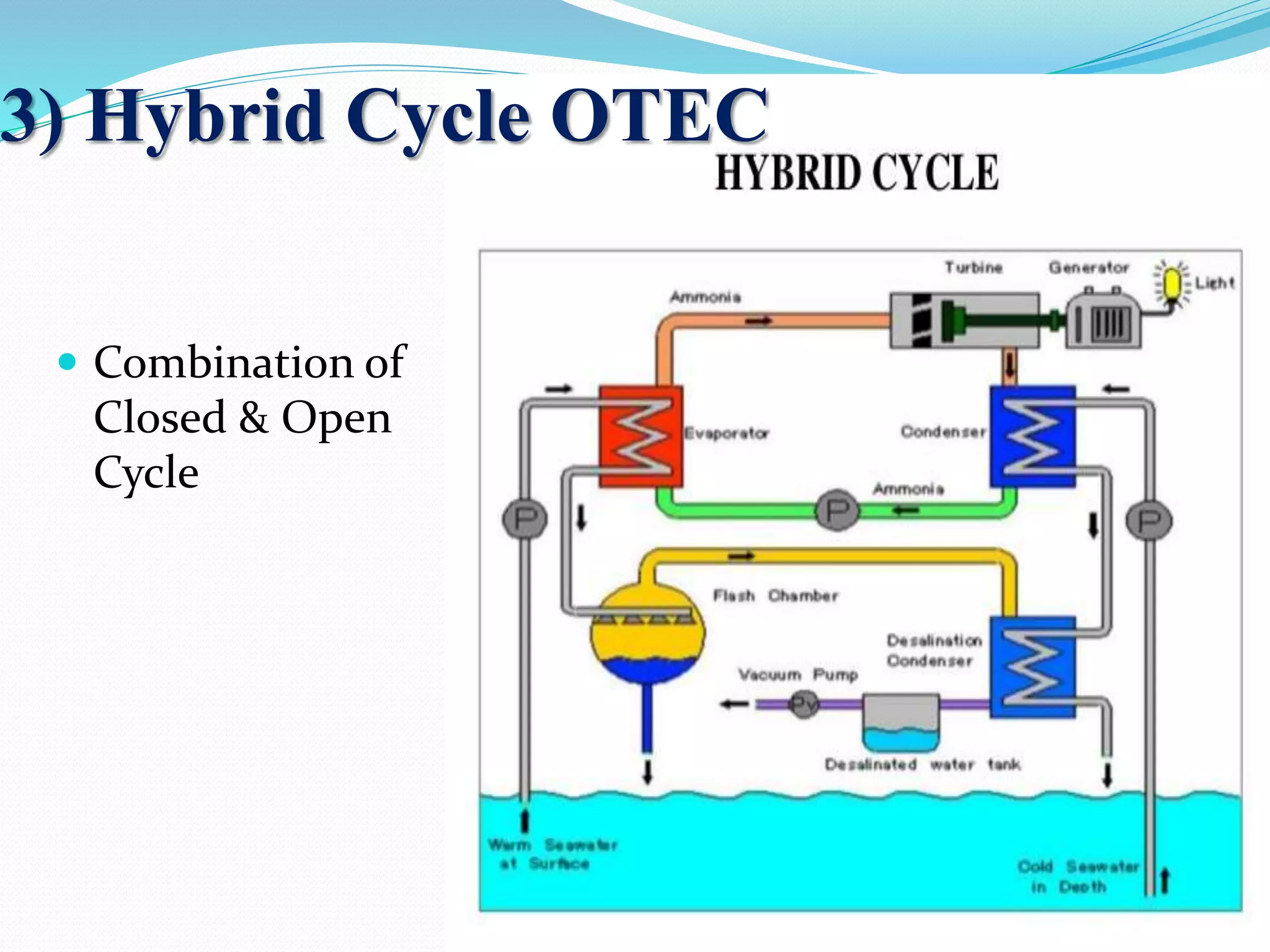
 Combination of
Closed & Open
Cycle
3) Hybrid Cycle OTEC
Platforms of OTEC
1) Land Based Power plant
2) Sea Based Power plant(Floating plant)
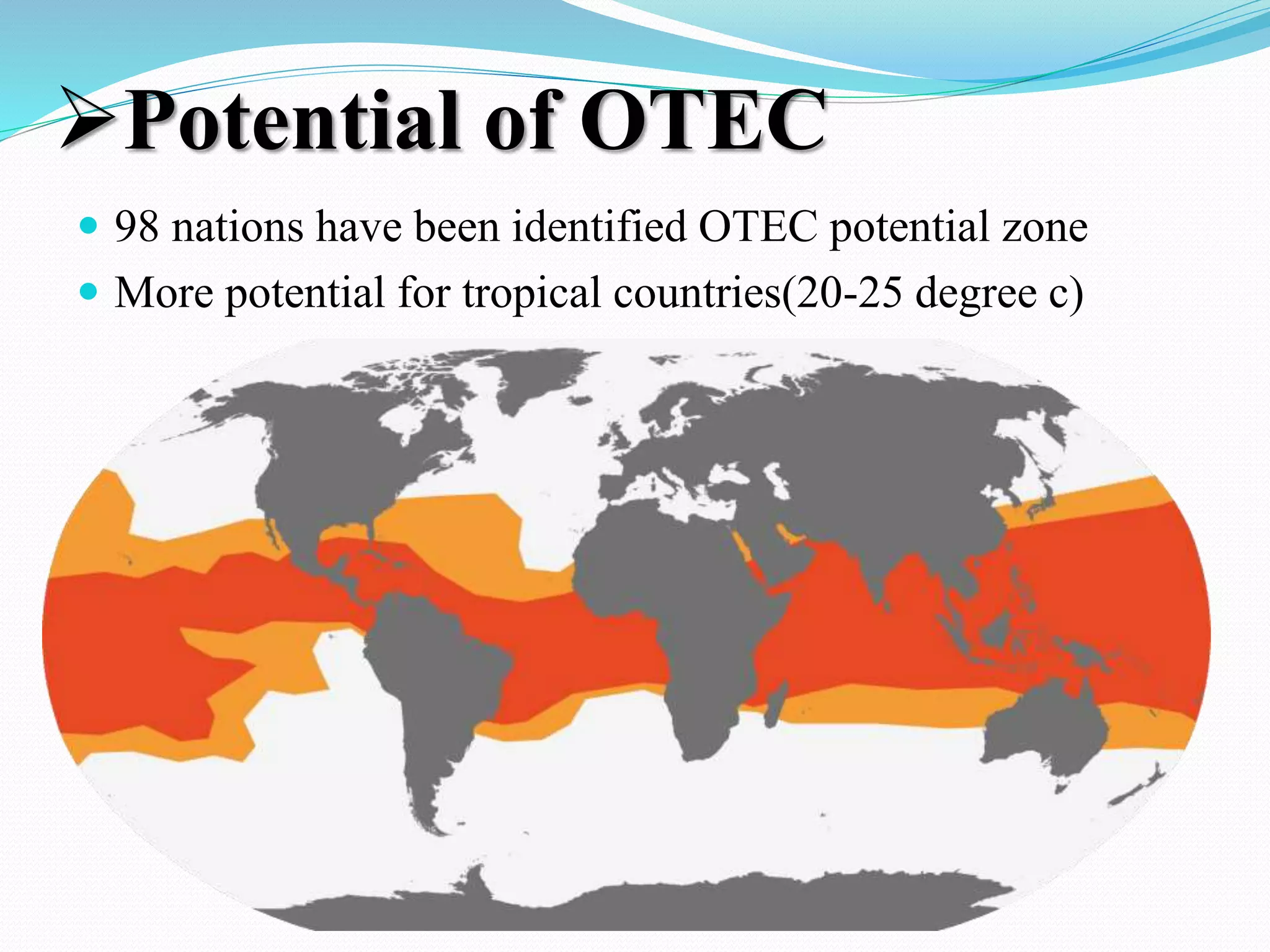
Potential of OTEC
 98 nations have been identified OTEC potential zone
 More potential for tropical countries(20-25 degree c)
Infrastructure & Cost
 Size-100MW…10mt pipe diameter
 Length required >1000 mt
 Big construction of plant
 Required skill & experiment
10MW(Landbased) coast-
40,000,000
10MW profit per/yr-10,000,000
100MW coast-215,000,000
profit-100,000,000
(Source-www.oteci.com/http://nelha.hawaii.gov/)
OTEC Products (Outputs)
 1) Electricity
 2) Fresh water
 3) SWAC
 4) Mari culture
1) Electricity
 Able to provide continuously electricity
 Energy losses 20%-30%
 100MW -33,000,000 cubic mt per yr
2) Fresh water
3) Mari-culture (fish production)
 SWAC require 1 cold pipe to reduce temp.
 Resort, Hotels, Hospitals, malls….
 Reduce electricity uses
80%-90% (AC)
 Concentration of minerals, nutrients
 Artificial pond
 Very large profit
4) SWAC (Sea Water Air condition)
OTEC Plant in World
Installed-
 Hawaii 1 MW -OTEC International and NELHA
 Japan/Nauru 120 kW- Japan Institute for Ocean Energy Research
 South Korea 20 kW- Installed in 2013. KISOT
 Japan/Okinawa 50 kW- XenesysIncorporated, IHI,and Yokogawa
Developing Stage-
 Hawaii 10 MW- Lockheed Martin Naval Facility Engineering Command
 Southern China 10 MW- Lockheed Martin, Reign wood Group
(India-Tuticorin 1 MW -Ammonia-based closed cycle, started in 2000, but not
completed due to problems with the pipes for pumping the seawater;floating
plant.(IIT))
Advantages
 Use clean, renewable, natural resource
 “0” Carbon emission (sometime little)
 Produce electricity as well as fresh water
 Reduce dependency on fossil fuel (1.3million barrel p/ye)
 Produce 120,000,000 litter fresh water p/day(100MW)
 Mariculture -70 tons of shellfish meat grow each
day(100MW)
(Johnson 2013)
Disadvantages/Limitations
 OTEC produced electricity at present some time cost more
than electricity
 OTEC plant not working further 40 degree latitude
 The pipe used in OTEC nearly up to 10 mt diameter, there is
animal are sucked into the OTEC system.
 Risk of the leakage of Ammonia
 Cold water discharge on surface water it dangerous for
marine life ex- Coral reefs
 OTEC –Experimental Stage
Ocean Thermal Energy Conversion (OTEC) is a technology solution
that directly addresses the key concerns of energy security, global
warming, pollution and depletion of nonrenewable fossil resources.
OTEC provides a clean, reliable energy solution for many areas of the
world.
Thank You
References:-
 http://www.oteci.com
 http://www.britannica.com/technology/ocean-
thermal-energy-conversion
 https://www.bing.com/images
 http://nelha.hawaii.gov

Ocean Thermal Energy Conversion (OTEC)

  • 2.
    Introduction  The oceancover 70% of the earth surface means ocean is the world largest solar energy collector & energy stored system.  So, it possible to generate electricity from the oceanic thermal energy?
  • 3.
    (Ocean thermal energyconversion)  Jacques Arsene d’Arsonval (1881)  Energy convert –ocean solar radiation to electric power  Renewable energy(clean & green power)  Hydro energy thermal conversion system  Use temp. differences What is OTEC..???
  • 4.
    How does itwork..???  Fuel of OTEC..  25-4 degree c (20 degree c differences)  Used to drive steam cycle that turn to turbine  Part of OTEC  Require large volume  Ex-100MW 20,000,000 gallon water  Pump use 30% electricity
  • 5.
    Type of OTEC- 1)Closed Cycle OTEC 2) Open Cycle OTEC 3) Hybrid Cycle OTEC
  • 6.
    1) Closed CycleOTEC  Warm & cold water  Ammonia as working fluid  Generate electricity not fresh water
  • 7.
    2) Open CycleOTEC  Seawater is working fluid  Vacuum  0.3 psia –22 degree c (boiling point of water)  Boiling water drive to turbine  Give Production of electricity & fresh water
  • 9.
  • 10.
     Combination of Closed& Open Cycle 3) Hybrid Cycle OTEC
  • 11.
    Platforms of OTEC 1)Land Based Power plant
  • 12.
    2) Sea BasedPower plant(Floating plant)
  • 13.
    Potential of OTEC 98 nations have been identified OTEC potential zone  More potential for tropical countries(20-25 degree c)
  • 14.
    Infrastructure & Cost Size-100MW…10mt pipe diameter  Length required >1000 mt  Big construction of plant  Required skill & experiment 10MW(Landbased) coast- 40,000,000 10MW profit per/yr-10,000,000 100MW coast-215,000,000 profit-100,000,000 (Source-www.oteci.com/http://nelha.hawaii.gov/)
  • 15.
    OTEC Products (Outputs) 1) Electricity  2) Fresh water  3) SWAC  4) Mari culture
  • 16.
    1) Electricity  Ableto provide continuously electricity  Energy losses 20%-30%  100MW -33,000,000 cubic mt per yr 2) Fresh water
  • 17.
    3) Mari-culture (fishproduction)  SWAC require 1 cold pipe to reduce temp.  Resort, Hotels, Hospitals, malls….  Reduce electricity uses 80%-90% (AC)  Concentration of minerals, nutrients  Artificial pond  Very large profit 4) SWAC (Sea Water Air condition)
  • 20.
    OTEC Plant inWorld Installed-  Hawaii 1 MW -OTEC International and NELHA  Japan/Nauru 120 kW- Japan Institute for Ocean Energy Research  South Korea 20 kW- Installed in 2013. KISOT  Japan/Okinawa 50 kW- XenesysIncorporated, IHI,and Yokogawa Developing Stage-  Hawaii 10 MW- Lockheed Martin Naval Facility Engineering Command  Southern China 10 MW- Lockheed Martin, Reign wood Group (India-Tuticorin 1 MW -Ammonia-based closed cycle, started in 2000, but not completed due to problems with the pipes for pumping the seawater;floating plant.(IIT))
  • 21.
    Advantages  Use clean,renewable, natural resource  “0” Carbon emission (sometime little)  Produce electricity as well as fresh water  Reduce dependency on fossil fuel (1.3million barrel p/ye)  Produce 120,000,000 litter fresh water p/day(100MW)  Mariculture -70 tons of shellfish meat grow each day(100MW) (Johnson 2013)
  • 22.
    Disadvantages/Limitations  OTEC producedelectricity at present some time cost more than electricity  OTEC plant not working further 40 degree latitude  The pipe used in OTEC nearly up to 10 mt diameter, there is animal are sucked into the OTEC system.  Risk of the leakage of Ammonia  Cold water discharge on surface water it dangerous for marine life ex- Coral reefs  OTEC –Experimental Stage
  • 23.
    Ocean Thermal EnergyConversion (OTEC) is a technology solution that directly addresses the key concerns of energy security, global warming, pollution and depletion of nonrenewable fossil resources. OTEC provides a clean, reliable energy solution for many areas of the world.
  • 24.
  • 25.