BY:-
AMITABH KUMAR SINGH
18PCE019
 Ocean covers >70% Earth’s surface.
 Largest natural solar collector and storage system.
 Largest renewable energy resource.
 Ocean water stores much more heat than the
atmosphere.
 Ocean contains enough energy power all of the world’s
electrical needs.
 Renewable – The world’s use of energy is ever-
increasing. At the same time, traditional sources of
energy are depleting. OTEC is an economically-viable
energy option with practically zero carbon emissions.
 OTEC, or Ocean Thermal Energy Conversion, is an
energy technology that converts solar radiation to
electric power.
 OTEC systems use the ocean's natural thermal
gradient—the fact that the ocean's layers of water
have different temperatures to drive a power-
producing cycle.
 As long as the temperature between the warm surface
water and the cold deep water differs by about 20°C
(36°F), an OTEC system can produce a significant
amount of power, with little impact on the
surrounding environment.
 OTEC is an energy technology that converts solar
radiation to electric power
 Temperature difference between the warm surface
water and the cold deep water below 600 meters by
about 20° C, an OTEC system can produce a
significant amount of power.
 oceans are thus a vast renewable resource, with the
potential to help us produce billions of watts of
electric power
 Idea thought of by Jacques D’Arsonval, in
1881.
 French physician that contributed greatly to
electrophysiology.
 His student, Georges Claude, created the first
OTEC system in Cuba in 1930.
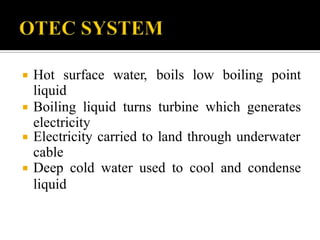
 Hot surface water, boils low boiling point
liquid
 Boiling liquid turns turbine which generates
electricity
 Electricity carried to land through underwater
cable
 Deep cold water used to cool and condense
liquid
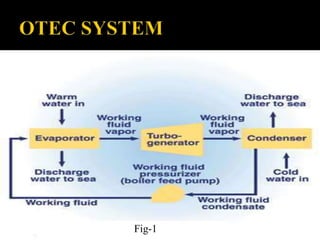
Fig-1
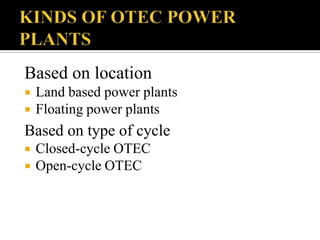
Based on location
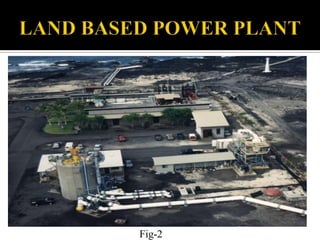
 Land based power plants
 Floating power plants
Based on type of cycle
 Closed-cycle OTEC
 Open-cycle OTEC
Fig-2
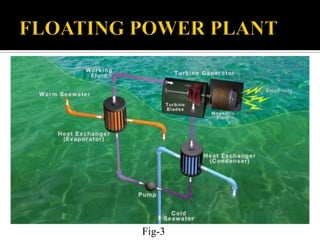
Fig-3
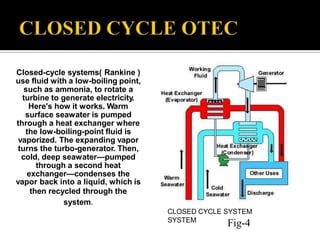
Closed-cycle systems( Rankine )
use fluid with a low-boiling point,
such as ammonia, to rotate a
turbine to generate electricity.
Here's how it works. Warm
surface seawater is pumped
through a heat exchanger where
the low-boiling-point fluid is
vaporized. The expanding vapor
turns the turbo-generator. Then,
cold, deep seawater—pumped
through a second heat
exchanger—condenses the
vapor back into a liquid, which is
then recycled through the
system.
CLOSED CYCLE SYSTEM
SYSTEM
Fig-4
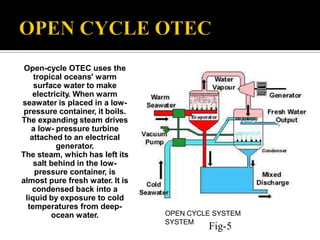
OPEN CYCLE SYSTEM
SYSTEM
Open-cycle OTEC uses the
tropical oceans' warm
surface water to make
electricity. When warm
seawater is placed in a low-
pressure container, it boils.
The expanding steam drives
a low- pressure turbine
attached to an electrical
generator.
The steam, which has left its
salt behind in the low-
pressure container, is
almost pure fresh water. It is
condensed back into a
liquid by exposure to cold
temperatures from deep-
ocean water.
Fig-5
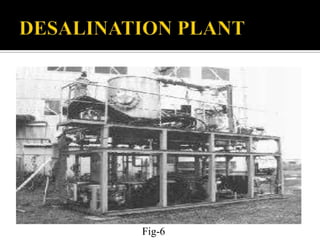
 Desalination
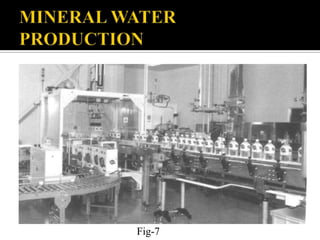
 Mineral water production
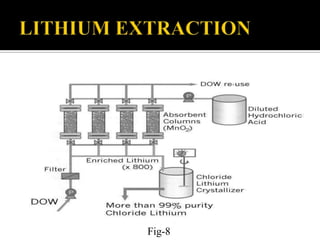
 Lithium extraction
 Air conditioning
 Aquaculture
 Food, cosmetics, medical science etc
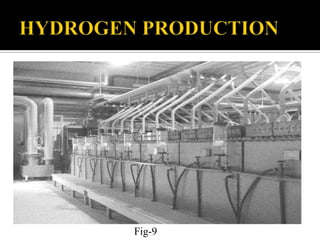
 Hydrogen production
Fig-6
Fig-7
Fig-8
Fig-9
 OTEC uses clean, renewable, natural resources. Warm surface
seawater and cold water from the ocean depths replace fossil fuels to
produce electricity.
 Suitably designed OTEC plants will produce little or no carbon
dioxide or other polluting chemicals.
 OTEC systems can produce fresh water as well as electricity. This is a
significant advantage in island areas where fresh water is limited.
 There is enough solar energy received and stored in the warm tropical
ocean surface layer to provide most, if not all, of present human energy
needs.
 The use of OTEC as a source of electricity will help reduce the state's
almost complete dependence on imported fossil fuels.
 OTEC-produced electricity at present would cost more than electricity
generated from fossil fuels at their current costs.
 OTEC plants must be located where a difference of about 20º C occurs
year round.
 Ocean depths must be available fairly close to shore-based facilities for
economic operation. Floating plant ships could provide more flexibility.
 No energy company will put money in this project because it only had
been tested in a very small scale
 Construction of OTEC plants and lying of pipes in coastal waters may
cause localized damage to reefs and near-shore marine ecosystems
The fossil fuels will in the near future be consumed, so we
had to find some alternative energy sources. OTEC is a source,
which uses the renewable solar collector, the sea, instead of an
artificial collector.
The problem is that this investment will be more expensive
than the fossil fuels power plants, and it will take a long time
before anyone will put some
FUTURE OF OTEC
 OTEC has tremendous potential to supply the
world’s energy.
 OTEC offers one of the most compassionate
power production technologies.
 As long as the sun heats the waters of the oceans,
the potential for power conversion though OTEC
will always exists.
 The oceans are thus a vast renewable resource,
with the potential to help us produce billions of
watts of electric power.
 The distinctive feature of OTEC energy
systems is that the end products include not
only energy in the form of electricity, but
several other synergistic products.
 Eleventh plan 2007-2012 working group document
volume 2 (Ocean development) page no 4, 23, 33.
 Göran Wall, Alternativa energisystem,
http://www.exergy.se/ftp/aes.pdf
 http://www.seasolarpower.com
 lectures/resources/lect838737281.html
1998,
ocean thermal energy conversion

ocean thermal energy conversion

  • 1.
  • 2.
     Ocean covers>70% Earth’s surface.  Largest natural solar collector and storage system.  Largest renewable energy resource.  Ocean water stores much more heat than the atmosphere.  Ocean contains enough energy power all of the world’s electrical needs.  Renewable – The world’s use of energy is ever- increasing. At the same time, traditional sources of energy are depleting. OTEC is an economically-viable energy option with practically zero carbon emissions.
  • 3.
     OTEC, orOcean Thermal Energy Conversion, is an energy technology that converts solar radiation to electric power.  OTEC systems use the ocean's natural thermal gradient—the fact that the ocean's layers of water have different temperatures to drive a power- producing cycle.  As long as the temperature between the warm surface water and the cold deep water differs by about 20°C (36°F), an OTEC system can produce a significant amount of power, with little impact on the surrounding environment.
  • 4.
     OTEC isan energy technology that converts solar radiation to electric power  Temperature difference between the warm surface water and the cold deep water below 600 meters by about 20° C, an OTEC system can produce a significant amount of power.  oceans are thus a vast renewable resource, with the potential to help us produce billions of watts of electric power
  • 5.
     Idea thoughtof by Jacques D’Arsonval, in 1881.  French physician that contributed greatly to electrophysiology.  His student, Georges Claude, created the first OTEC system in Cuba in 1930.
  • 6.
     Hot surfacewater, boils low boiling point liquid  Boiling liquid turns turbine which generates electricity  Electricity carried to land through underwater cable  Deep cold water used to cool and condense liquid
  • 7.
  • 8.
    Based on location Land based power plants  Floating power plants Based on type of cycle  Closed-cycle OTEC  Open-cycle OTEC
  • 9.
  • 10.
  • 11.
    Closed-cycle systems( Rankine) use fluid with a low-boiling point, such as ammonia, to rotate a turbine to generate electricity. Here's how it works. Warm surface seawater is pumped through a heat exchanger where the low-boiling-point fluid is vaporized. The expanding vapor turns the turbo-generator. Then, cold, deep seawater—pumped through a second heat exchanger—condenses the vapor back into a liquid, which is then recycled through the system. CLOSED CYCLE SYSTEM SYSTEM Fig-4
  • 12.
    OPEN CYCLE SYSTEM SYSTEM Open-cycleOTEC uses the tropical oceans' warm surface water to make electricity. When warm seawater is placed in a low- pressure container, it boils. The expanding steam drives a low- pressure turbine attached to an electrical generator. The steam, which has left its salt behind in the low- pressure container, is almost pure fresh water. It is condensed back into a liquid by exposure to cold temperatures from deep- ocean water. Fig-5
  • 13.
     Desalination  Mineralwater production  Lithium extraction  Air conditioning  Aquaculture  Food, cosmetics, medical science etc  Hydrogen production
  • 14.
  • 15.
  • 16.
  • 17.
  • 18.
     OTEC usesclean, renewable, natural resources. Warm surface seawater and cold water from the ocean depths replace fossil fuels to produce electricity.  Suitably designed OTEC plants will produce little or no carbon dioxide or other polluting chemicals.  OTEC systems can produce fresh water as well as electricity. This is a significant advantage in island areas where fresh water is limited.  There is enough solar energy received and stored in the warm tropical ocean surface layer to provide most, if not all, of present human energy needs.  The use of OTEC as a source of electricity will help reduce the state's almost complete dependence on imported fossil fuels.
  • 19.
     OTEC-produced electricityat present would cost more than electricity generated from fossil fuels at their current costs.  OTEC plants must be located where a difference of about 20º C occurs year round.  Ocean depths must be available fairly close to shore-based facilities for economic operation. Floating plant ships could provide more flexibility.  No energy company will put money in this project because it only had been tested in a very small scale  Construction of OTEC plants and lying of pipes in coastal waters may cause localized damage to reefs and near-shore marine ecosystems
  • 20.
    The fossil fuelswill in the near future be consumed, so we had to find some alternative energy sources. OTEC is a source, which uses the renewable solar collector, the sea, instead of an artificial collector. The problem is that this investment will be more expensive than the fossil fuels power plants, and it will take a long time before anyone will put some FUTURE OF OTEC
  • 21.
     OTEC hastremendous potential to supply the world’s energy.  OTEC offers one of the most compassionate power production technologies.  As long as the sun heats the waters of the oceans, the potential for power conversion though OTEC will always exists.  The oceans are thus a vast renewable resource, with the potential to help us produce billions of watts of electric power.
  • 22.
     The distinctivefeature of OTEC energy systems is that the end products include not only energy in the form of electricity, but several other synergistic products.
  • 23.
     Eleventh plan2007-2012 working group document volume 2 (Ocean development) page no 4, 23, 33.  Göran Wall, Alternativa energisystem, http://www.exergy.se/ftp/aes.pdf  http://www.seasolarpower.com  lectures/resources/lect838737281.html 1998,