Presented by
Mr. AKSHAY PATIL
M pharm 1st yr
[Pharmaceutics dept]
Guided by
Dr. A.J.Shinde Sir
ASSOCIATE PROFESSOR
M Pharm , Ph.D
DEPARTMENT OF PHARMACEUTICS
CONTENTS
 INTRODUCTION
 OBJECTIVES OF THE ACT
 PROVISION OF THE ACT
 DRUG APPROVAL
 NEW CHEMICAL ENTITY
 NEW DRUG EXCLUSIVITY
 NON PATENT EXCLUSIVITY
 ORANGE BOOK
 CONCLUSION
INTRODUCTION
 The "Drug Price Competition and Patent Term
Restoration Act of 1984," also known as the Hatch-Waxman
Amendments, established the approval pathway for generic
drug products, under which applicants can submit an
abbreviated new drug application (ANDA) under section
505(j) of the Federal Food, Drug, and Cosmetic Act (FD&C
Act).
 is a 1984 United States Federal law which encourages the
manufacture of generic drugs by the pharmaceutical industry
and established the modern system of government generic
drug regulation in the United States.
 In order to overcome the above problem an act was needed
to promote generic drug and innovators.
 In 1984, Two American politicians Orrin Grant Hatch &
Henry Arnold Waxman sponsored the Official act “ The
Drug Price Competition and Patent Term Restoration” since
then this Act was informally known as Hatch-Waxman Act.
“AIM: To make available more low cost generic drugs”
OBJECTIVES OF THE ACT
 Reducing the cost associated with the approval of a generic
drug
 Allowing early-experimental use
 Compensating the branded drugs manufacturers for the time
lost from the patent term because of the regulatory approval
formality
 Motivating the generic drug manufacturers.
PROVISION OF THE ACT:
 Creation of section 505(j)
 This Section outlines the process of pharmaceutical
manufacturers to file a Abbreviated New Drug Application
(ANDA) for approval of generic drug manufacture.
 NDA must include any patent that claims the "drug" or a
"method of using the drug" for which a claim of patent
infringement could reasonably be asserted.
 On approval of NDA, FDA publishes patent information for
drug in Orange Book
Four Types of Patent Certifications
 When an applicant submits an ANDA to the FDA, the
applicant must certify one of four things under section
505(j)(2)(A)(vii):
 that the required patent information relating to such patent has
not been filed (Para I)
 that such patent has expired (Para II)
 that the patent will expire on a particular date(Para III)
 that such patent is invalid or will not be infringed by the drug,
for which approval is being sought (Para IV – Patent
Challenge)
DRUG APPROVAL
 The FDA requires every new drug, including generic drugs, to
be safe and effective.
 Before the adoption of the Hatch-Waxman Act, the FDA
required branded and generic drug companies alike to
demonstrate the safety and efficacy of their products in the
same manner through a New Drug Application (NDA) .
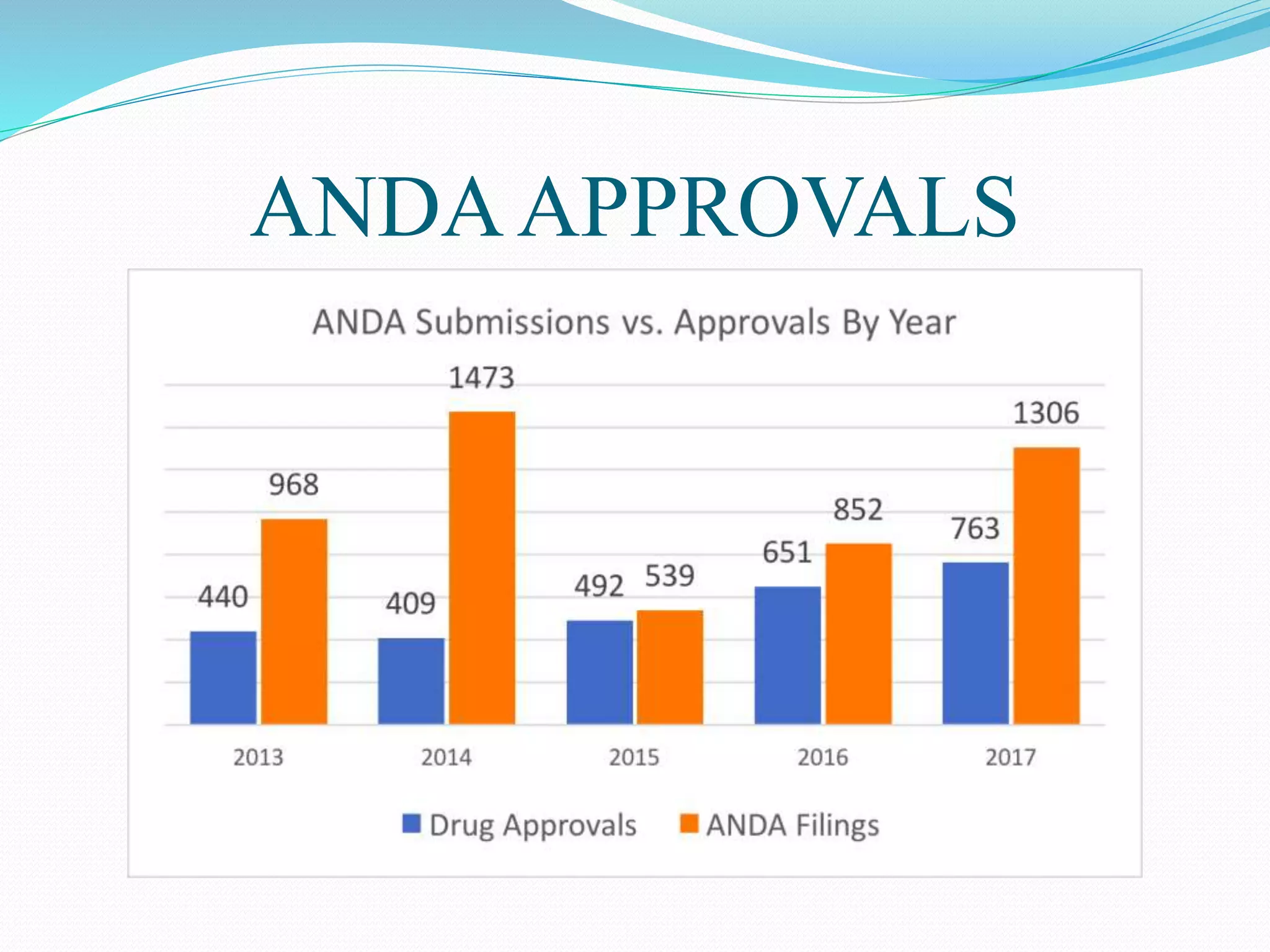
ANDAAPPROVALS
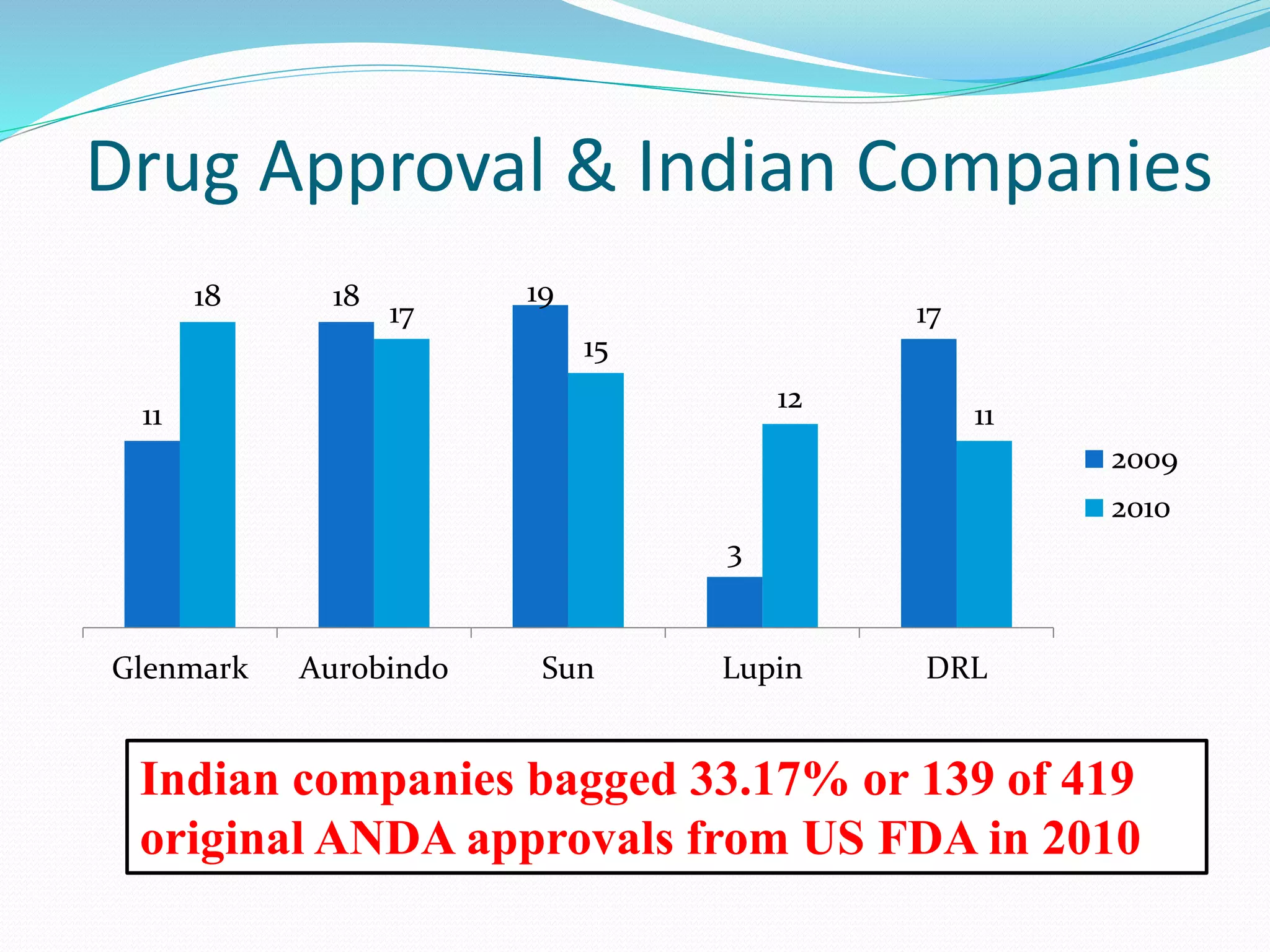
Drug Approval & Indian Companies
11
18 19
3
17
18
17
15
12
11
Glenmark Aurobindo Sun Lupin DRL
2009
2010
Indian companies bagged 33.17% or 139 of 419
original ANDA approvals from US FDA in 2010
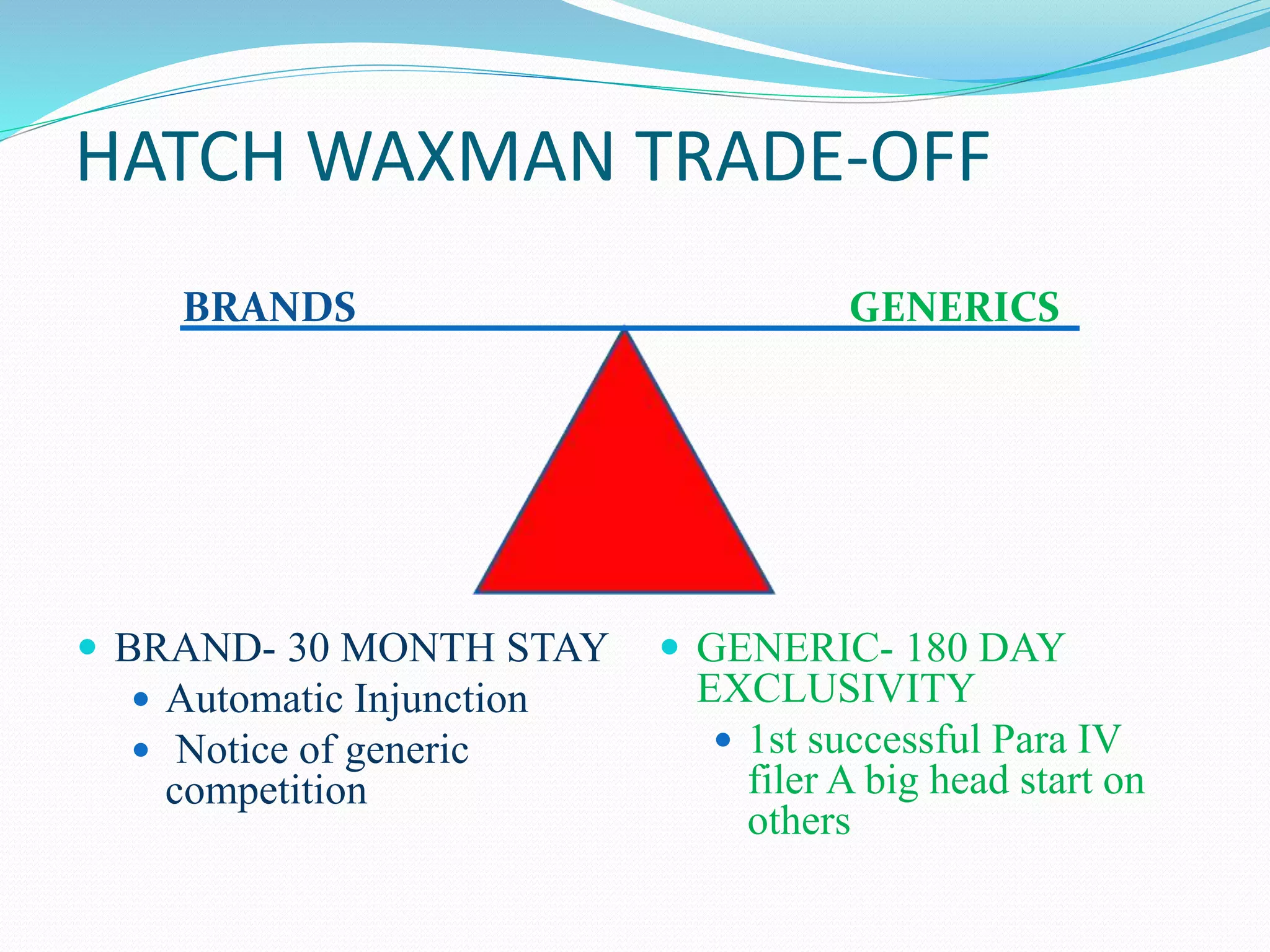
HATCH WAXMAN TRADE-OFF
 BRAND- 30 MONTH STAY
 Automatic Injunction
 Notice of generic
competition
 GENERIC- 180 DAY
EXCLUSIVITY
 1st successful Para IV
filer A big head start on
others
BRANDS GENERICS
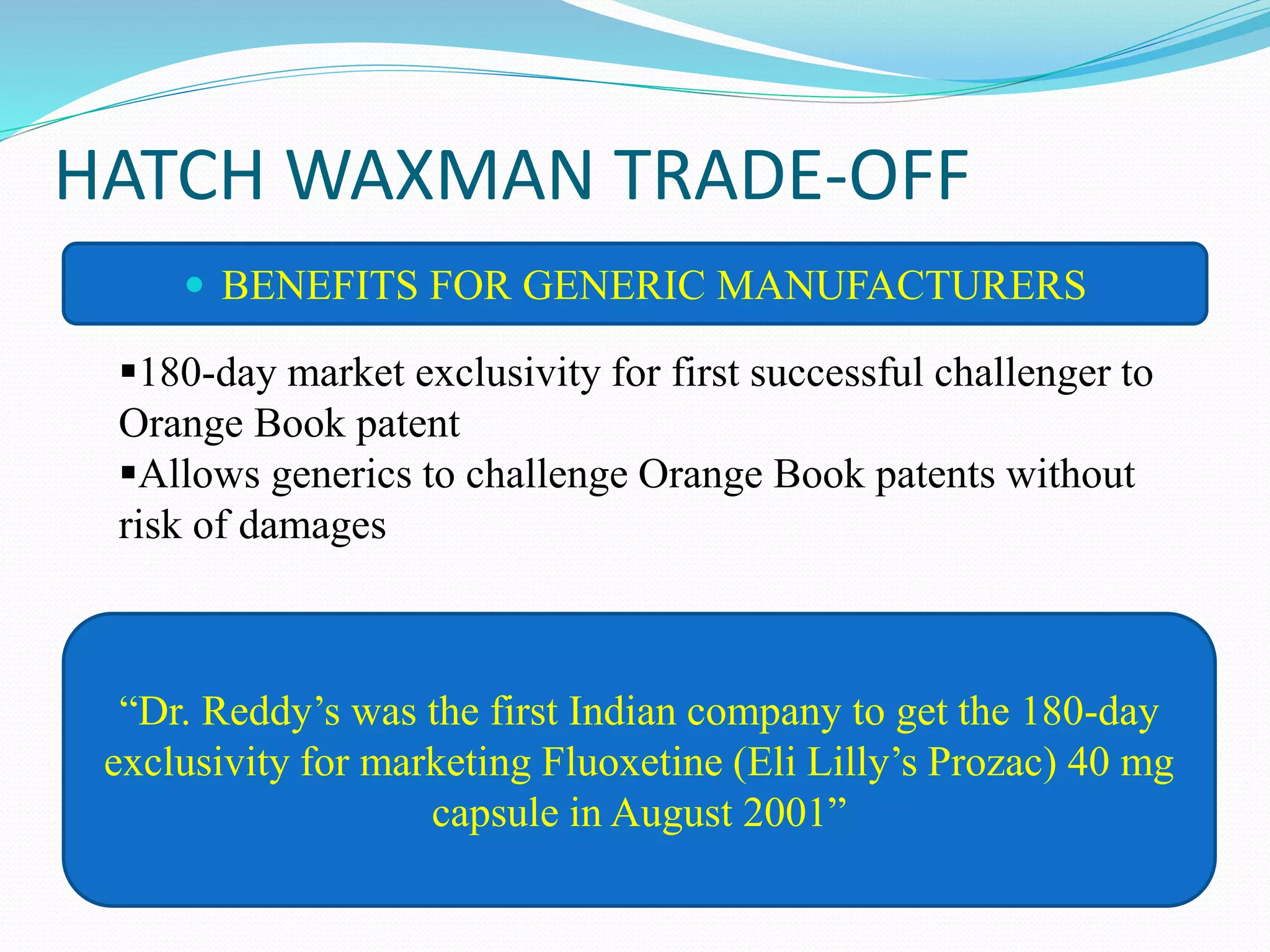
HATCH WAXMAN TRADE-OFF
 BENEFITS FOR GENERIC MANUFACTURERS
180-day market exclusivity for first successful challenger to
Orange Book patent
Allows generics to challenge Orange Book patents without
risk of damages
“Dr. Reddy’s was the first Indian company to get the 180-day
exclusivity for marketing Fluoxetine (Eli Lilly’s Prozac) 40 mg
capsule in August 2001”
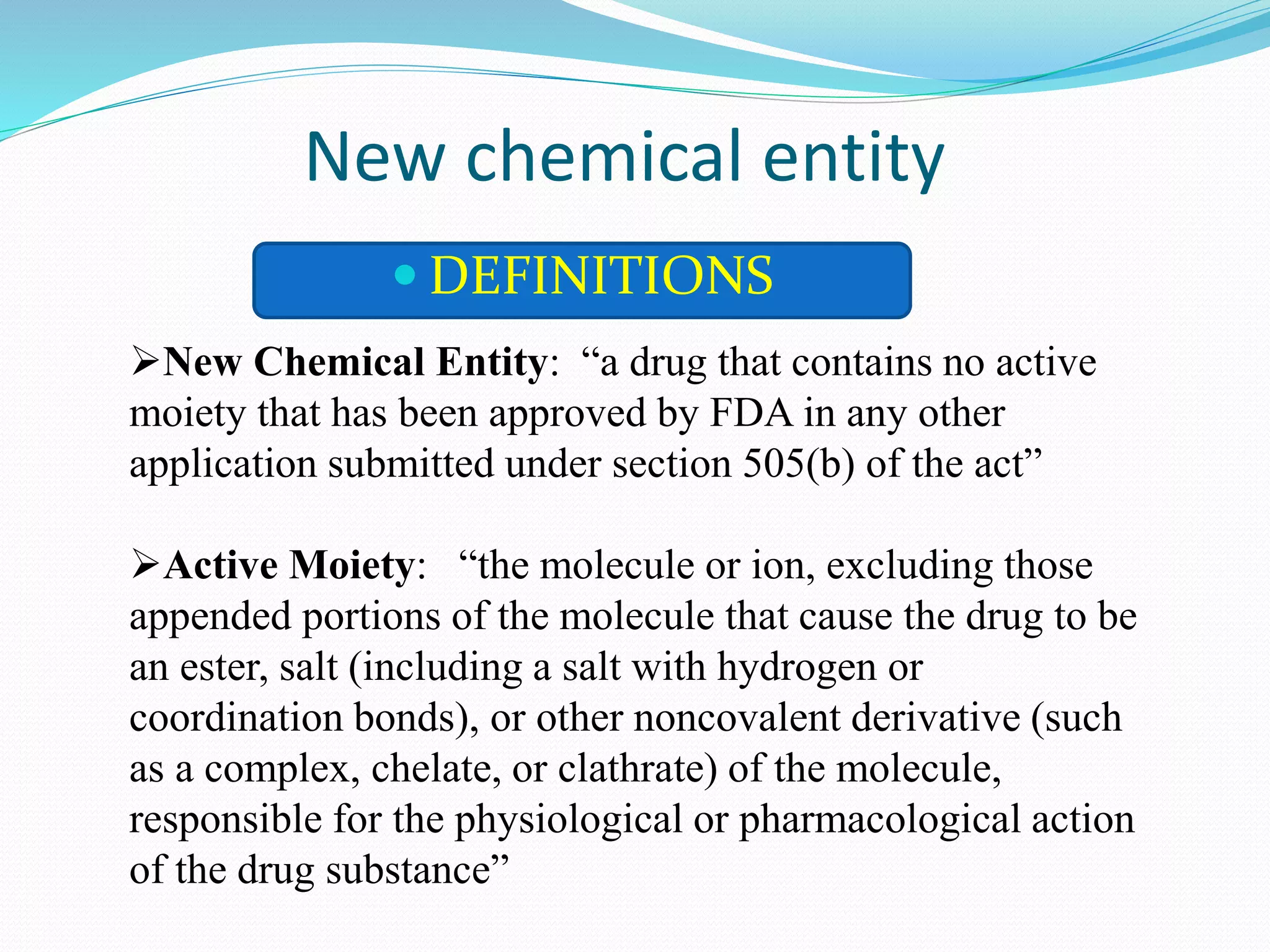
New chemical entity
 DEFINITIONS
New Chemical Entity: “a drug that contains no active
moiety that has been approved by FDA in any other
application submitted under section 505(b) of the act”
Active Moiety: “the molecule or ion, excluding those
appended portions of the molecule that cause the drug to be
an ester, salt (including a salt with hydrogen or
coordination bonds), or other noncovalent derivative (such
as a complex, chelate, or clathrate) of the molecule,
responsible for the physiological or pharmacological action
of the drug substance”
NEW DRUG EXCLUSIVITY
 A)Non-patent Exclusivities
 1) Orphan drug exclusivity, which is granted to drugs:
 a) that treat a disease or condition that affects less than
200,000 people in the US; or
 b) for which it is unlikely that US sales of the drug will
recoup its development costs.
This exclusivity period is seven years, but only applies to
use in treating the specific
rare disease or condition
 2) New chemical entity (NCE) exclusivity.
 This is granted if the FDA has not previously approved the
“active drug moiety.”
 NCE exclusivity bars a generic drug company from filing an
application for approval of a generic drug five years from the
first approval of the relevant NDA.
 However, a generic drug company may file an ANDA with a
Paragraph IV certification four years after the first NDA
approval.
 (4) Pediatric exclusivity.
 This applies if the FDA requested that the NDA holder conduct
studies with the drug in pediatric populations.
 Pediatric exclusivity adds six months of exclusivity to any
marketing or paten exclusivity.
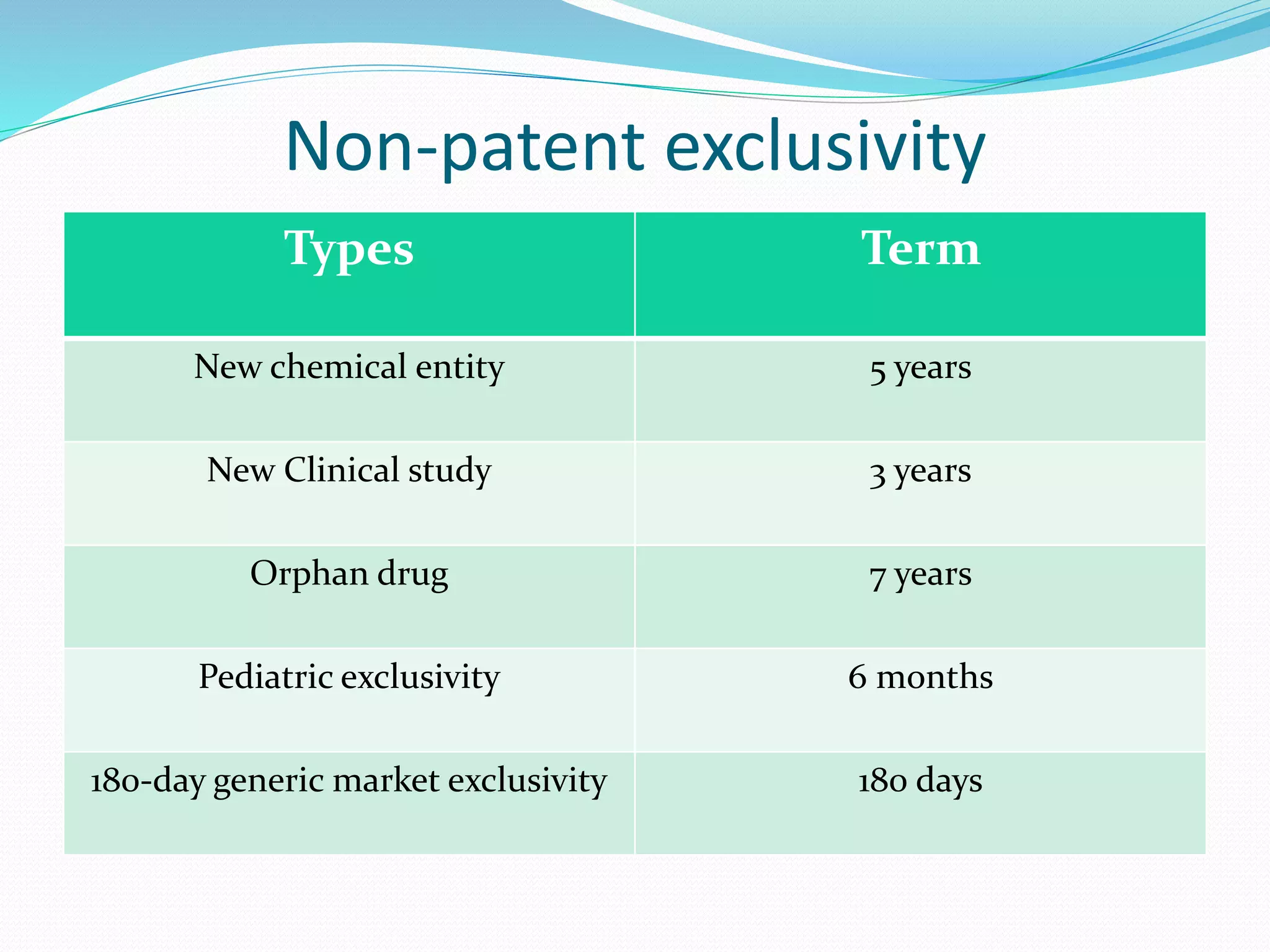
Non-patent exclusivity
Types Term
New chemical entity 5 years
New Clinical study 3 years
Orphan drug 7 years
Pediatric exclusivity 6 months
180-day generic market exclusivity 180 days
 B) Patent exclusivity & the orange book
 An NDA holder must provide the FDA with the patent
number and expiration date of any patent that claims either:
 a) The drug, including the active ingredient and the
formulation for the active ingredient.
 b) A method of using the drug, but not other inventions
such as:
 metabolites;
 synthetic intermediates; or
 methods of making the drug.
ORANGE BOOK
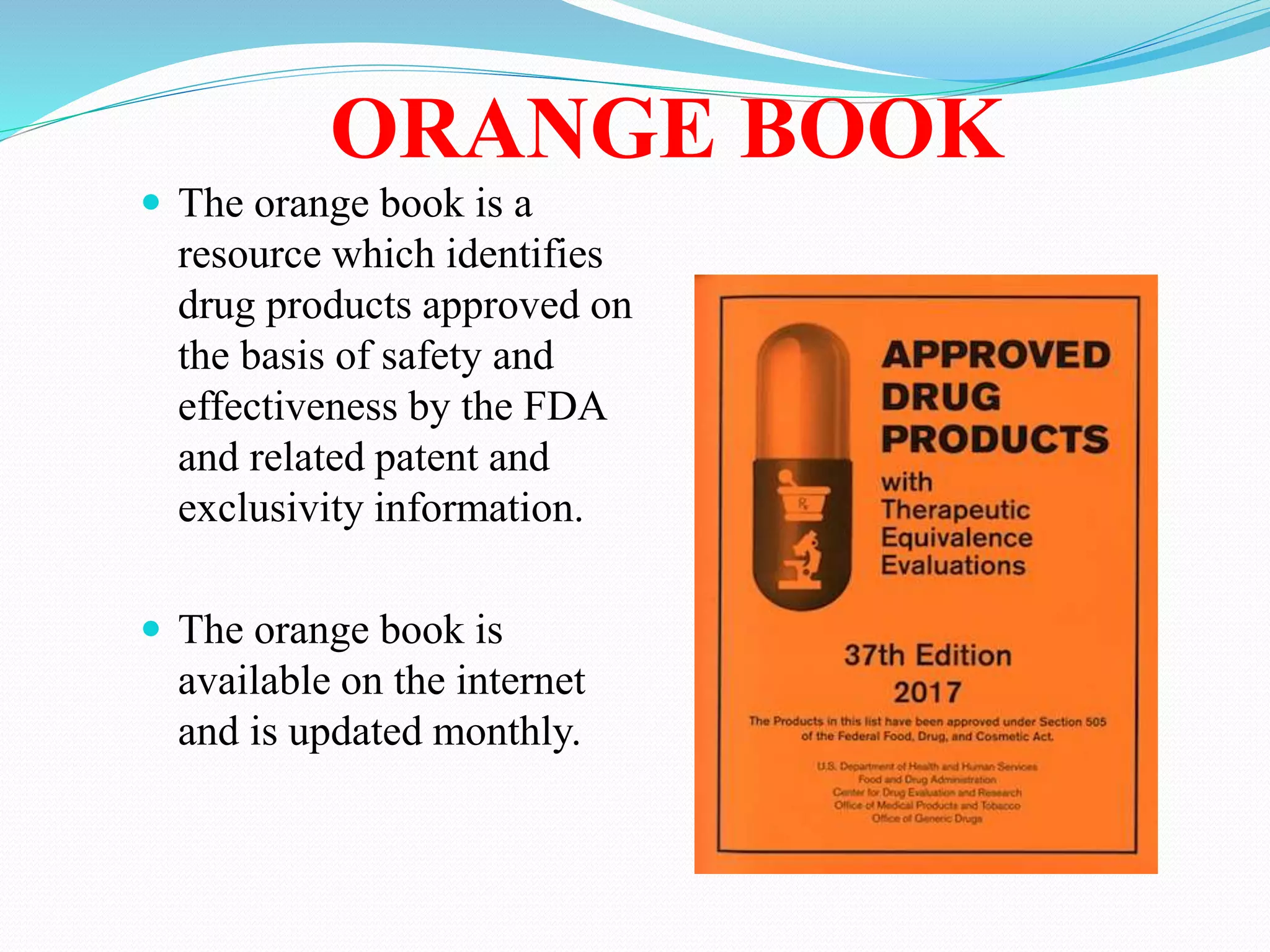
 The orange book is a
resource which identifies
drug products approved on
the basis of safety and
effectiveness by the FDA
and related patent and
exclusivity information.
 The orange book is
available on the internet
and is updated monthly.
CONCLUSION
 The hatch-Waxman act provides an expedited USFDA program
for speedy generic entry and market exclusivity
 The hatch-Waxman act allows for a patent term extension of a
maximum of 5 years for the branded drug manufacturer to
compensate for the time lost during the NDA approval by the
USFDA.
Reference:
 https://www.fda.gov/downloads/Drugs/DevelopmentApprov
alProcess/SmallBusinessAssistance/UC M445610.pdf
 Subrahmanyam CVS, Thimmasetty J. Pharmaceutical
Regulatory Affairs,1st ed. MK Jain,Delhi.2012.
 https://en.wikipedia.org/wiki/Code_of_Federal_Regultions
hatch-waxman act@amendments

hatch-waxman act@amendments

  • 1.
    Presented by Mr. AKSHAYPATIL M pharm 1st yr [Pharmaceutics dept] Guided by Dr. A.J.Shinde Sir ASSOCIATE PROFESSOR M Pharm , Ph.D DEPARTMENT OF PHARMACEUTICS
  • 2.
    CONTENTS  INTRODUCTION  OBJECTIVESOF THE ACT  PROVISION OF THE ACT  DRUG APPROVAL  NEW CHEMICAL ENTITY  NEW DRUG EXCLUSIVITY  NON PATENT EXCLUSIVITY  ORANGE BOOK  CONCLUSION
  • 3.
    INTRODUCTION  The "DrugPrice Competition and Patent Term Restoration Act of 1984," also known as the Hatch-Waxman Amendments, established the approval pathway for generic drug products, under which applicants can submit an abbreviated new drug application (ANDA) under section 505(j) of the Federal Food, Drug, and Cosmetic Act (FD&C Act).  is a 1984 United States Federal law which encourages the manufacture of generic drugs by the pharmaceutical industry and established the modern system of government generic drug regulation in the United States.
  • 4.
     In orderto overcome the above problem an act was needed to promote generic drug and innovators.  In 1984, Two American politicians Orrin Grant Hatch & Henry Arnold Waxman sponsored the Official act “ The Drug Price Competition and Patent Term Restoration” since then this Act was informally known as Hatch-Waxman Act. “AIM: To make available more low cost generic drugs”
  • 5.
    OBJECTIVES OF THEACT  Reducing the cost associated with the approval of a generic drug  Allowing early-experimental use  Compensating the branded drugs manufacturers for the time lost from the patent term because of the regulatory approval formality  Motivating the generic drug manufacturers.
  • 6.
    PROVISION OF THEACT:  Creation of section 505(j)  This Section outlines the process of pharmaceutical manufacturers to file a Abbreviated New Drug Application (ANDA) for approval of generic drug manufacture.  NDA must include any patent that claims the "drug" or a "method of using the drug" for which a claim of patent infringement could reasonably be asserted.  On approval of NDA, FDA publishes patent information for drug in Orange Book
  • 7.
    Four Types ofPatent Certifications  When an applicant submits an ANDA to the FDA, the applicant must certify one of four things under section 505(j)(2)(A)(vii):  that the required patent information relating to such patent has not been filed (Para I)  that such patent has expired (Para II)  that the patent will expire on a particular date(Para III)  that such patent is invalid or will not be infringed by the drug, for which approval is being sought (Para IV – Patent Challenge)
  • 8.
    DRUG APPROVAL  TheFDA requires every new drug, including generic drugs, to be safe and effective.  Before the adoption of the Hatch-Waxman Act, the FDA required branded and generic drug companies alike to demonstrate the safety and efficacy of their products in the same manner through a New Drug Application (NDA) .
  • 9.
  • 10.
    Drug Approval &Indian Companies 11 18 19 3 17 18 17 15 12 11 Glenmark Aurobindo Sun Lupin DRL 2009 2010 Indian companies bagged 33.17% or 139 of 419 original ANDA approvals from US FDA in 2010
  • 11.
    HATCH WAXMAN TRADE-OFF BRAND- 30 MONTH STAY  Automatic Injunction  Notice of generic competition  GENERIC- 180 DAY EXCLUSIVITY  1st successful Para IV filer A big head start on others BRANDS GENERICS
  • 12.
    HATCH WAXMAN TRADE-OFF BENEFITS FOR GENERIC MANUFACTURERS 180-day market exclusivity for first successful challenger to Orange Book patent Allows generics to challenge Orange Book patents without risk of damages “Dr. Reddy’s was the first Indian company to get the 180-day exclusivity for marketing Fluoxetine (Eli Lilly’s Prozac) 40 mg capsule in August 2001”
  • 13.
    New chemical entity DEFINITIONS New Chemical Entity: “a drug that contains no active moiety that has been approved by FDA in any other application submitted under section 505(b) of the act” Active Moiety: “the molecule or ion, excluding those appended portions of the molecule that cause the drug to be an ester, salt (including a salt with hydrogen or coordination bonds), or other noncovalent derivative (such as a complex, chelate, or clathrate) of the molecule, responsible for the physiological or pharmacological action of the drug substance”
  • 14.
    NEW DRUG EXCLUSIVITY A)Non-patent Exclusivities  1) Orphan drug exclusivity, which is granted to drugs:  a) that treat a disease or condition that affects less than 200,000 people in the US; or  b) for which it is unlikely that US sales of the drug will recoup its development costs. This exclusivity period is seven years, but only applies to use in treating the specific rare disease or condition
  • 15.
     2) Newchemical entity (NCE) exclusivity.  This is granted if the FDA has not previously approved the “active drug moiety.”  NCE exclusivity bars a generic drug company from filing an application for approval of a generic drug five years from the first approval of the relevant NDA.  However, a generic drug company may file an ANDA with a Paragraph IV certification four years after the first NDA approval.
  • 16.
     (4) Pediatricexclusivity.  This applies if the FDA requested that the NDA holder conduct studies with the drug in pediatric populations.  Pediatric exclusivity adds six months of exclusivity to any marketing or paten exclusivity.
  • 17.
    Non-patent exclusivity Types Term Newchemical entity 5 years New Clinical study 3 years Orphan drug 7 years Pediatric exclusivity 6 months 180-day generic market exclusivity 180 days
  • 18.
     B) Patentexclusivity & the orange book  An NDA holder must provide the FDA with the patent number and expiration date of any patent that claims either:  a) The drug, including the active ingredient and the formulation for the active ingredient.  b) A method of using the drug, but not other inventions such as:  metabolites;  synthetic intermediates; or  methods of making the drug.
  • 19.
    ORANGE BOOK  Theorange book is a resource which identifies drug products approved on the basis of safety and effectiveness by the FDA and related patent and exclusivity information.  The orange book is available on the internet and is updated monthly.
  • 20.
    CONCLUSION  The hatch-Waxmanact provides an expedited USFDA program for speedy generic entry and market exclusivity  The hatch-Waxman act allows for a patent term extension of a maximum of 5 years for the branded drug manufacturer to compensate for the time lost during the NDA approval by the USFDA.
  • 21.
    Reference:  https://www.fda.gov/downloads/Drugs/DevelopmentApprov alProcess/SmallBusinessAssistance/UC M445610.pdf Subrahmanyam CVS, Thimmasetty J. Pharmaceutical Regulatory Affairs,1st ed. MK Jain,Delhi.2012.  https://en.wikipedia.org/wiki/Code_of_Federal_Regultions