FAULT TREE AND EVENT TREE IN RISK ANALYSIS Alma Maria Jennifer Gutierrez De La Salle University
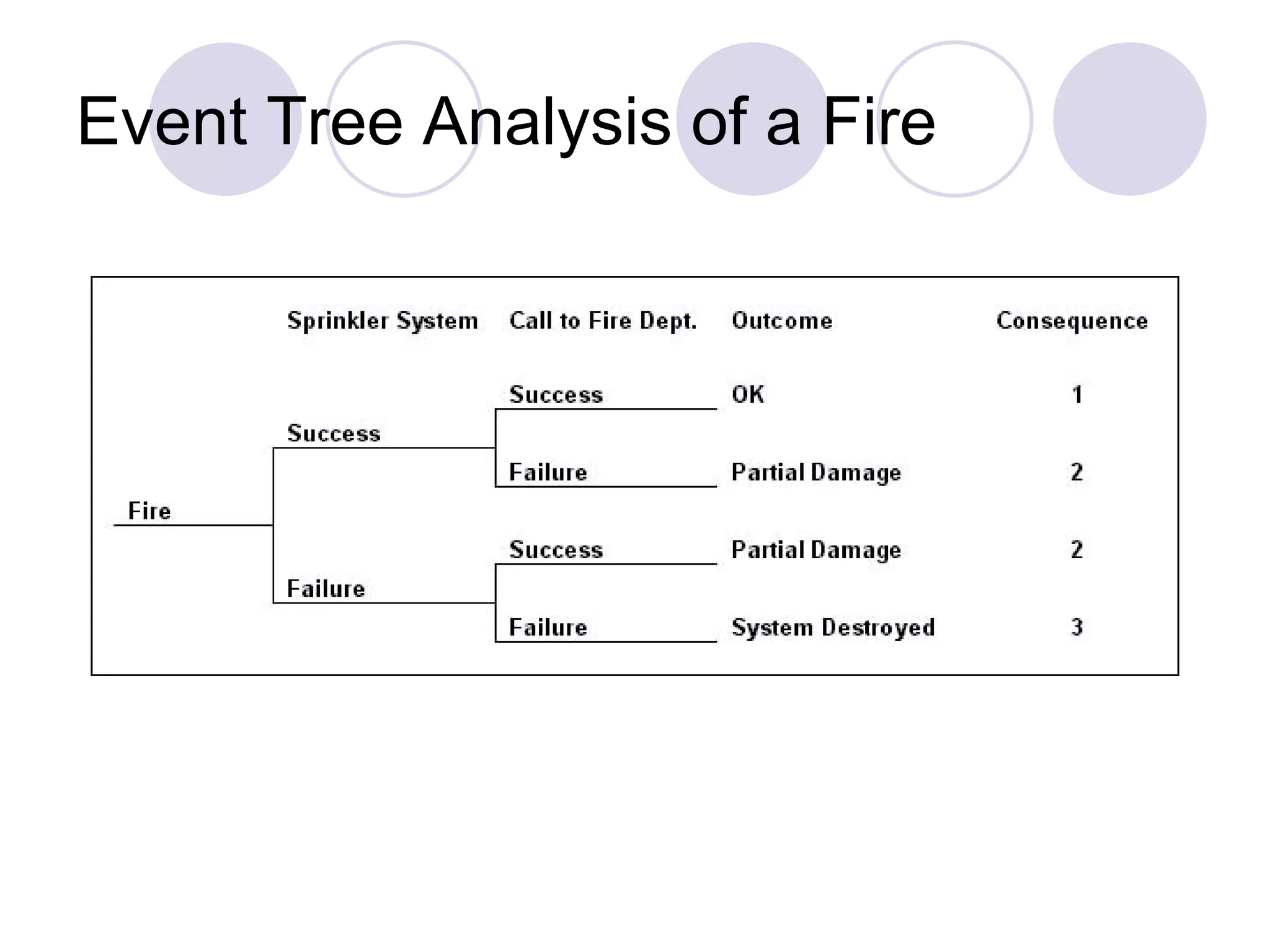
Event Tree A bottom up approach starting with an initiating event and looking at consequences. Can be quantified to give an estimate of the probability of each outcome.
Event Tree Analysis of a Fire
Fault Tree Start with a loss, or unwanted consequences as the “head event”  Can be quantified to estimate the probability of an unwanted head event from the known probabilities of failure causes. Are useful for analyzing possible sources of risk before loss occurs and for investigating failures and accidents.
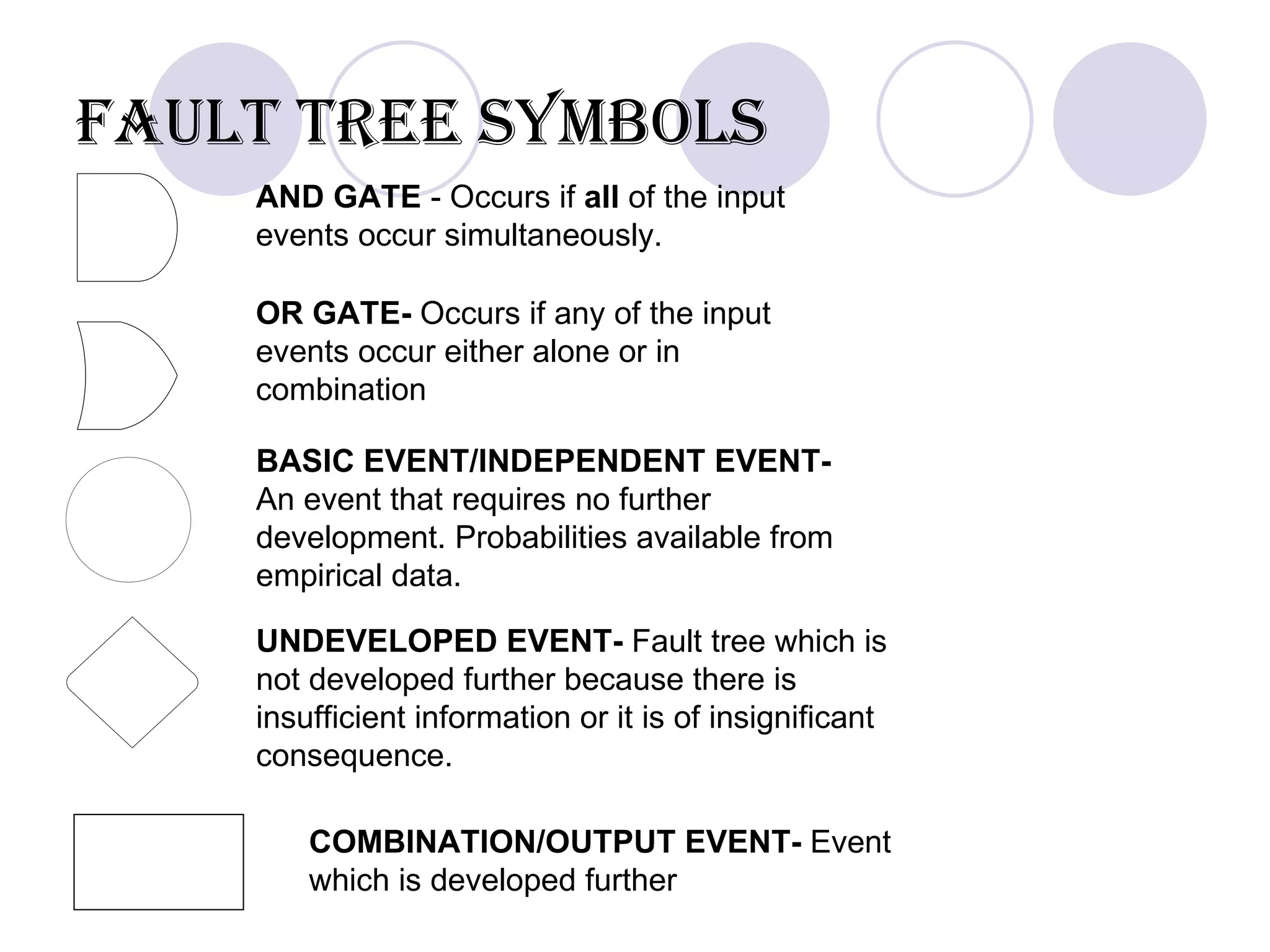
Fault Tree Symbols AND GATE  - Occurs if  all  of the input events occur simultaneously. OR GATE-  Occurs if any of the input events occur either alone or in combination BASIC EVENT/INDEPENDENT EVENT-  An event that requires no further development. Probabilities available from empirical data. UNDEVELOPED EVENT-  Fault tree which is not developed further because there is insufficient information or it is of insignificant consequence. COMBINATION/OUTPUT EVENT-  Event which is developed further
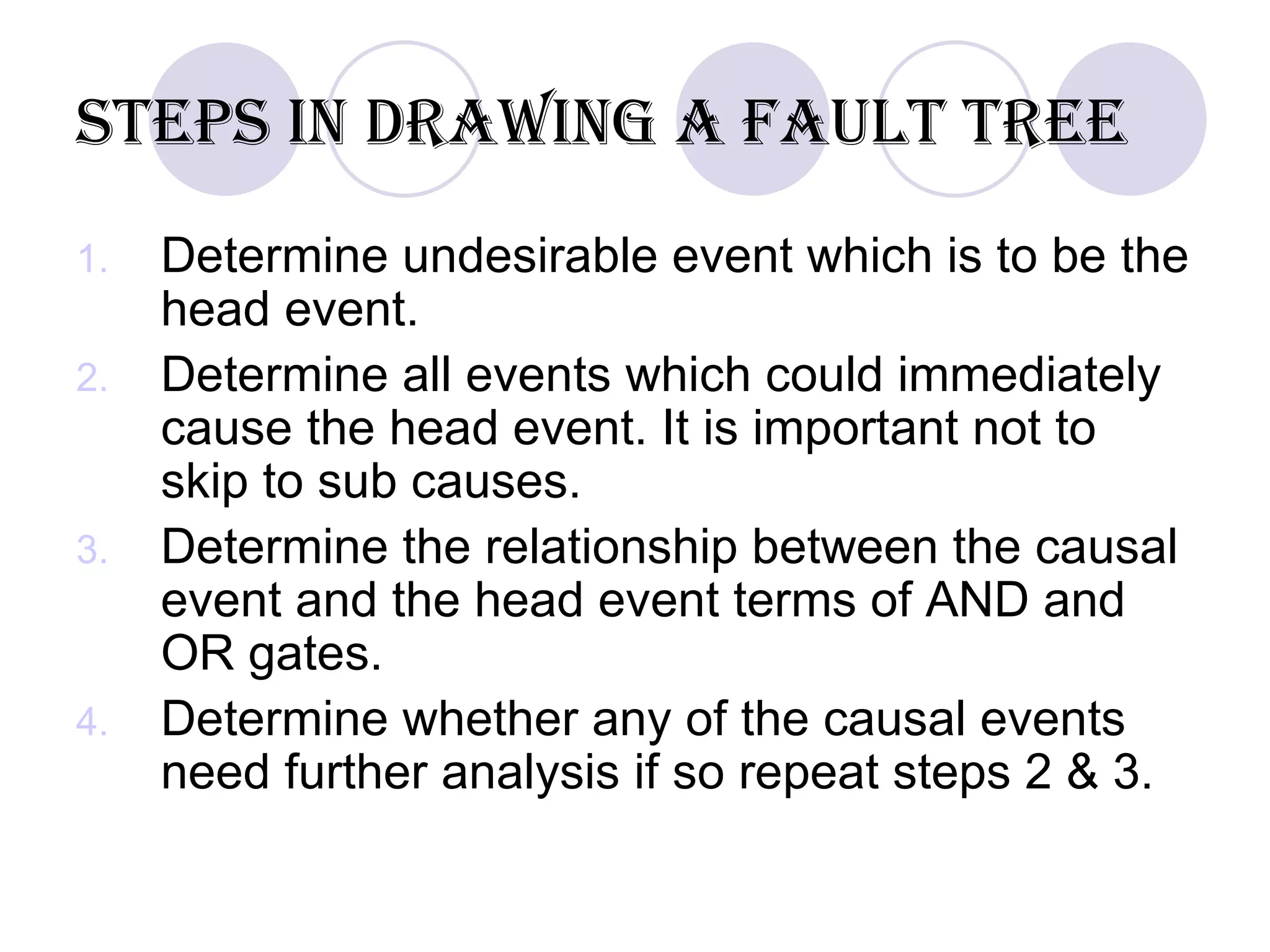
Steps in Drawing a Fault Tree Determine undesirable event which is to be the head event. Determine all events which could immediately cause the head event. It is important not to skip to sub causes. Determine the relationship between the causal event and the head event terms of AND and OR gates. Determine whether any of the causal events need further analysis if so repeat steps 2 & 3.
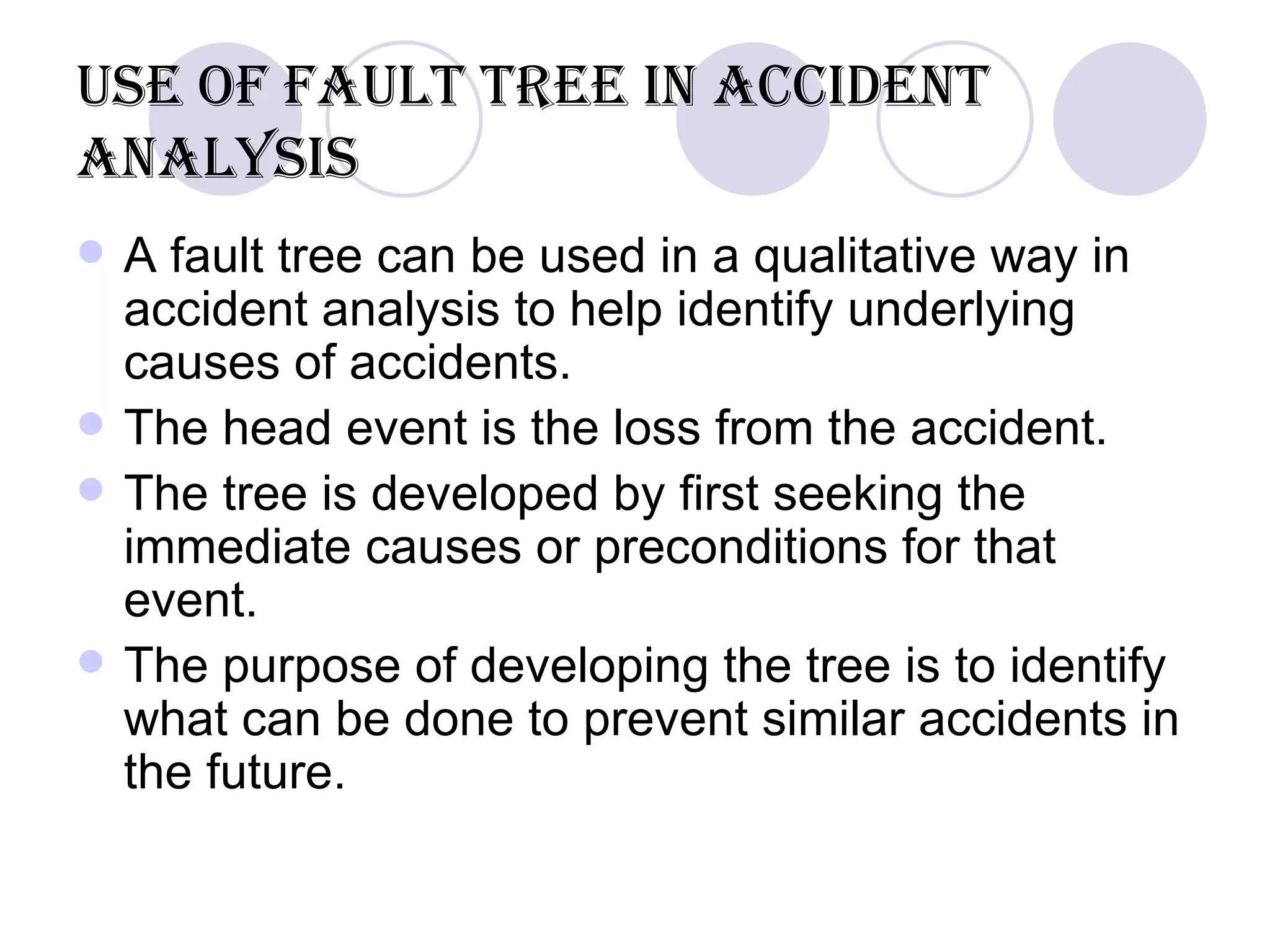
Use of Fault Tree in Accident Analysis A fault tree can be used in a qualitative way in accident analysis to help identify underlying causes of accidents. The head event is the loss from the accident. The tree is developed by first seeking the immediate causes or preconditions for that event. The purpose of developing the tree is to identify what can be done to prevent similar accidents in the future.
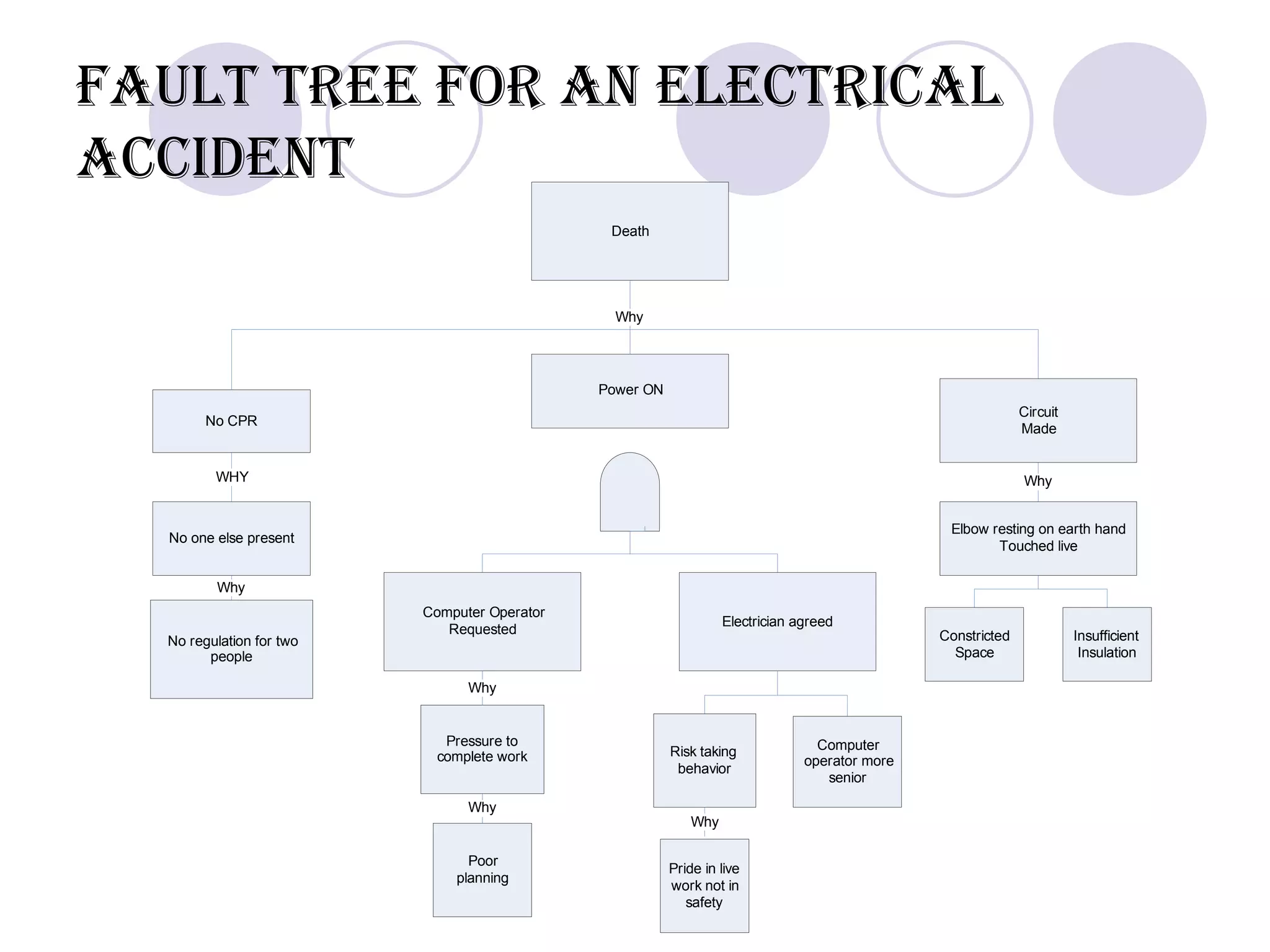
FAULT TREE FOR AN ELECTRICAL ACCIDENT
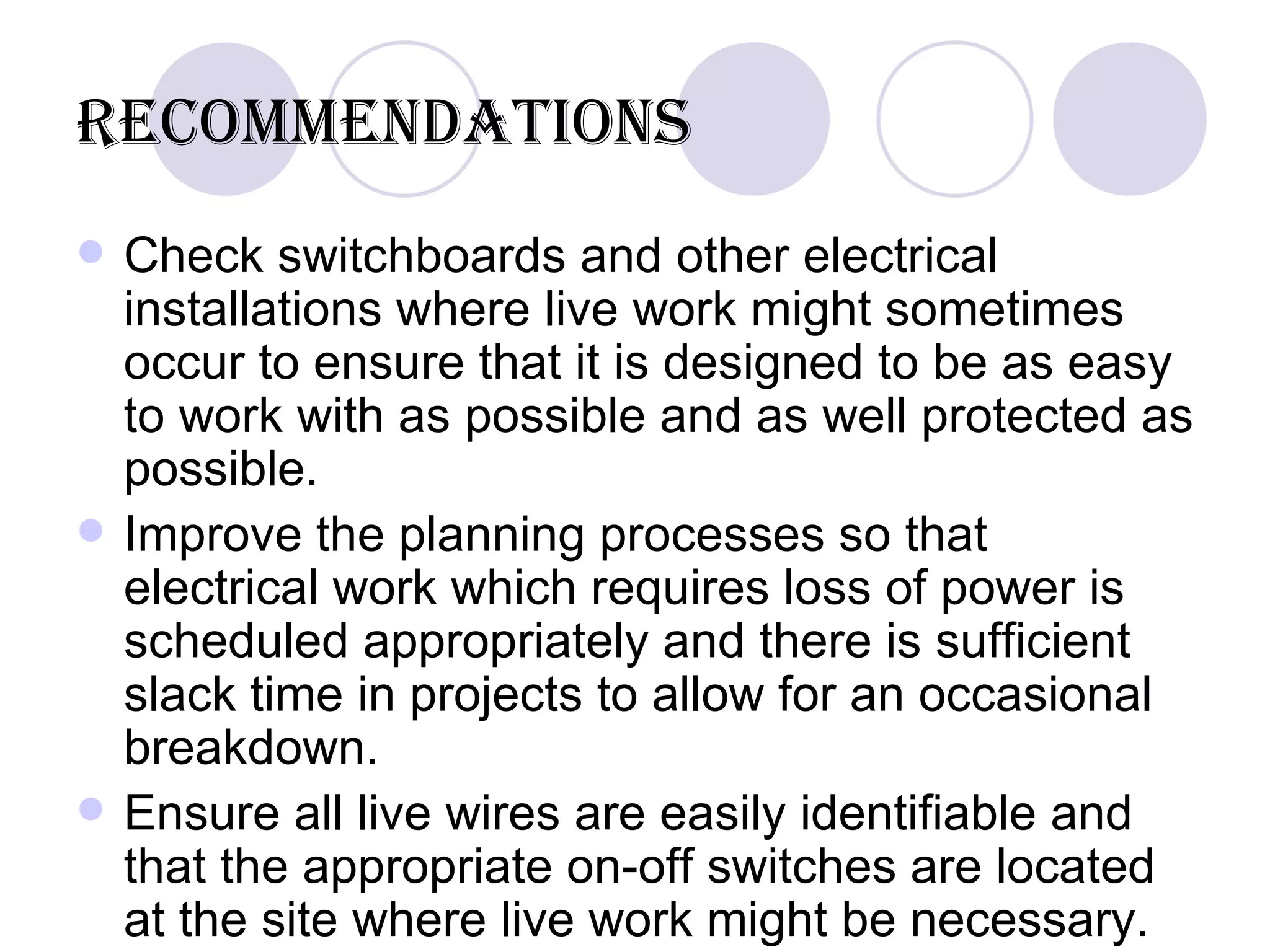
Recommendations Enforce a procedure that two people must always be present if it is that essential live work is carried out. Enforce a procedure that all live work must be approved by a senior person who takes responsibility for ensuring that it really is necessary.  Reinforce a pride in safe work in training of electricians.
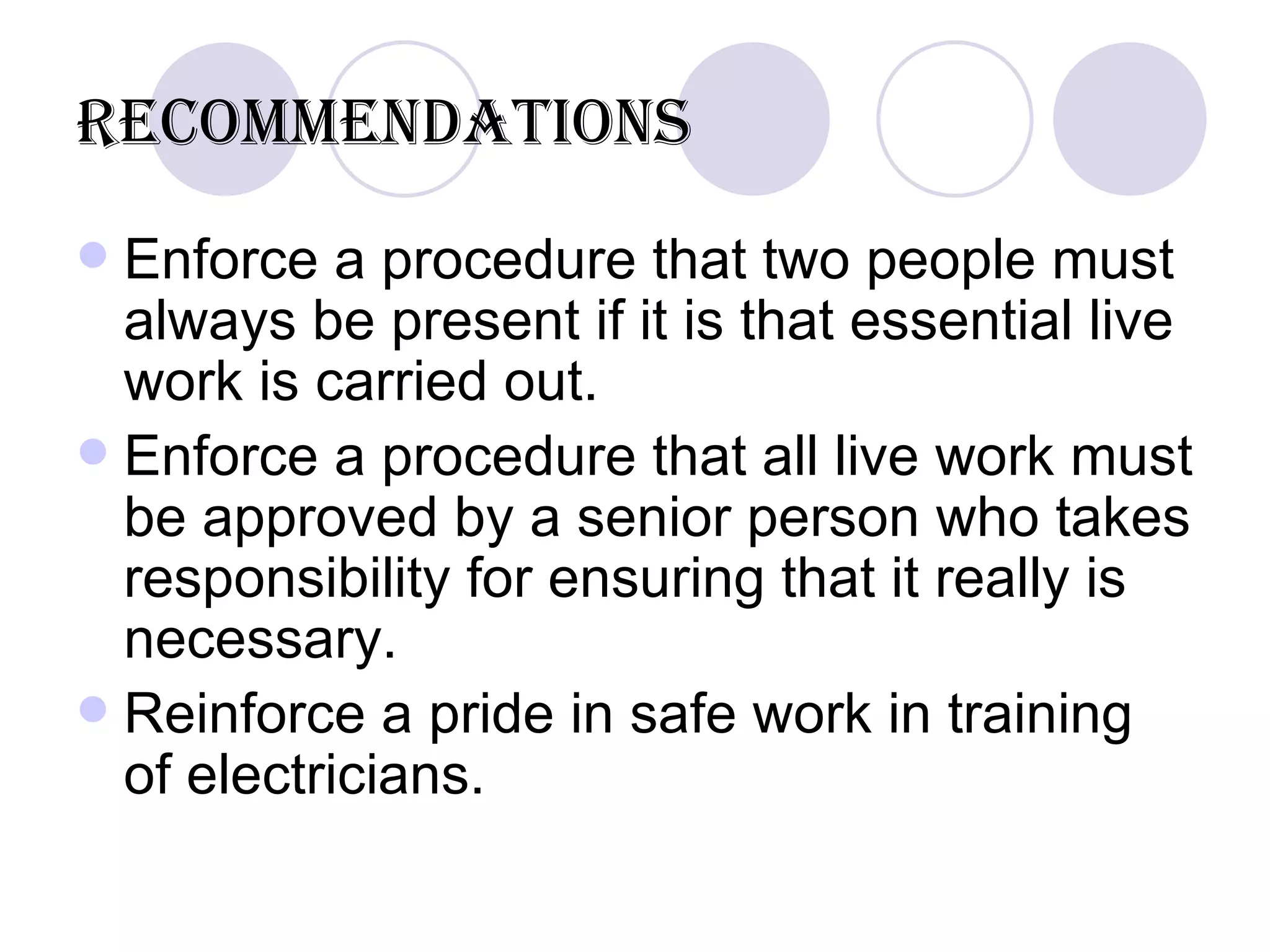
Recommendations Check switchboards and other electrical installations where live work might sometimes occur to ensure that it is designed to be as easy to work with as possible and as well protected as possible. Improve the planning processes so that electrical work which requires loss of power is scheduled appropriately and there is sufficient slack time in projects to allow for an occasional breakdown.  Ensure all live wires are easily identifiable and that the appropriate on-off switches are located at the site where live work might be necessary.
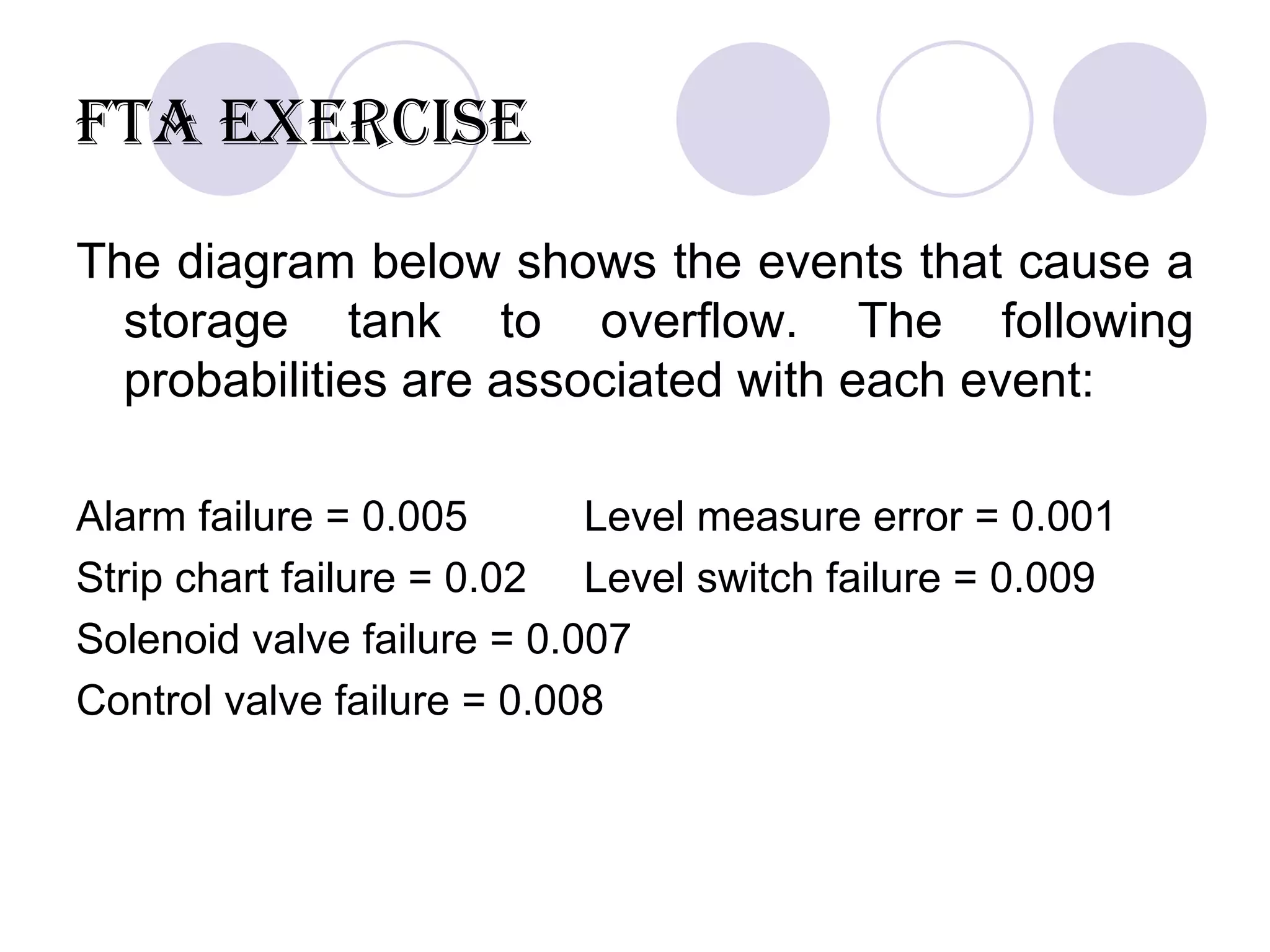
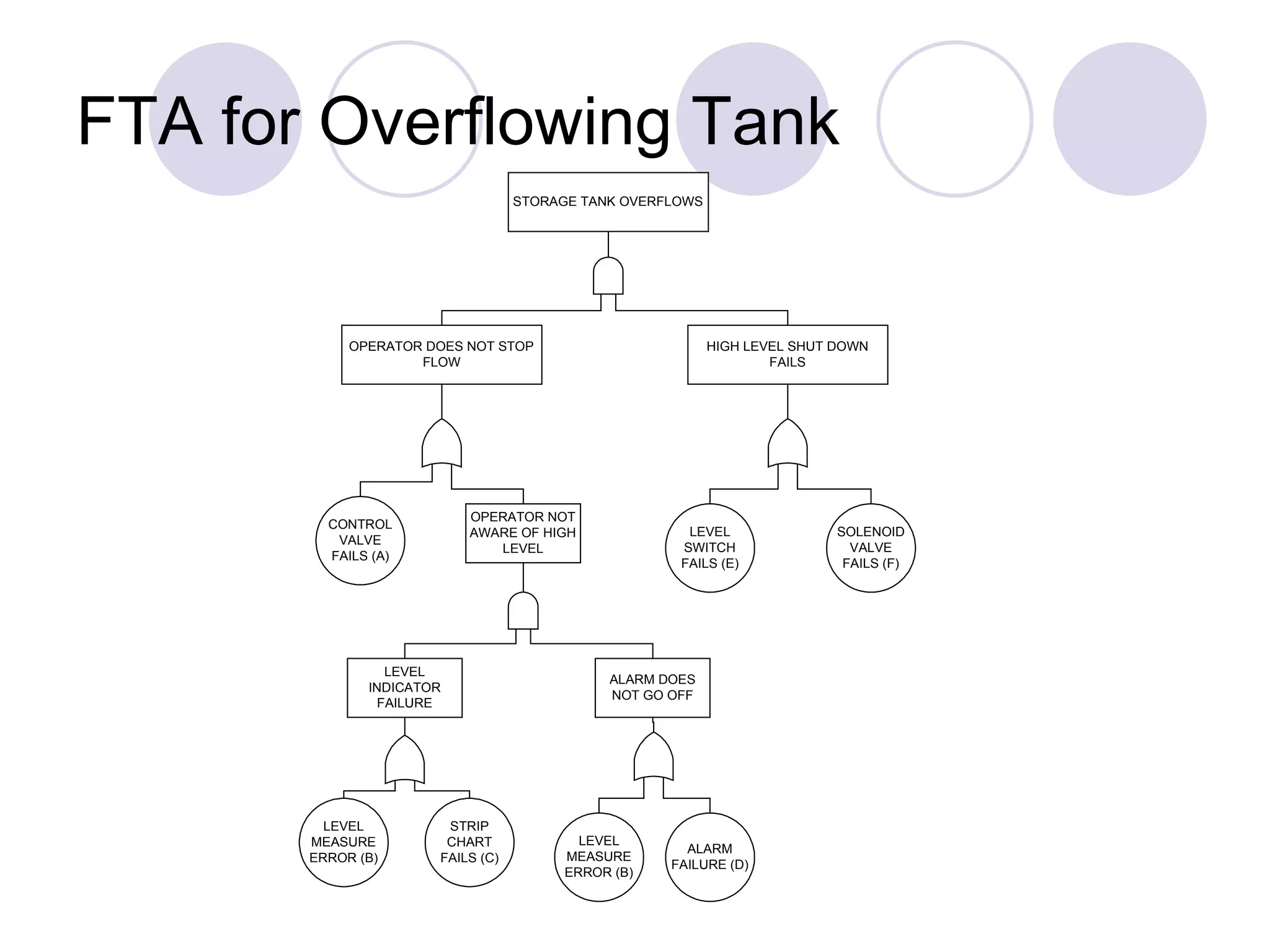
FTA Exercise The diagram below shows the events that cause a storage tank to overflow. The following probabilities are associated with each event:   Alarm failure = 0.005 Level measure error = 0.001 Strip chart failure = 0.02 Level switch failure = 0.009 Solenoid valve failure = 0.007 Control valve failure = 0.008
FTA for Overflowing Tank
Questions What is the probability of the head event? What are the cut sets? A cut set is any set of primary failures or undeveloped faults that in themselves give rise to the top event. Which cut set defines the most probable path to the head event?

Fault tree and event tree in risk analysis

  • 1.
    FAULT TREE ANDEVENT TREE IN RISK ANALYSIS Alma Maria Jennifer Gutierrez De La Salle University
  • 2.
    Event Tree Abottom up approach starting with an initiating event and looking at consequences. Can be quantified to give an estimate of the probability of each outcome.
  • 3.
  • 4.
    Fault Tree Startwith a loss, or unwanted consequences as the “head event” Can be quantified to estimate the probability of an unwanted head event from the known probabilities of failure causes. Are useful for analyzing possible sources of risk before loss occurs and for investigating failures and accidents.
  • 5.
    Fault Tree SymbolsAND GATE - Occurs if all of the input events occur simultaneously. OR GATE- Occurs if any of the input events occur either alone or in combination BASIC EVENT/INDEPENDENT EVENT- An event that requires no further development. Probabilities available from empirical data. UNDEVELOPED EVENT- Fault tree which is not developed further because there is insufficient information or it is of insignificant consequence. COMBINATION/OUTPUT EVENT- Event which is developed further
  • 6.
    Steps in Drawinga Fault Tree Determine undesirable event which is to be the head event. Determine all events which could immediately cause the head event. It is important not to skip to sub causes. Determine the relationship between the causal event and the head event terms of AND and OR gates. Determine whether any of the causal events need further analysis if so repeat steps 2 & 3.
  • 7.
    Use of FaultTree in Accident Analysis A fault tree can be used in a qualitative way in accident analysis to help identify underlying causes of accidents. The head event is the loss from the accident. The tree is developed by first seeking the immediate causes or preconditions for that event. The purpose of developing the tree is to identify what can be done to prevent similar accidents in the future.
  • 8.
    FAULT TREE FORAN ELECTRICAL ACCIDENT
  • 9.
    Recommendations Enforce aprocedure that two people must always be present if it is that essential live work is carried out. Enforce a procedure that all live work must be approved by a senior person who takes responsibility for ensuring that it really is necessary. Reinforce a pride in safe work in training of electricians.
  • 10.
    Recommendations Check switchboardsand other electrical installations where live work might sometimes occur to ensure that it is designed to be as easy to work with as possible and as well protected as possible. Improve the planning processes so that electrical work which requires loss of power is scheduled appropriately and there is sufficient slack time in projects to allow for an occasional breakdown. Ensure all live wires are easily identifiable and that the appropriate on-off switches are located at the site where live work might be necessary.
  • 11.
    FTA Exercise Thediagram below shows the events that cause a storage tank to overflow. The following probabilities are associated with each event:   Alarm failure = 0.005 Level measure error = 0.001 Strip chart failure = 0.02 Level switch failure = 0.009 Solenoid valve failure = 0.007 Control valve failure = 0.008
  • 12.
  • 13.
    Questions What isthe probability of the head event? What are the cut sets? A cut set is any set of primary failures or undeveloped faults that in themselves give rise to the top event. Which cut set defines the most probable path to the head event?