
Determinants of Supply
AS Economics
Key Issues
• The meaning of supply
• The law of supply
• The supply curve
• Incentives to produce – explaining the supply
curve
• The conditions of supply – shifts in the supply
curve
• Joint supply
The Law of Supply
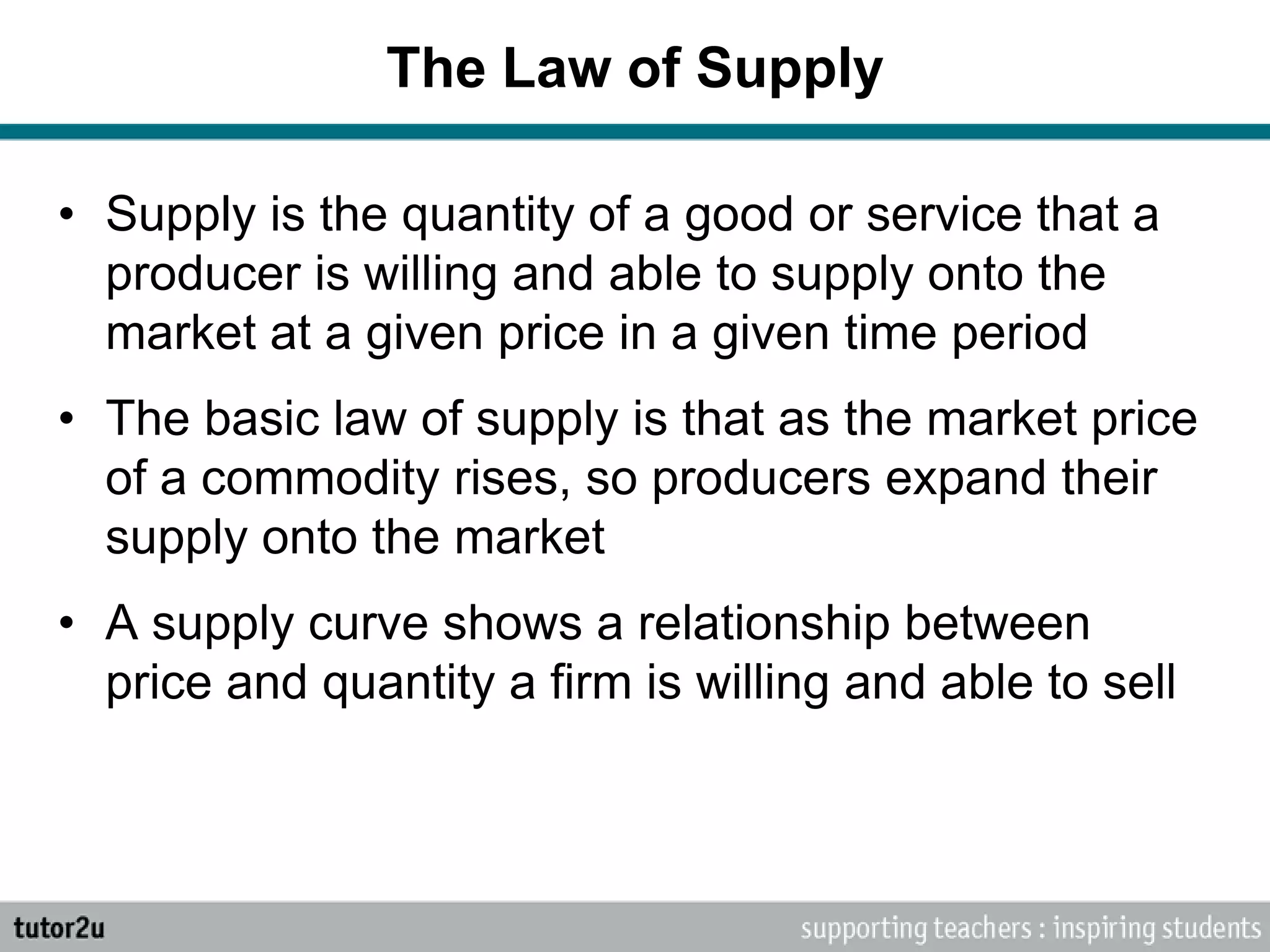
• Supply is the quantity of a good or service that a
producer is willing and able to supply onto the
market at a given price in a given time period
• The basic law of supply is that as the market price
of a commodity rises, so producers expand their
supply onto the market
• A supply curve shows a relationship between
price and quantity a firm is willing and able to sell
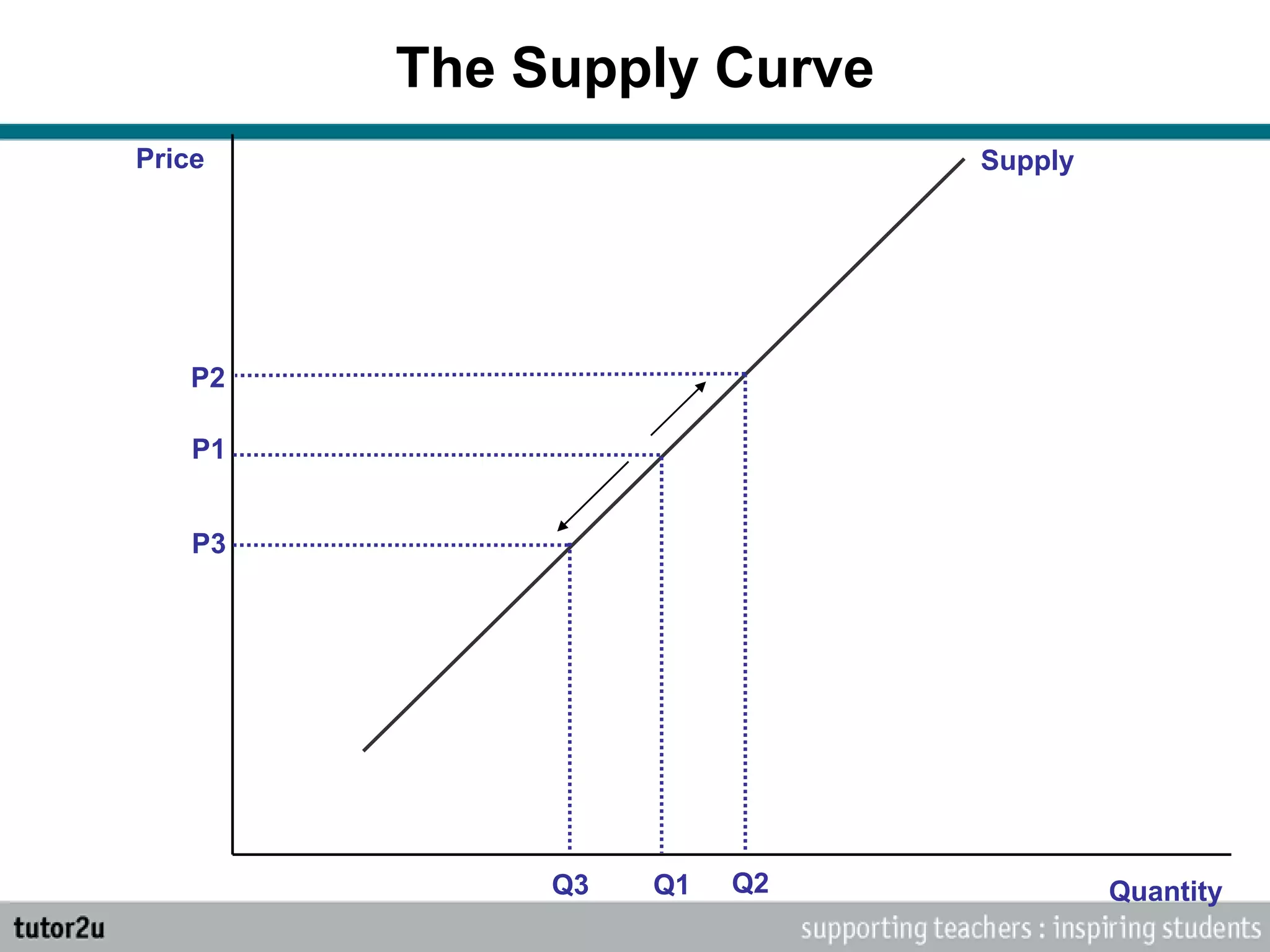
The Supply Curve
Price
Quantity
Supply
P1
Q1
P2
Q2Q3
P3
Explaining the supply decision
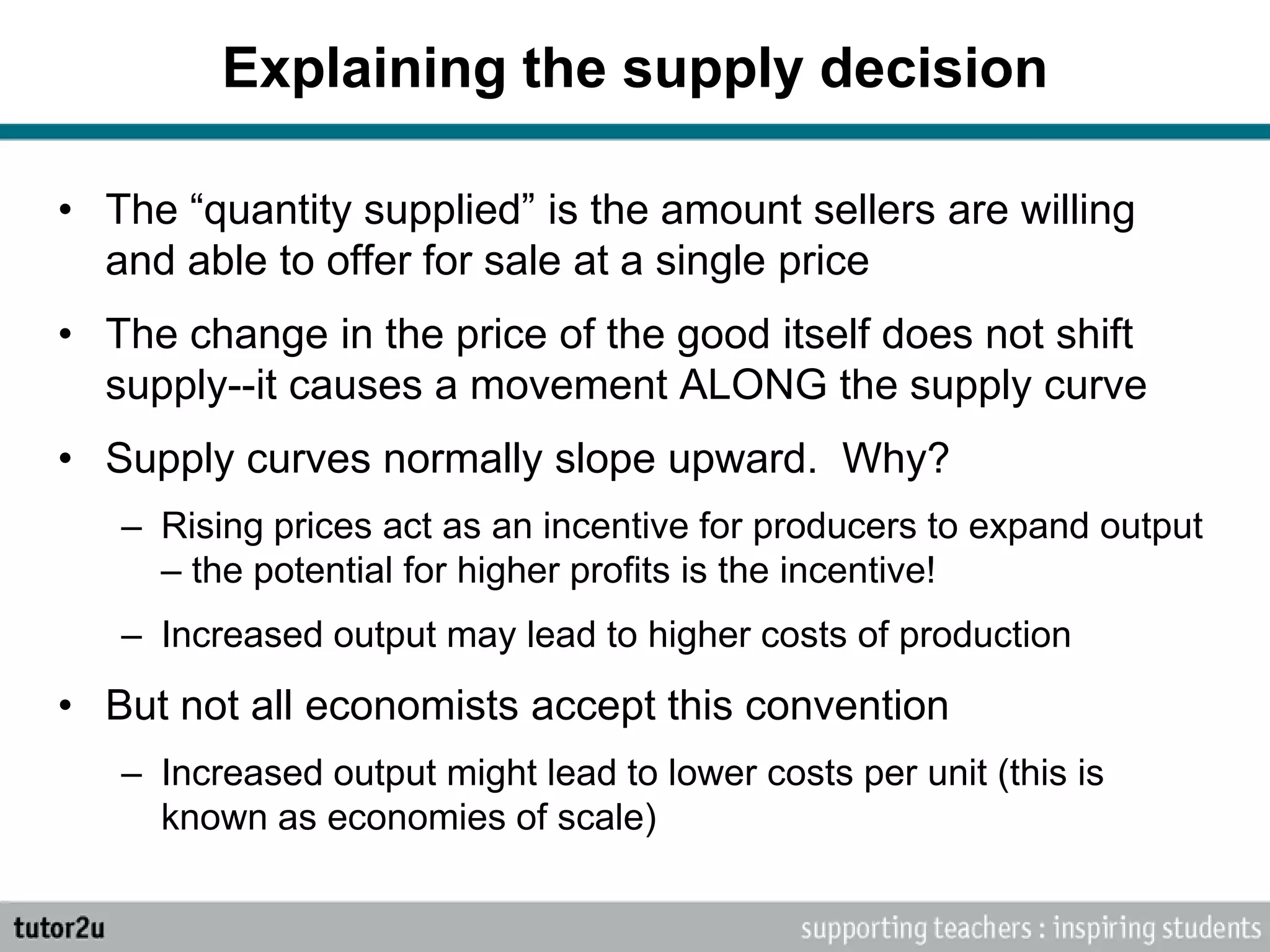
• The “quantity supplied” is the amount sellers are willing
and able to offer for sale at a single price
• The change in the price of the good itself does not shift
supply--it causes a movement ALONG the supply curve
• Supply curves normally slope upward. Why?
– Rising prices act as an incentive for producers to expand output
– the potential for higher profits is the incentive!
– Increased output may lead to higher costs of production
• But not all economists accept this convention
– Increased output might lead to lower costs per unit (this is
known as economies of scale)
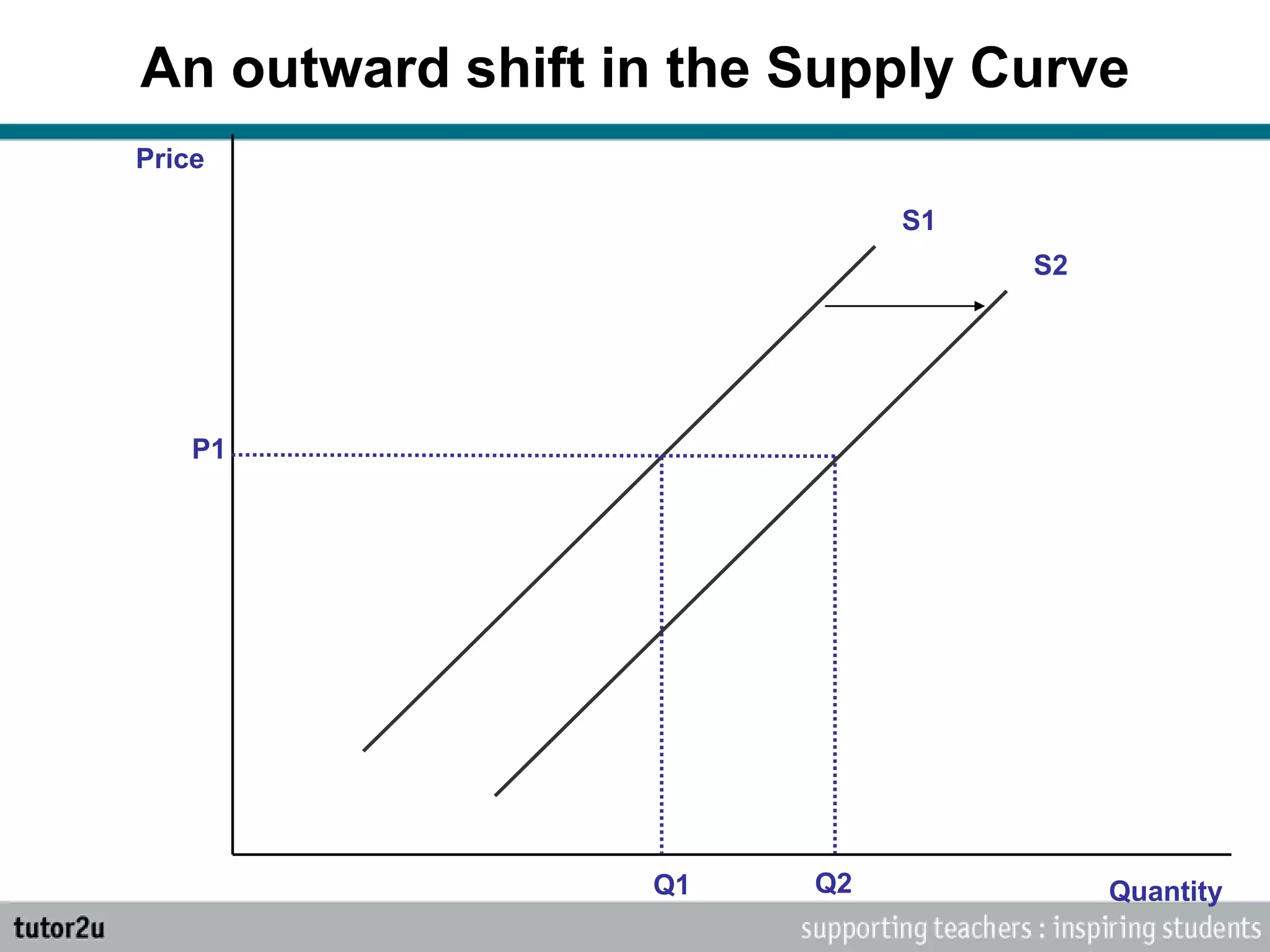
An outward shift in the Supply Curve
Price
Quantity
S1
P1
Q1 Q2
S2
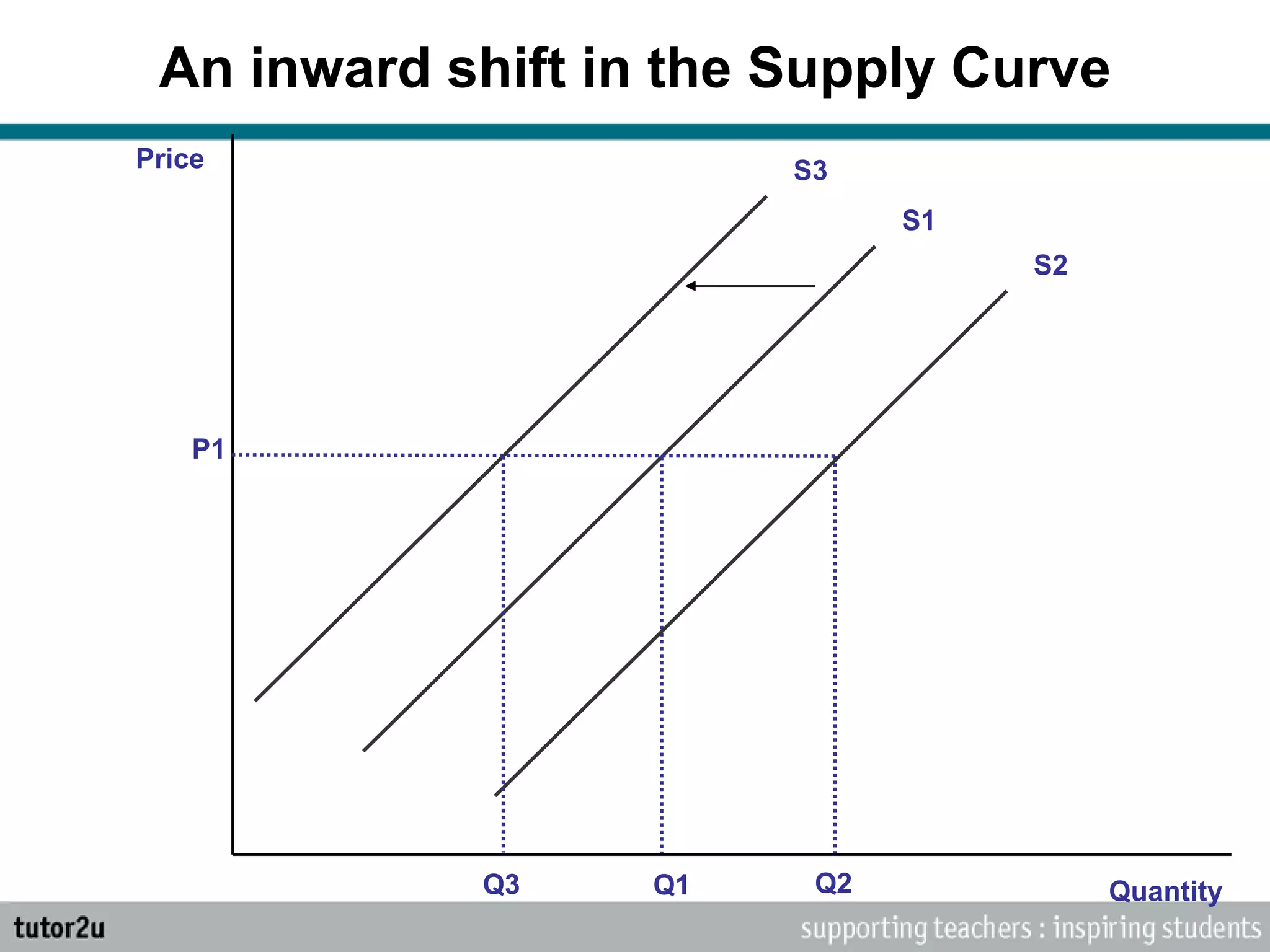
An inward shift in the Supply Curve
Price
Quantity
S1
P1
Q1 Q2
S2
S3
Q3
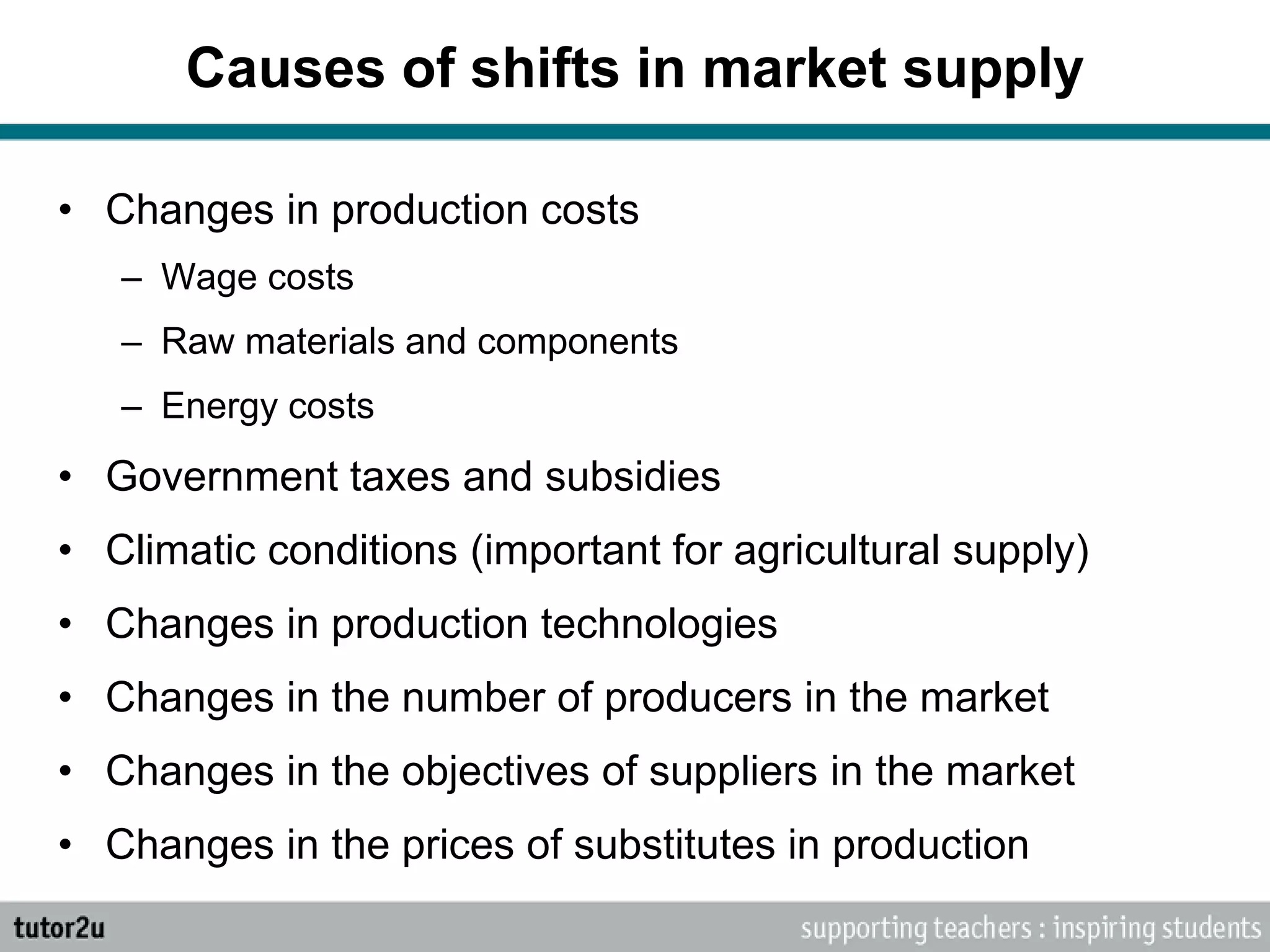
Causes of shifts in market supply
• Changes in production costs
– Wage costs
– Raw materials and components
– Energy costs
• Government taxes and subsidies
• Climatic conditions (important for agricultural supply)
• Changes in production technologies
• Changes in the number of producers in the market
• Changes in the objectives of suppliers in the market
• Changes in the prices of substitutes in production
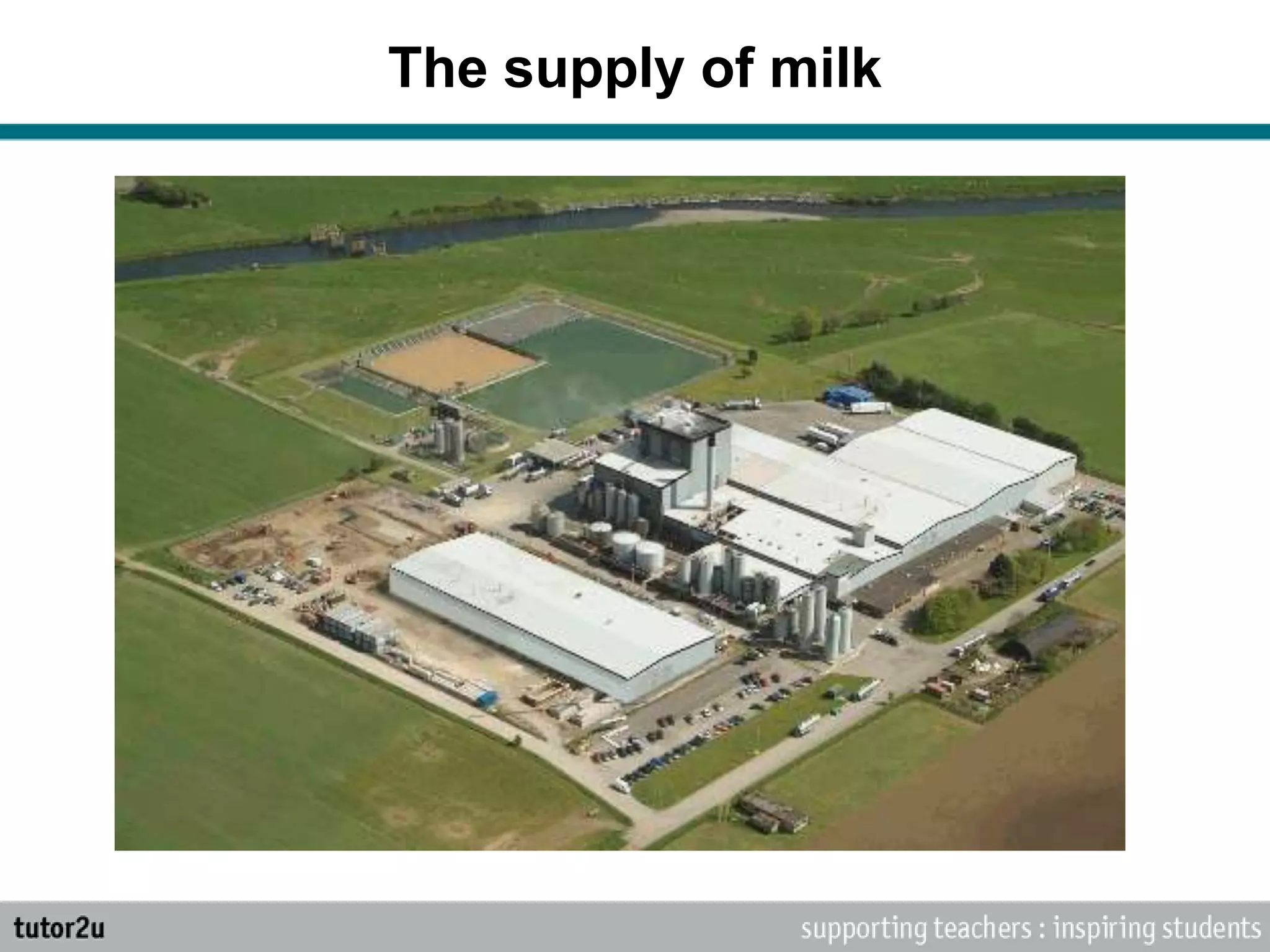
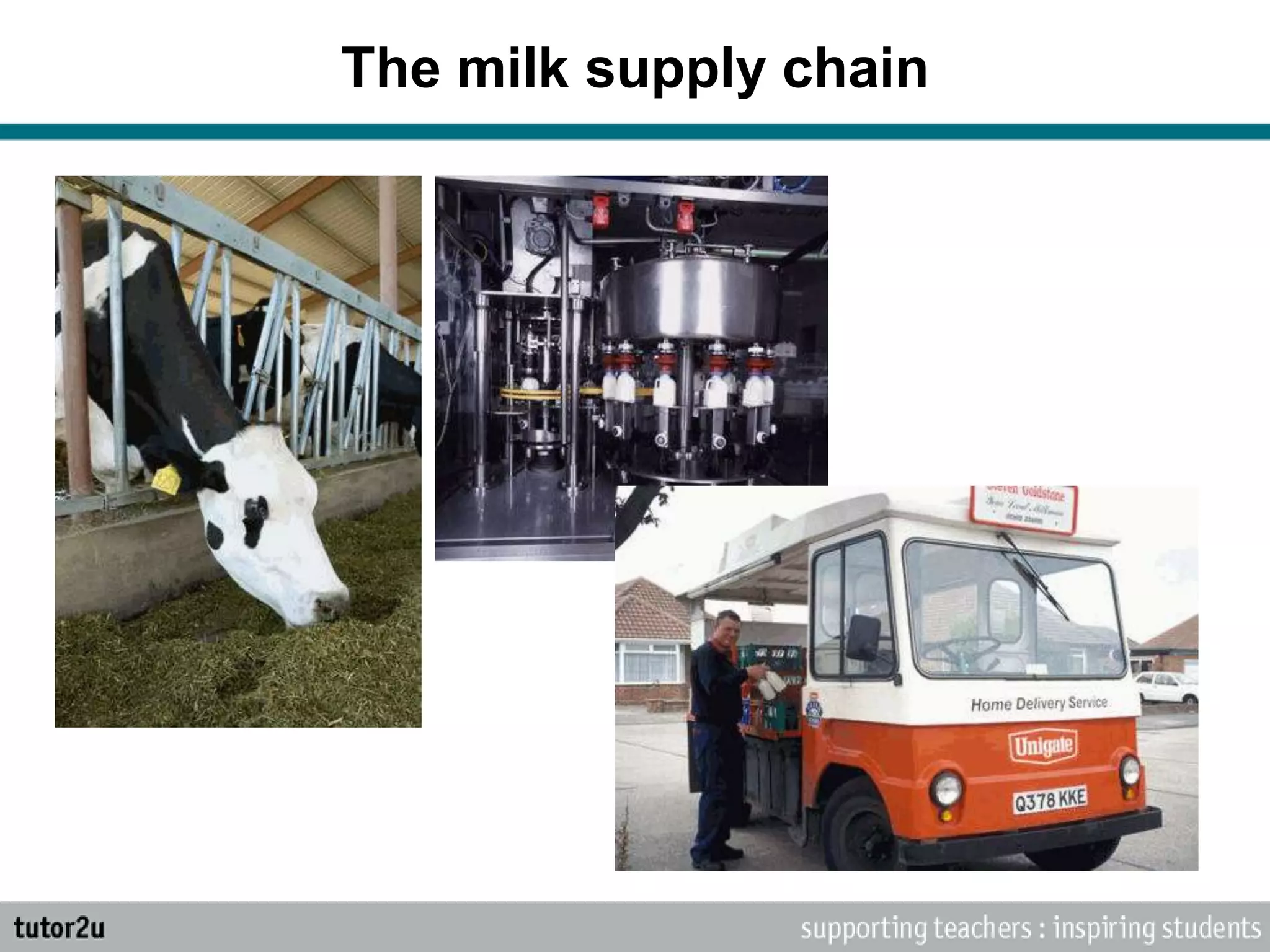
The supply of milk
The milk supply chain
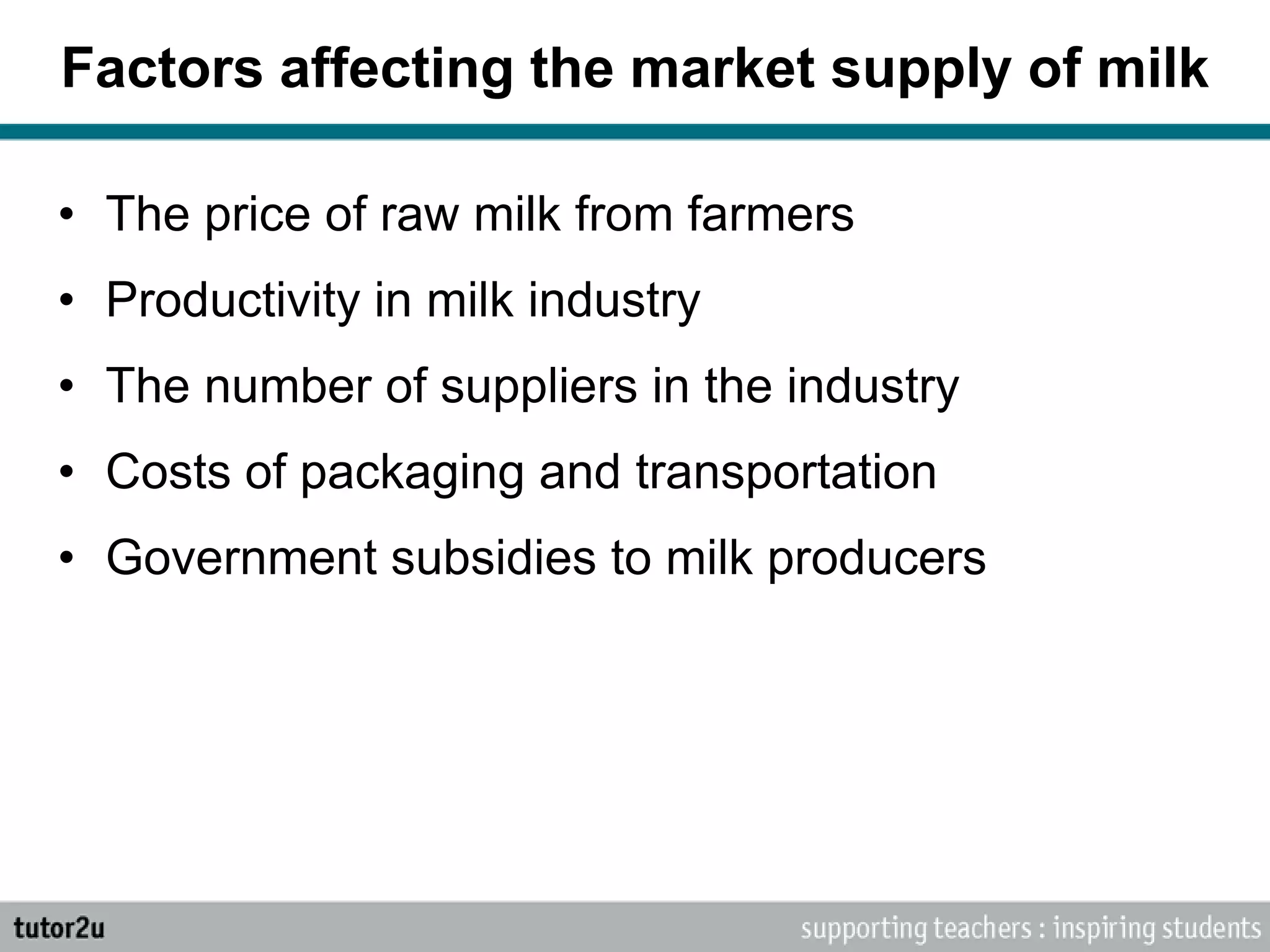
Factors affecting the market supply of milk
• The price of raw milk from farmers
• Productivity in milk industry
• The number of suppliers in the industry
• Costs of packaging and transportation
• Government subsidies to milk producers
Joint Supply
• Two products are in joint supply when a rise in the
output of one product leads to a rise in the supply
of the other product
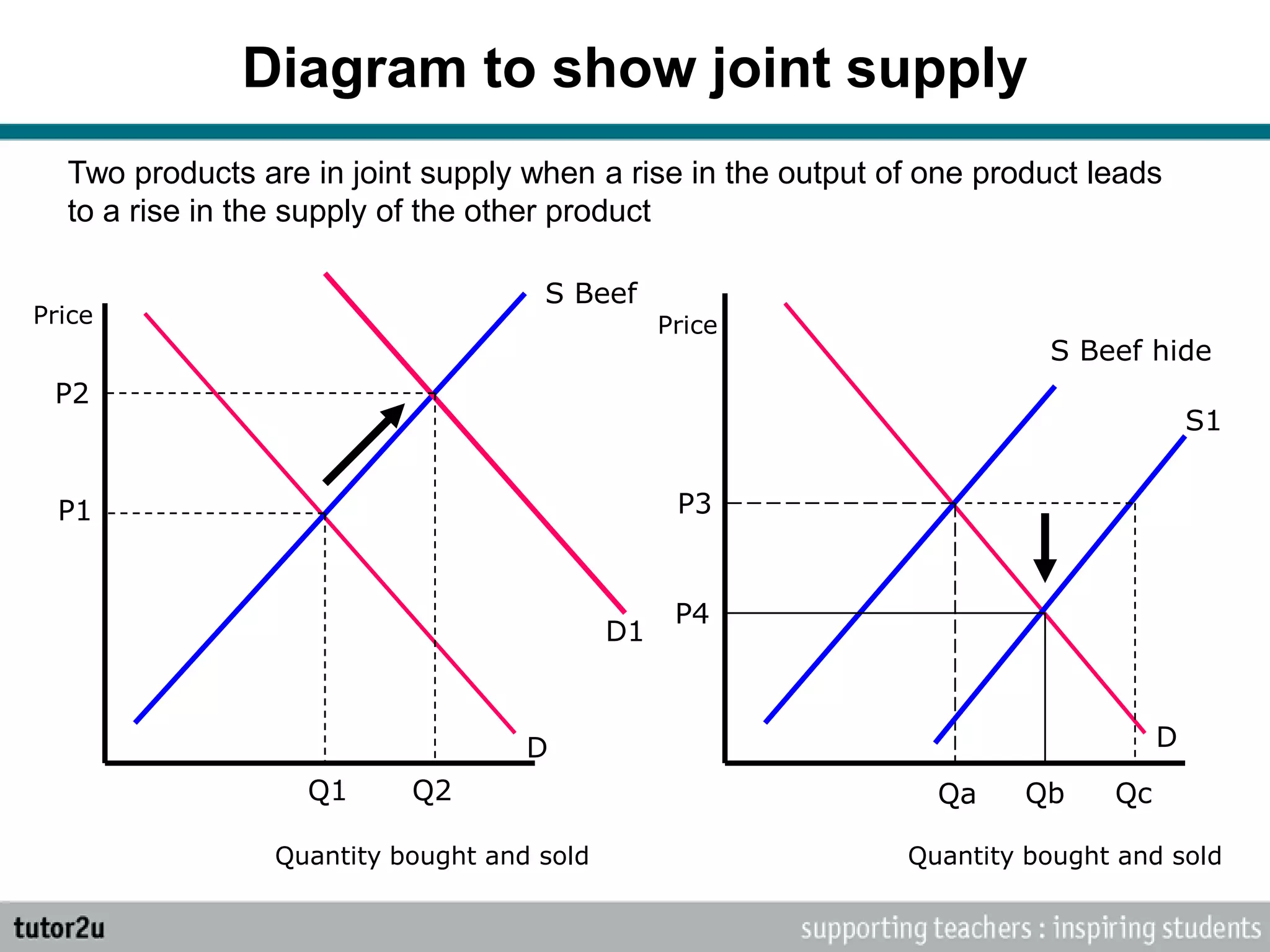
Diagram to show joint supply
Price Price
Quantity bought and sold Quantity bought and sold
D
S Beef
P1
Q1
D
S Beef hide
D1
P2
P3
Qa
S1
Qc
P4
QbQ2
Two products are in joint supply when a rise in the output of one product leads
to a rise in the supply of the other product
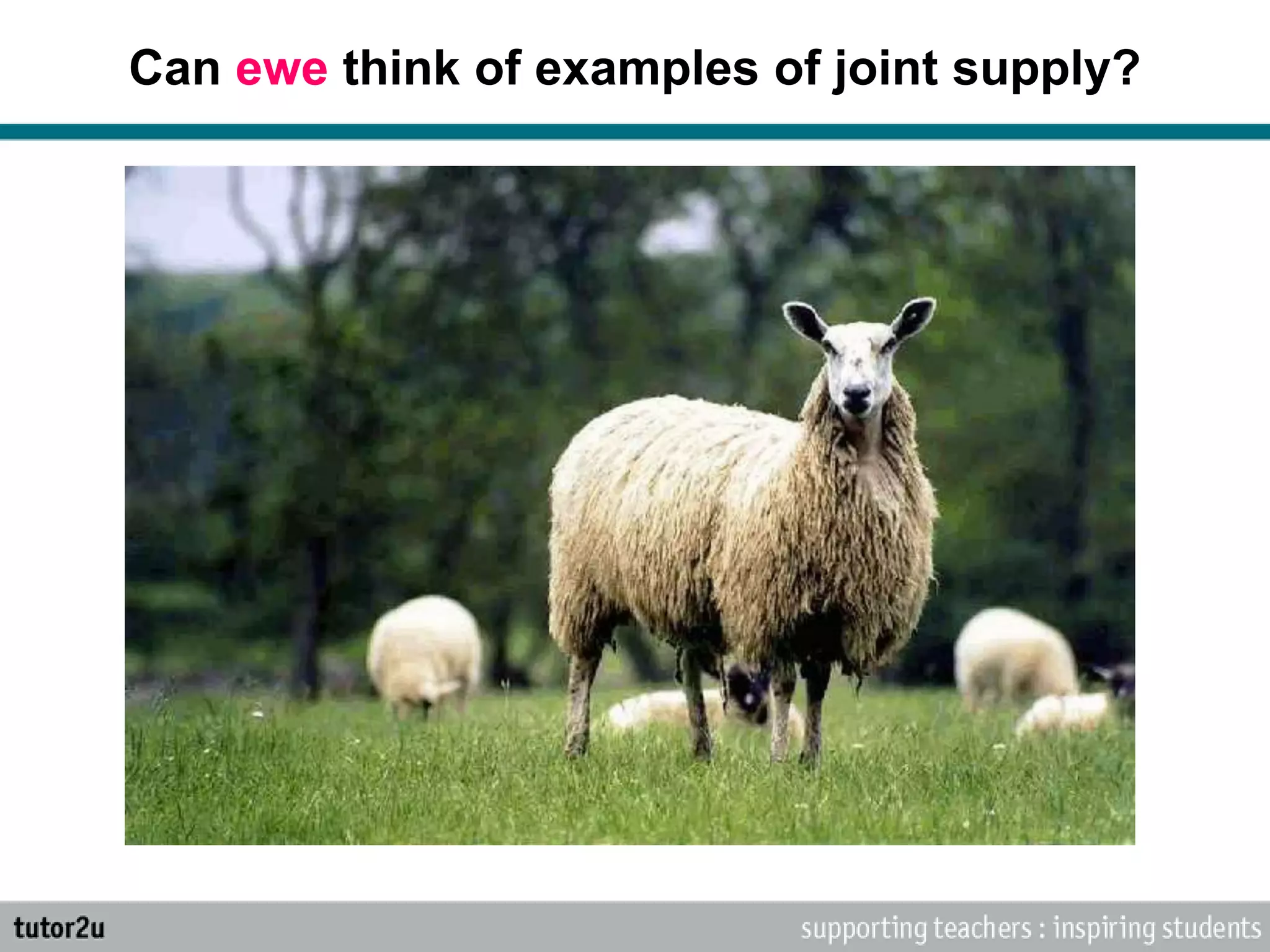
Can ewe think of examples of joint supply?
Get help from fellow
students, teachers and
tutor2u on Twitter:
#econ1
@tutor2u_econ

AS Micro: Determinants of Supply

  • 1.
  • 2.
    Key Issues • Themeaning of supply • The law of supply • The supply curve • Incentives to produce – explaining the supply curve • The conditions of supply – shifts in the supply curve • Joint supply
  • 3.
    The Law ofSupply • Supply is the quantity of a good or service that a producer is willing and able to supply onto the market at a given price in a given time period • The basic law of supply is that as the market price of a commodity rises, so producers expand their supply onto the market • A supply curve shows a relationship between price and quantity a firm is willing and able to sell
  • 4.
  • 5.
    Explaining the supplydecision • The “quantity supplied” is the amount sellers are willing and able to offer for sale at a single price • The change in the price of the good itself does not shift supply--it causes a movement ALONG the supply curve • Supply curves normally slope upward. Why? – Rising prices act as an incentive for producers to expand output – the potential for higher profits is the incentive! – Increased output may lead to higher costs of production • But not all economists accept this convention – Increased output might lead to lower costs per unit (this is known as economies of scale)
  • 6.
    An outward shiftin the Supply Curve Price Quantity S1 P1 Q1 Q2 S2
  • 7.
    An inward shiftin the Supply Curve Price Quantity S1 P1 Q1 Q2 S2 S3 Q3
  • 8.
    Causes of shiftsin market supply • Changes in production costs – Wage costs – Raw materials and components – Energy costs • Government taxes and subsidies • Climatic conditions (important for agricultural supply) • Changes in production technologies • Changes in the number of producers in the market • Changes in the objectives of suppliers in the market • Changes in the prices of substitutes in production
  • 9.
  • 10.
  • 11.
    Factors affecting themarket supply of milk • The price of raw milk from farmers • Productivity in milk industry • The number of suppliers in the industry • Costs of packaging and transportation • Government subsidies to milk producers
  • 12.
    Joint Supply • Twoproducts are in joint supply when a rise in the output of one product leads to a rise in the supply of the other product
  • 13.
    Diagram to showjoint supply Price Price Quantity bought and sold Quantity bought and sold D S Beef P1 Q1 D S Beef hide D1 P2 P3 Qa S1 Qc P4 QbQ2 Two products are in joint supply when a rise in the output of one product leads to a rise in the supply of the other product
  • 14.
    Can ewe thinkof examples of joint supply?
  • 15.
    Get help fromfellow students, teachers and tutor2u on Twitter: #econ1 @tutor2u_econ