Chapter  3 Understanding Regulations, Accreditation Criteria, and  Other Standards of Practice
Licensing Regulations provide the baseline for acceptable care of children and are meant to be minimum standards below which no program should operate.
Definitions Regulation : A binding rule created outside the program. Standard : A statement of expectations for program characteristics and performance.
Types of Regulations Zoning regulations  govern land use. Building codes  address issues such as wiring, plumbing, building materials. Fire and sanitation regulations  set health and safety standards. Child care licensing regulations  address many aspects of programs’ operations.
Why? Should achieve their primary purpose of ensuring adequate, safe care of children.  Also benefits those who provide care as well as the children they serve.  A license carries with it an official recognition of the importance of the job
Who? Not all programs are covered by licensing Exempted programs usually include programs such as church sponsored, recreation programs, etc. Family members being cared for in the home do not have to be licensed Licensing alone does not guarantee quality
States’ child care center licensing codes typically address: The process of obtaining a license The program’s organization and administration Staffing patterns including ratios and group size Required characteristics of facilities and provisions for transporting children
States’ child care center licensing   codes typically address:  (continued) Practices to safeguard children’s health and safety Required activities and equipment Allowable forms of discipline How programs are to communicate with and involve families  Nutrition and food services
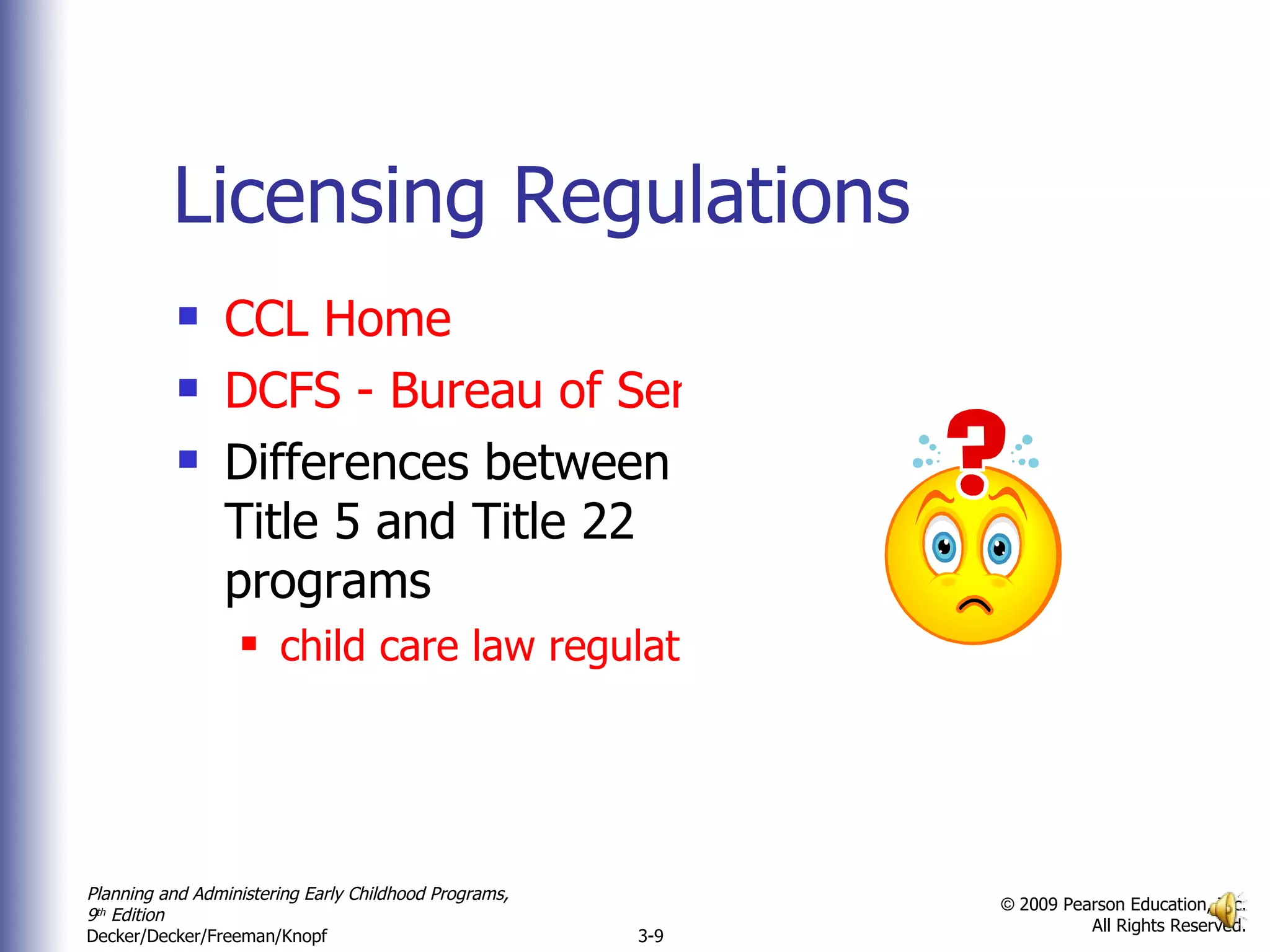
Licensing Regulations CCL Home DCFS - Bureau of Services for Child Care Nevada Differences between Title 5 and Title 22 programs child care law regulations
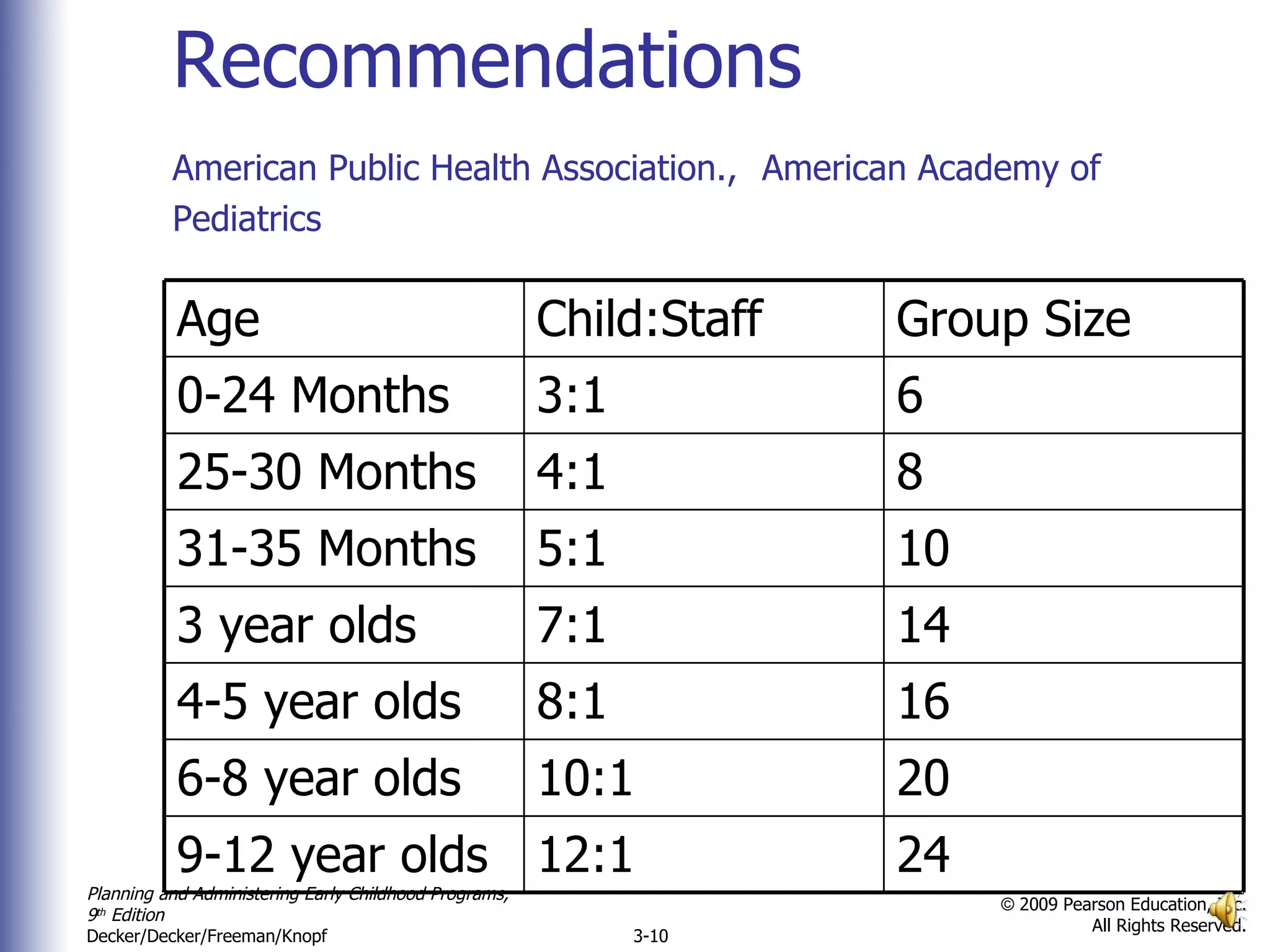
Recommendations American Public Health Association.,   American Academy of Pediatrics Age Child:Staff Group Size 0-24 Months 3:1 6 25-30 Months 4:1 8 31-35 Months 5:1 10 3 year olds 7:1 14 4-5 year olds 8:1 16 6-8 year olds 10:1 20 9-12 year olds 12:1 24
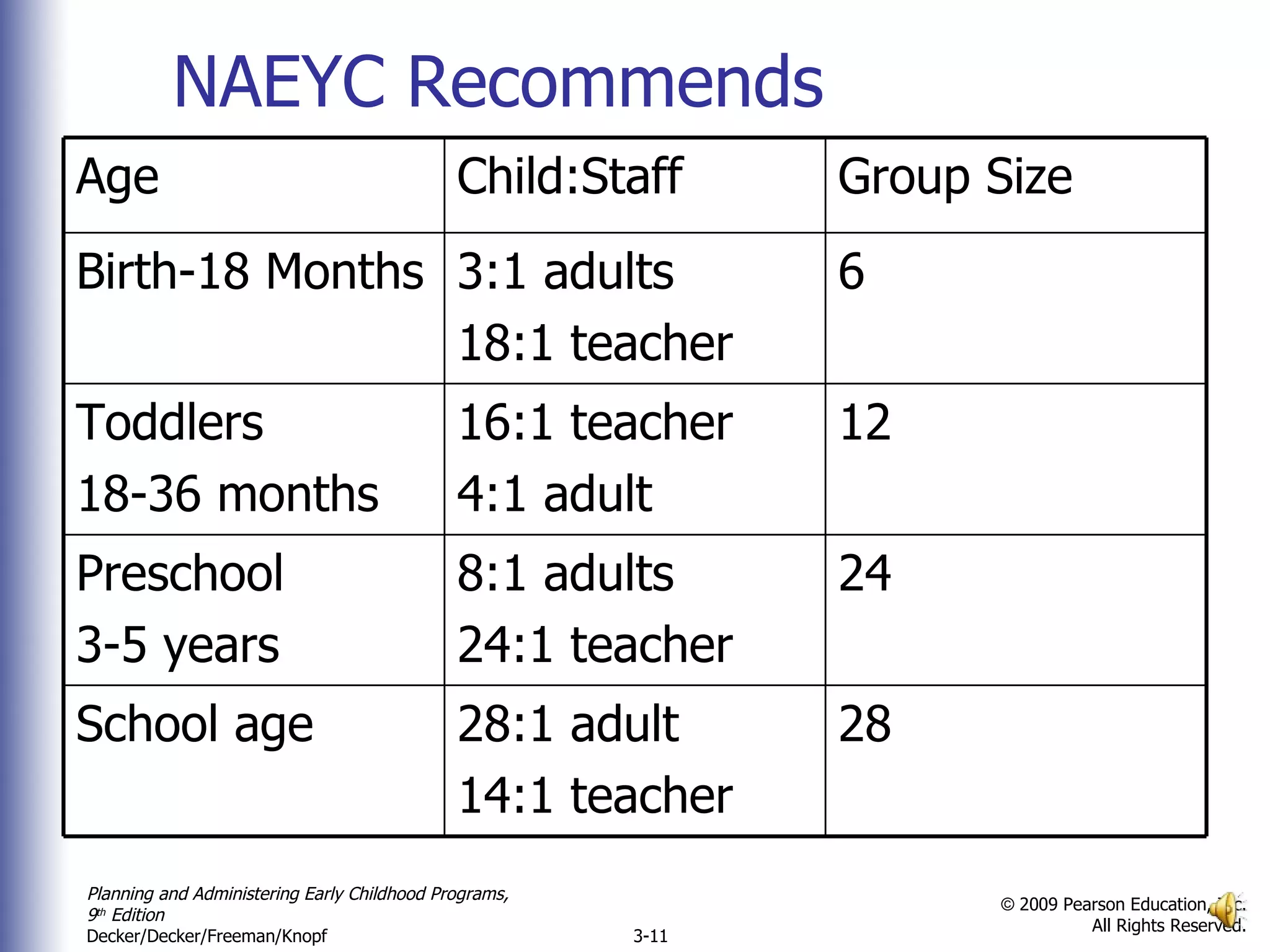
NAEYC Recommends Age Child:Staff Group Size Birth-18 Months 3:1 adults 18:1 teacher 6 Toddlers 18-36 months 16:1 teacher 4:1 adult 12 Preschool 3-5 years 8:1 adults 24:1 teacher 24 School age 28:1 adult 14:1 teacher 28
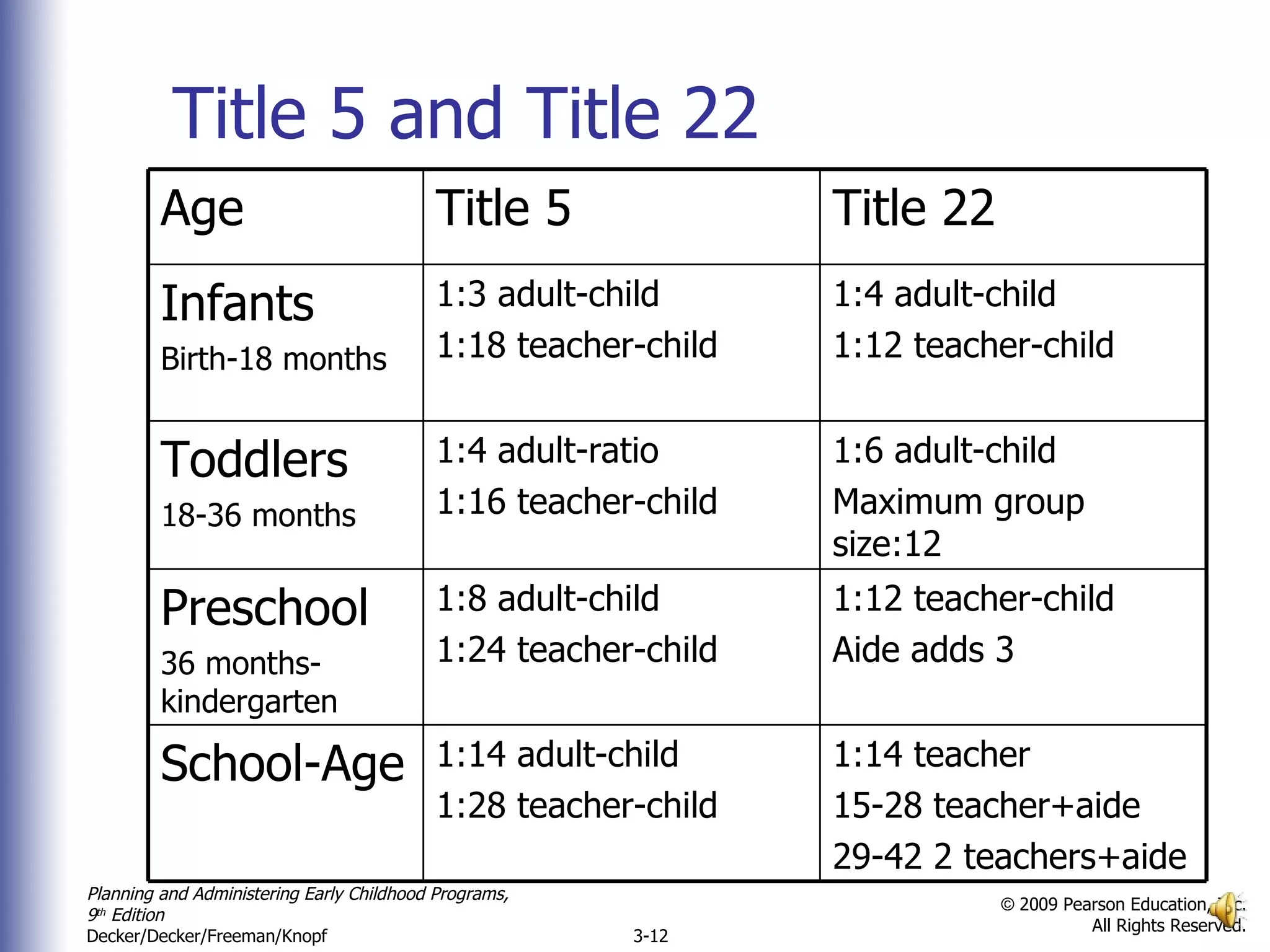
Title 5 and Title 22 Age Title 5 Title 22 Infants Birth-18 months 1:3 adult-child 1:18 teacher-child 1:4 adult-child 1:12 teacher-child Toddlers 18-36 months 1:4 adult-ratio 1:16 teacher-child 1:6 adult-child Maximum group size:12 Preschool 36 months-kindergarten 1:8 adult-child 1:24 teacher-child 1:12 teacher-child Aide adds 3 School-Age 1:14 adult-child 1:28 teacher-child 1:14 teacher 15-28 teacher+aide 29-42 2 teachers+aide
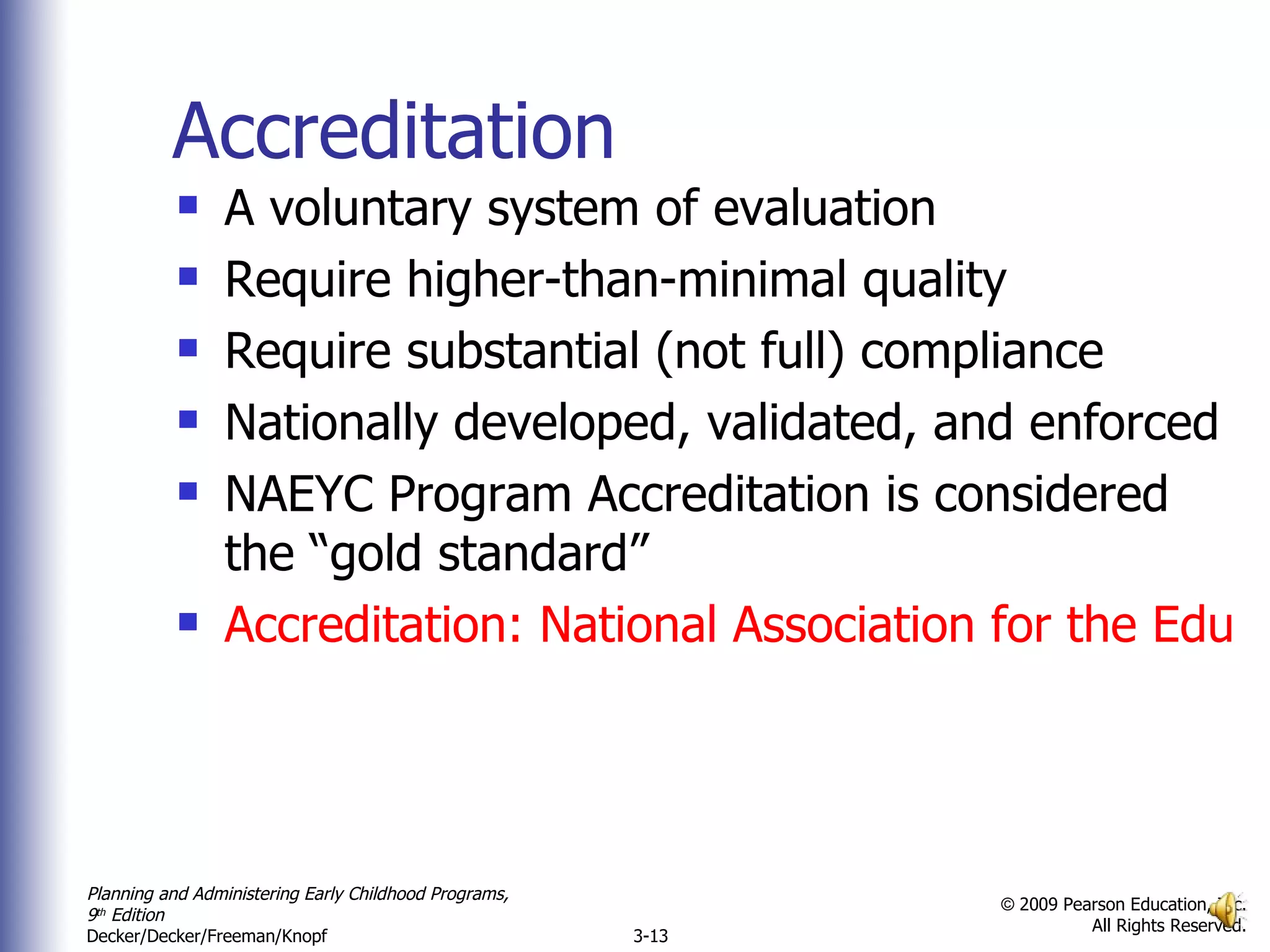
Accreditation  A voluntary system of evaluation Require higher-than-minimal quality Require substantial (not full) compliance Nationally developed, validated, and enforced NAEYC Program Accreditation is considered the “gold standard” Accreditation: National Association for the Education of Young Children
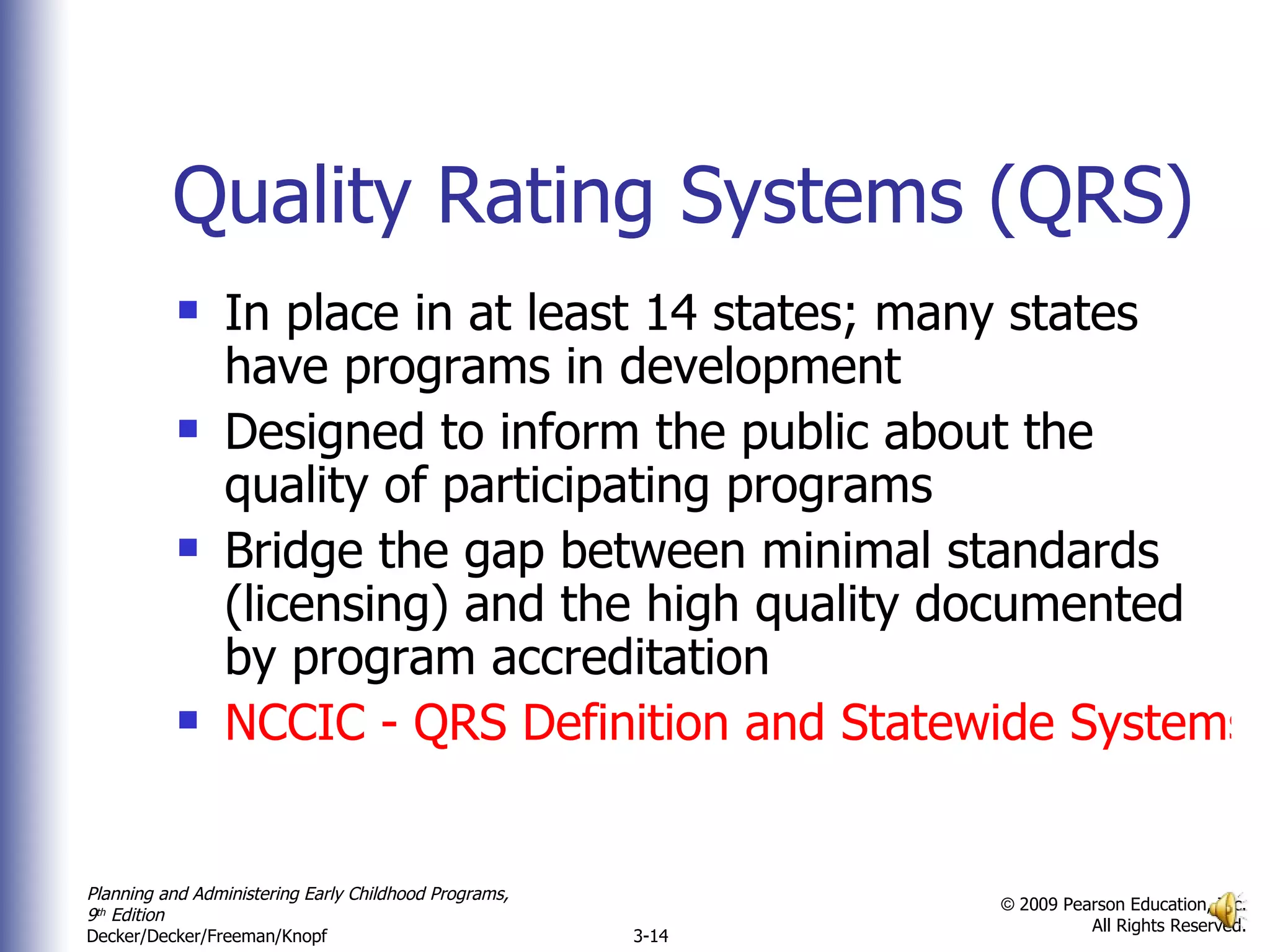
Quality Rating Systems (QRS) In place in at least 14 states; many states have programs in development Designed to inform the public about the quality of participating programs Bridge the gap between minimal standards (licensing) and the high quality documented by program accreditation NCCIC - QRS Definition and Statewide Systems
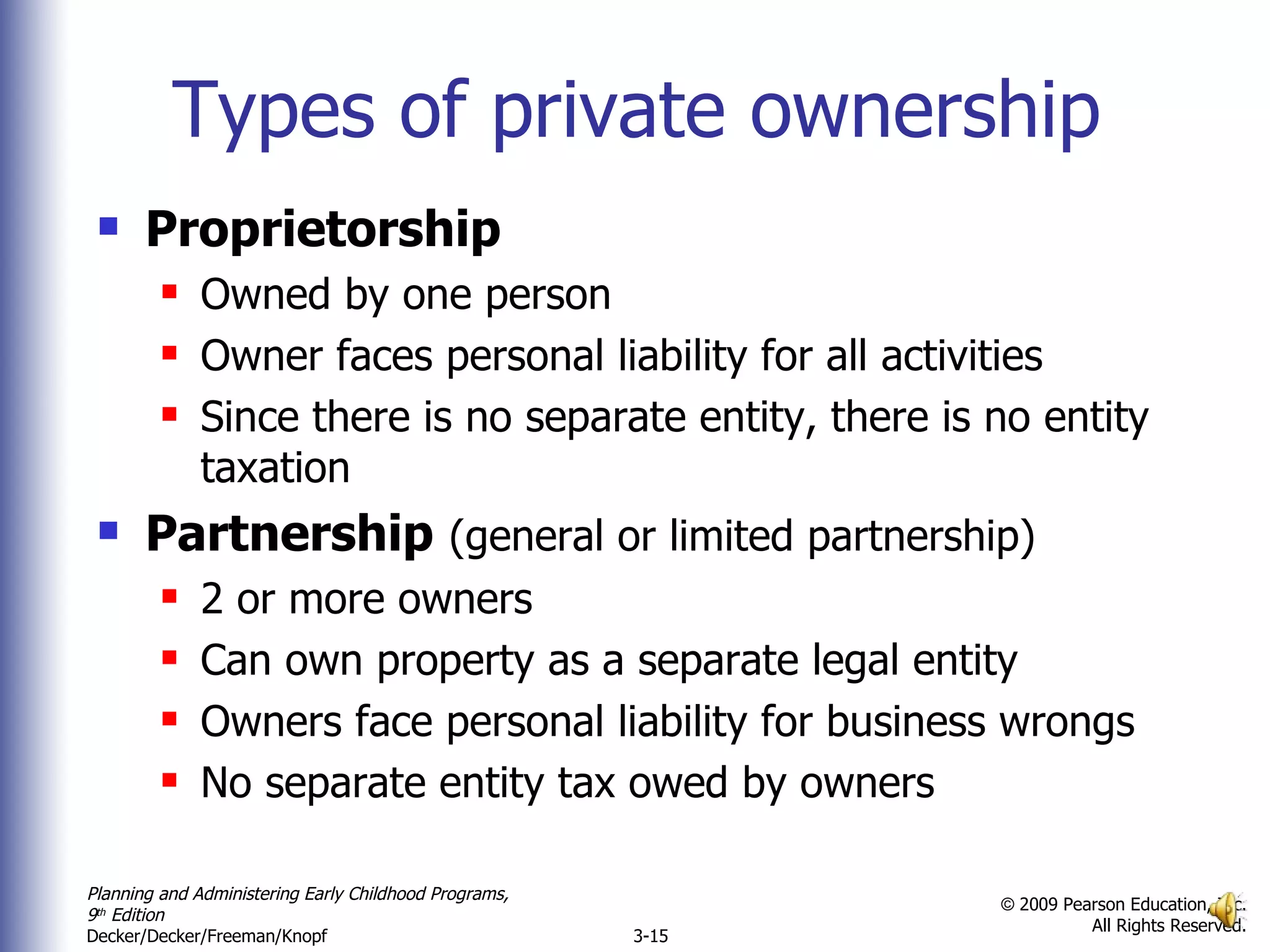
Types of private ownership Proprietorship  Owned by one person Owner faces personal liability for all activities Since there is no separate entity, there is no entity taxation Partnership   (general or limited partnership) 2 or more owners  Can own property as a separate legal entity Owners face personal liability for business wrongs No separate entity tax owed by owners
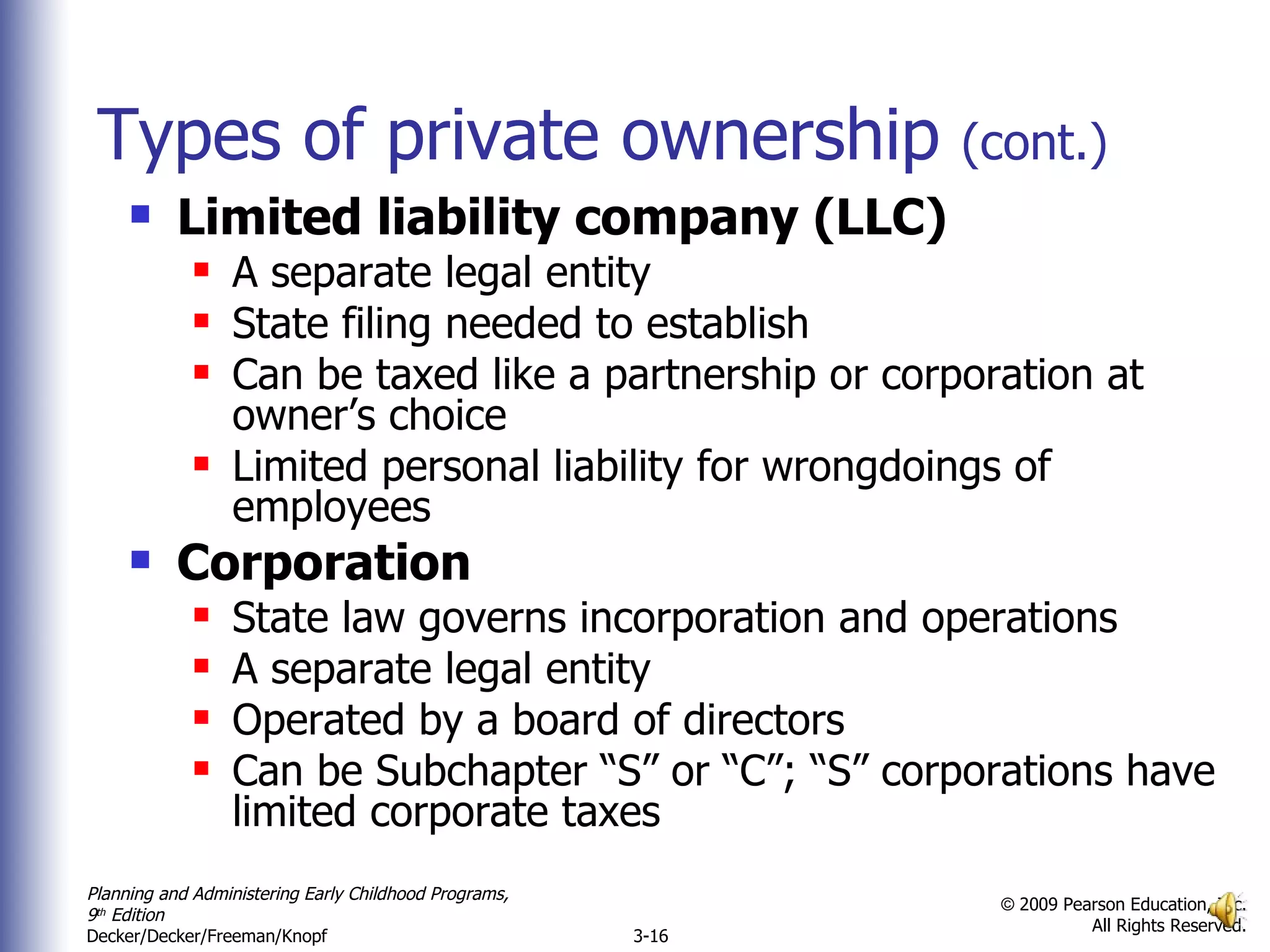
Types of private ownership  (cont.) Limited liability company (LLC) A separate legal entity State filing needed to establish  Can be taxed like a partnership or corporation at owner’s choice Limited personal liability for wrongdoings of employees Corporation State law governs incorporation and operations A separate legal entity Operated by a board of directors Can be Subchapter “S” or “C”; “S” corporations have limited corporate taxes
Fiscal regulations Violations can result in civil and/or criminal penalties. To avoid penalties: Honor all contracts Follow IRS regulations Obtain  Federal Employer Identification Number  (FEIN) File required tax returns Withhold appropriate taxes from employees
Laws that protect the staff and the program Civil Rights Act (1964) & Equal Opportunity Act (1972) American with Disabilities Act P.L. 101-336 (1990) Fair Labor Standards Act (1938) Family and Medical Leave Act (1993) It is important to stay abreast of recent developments.
Licensing Does Not… Guarantee quality Address issues such as equity, pay, benefits, etc Gives the  bare minimum  for the health and safety of children

Understanding Regulations

  • 1.
    Chapter 3Understanding Regulations, Accreditation Criteria, and Other Standards of Practice
  • 2.
    Licensing Regulations providethe baseline for acceptable care of children and are meant to be minimum standards below which no program should operate.
  • 3.
    Definitions Regulation :A binding rule created outside the program. Standard : A statement of expectations for program characteristics and performance.
  • 4.
    Types of RegulationsZoning regulations govern land use. Building codes address issues such as wiring, plumbing, building materials. Fire and sanitation regulations set health and safety standards. Child care licensing regulations address many aspects of programs’ operations.
  • 5.
    Why? Should achievetheir primary purpose of ensuring adequate, safe care of children. Also benefits those who provide care as well as the children they serve. A license carries with it an official recognition of the importance of the job
  • 6.
    Who? Not allprograms are covered by licensing Exempted programs usually include programs such as church sponsored, recreation programs, etc. Family members being cared for in the home do not have to be licensed Licensing alone does not guarantee quality
  • 7.
    States’ child carecenter licensing codes typically address: The process of obtaining a license The program’s organization and administration Staffing patterns including ratios and group size Required characteristics of facilities and provisions for transporting children
  • 8.
    States’ child carecenter licensing codes typically address: (continued) Practices to safeguard children’s health and safety Required activities and equipment Allowable forms of discipline How programs are to communicate with and involve families Nutrition and food services
  • 9.
    Licensing Regulations CCLHome DCFS - Bureau of Services for Child Care Nevada Differences between Title 5 and Title 22 programs child care law regulations
  • 10.
    Recommendations American PublicHealth Association., American Academy of Pediatrics Age Child:Staff Group Size 0-24 Months 3:1 6 25-30 Months 4:1 8 31-35 Months 5:1 10 3 year olds 7:1 14 4-5 year olds 8:1 16 6-8 year olds 10:1 20 9-12 year olds 12:1 24
  • 11.
    NAEYC Recommends AgeChild:Staff Group Size Birth-18 Months 3:1 adults 18:1 teacher 6 Toddlers 18-36 months 16:1 teacher 4:1 adult 12 Preschool 3-5 years 8:1 adults 24:1 teacher 24 School age 28:1 adult 14:1 teacher 28
  • 12.
    Title 5 andTitle 22 Age Title 5 Title 22 Infants Birth-18 months 1:3 adult-child 1:18 teacher-child 1:4 adult-child 1:12 teacher-child Toddlers 18-36 months 1:4 adult-ratio 1:16 teacher-child 1:6 adult-child Maximum group size:12 Preschool 36 months-kindergarten 1:8 adult-child 1:24 teacher-child 1:12 teacher-child Aide adds 3 School-Age 1:14 adult-child 1:28 teacher-child 1:14 teacher 15-28 teacher+aide 29-42 2 teachers+aide
  • 13.
    Accreditation Avoluntary system of evaluation Require higher-than-minimal quality Require substantial (not full) compliance Nationally developed, validated, and enforced NAEYC Program Accreditation is considered the “gold standard” Accreditation: National Association for the Education of Young Children
  • 14.
    Quality Rating Systems(QRS) In place in at least 14 states; many states have programs in development Designed to inform the public about the quality of participating programs Bridge the gap between minimal standards (licensing) and the high quality documented by program accreditation NCCIC - QRS Definition and Statewide Systems
  • 15.
    Types of privateownership Proprietorship Owned by one person Owner faces personal liability for all activities Since there is no separate entity, there is no entity taxation Partnership (general or limited partnership) 2 or more owners Can own property as a separate legal entity Owners face personal liability for business wrongs No separate entity tax owed by owners
  • 16.
    Types of privateownership (cont.) Limited liability company (LLC) A separate legal entity State filing needed to establish Can be taxed like a partnership or corporation at owner’s choice Limited personal liability for wrongdoings of employees Corporation State law governs incorporation and operations A separate legal entity Operated by a board of directors Can be Subchapter “S” or “C”; “S” corporations have limited corporate taxes
  • 17.
    Fiscal regulations Violationscan result in civil and/or criminal penalties. To avoid penalties: Honor all contracts Follow IRS regulations Obtain Federal Employer Identification Number (FEIN) File required tax returns Withhold appropriate taxes from employees
  • 18.
    Laws that protectthe staff and the program Civil Rights Act (1964) & Equal Opportunity Act (1972) American with Disabilities Act P.L. 101-336 (1990) Fair Labor Standards Act (1938) Family and Medical Leave Act (1993) It is important to stay abreast of recent developments.
  • 19.
    Licensing Does Not…Guarantee quality Address issues such as equity, pay, benefits, etc Gives the bare minimum for the health and safety of children