1 of 33
2 of 33
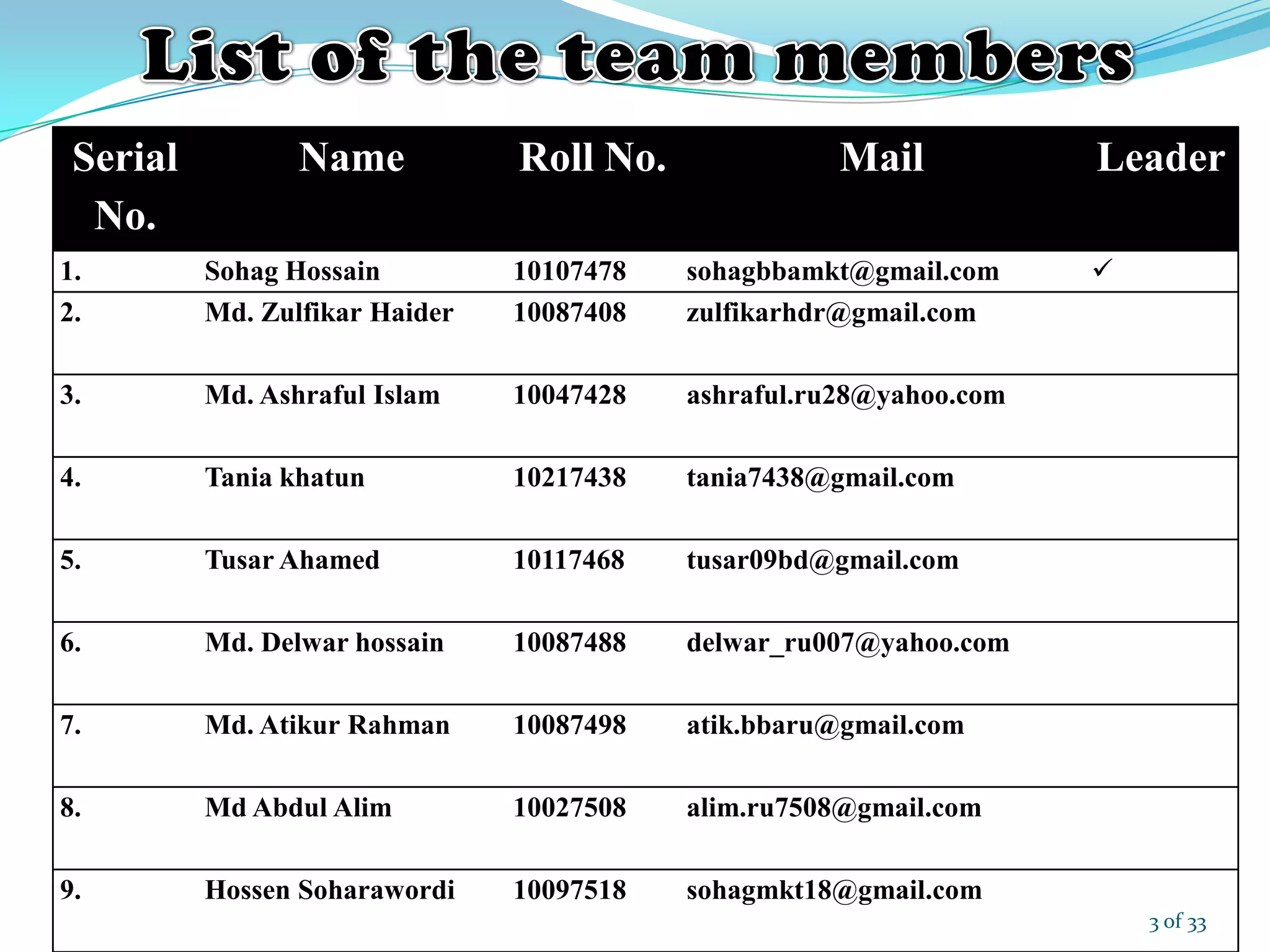
Serial
No.
Name Roll No. Mail Leader
1. Sohag Hossain 10107478 sohagbbamkt@gmail.com 
2. Md. Zulfikar Haider 10087408 zulfikarhdr@gmail.com
3. Md. Ashraful Islam 10047428 ashraful.ru28@yahoo.com
4. Tania khatun 10217438 tania7438@gmail.com
5. Tusar Ahamed 10117468 tusar09bd@gmail.com
6. Md. Delwar hossain 10087488 delwar_ru007@yahoo.com
7. Md. Atikur Rahman 10087498 atik.bbaru@gmail.com
8. Md Abdul Alim 10027508 alim.ru7508@gmail.com
9. Hossen Soharawordi 10097518 sohagmkt18@gmail.com
3 of 33
2.Designing
Distribution Networks
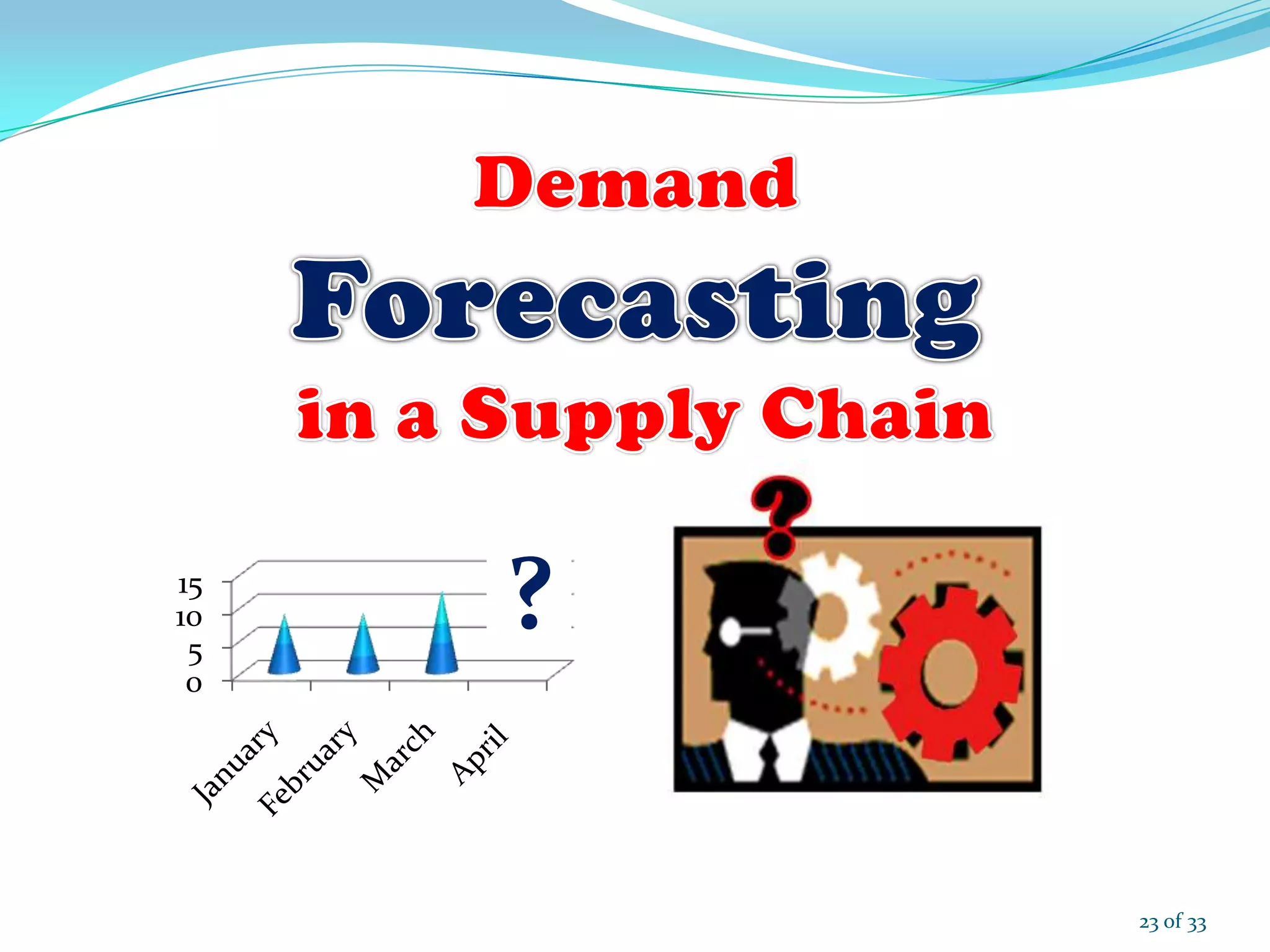
4.Demand Forecasting
in a Supply Chain
4 of 33
5 of 33
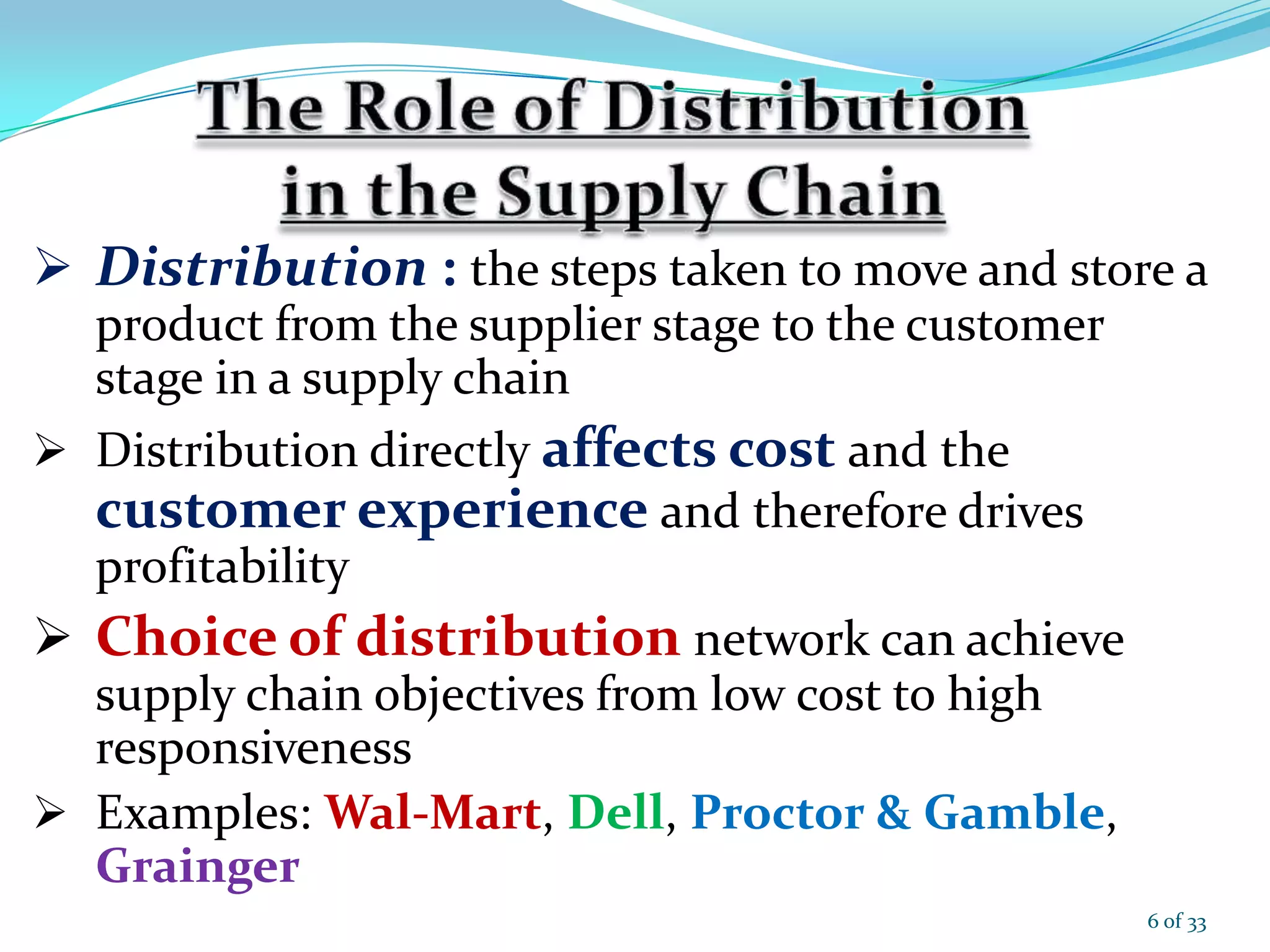
 Distribution : the steps taken to move and store a
product from the supplier stage to the customer
stage in a supply chain
 Distribution directly affects cost and the
customer experience and therefore drives
profitability
 Choice of distribution network can achieve
supply chain objectives from low cost to high
responsiveness
 Examples: Wal-Mart, Dell, Proctor & Gamble,
Grainger
6 of 33
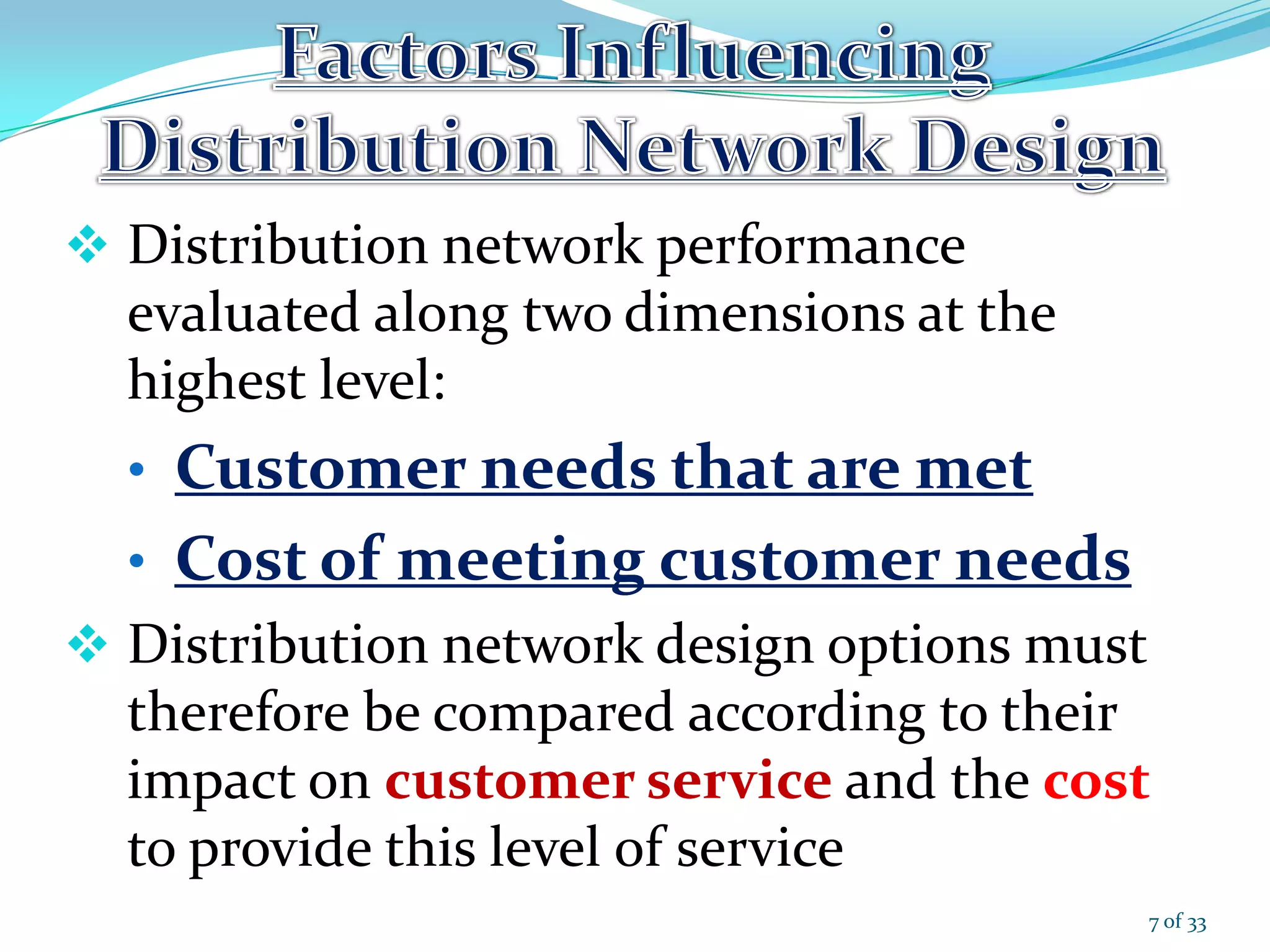
 Distribution network performance
evaluated along two dimensions at the
highest level:
• Customer needs that are met
• Cost of meeting customer needs
 Distribution network design options must
therefore be compared according to their
impact on customer service and the cost
to provide this level of service
7 of 33
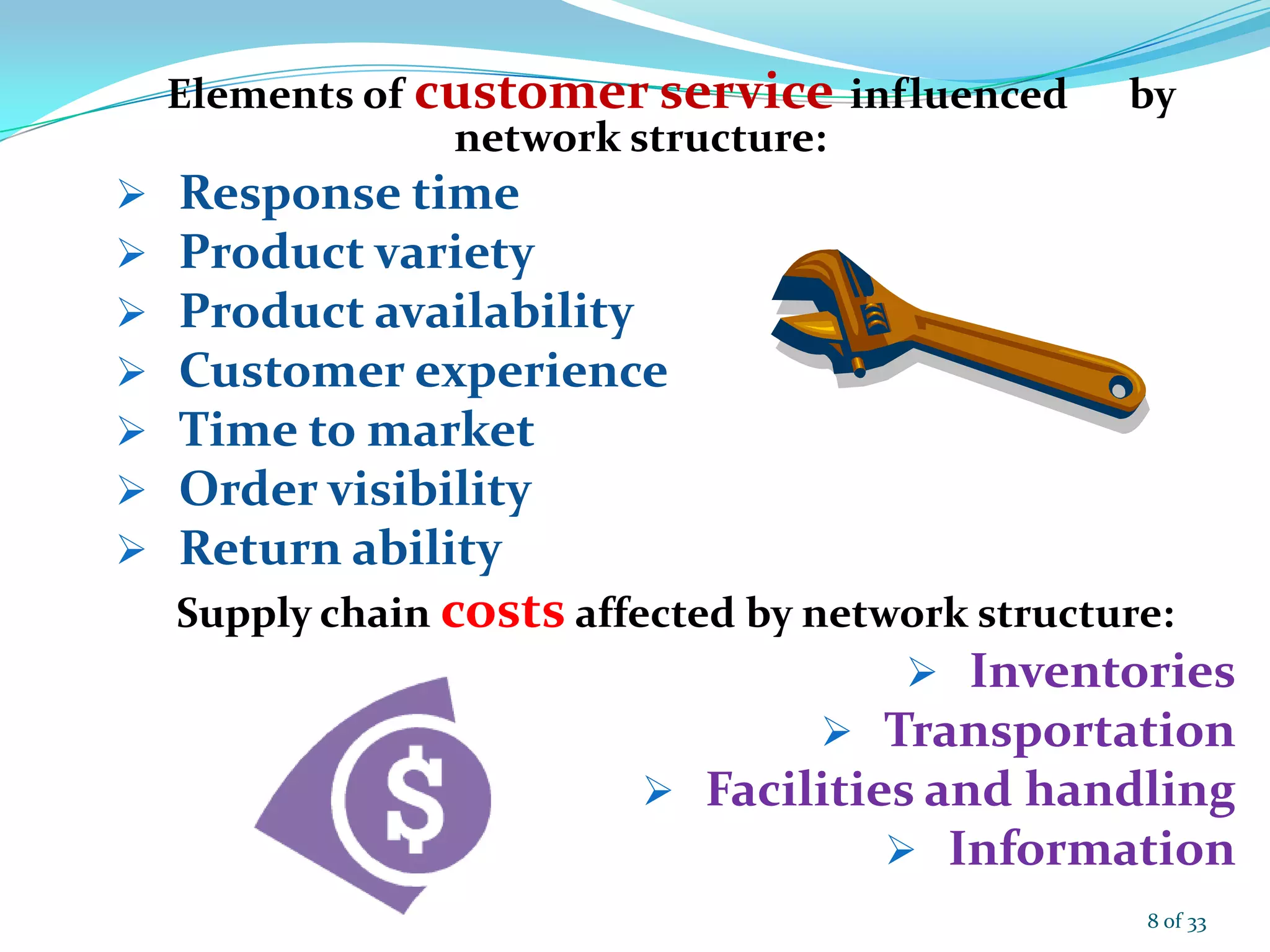
Elements of customer service influenced by
network structure:
 Response time
 Product variety
 Product availability
 Customer experience
 Time to market
 Order visibility
 Return ability
Supply chain costs affected by network structure:
 Inventories
 Transportation
 Facilities and handling
 Information
8 of 33
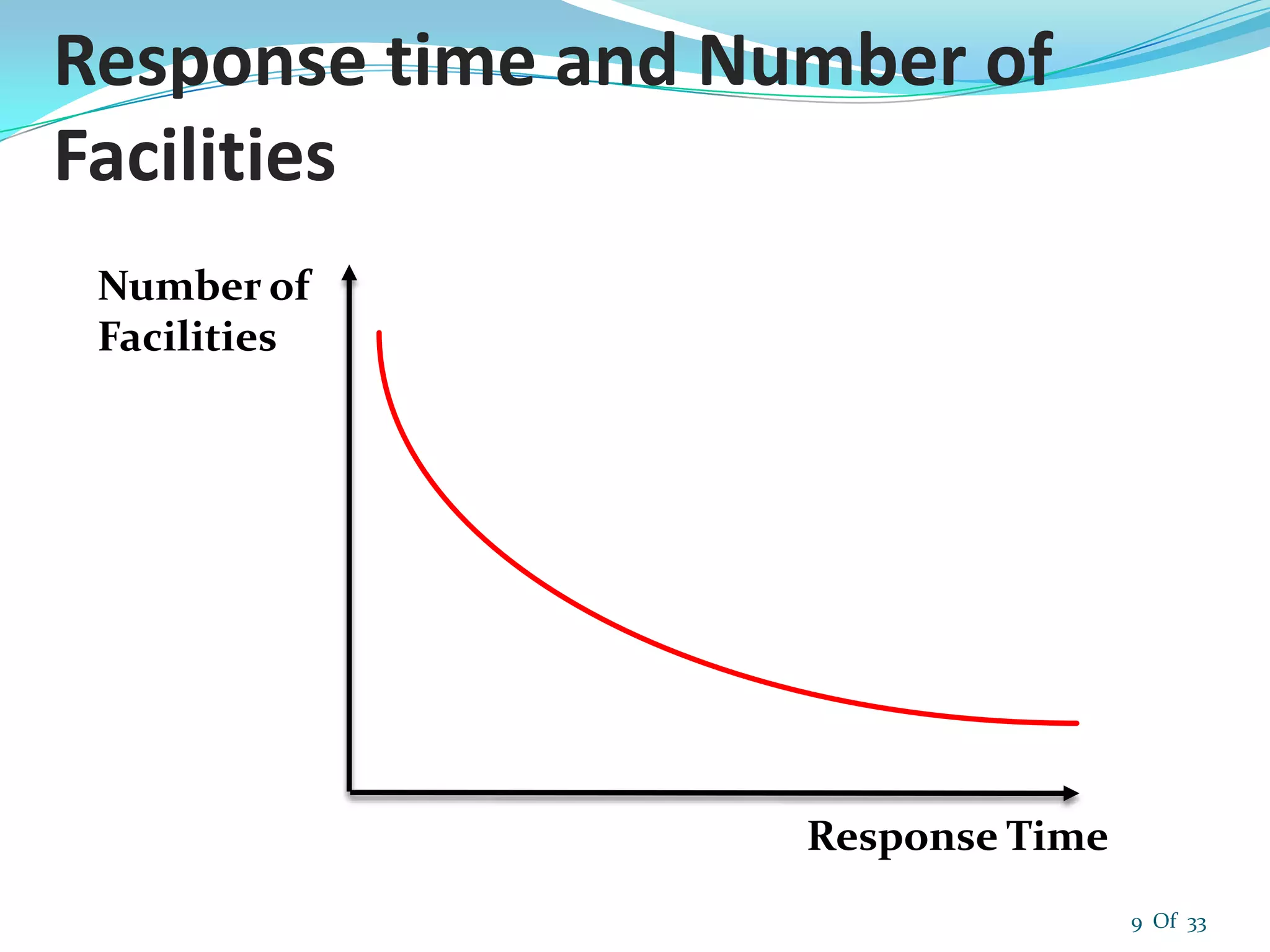
Response time and Number of
Facilities
Number of
Facilities
Response Time
9 Of 33
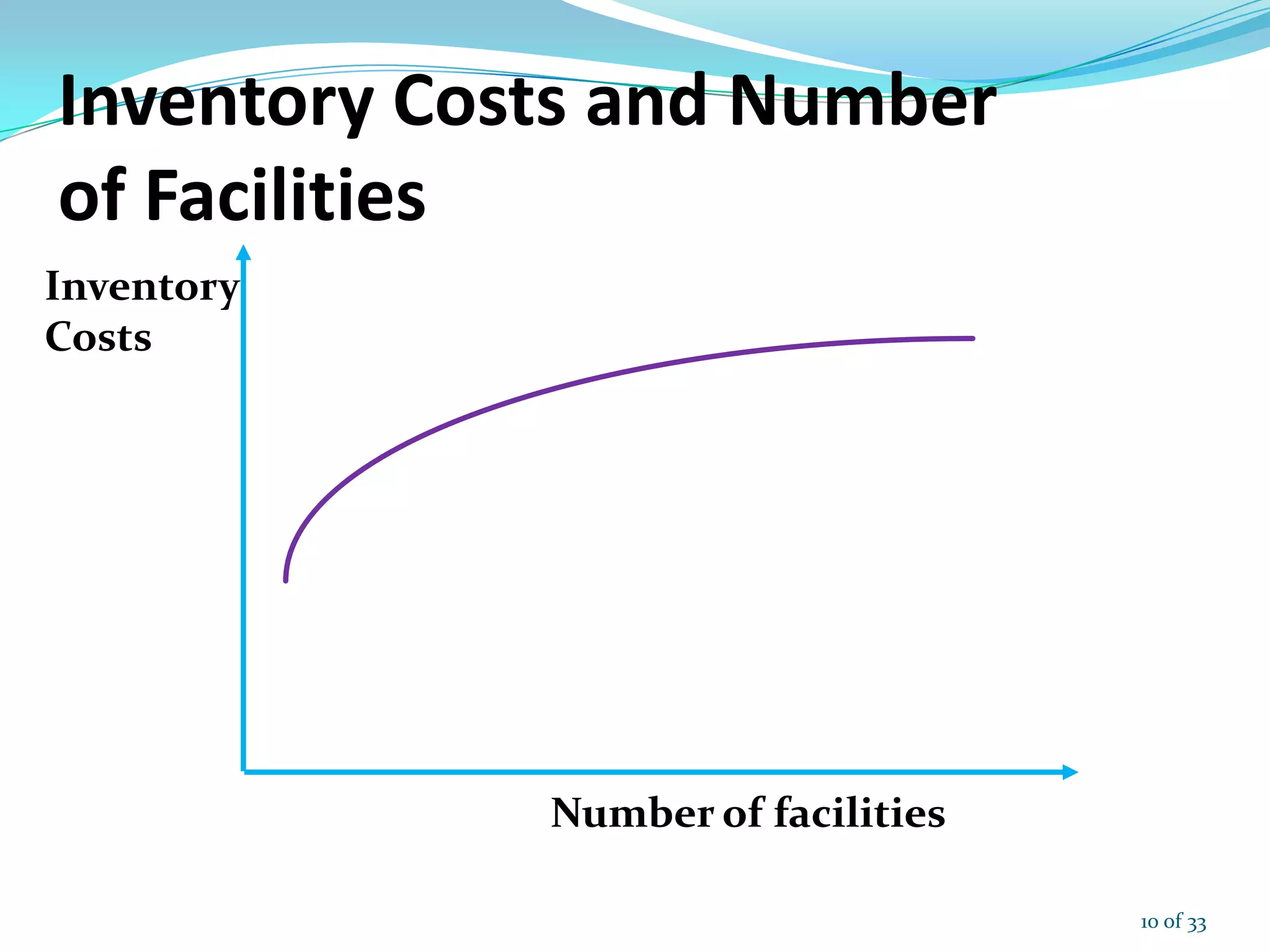
Inventory Costs and Number
of Facilities
Inventory
Costs
Number of facilities
10 of 33
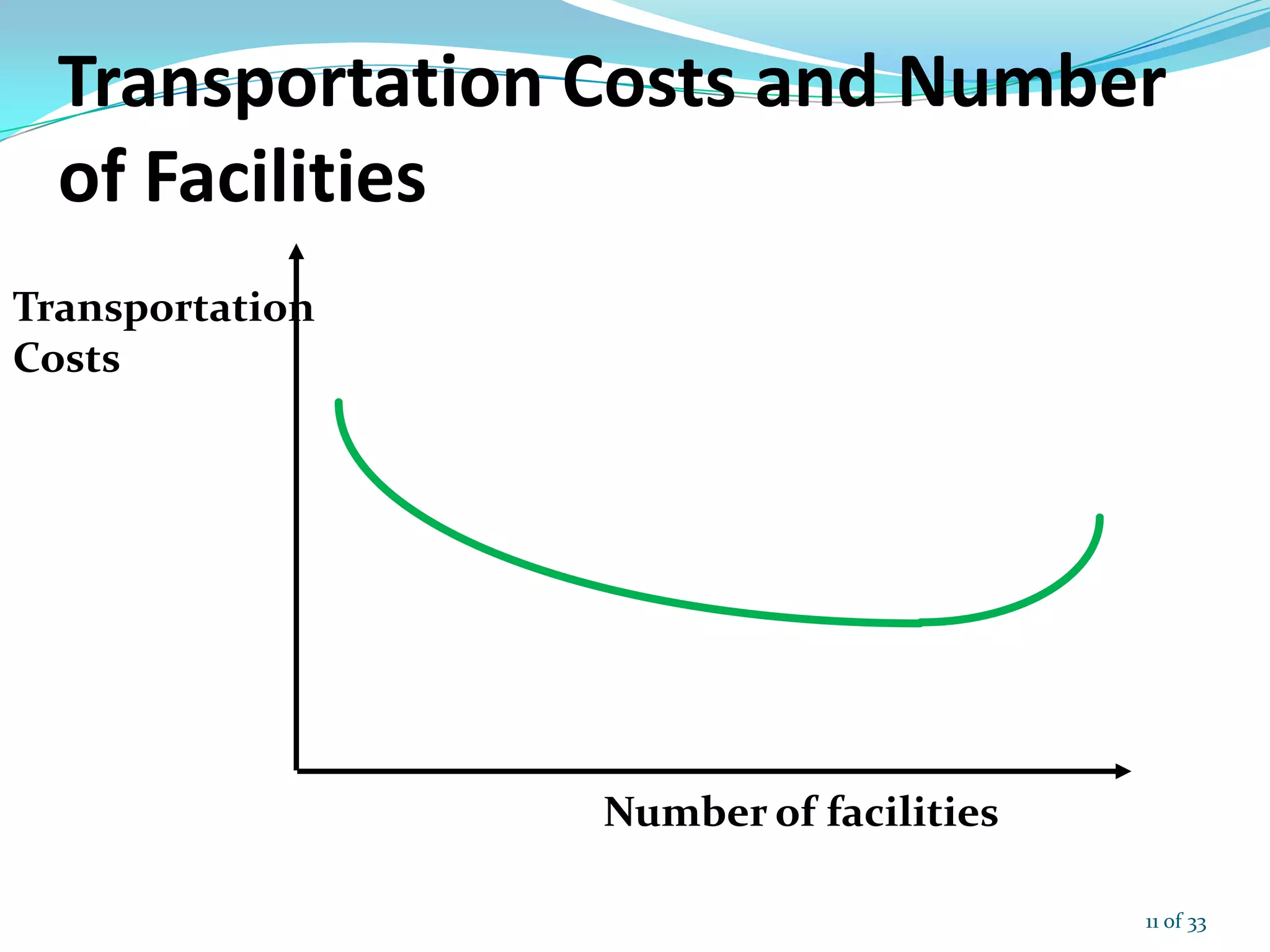
Transportation Costs and Number
of Facilities
Transportation
Costs
Number of facilities
11 of 33
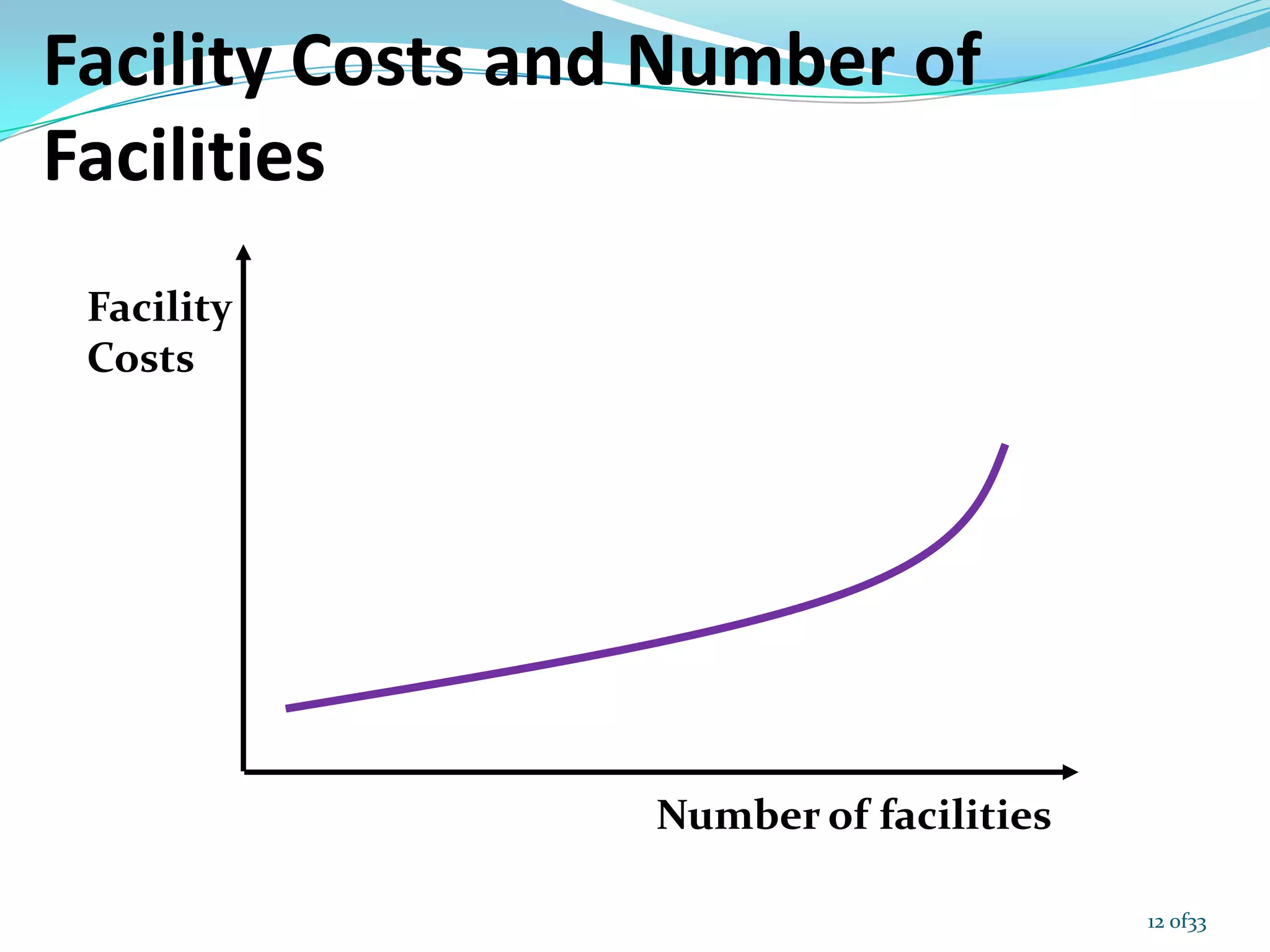
Facility Costs and Number of
Facilities
Facility
Costs
Number of facilities
12 of33
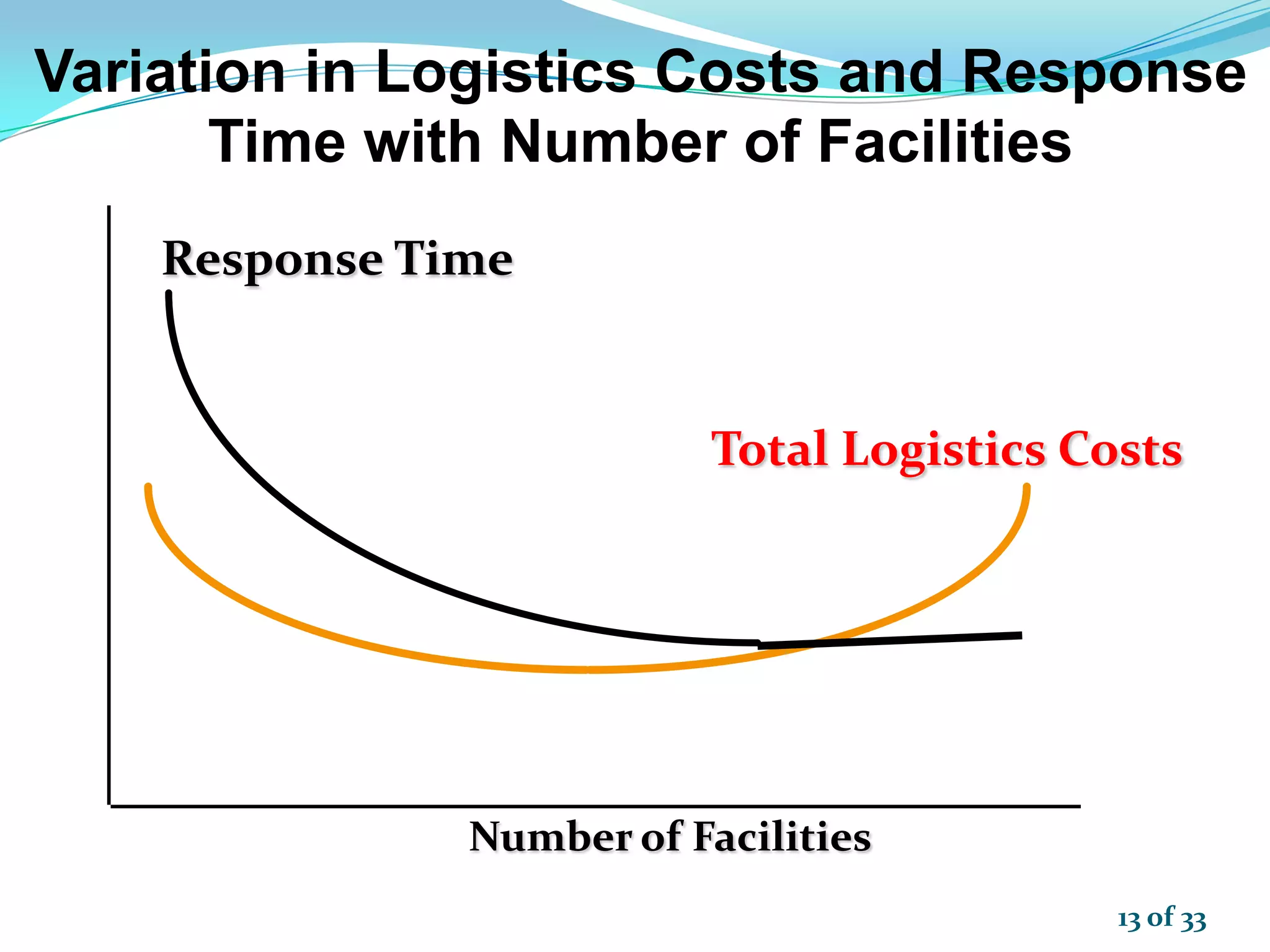
Response Time
Variation in Logistics Costs and Response
Time with Number of Facilities
Number of Facilities
Total Logistics Costs
13 of 33
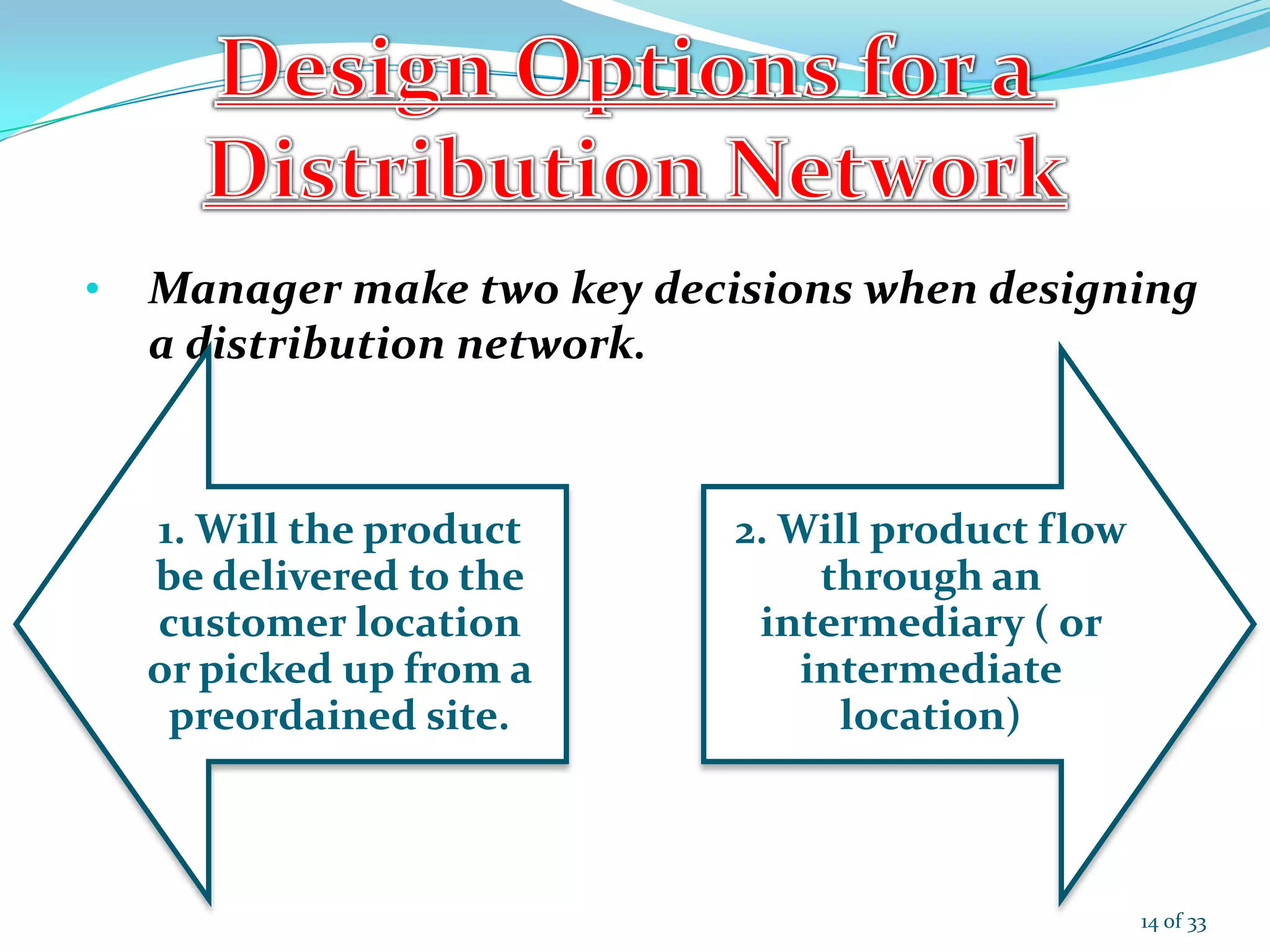
• Manager make two key decisions when designing
a distribution network.
1. Will the product
be delivered to the
customer location
or picked up from a
preordained site.
2. Will product flow
through an
intermediary ( or
intermediate
location)
14 of 33
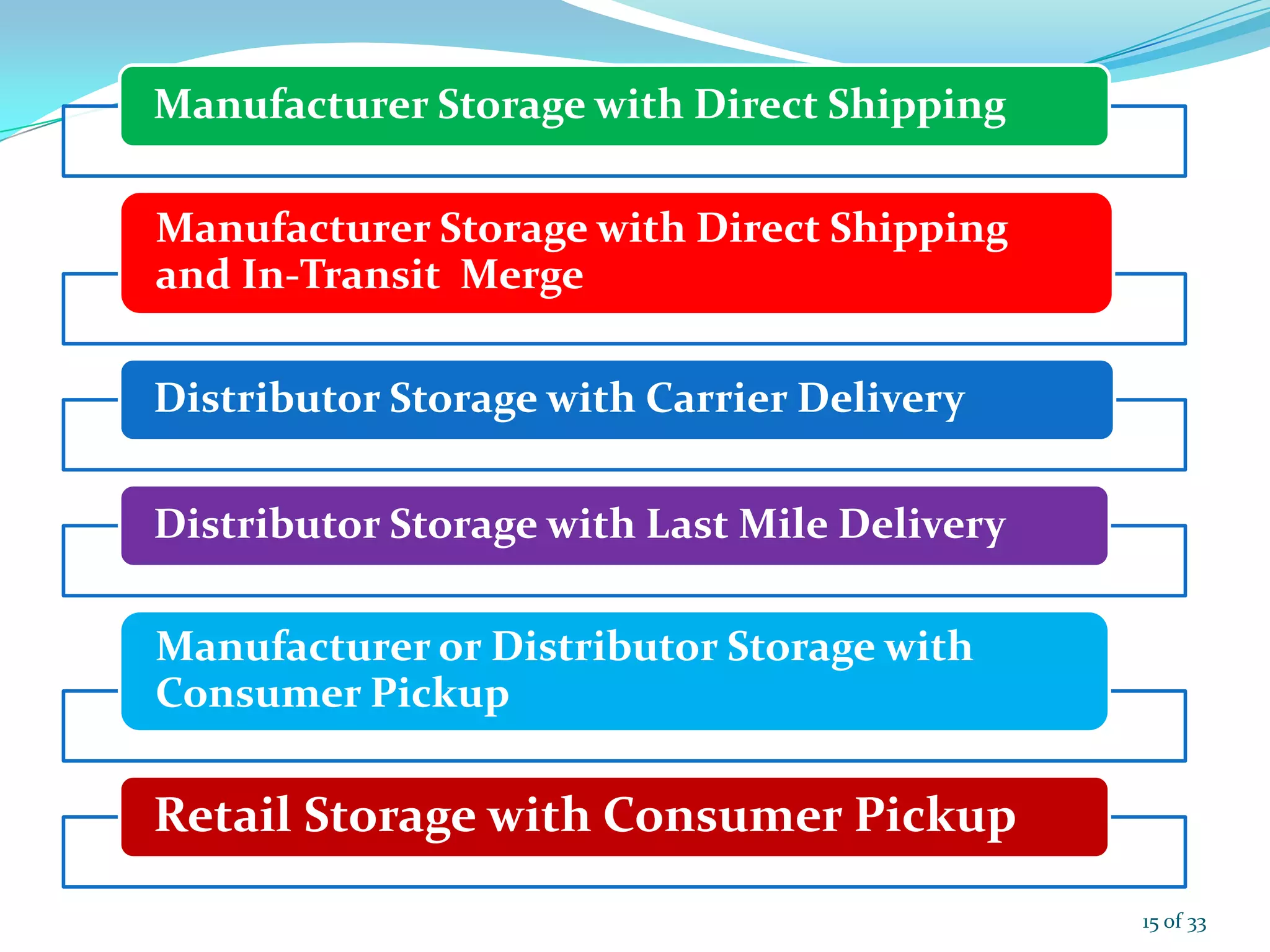
Manufacturer Storage with Direct Shipping
and In-Transit Merge
Distributor Storage with Carrier Delivery
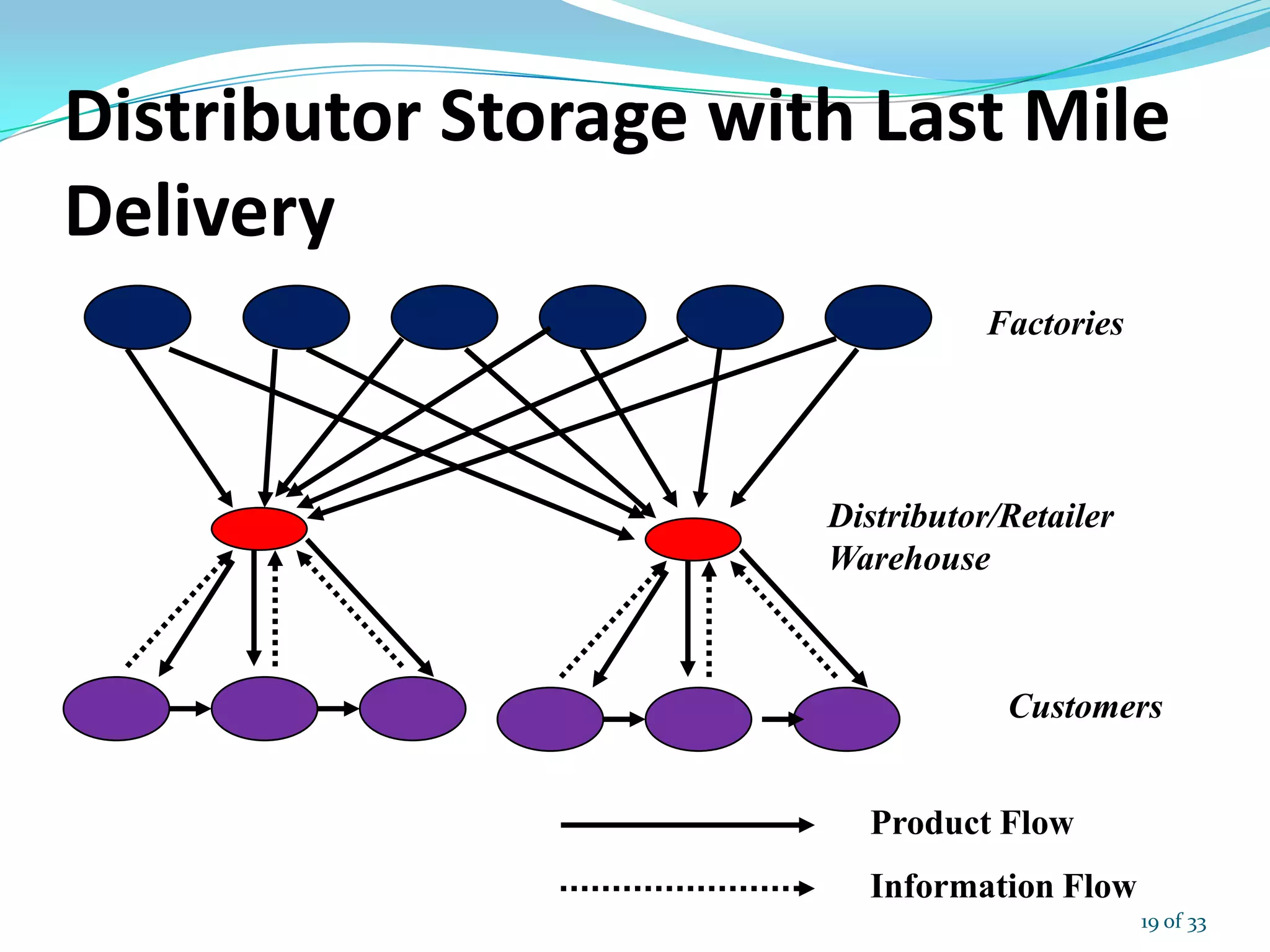
Distributor Storage with Last Mile Delivery
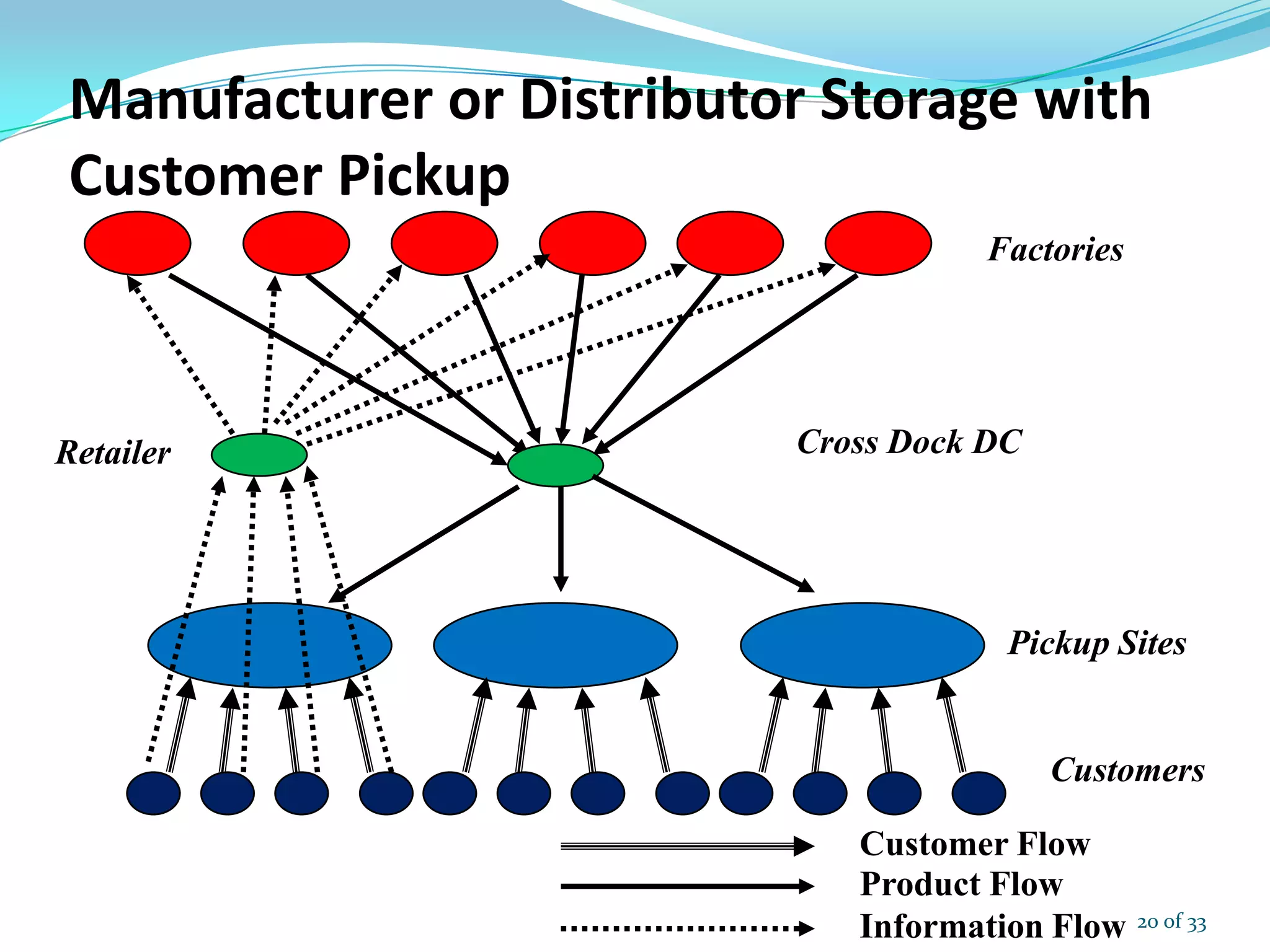
Manufacturer or Distributor Storage with
Consumer Pickup
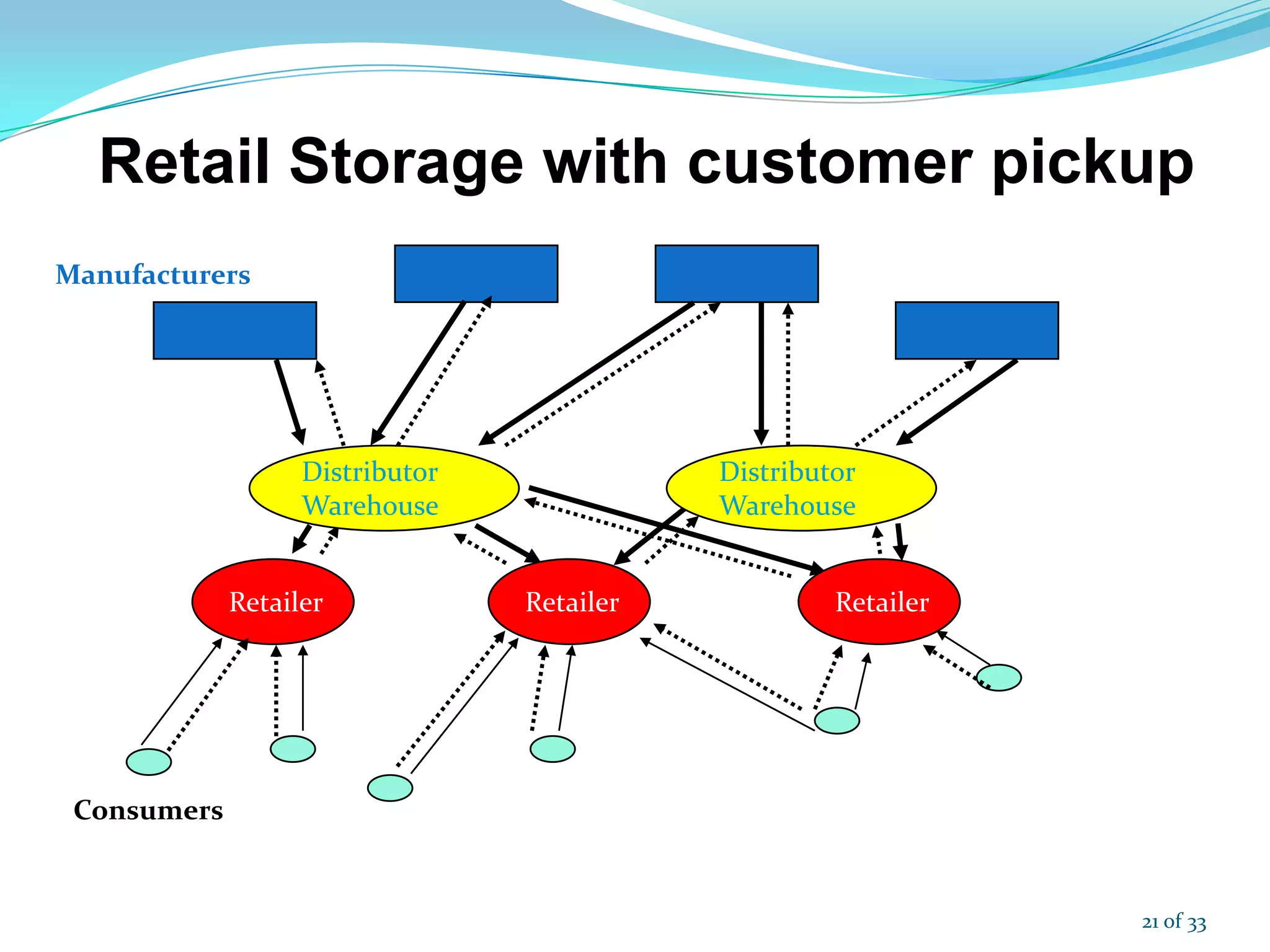
Retail Storage with Consumer Pickup
15 of 33
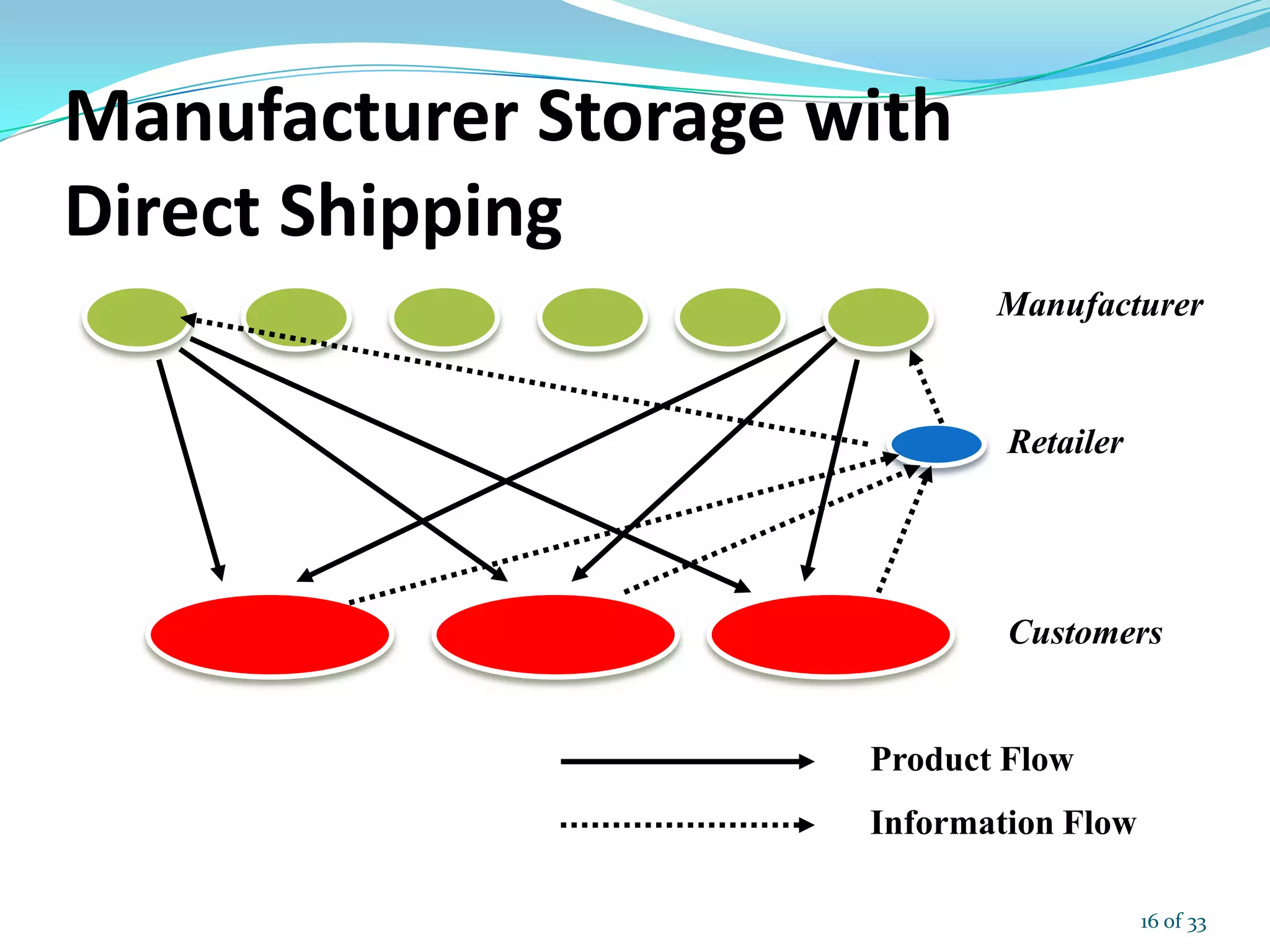
Manufacturer Storage with
Direct Shipping
Manufacturer
Retailer
Customers
Product Flow
Information Flow
16 of 33
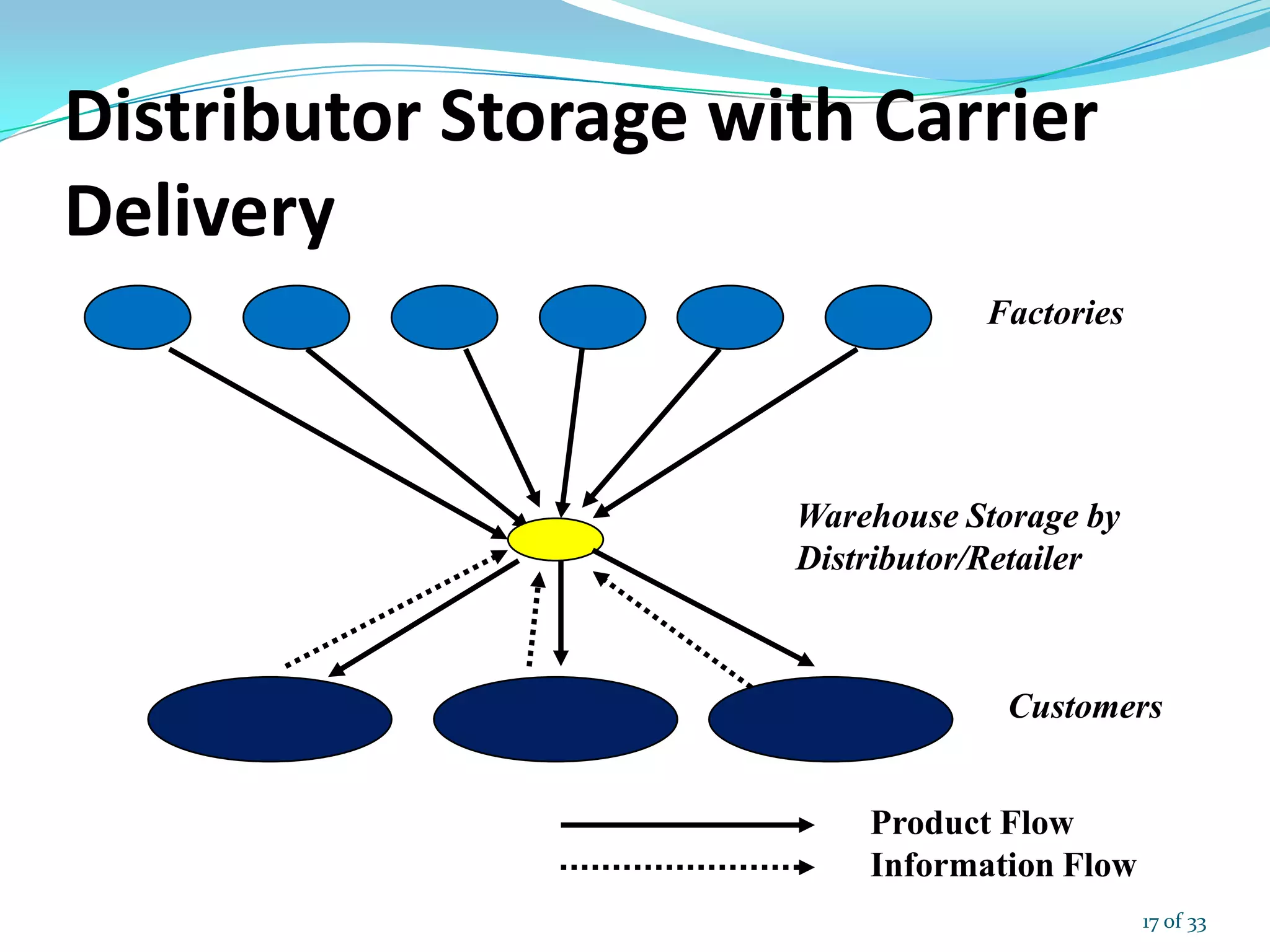
Distributor Storage with Carrier
Delivery
Factories
Customers
Product Flow
Information Flow
Warehouse Storage by
Distributor/Retailer
17 of 33
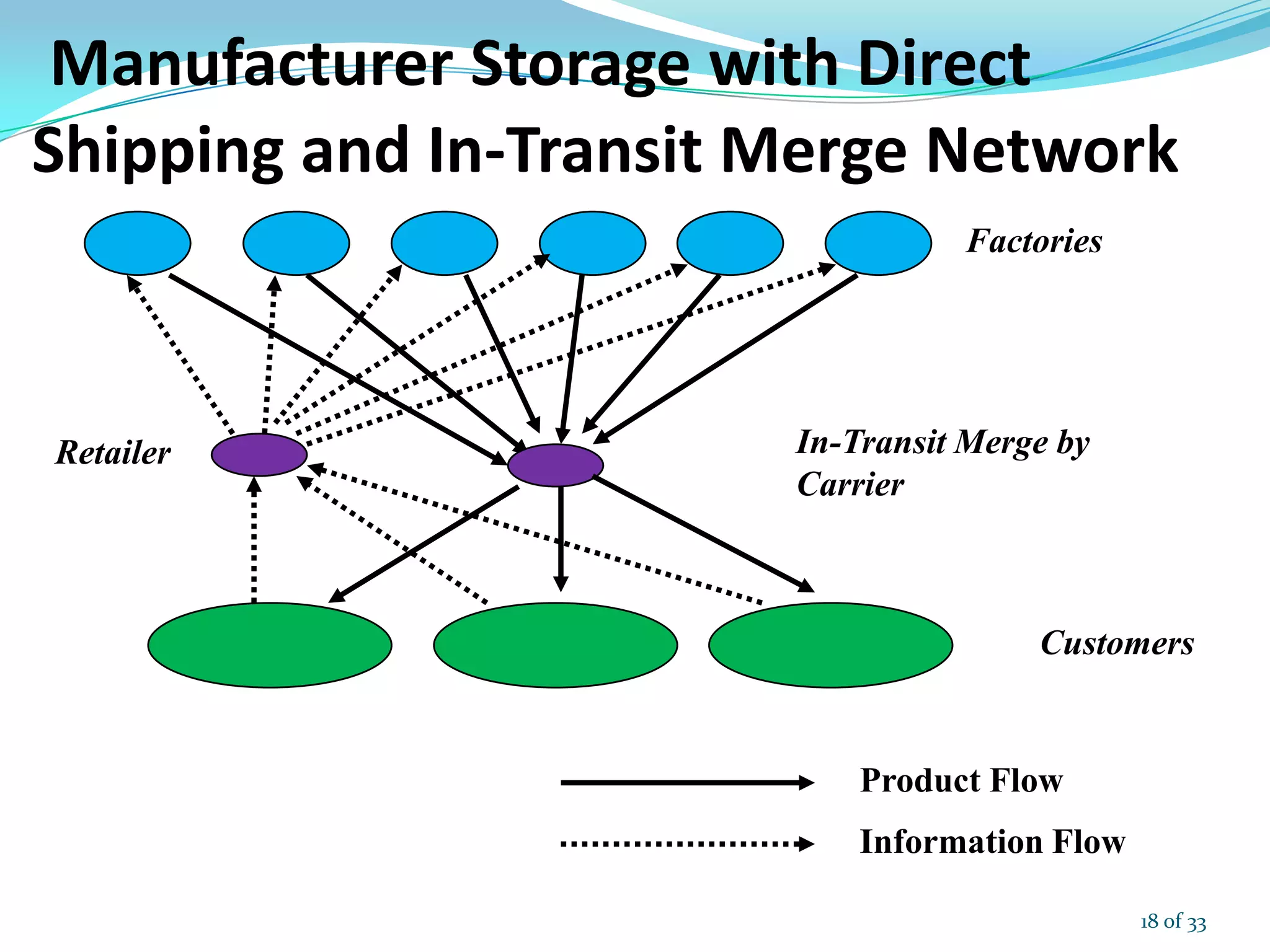
Manufacturer Storage with Direct
Shipping and In-Transit Merge Network
Factories
Retailer
Product Flow
Information Flow
In-Transit Merge by
Carrier
Customers
18 of 33
Distributor Storage with Last Mile
Delivery
Factories
Customers
Product Flow
Information Flow
Distributor/Retailer
Warehouse
19 of 33
Manufacturer or Distributor Storage with
Customer Pickup
Factories
Retailer
Pickup Sites
Product Flow
Information Flow
Cross Dock DC
Customer Flow
Customers
20 of 33
Retail Storage with customer pickup
Retailer
Consumers
RetailerRetailer
Distributor
Warehouse
Manufacturers
Distributor
Warehouse
21 of 33
Distribution Networks in Practice
1. The ownership structure of the distribution
network can have as big as an impact as the type
of distribution network
2. The choice of a distribution network has very
long-term consequences
3. Consider whether an exclusive distribution
strategy is advantageous
4. Product, price, commoditization, and criticality
have an impact on the type of distribution system
preferred by customers
22 of 33
23 of 33
0
5
10
15
?
 The basis for all strategic and planning decisions in
a supply chain
 Used for both push and pull processes
 Examples:
 Production: scheduling, inventory, aggregate
planning
 Marketing: sales force
allocation, promotions, new production introduction
 Finance: plant/equipment investment, budgetary
planning
 Personnel: workforce planning, hiring, layoffs
 All of these decisions are interrelated
24 of 33
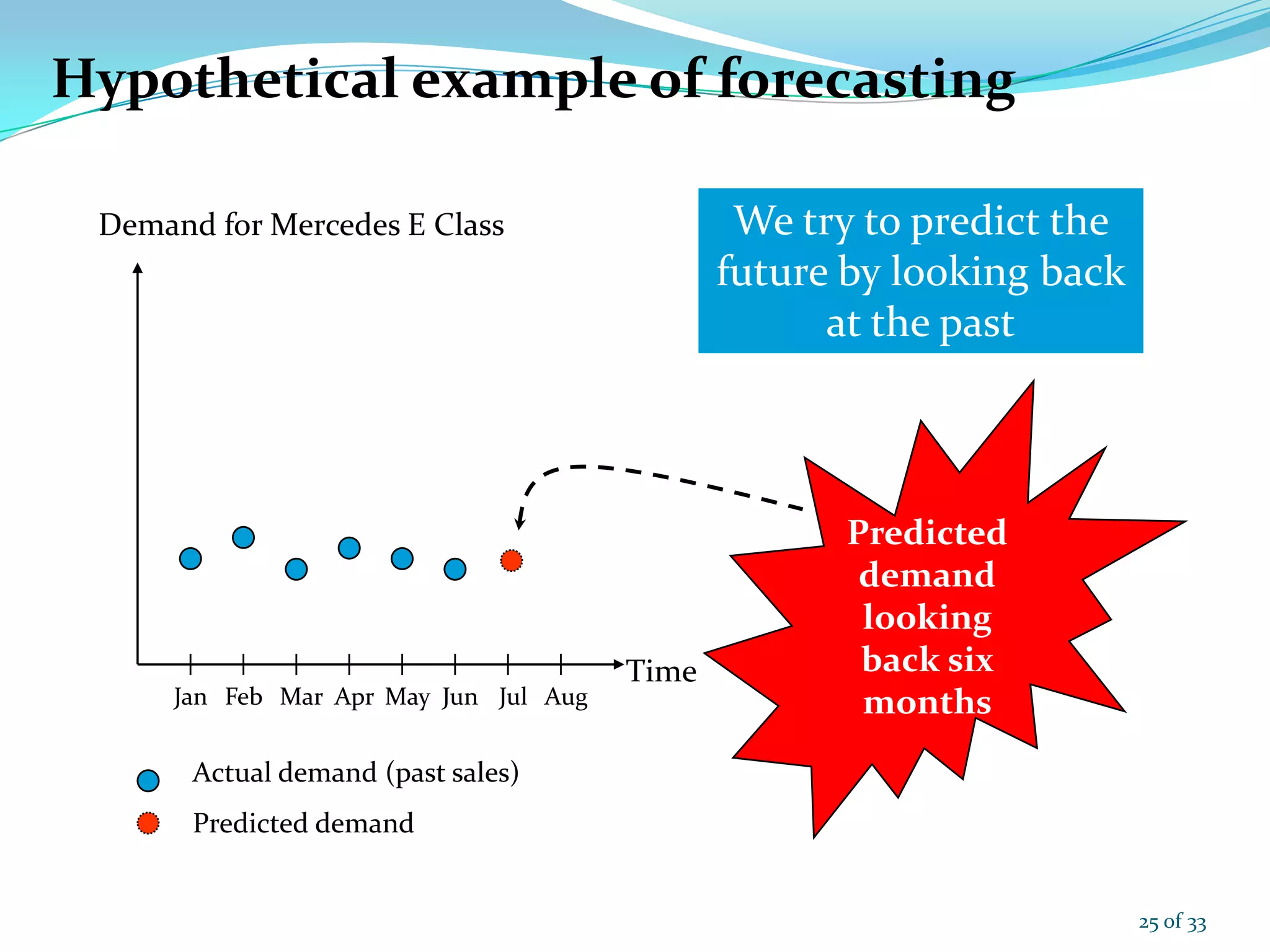
Hypothetical example of forecasting
Demand for Mercedes E Class
Time
Jan Feb Mar Apr May Jun Jul Aug
Actual demand (past sales)
Predicted demand
We try to predict the
future by looking back
at the past
Predicted
demand
looking
back six
months
25 of 33
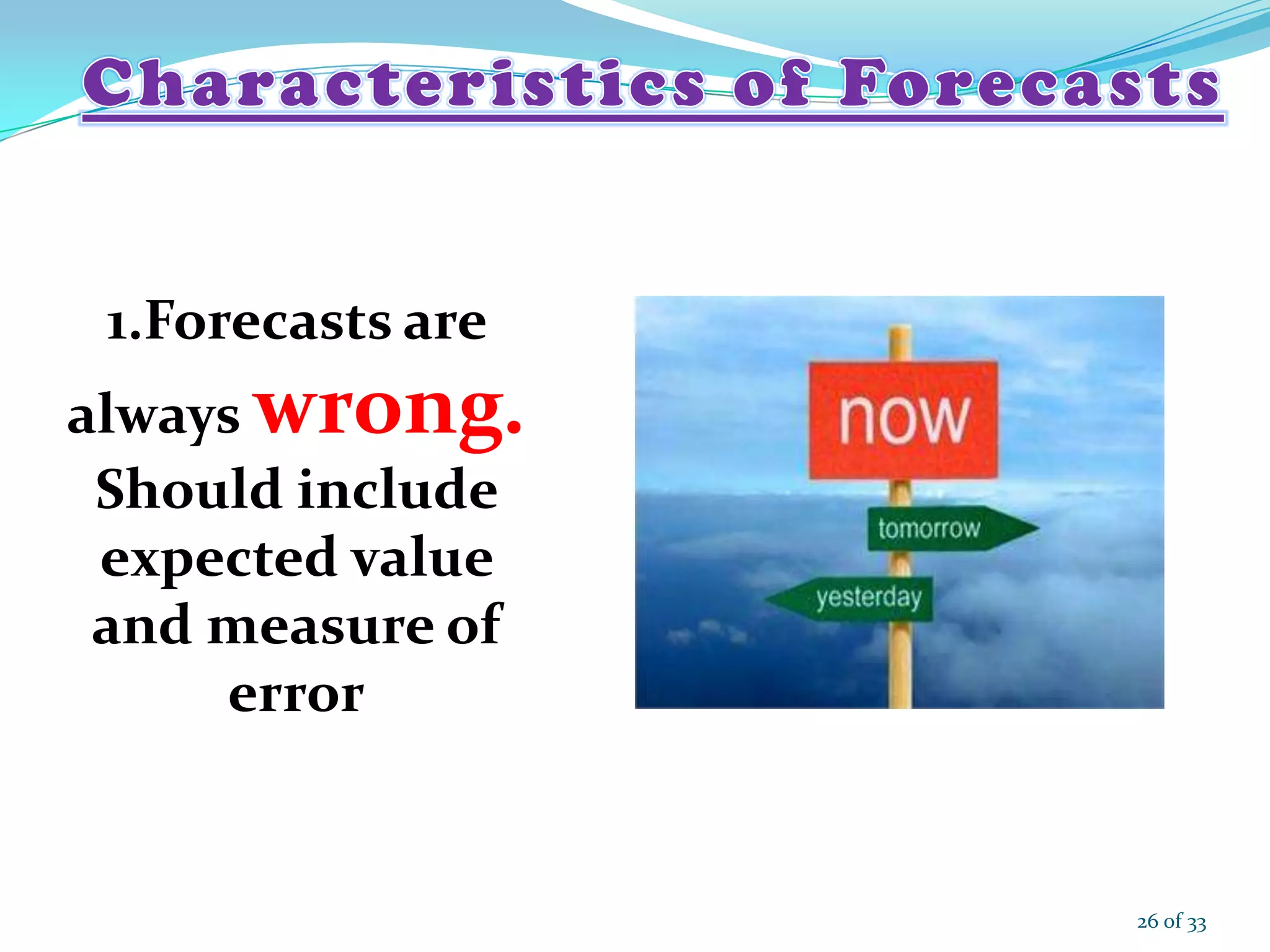
1.Forecasts are
always wrong.
Should include
expected value
and measure of
error
26 of 33
2.Long-term forecasts
are less accurate
than short-term
forecasts (forecast
horizon is important)
27
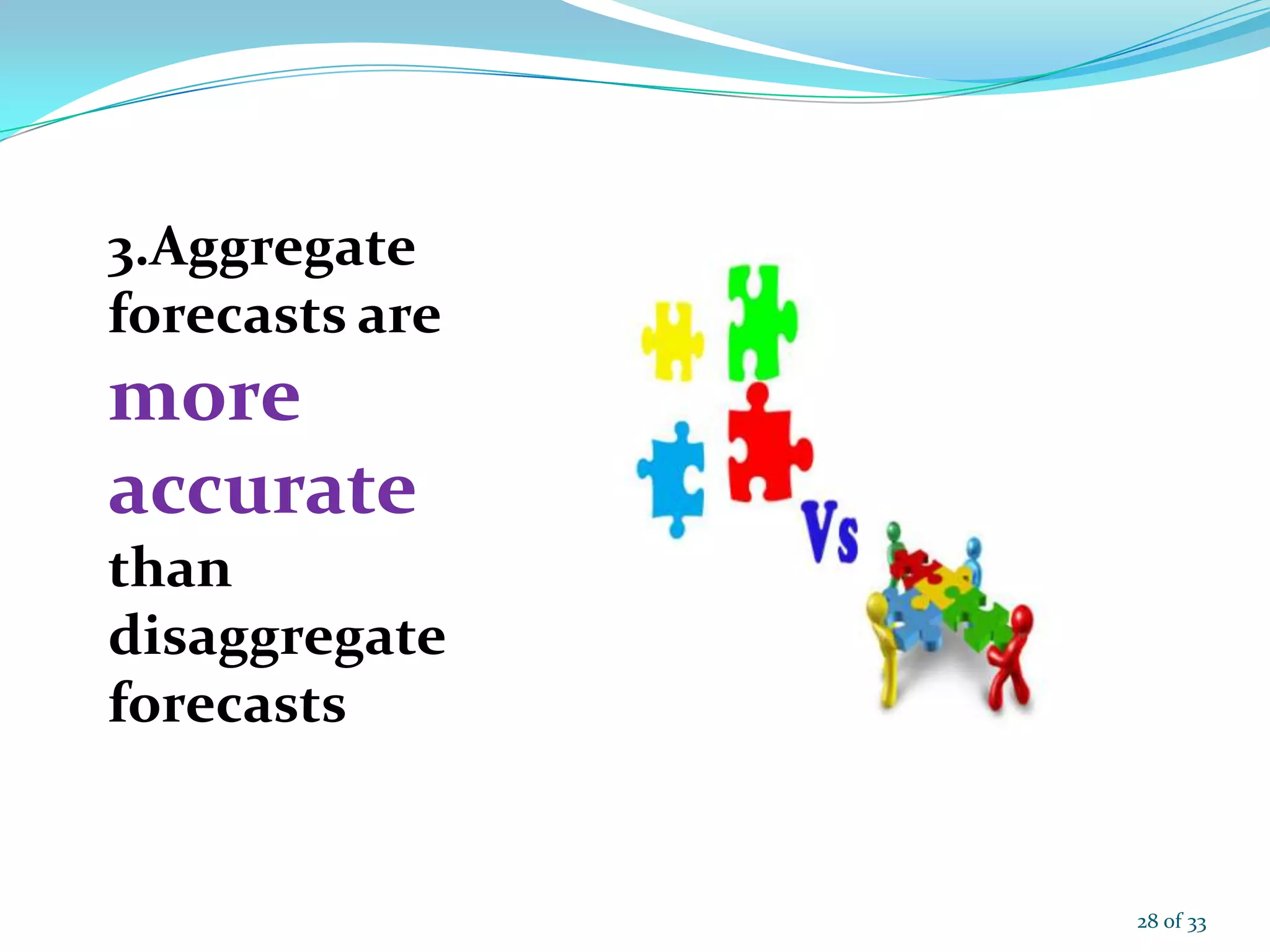
3.Aggregate
forecasts are
more
accurate
than
disaggregate
forecasts
28 of 33
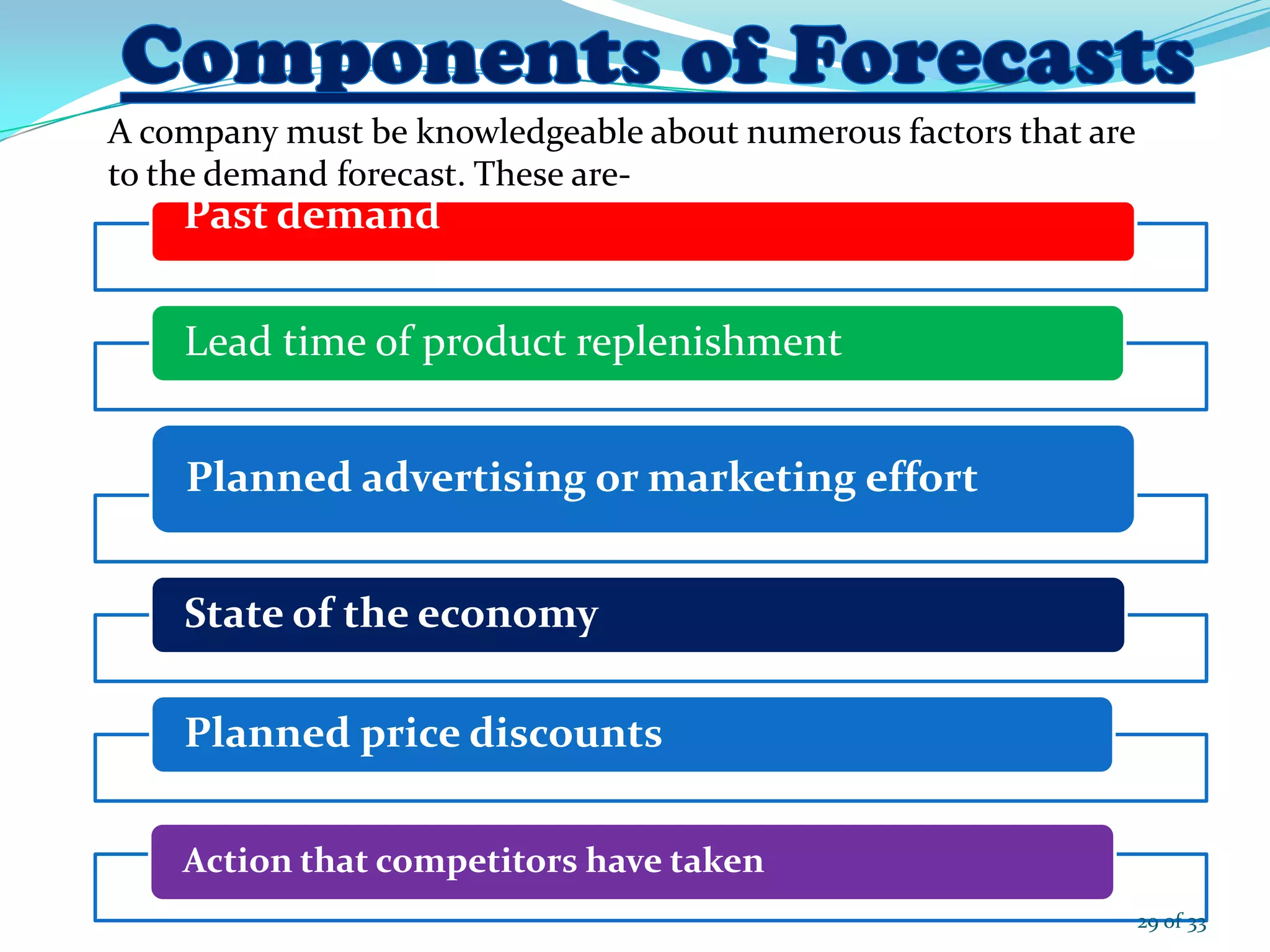
A company must be knowledgeable about numerous factors that are
to the demand forecast. These are-
Past demand
Lead time of product replenishment
Planned advertising or marketing effort
State of the economy
Planned price discounts
Action that competitors have taken
29 of 33
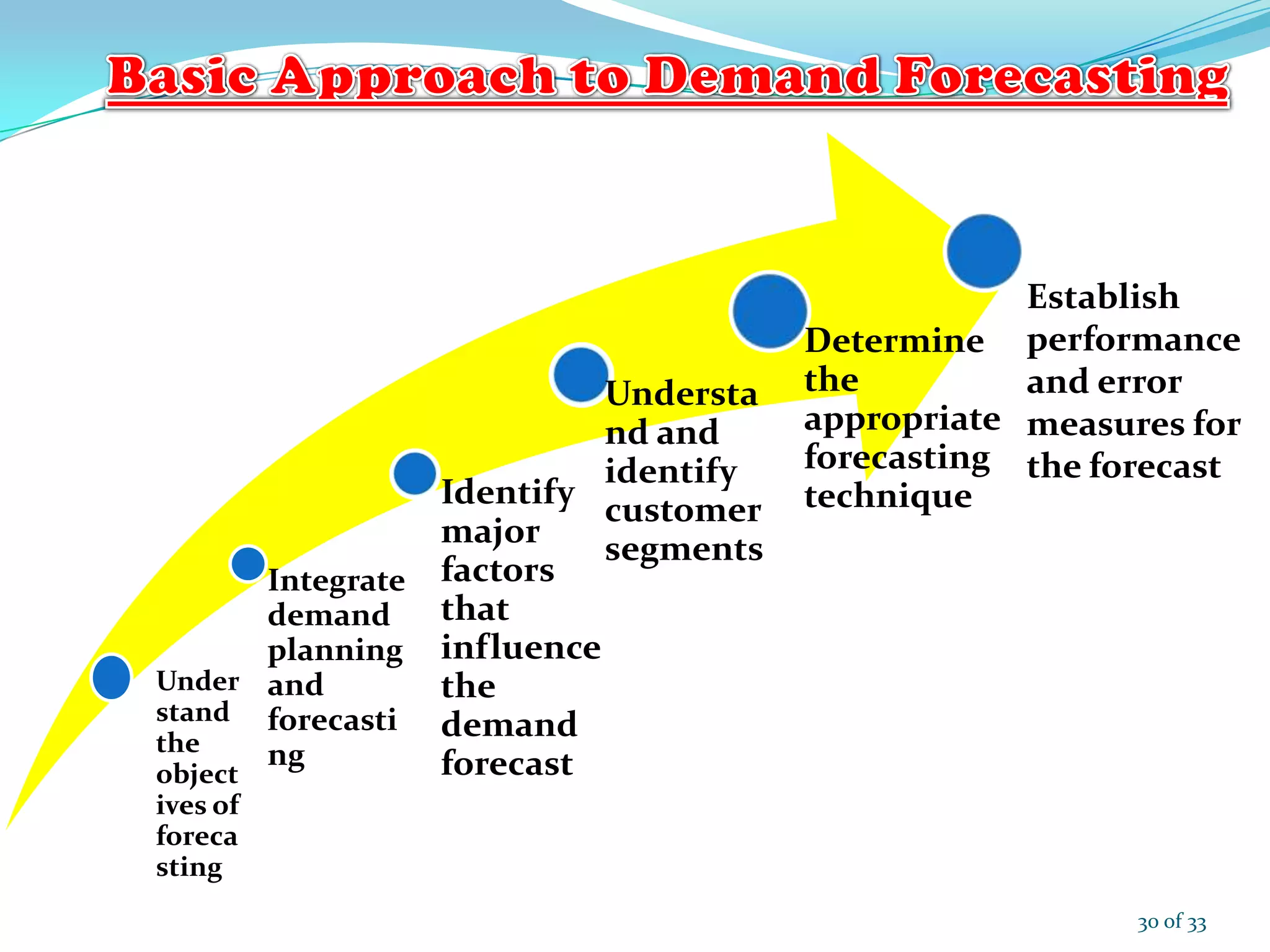
Under
stand
the
object
ives of
foreca
sting
Integrate
demand
planning
and
forecasti
ng
Identify
major
factors
that
influence
the
demand
forecast
Understa
nd and
identify
customer
segments
Determine
the
appropriate
forecasting
technique
Establish
performance
and error
measures for
the forecast
30 of 33
 Qualitative: primarily subjective; rely on
judgment and opinion
 Time Series: use historical demand only
 Static
 Adaptive
 Causal: use the relationship between demand
and some other factor to develop forecast
 Simulation:
 Imitate consumer choices that give rise to demand
 Can combine time series and causal methods
31 of 33
• Collaborate
in building
forecasts
1
• The value of
data depends
on where you
are in the
supply chain
2
• Be sure to
distinguish
between
demand
and sales
3
32 of 33
Thanks
33

Distribution network desing

  • 1.
  • 2.
  • 3.
    Serial No. Name Roll No.Mail Leader 1. Sohag Hossain 10107478 sohagbbamkt@gmail.com  2. Md. Zulfikar Haider 10087408 zulfikarhdr@gmail.com 3. Md. Ashraful Islam 10047428 ashraful.ru28@yahoo.com 4. Tania khatun 10217438 tania7438@gmail.com 5. Tusar Ahamed 10117468 tusar09bd@gmail.com 6. Md. Delwar hossain 10087488 delwar_ru007@yahoo.com 7. Md. Atikur Rahman 10087498 atik.bbaru@gmail.com 8. Md Abdul Alim 10027508 alim.ru7508@gmail.com 9. Hossen Soharawordi 10097518 sohagmkt18@gmail.com 3 of 33
  • 4.
  • 5.
  • 6.
     Distribution :the steps taken to move and store a product from the supplier stage to the customer stage in a supply chain  Distribution directly affects cost and the customer experience and therefore drives profitability  Choice of distribution network can achieve supply chain objectives from low cost to high responsiveness  Examples: Wal-Mart, Dell, Proctor & Gamble, Grainger 6 of 33
  • 7.
     Distribution networkperformance evaluated along two dimensions at the highest level: • Customer needs that are met • Cost of meeting customer needs  Distribution network design options must therefore be compared according to their impact on customer service and the cost to provide this level of service 7 of 33
  • 8.
    Elements of customerservice influenced by network structure:  Response time  Product variety  Product availability  Customer experience  Time to market  Order visibility  Return ability Supply chain costs affected by network structure:  Inventories  Transportation  Facilities and handling  Information 8 of 33
  • 9.
    Response time andNumber of Facilities Number of Facilities Response Time 9 Of 33
  • 10.
    Inventory Costs andNumber of Facilities Inventory Costs Number of facilities 10 of 33
  • 11.
    Transportation Costs andNumber of Facilities Transportation Costs Number of facilities 11 of 33
  • 12.
    Facility Costs andNumber of Facilities Facility Costs Number of facilities 12 of33
  • 13.
    Response Time Variation inLogistics Costs and Response Time with Number of Facilities Number of Facilities Total Logistics Costs 13 of 33
  • 14.
    • Manager maketwo key decisions when designing a distribution network. 1. Will the product be delivered to the customer location or picked up from a preordained site. 2. Will product flow through an intermediary ( or intermediate location) 14 of 33
  • 15.
    Manufacturer Storage withDirect Shipping Manufacturer Storage with Direct Shipping and In-Transit Merge Distributor Storage with Carrier Delivery Distributor Storage with Last Mile Delivery Manufacturer or Distributor Storage with Consumer Pickup Retail Storage with Consumer Pickup 15 of 33
  • 16.
    Manufacturer Storage with DirectShipping Manufacturer Retailer Customers Product Flow Information Flow 16 of 33
  • 17.
    Distributor Storage withCarrier Delivery Factories Customers Product Flow Information Flow Warehouse Storage by Distributor/Retailer 17 of 33
  • 18.
    Manufacturer Storage withDirect Shipping and In-Transit Merge Network Factories Retailer Product Flow Information Flow In-Transit Merge by Carrier Customers 18 of 33
  • 19.
    Distributor Storage withLast Mile Delivery Factories Customers Product Flow Information Flow Distributor/Retailer Warehouse 19 of 33
  • 20.
    Manufacturer or DistributorStorage with Customer Pickup Factories Retailer Pickup Sites Product Flow Information Flow Cross Dock DC Customer Flow Customers 20 of 33
  • 21.
    Retail Storage withcustomer pickup Retailer Consumers RetailerRetailer Distributor Warehouse Manufacturers Distributor Warehouse 21 of 33
  • 22.
    Distribution Networks inPractice 1. The ownership structure of the distribution network can have as big as an impact as the type of distribution network 2. The choice of a distribution network has very long-term consequences 3. Consider whether an exclusive distribution strategy is advantageous 4. Product, price, commoditization, and criticality have an impact on the type of distribution system preferred by customers 22 of 33
  • 23.
  • 24.
     The basisfor all strategic and planning decisions in a supply chain  Used for both push and pull processes  Examples:  Production: scheduling, inventory, aggregate planning  Marketing: sales force allocation, promotions, new production introduction  Finance: plant/equipment investment, budgetary planning  Personnel: workforce planning, hiring, layoffs  All of these decisions are interrelated 24 of 33
  • 25.
    Hypothetical example offorecasting Demand for Mercedes E Class Time Jan Feb Mar Apr May Jun Jul Aug Actual demand (past sales) Predicted demand We try to predict the future by looking back at the past Predicted demand looking back six months 25 of 33
  • 26.
    1.Forecasts are always wrong. Shouldinclude expected value and measure of error 26 of 33
  • 27.
    2.Long-term forecasts are lessaccurate than short-term forecasts (forecast horizon is important) 27
  • 28.
  • 29.
    A company mustbe knowledgeable about numerous factors that are to the demand forecast. These are- Past demand Lead time of product replenishment Planned advertising or marketing effort State of the economy Planned price discounts Action that competitors have taken 29 of 33
  • 30.
  • 31.
     Qualitative: primarilysubjective; rely on judgment and opinion  Time Series: use historical demand only  Static  Adaptive  Causal: use the relationship between demand and some other factor to develop forecast  Simulation:  Imitate consumer choices that give rise to demand  Can combine time series and causal methods 31 of 33
  • 32.
    • Collaborate in building forecasts 1 •The value of data depends on where you are in the supply chain 2 • Be sure to distinguish between demand and sales 3 32 of 33
  • 33.