SIMPLE PENDULUM……..
………..Simple………. 
Pendulum…………..
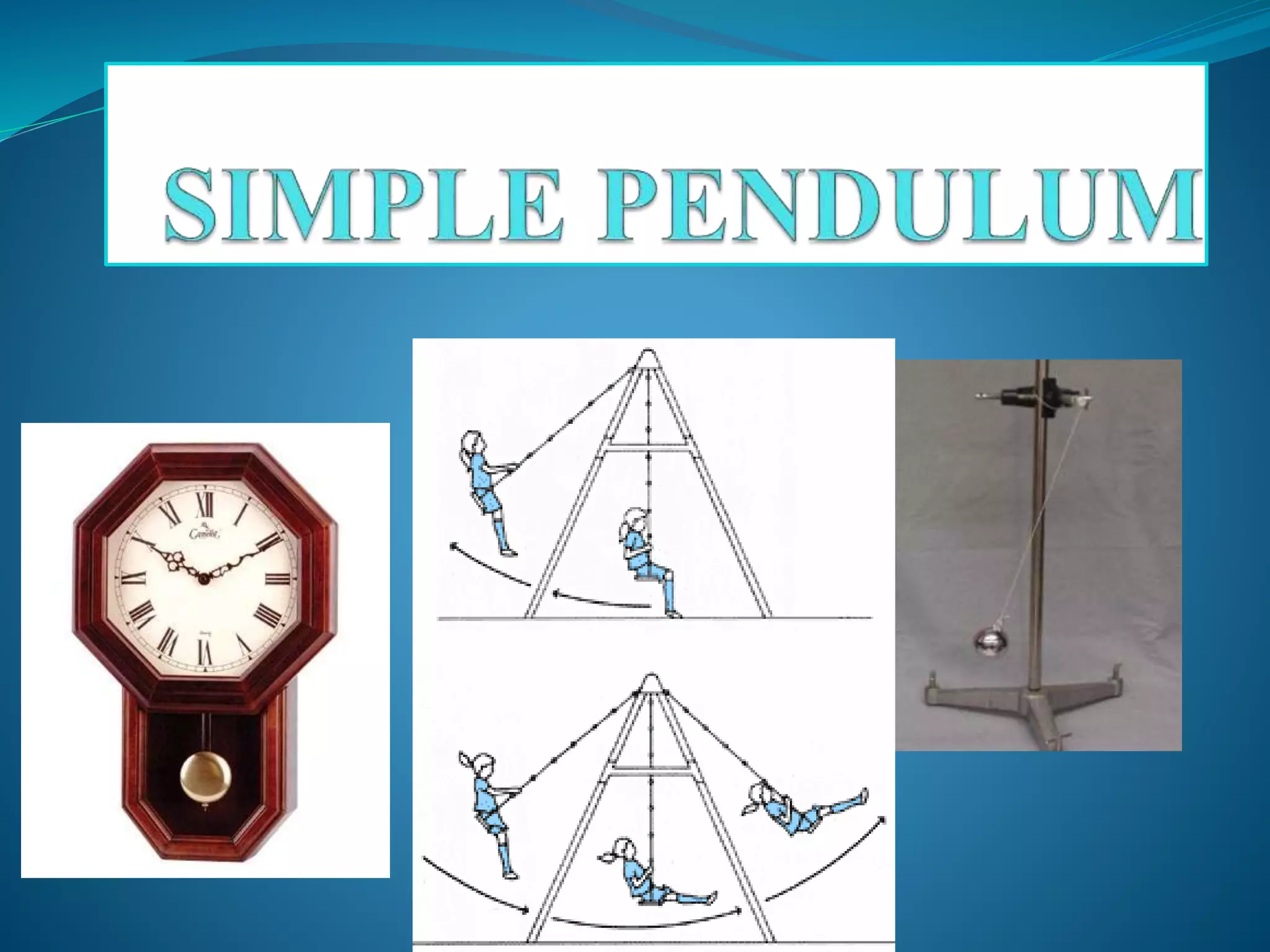
Simple Pendulum……….. 
Consists of a metal ball 
(bob) which is suspended freely 
from a fixed point using an 
inelastic string.
A SIMPLE PENDULUM 
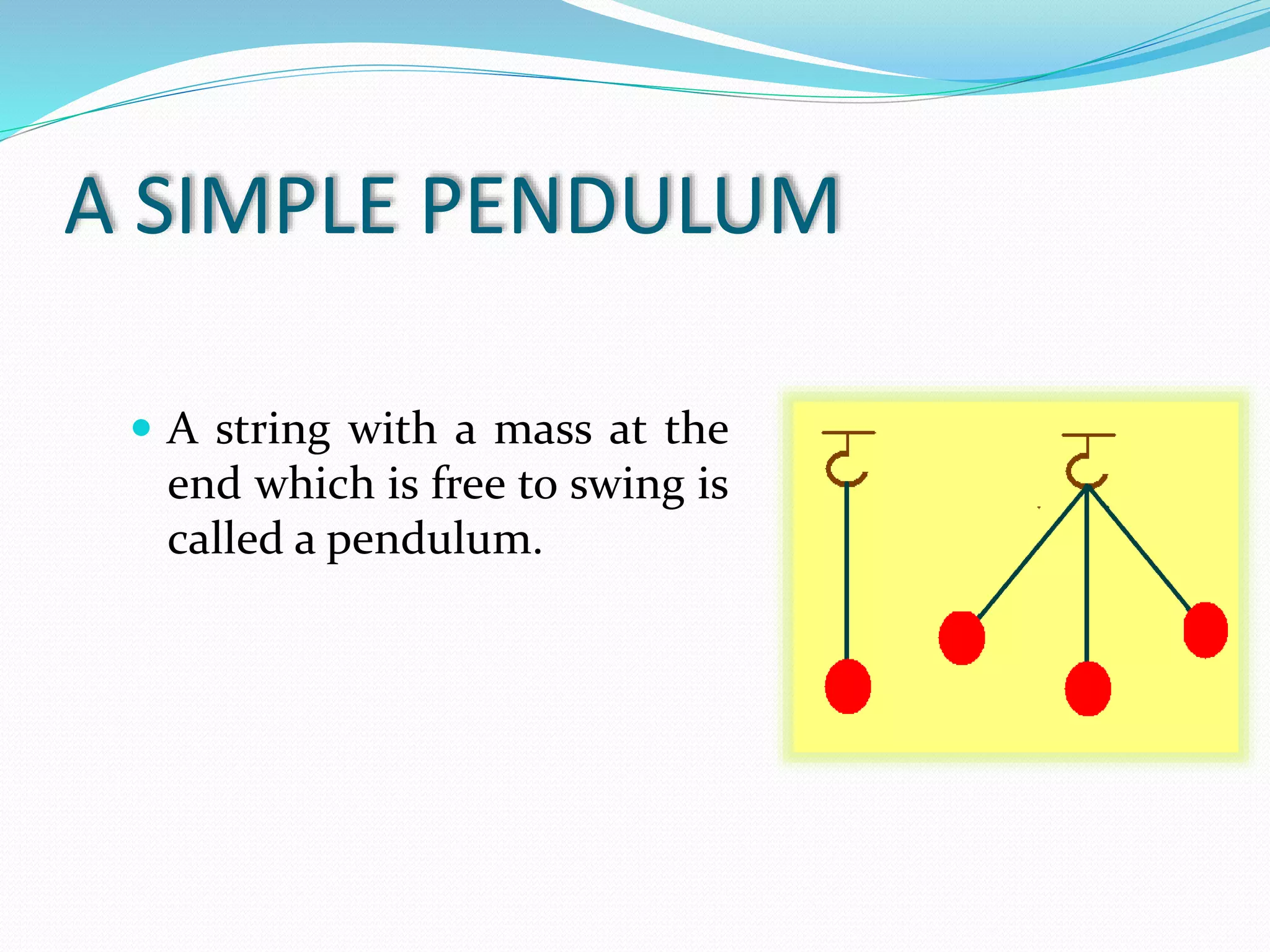
 A string with a mass at the 
end which is free to swing is 
called a pendulum.
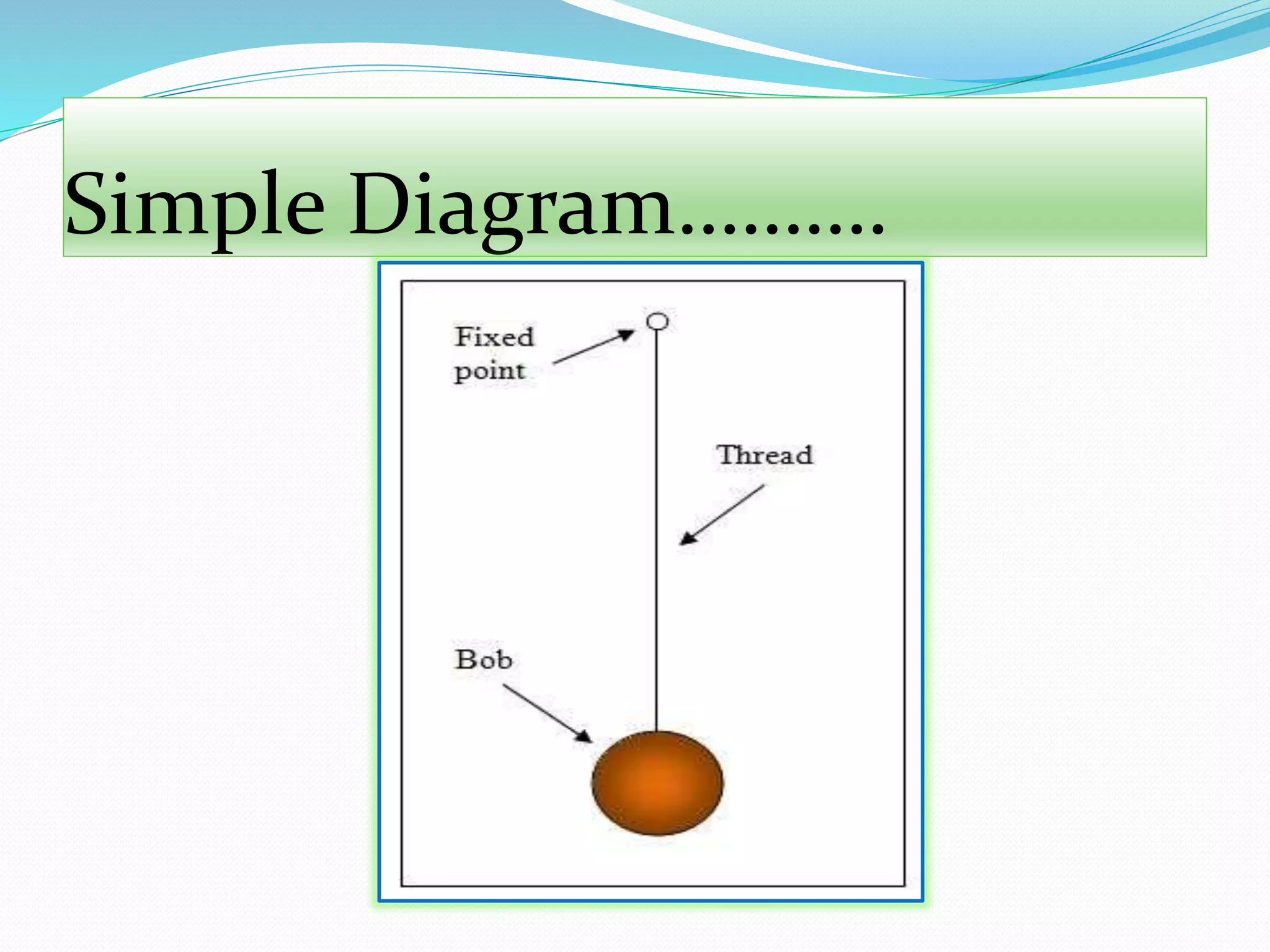
Simple Diagram……….
TERMS…………….. 
 Length 
 Mass of bob 
 Oscillations 
 Equilibrium Position 
 Amplitude 
 Period 
 Frequency
LENGTH OF THE PENDULUM 
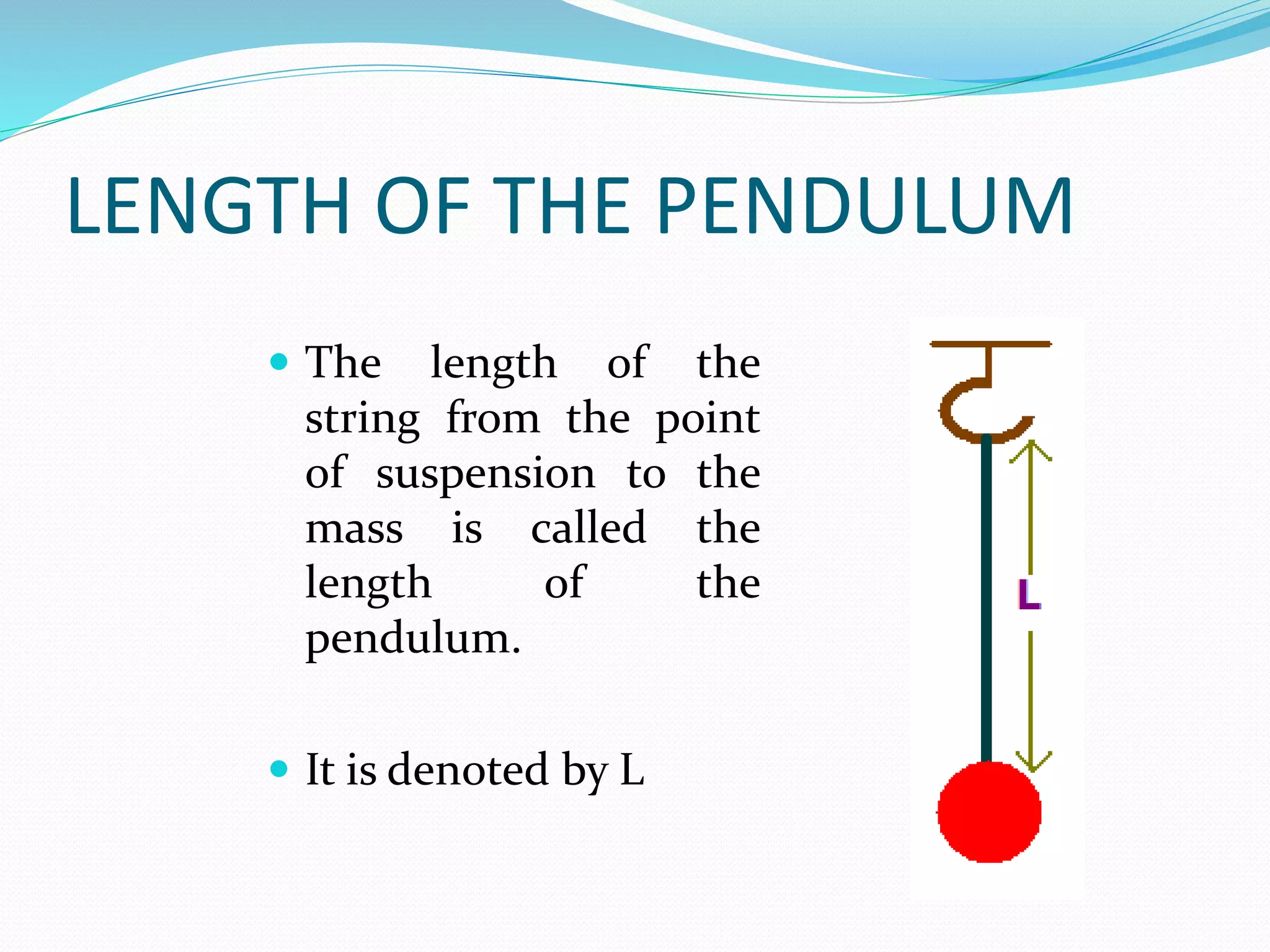
 The length of the 
string from the point 
of suspension to the 
mass is called the 
length of the 
pendulum. 
 It is denoted by L
MASS OF THE BOB 
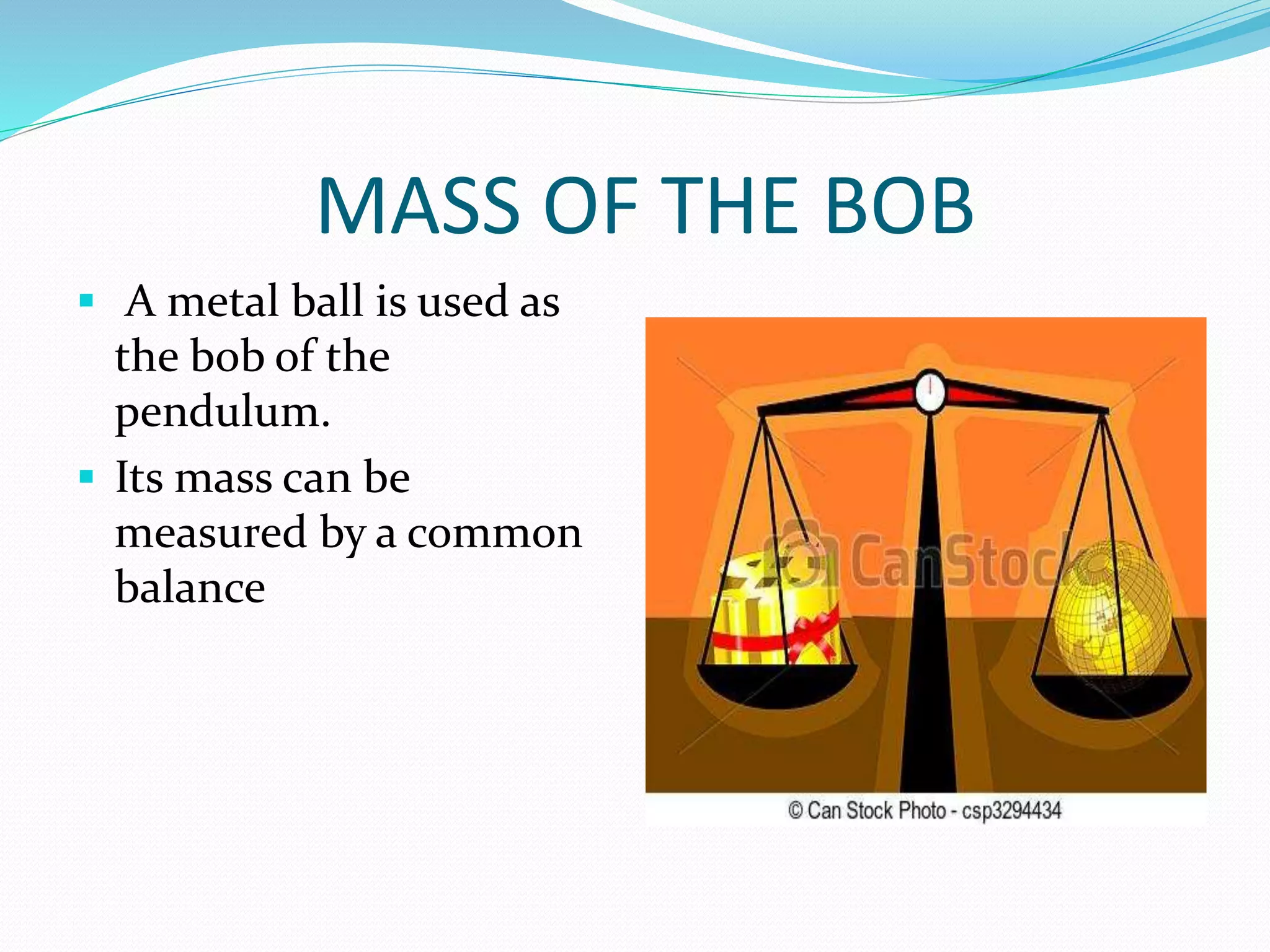
 A metal ball is used as 
the bob of the 
pendulum. 
 Its mass can be 
measured by a common 
balance
PERIODIC MOTION 
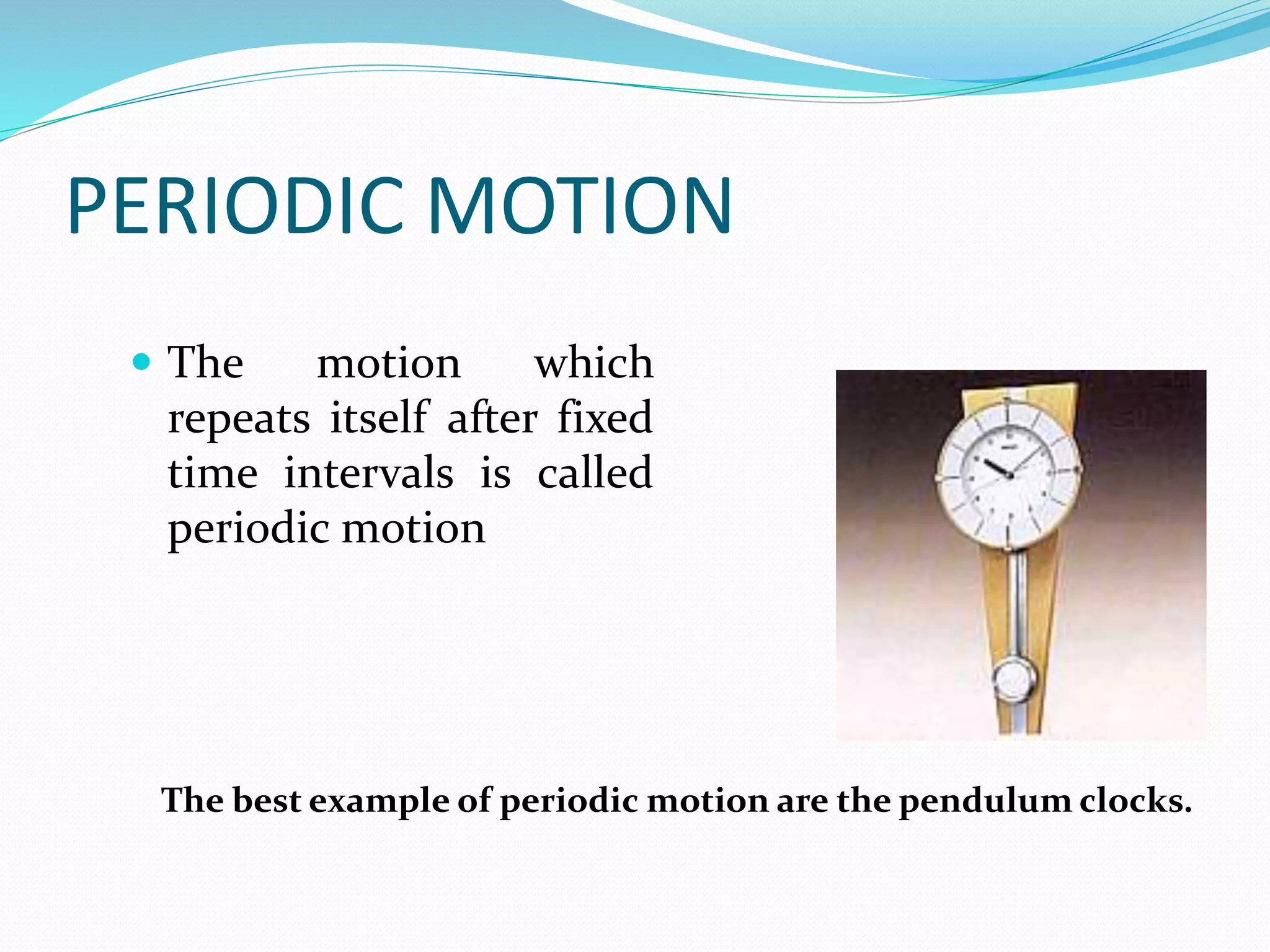
 The motion which 
repeats itself after fixed 
time intervals is called 
periodic motion 
The best example of periodic motion are the pendulum clocks.
TO AND FRO MOTION 
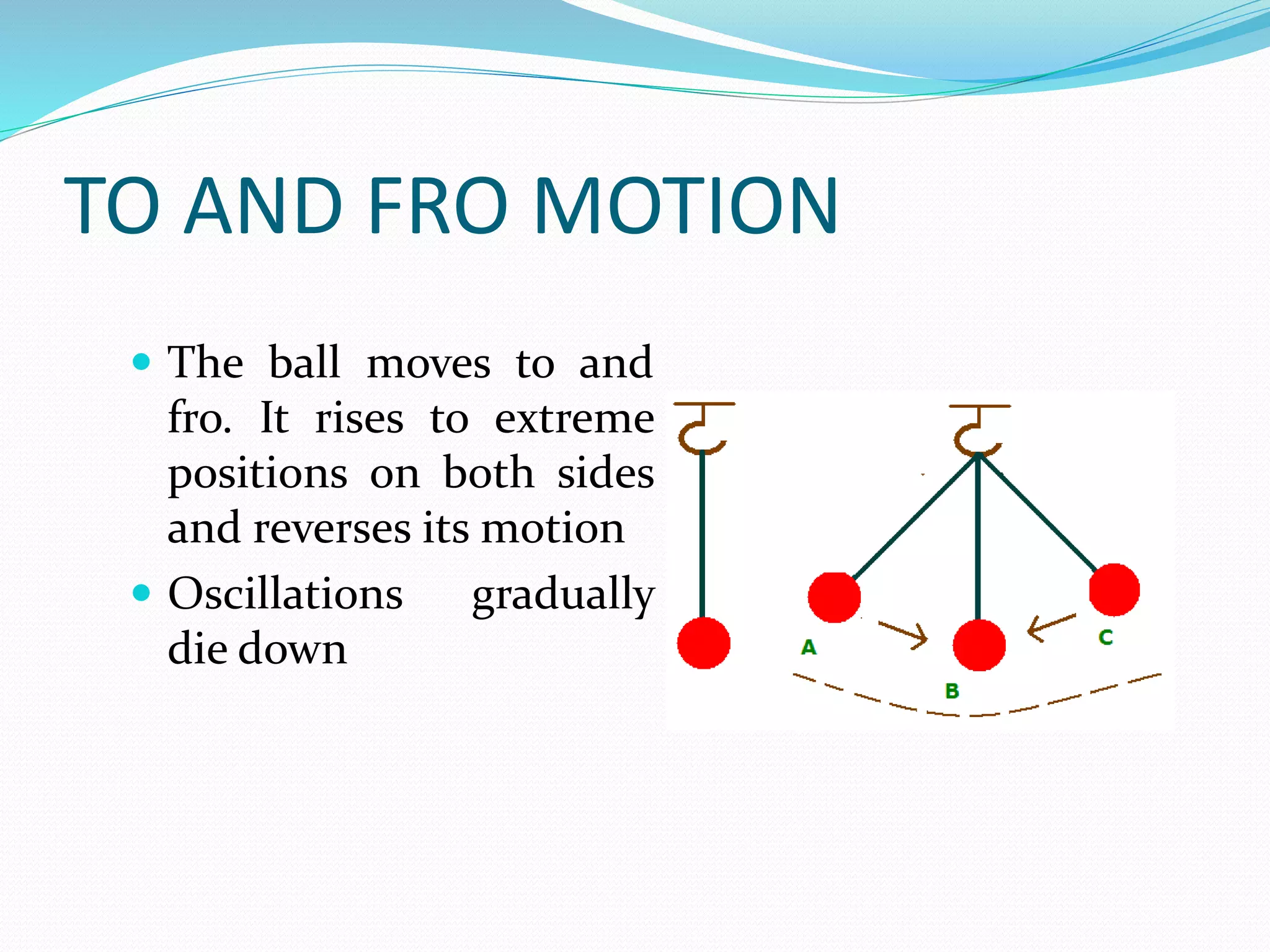
 The ball moves to and 
fro. It rises to extreme 
positions on both sides 
and reverses its motion 
 Oscillations gradually 
die down
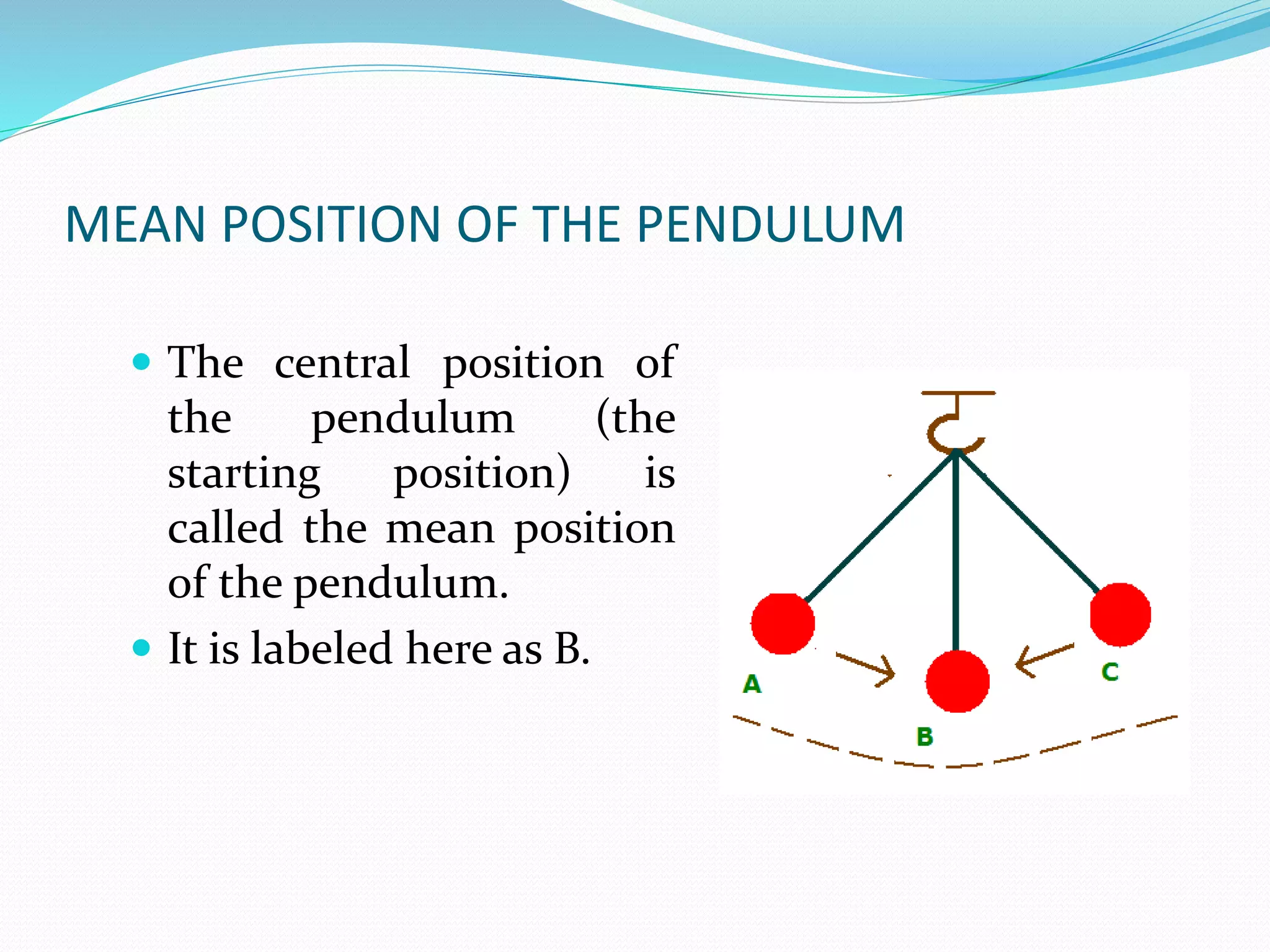
MEAN POSITION OF THE PENDULUM 
 The central position of 
the pendulum (the 
starting position) is 
called the mean position 
of the pendulum. 
 It is labeled here as B.
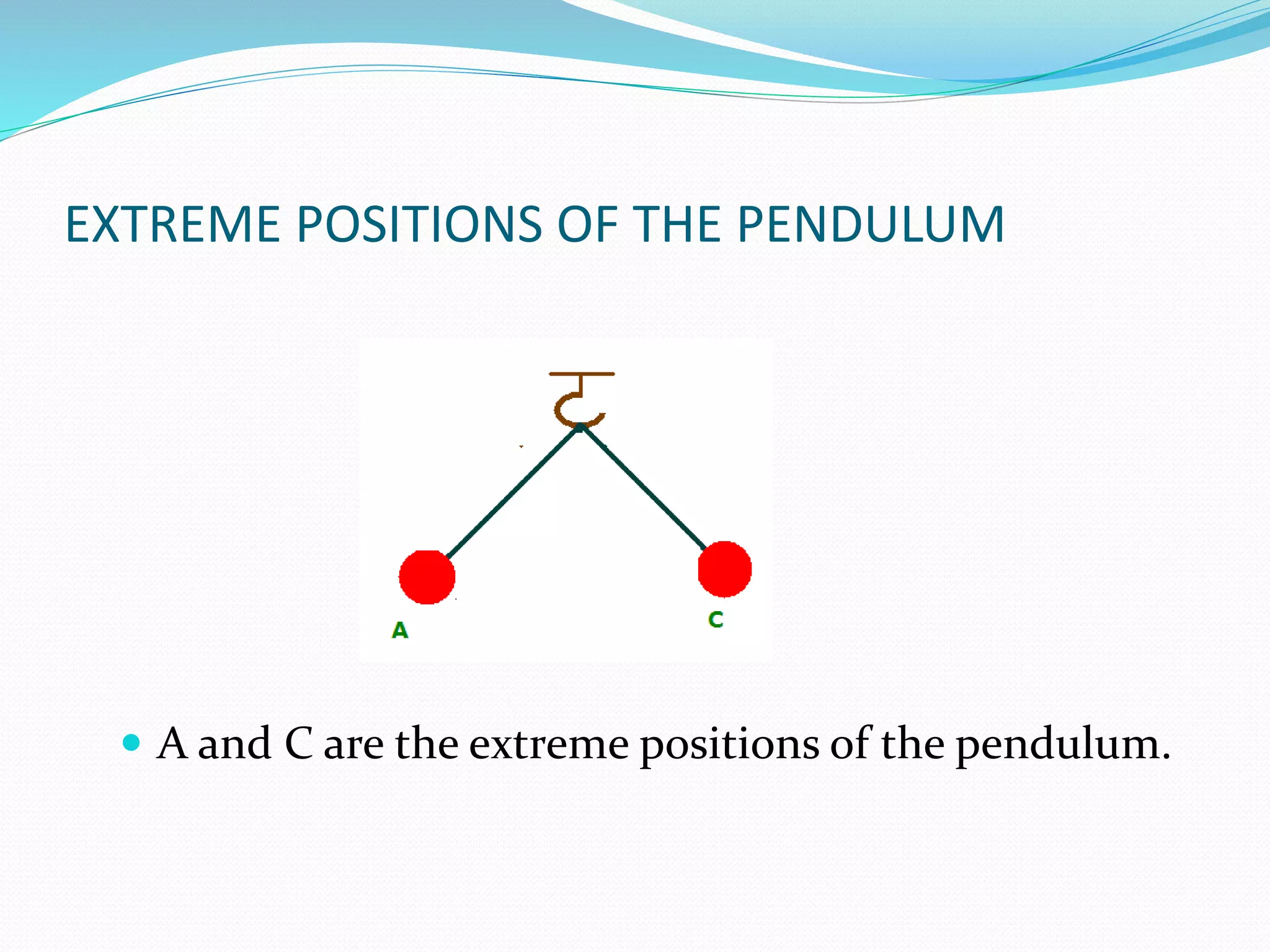
EXTREME POSITIONS OF THE PENDULUM 
 A and C are the extreme positions of the pendulum.
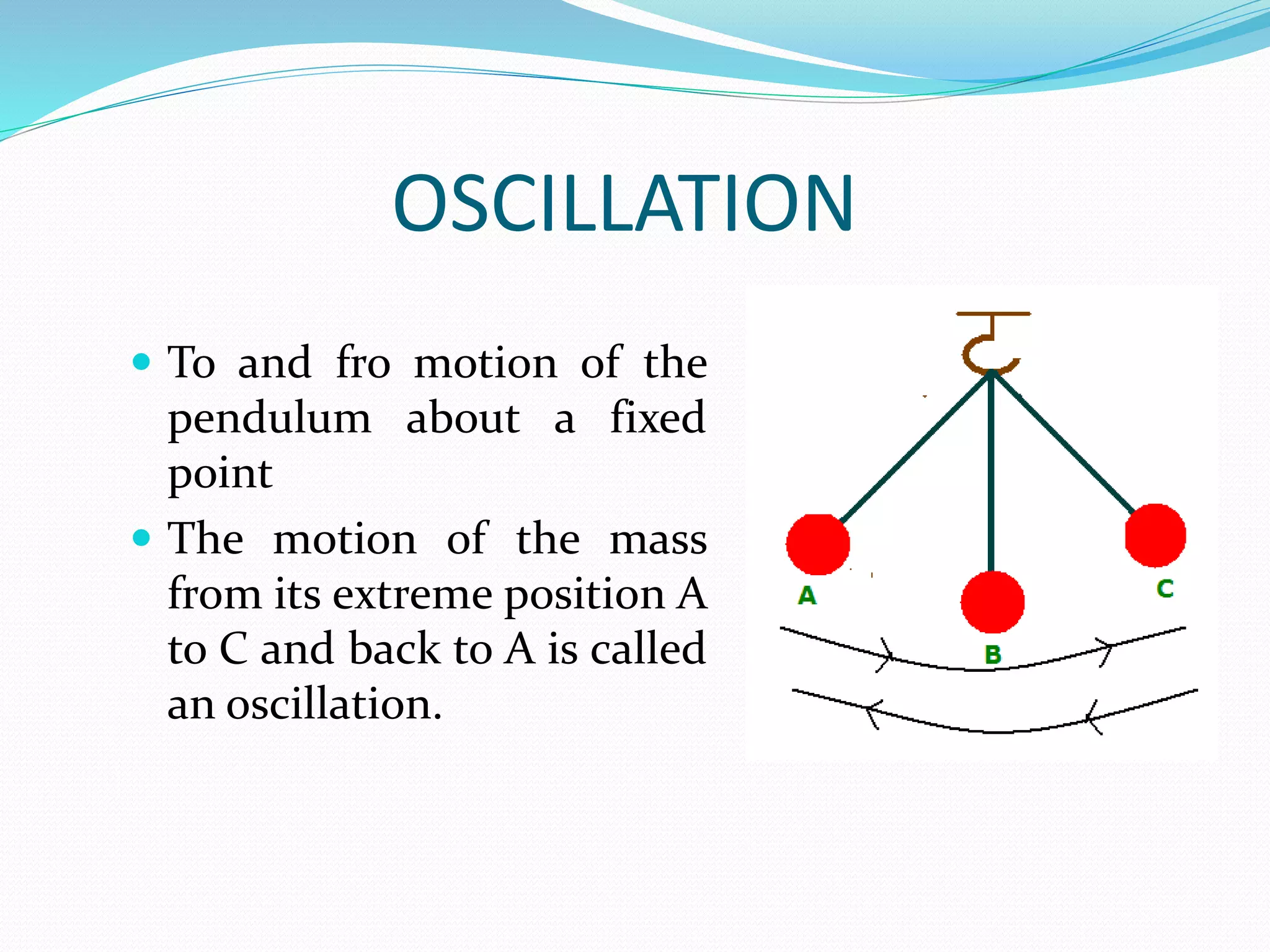
OSCILLATION 
 To and fro motion of the 
pendulum about a fixed 
point 
 The motion of the mass 
from its extreme position A 
to C and back to A is called 
an oscillation.
TIME TAKEN FOR ONE OSCILLATION 
 The time taken for one oscillation is very short and 
therefore, difficult to measure accurately. 
 To find the time taken, we find the time taken for large 
number say 20 oscillations. This time divided by 20 
will give us time taken for one oscillation.
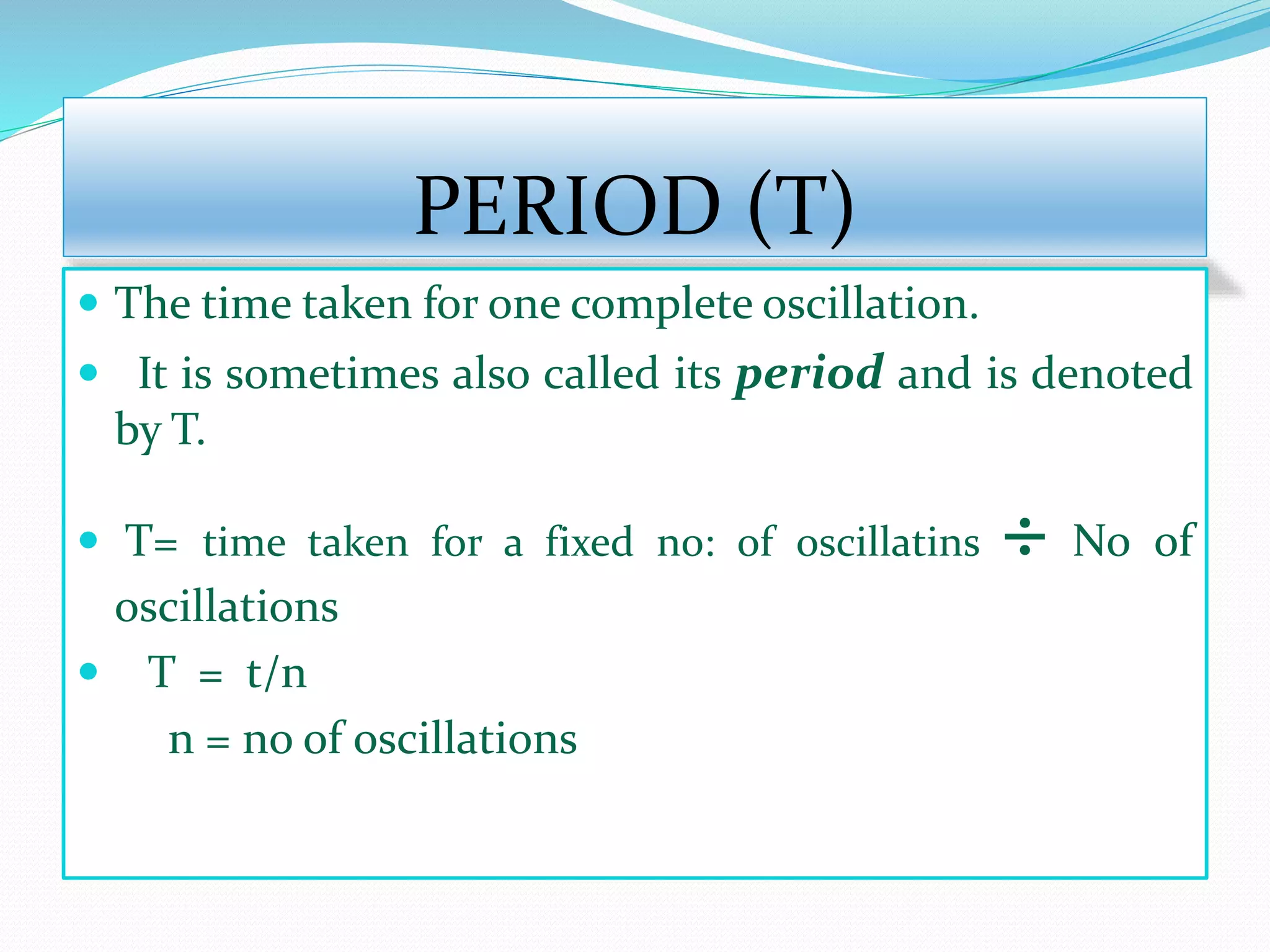
PERIOD (T) 
 The time taken for one complete oscillation. 
 It is sometimes also called its period and is denoted 
by T. 
 T= time taken for a fixed no: of oscillatins ÷ No of 
oscillations 
 T = t/n 
n = no of oscillations
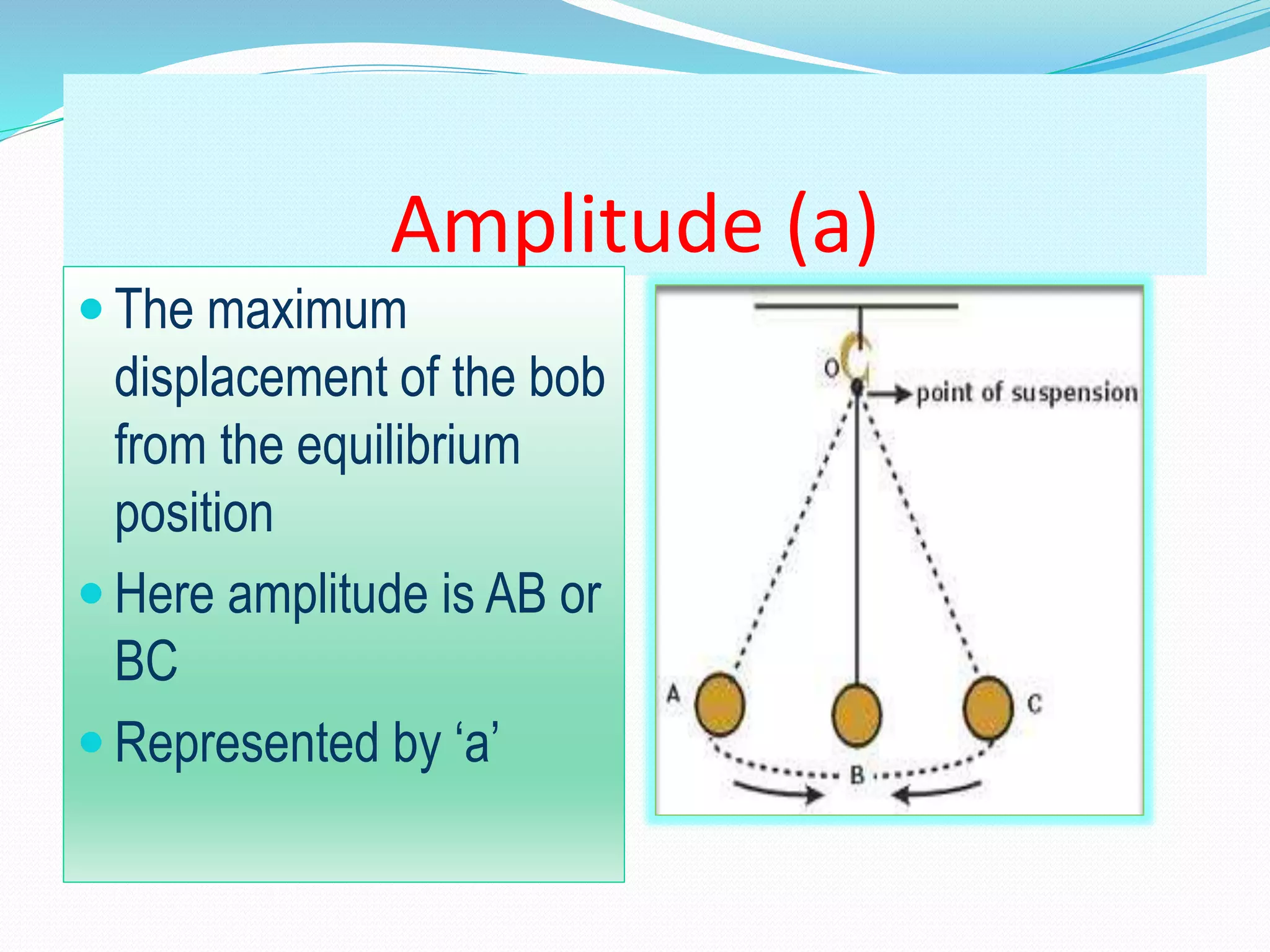
Amplitude (a) 
 The maximum 
displacement of the bob 
from the equilibrium 
position 
 Here amplitude is AB or 
BC 
 Represented by ‘a’
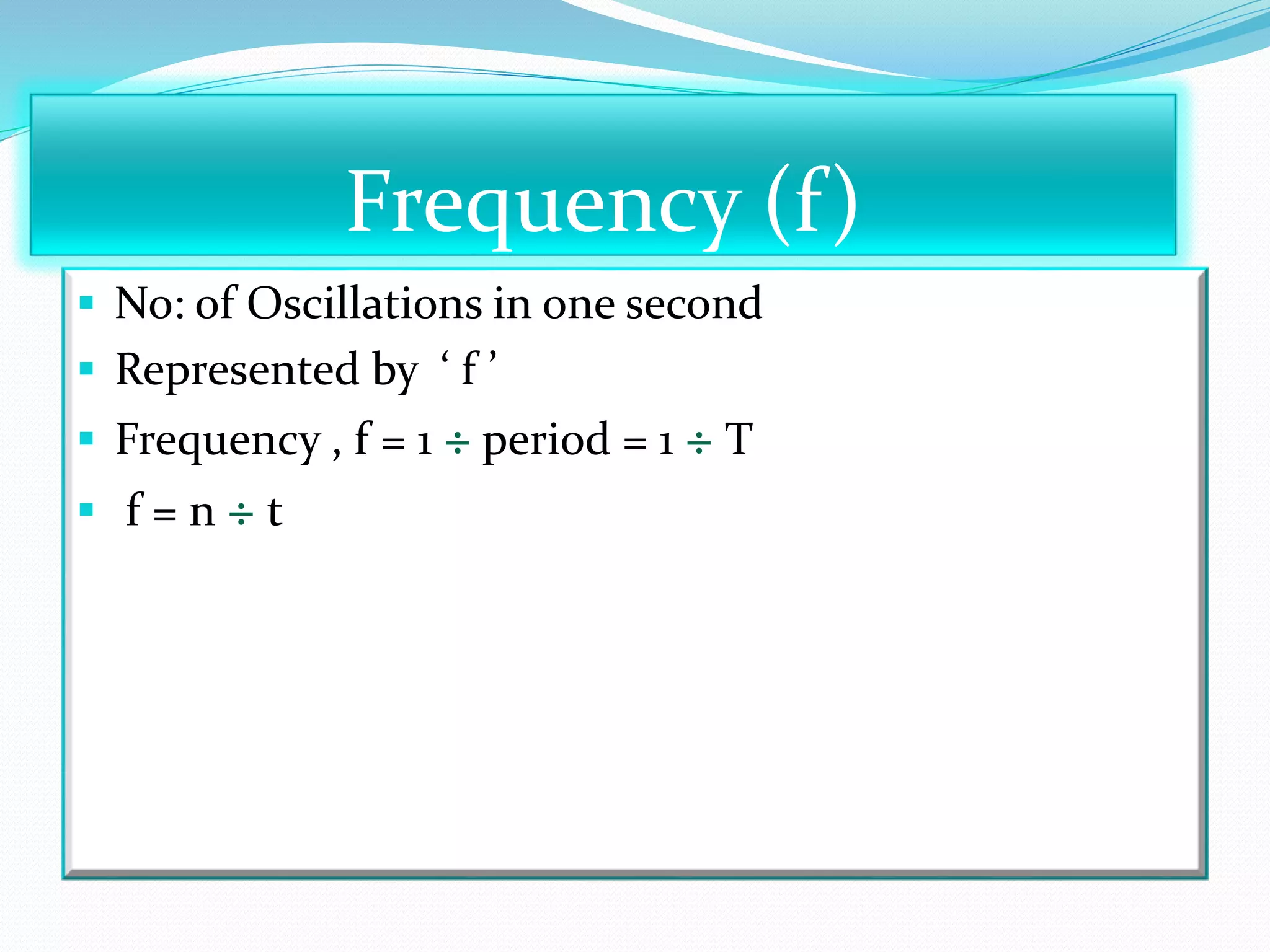
Frequency (f ) 
 No: of Oscillations in one second 
 Represented by ‘ f ’ 
 Frequency , f = 1 ÷ period = 1 ÷ T 
 f = n ÷ t
A Sample 
Video……………

Wave motion 003

  • 2.
  • 3.
  • 5.
    Simple Pendulum……….. Consistsof a metal ball (bob) which is suspended freely from a fixed point using an inelastic string.
  • 6.
    A SIMPLE PENDULUM  A string with a mass at the end which is free to swing is called a pendulum.
  • 7.
  • 8.
    TERMS……………..  Length  Mass of bob  Oscillations  Equilibrium Position  Amplitude  Period  Frequency
  • 9.
    LENGTH OF THEPENDULUM  The length of the string from the point of suspension to the mass is called the length of the pendulum.  It is denoted by L
  • 10.
    MASS OF THEBOB  A metal ball is used as the bob of the pendulum.  Its mass can be measured by a common balance
  • 11.
    PERIODIC MOTION The motion which repeats itself after fixed time intervals is called periodic motion The best example of periodic motion are the pendulum clocks.
  • 12.
    TO AND FROMOTION  The ball moves to and fro. It rises to extreme positions on both sides and reverses its motion  Oscillations gradually die down
  • 13.
    MEAN POSITION OFTHE PENDULUM  The central position of the pendulum (the starting position) is called the mean position of the pendulum.  It is labeled here as B.
  • 14.
    EXTREME POSITIONS OFTHE PENDULUM  A and C are the extreme positions of the pendulum.
  • 15.
    OSCILLATION  Toand fro motion of the pendulum about a fixed point  The motion of the mass from its extreme position A to C and back to A is called an oscillation.
  • 16.
    TIME TAKEN FORONE OSCILLATION  The time taken for one oscillation is very short and therefore, difficult to measure accurately.  To find the time taken, we find the time taken for large number say 20 oscillations. This time divided by 20 will give us time taken for one oscillation.
  • 17.
    PERIOD (T) The time taken for one complete oscillation.  It is sometimes also called its period and is denoted by T.  T= time taken for a fixed no: of oscillatins ÷ No of oscillations  T = t/n n = no of oscillations
  • 18.
    Amplitude (a) The maximum displacement of the bob from the equilibrium position  Here amplitude is AB or BC  Represented by ‘a’
  • 19.
    Frequency (f )  No: of Oscillations in one second  Represented by ‘ f ’  Frequency , f = 1 ÷ period = 1 ÷ T  f = n ÷ t
  • 20.