Windows Privilege Escalation
A Pentester's Methodology to Discover and Exploit flaws on the network
• Riyaz Walikar
• @riyazwalikar
• @wincmdfu
• http://ibreak.software
• OWASP Bangalore chapter leader, null Bangalore contributor
• Trainer/Speaker: BlackHat Asia, BlackHat USA, nullcon Goa, nullcon
Delhi, c0c0n, OWASP AppSec USA
• This talk is not about
• Kernel level exploits
• Race conditions
• Heap/stack any form of overflows
• A pentester’s approach on a network
• jibber jabber from experience
• Real world examples
• Design issues, misconfigurations, binary planting, permission issues, forensics,
hash passing/spraying etc.
Limited privileges already obtained on the
machine/network via pentest, valid auth,
unicorns.
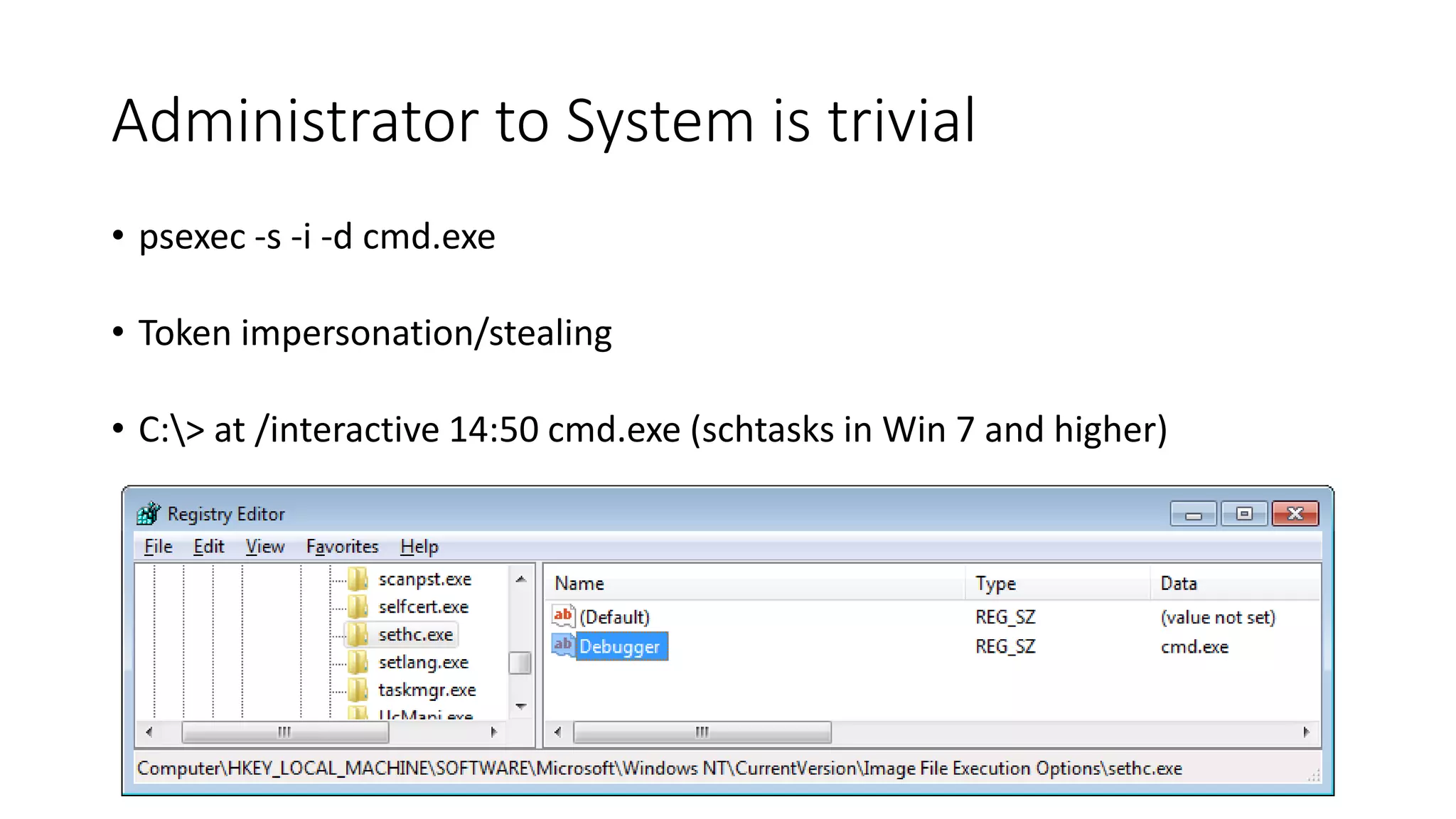
Administrator to System is trivial
• psexec -s -i -d cmd.exe
• Token impersonation/stealing
• C:> at /interactive 14:50 cmd.exe (schtasks in Win 7 and higher)
Demo
Limited user to
Administrator/SYSTEM
Local Admin to Domain
Admin
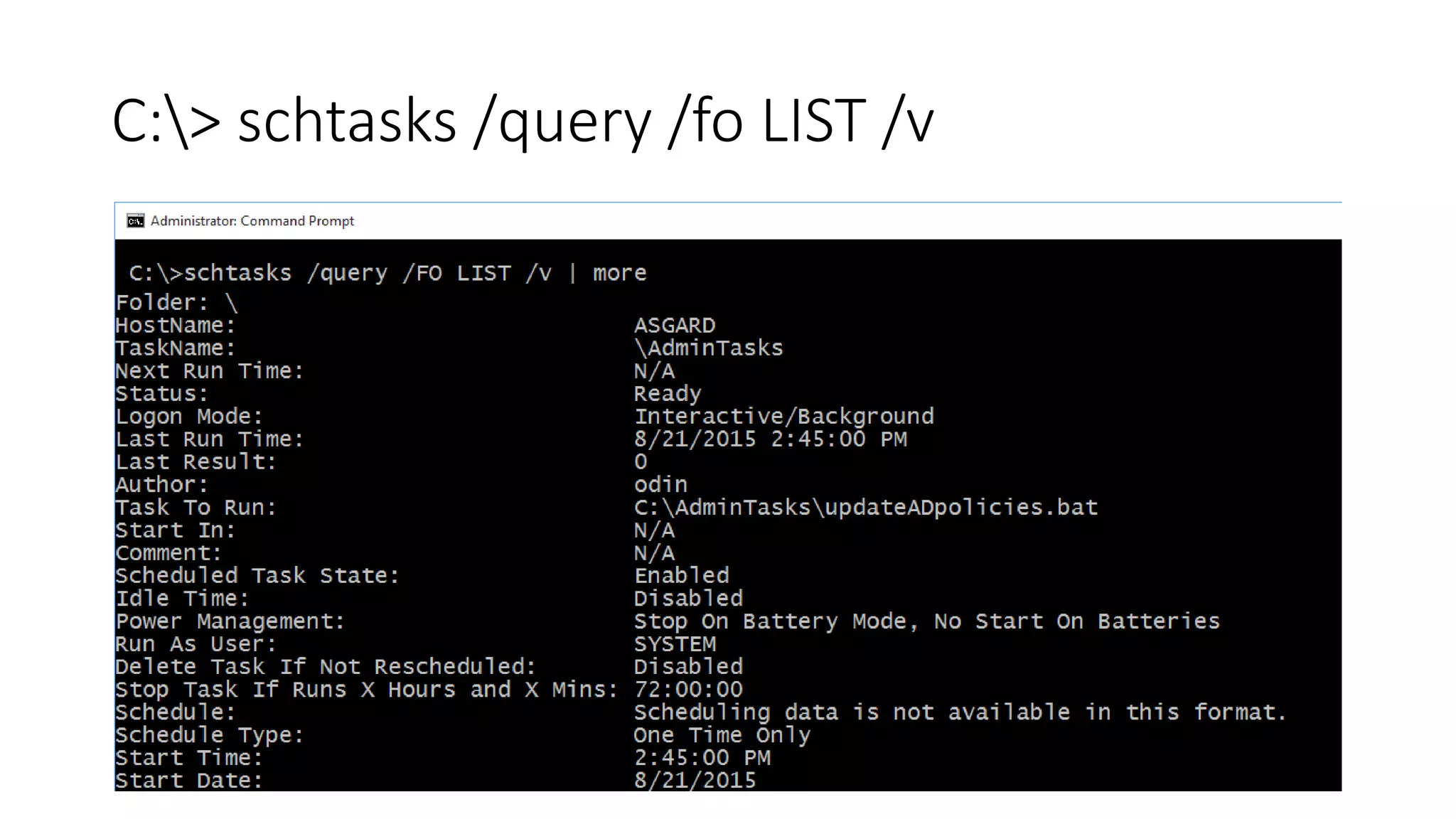
Abusing Scheduled
Tasks
C:> schtasks /query /fo LIST /v
C:> icacls C:AdminTasks
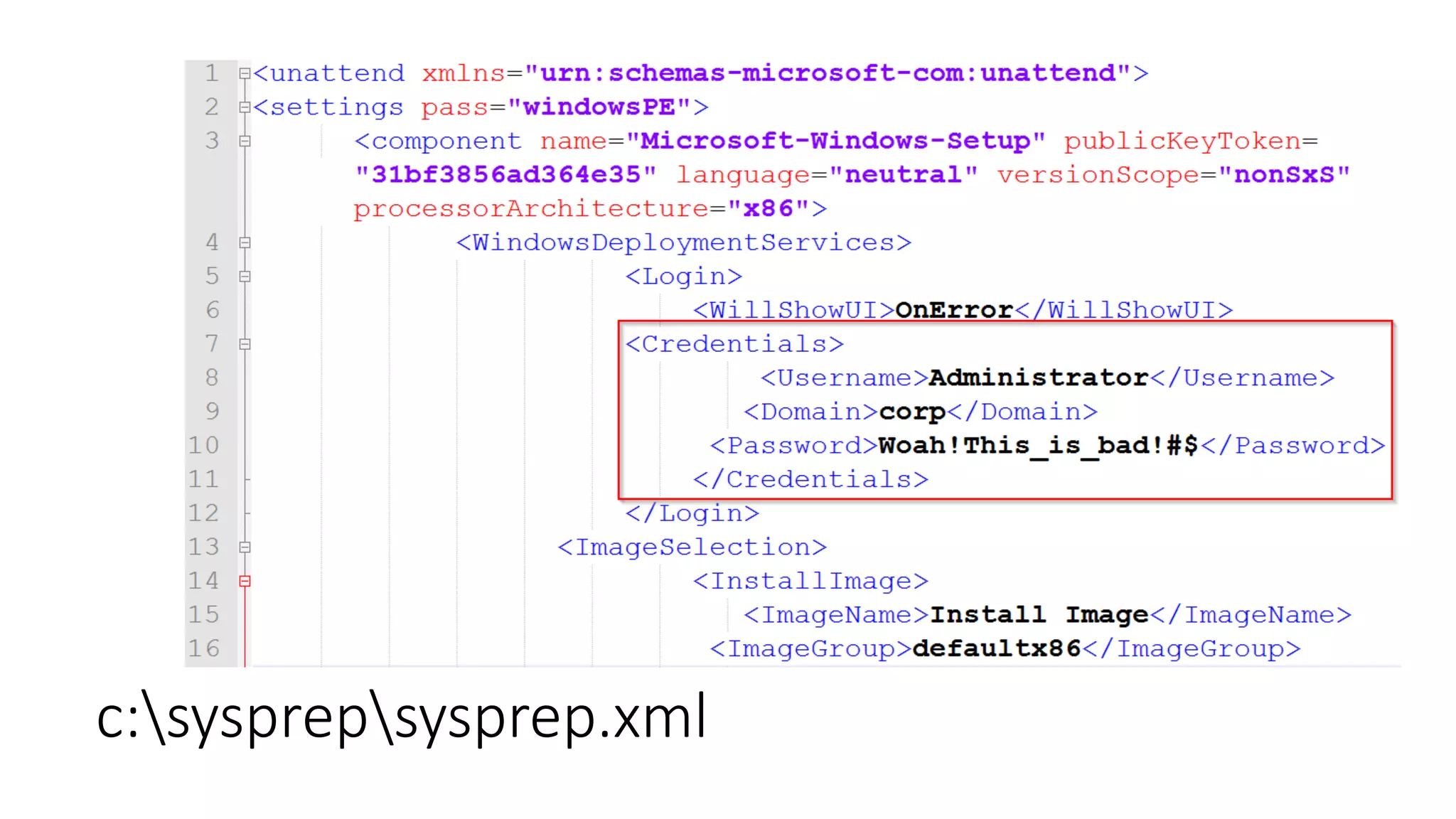
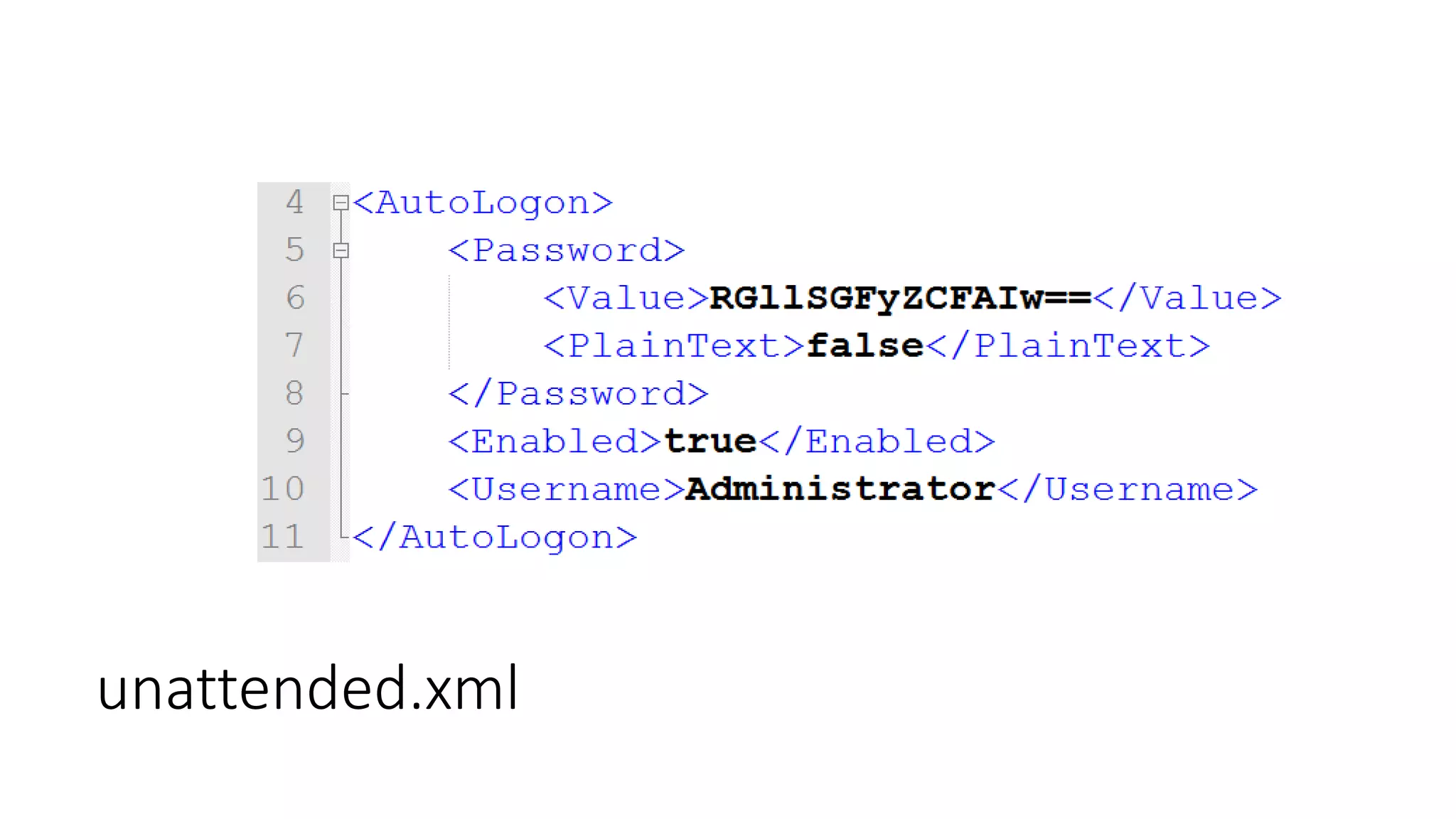
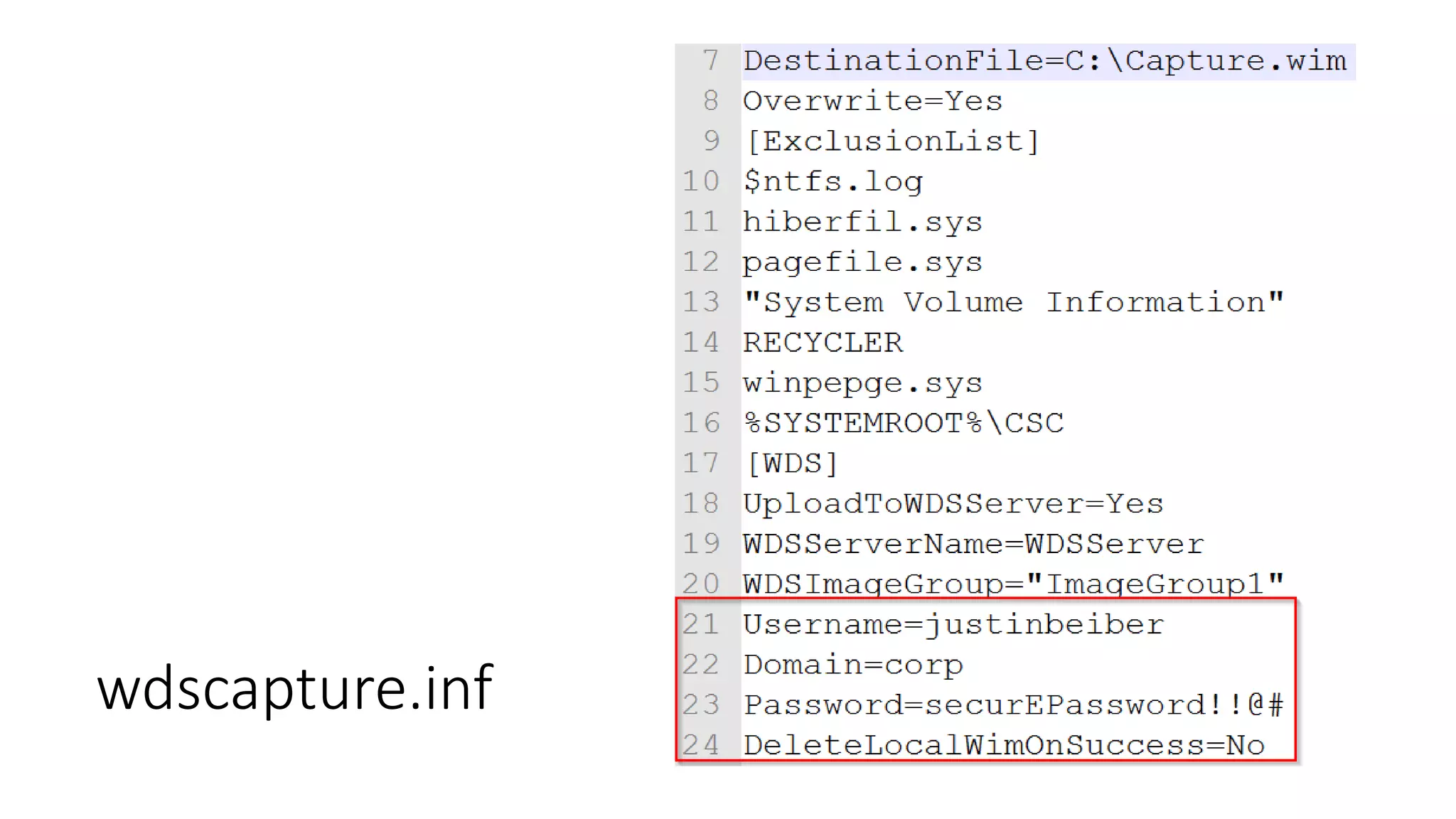
Passwords in files/registry
[unencrypted (like for real!)]
c:sysprep.inf
c:sysprepsysprep.xml
unattended.xml
wdscapture.inf
Groups.xml in sysvol
*vnc
• RealVNC [HKEY_LOCAL_MACHINESOFTWARERealVNCvncserver]
• TightVNC [HKEY_CURRENT_USERSoftwareTightVNCServer]
• TigerVNC [HKEY_LOCAL_USERSoftwareTigerVNCWinVNC4]
• UltraVNC [C:Program FilesUltraVNCultravnc.ini]
Other places / software
• Autologon [HKLMSoftwareMicrosoftWindows
NTCurrentVersionWinlogon]
• HKEY_CURRENT_USERSoftwareSimonTathamPuTTYSessions
• Search the OS using dir /s and findstr /S /I (.xlsx, .docx, .pdf etc.)
• Search the Windows registry using reg query
Forensics and Data
carving
Disk Image data
• Search for *.vmdk, *.vdi, *.vhd, *.qed
• Vmware, Virtual and Virtual PC disk images
• ISO files, Ghost images, Daemon tool images etc.
• Memory snapshopts (*.vmem files for example)
• Volatility FTW!
Demo
I came, I saw, I passed the hash
• use exploit/windows/smb/psexec
• Windows Credential Editor + net use + sysinternals psexec
• Windows Credential Editor + net use + wmiexec.py (Impacket)
• Good way to identify if the user is local admin on any other machine
Abusing Service
(mis)configurations
Service permission issues
• C:> sc qc <servicename>
Service permission issues
• C:accesschk -cqwvu <servicename> | *
Windows window
Messaging
Message Passing
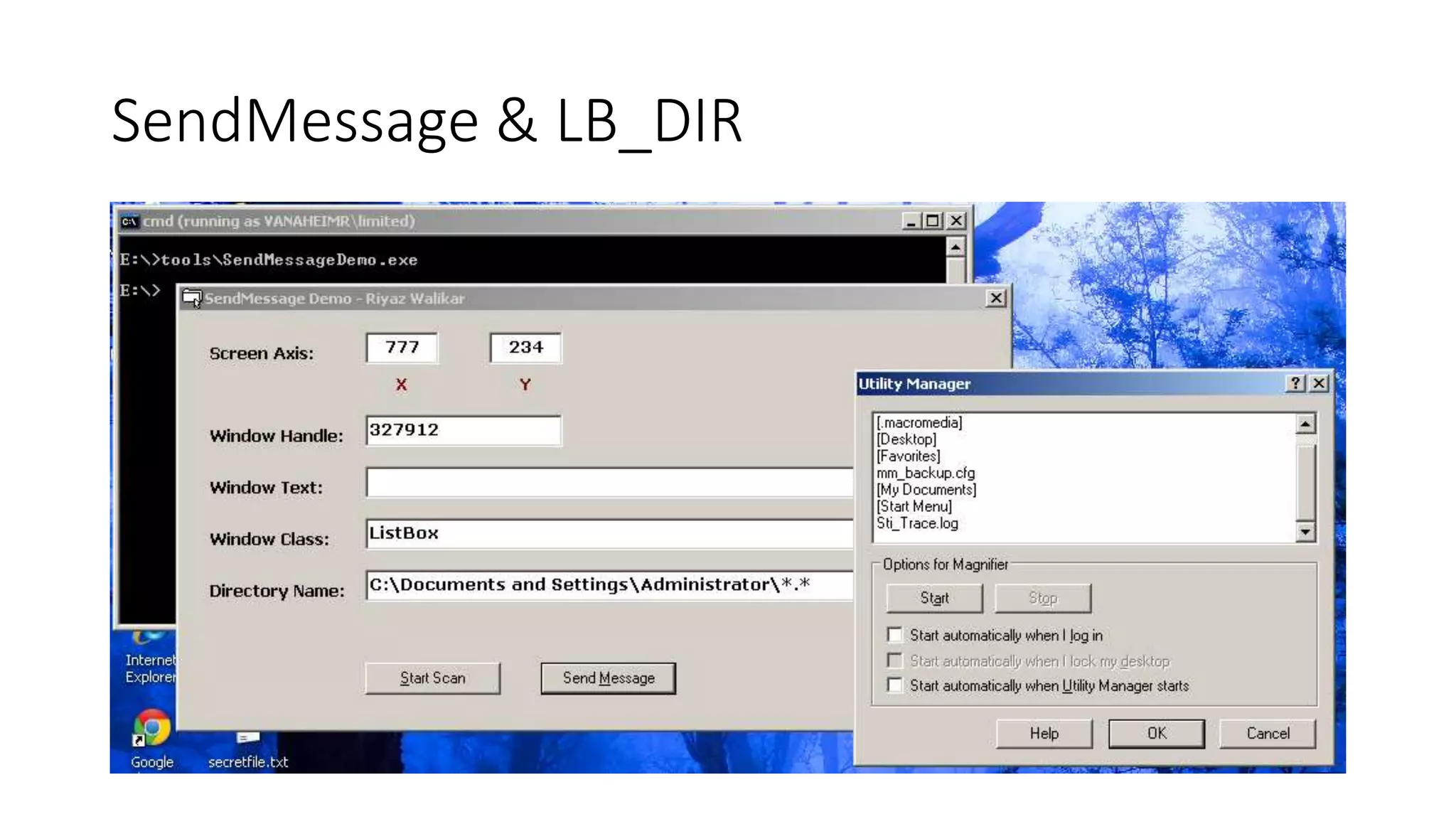
• Passing a message via SendMessage to the message loop of the main
thread of the program
• Shatter attack allowed cross process message passing between
unprivileged process and a privileged thread.
• Can be used to pass a message to a windowed system object running
on a thread as NT AuthoritySYSTEM
• CB_DIR, LB_DIR etc.
Demo
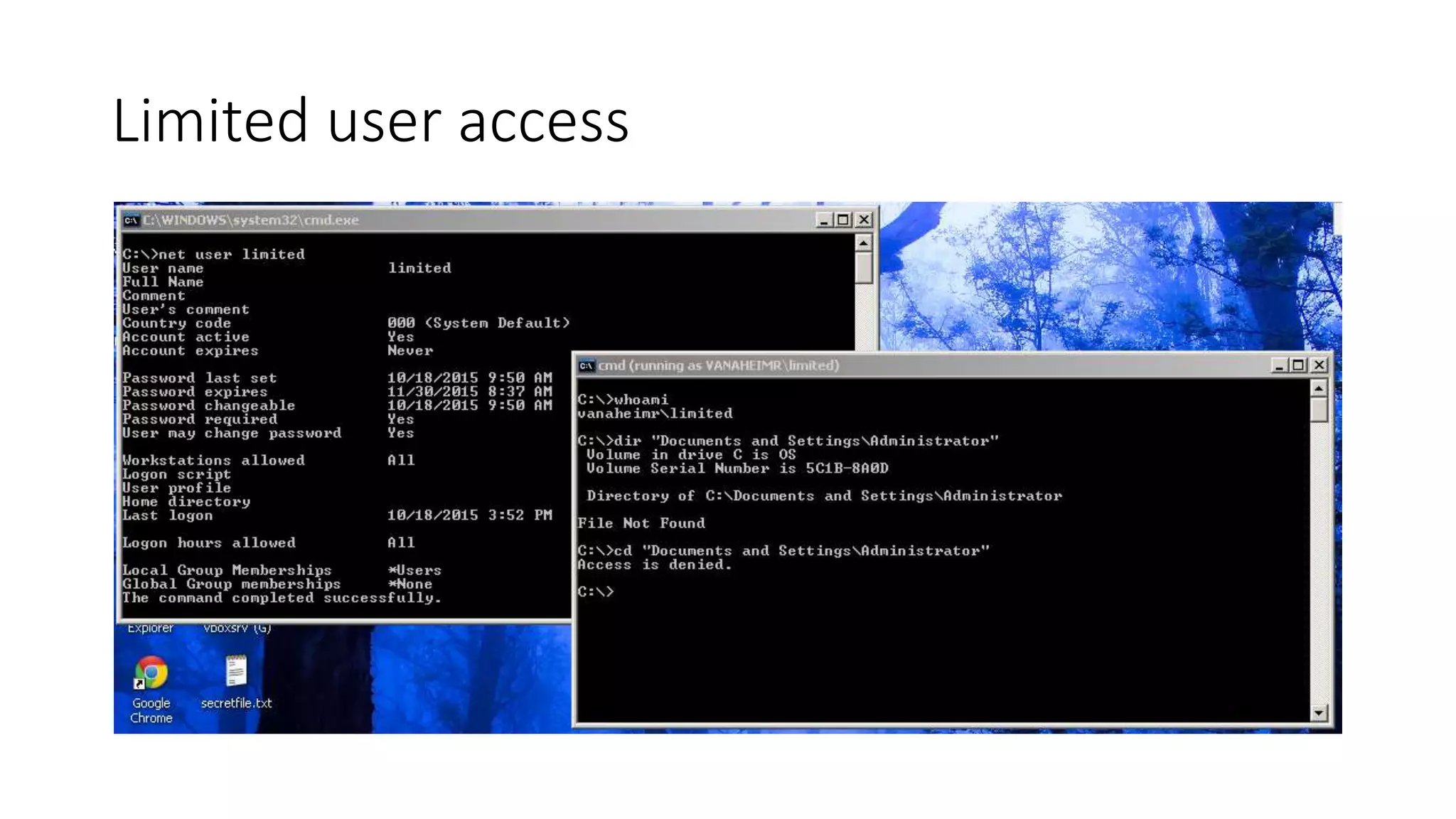
Limited user access
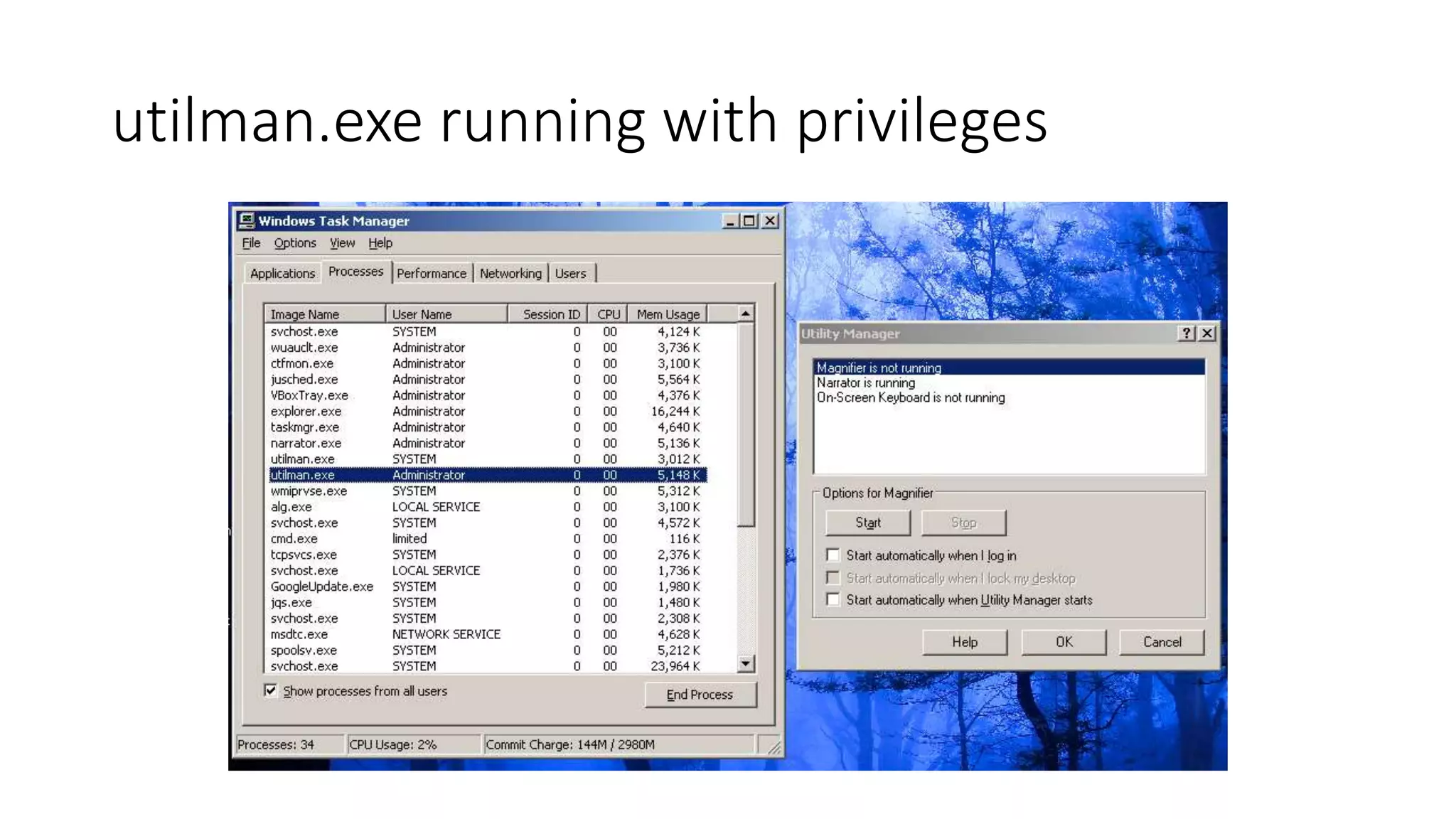
utilman.exe running with privileges
SendMessage & LB_DIR
Session separation!
Binary Planting
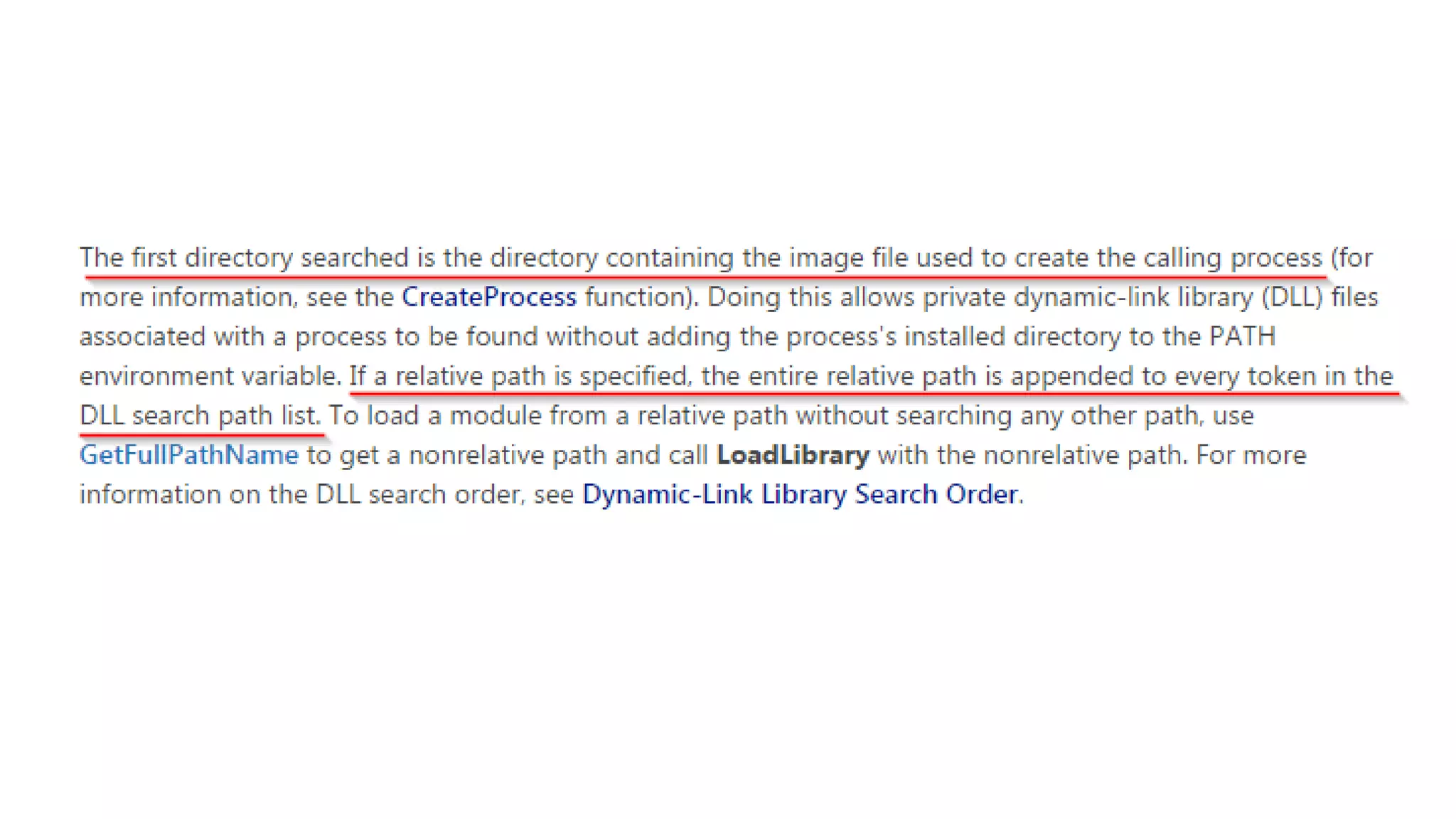
Abusing load paths
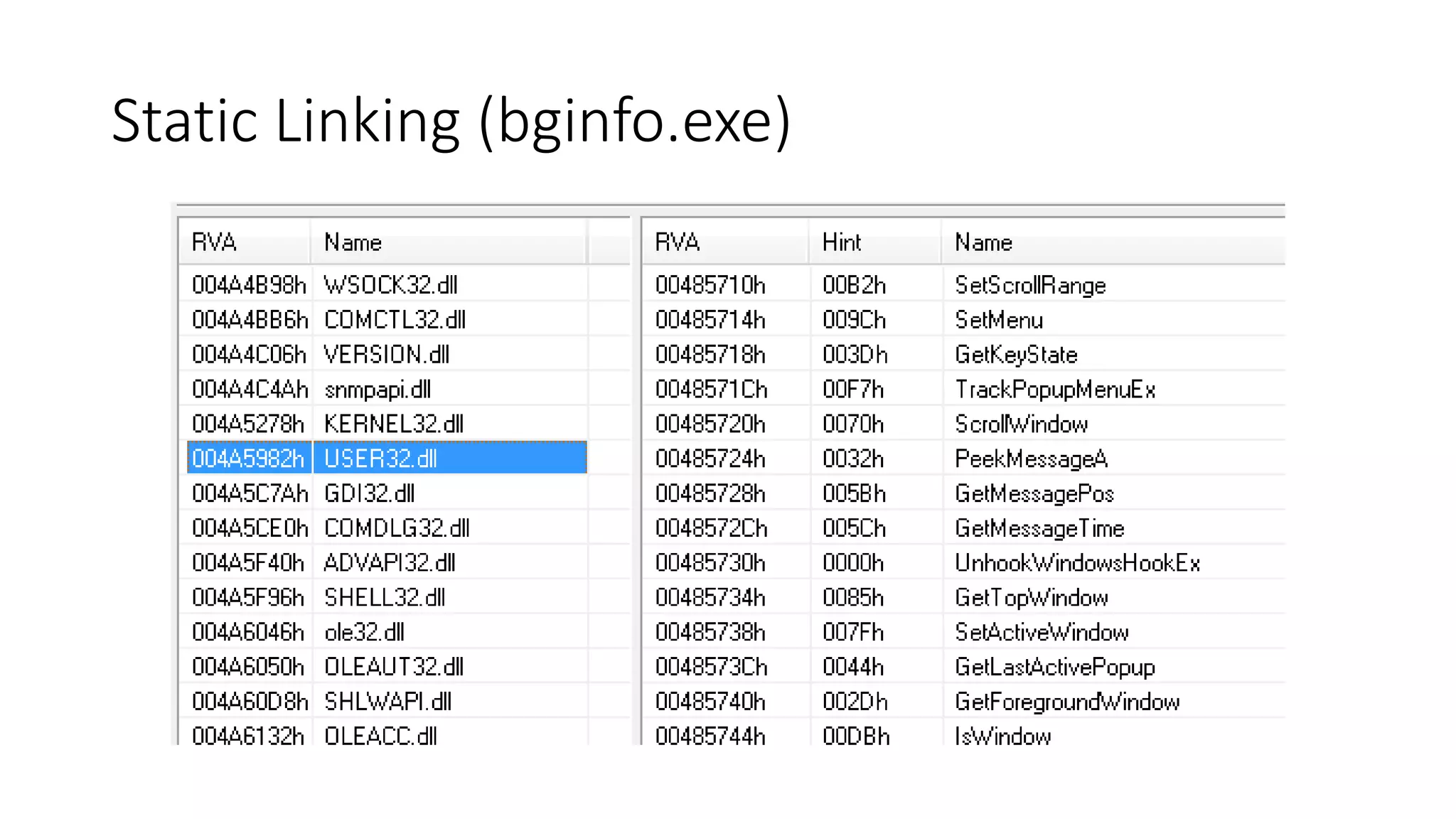
• A binary can call code from external link libraries (DLLs)
• Static Runtime loading
• Dynamic loading using kernel32.LoadLibrary()
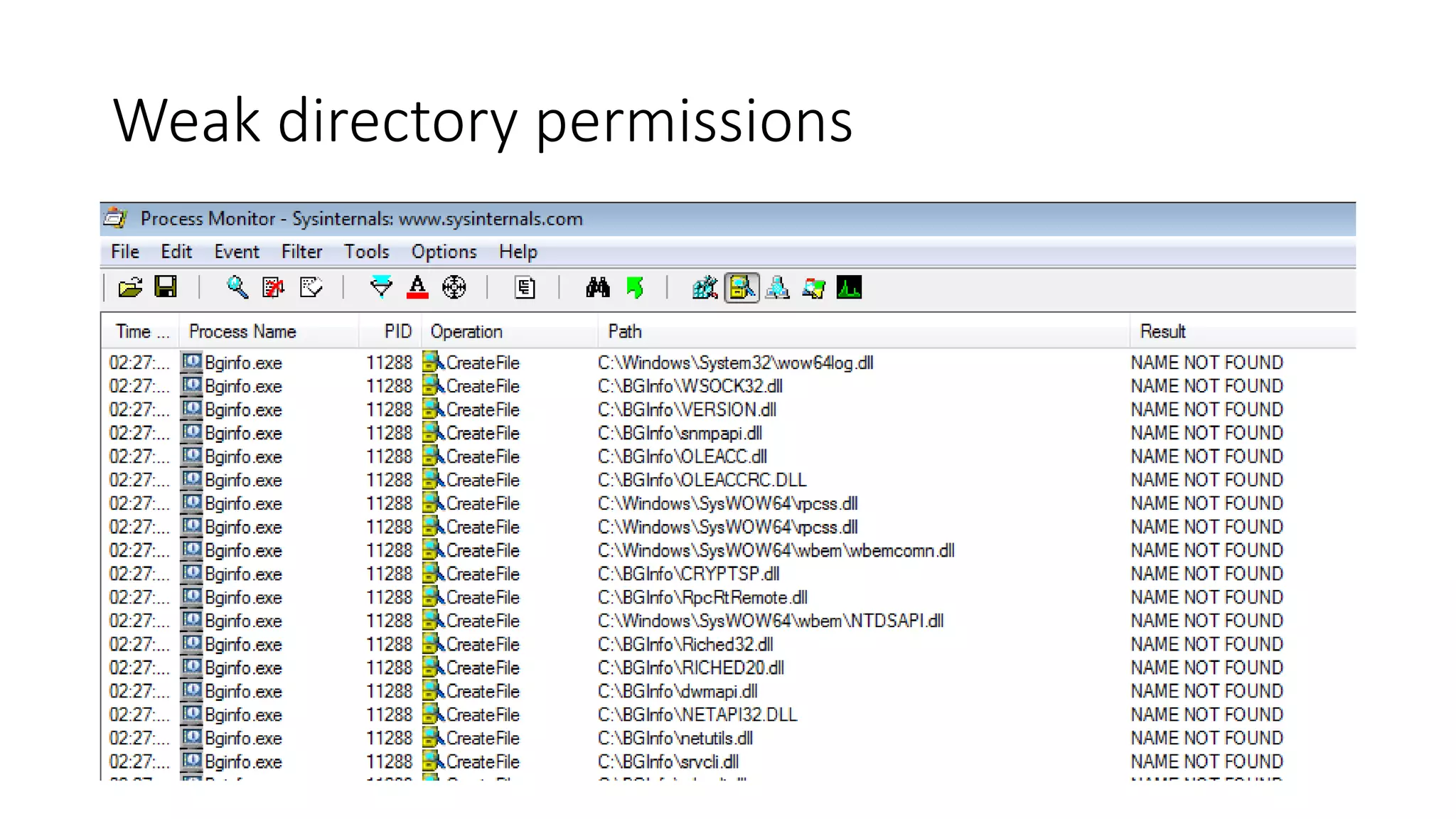
• Both can be abused because the path is (most likely) user controlled
Static Linking (bginfo.exe)
Dynamic Linking (bginfo.exe)
Weak directory permissions
Demo
Delayed/Selective
Patching
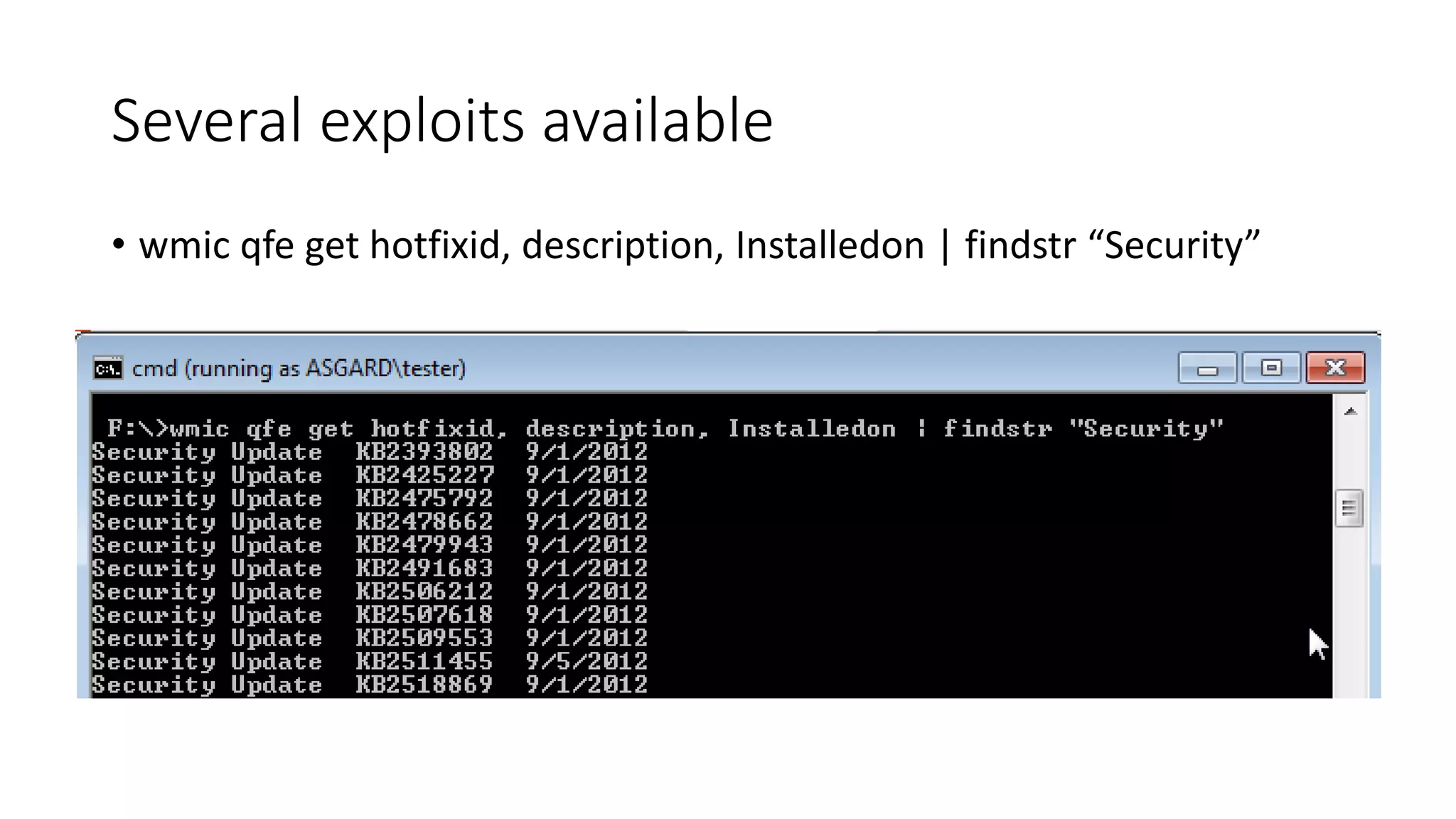
Several exploits available
• wmic qfe get hotfixid, description, Installedon | findstr “Security”
Resources
• http://pentestmonkey.net/tools/windows-privesc-check
• http://www.fuzzysecurity.com/tutorials/16.html
• https://msdn.microsoft.com/en-us/library/cc422924.aspx
• https://ibreak.software
• Sysinternals FTW
Q&A
Riyaz Walikar
@riyazwalikar
@wincmdfu
http://ibreak.software

Windows Privilege Escalation

Editor's Notes

  • #6 Psexec –s –I –d cmd.exe from a UAC free console
  • #34 Check using PokeWindows
  • #35 Check using PokeWindows
  • #36 Check using PokeWindows
  • #37 Check using PokeWindows
  • #42 Not exhaustive. Will not know entire list till program is decompiled and all LoadLibraryA() calls are traced. Loadlibrary may exist in uncalled functions.
  • #43 Not exhaustive. Will not know entire list till program is decompiled and all LoadLibraryA() calls are traced. Loadlibrary may exist in uncalled functions.