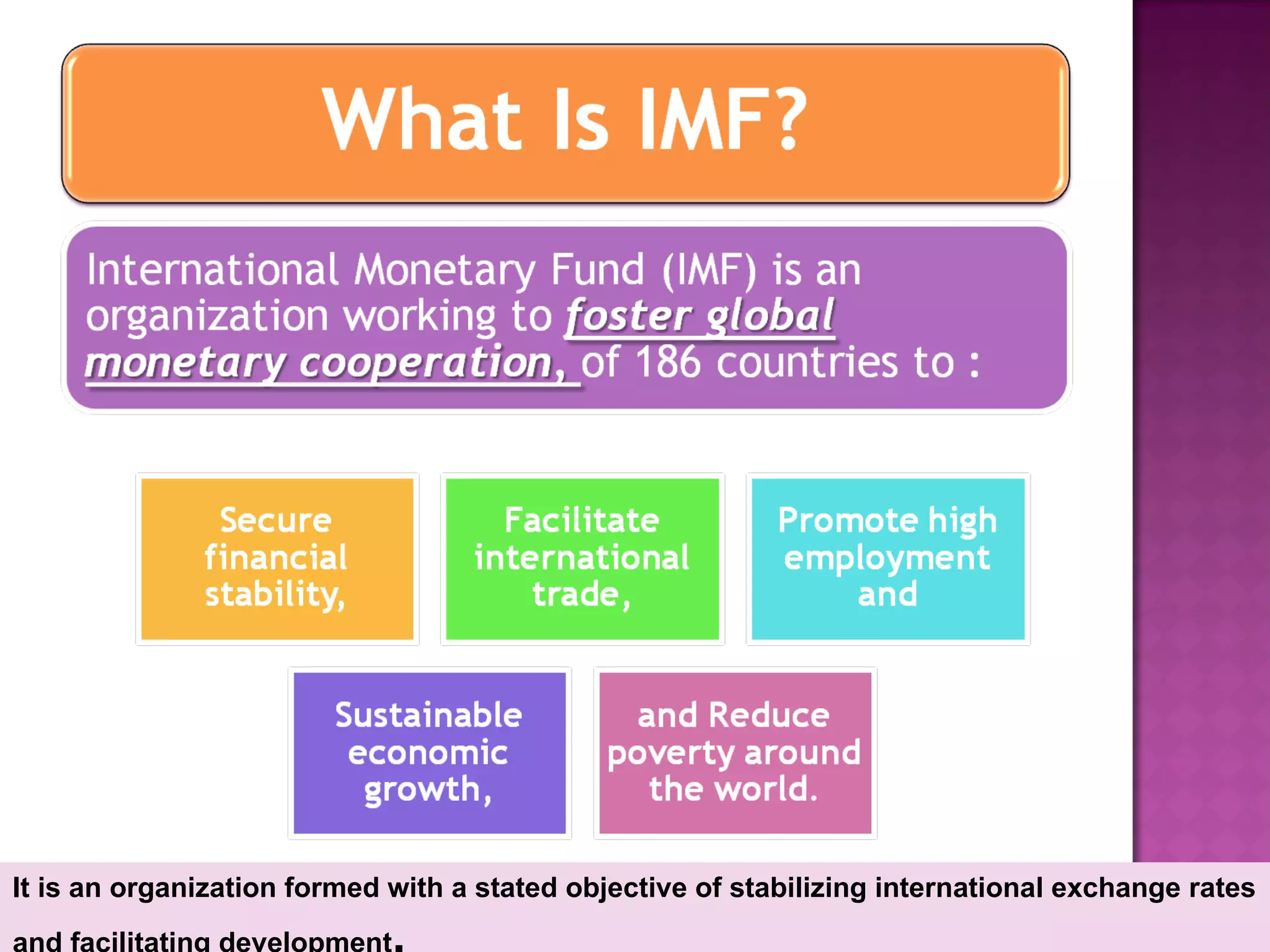
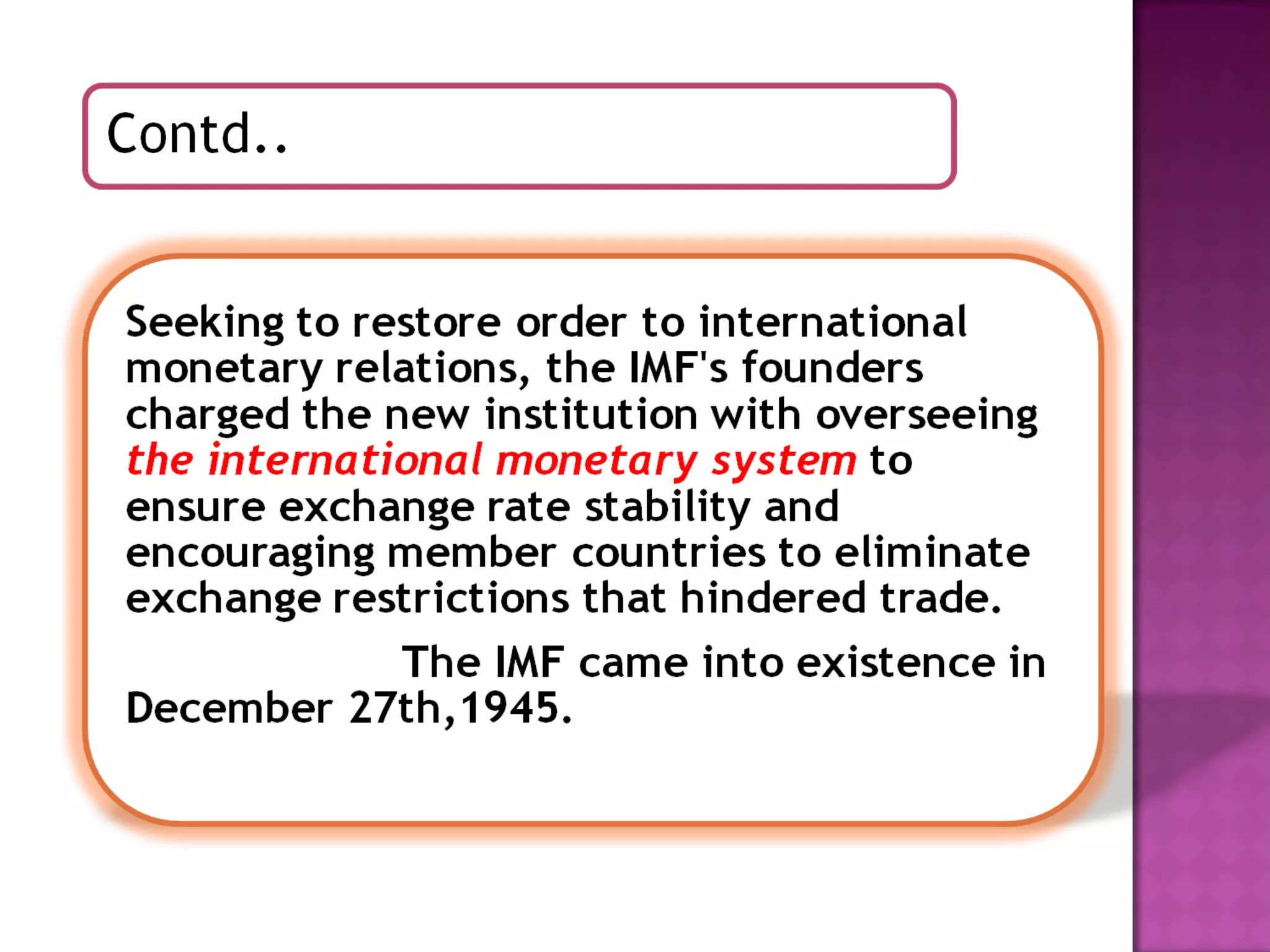
It is an organization formed with a stated objective of stabilizing international exchange rates and facilitating development .
 
History


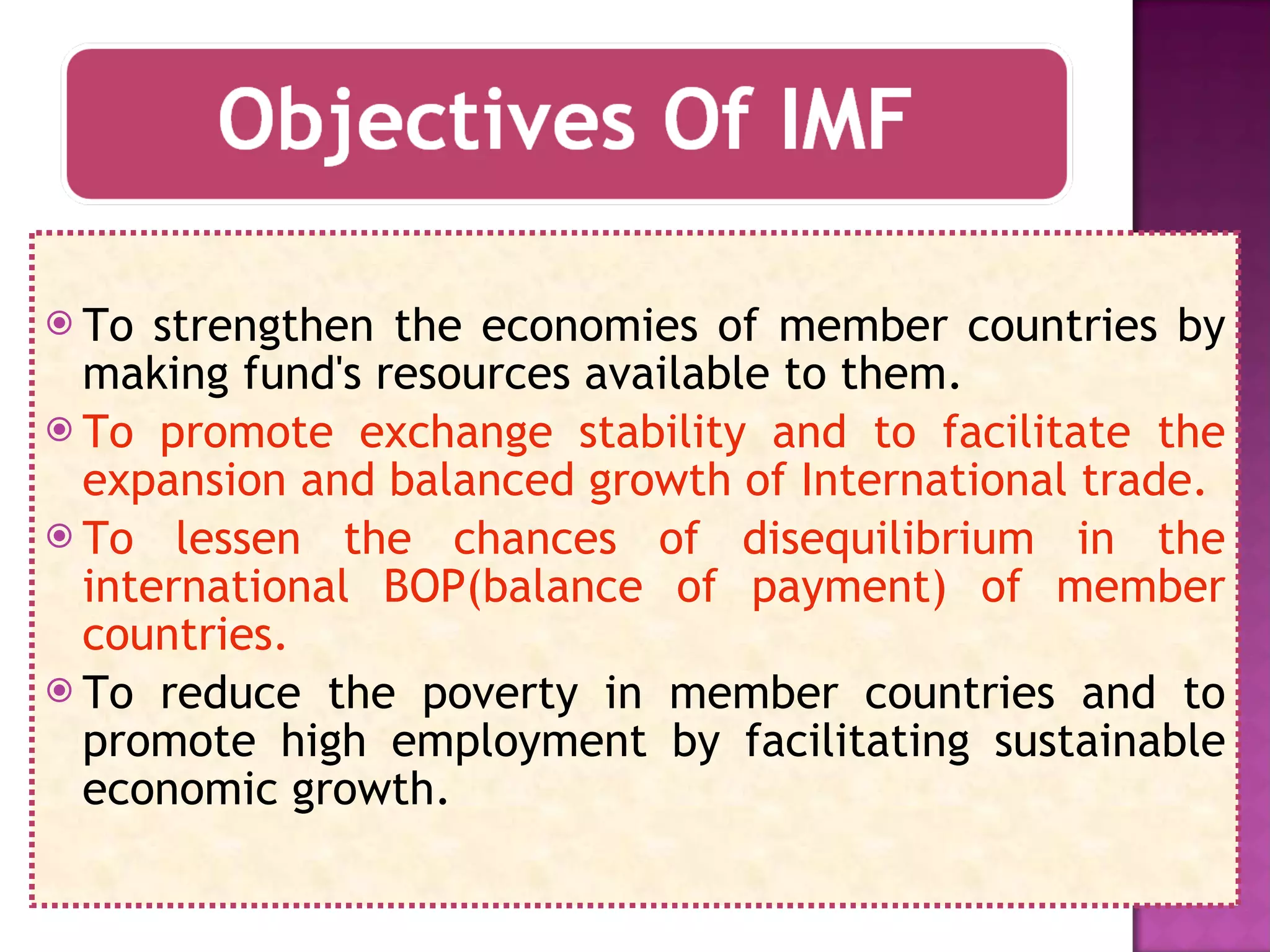
To strengthen the economies of member countries by making fund's resources available to them. To promote exchange stability and to facilitate the expansion and balanced growth of International trade. To lessen the chances of disequilibrium in the international BOP(balance of payment) of member countries. To reduce the poverty in member countries and to promote high employment by facilitating sustainable economic growth.


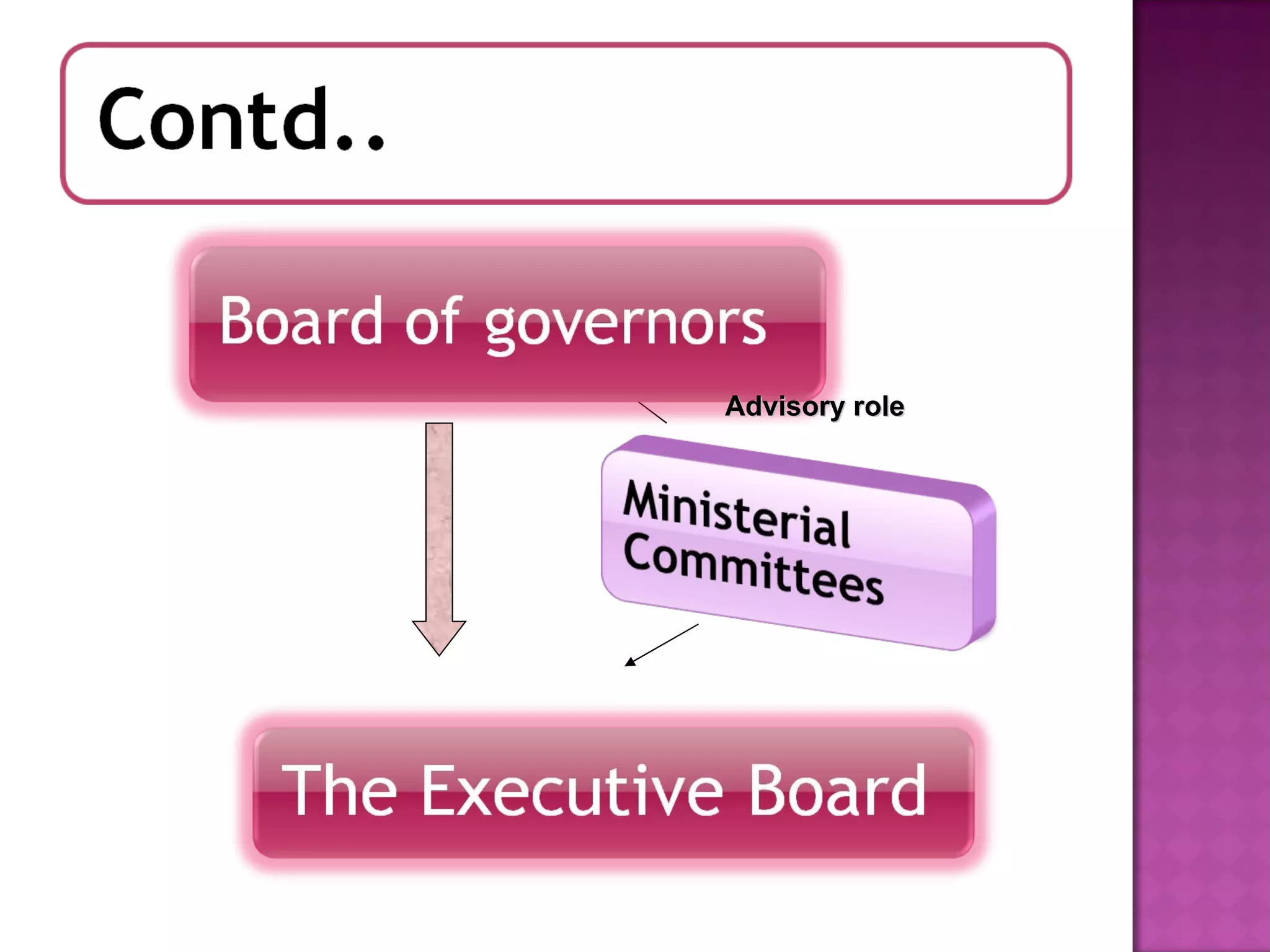
Advisory role
 
 
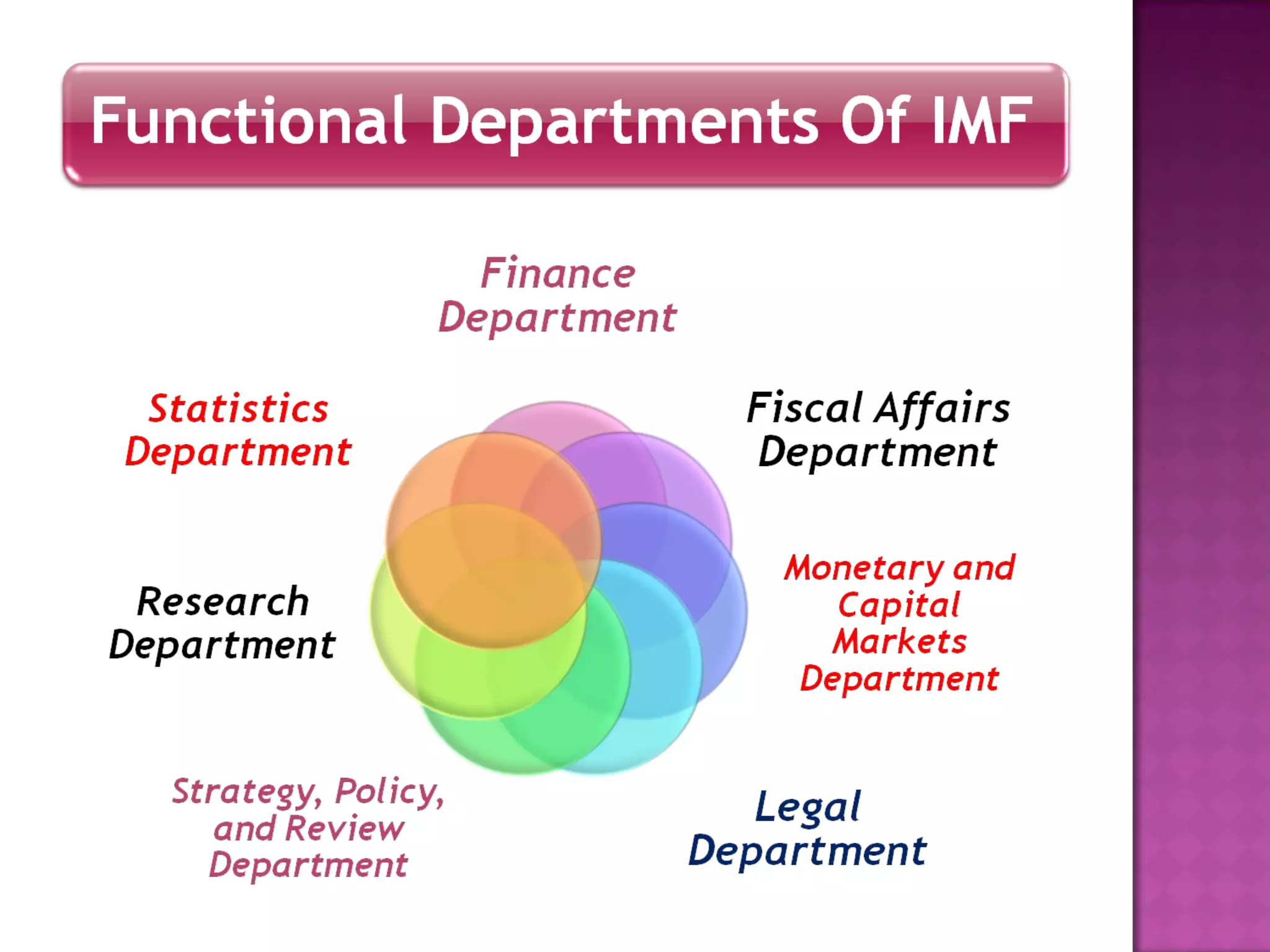
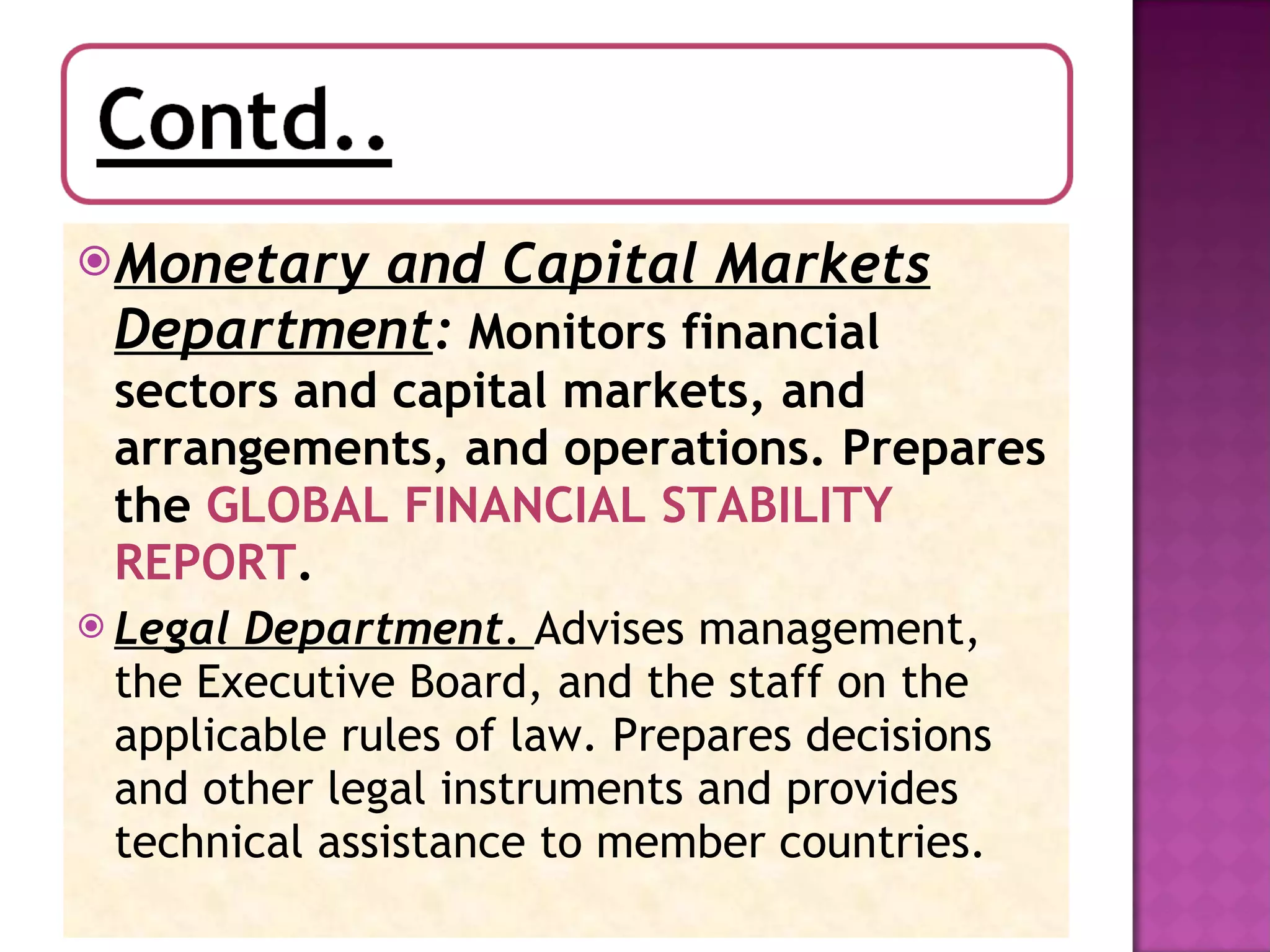
Monetary and Capital Markets Department :  Monitors financial sectors and capital markets, and arrangements, and operations. Prepares the  GLOBAL FINANCIAL STABILITY REPORT .  Legal Department.   Advises management, the Executive Board, and the staff on the applicable rules of law. Prepares decisions and other legal instruments and provides technical assistance to member countries.

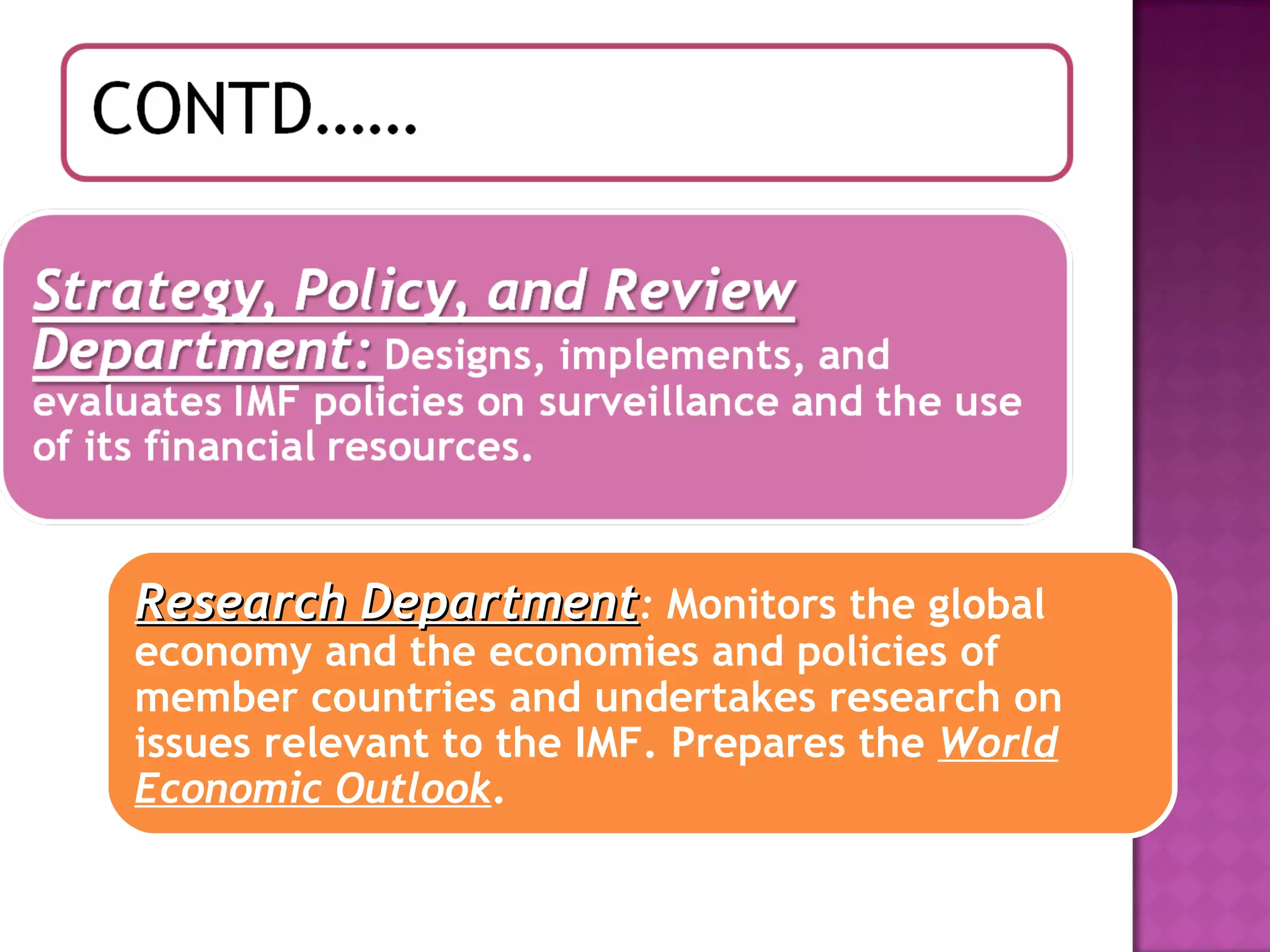
Research Department :  Monitors the global economy and the economies and policies of member countries and undertakes research on issues relevant to the IMF. Prepares the  World Economic Outlook . 


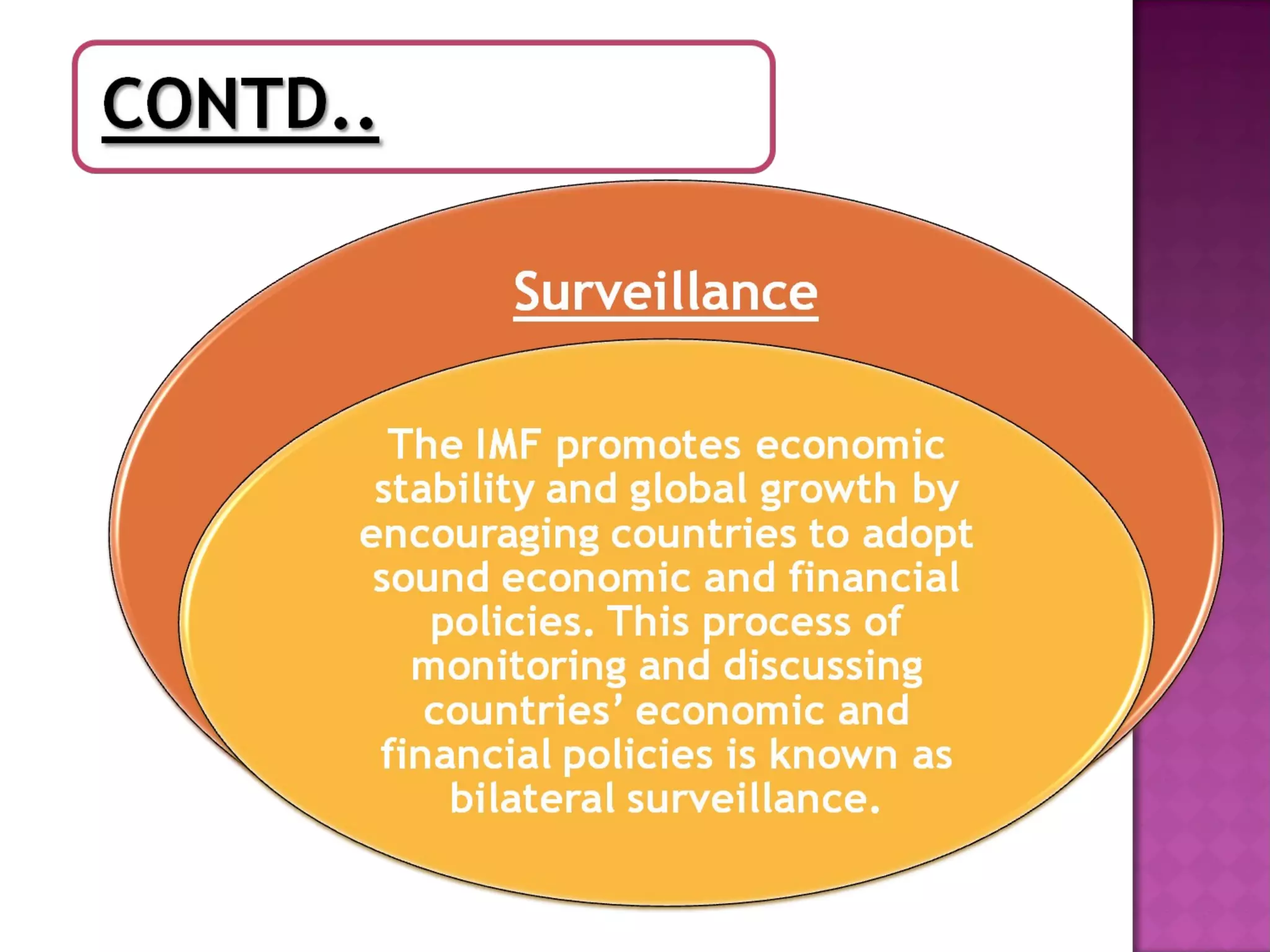
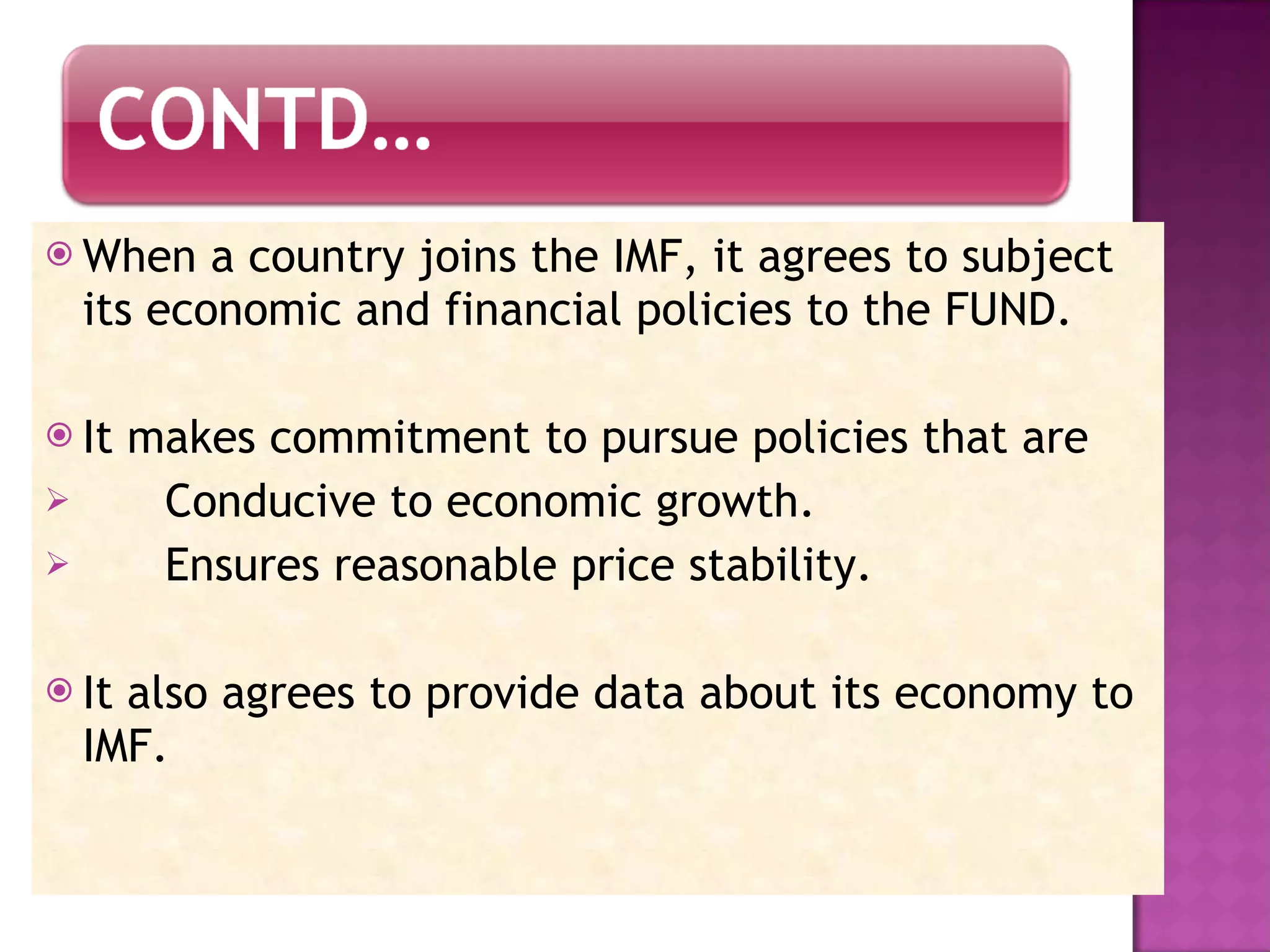
When a country joins the IMF, it agrees to subject its economic and financial policies to the FUND. It makes commitment to pursue policies that are Conducive to economic growth. Ensures reasonable price stability. It also agrees to provide data about its economy to IMF.
 
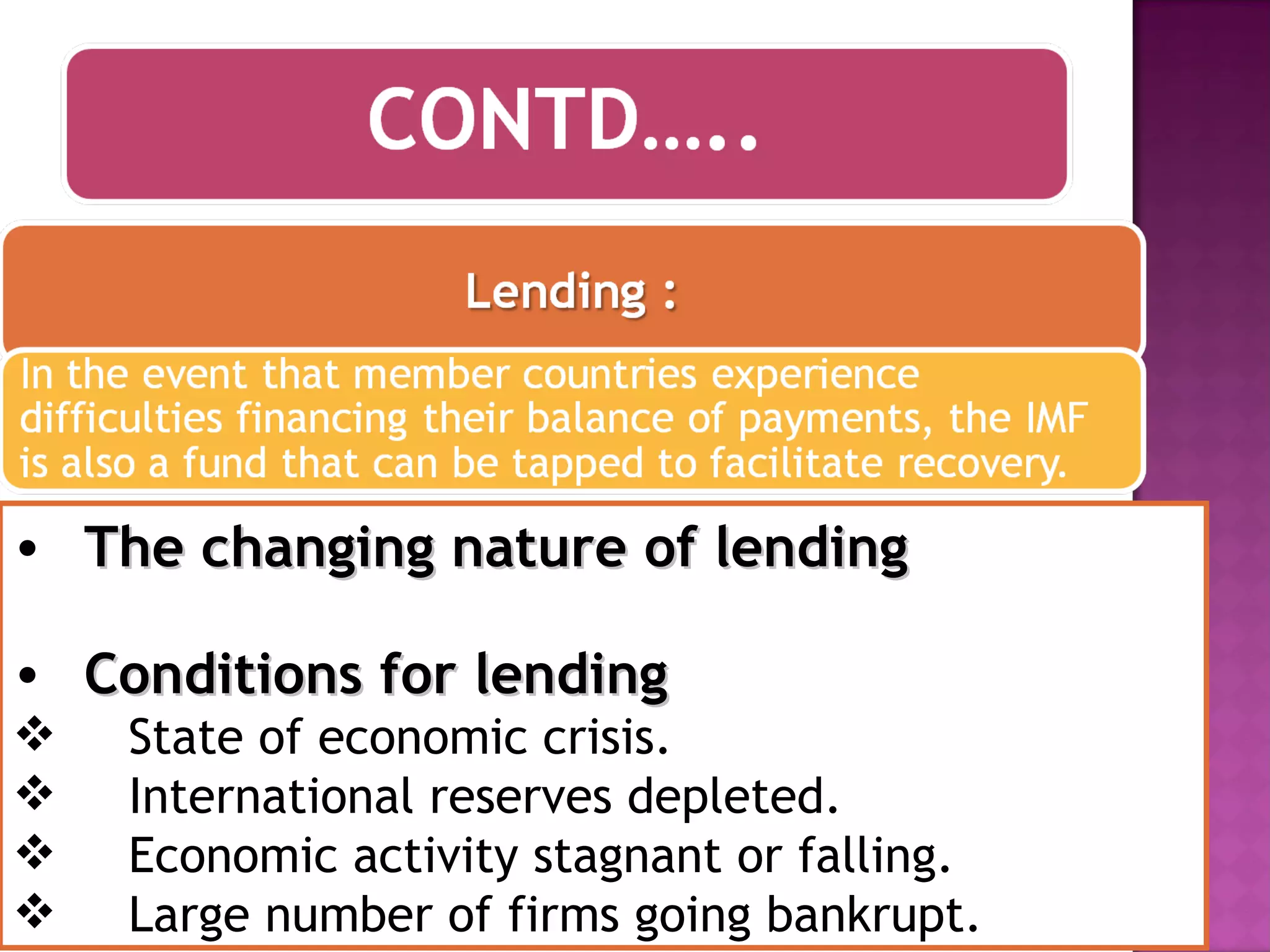
The changing nature of lending Conditions for lending State of economic crisis. International reserves depleted. Economic activity stagnant or falling. Large number of firms going bankrupt.
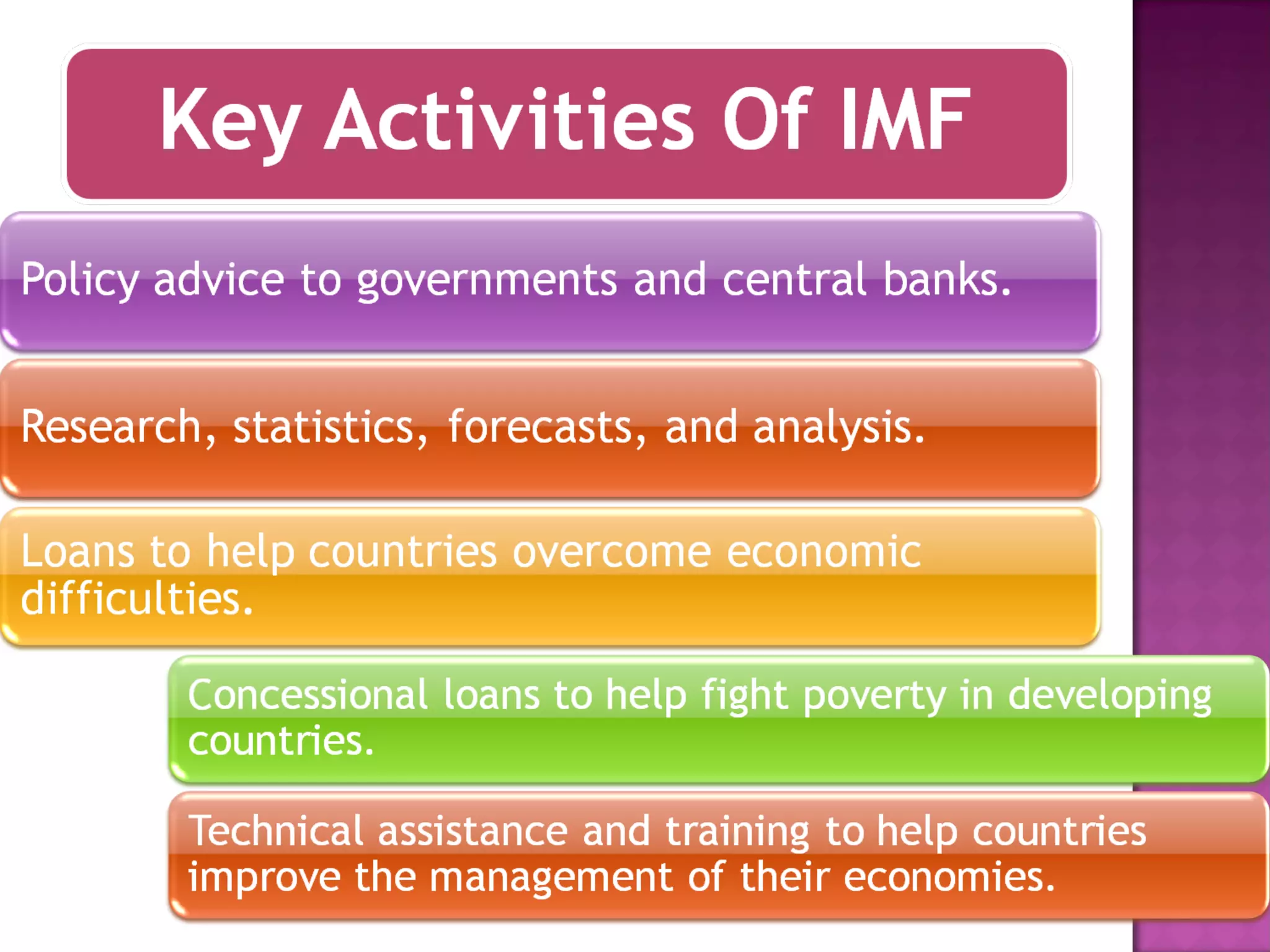
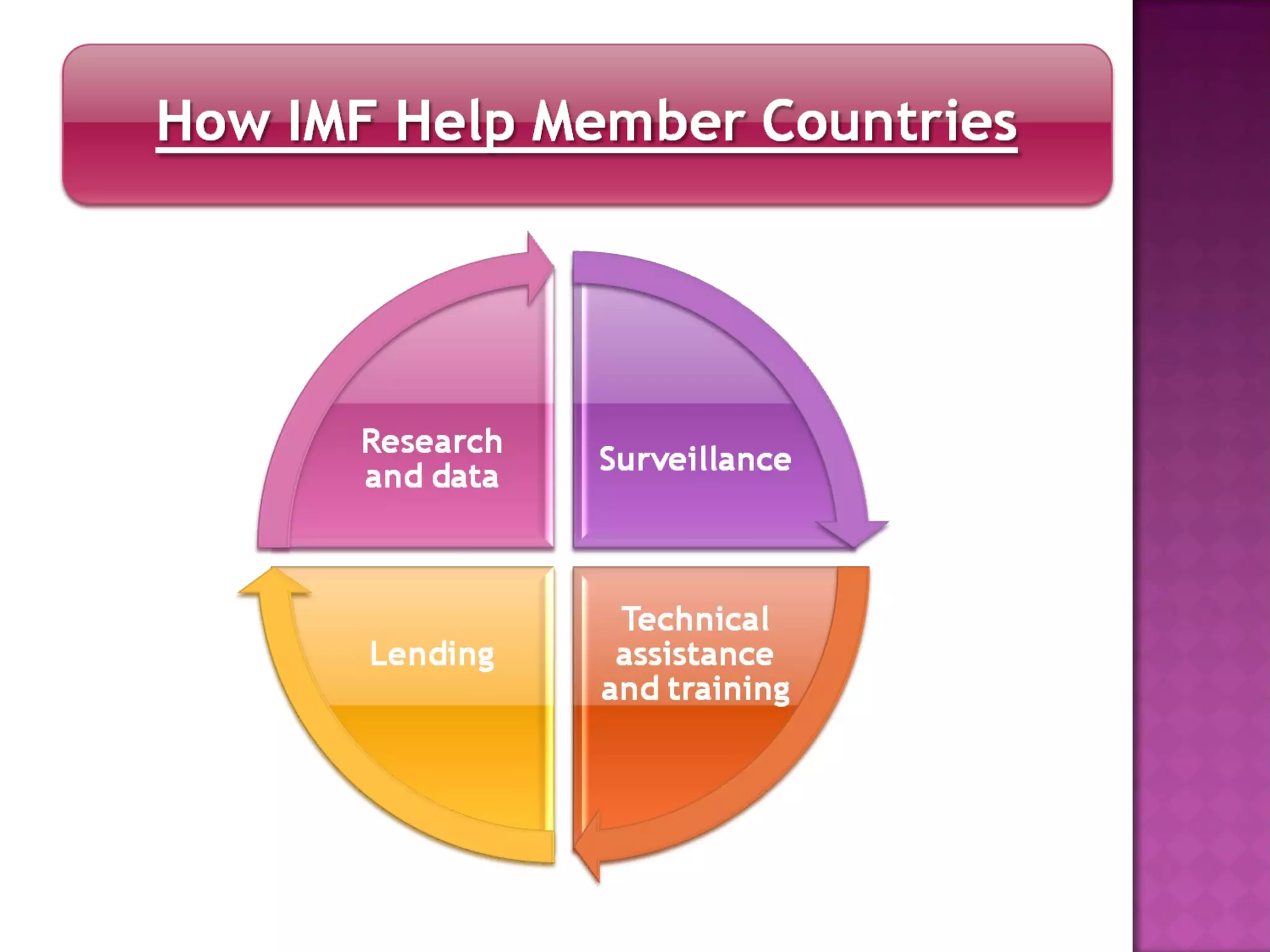
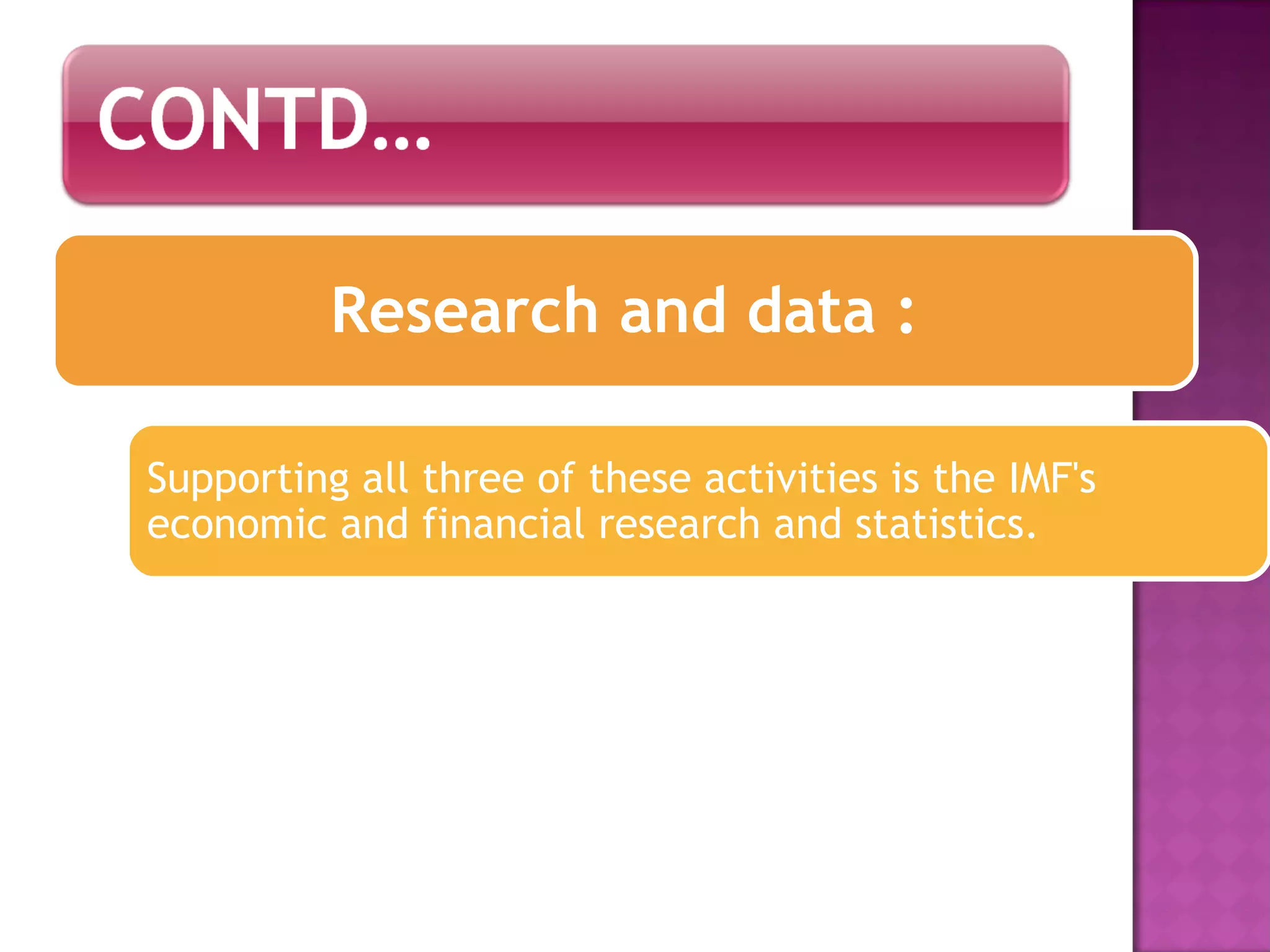
Research and data : Supporting all three of these activities is the IMF's economic and financial research and statistics.


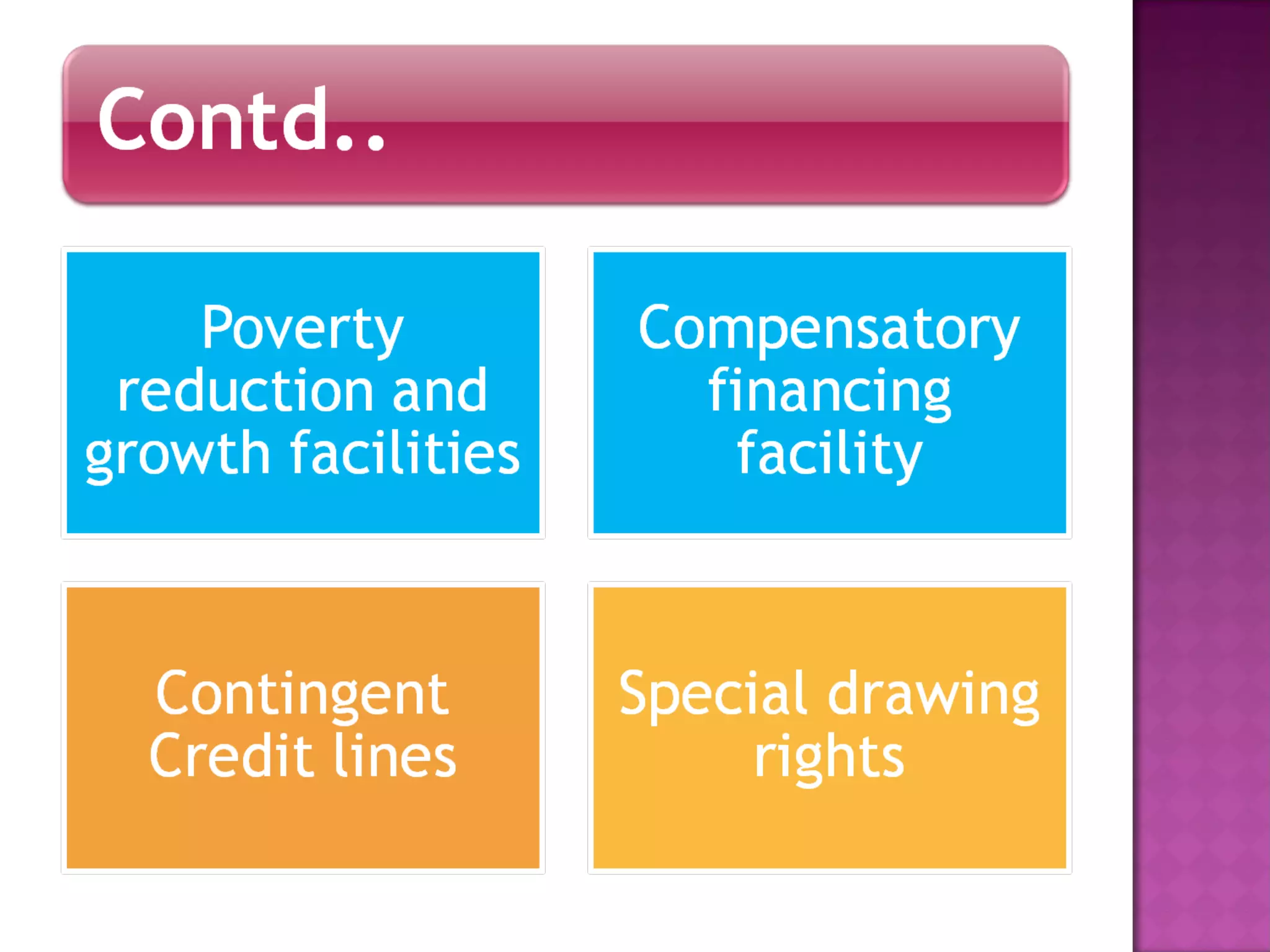
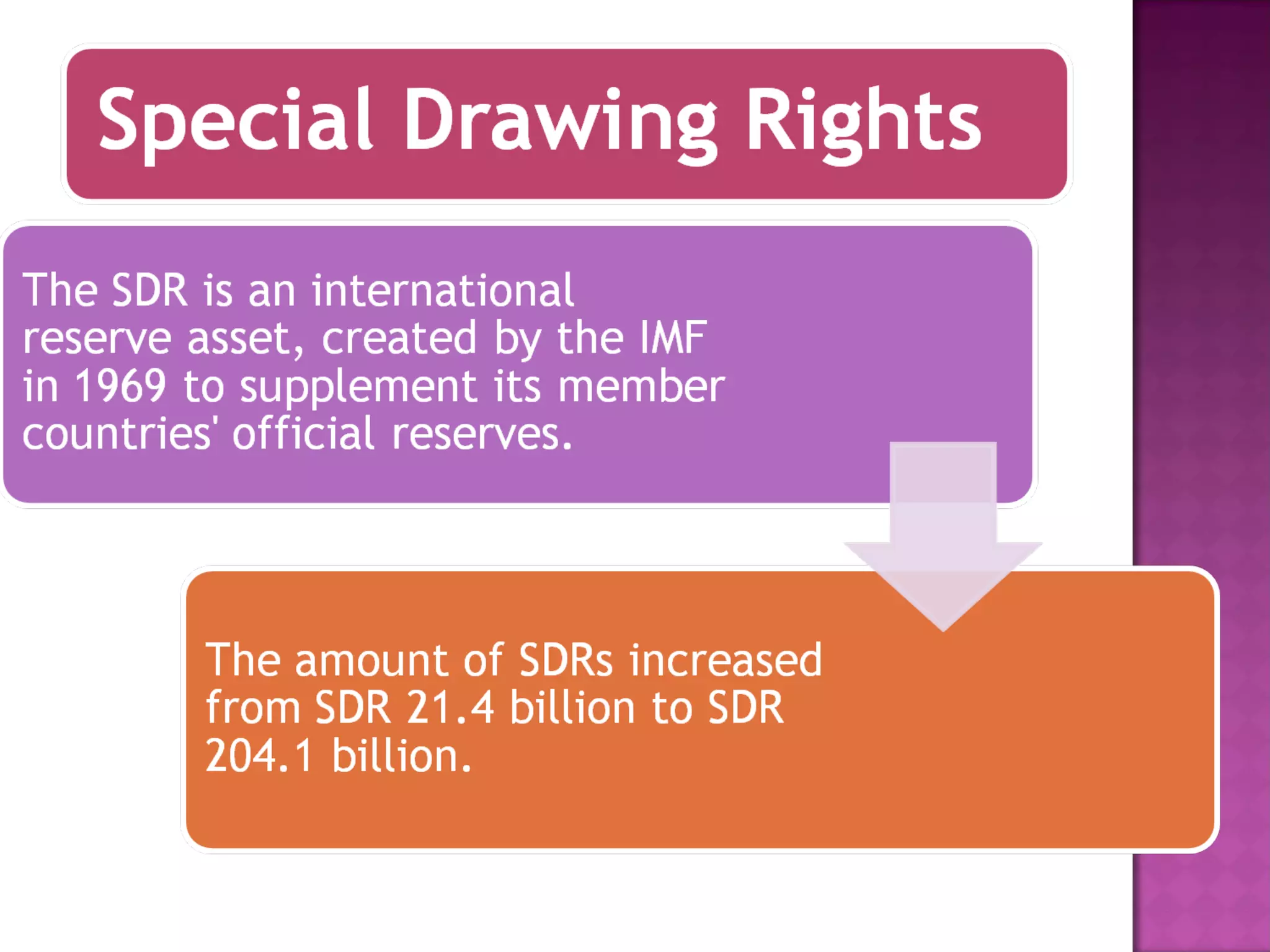
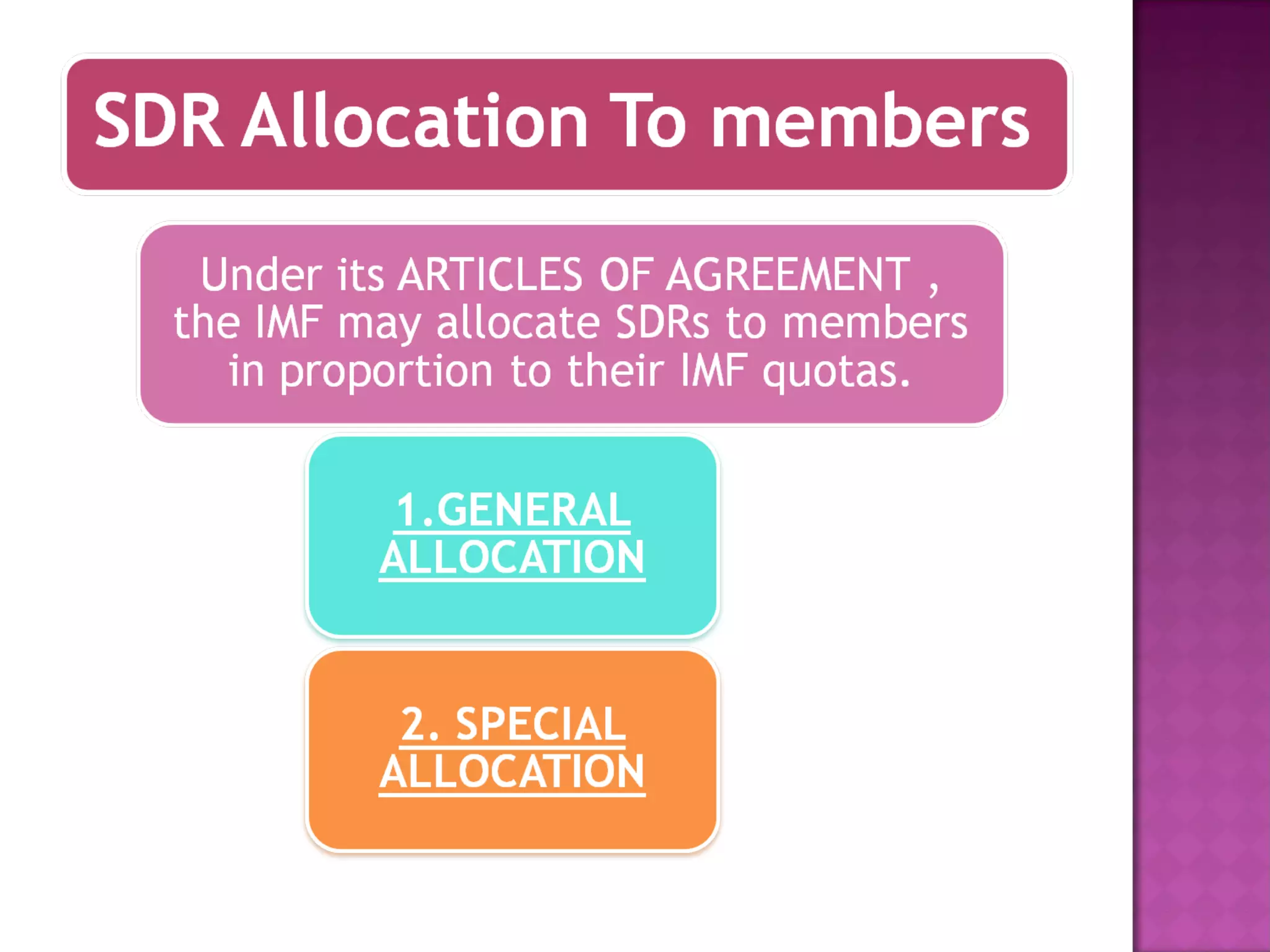
The IMF's SDR Department keeps records of members' SDR allocations and holdings; the SDR Department is also the channel through which all transactions and operations involving SDRs are conducted. Once allocated, members can hold their SDRs as part of their international reserves or sell part or all of their SDR allocations.
IMF members can also use SDRs in operations and transactions involving the IMF, such as the payment of interest and repayment of loans, or payment for future quota increases.
 

Presentation On Imf

  • 1.
  • 2.
    It is anorganization formed with a stated objective of stabilizing international exchange rates and facilitating development .
  • 3.
  • 4.
  • 5.
  • 6.
  • 7.
  • 8.
  • 9.
    To strengthen theeconomies of member countries by making fund's resources available to them. To promote exchange stability and to facilitate the expansion and balanced growth of International trade. To lessen the chances of disequilibrium in the international BOP(balance of payment) of member countries. To reduce the poverty in member countries and to promote high employment by facilitating sustainable economic growth.
  • 10.
  • 11.
  • 12.
  • 13.
  • 14.
  • 15.
  • 16.
    Monetary and CapitalMarkets Department :  Monitors financial sectors and capital markets, and arrangements, and operations. Prepares the GLOBAL FINANCIAL STABILITY REPORT .  Legal Department.   Advises management, the Executive Board, and the staff on the applicable rules of law. Prepares decisions and other legal instruments and provides technical assistance to member countries.
  • 17.
    Research Department : Monitors the global economy and the economies and policies of member countries and undertakes research on issues relevant to the IMF. Prepares the World Economic Outlook . 
  • 18.
  • 19.
  • 20.
  • 21.
  • 22.
    When a countryjoins the IMF, it agrees to subject its economic and financial policies to the FUND. It makes commitment to pursue policies that are Conducive to economic growth. Ensures reasonable price stability. It also agrees to provide data about its economy to IMF.
  • 23.
  • 24.
    The changing natureof lending Conditions for lending State of economic crisis. International reserves depleted. Economic activity stagnant or falling. Large number of firms going bankrupt.
  • 25.
    Research and data: Supporting all three of these activities is the IMF's economic and financial research and statistics.
  • 26.
  • 27.
  • 28.
  • 29.
  • 30.
  • 31.
  • 32.
  • 33.
  • 34.
  • 35.
  • 36.
    The IMF's SDRDepartment keeps records of members' SDR allocations and holdings; the SDR Department is also the channel through which all transactions and operations involving SDRs are conducted. Once allocated, members can hold their SDRs as part of their international reserves or sell part or all of their SDR allocations.
  • 37.
    IMF members canalso use SDRs in operations and transactions involving the IMF, such as the payment of interest and repayment of loans, or payment for future quota increases.
  • 38.