Note-takingTried and true methods that students actually use
Good notes can save the dayBut lets be honest, that’s easier said than done. Luckily, these strategies will help you choose a note-taking style that works for you and take more efficient notes in class.Learn more effectively and free up more time for other things
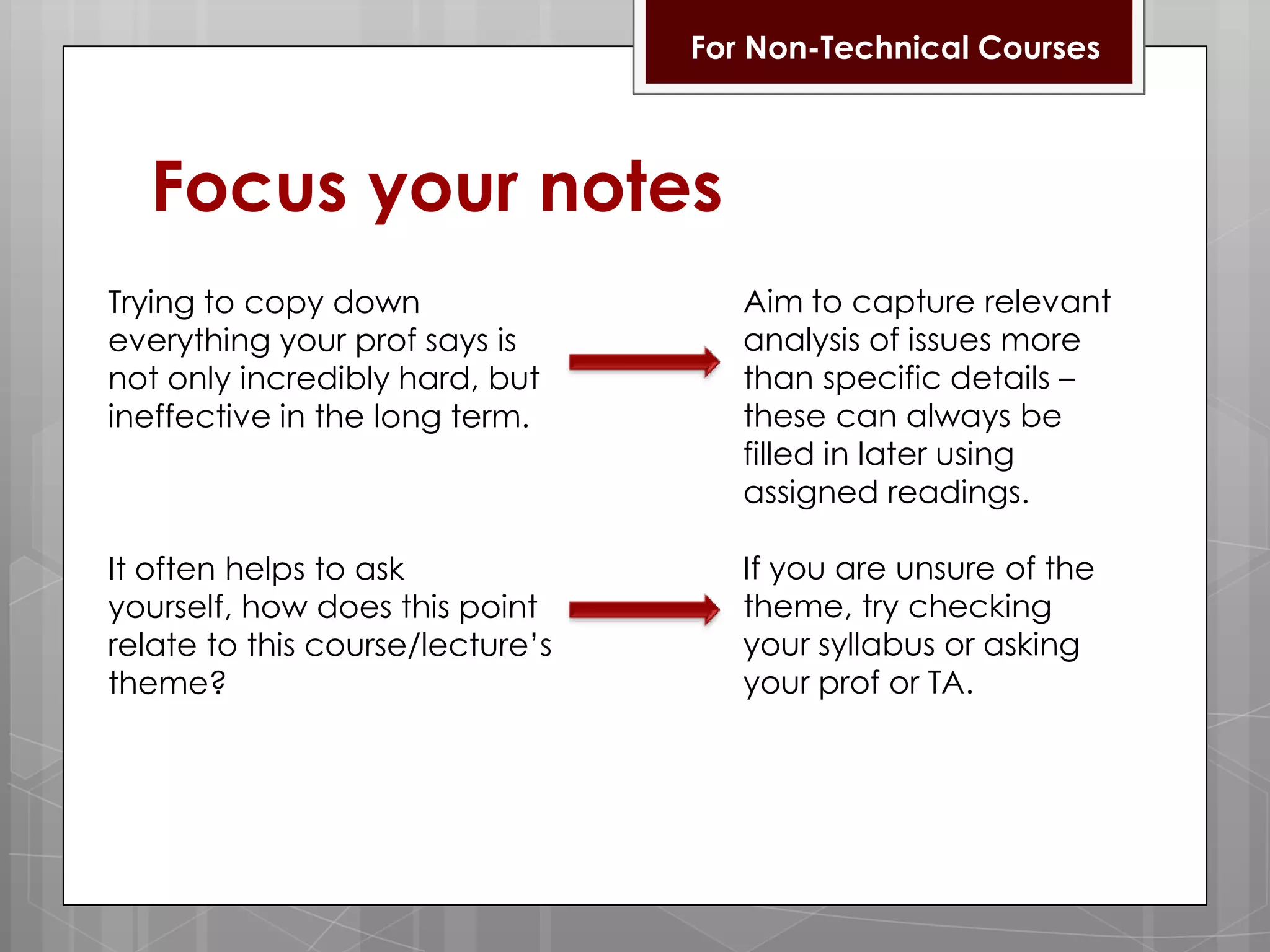
For Non-Technical CoursesFocus your notesAim to capture relevant analysis of issues more than specific details – these can always be filled in later using assigned readings.If you are unsure of the theme, try checking your syllabus or asking your prof or TA.Trying to copy down everything your prof says is not only incredibly hard, but ineffective in the long term.It often helps to ask yourself, how does this point relate to this course/lecture’s theme?
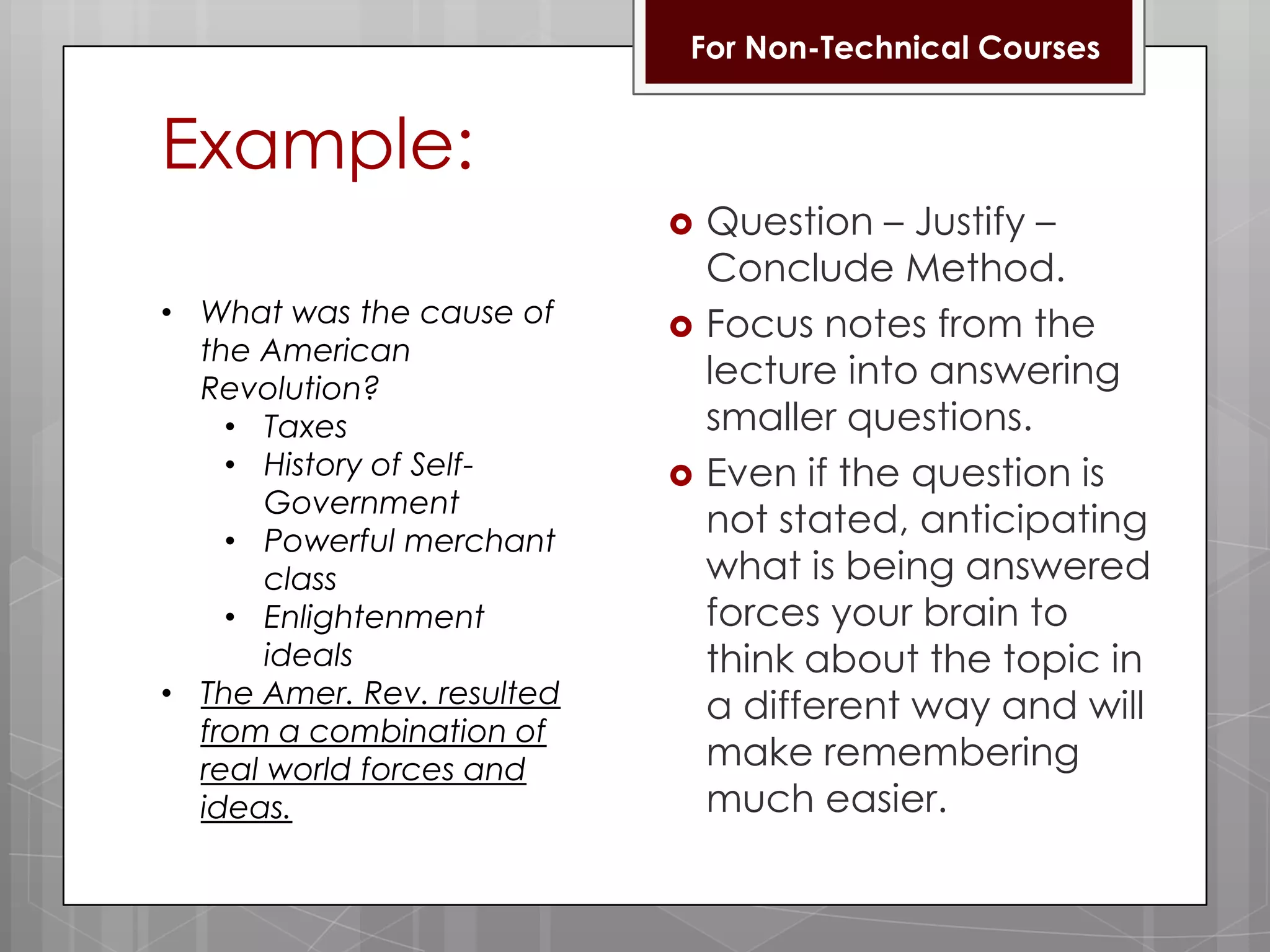
For Non-Technical CoursesExample:Question– Justify –   Conclude Method.Focus notes from the lecture into answering smaller questions.Even if the question is not stated, anticipating what is being answered forces your brain to think about the topic in a different way and will make remembering much easier.What was the cause of the American Revolution?
Taxes
History of Self-Government
Powerful merchant class
Enlightenment ideals
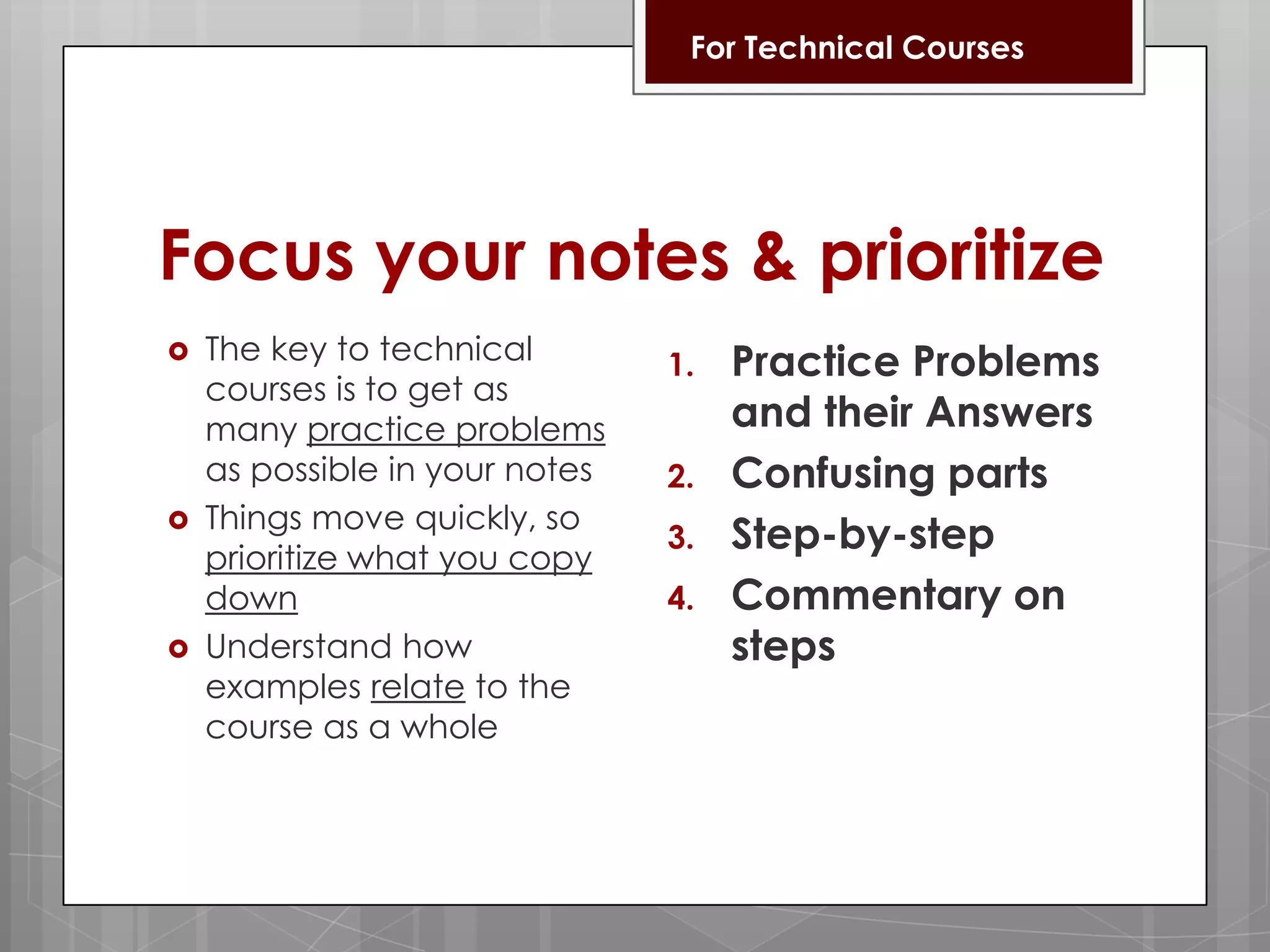
The Amer. Rev. resulted from a combination of real world forces and ideas.Focus your notes & prioritizeThe key to technical courses is to get as many practice problems as possible in your notesThings move quickly, so prioritize what you copy downUnderstand how examples relate to the course as a wholeFor Technical CoursesPractice Problems and their AnswersConfusing partsStep-by-stepCommentary on steps
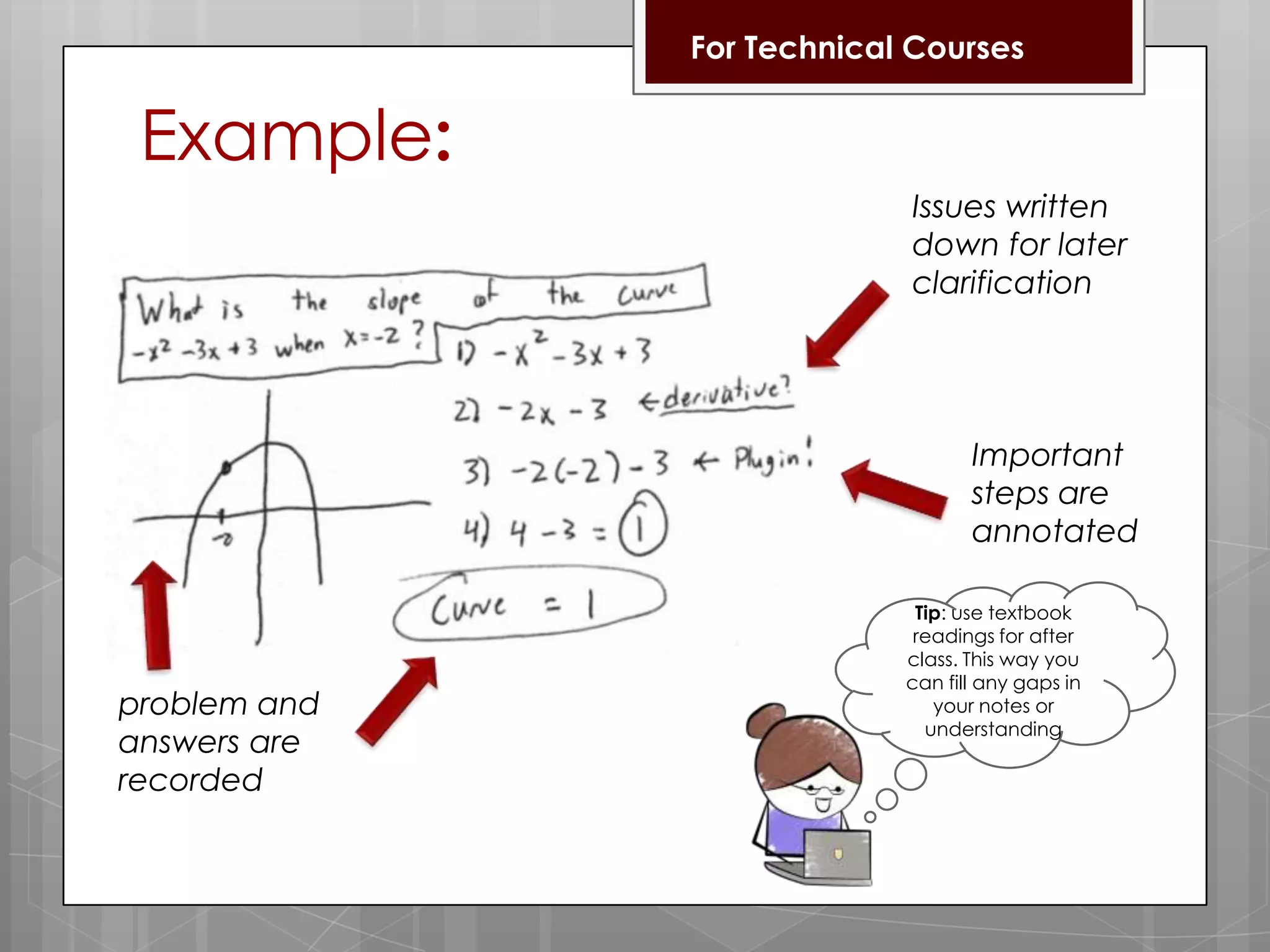
For Technical CoursesExample:Issues written down for later clarificationImportant steps are annotatedTip: use textbook readings for after class. This way you can fill any gaps in your notes or understandingproblem and answers are recorded
Note-Taking MethodsThe following slides will help you up your note-taking game.More information and note templates are available at the bottom of the page!

Note-taking tutorial

  • 1.
    Note-takingTried and truemethods that students actually use
  • 2.
    Good notes cansave the dayBut lets be honest, that’s easier said than done. Luckily, these strategies will help you choose a note-taking style that works for you and take more efficient notes in class.Learn more effectively and free up more time for other things
  • 3.
    For Non-Technical CoursesFocusyour notesAim to capture relevant analysis of issues more than specific details – these can always be filled in later using assigned readings.If you are unsure of the theme, try checking your syllabus or asking your prof or TA.Trying to copy down everything your prof says is not only incredibly hard, but ineffective in the long term.It often helps to ask yourself, how does this point relate to this course/lecture’s theme?
  • 4.
    For Non-Technical CoursesExample:Question–Justify – Conclude Method.Focus notes from the lecture into answering smaller questions.Even if the question is not stated, anticipating what is being answered forces your brain to think about the topic in a different way and will make remembering much easier.What was the cause of the American Revolution?
  • 5.
  • 6.
  • 7.
  • 8.
  • 9.
    The Amer. Rev.resulted from a combination of real world forces and ideas.Focus your notes & prioritizeThe key to technical courses is to get as many practice problems as possible in your notesThings move quickly, so prioritize what you copy downUnderstand how examples relate to the course as a wholeFor Technical CoursesPractice Problems and their AnswersConfusing partsStep-by-stepCommentary on steps
  • 10.
    For Technical CoursesExample:Issueswritten down for later clarificationImportant steps are annotatedTip: use textbook readings for after class. This way you can fill any gaps in your notes or understandingproblem and answers are recorded
  • 11.
    Note-Taking MethodsThe followingslides will help you up your note-taking game.More information and note templates are available at the bottom of the page!
  • 12.
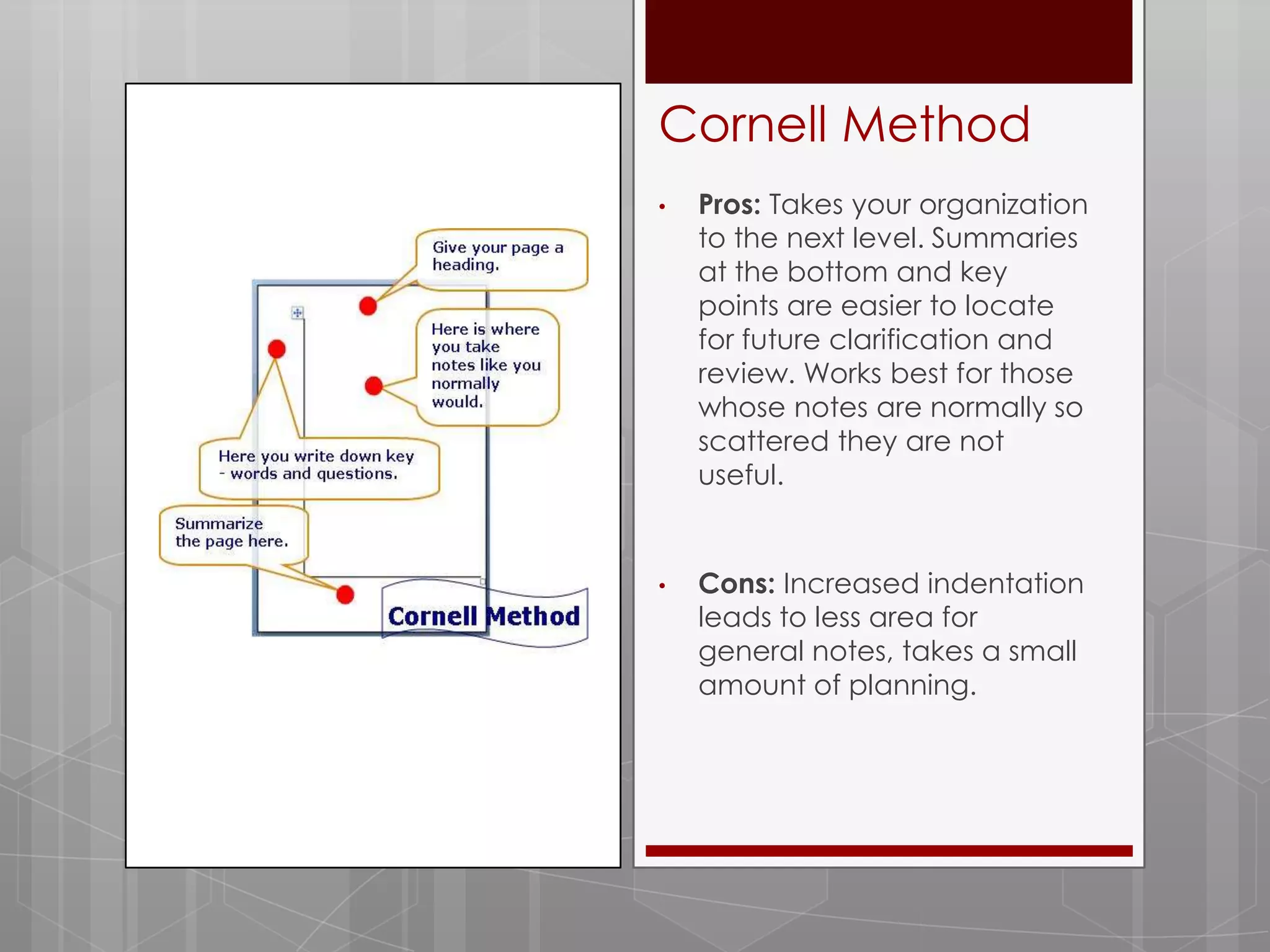
    Cornell MethodPros: Takesyour organization to the next level. Summaries at the bottom and key points are easier to locate for future clarification and review. Works best for those whose notes are normally so scattered they are not useful.
  • 13.
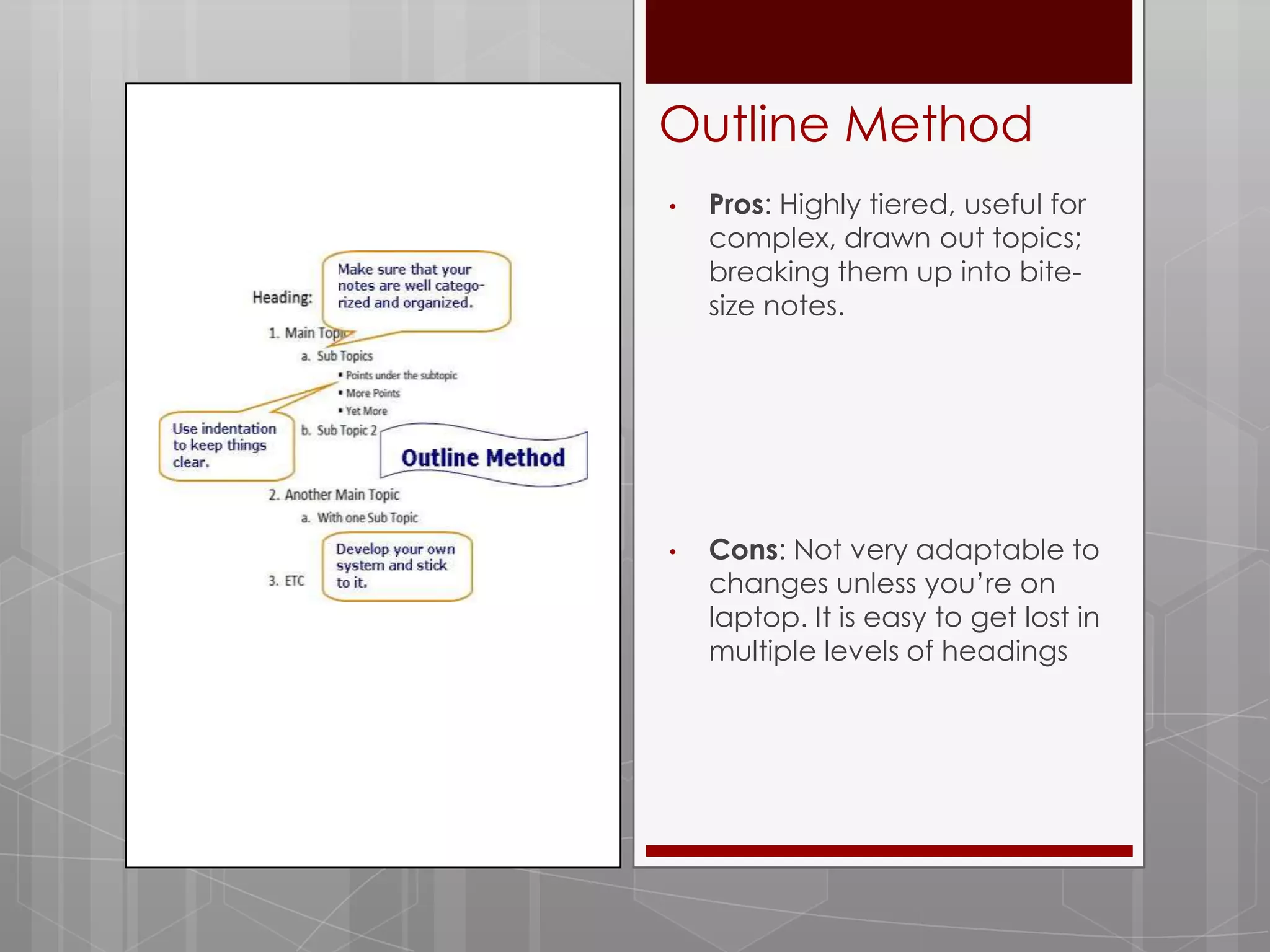
    Cons: Increased indentationleads to less area for general notes, takes a small amount of planning. Outline MethodPros: Highly tiered, useful for complex, drawn out topics; breaking them up into bite-size notes.
  • 14.
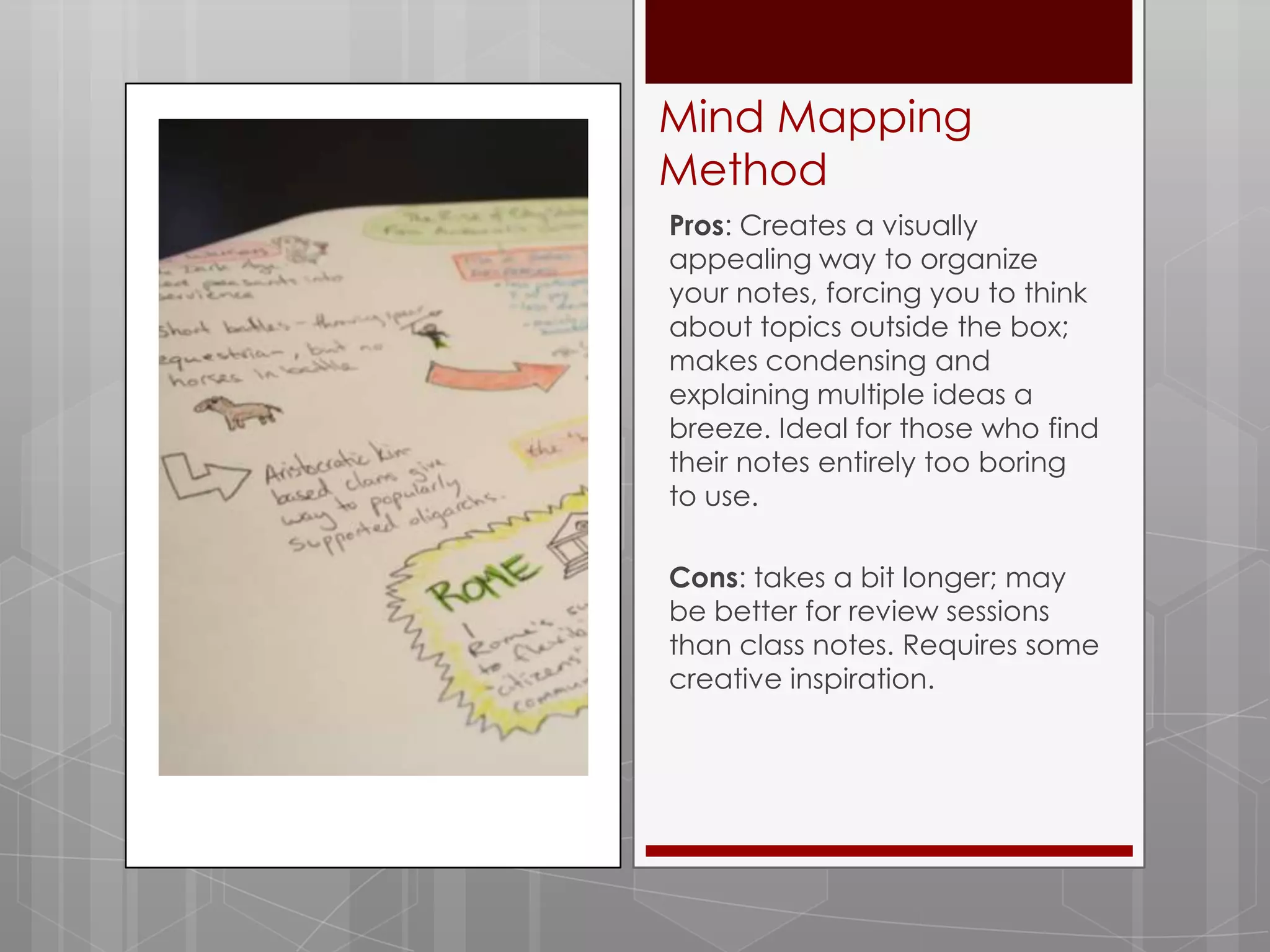
    Cons: Not veryadaptable to changes unless you’re on laptop. It is easy to get lost in multiple levels of headingsMind Mapping MethodPros: Creates a visually appealing way to organize your notes, forcing you to think about topics outside the box; makes condensing and explaining multiple ideas a breeze. Ideal for those who find their notes entirely too boring to use.Cons: takes a bit longer; may be better for review sessions than class notes. Requires some creative inspiration.
  • 15.
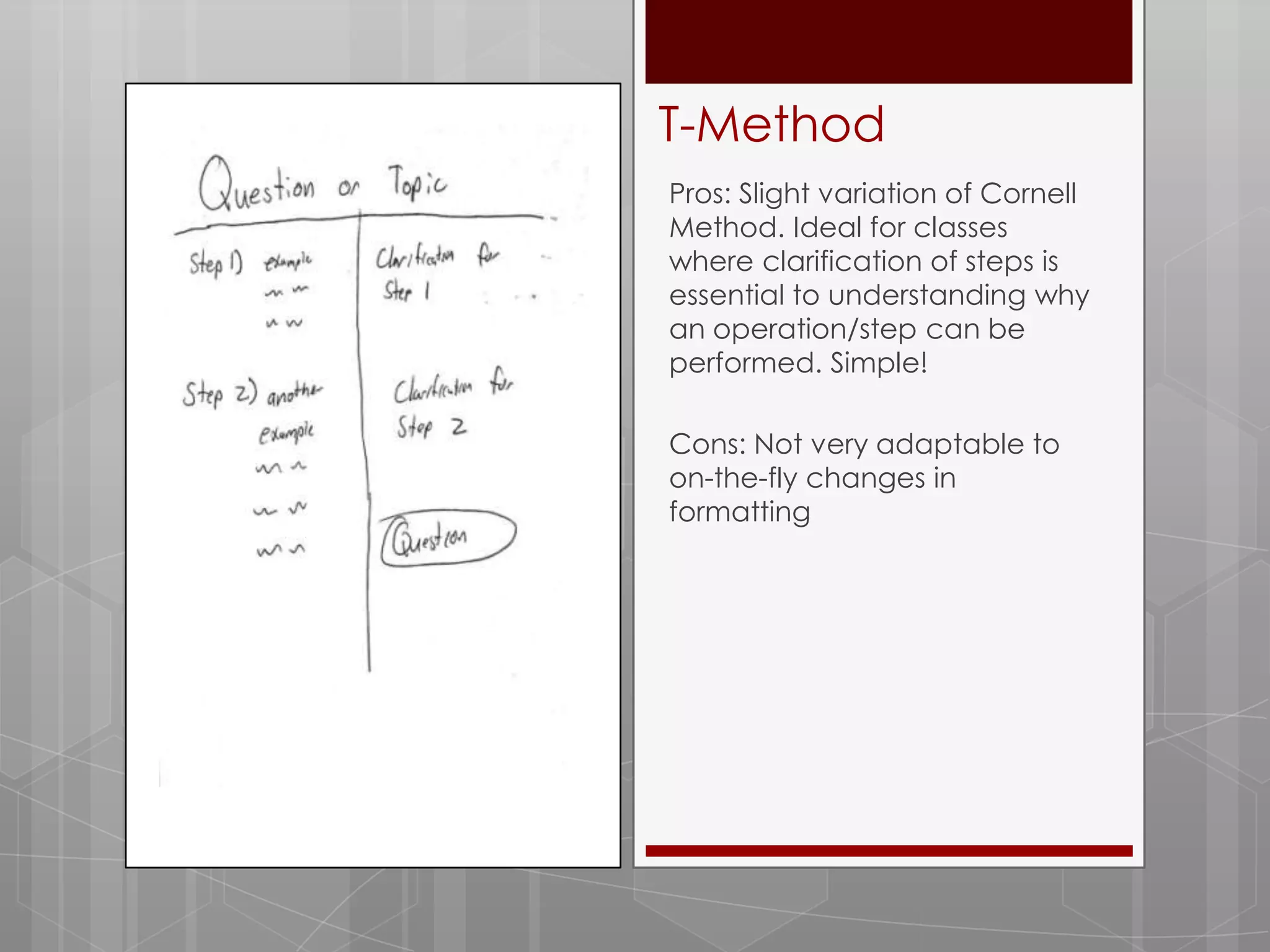
    T-MethodPros: Slight variationof Cornell Method. Ideal for classes where clarification of steps is essential to understanding why an operation/step can be performed. Simple!Cons: Not very adaptable to on-the-fly changes in formatting

Editor's Notes