What is Irony?
Irony
• A Surprise!
• It is the difference between what we
expect to happen, and what actually
does happen.
• It is often used to add suspense and
interest.
• It is also used to keep the reader
thinking about the moral of the story.
3 types of Irony
• Verbal Irony
• Situational Irony
• Dramatic Irony
Verbal Irony
• The simplest kind of irony.
• You use it everyday when you say one
thing and really mean another.
• It is often similar to a sarcastic response.
• Example:
• When you appear to be sick and someone
asks you if you’re okay. You say “Of
course!” But in the meantime you are
vomiting and fainting.
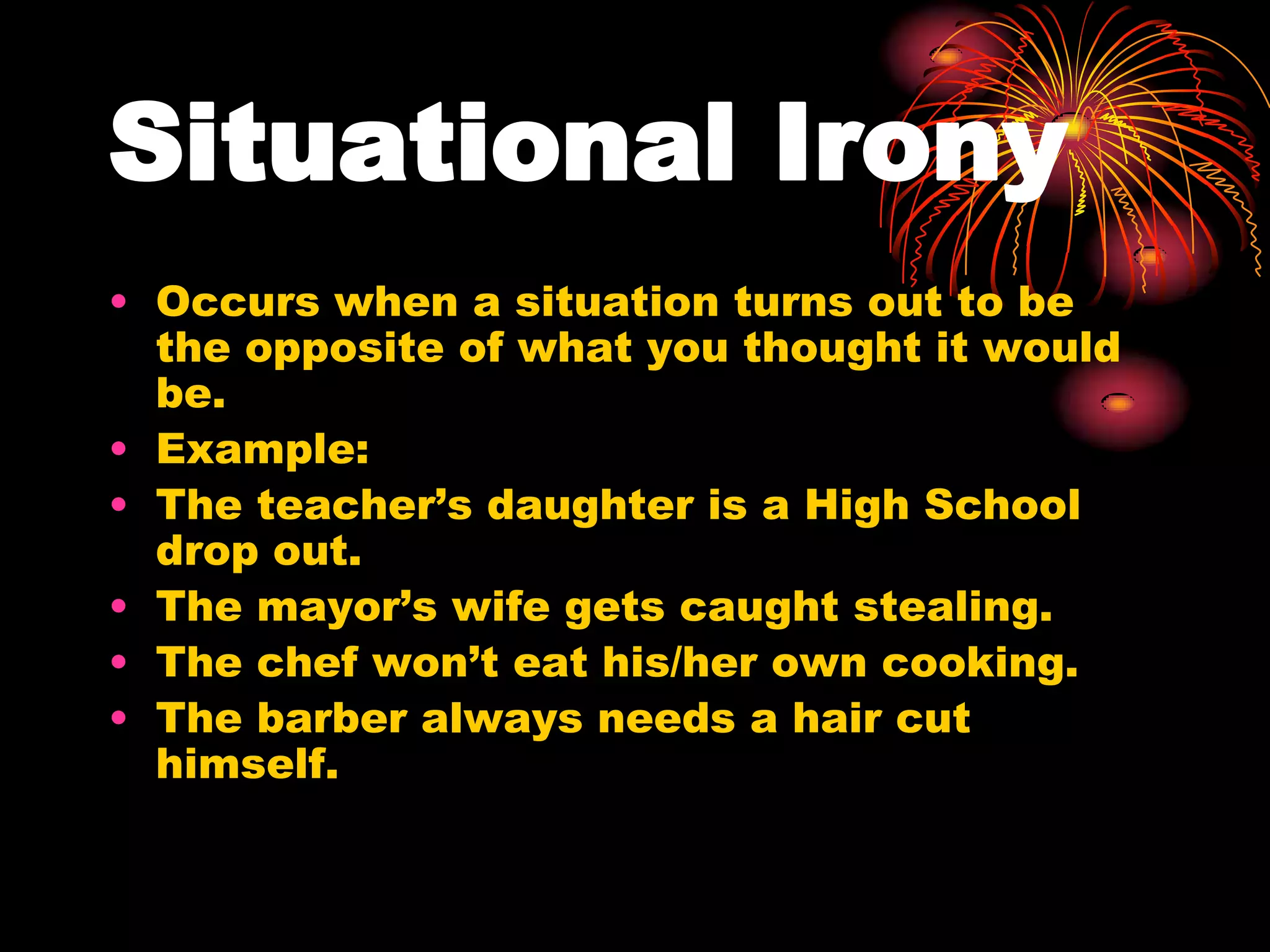
Situational Irony
• Occurs when a situation turns out to be
the opposite of what you thought it would
be.
• Example:
• The teacher’s daughter is a High School
drop out.
• The mayor’s wife gets caught stealing.
• The chef won’t eat his/her own cooking.
• The barber always needs a hair cut
himself.
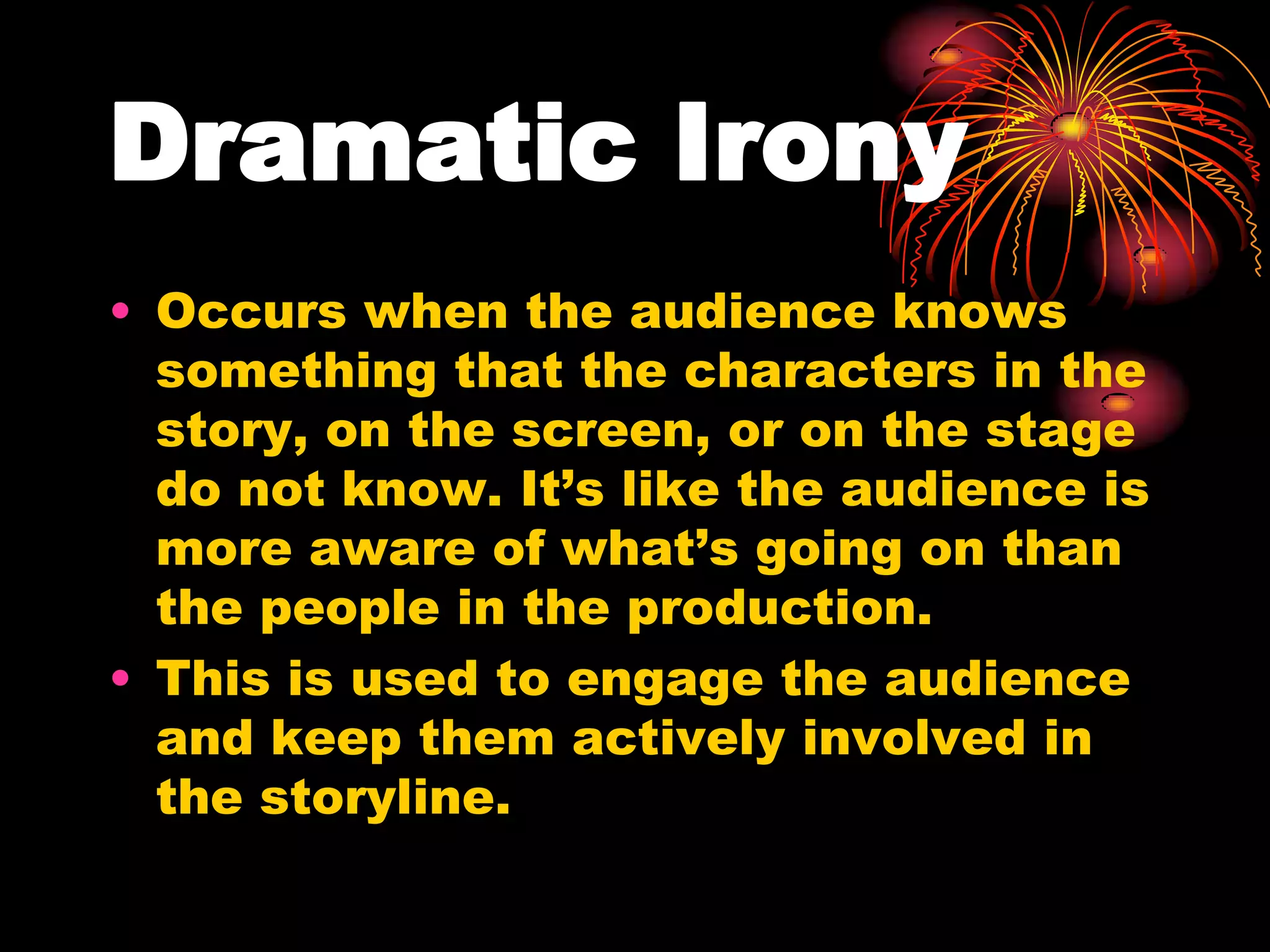
Dramatic Irony
• Occurs when the audience knows
something that the characters in the
story, on the screen, or on the stage
do not know. It’s like the audience is
more aware of what’s going on than
the people in the production.
• This is used to engage the audience
and keep them actively involved in
the storyline.
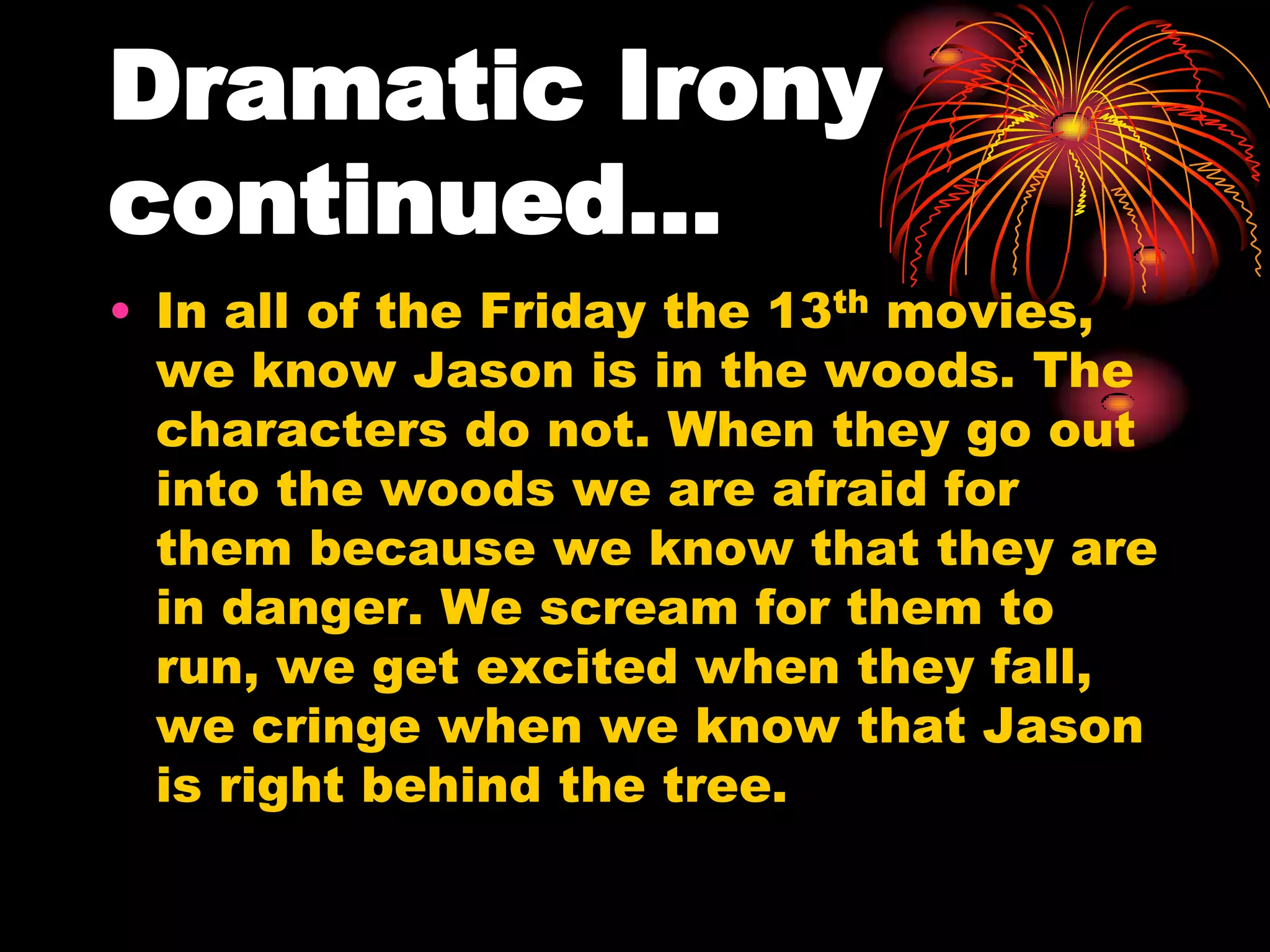
Dramatic Irony
continued…
• In all of the Friday the 13th movies,
we know Jason is in the woods. The
characters do not. When they go out
into the woods we are afraid for
them because we know that they are
in danger. We scream for them to
run, we get excited when they fall,
we cringe when we know that Jason
is right behind the tree.
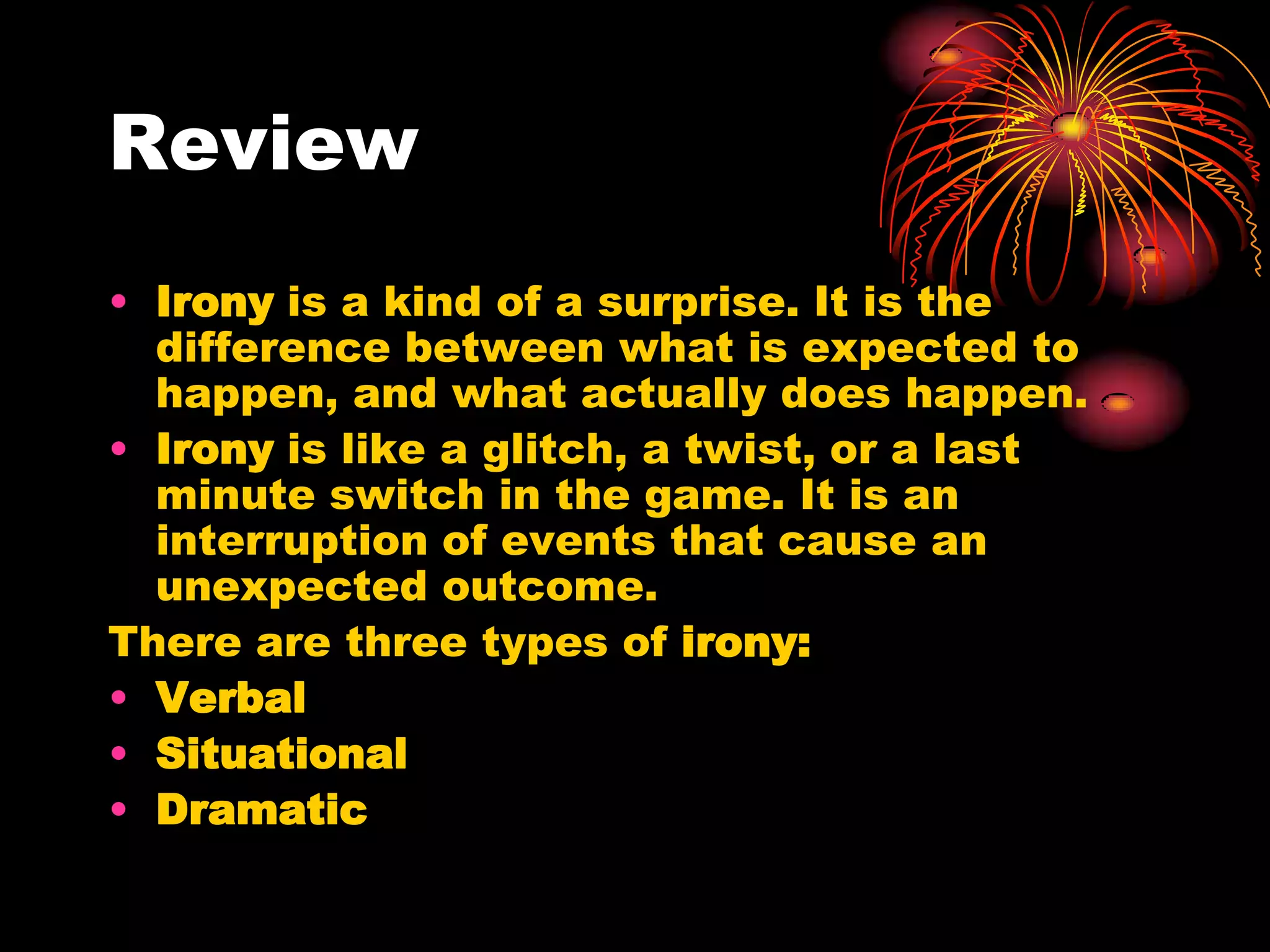
Review
• Irony is a kind of a surprise. It is the
difference between what is expected to
happen, and what actually does happen.
• Irony is like a glitch, a twist, or a last
minute switch in the game. It is an
interruption of events that cause an
unexpected outcome.
There are three types of irony:
• Verbal
• Situational
• Dramatic

What is Irony?

  • 1.
  • 2.
    Irony • A Surprise! •It is the difference between what we expect to happen, and what actually does happen. • It is often used to add suspense and interest. • It is also used to keep the reader thinking about the moral of the story.
  • 3.
    3 types ofIrony • Verbal Irony • Situational Irony • Dramatic Irony
  • 4.
    Verbal Irony • Thesimplest kind of irony. • You use it everyday when you say one thing and really mean another. • It is often similar to a sarcastic response. • Example: • When you appear to be sick and someone asks you if you’re okay. You say “Of course!” But in the meantime you are vomiting and fainting.
  • 5.
    Situational Irony • Occurswhen a situation turns out to be the opposite of what you thought it would be. • Example: • The teacher’s daughter is a High School drop out. • The mayor’s wife gets caught stealing. • The chef won’t eat his/her own cooking. • The barber always needs a hair cut himself.
  • 6.
    Dramatic Irony • Occurswhen the audience knows something that the characters in the story, on the screen, or on the stage do not know. It’s like the audience is more aware of what’s going on than the people in the production. • This is used to engage the audience and keep them actively involved in the storyline.
  • 7.
    Dramatic Irony continued… • Inall of the Friday the 13th movies, we know Jason is in the woods. The characters do not. When they go out into the woods we are afraid for them because we know that they are in danger. We scream for them to run, we get excited when they fall, we cringe when we know that Jason is right behind the tree.
  • 8.
    Review • Irony isa kind of a surprise. It is the difference between what is expected to happen, and what actually does happen. • Irony is like a glitch, a twist, or a last minute switch in the game. It is an interruption of events that cause an unexpected outcome. There are three types of irony: • Verbal • Situational • Dramatic