TYPES OF IRONY
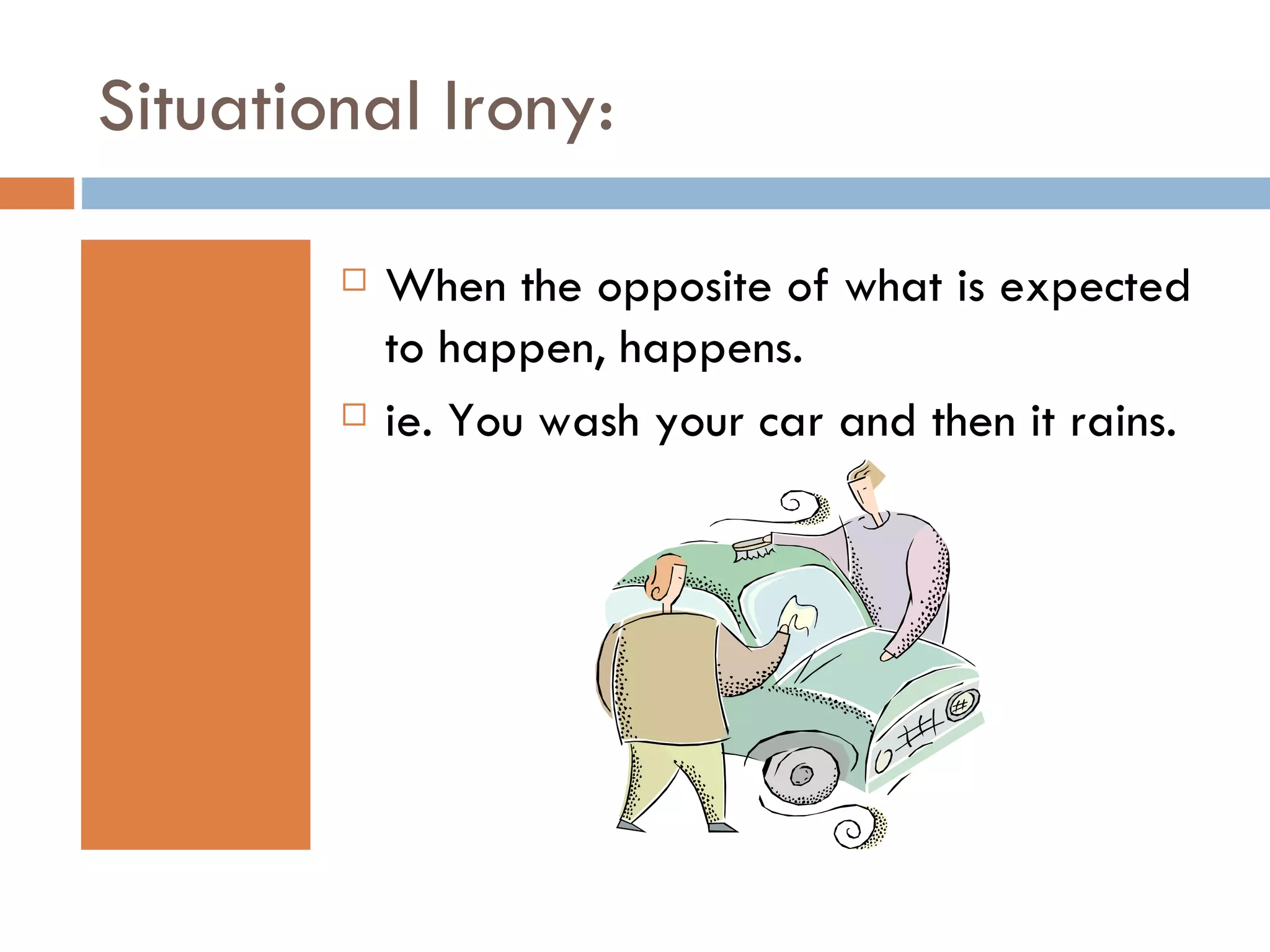
Situational Irony: When the opposite of what is expected to happen, happens. ie. You wash your car and then it rains.
Verbal Irony: In conversation, the speaker intends to be understood as meaning something that  contrasts with  the literal or usual meaning of what he says. ie. "My, you've certainly made a mess of things!" could be said to a hostess who presents a spectacular dish prepared with obvious care and skill.
Dramatic Irony: When the reader or audience are aware of something that the characters in the story are not.  The reader/audience waits anxiously to find out what will happen when the characters discover what we already know. ie. In Act II while Romeo & Juliet make plans for a happy future the audience already knows of their fate since they’ve been told by the chorus in the Prologue.
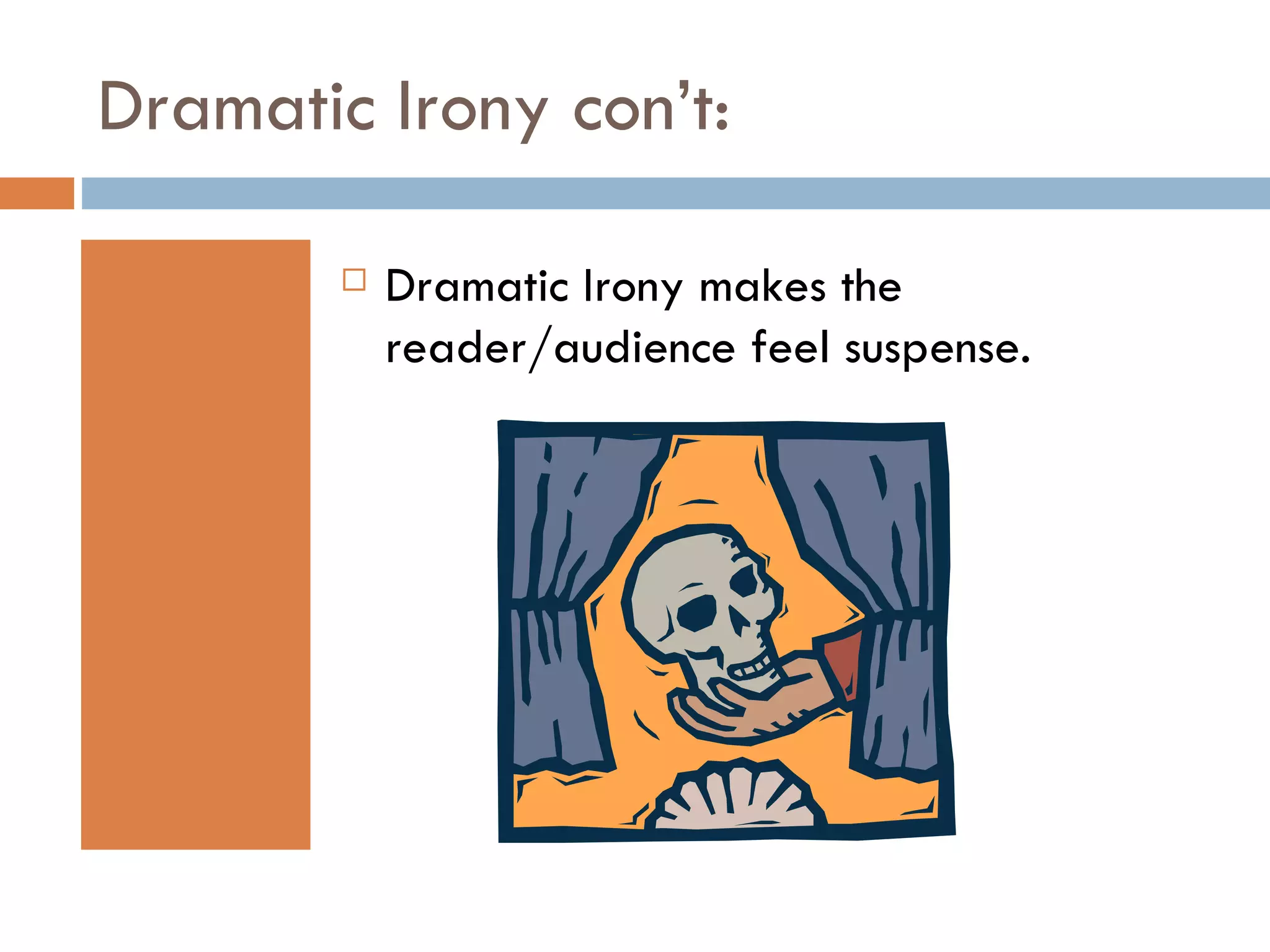
Dramatic Irony con’t: Dramatic Irony makes the reader/audience feel suspense.
THE END

Types of Irony

  • 1.
  • 2.
    Situational Irony: Whenthe opposite of what is expected to happen, happens. ie. You wash your car and then it rains.
  • 3.
    Verbal Irony: Inconversation, the speaker intends to be understood as meaning something that contrasts with the literal or usual meaning of what he says. ie. "My, you've certainly made a mess of things!" could be said to a hostess who presents a spectacular dish prepared with obvious care and skill.
  • 4.
    Dramatic Irony: Whenthe reader or audience are aware of something that the characters in the story are not. The reader/audience waits anxiously to find out what will happen when the characters discover what we already know. ie. In Act II while Romeo & Juliet make plans for a happy future the audience already knows of their fate since they’ve been told by the chorus in the Prologue.
  • 5.
    Dramatic Irony con’t:Dramatic Irony makes the reader/audience feel suspense.
  • 6.