


Irony is a literary device in which words
are used to express a contradiction
between appearance and reality— in
irony, reality is usually the opposite of
what it seems. In literature, there are
three types of irony:
Situational
 Verbal
 Dramatic

Situational irony is when the outcome of
a situation is inconsistent with what we
expect would logically or normally
occur.
 In other words, it is the opposite of what
we expect will be or happen.


› An example of situational irony would be if a

thief’s house was broken into at the same
time he was robbing someone’s house.
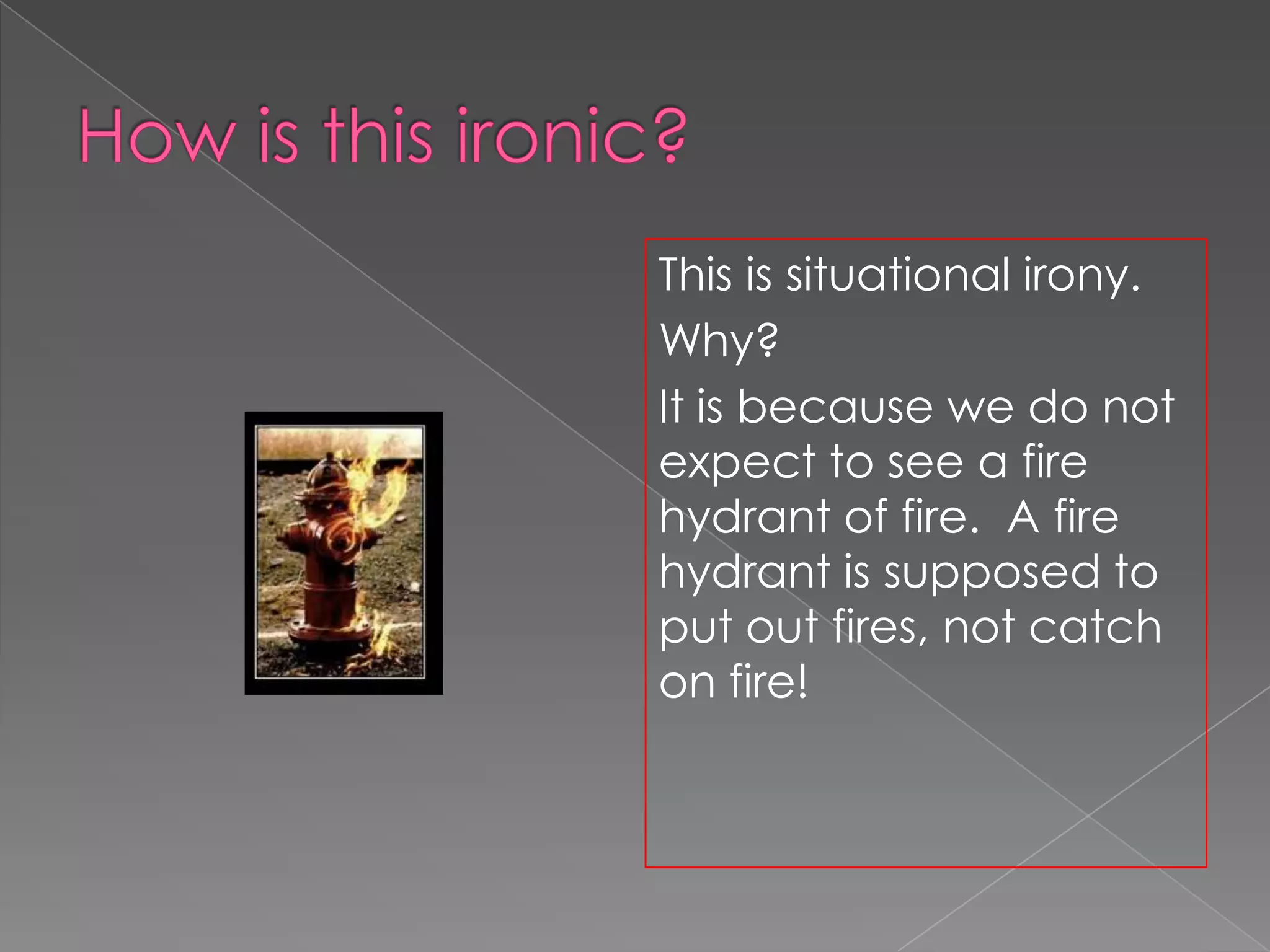
This is situational irony.
Why?
It is because we do not
expect to see a fire
hydrant of fire. A fire
hydrant is supposed to
put out fires, not catch
on fire!


Verbal irony is when a speaker or writer
says one thing but actually means the
opposite.
›

For example, when your mom walks into
your filthy bedroom and says, “I see you’ve
cleaned your room!” Sarcasm is one type of
verbal irony.
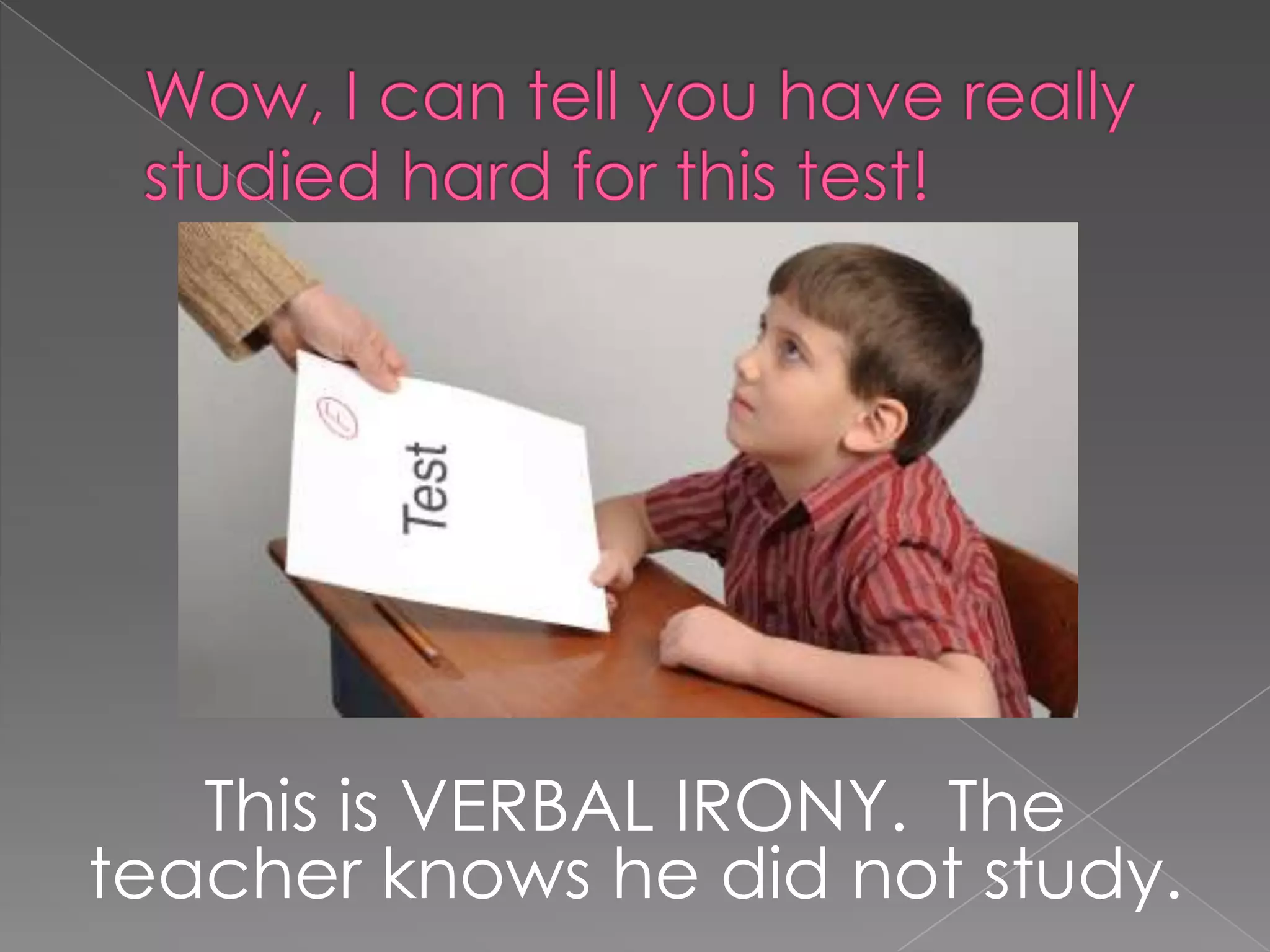
This is VERBAL IRONY. The
teacher knows he did not study.


Dramatic irony is when the audience or
the reader is aware of something that a
character does not know. For example,
when Romeo believes Juliet is dead, but
the audience knows that she has only
been given a potion to sleep.


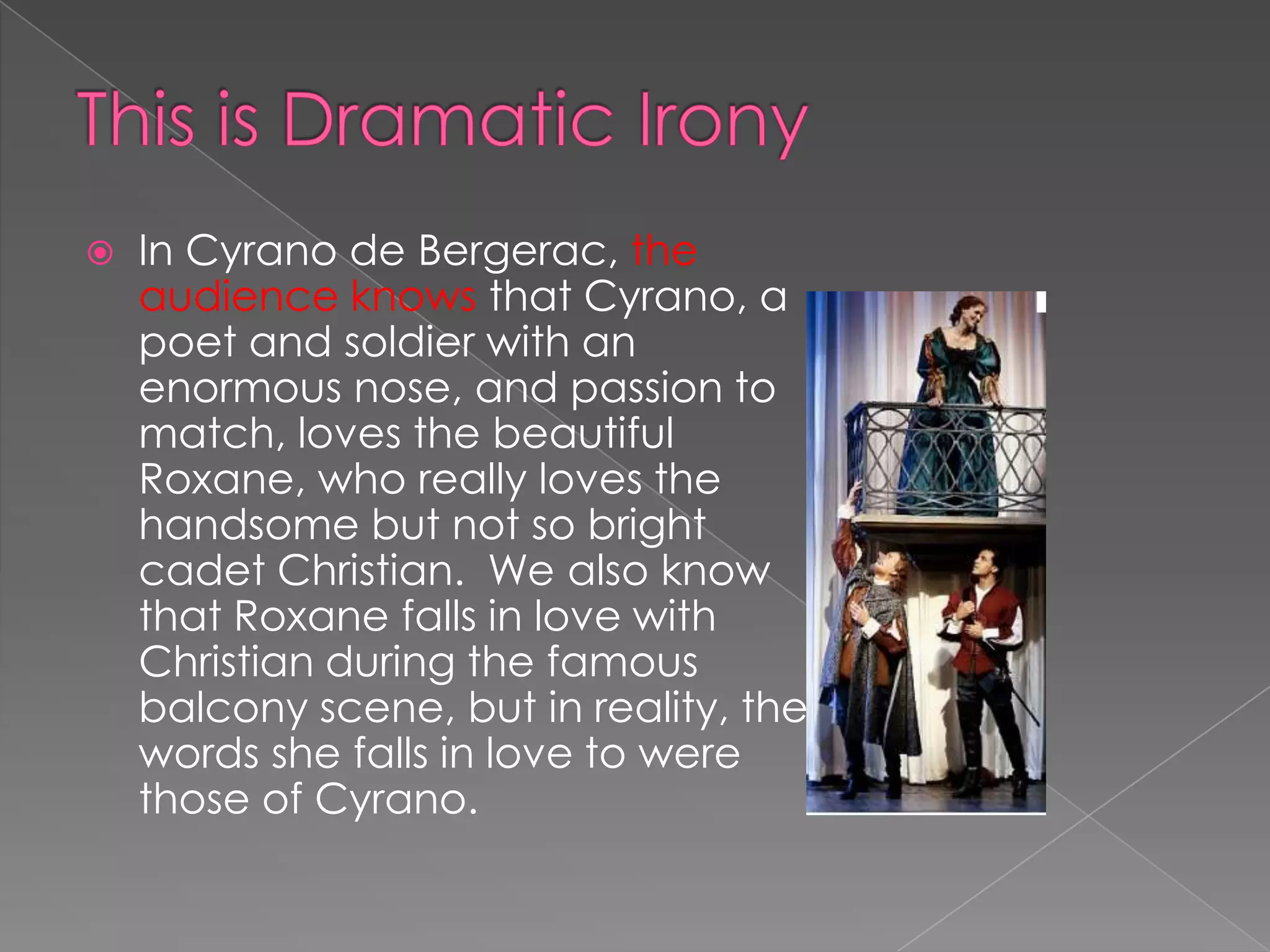
In Cyrano de Bergerac, the
audience knows that Cyrano, a
poet and soldier with an
enormous nose, and passion to
match, loves the beautiful
Roxane, who really loves the
handsome but not so bright
cadet Christian. We also know
that Roxane falls in love with
Christian during the famous
balcony scene, but in reality, the
words she falls in love to were
those of Cyrano.
Authors use irony to make a point and
bring attention to some important
aspect of a story.
 Irony can be both comic and tragic.

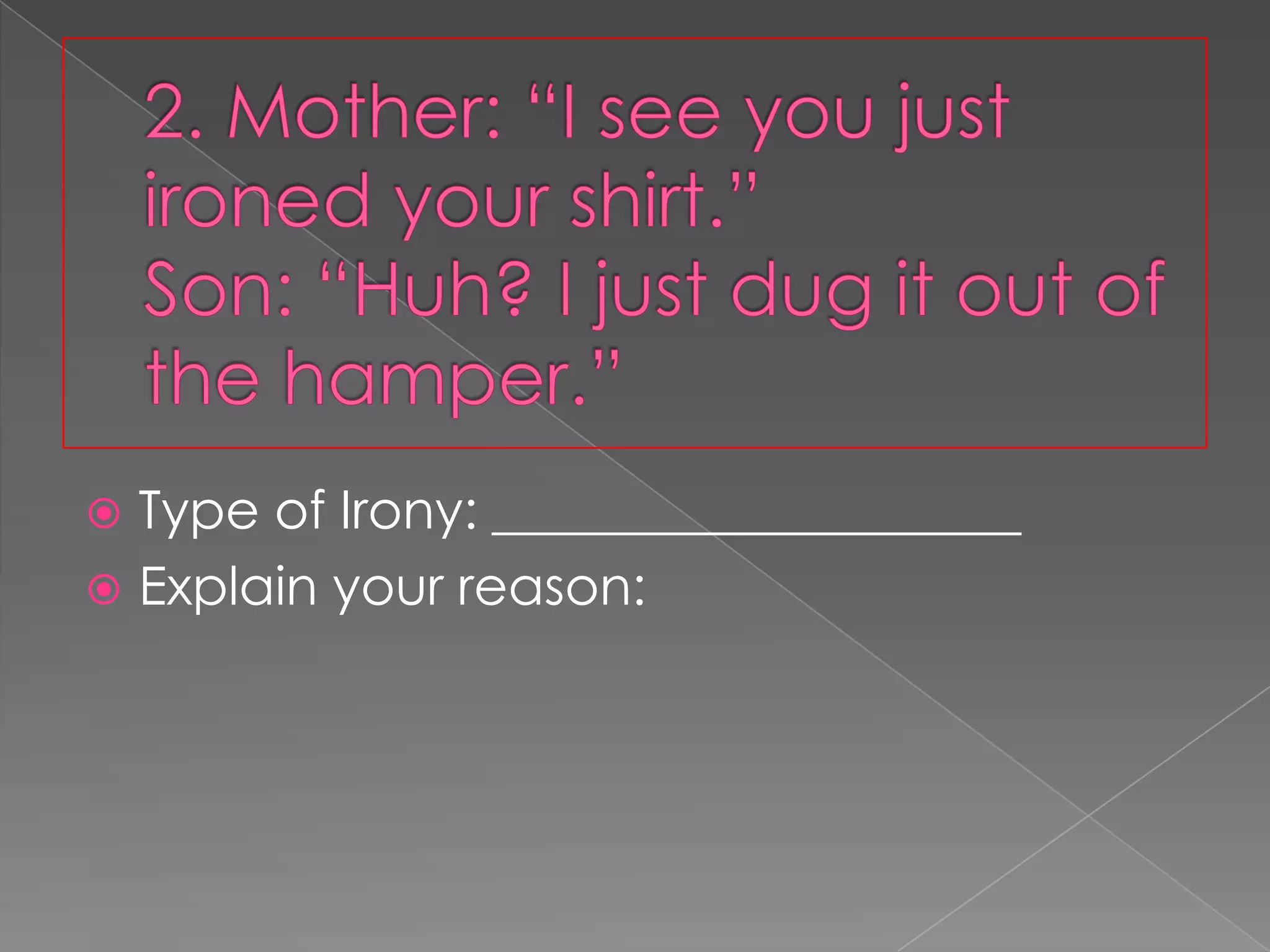
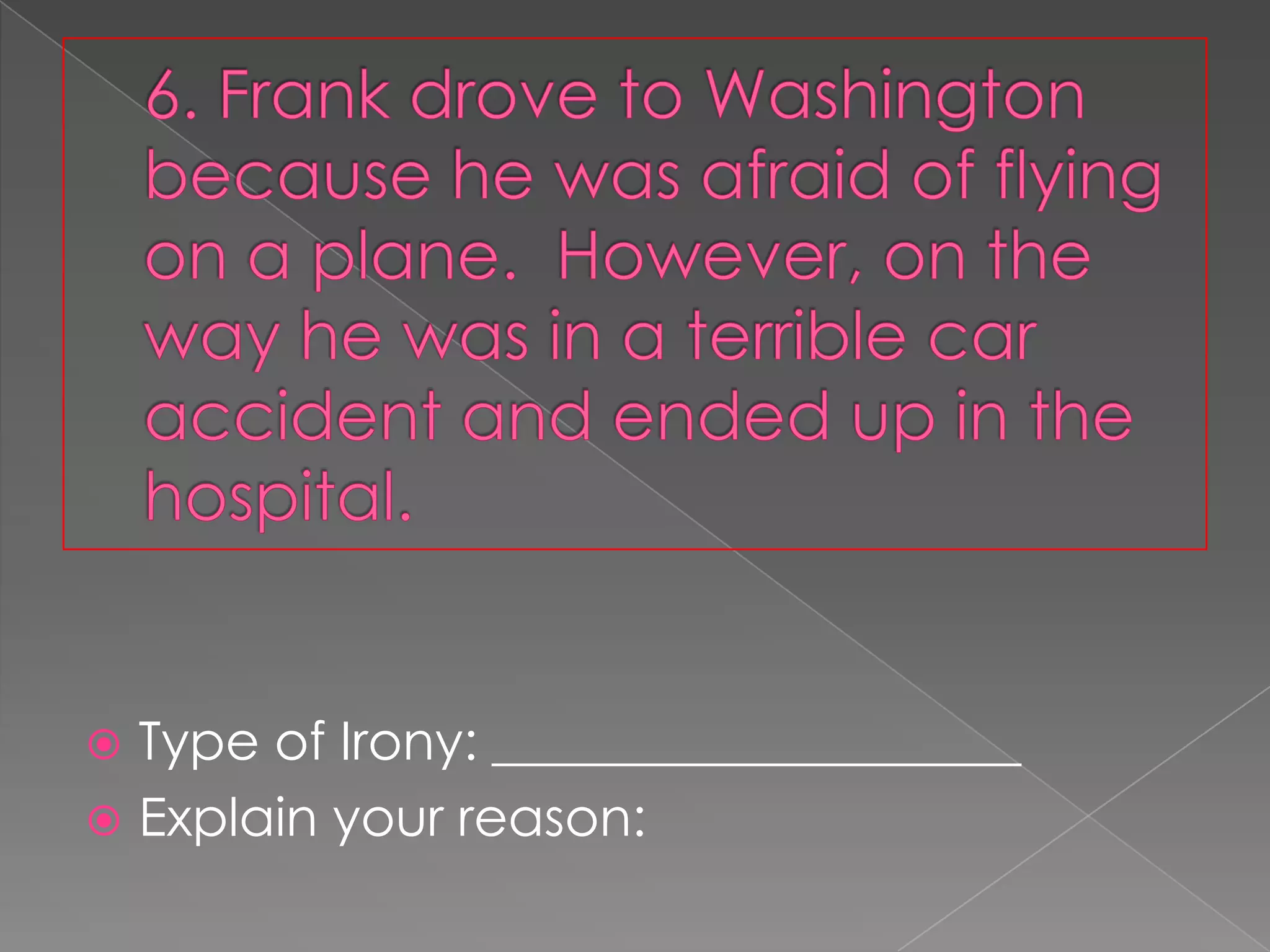
Type of Irony: ____________________
 Explain your reason:

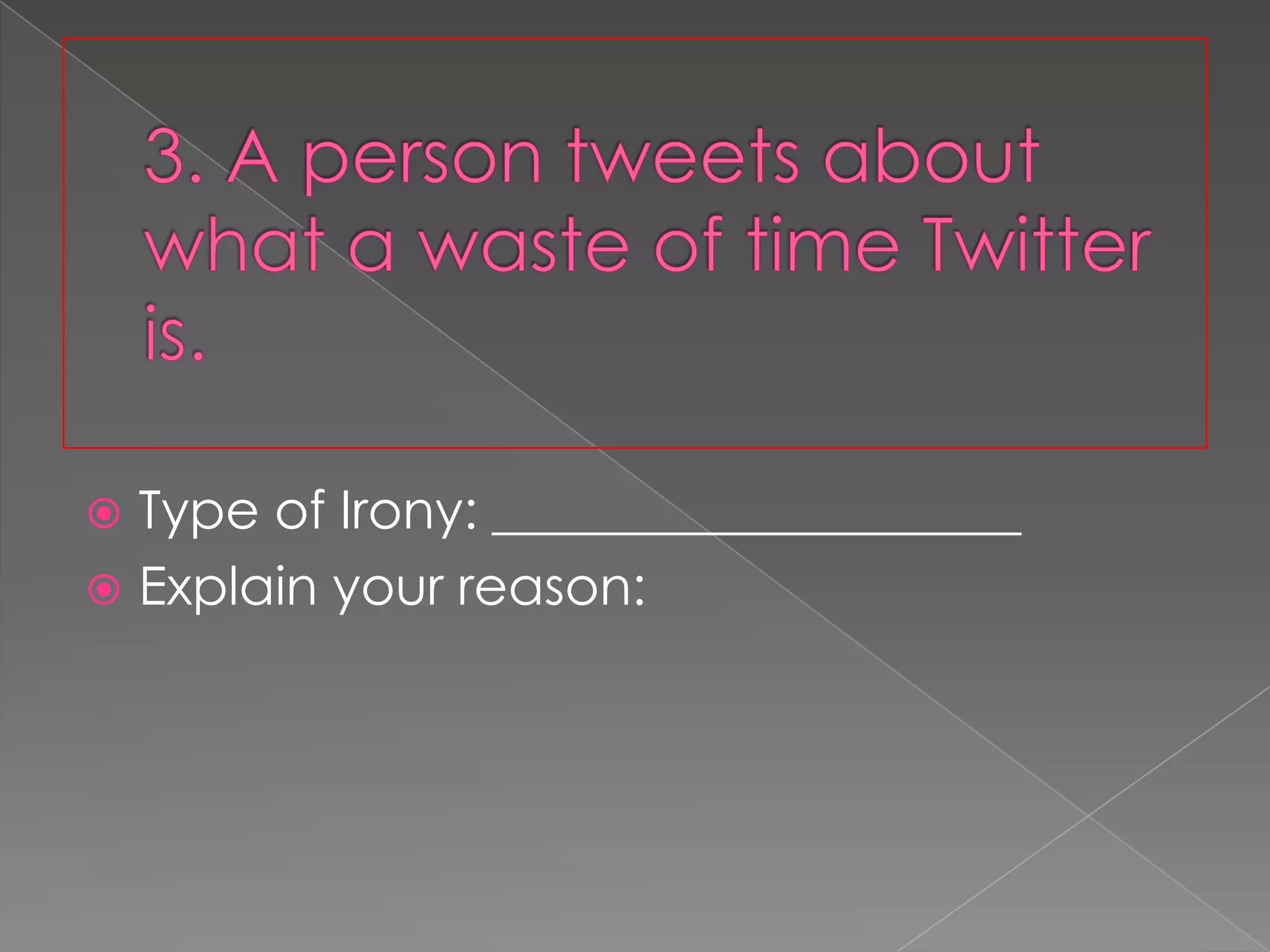
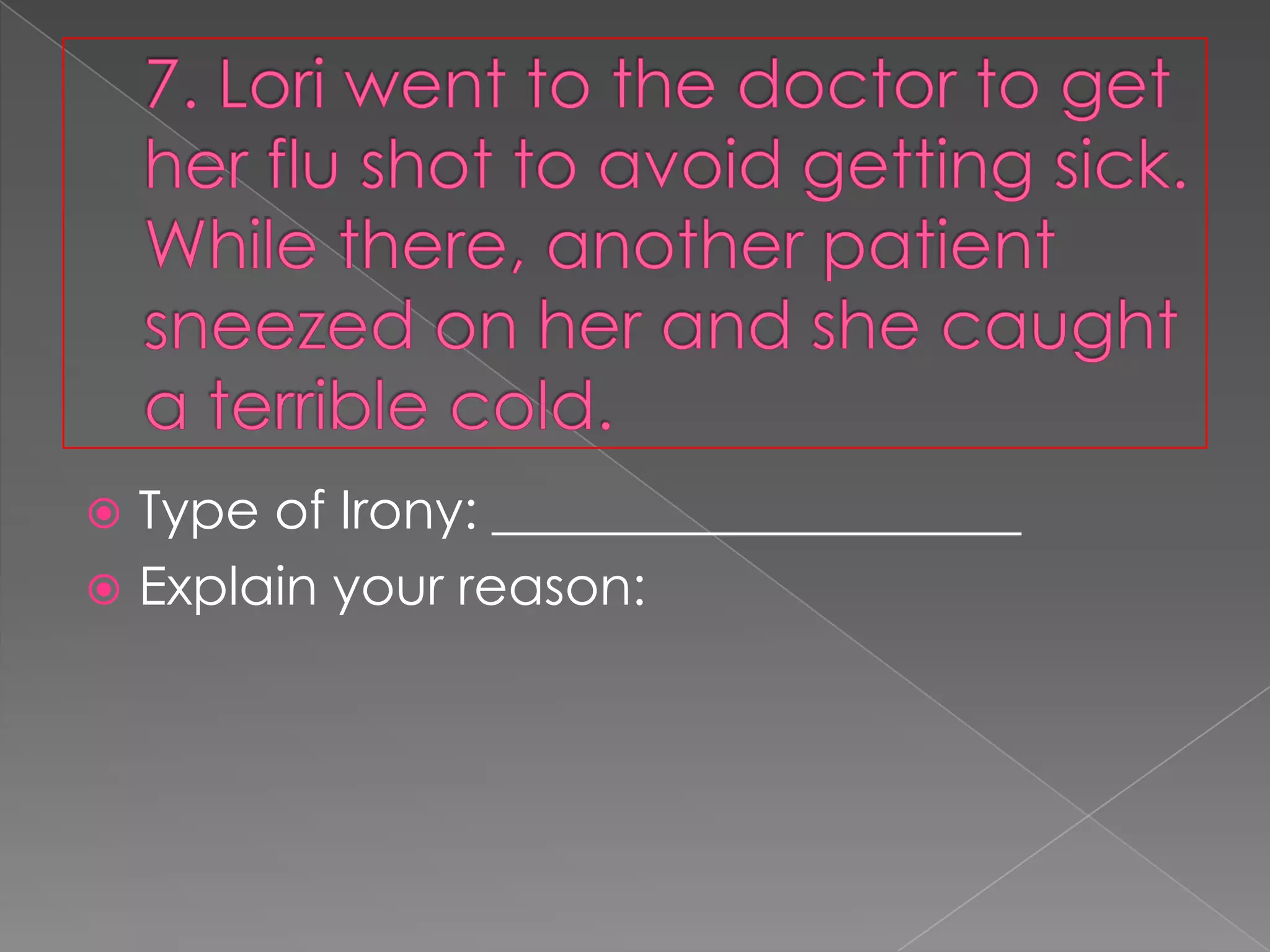
Type of Irony: ____________________
 Explain your reason:

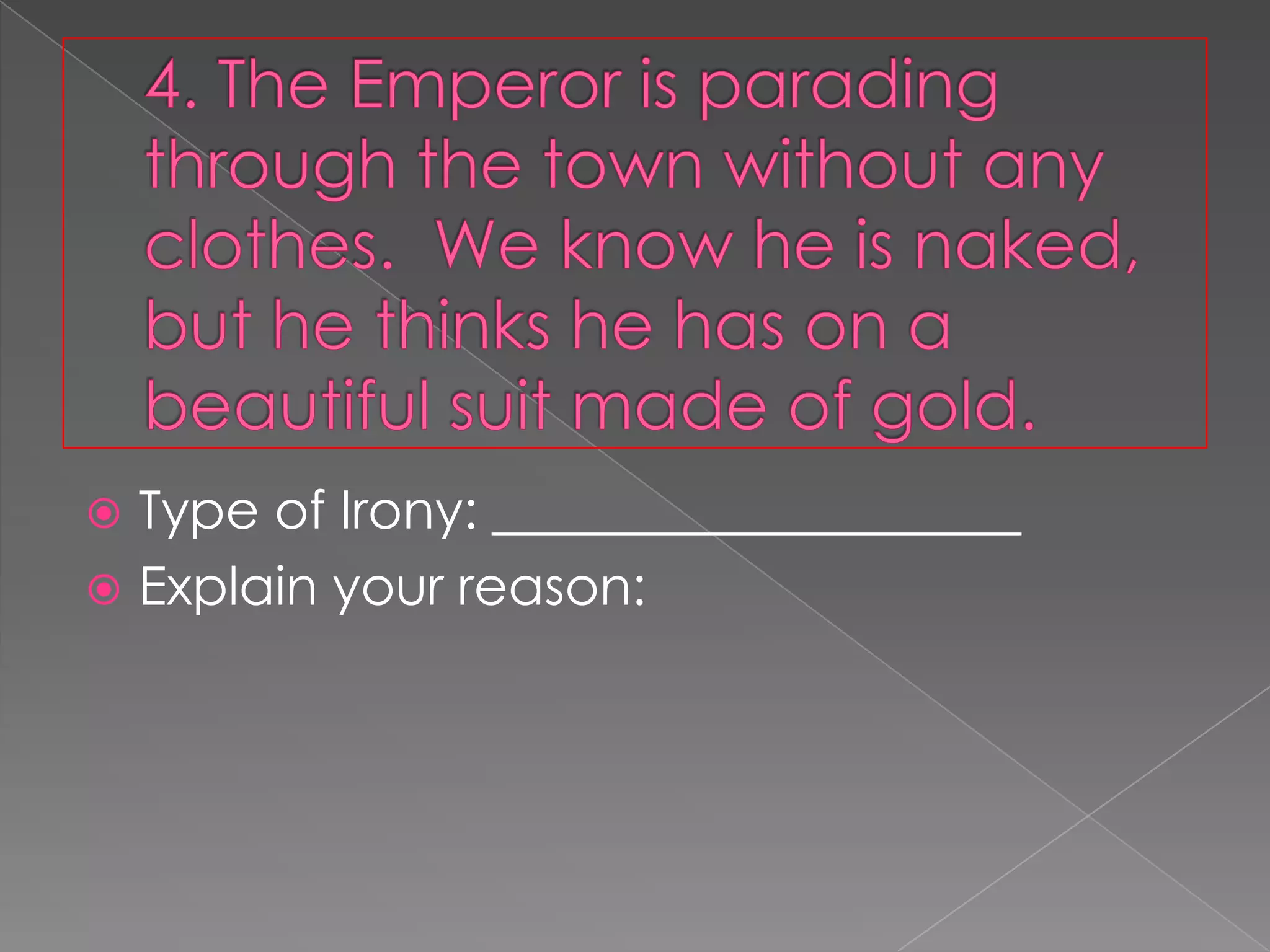
Type of Irony: ____________________
 Explain your reason:

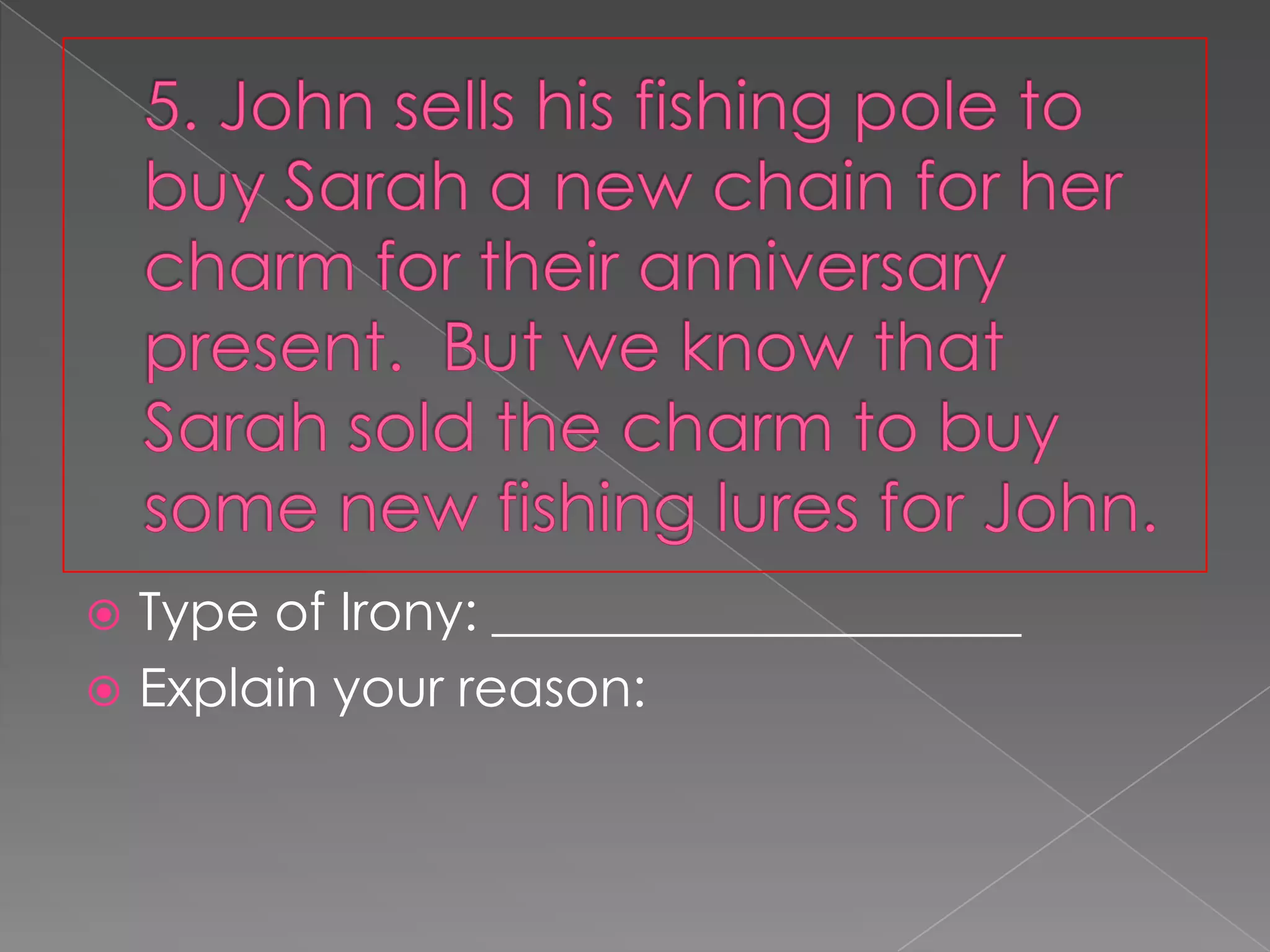
Type of Irony: ____________________
 Explain your reason:

Type of Irony: ____________________
 Explain your reason:

Type of Irony: ____________________
 Explain your reason:

Type of Irony: ____________________
 Explain your reason:

Type of Irony: ____________________
 Explain your reason:

Irony ppt webquest

Irony ppt webquest

  • 2.
     Irony is aliterary device in which words are used to express a contradiction between appearance and reality— in irony, reality is usually the opposite of what it seems. In literature, there are three types of irony:
  • 3.
  • 4.
    Situational irony iswhen the outcome of a situation is inconsistent with what we expect would logically or normally occur.  In other words, it is the opposite of what we expect will be or happen.  › An example of situational irony would be if a thief’s house was broken into at the same time he was robbing someone’s house.
  • 5.
    This is situationalirony. Why? It is because we do not expect to see a fire hydrant of fire. A fire hydrant is supposed to put out fires, not catch on fire!
  • 6.
     Verbal irony iswhen a speaker or writer says one thing but actually means the opposite. › For example, when your mom walks into your filthy bedroom and says, “I see you’ve cleaned your room!” Sarcasm is one type of verbal irony.
  • 7.
    This is VERBALIRONY. The teacher knows he did not study.
  • 8.
     Dramatic irony iswhen the audience or the reader is aware of something that a character does not know. For example, when Romeo believes Juliet is dead, but the audience knows that she has only been given a potion to sleep.
  • 9.
     In Cyrano deBergerac, the audience knows that Cyrano, a poet and soldier with an enormous nose, and passion to match, loves the beautiful Roxane, who really loves the handsome but not so bright cadet Christian. We also know that Roxane falls in love with Christian during the famous balcony scene, but in reality, the words she falls in love to were those of Cyrano.
  • 10.
    Authors use ironyto make a point and bring attention to some important aspect of a story.  Irony can be both comic and tragic. 
  • 12.
    Type of Irony:____________________  Explain your reason: 
  • 13.
    Type of Irony:____________________  Explain your reason: 
  • 14.
    Type of Irony:____________________  Explain your reason: 
  • 15.
    Type of Irony:____________________  Explain your reason: 
  • 16.
    Type of Irony:____________________  Explain your reason: 
  • 17.
    Type of Irony:____________________  Explain your reason: 
  • 18.
    Type of Irony:____________________  Explain your reason: 
  • 19.
    Type of Irony:____________________  Explain your reason: 