Further Explorations in Simplifying
           Electronics
Further Explorations in Simplifying
           Electronics


                  Or

    How I Learned to Stop Worrying
     and start Teaching with Junk
Michael Shiloh

Tinkerer, Geek, Builder, Artist, Experimenter,
  Troublemaker, Educator, Student
Community manager and educational materials
 (something) at Arduino
michael@michaelshiloh.com
Teachmetomake.wordpress.com
Teachmetomake.com/wordpress
Teach
California College of the Arts
San Francisco State University
San Francisco Art Institute
Workshop/Studio on Treasure Island
Also student at San Francisco State University
  (CIA)
Teach Me To Make
Co-founded with my partner Judy Castro (who
 invented most of what you'll see today)
Started as outreach program to underserved
 communities for Make: Magazine
Constraints
Little budget
Very little time
Many participants
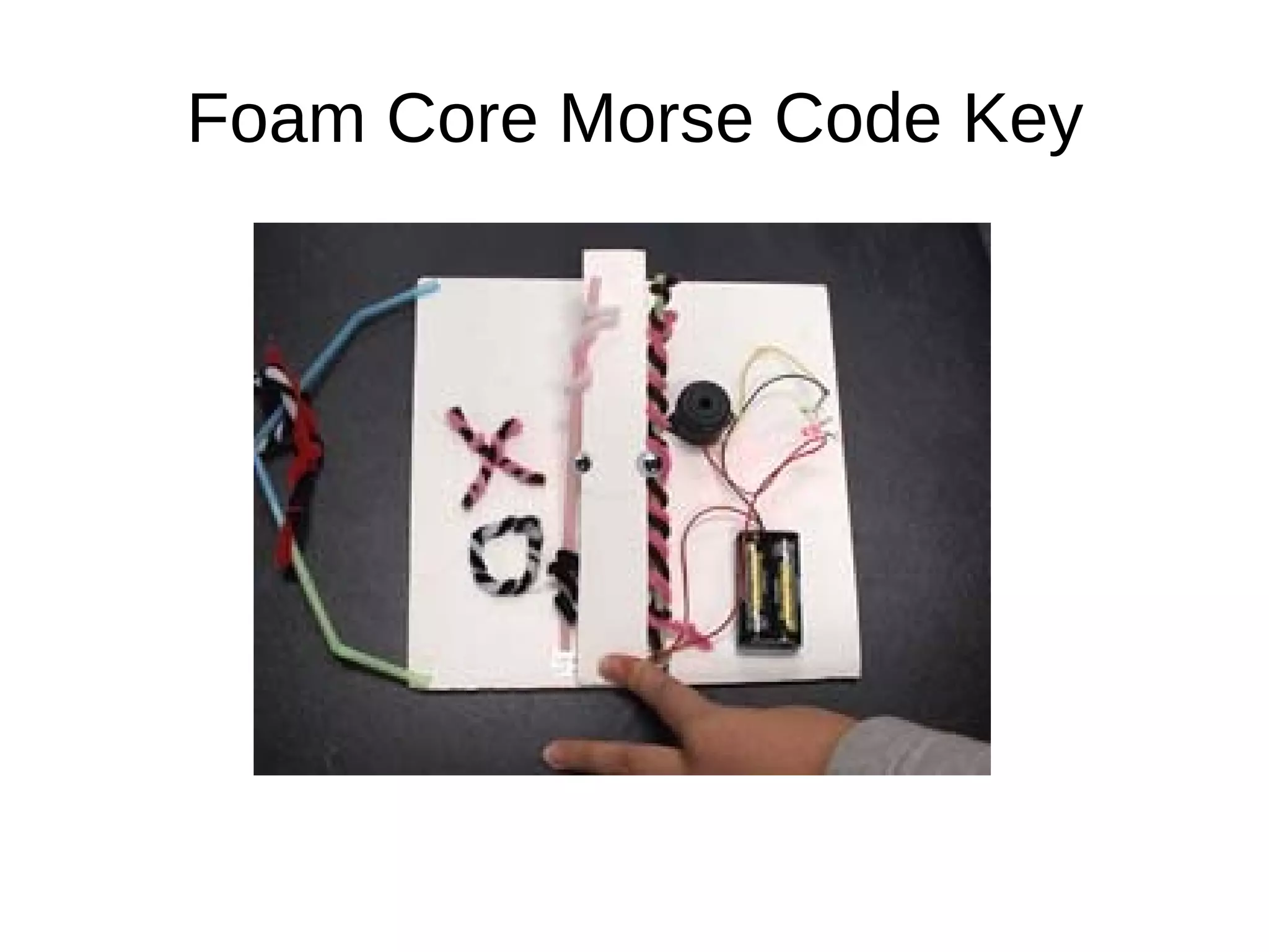
Foam Core Morse Code Key
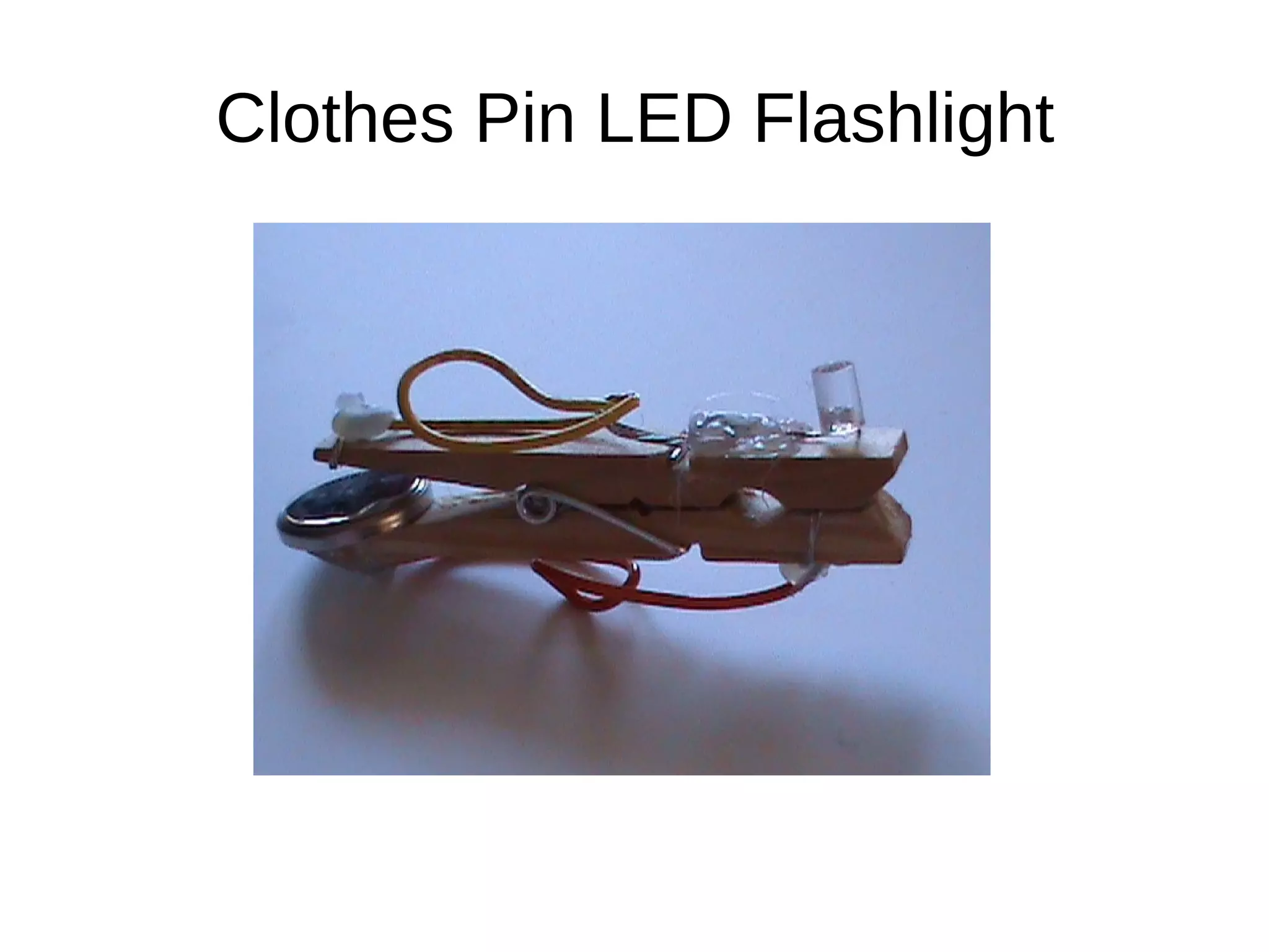
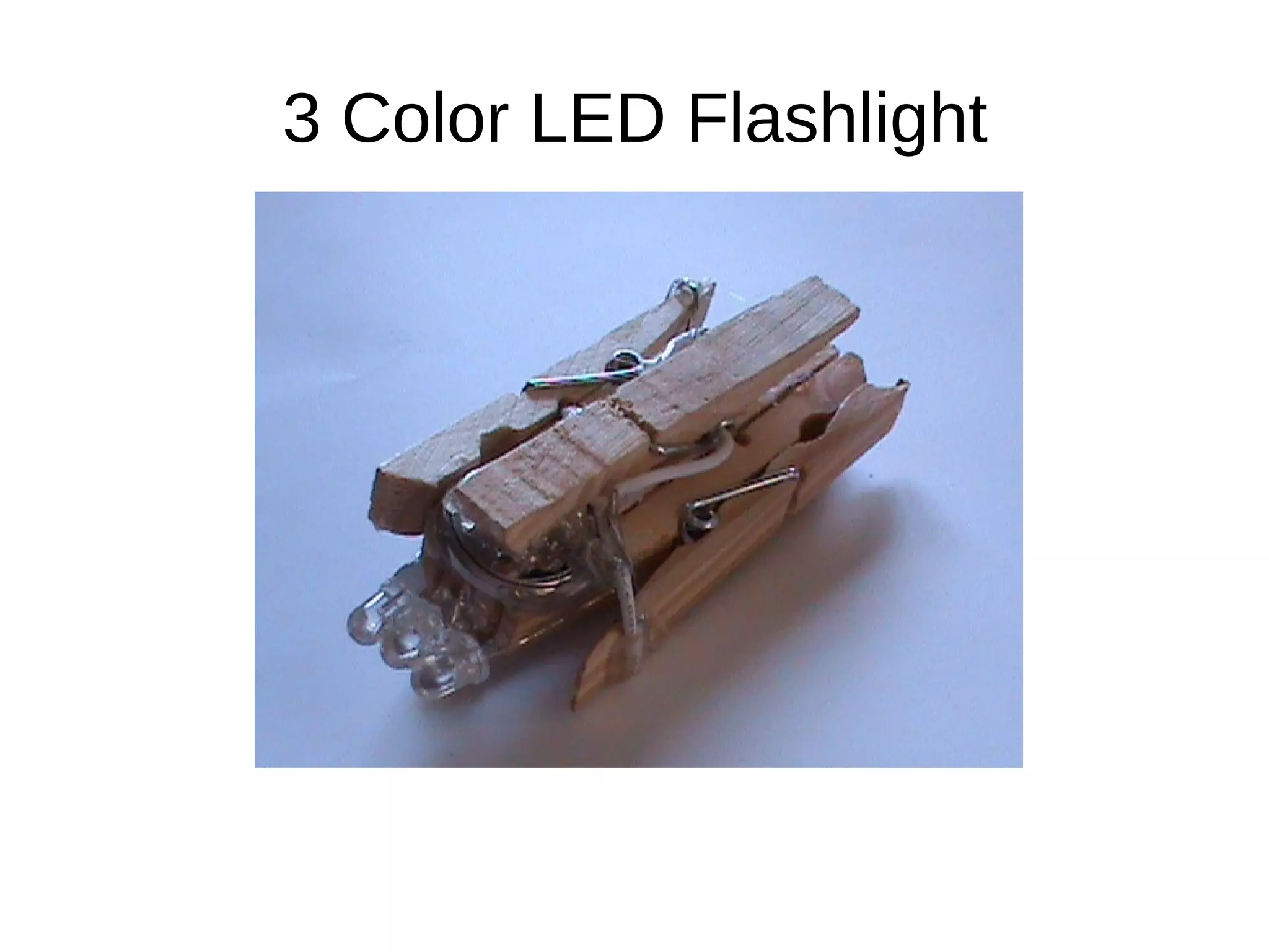
Clothes Pin LED Flashlight
3 Color LED Flashlight
Clothes Pin LED Spider
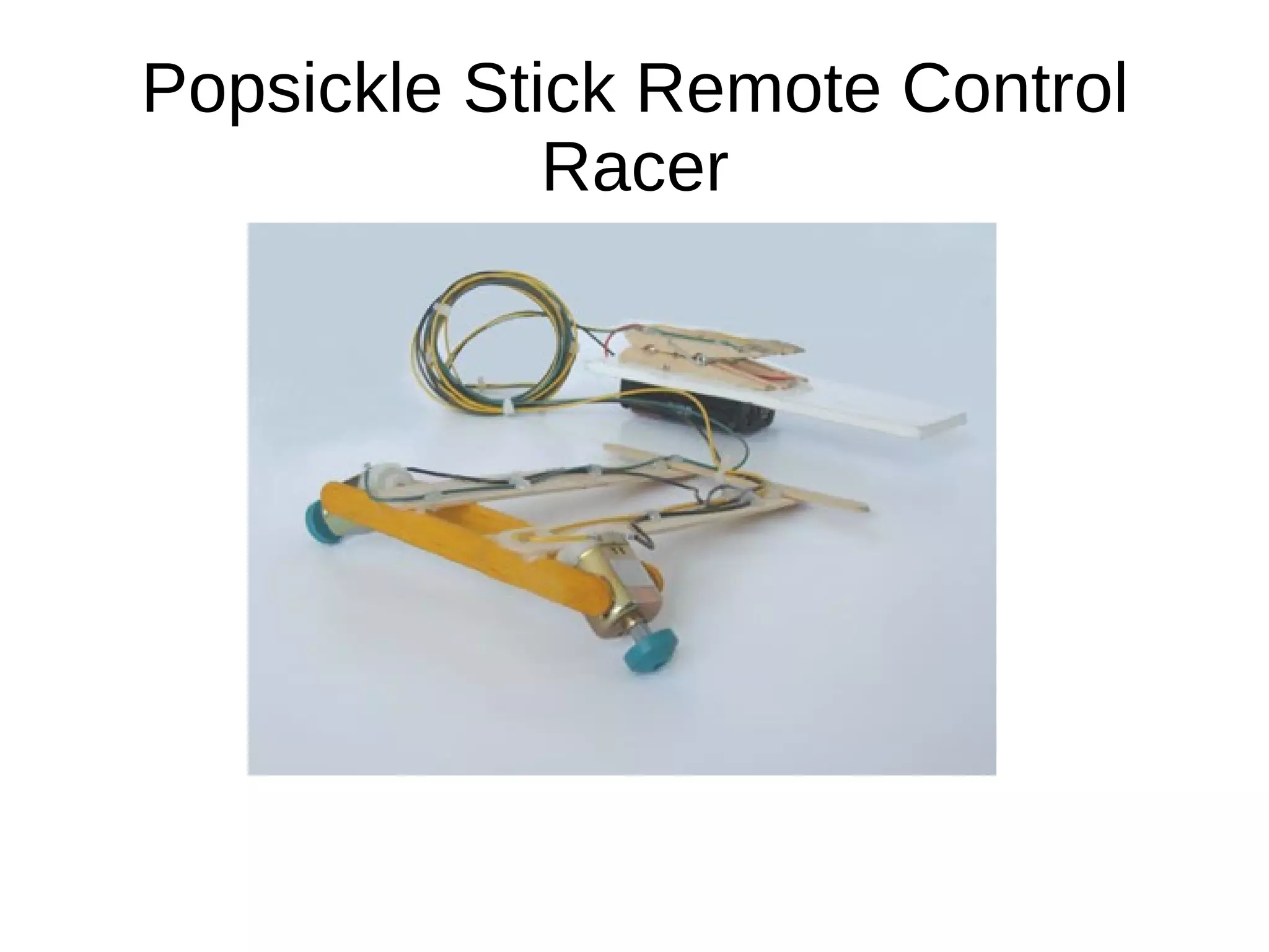
Popsickle Stick Remote Control
             Racer
Using familiar household objects
Cost
Using familiar household objects
Cost
Seemed to make it easier to understand the
 hard stuff
Using familiar household objects
Cost
Seemed to make it easier to understand the
 hard stuff
Suppressed barriers to understanding
Cheap, Quick, Easy
One-time
College Level?
Teaching physical computing to non-engineers
Especially in art schools
College level
More depth
Somewhat constrained at beginning but
Open ended
Relatively inexpensive
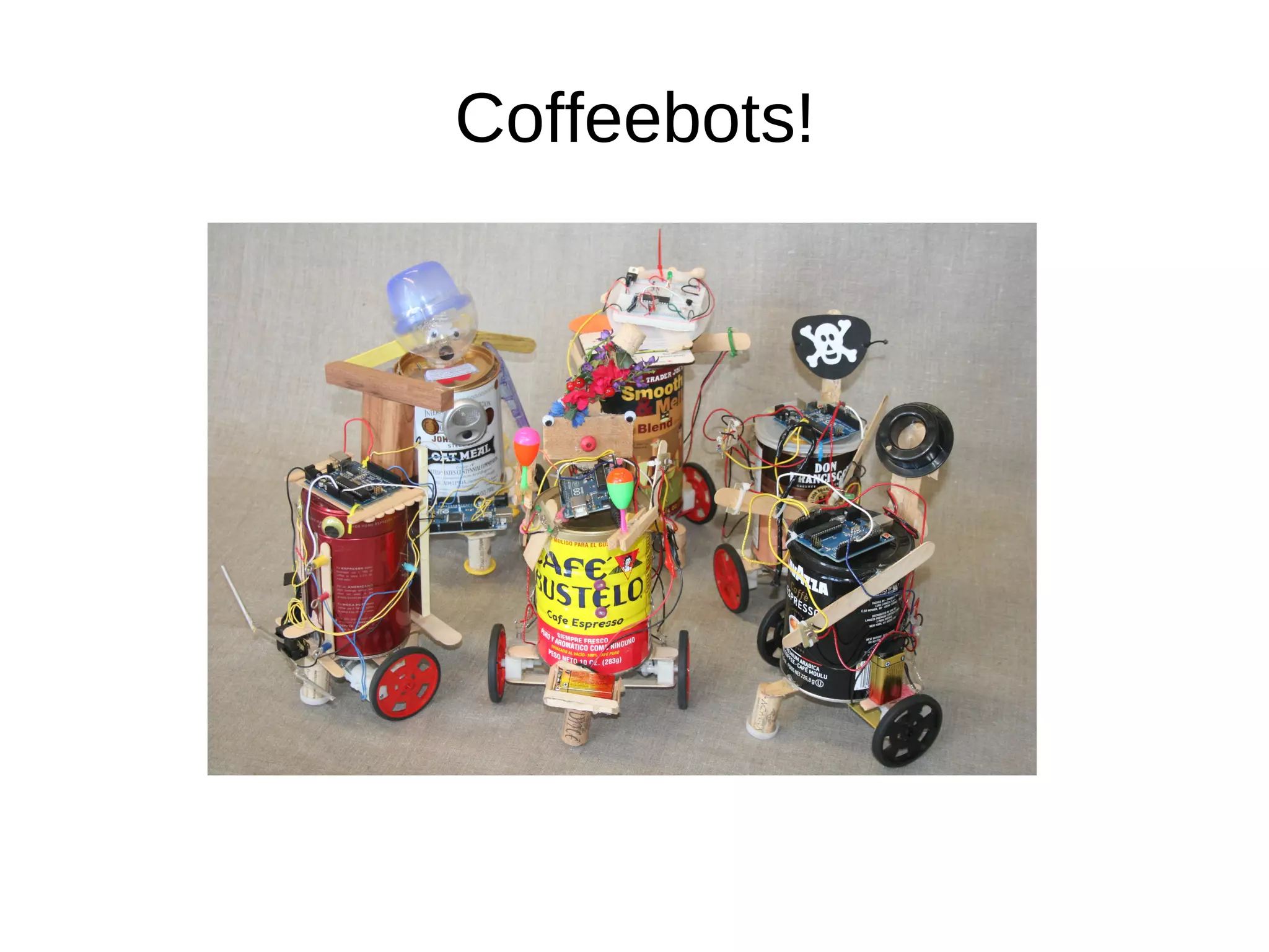
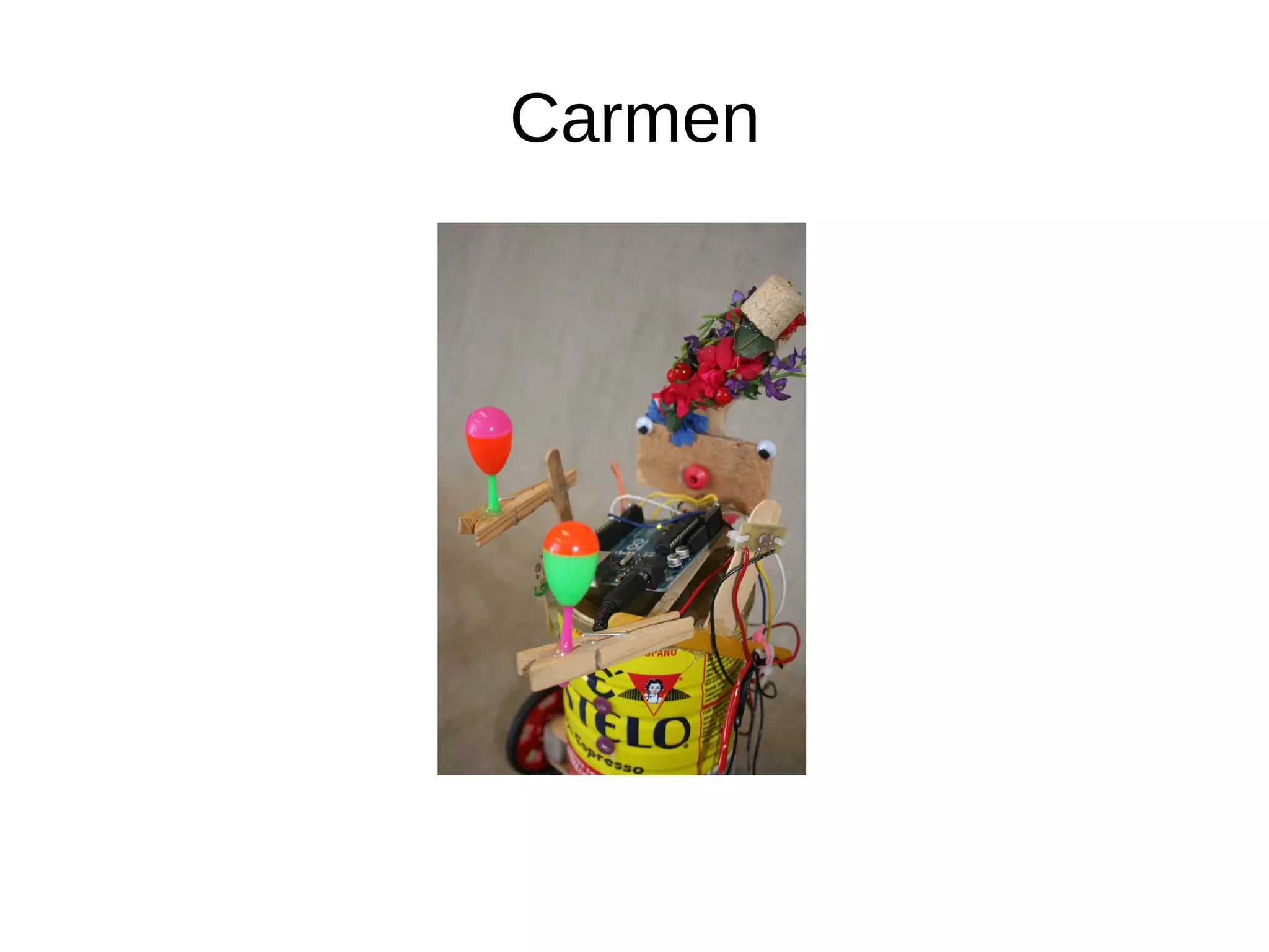
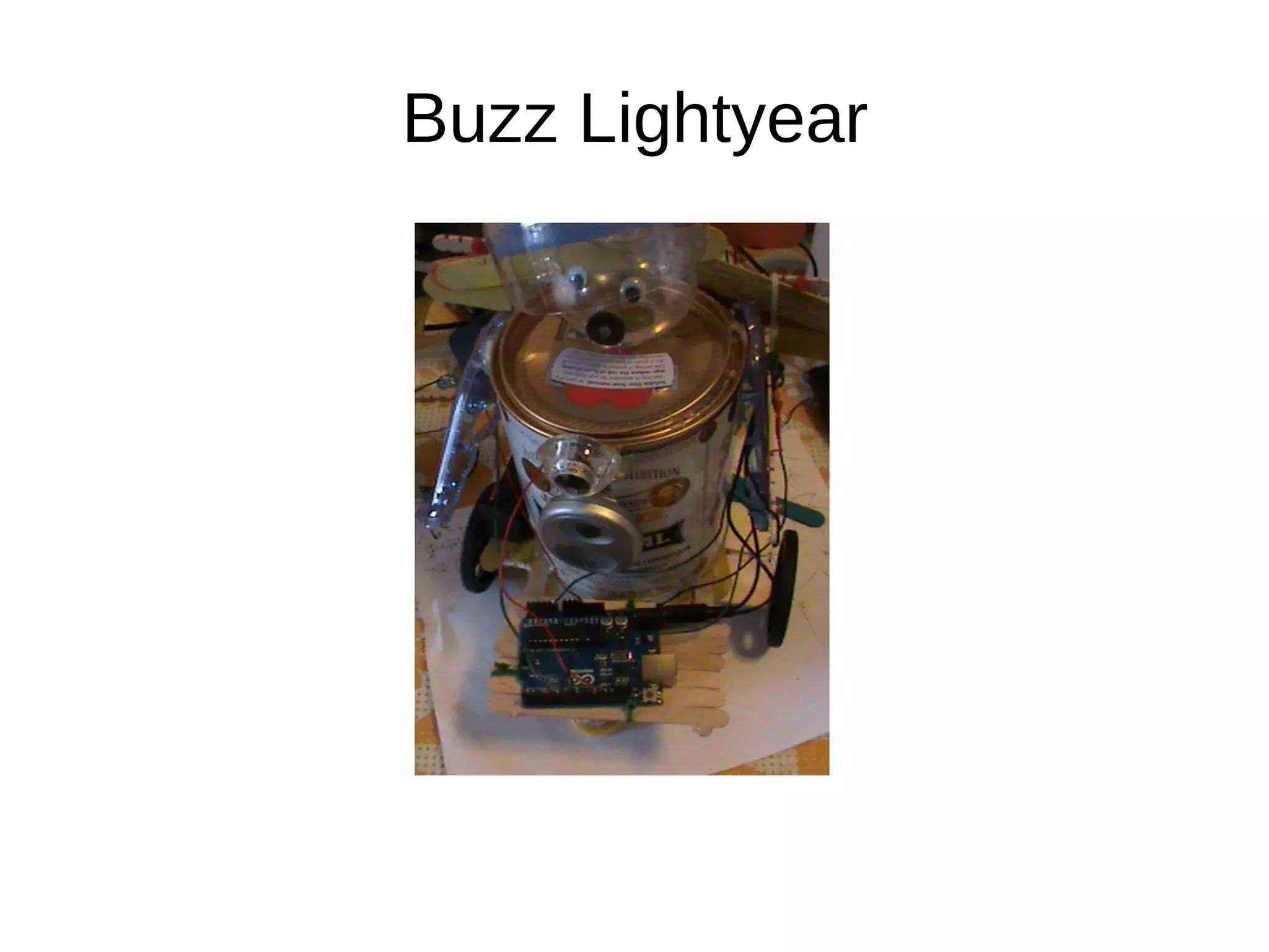
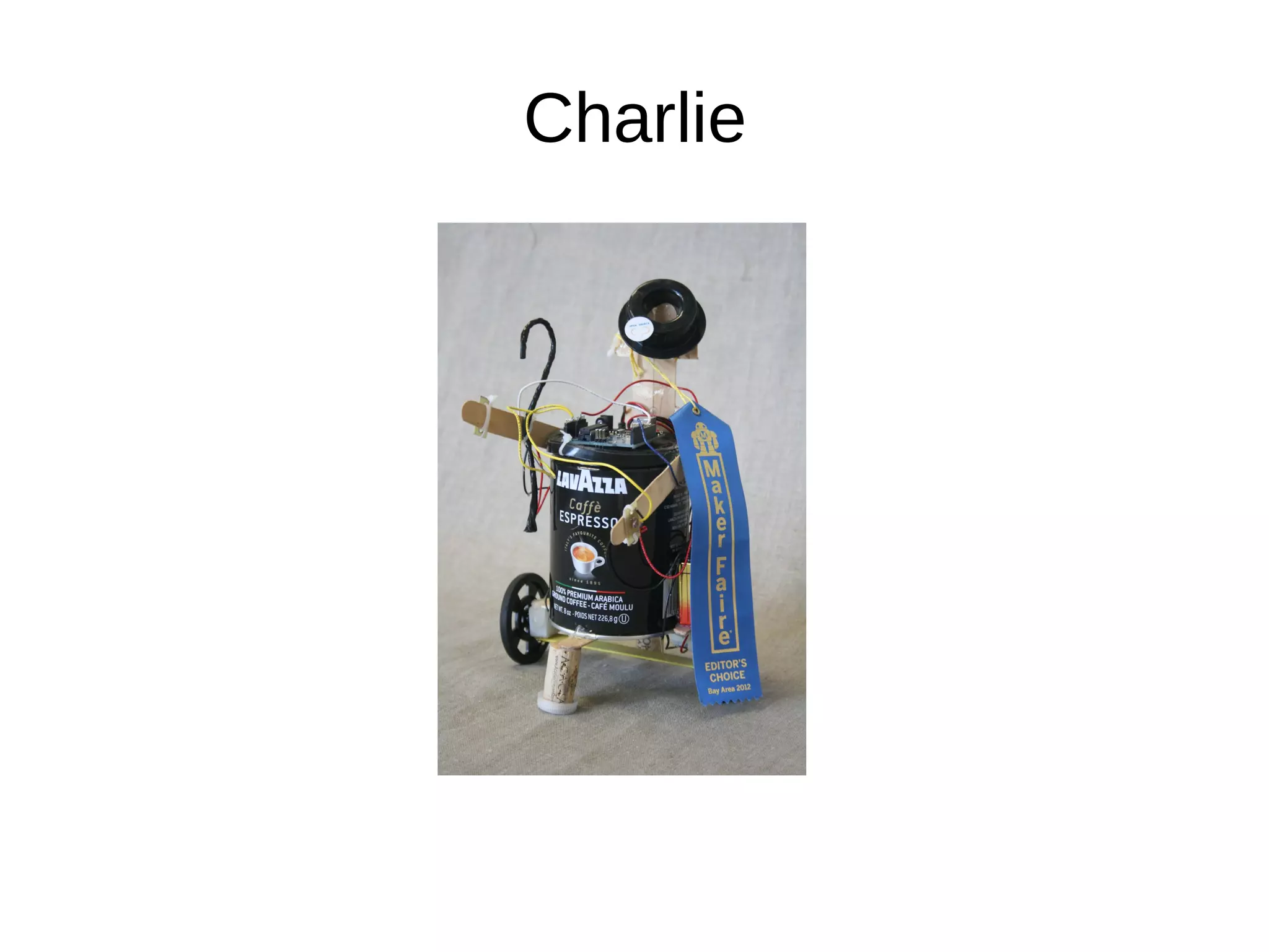
Coffeebots!
Coffeebots
Half-joke for an art show
“Robots in search of Personality”
Amazed to discover that people learned Arduino
 and sat in front of a computer for up to an hour
 in an art gallery setting (even during the
 opening reception!)
What did we learn
Household objects reduce fear of not
 understanding
People love working with stuff that has
 personality
Carmen
Buzz Lightyear
Charlie
Arduino ($30)
Solarbotics gear motor ($20)
Battery case, switch, and power plug ($4)
Battery ($3)
Header
Transistors, photoresistors, resistors ($5)
Popsickle sticks, coffee cans, etc.
Wire, glue, solder, etc.
What do students Learn?
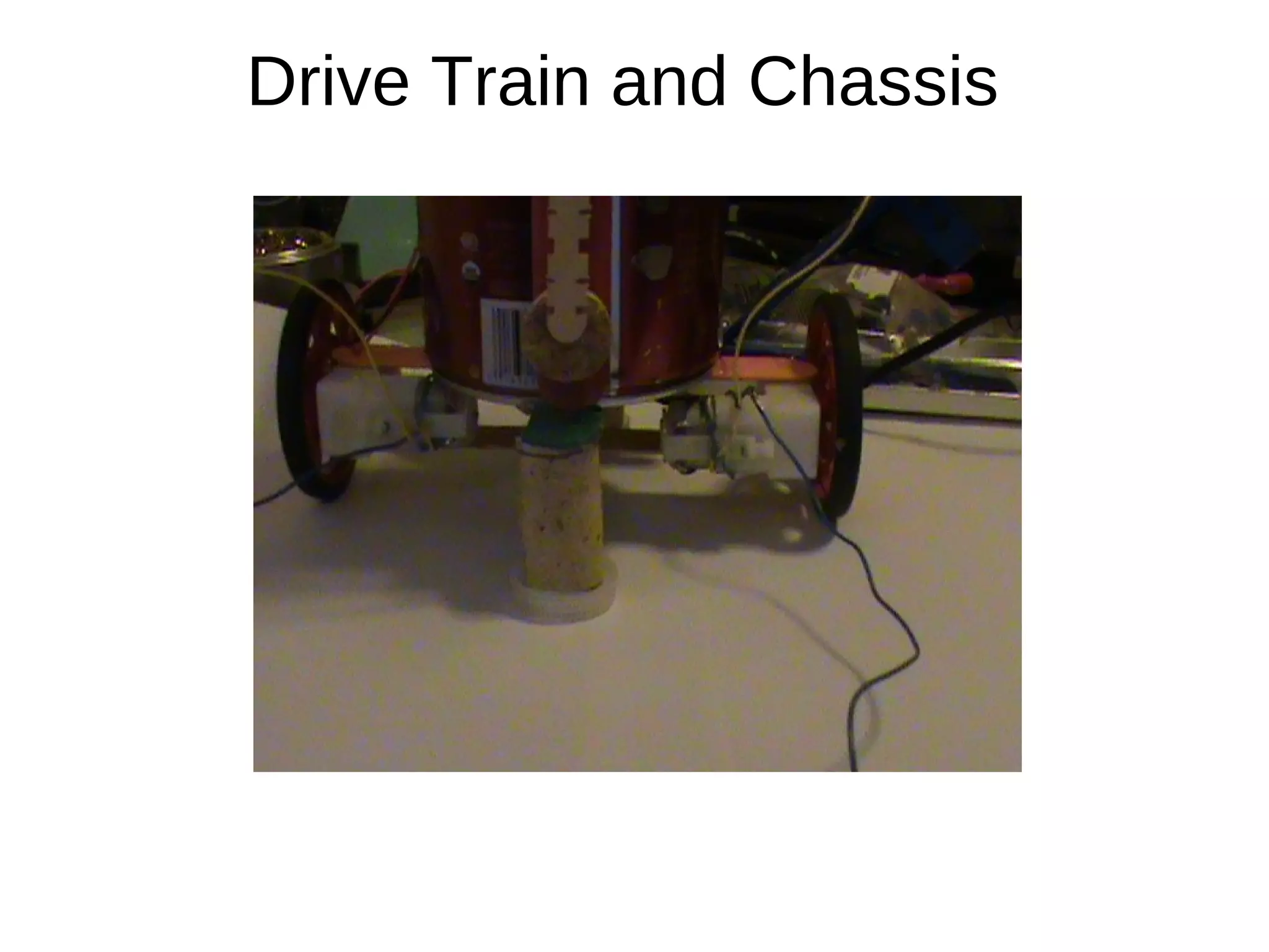
Drive Train and Chassis
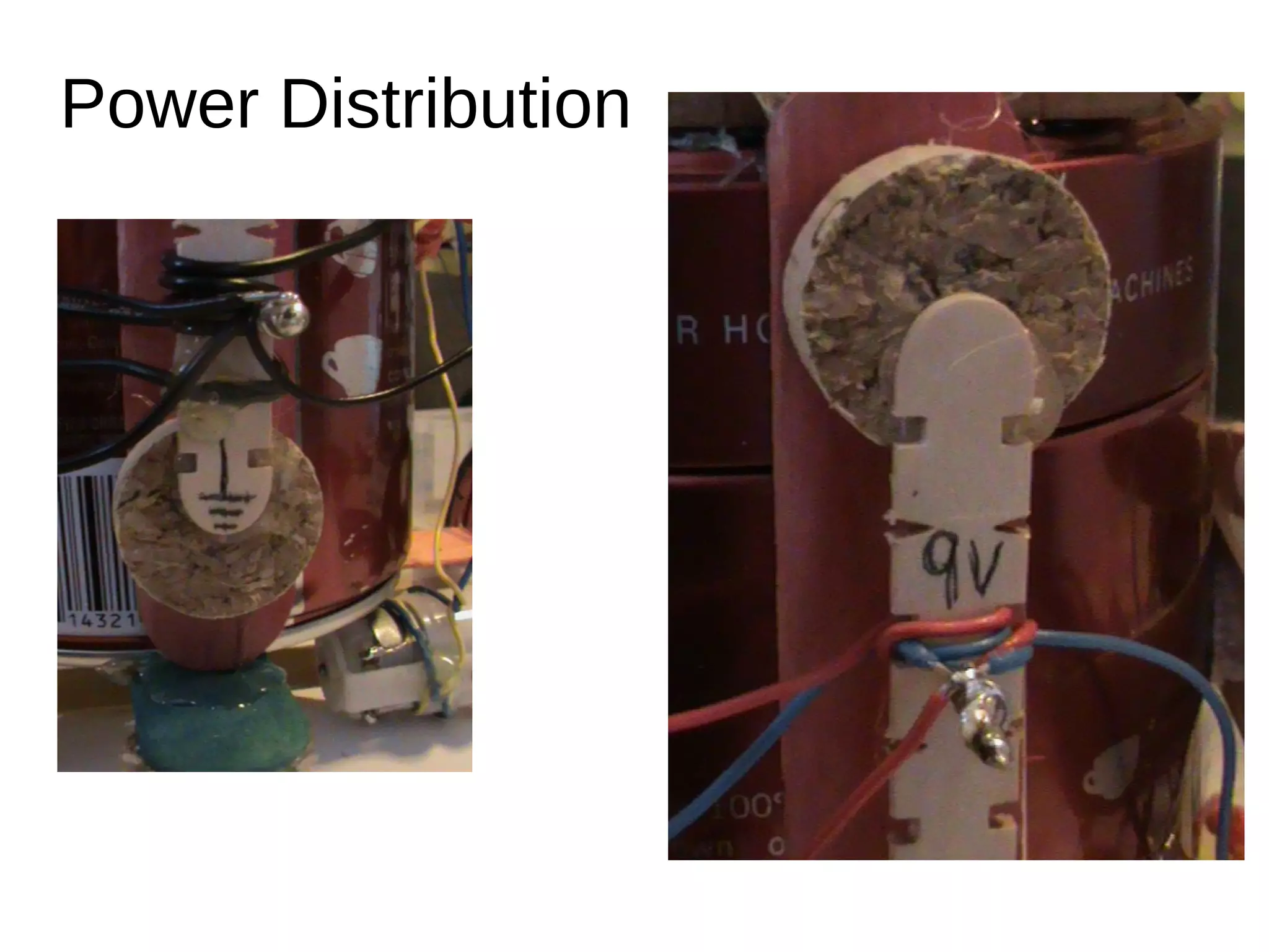
Power Distribution
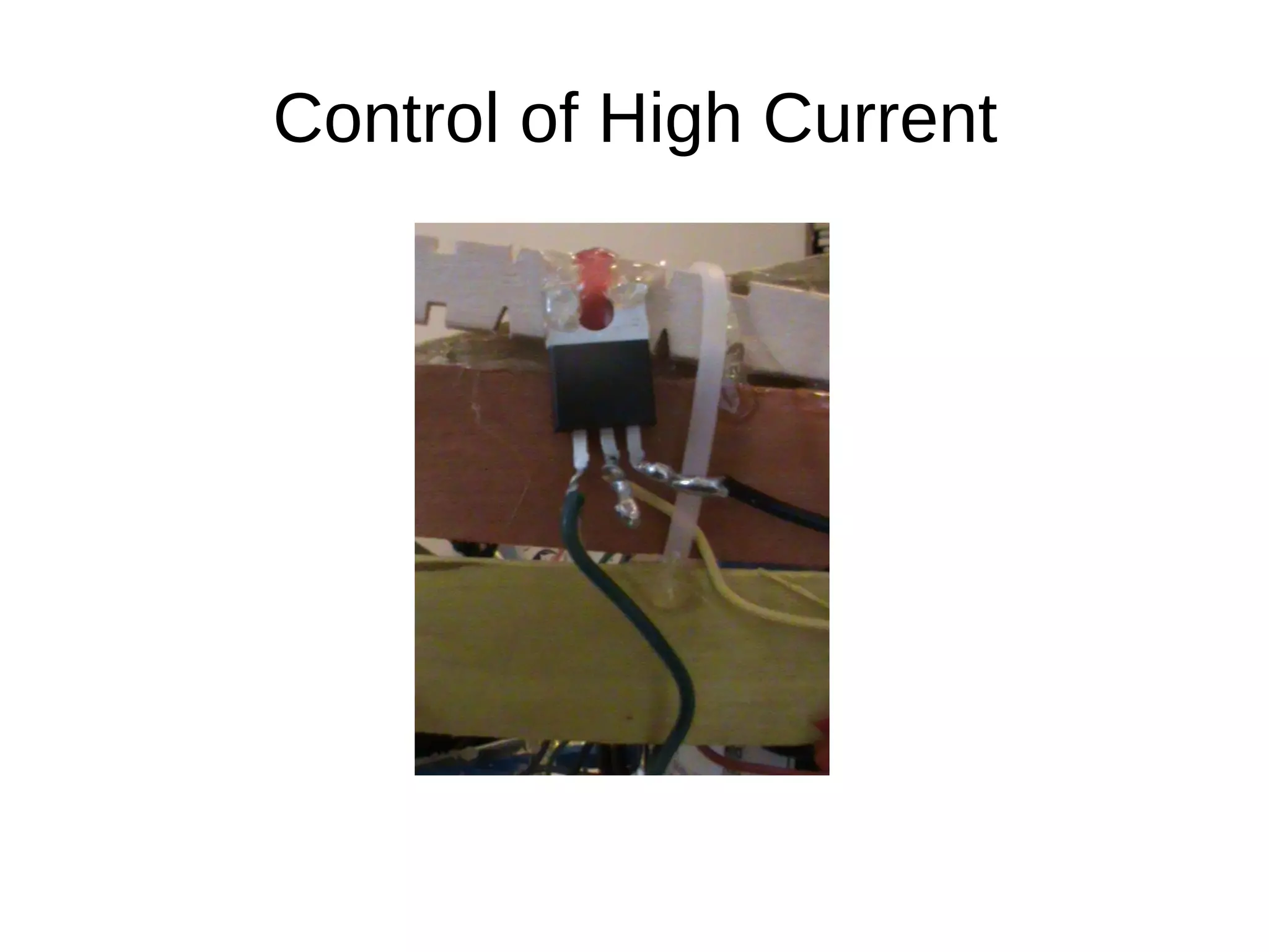
Control of High Current
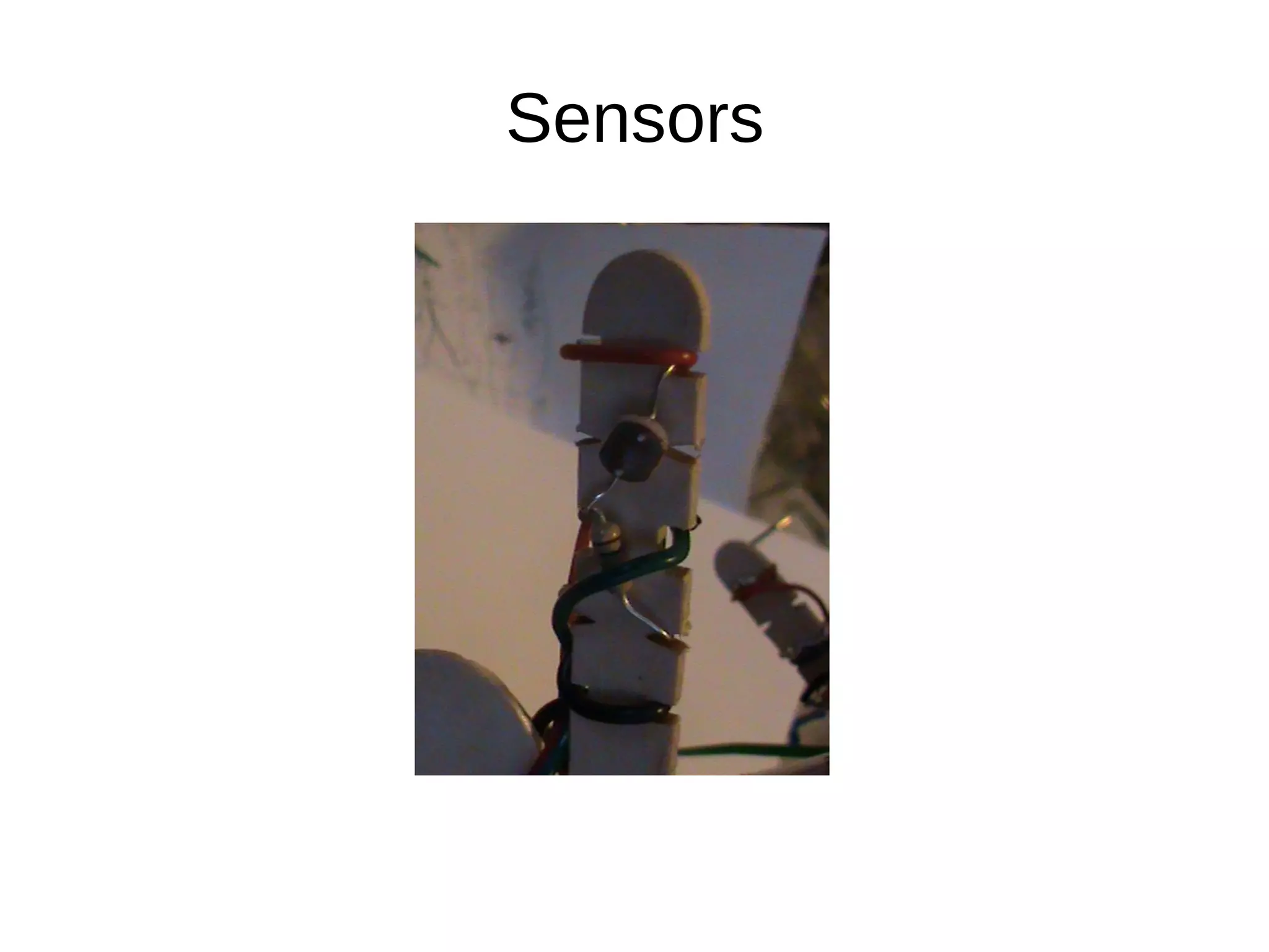
Sensors
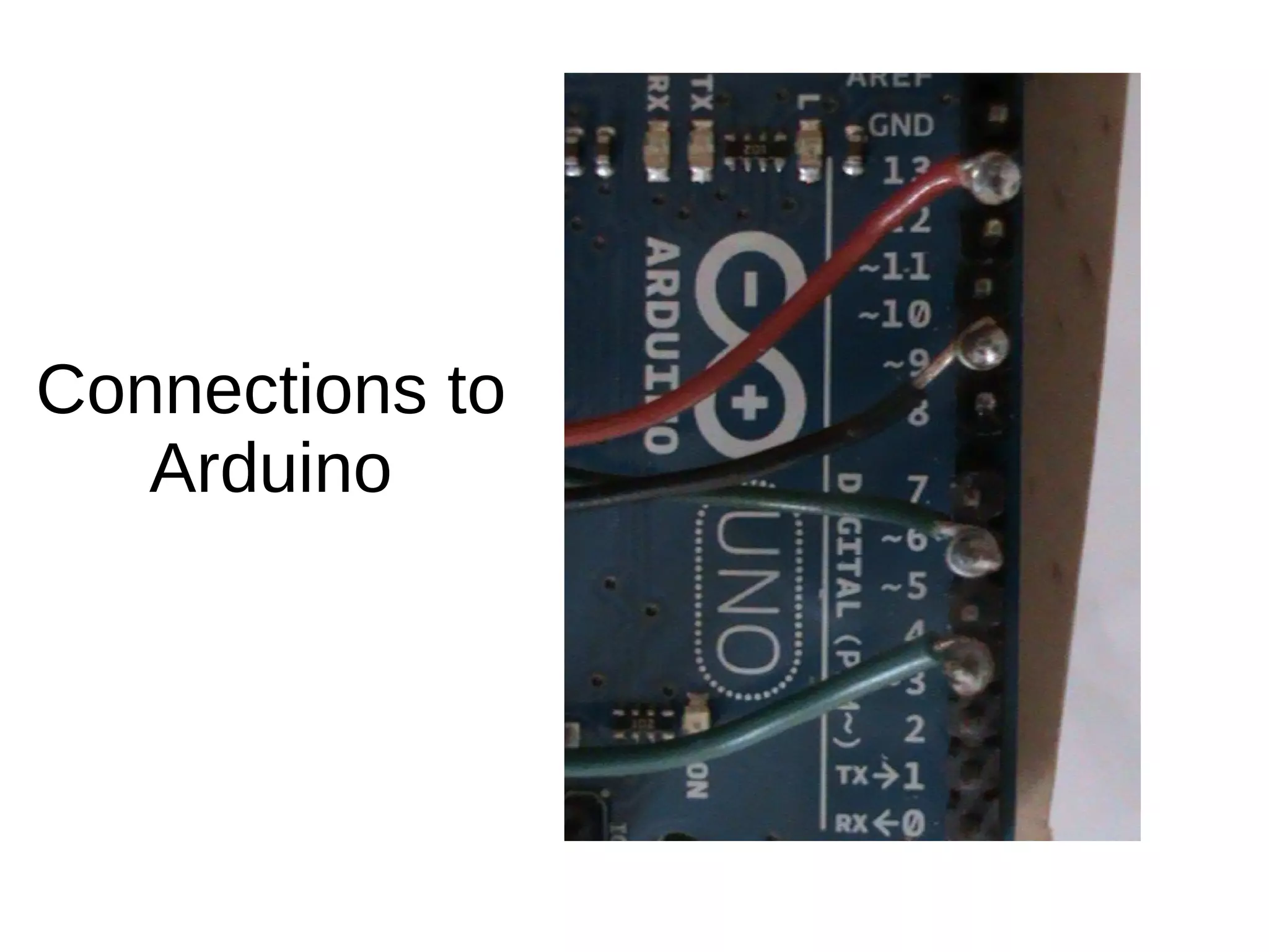
Connections to
   Arduino
What about flexibility?
More Sensors?
More Actuators?
Different wiring?
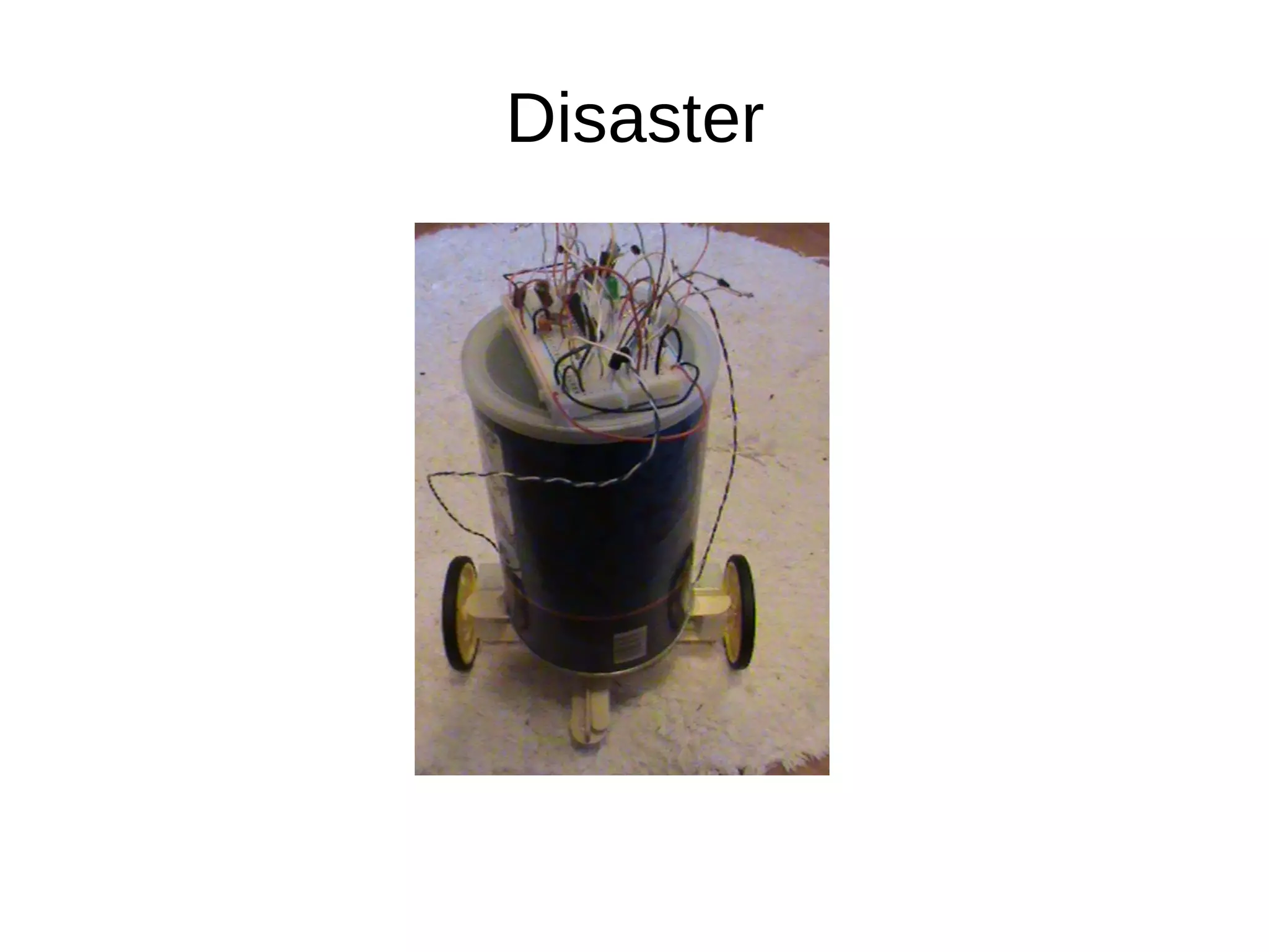
Solderless Breadboard?
Disaster
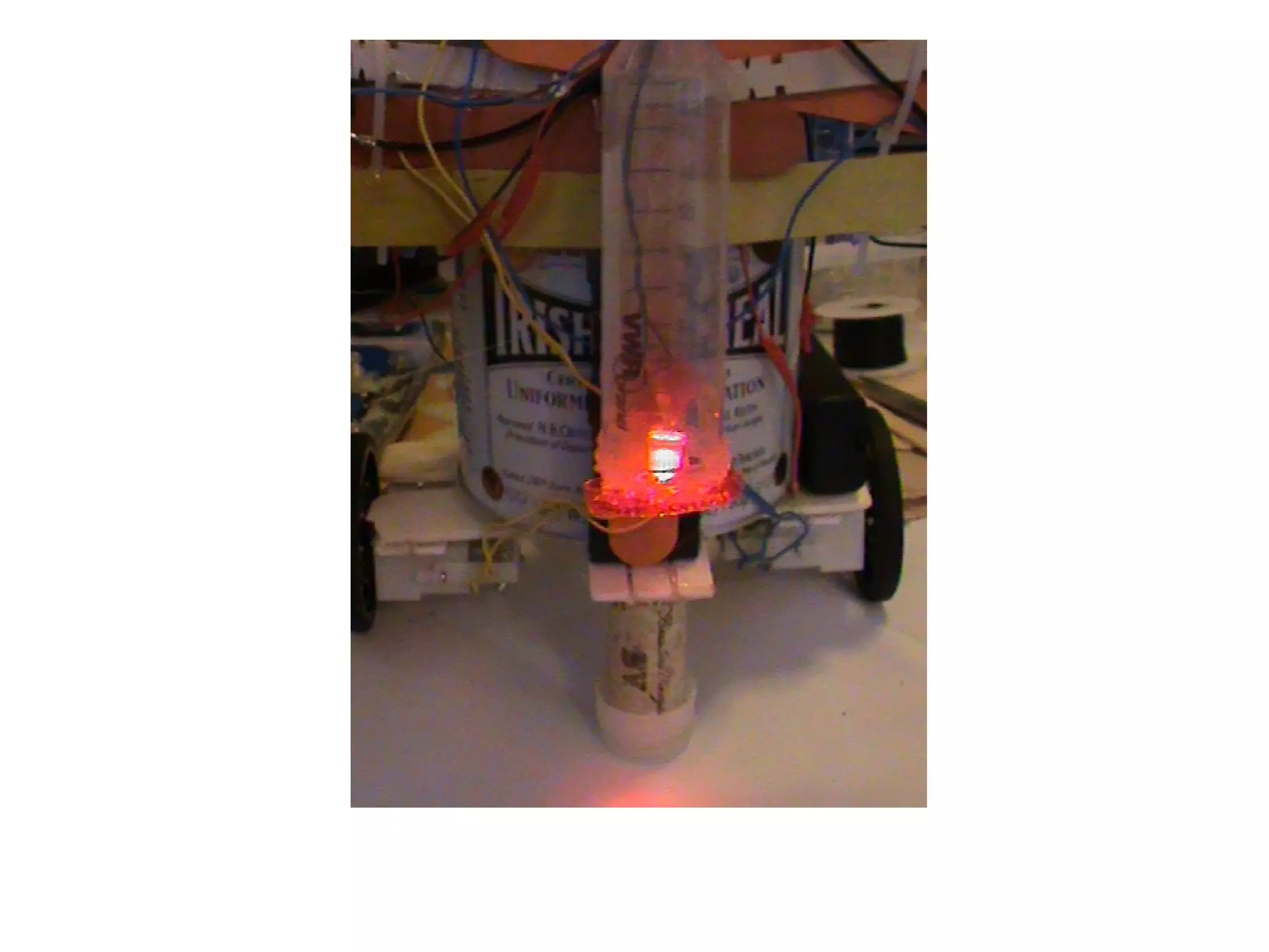
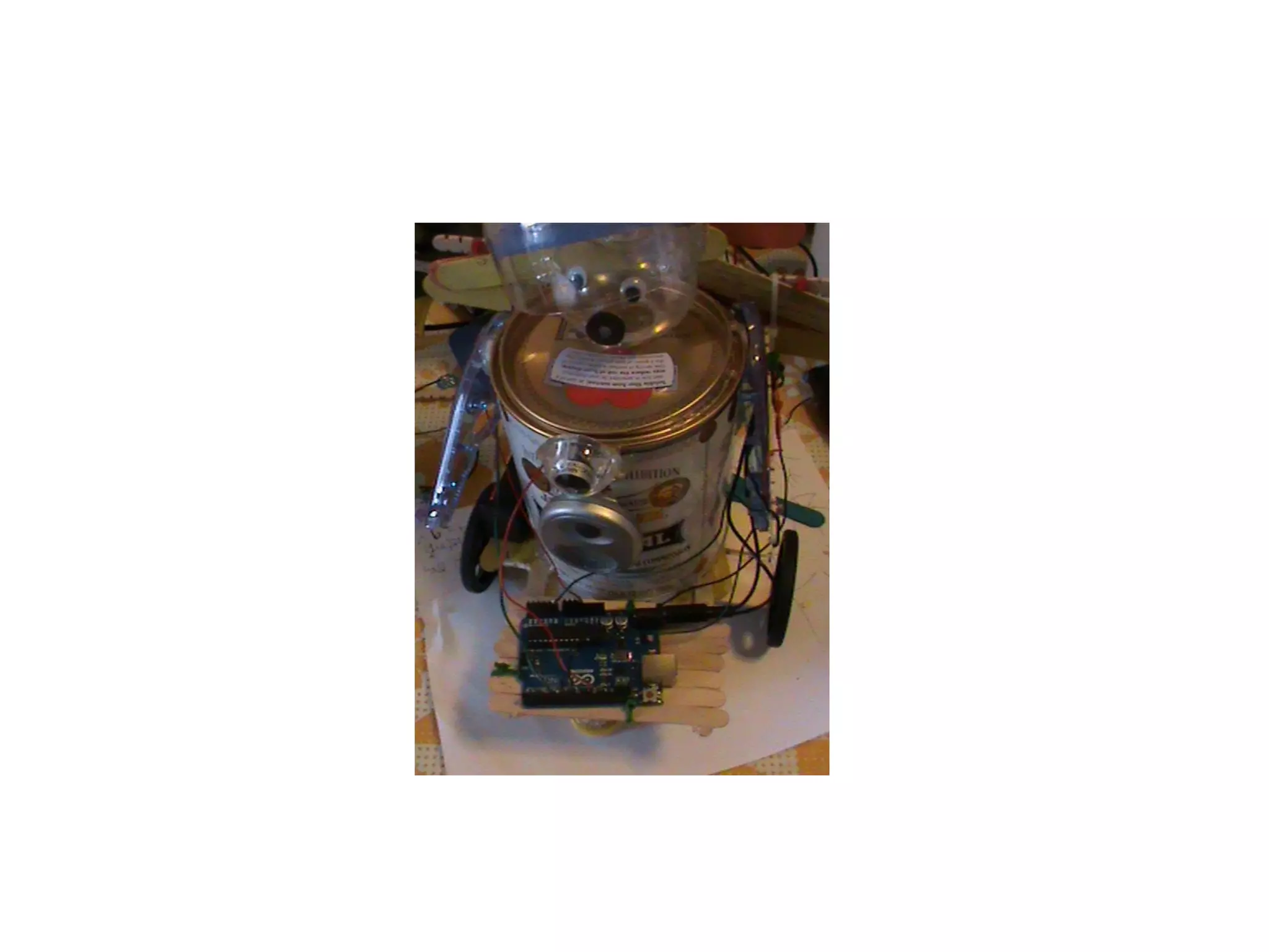
Just a few simple extensions
LED
Problems and Solutions
Strain relief at motor (glue wires first, then
 solder)
Soldering large connections (e.g. power
 distribution) melts hot glue (mechanically
 attach by twisting wires around stick)
Conclusions
Non-standard parts and construction
 immediately gives personality
Conclusions
Non-standard parts and construction
 immediately gives personality
Students build on that by selecting parts that
 reinforce the perceived or desired personality
Conclusions
Non-standard parts and construction
 immediately gives personality
Students build on that by selecting parts that
 reinforce the perceived or desired personality
Students bond with their new friend
Conclusions
Non-standard parts and construction
 immediately gives personality
Students build on that by selecting parts that
 reinforce the perceived or desired personality
Students bond with their new friend
Students are eager to give their new friend
 personality and features
Conclusion (cont.)
Learning Happens!
Links
Coffeebot parts
teachmetomake.com/wordpress/coffeebot
Monthy open workshops
teachmetomake.com/wordpress/arduino-club

Further Explorations in Simplifying Electronics for Education, Sketching in Hardware, 2012