Magdy El-Masry.
Prof. of Cardiology.
Tanta University.
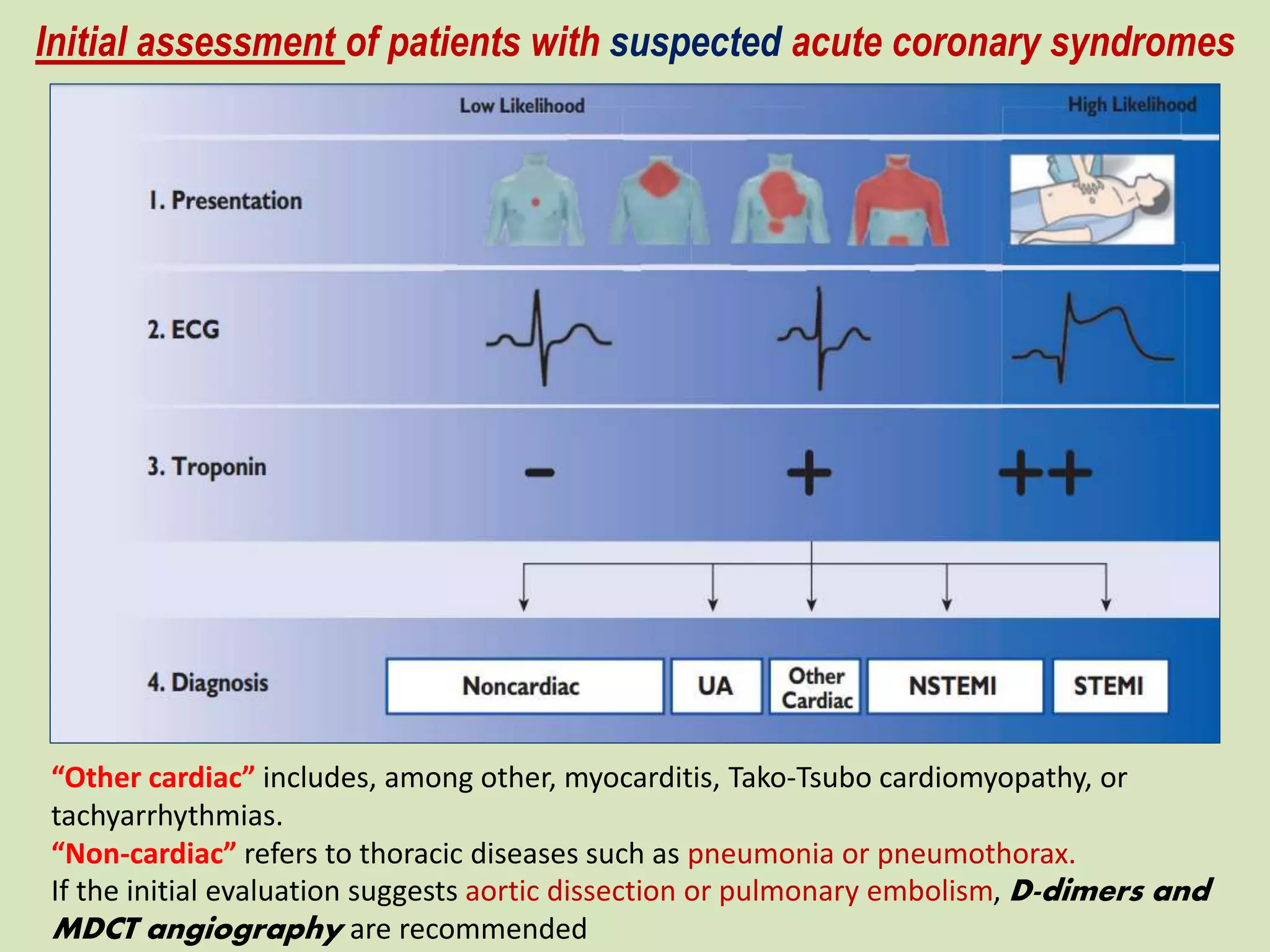
Initial assessment of patients with suspected acute coronary syndromes
“Other cardiac” includes, among other, myocarditis, Tako-Tsubo cardiomyopathy, or
tachyarrhythmias.
“Non-cardiac” refers to thoracic diseases such as pneumonia or pneumothorax.

If the initial evaluation suggests aortic dissection or pulmonary embolism, D-dimers and
MDCT angiography are recommended
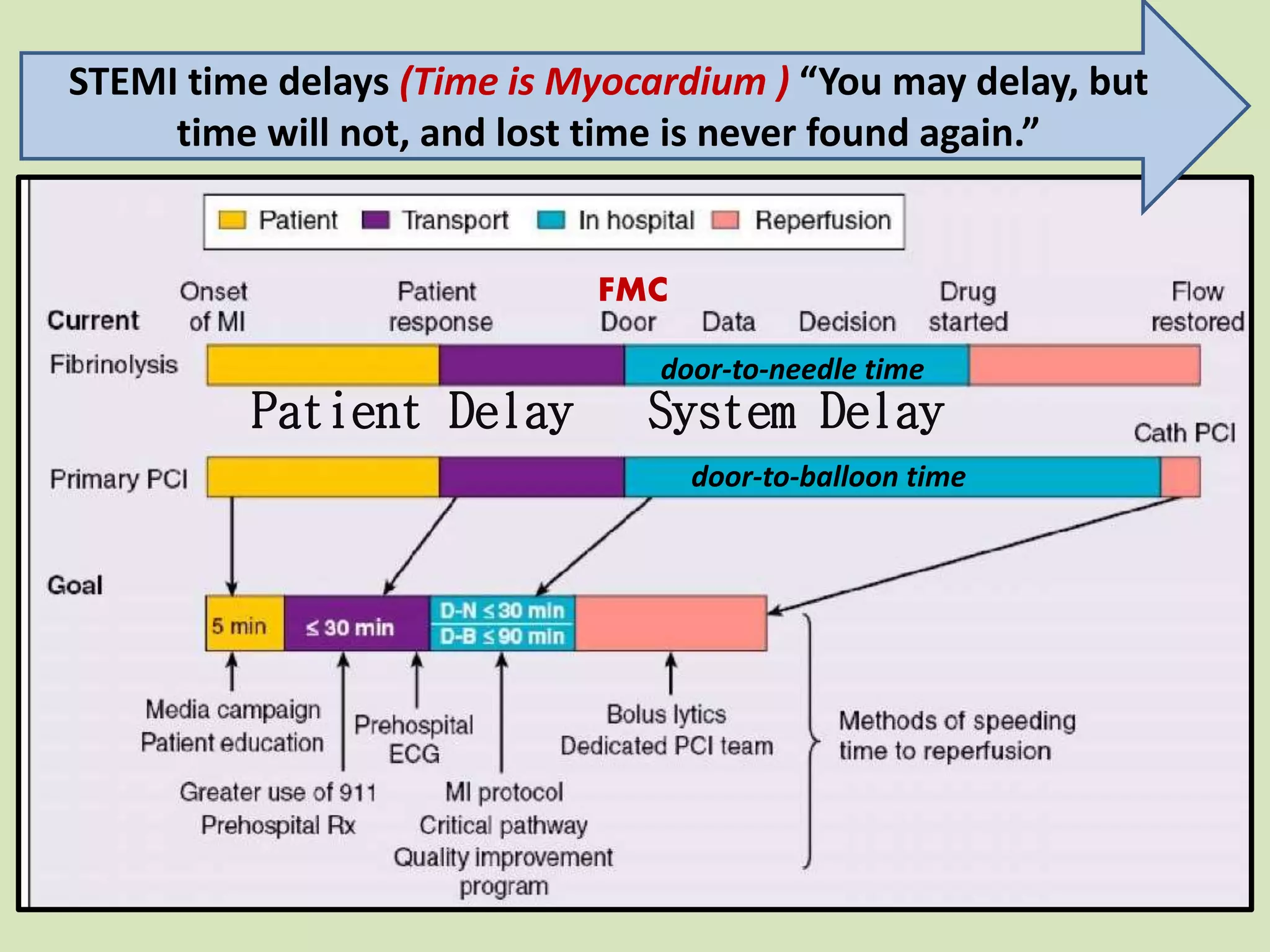
STEMI time delays (Time is Myocardium ) “You may delay, but
time will not, and lost time is never found again.”
Patient Delay System Delay
FMC
door-to-balloon time
door-to-needle time
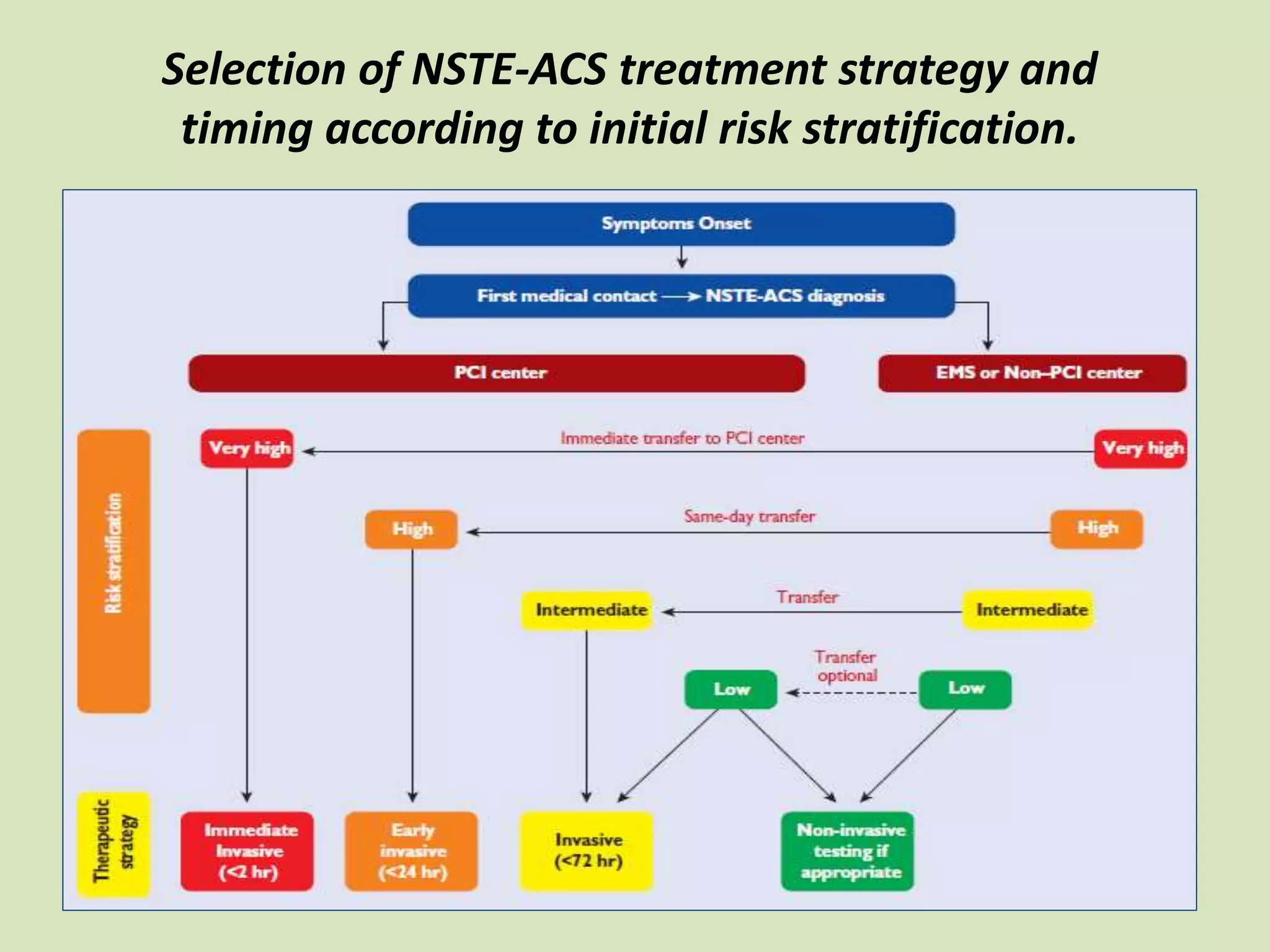
Selection of NSTE-ACS treatment strategy and
timing according to initial risk stratification.
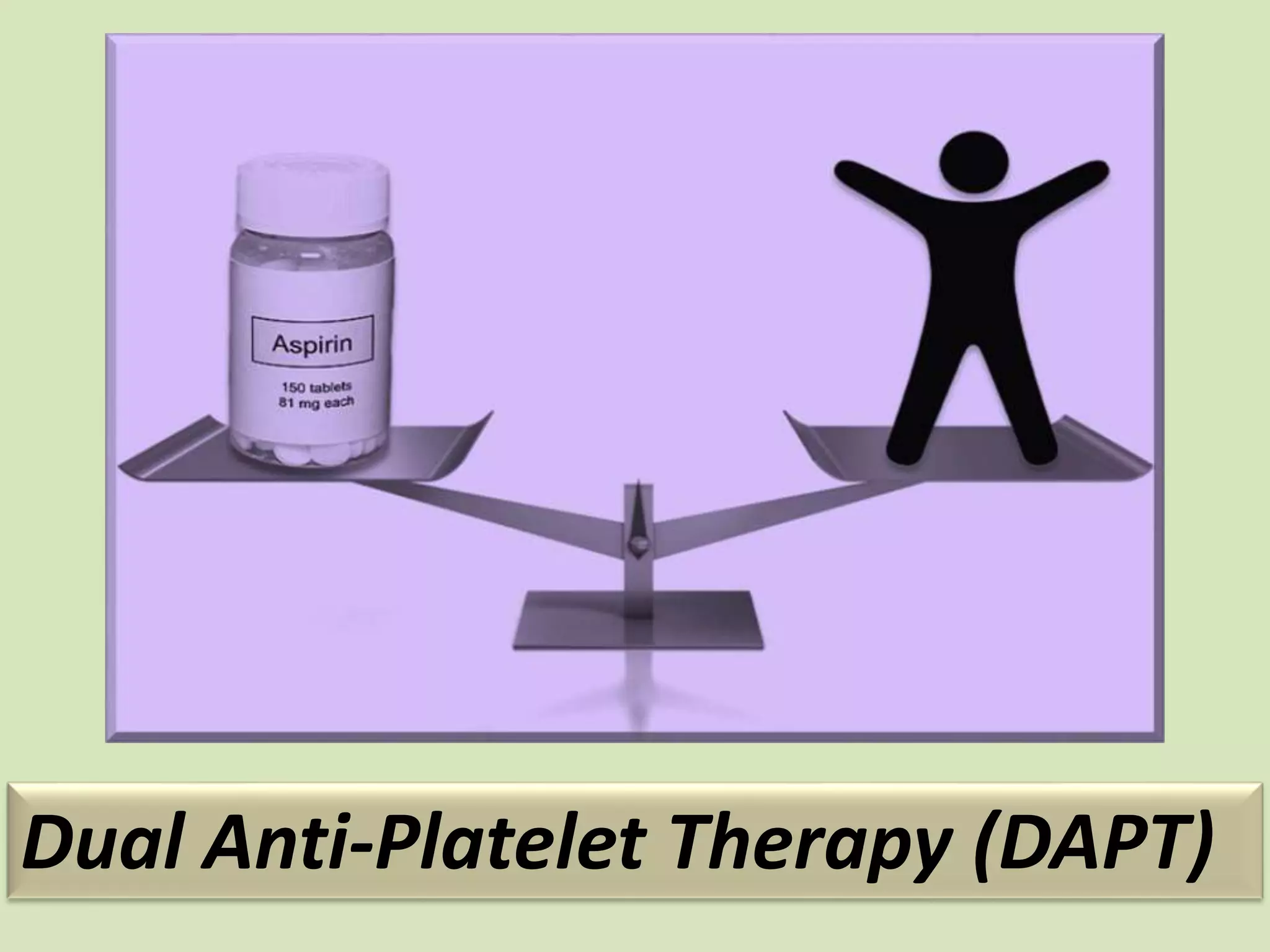
Dual Anti-Platelet Therapy (DAPT)
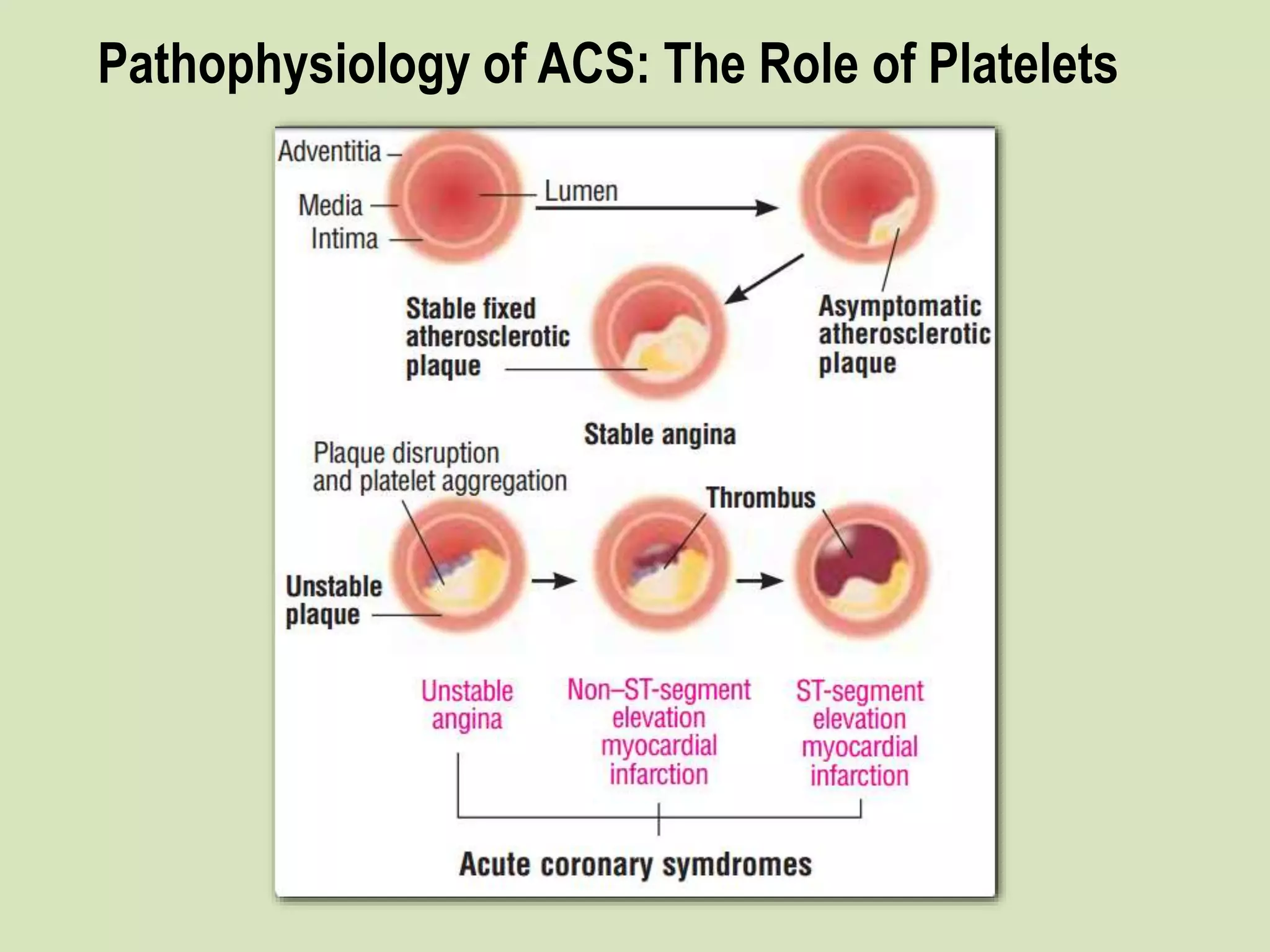
Pathophysiology of ACS: The Role of Platelets
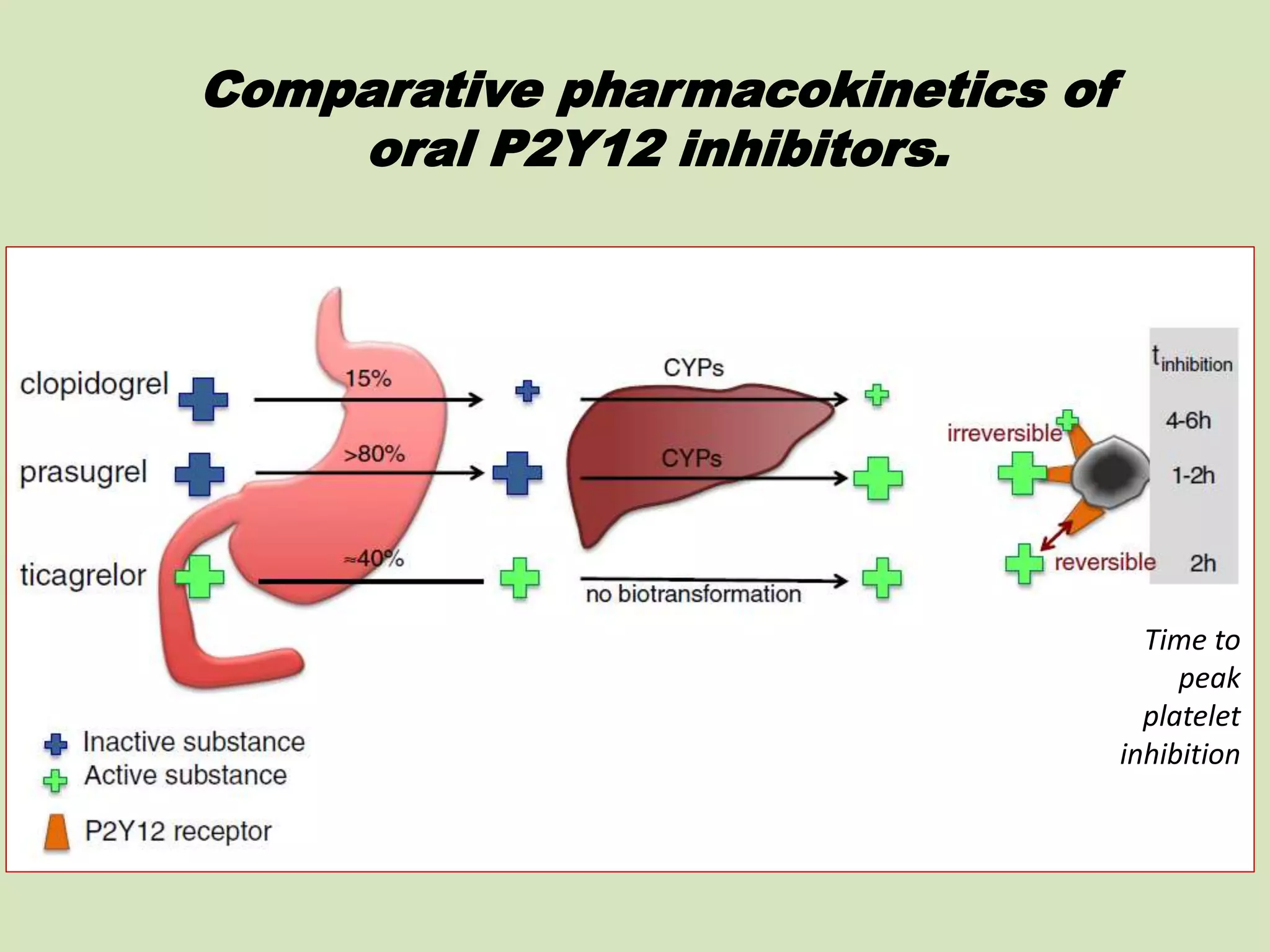
Comparative pharmacokinetics of
oral P2Y12 inhibitors.
Time to
peak
platelet
inhibition
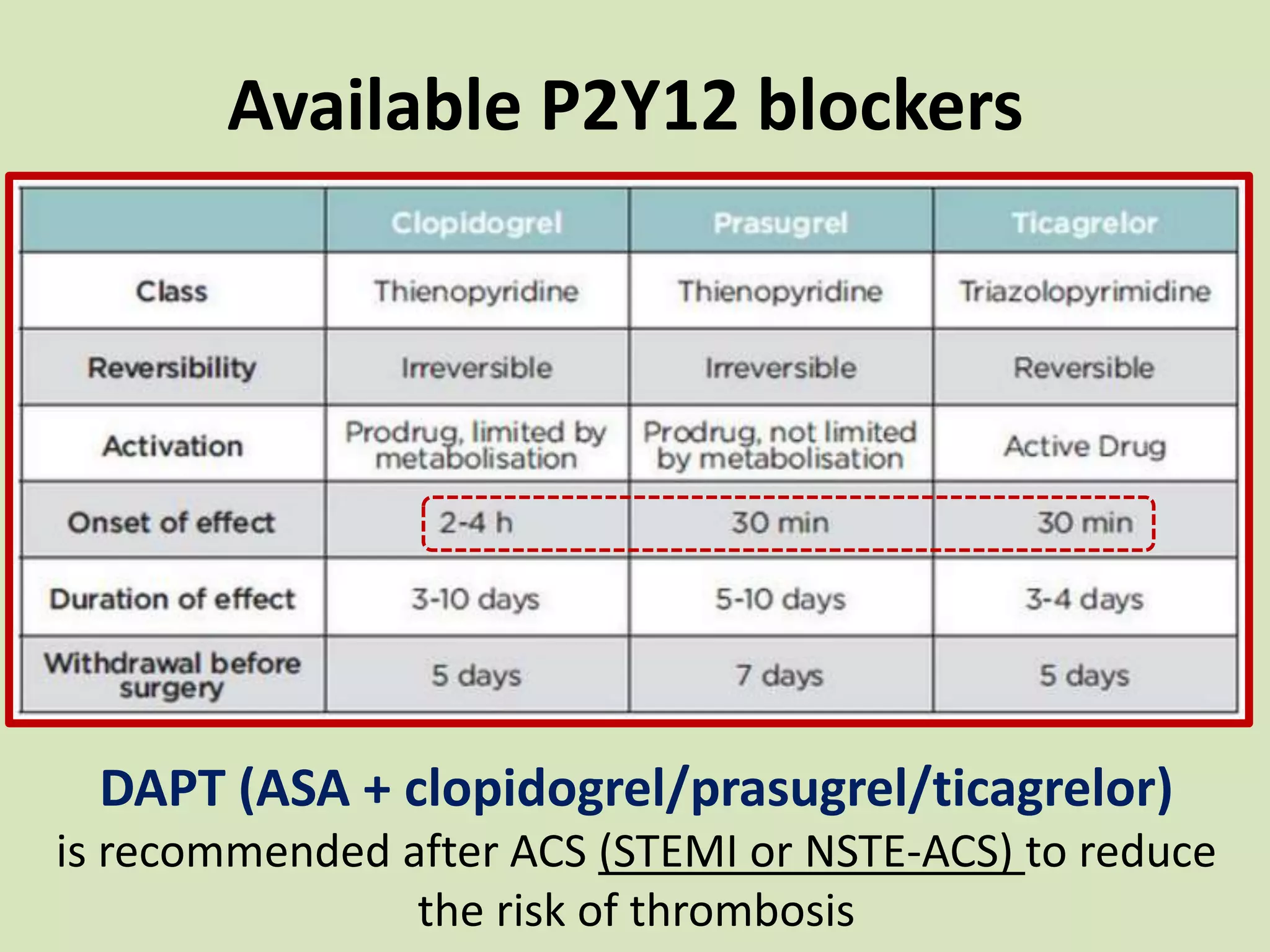
Available P2Y12 blockers
DAPT (ASA + clopidogrel/prasugrel/ticagrelor)
is recommended after ACS (STEMI or NSTE-ACS) to reduce
the risk of thrombosis
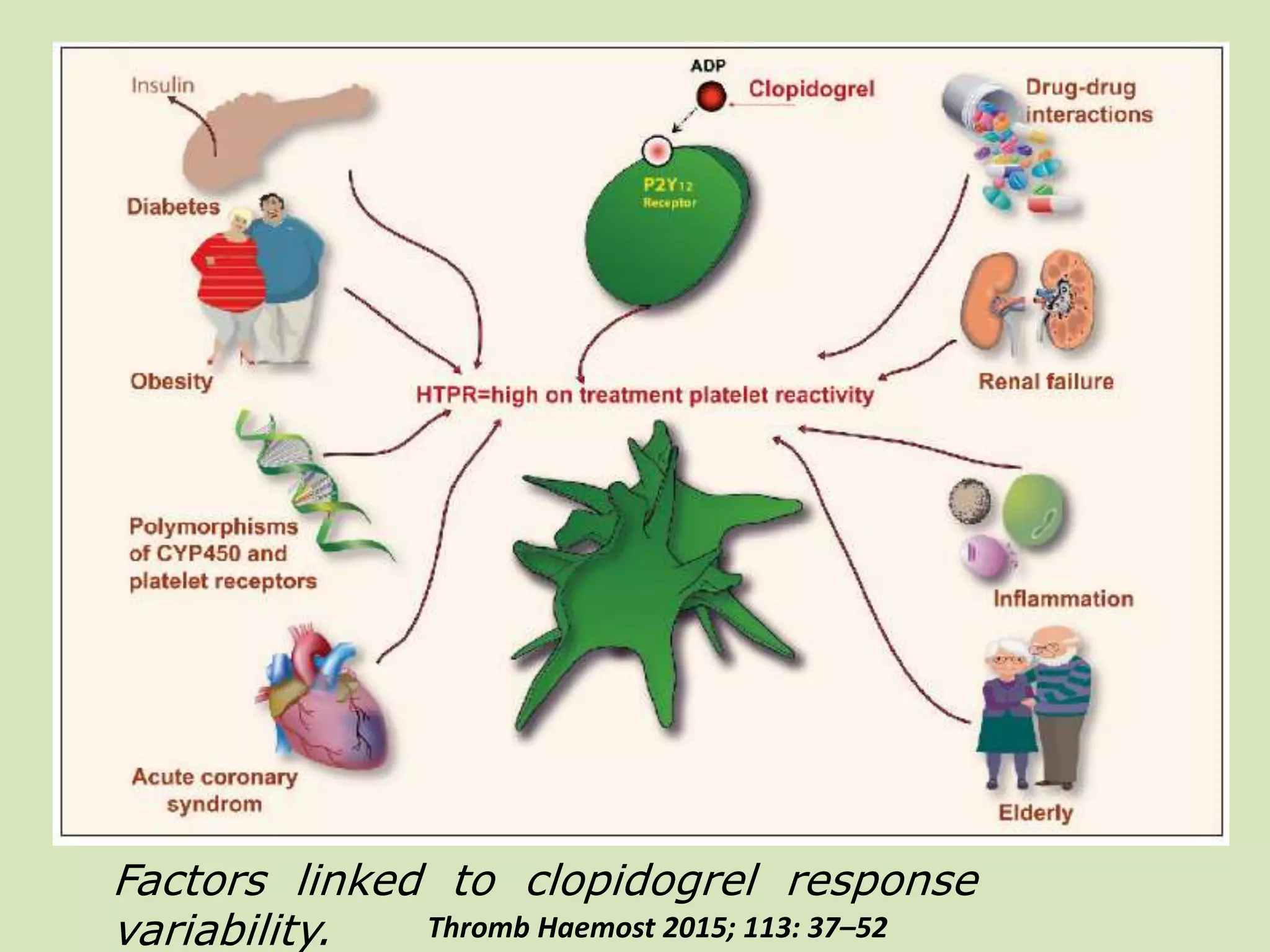
Factors linked to clopidogrel response
variability. Thromb Haemost 2015; 113: 37–52
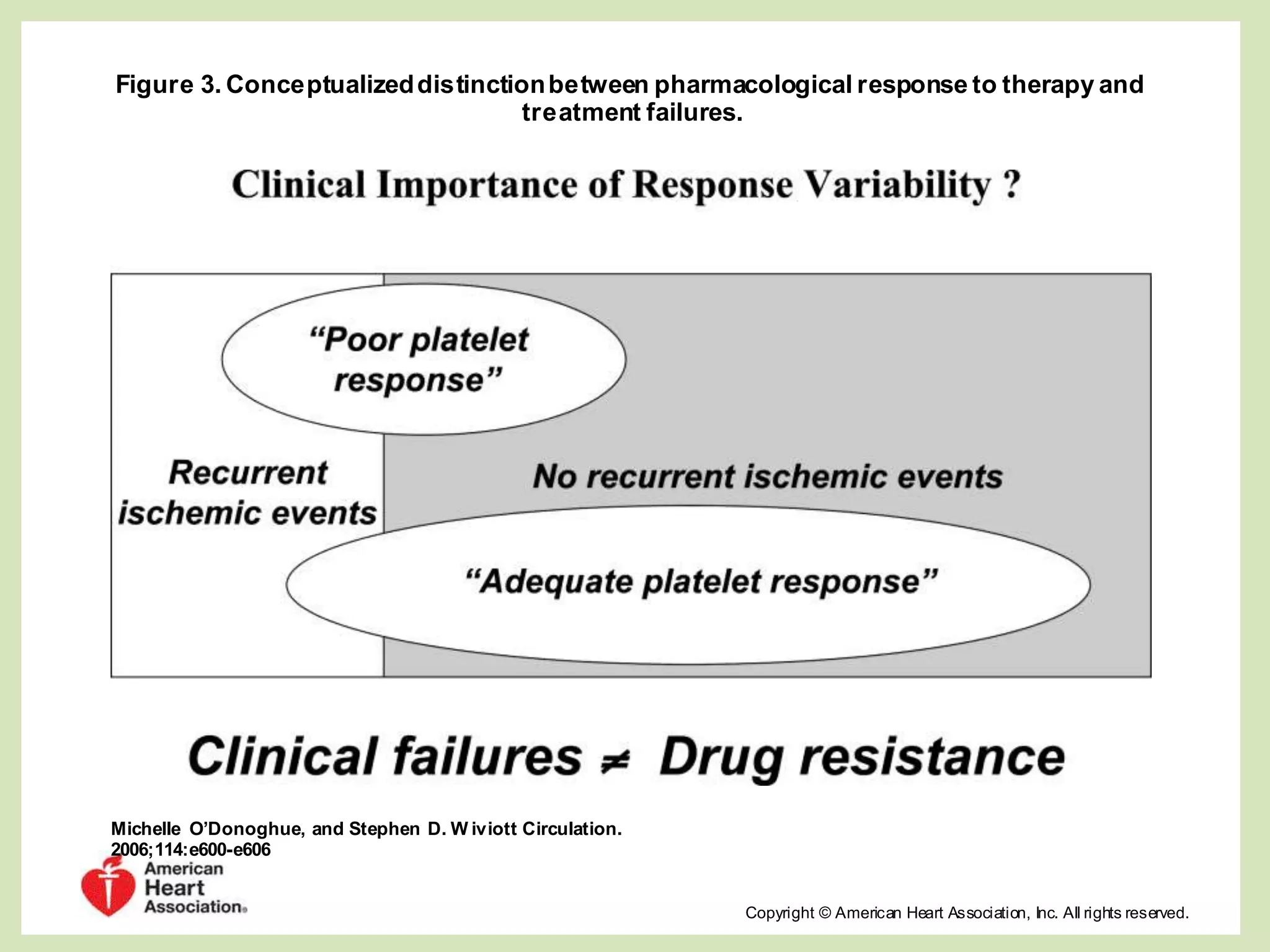
Figure 3. Conceptualizeddistinctionbetween pharmacological response to therapy and
treatment failures.
Michelle O’Donoghue, and Stephen D. W iviott Circulation.
2006;114:e600-e606
Copyright © American Heart Association, Inc. All rights reserved.
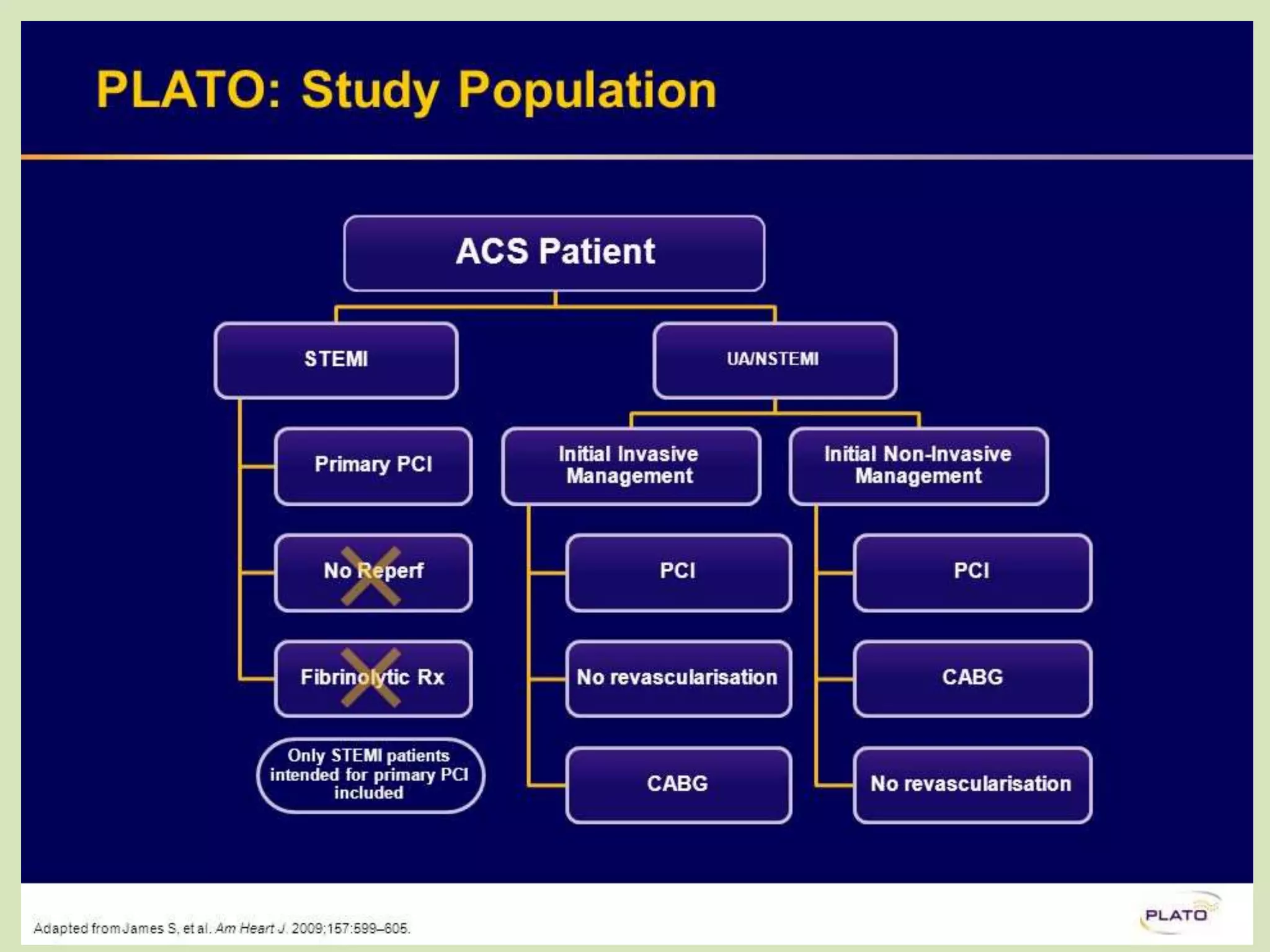
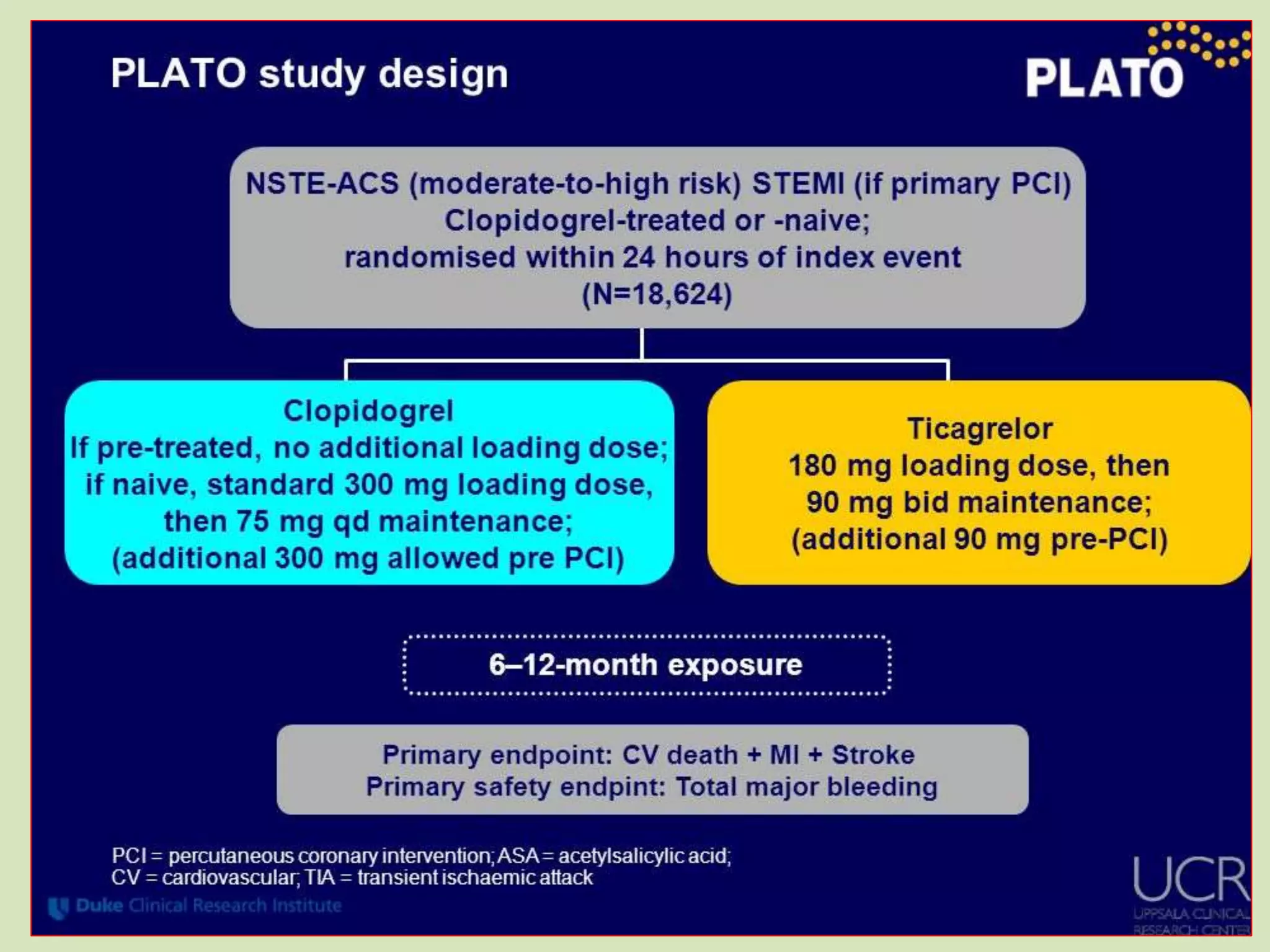
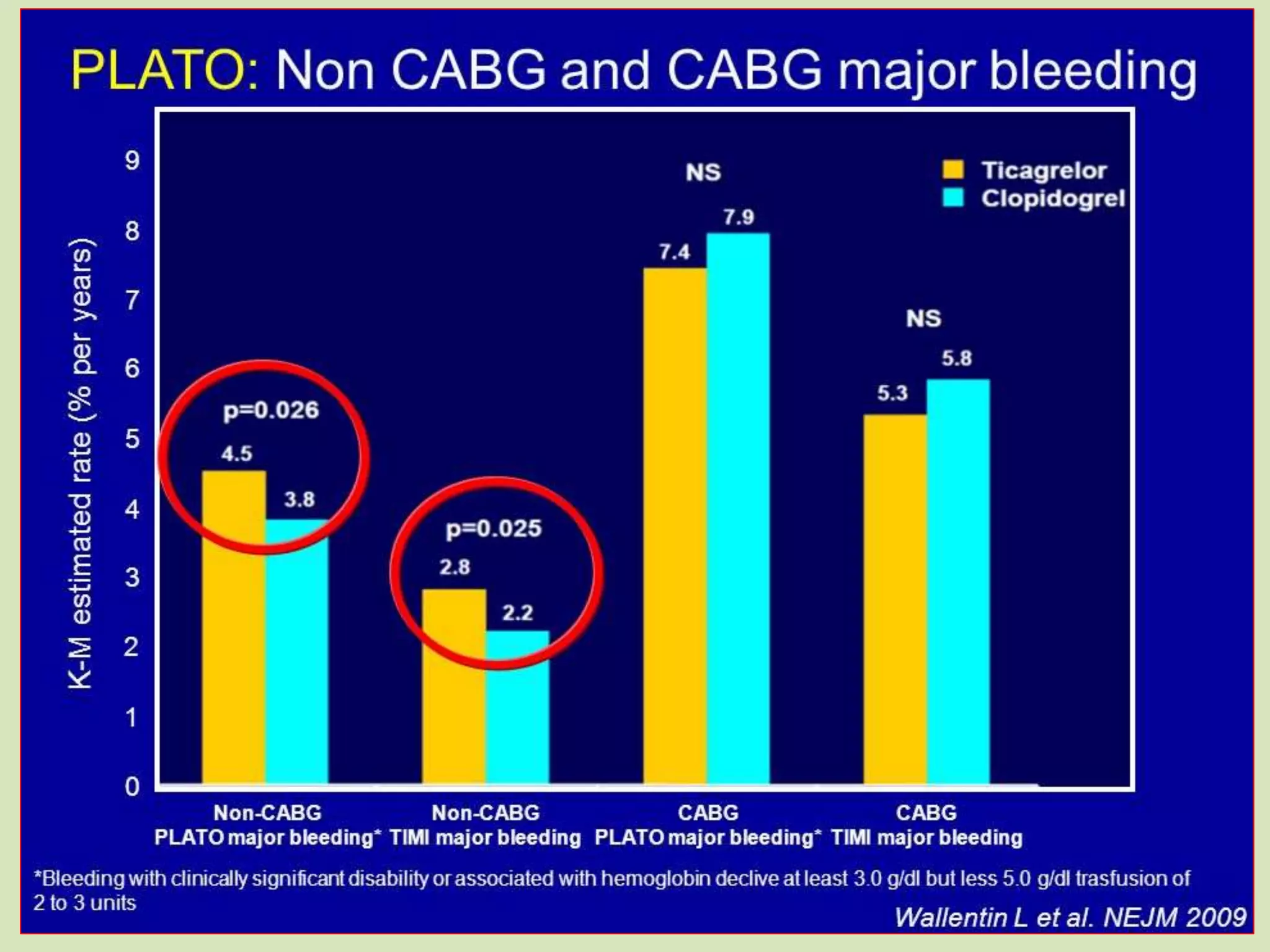
PLATelet inhibition and patient Outcomes (PLATO) trial.
Ticagrelor vs clopidogrel in patients with acute coronary syndromes.
Acute Stroke Or Transient IsChaemic Attack TReated With
Aspirin or Ticagrelor and Patient OutcomES"SOCRATES"
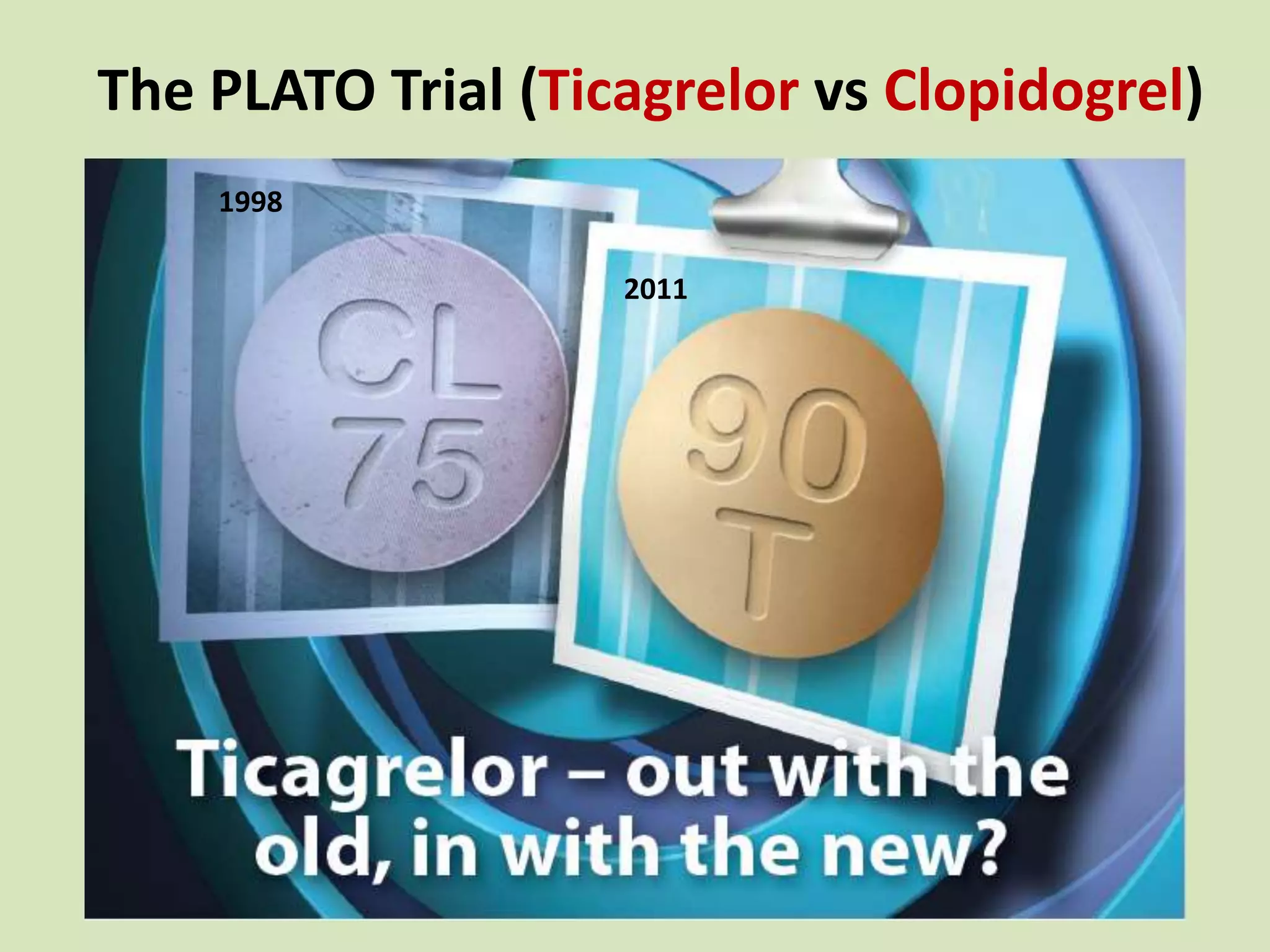
The PLATO Trial (Ticagrelor vs Clopidogrel)
1998
2011
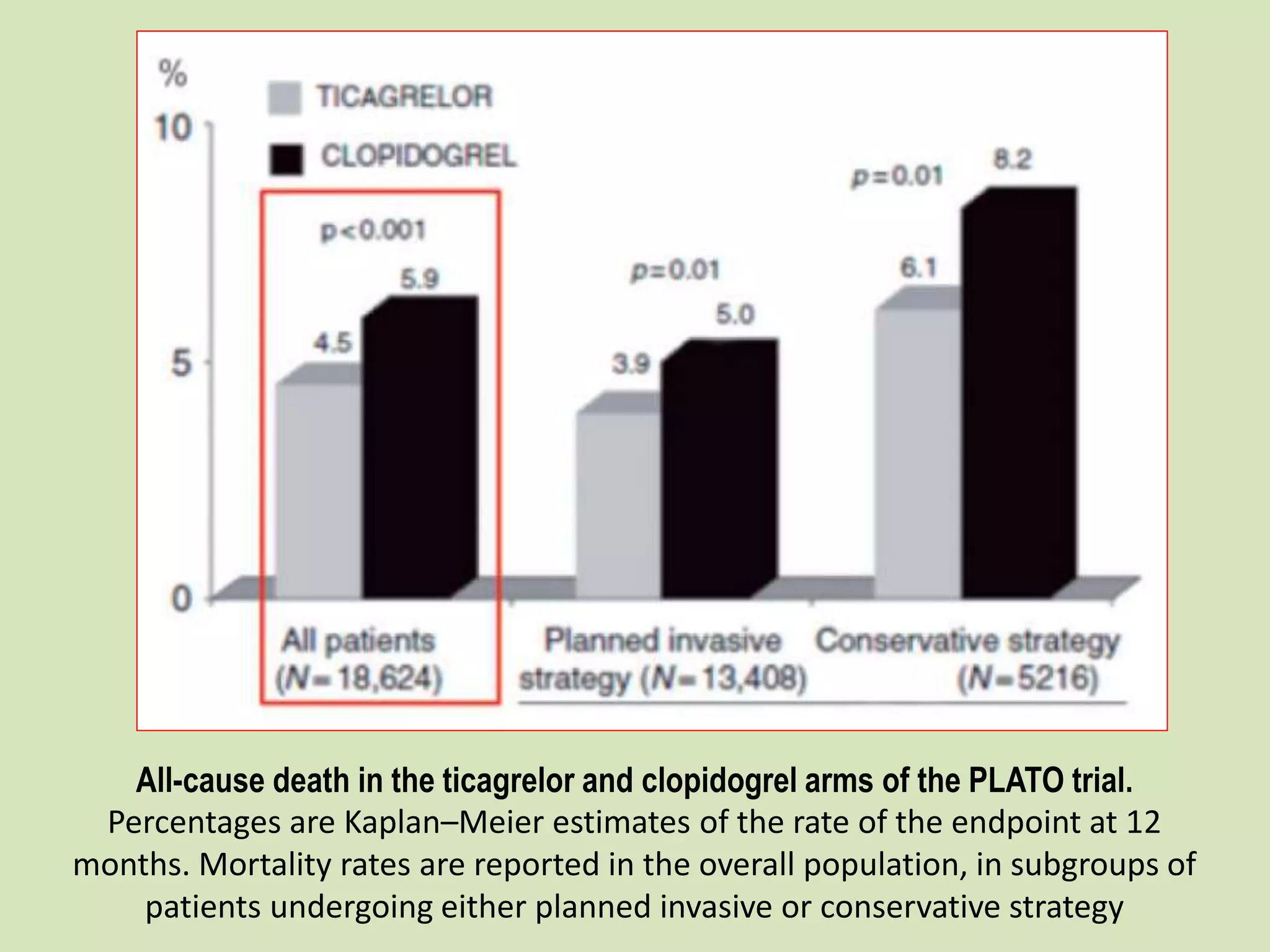
All-cause death in the ticagrelor and clopidogrel arms of the PLATO trial.
Percentages are Kaplan–Meier estimates of the rate of the endpoint at 12
months. Mortality rates are reported in the overall population, in subgroups of
patients undergoing either planned invasive or conservative strategy
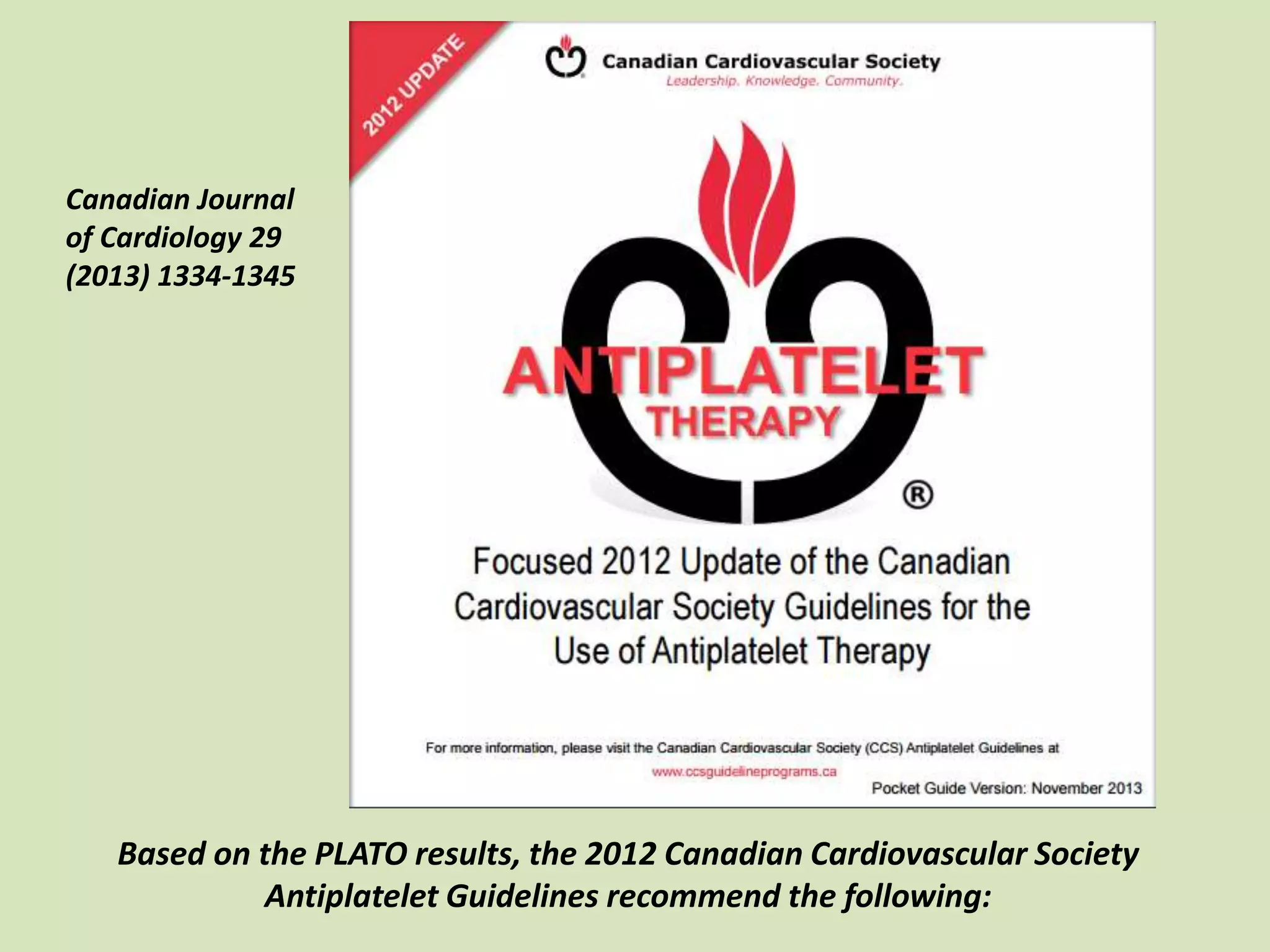
Canadian Journal
of Cardiology 29
(2013) 1334-1345
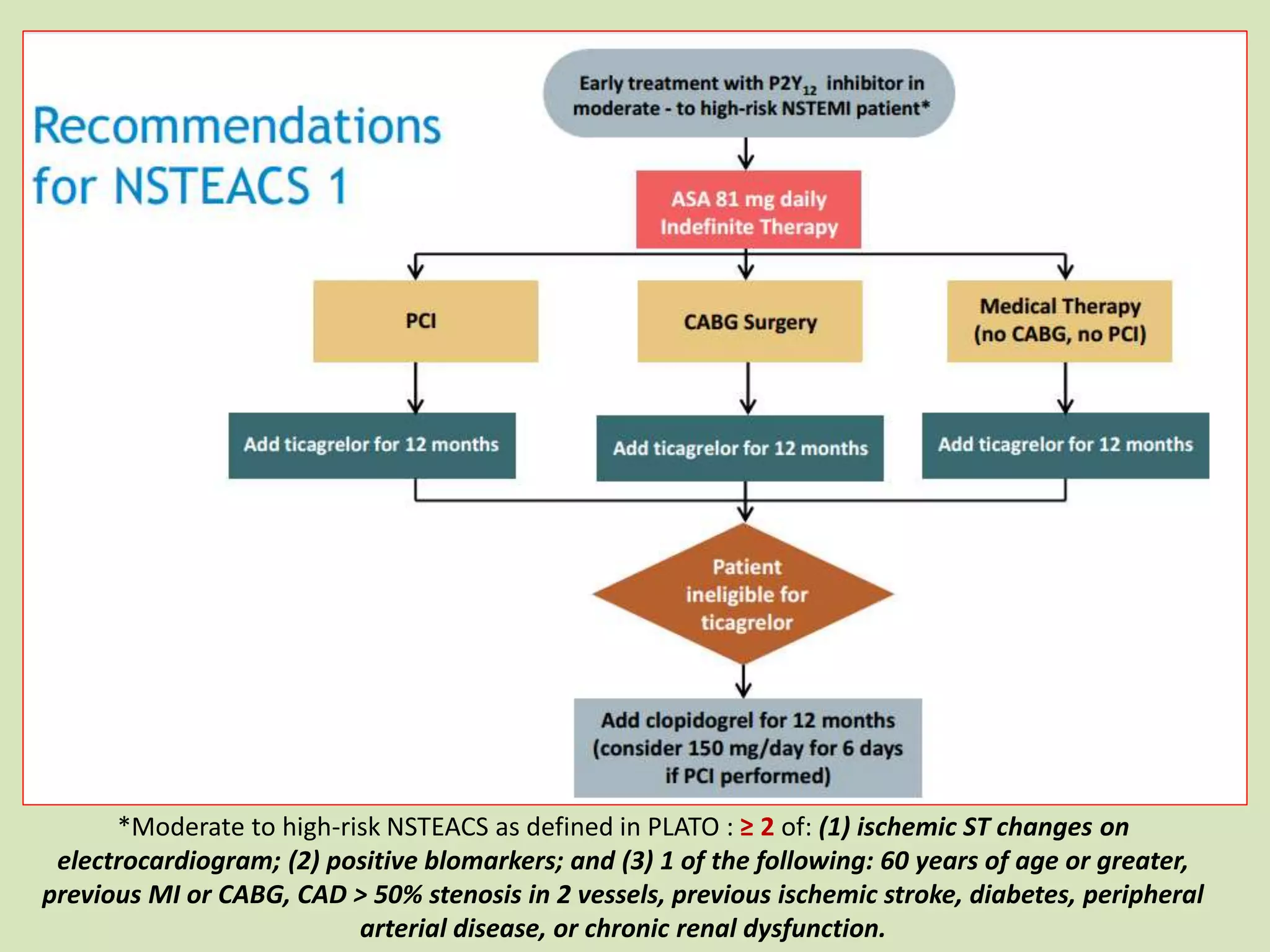
Based on the PLATO results, the 2012 Canadian Cardiovascular Society
Antiplatelet Guidelines recommend the following:
*Moderate to high-risk NSTEACS as defined in PLATO : ≥ 2 of: (1) ischemic ST changes on
electrocardiogram; (2) positive blomarkers; and (3) 1 of the following: 60 years of age or greater,
previous MI or CABG, CAD > 50% stenosis in 2 vessels, previous ischemic stroke, diabetes, peripheral
arterial disease, or chronic renal dysfunction.
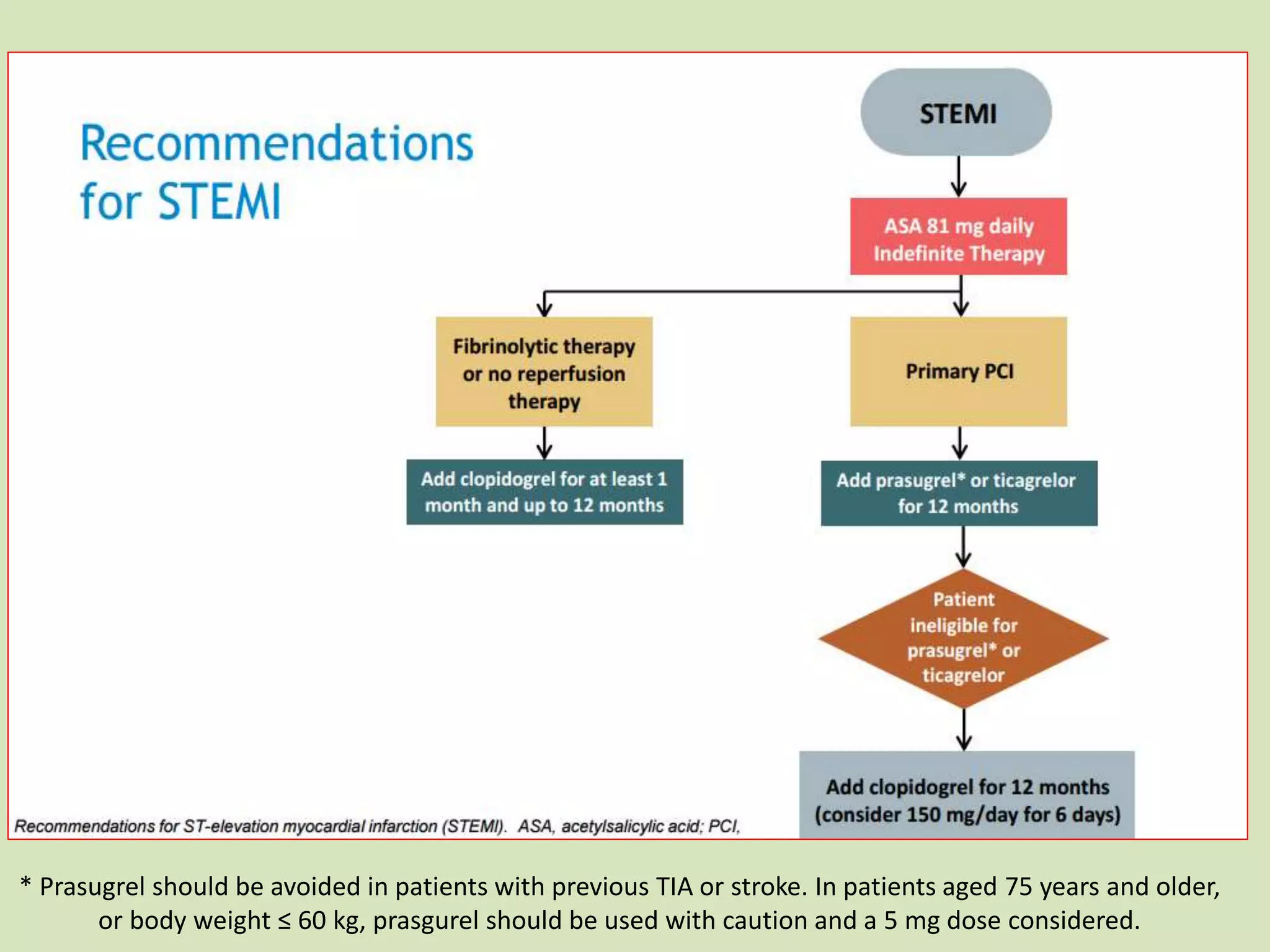
* Prasugrel should be avoided in patients with previous TIA or stroke. In patients aged 75 years and older,
or body weight ≤ 60 kg, prasgurel should be used with caution and a 5 mg dose considered.
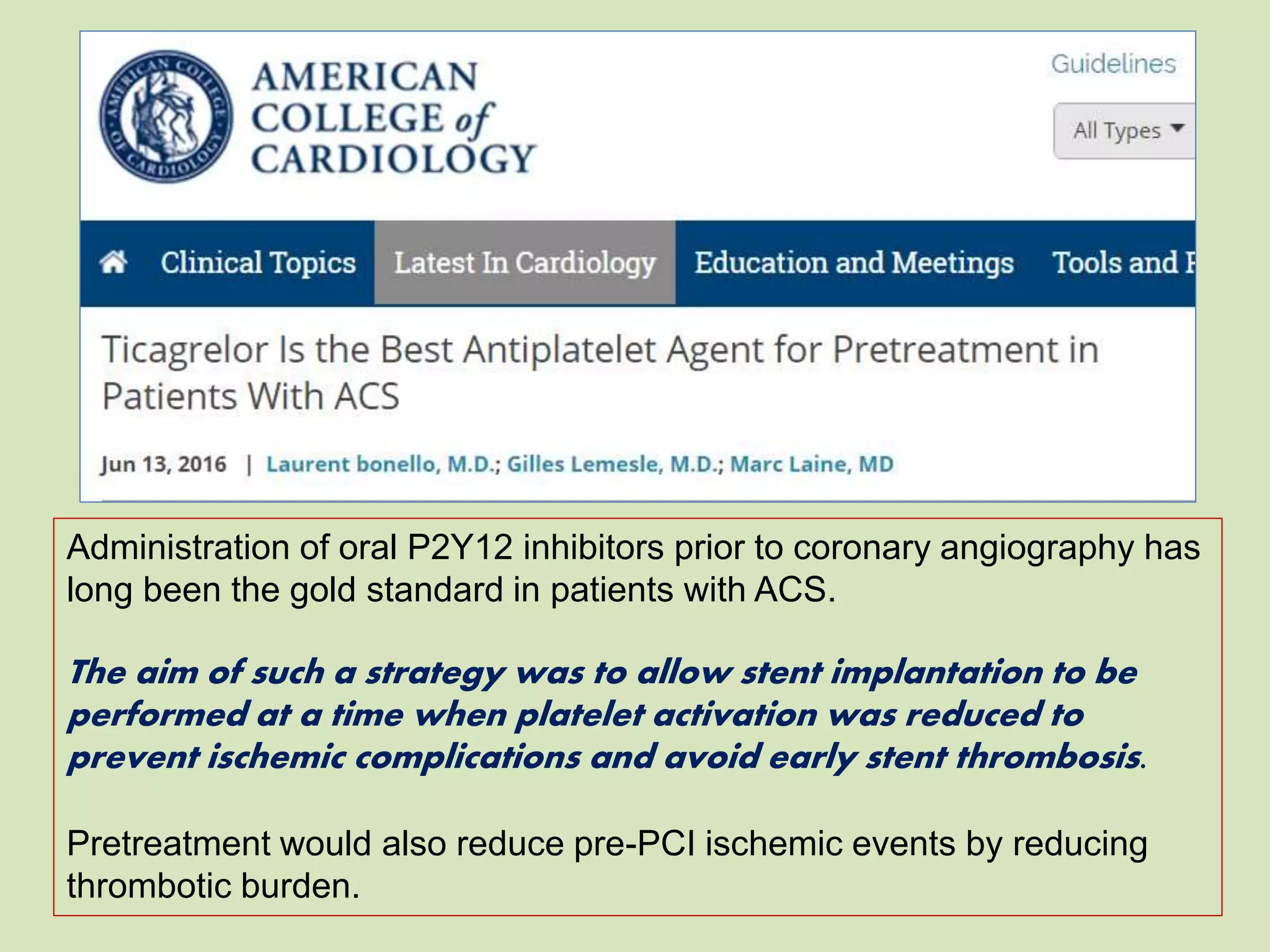
Administration of oral P2Y12 inhibitors prior to coronary angiography has
long been the gold standard in patients with ACS.
The aim of such a strategy was to allow stent implantation to be
performed at a time when platelet activation was reduced to
prevent ischemic complications and avoid early stent thrombosis.
Pretreatment would also reduce pre-PCI ischemic events by reducing
thrombotic burden.
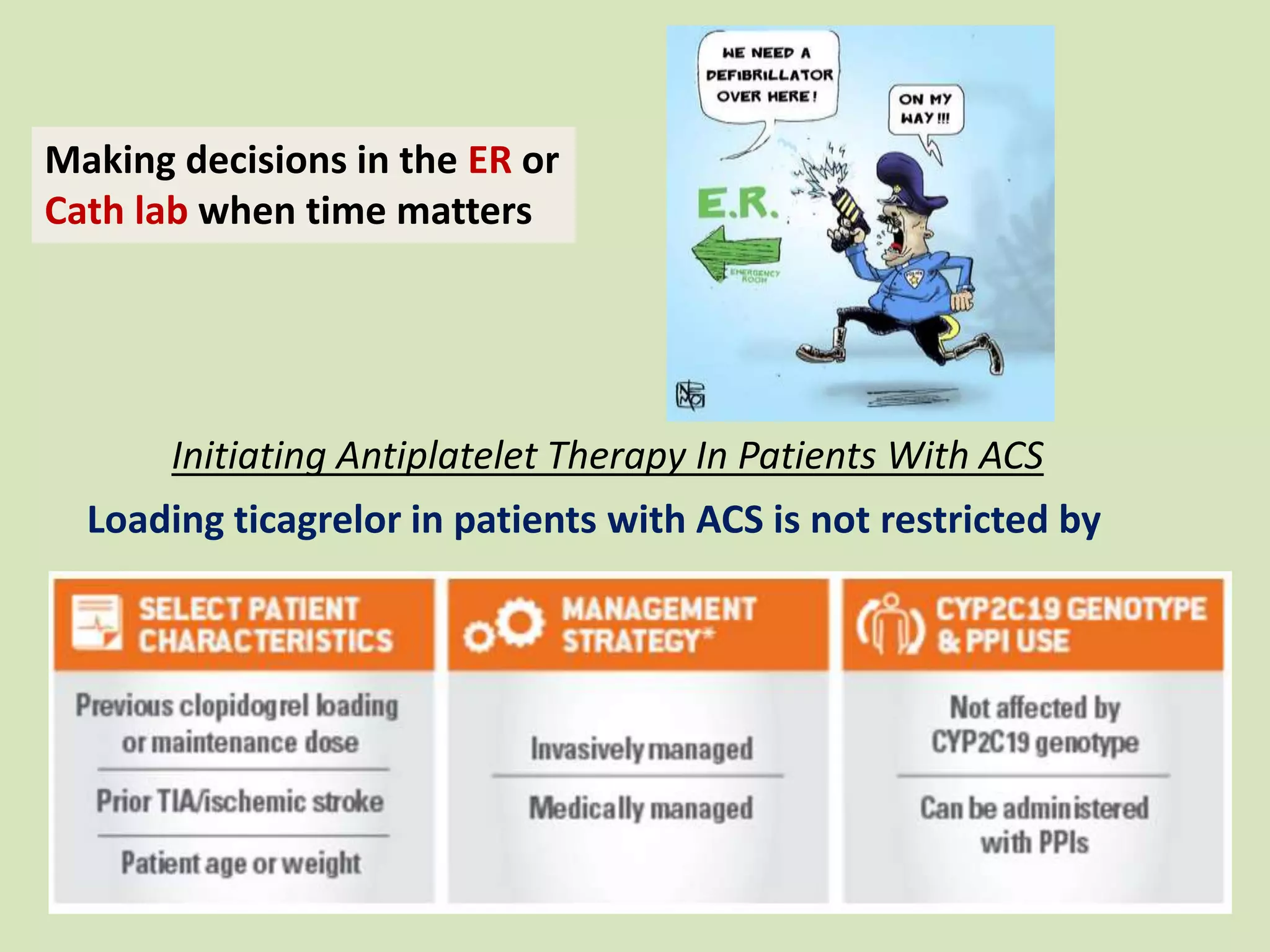
Initiating Antiplatelet Therapy In Patients With ACS
Making decisions in the ER or
Cath lab when time matters
Loading ticagrelor in patients with ACS is not restricted by
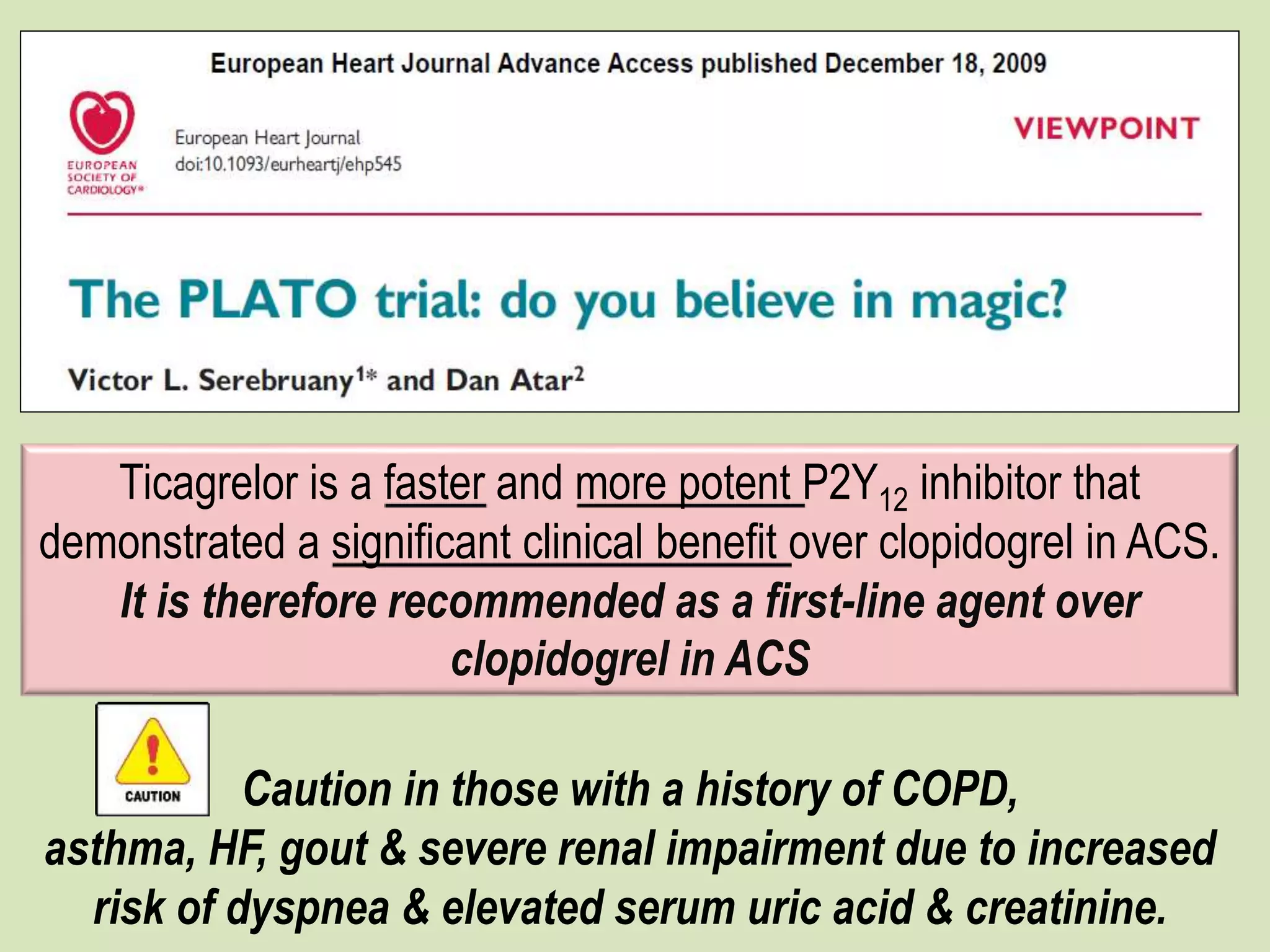
Ticagrelor is a faster and more potent P2Y12 inhibitor that
demonstrated a significant clinical benefit over clopidogrel in ACS.
It is therefore recommended as a first-line agent over
clopidogrel in ACS
Caution in those with a history of COPD,
asthma, HF, gout & severe renal impairment due to increased
risk of dyspnea & elevated serum uric acid & creatinine.
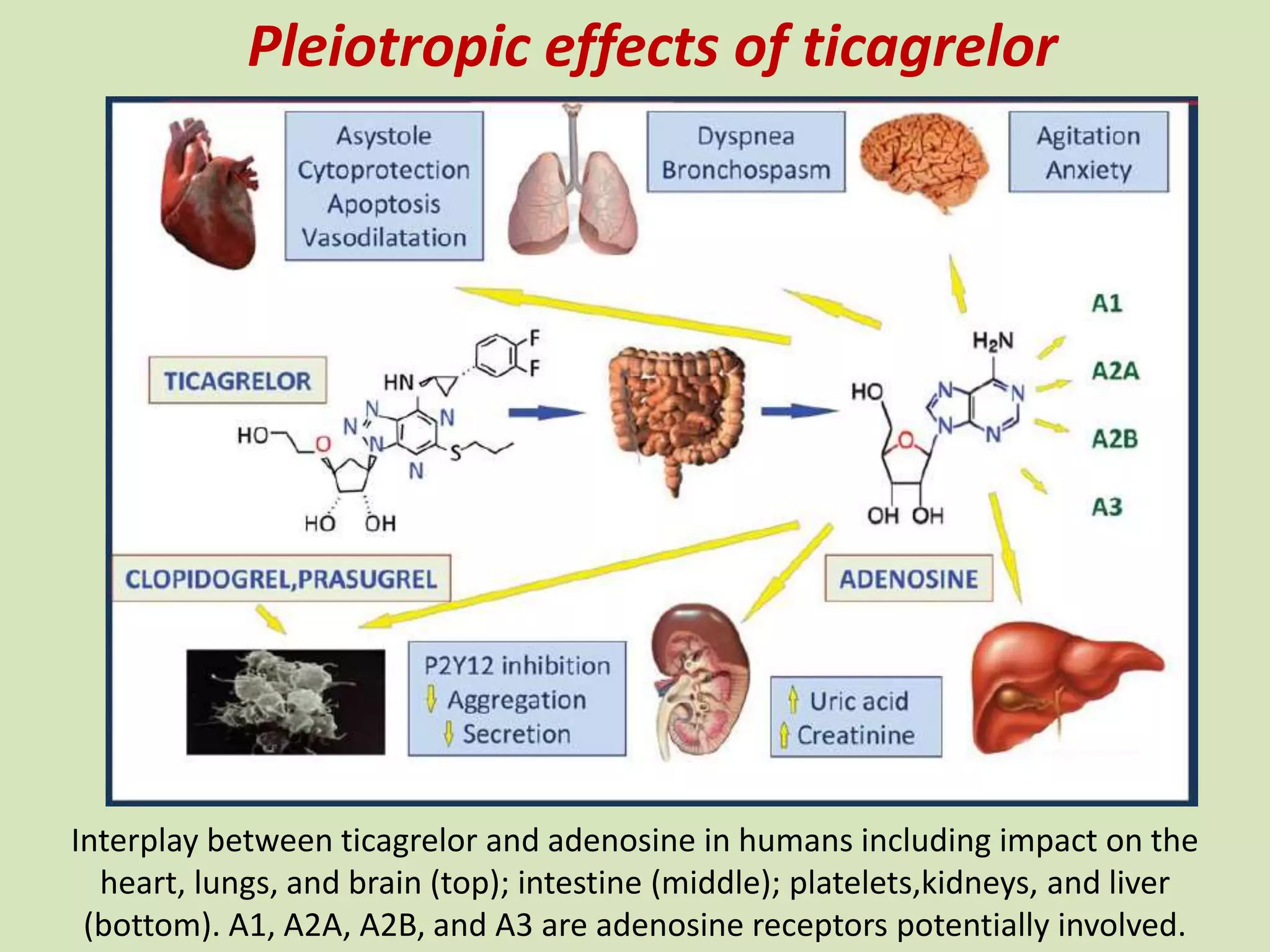
Interplay between ticagrelor and adenosine in humans including impact on the
heart, lungs, and brain (top); intestine (middle); platelets,kidneys, and liver
(bottom). A1, A2A, A2B, and A3 are adenosine receptors potentially involved.
Pleiotropic effects of ticagrelor
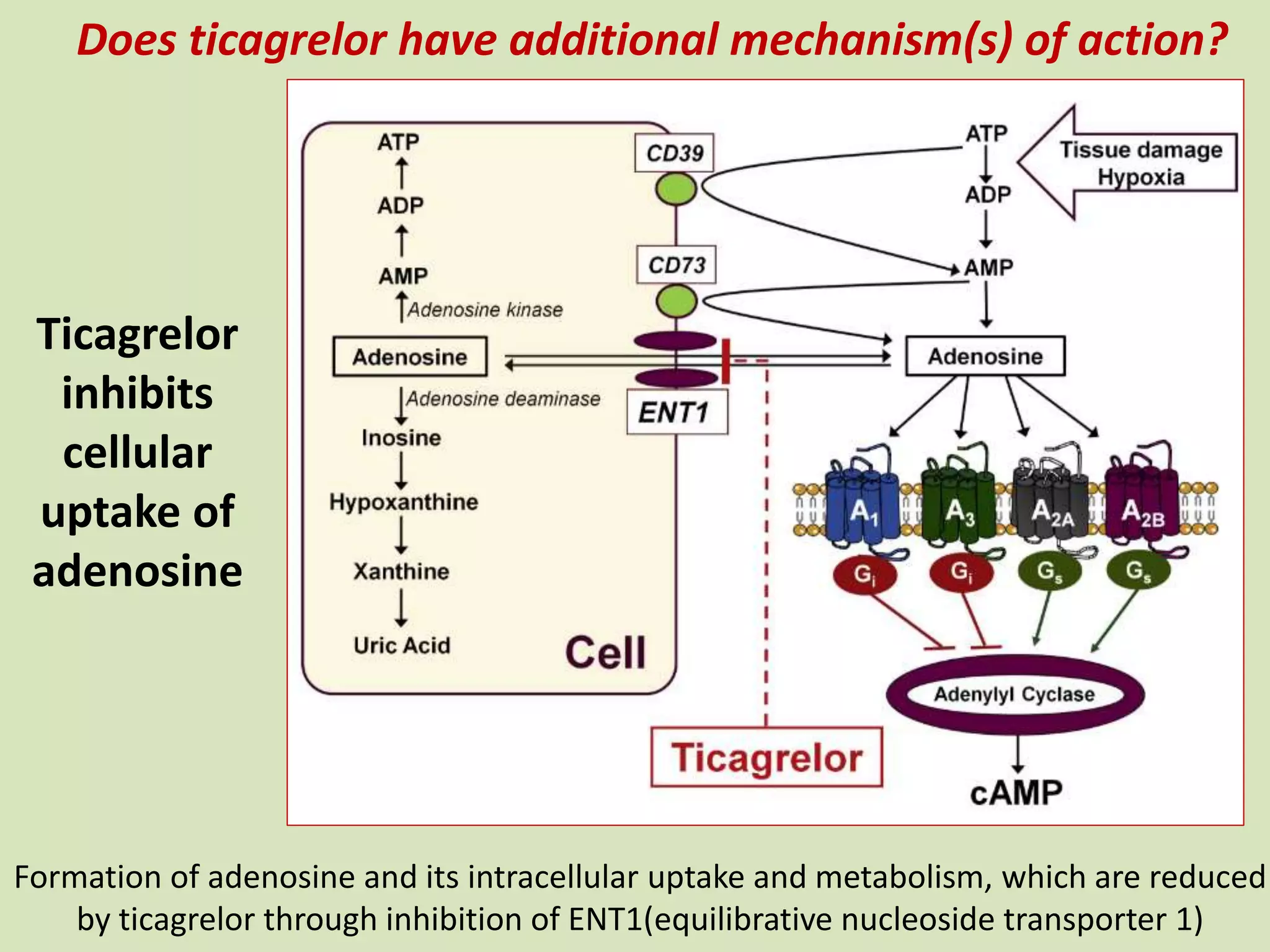
Ticagrelor
inhibits
cellular
uptake of
adenosine
Formation of adenosine and its intracellular uptake and metabolism, which are reduced
by ticagrelor through inhibition of ENT1(equilibrative nucleoside transporter 1)
Does ticagrelor have additional mechanism(s) of action?
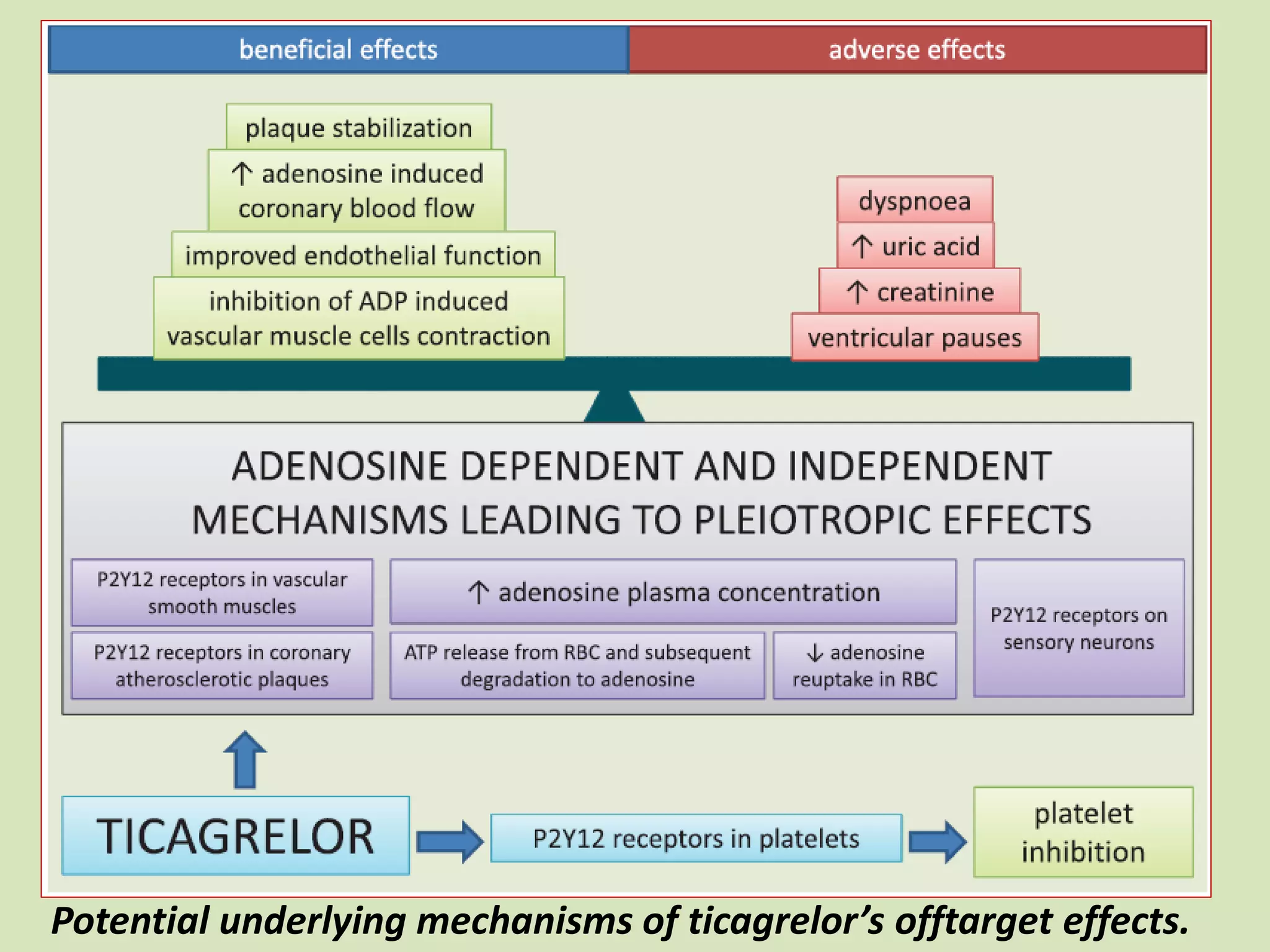
Potential underlying mechanisms of ticagrelor’s offtarget effects.
=
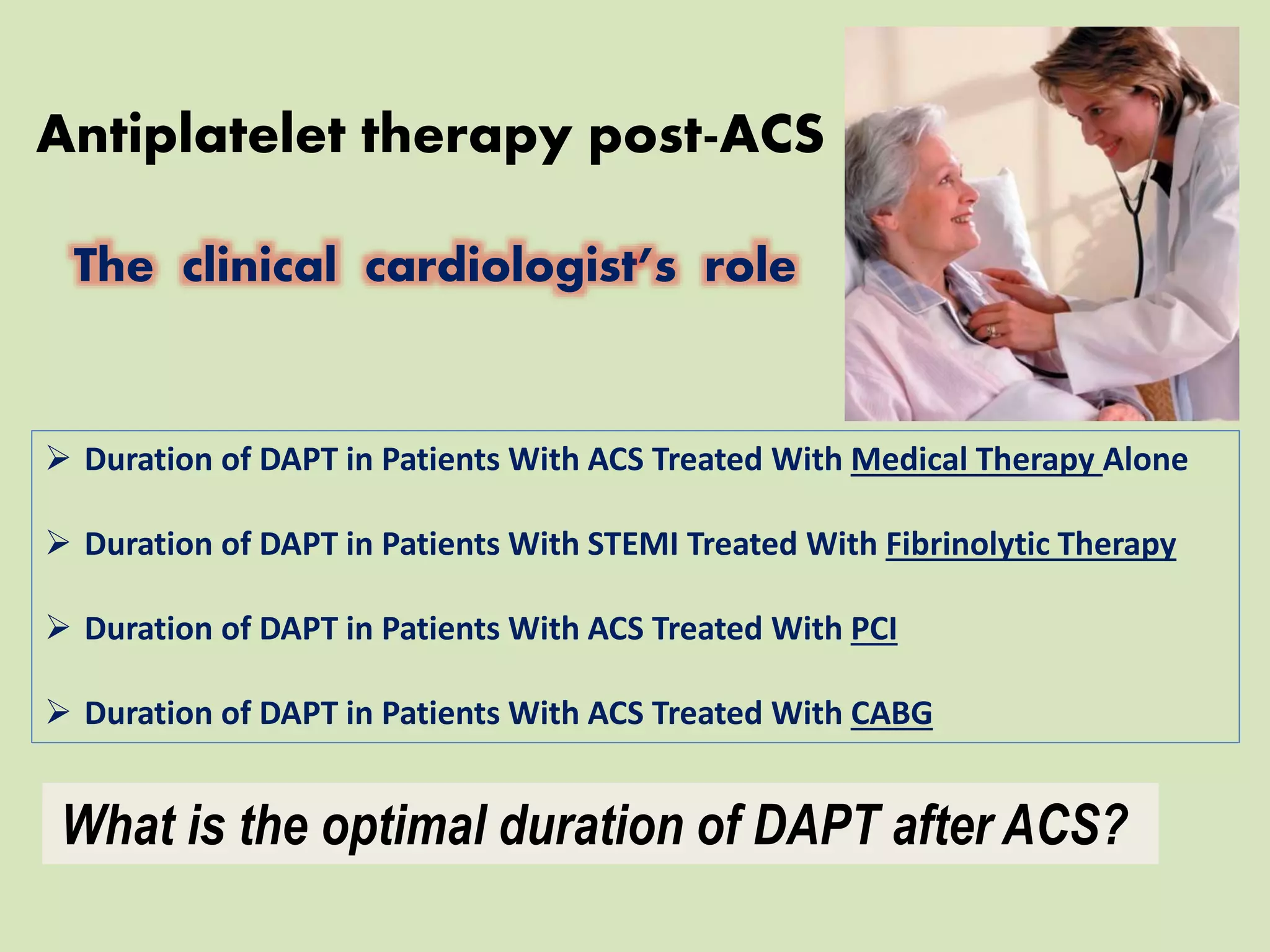
Antiplatelet therapy post-ACS
The clinical cardiologist’s role
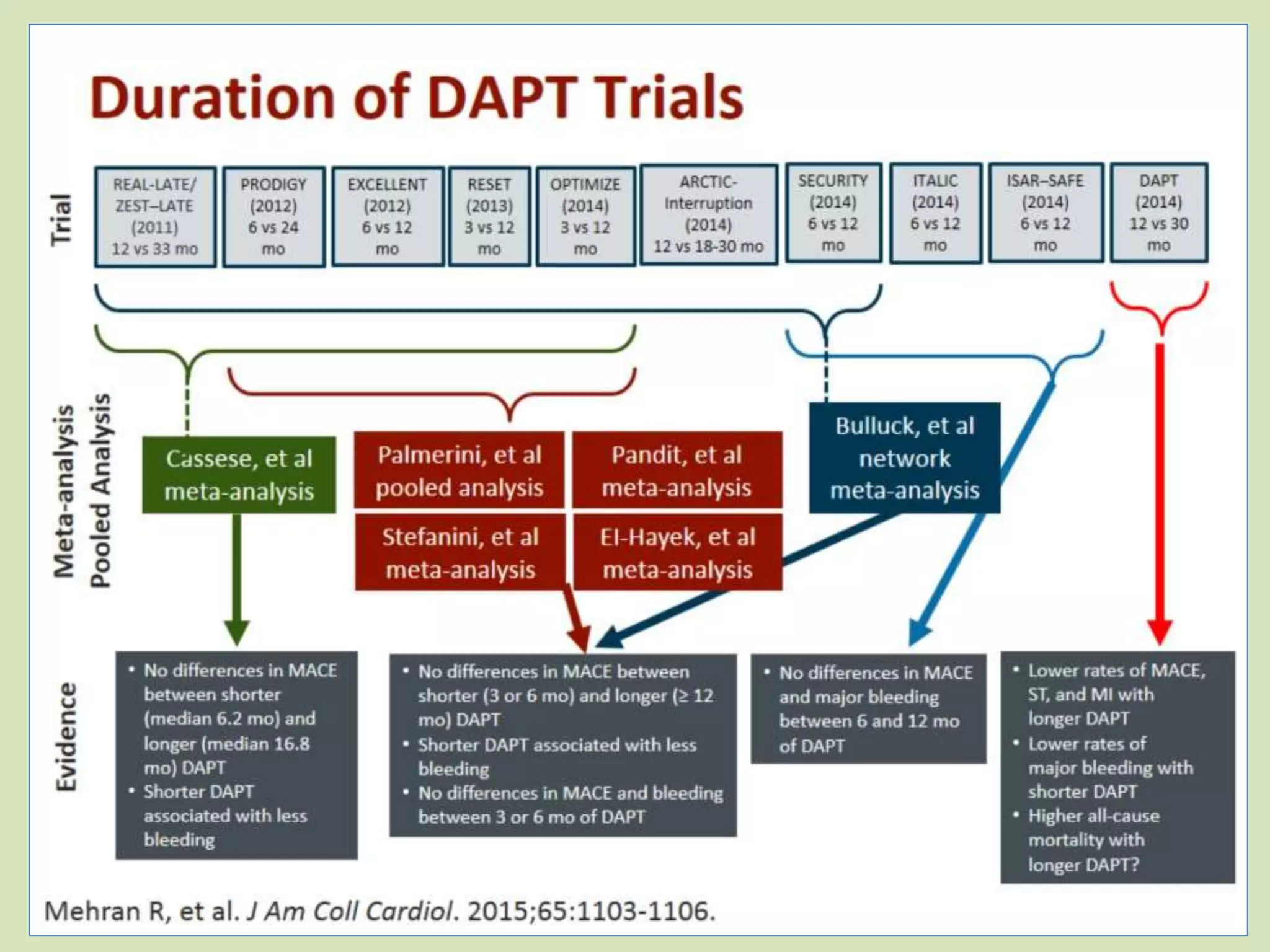
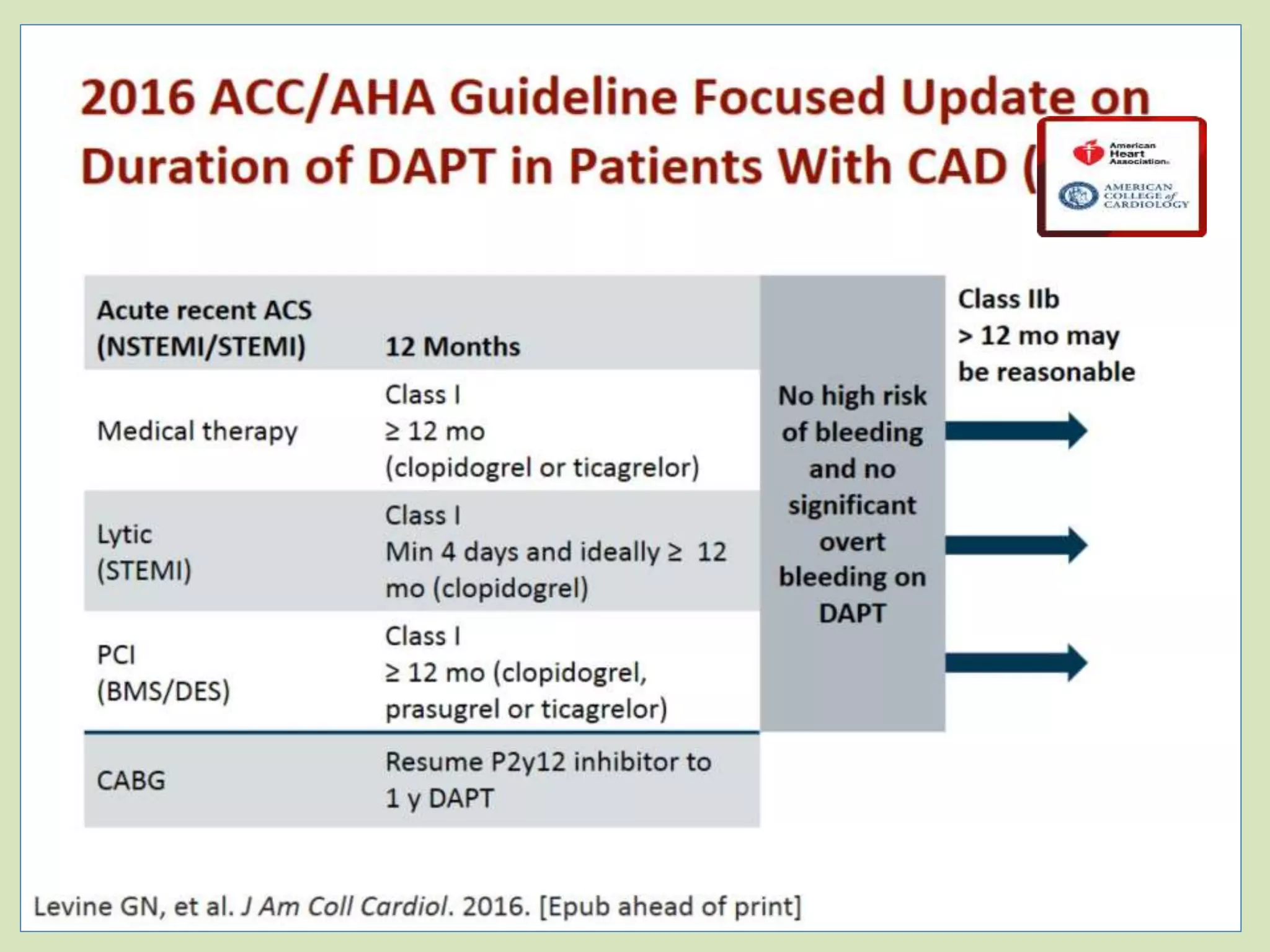
What is the optimal duration of DAPT after ACS?
 Duration of DAPT in Patients With ACS Treated With Medical Therapy Alone
 Duration of DAPT in Patients With STEMI Treated With Fibrinolytic Therapy
 Duration of DAPT in Patients With ACS Treated With PCI
 Duration of DAPT in Patients With ACS Treated With CABG
Balanced Benefit/Risk Ratio
Sweet spot
Ischemic
Risk
Bleeding
Risk
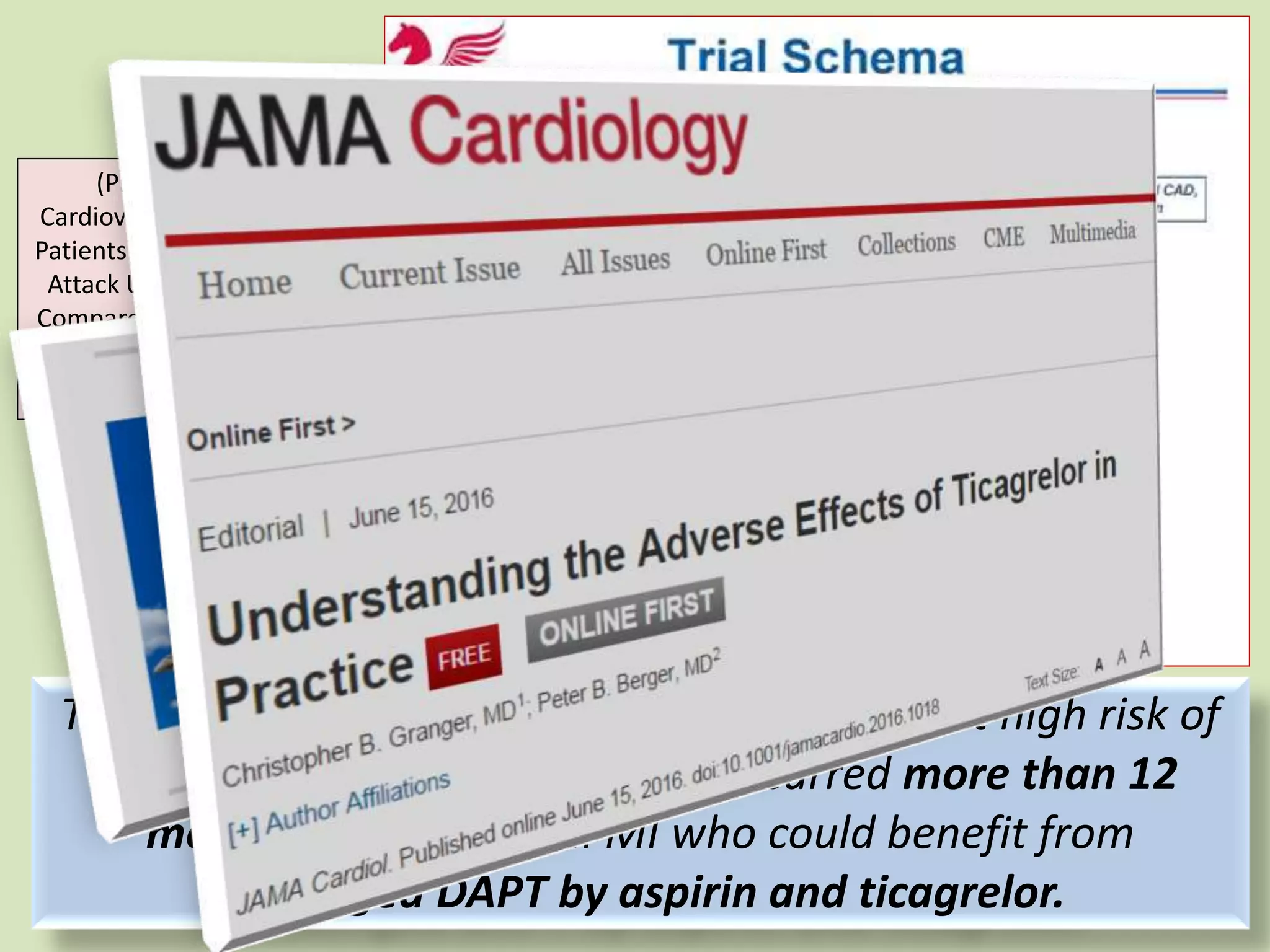
This study identified a sub-group of patients at high risk of
recurrent ischemic events that occurred more than 12
months after an initial MI who could benefit from
prolonged DAPT by aspirin and ticagrelor.
(Prevention of
Cardiovascular Events in
Patients With Prior Heart
Attack Using Ticagrelor
Compared to Placebo on
a Background of Aspirin)
trial
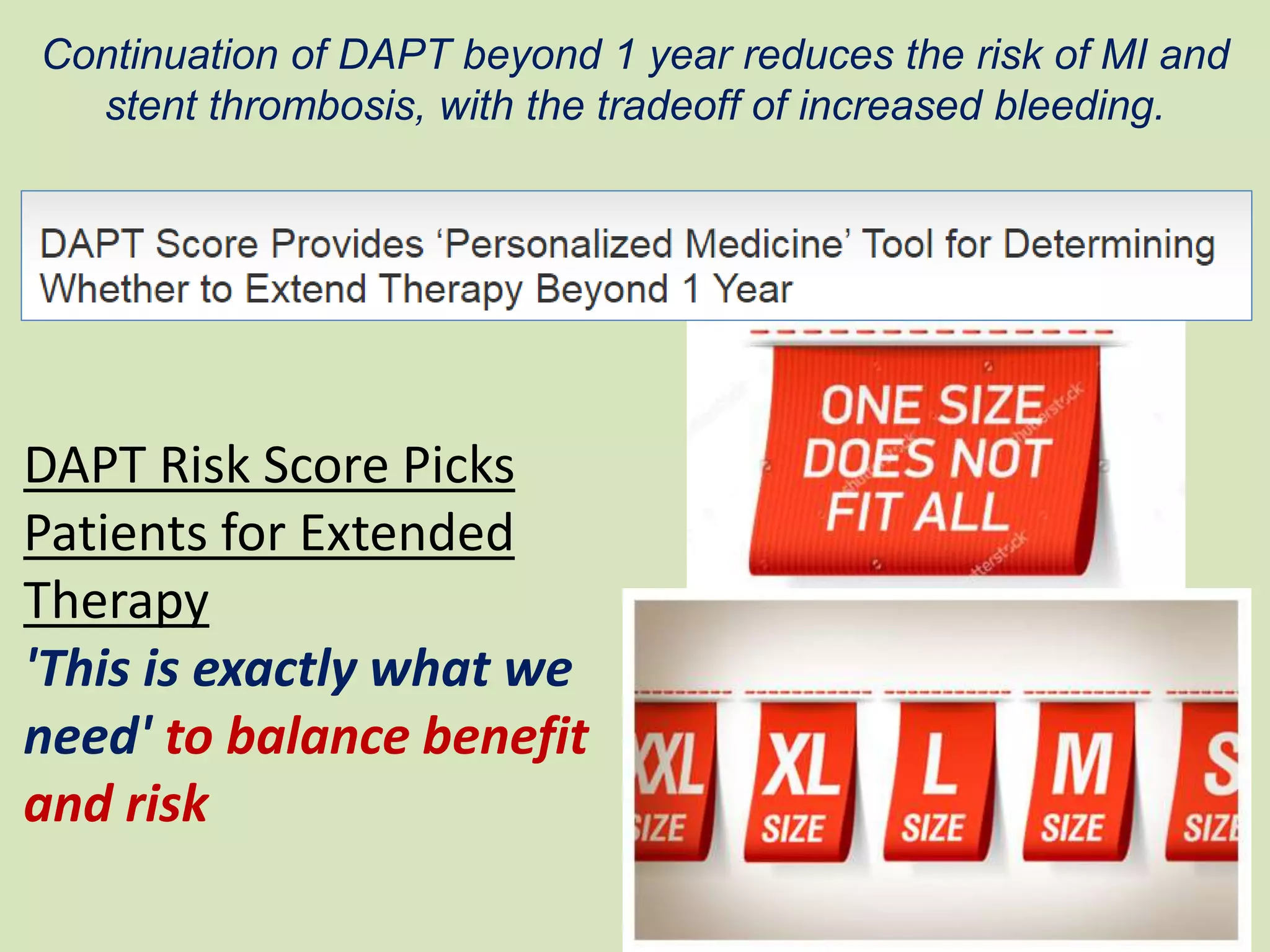
DAPT Risk Score Picks
Patients for Extended
Therapy
'This is exactly what we
need' to balance benefit
and risk
Continuation of DAPT beyond 1 year reduces the risk of MI and
stent thrombosis, with the tradeoff of increased bleeding.
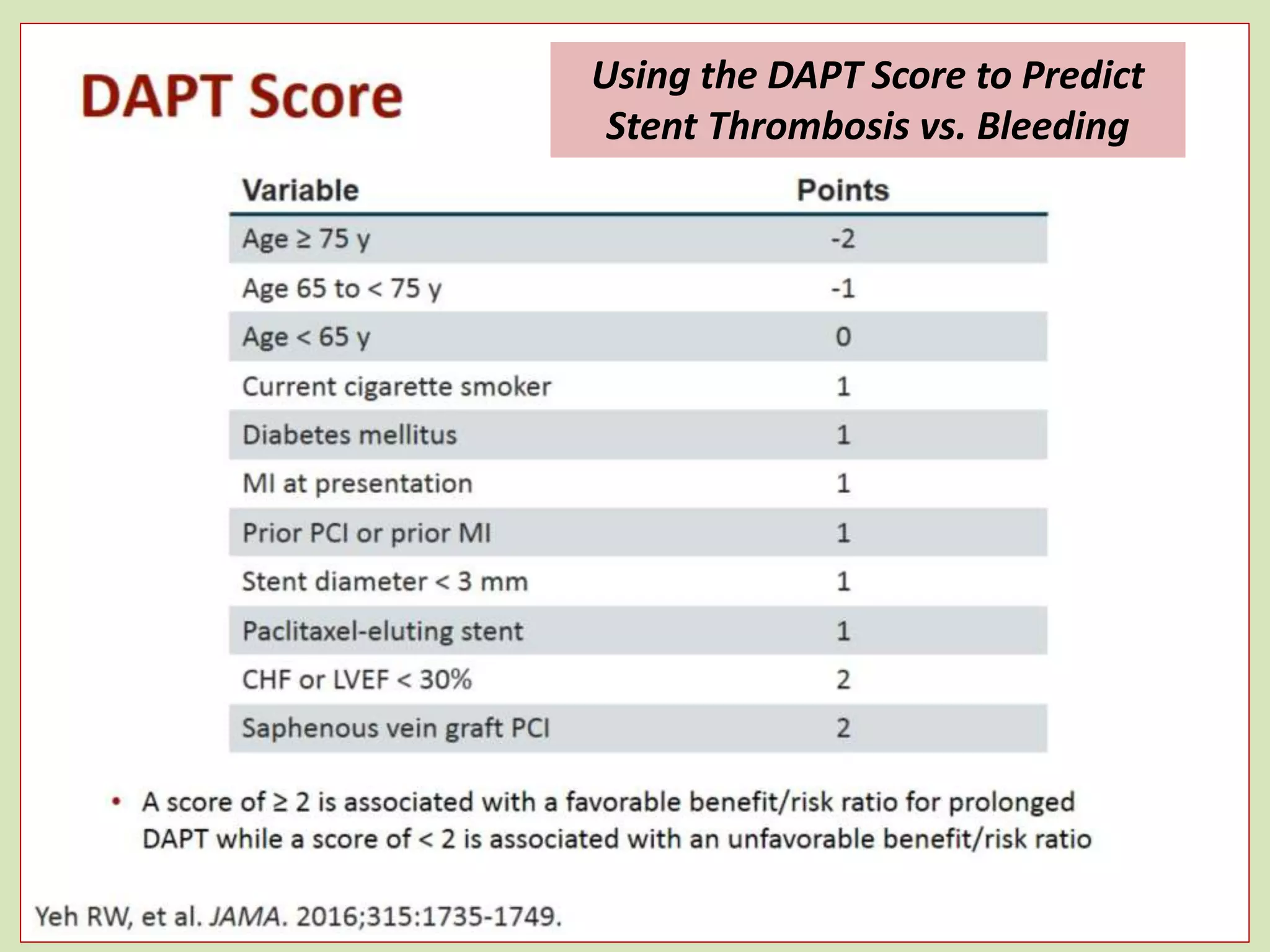
Using the DAPT Score to Predict
Stent Thrombosis vs. Bleeding
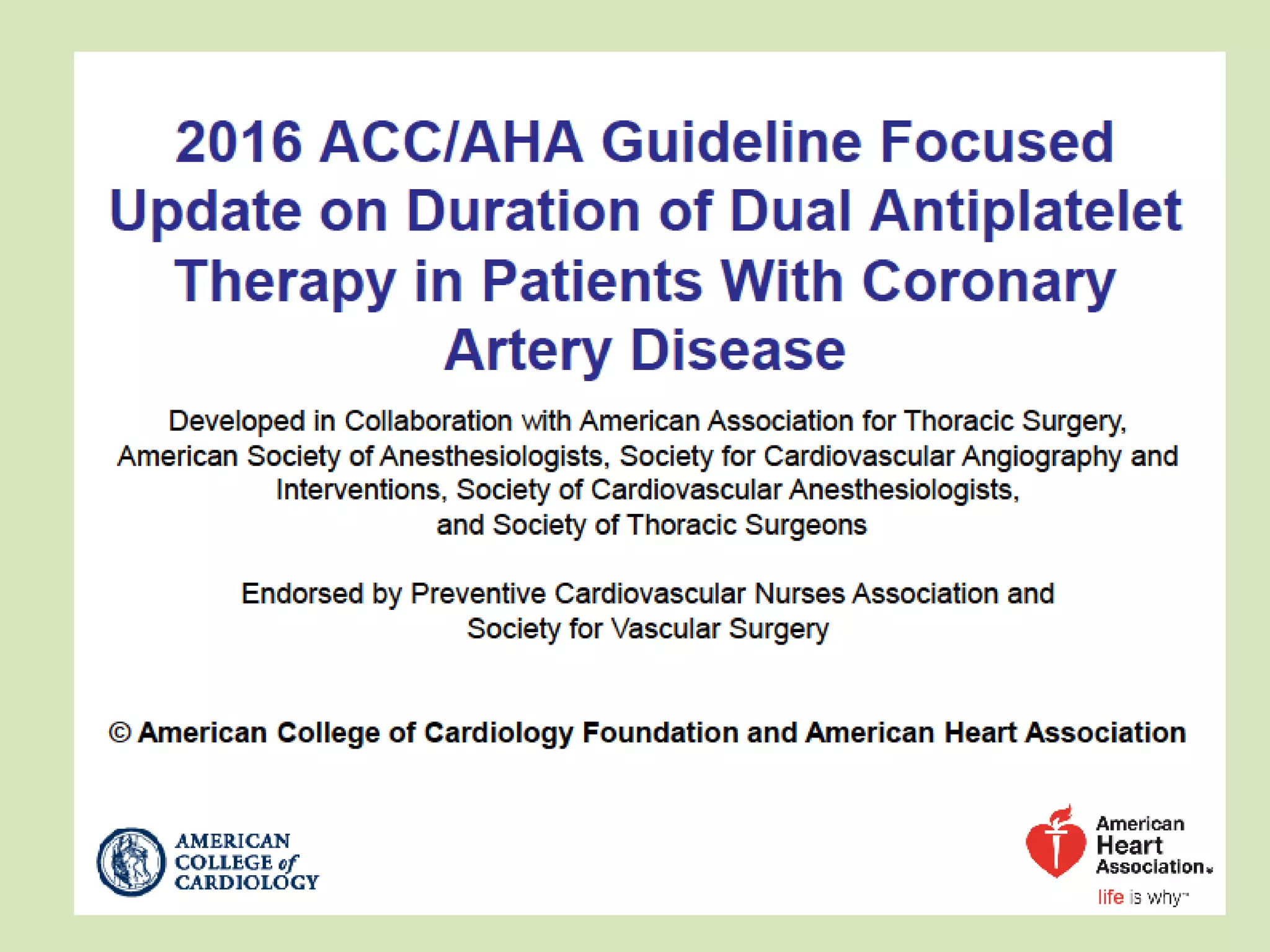
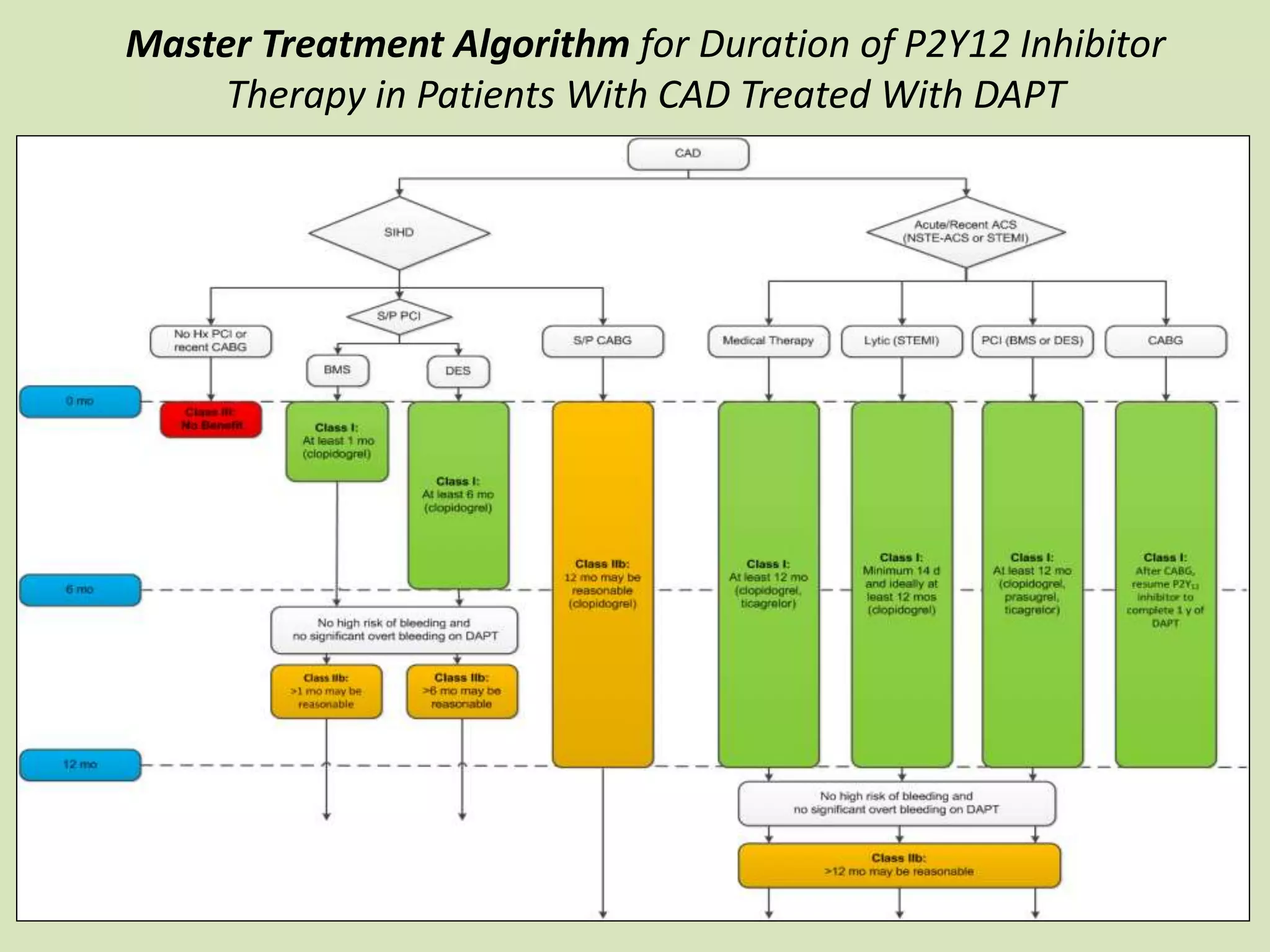
Master Treatment Algorithm for Duration of P2Y12 Inhibitor
Therapy in Patients With CAD Treated With DAPT
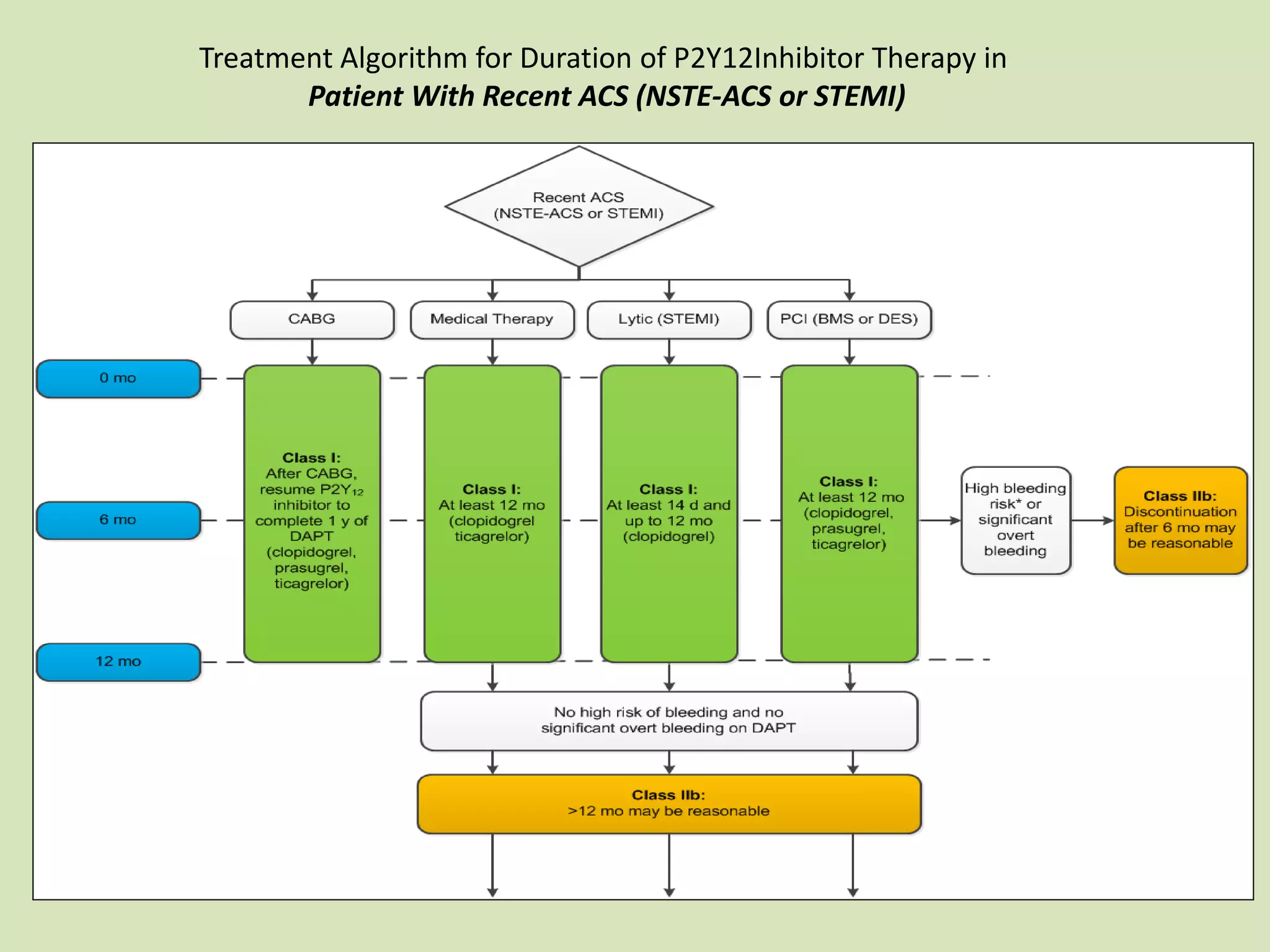
Treatment Algorithm for Duration of P2Y12Inhibitor Therapy in
Patient With Recent ACS (NSTE-ACS or STEMI)
Acs focus on dapt
Acs focus on dapt

Acs focus on dapt

  • 1.
    Magdy El-Masry. Prof. ofCardiology. Tanta University.
  • 2.
    Initial assessment ofpatients with suspected acute coronary syndromes “Other cardiac” includes, among other, myocarditis, Tako-Tsubo cardiomyopathy, or tachyarrhythmias. “Non-cardiac” refers to thoracic diseases such as pneumonia or pneumothorax. If the initial evaluation suggests aortic dissection or pulmonary embolism, D-dimers and MDCT angiography are recommended
  • 3.
    STEMI time delays(Time is Myocardium ) “You may delay, but time will not, and lost time is never found again.” Patient Delay System Delay FMC door-to-balloon time door-to-needle time
  • 4.
    Selection of NSTE-ACStreatment strategy and timing according to initial risk stratification.
  • 5.
  • 6.
    Pathophysiology of ACS:The Role of Platelets
  • 8.
    Comparative pharmacokinetics of oralP2Y12 inhibitors. Time to peak platelet inhibition
  • 9.
    Available P2Y12 blockers DAPT(ASA + clopidogrel/prasugrel/ticagrelor) is recommended after ACS (STEMI or NSTE-ACS) to reduce the risk of thrombosis
  • 10.
    Factors linked toclopidogrel response variability. Thromb Haemost 2015; 113: 37–52
  • 11.
    Figure 3. Conceptualizeddistinctionbetweenpharmacological response to therapy and treatment failures. Michelle O’Donoghue, and Stephen D. W iviott Circulation. 2006;114:e600-e606 Copyright © American Heart Association, Inc. All rights reserved.
  • 12.
    PLATelet inhibition andpatient Outcomes (PLATO) trial. Ticagrelor vs clopidogrel in patients with acute coronary syndromes. Acute Stroke Or Transient IsChaemic Attack TReated With Aspirin or Ticagrelor and Patient OutcomES"SOCRATES"
  • 13.
    The PLATO Trial(Ticagrelor vs Clopidogrel) 1998 2011
  • 16.
    All-cause death inthe ticagrelor and clopidogrel arms of the PLATO trial. Percentages are Kaplan–Meier estimates of the rate of the endpoint at 12 months. Mortality rates are reported in the overall population, in subgroups of patients undergoing either planned invasive or conservative strategy
  • 18.
    Canadian Journal of Cardiology29 (2013) 1334-1345 Based on the PLATO results, the 2012 Canadian Cardiovascular Society Antiplatelet Guidelines recommend the following:
  • 19.
    *Moderate to high-riskNSTEACS as defined in PLATO : ≥ 2 of: (1) ischemic ST changes on electrocardiogram; (2) positive blomarkers; and (3) 1 of the following: 60 years of age or greater, previous MI or CABG, CAD > 50% stenosis in 2 vessels, previous ischemic stroke, diabetes, peripheral arterial disease, or chronic renal dysfunction.
  • 20.
    * Prasugrel shouldbe avoided in patients with previous TIA or stroke. In patients aged 75 years and older, or body weight ≤ 60 kg, prasgurel should be used with caution and a 5 mg dose considered.
  • 21.
    Administration of oralP2Y12 inhibitors prior to coronary angiography has long been the gold standard in patients with ACS. The aim of such a strategy was to allow stent implantation to be performed at a time when platelet activation was reduced to prevent ischemic complications and avoid early stent thrombosis. Pretreatment would also reduce pre-PCI ischemic events by reducing thrombotic burden.
  • 24.
    Initiating Antiplatelet TherapyIn Patients With ACS Making decisions in the ER or Cath lab when time matters Loading ticagrelor in patients with ACS is not restricted by
  • 26.
    Ticagrelor is afaster and more potent P2Y12 inhibitor that demonstrated a significant clinical benefit over clopidogrel in ACS. It is therefore recommended as a first-line agent over clopidogrel in ACS Caution in those with a history of COPD, asthma, HF, gout & severe renal impairment due to increased risk of dyspnea & elevated serum uric acid & creatinine.
  • 27.
    Interplay between ticagrelorand adenosine in humans including impact on the heart, lungs, and brain (top); intestine (middle); platelets,kidneys, and liver (bottom). A1, A2A, A2B, and A3 are adenosine receptors potentially involved. Pleiotropic effects of ticagrelor
  • 28.
    Ticagrelor inhibits cellular uptake of adenosine Formation ofadenosine and its intracellular uptake and metabolism, which are reduced by ticagrelor through inhibition of ENT1(equilibrative nucleoside transporter 1) Does ticagrelor have additional mechanism(s) of action?
  • 29.
    Potential underlying mechanismsof ticagrelor’s offtarget effects.
  • 30.
  • 31.
    Antiplatelet therapy post-ACS Theclinical cardiologist’s role What is the optimal duration of DAPT after ACS?  Duration of DAPT in Patients With ACS Treated With Medical Therapy Alone  Duration of DAPT in Patients With STEMI Treated With Fibrinolytic Therapy  Duration of DAPT in Patients With ACS Treated With PCI  Duration of DAPT in Patients With ACS Treated With CABG
  • 32.
    Balanced Benefit/Risk Ratio Sweetspot Ischemic Risk Bleeding Risk
  • 36.
    This study identifieda sub-group of patients at high risk of recurrent ischemic events that occurred more than 12 months after an initial MI who could benefit from prolonged DAPT by aspirin and ticagrelor. (Prevention of Cardiovascular Events in Patients With Prior Heart Attack Using Ticagrelor Compared to Placebo on a Background of Aspirin) trial
  • 37.
    DAPT Risk ScorePicks Patients for Extended Therapy 'This is exactly what we need' to balance benefit and risk Continuation of DAPT beyond 1 year reduces the risk of MI and stent thrombosis, with the tradeoff of increased bleeding.
  • 38.
    Using the DAPTScore to Predict Stent Thrombosis vs. Bleeding
  • 41.
    Master Treatment Algorithmfor Duration of P2Y12 Inhibitor Therapy in Patients With CAD Treated With DAPT
  • 42.
    Treatment Algorithm forDuration of P2Y12Inhibitor Therapy in Patient With Recent ACS (NSTE-ACS or STEMI)