TI CAGRELOR
Past...
 Clopidogrel remained the gold standard along with
aspirin for several years of DAPT
 Participated in the wide expansion of percutaneous
coronary intervention(PCI).
Why newer P2Y12 antagonist were needed
Why newer P2Y12 antagonist were
needed
 Stent thrombosis continued to occur, leading investigators to
suspect clopidogrel "resistance."
 Studies showed that clopidogrel,
• pro-drug
• short-lived active metabolite,
• mild potency,
• slow onset of action, and
• large inter-individual variability.
 These limitations were associated with adverse ischemic events
including stent thrombosis
Postgraduate Medicine, Volume 125, Issue 4, July 2013:1941-9260
To present!
receptor
Since then, new P2Y12-ADP
antagonists, have been developed
• Prasugrel
• Ticagrelor and
• Cangrelor
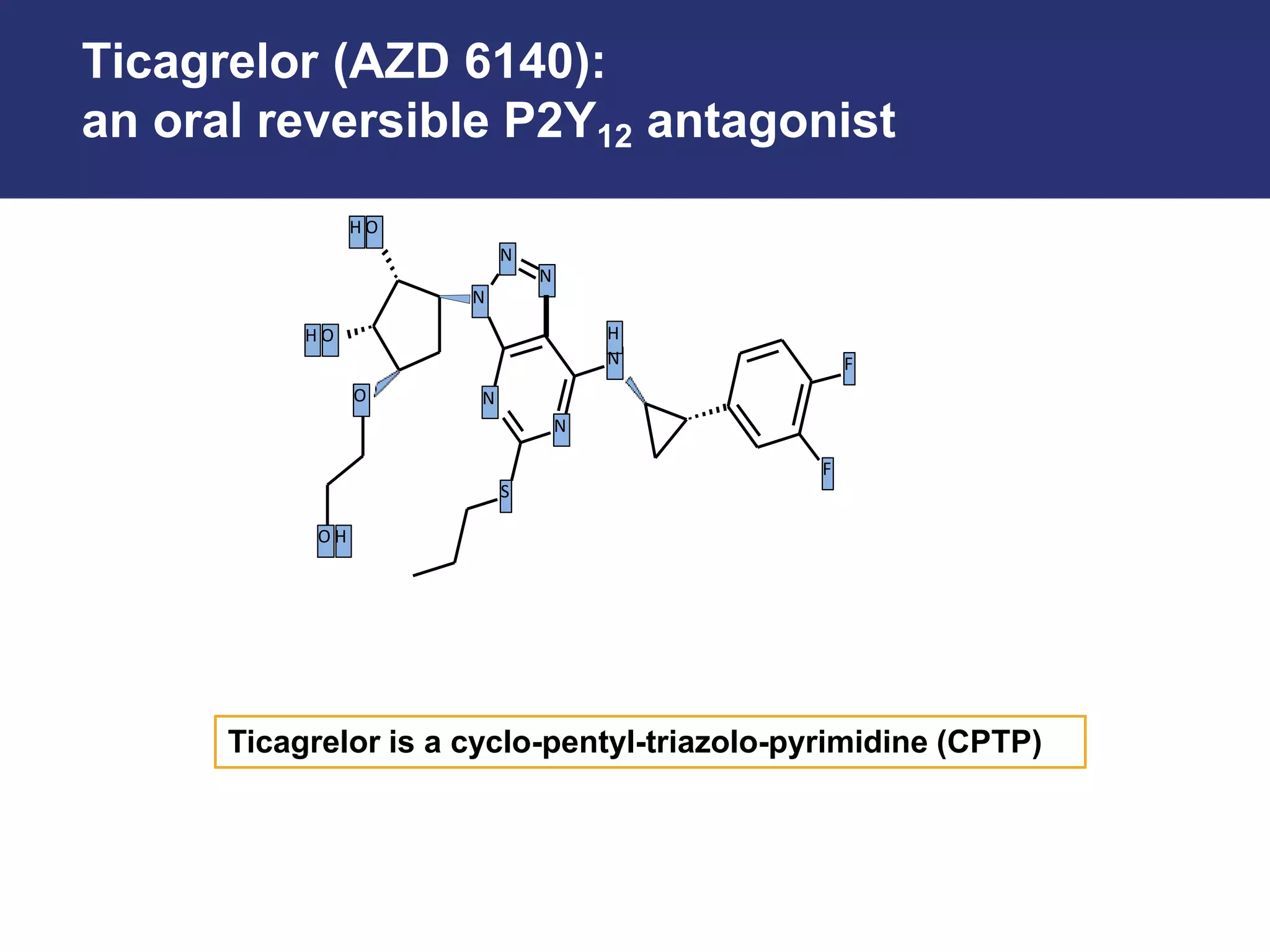
Ticagrelor (AZD 6140):
an oral reversible P2Y12 antagonist
Ticagrelor is a cyclo-pentyl-triazolo-pyrimidine (CPTP)
H O
H O
O
O H
N
F
S
H
N
N
N
N
N
F
Metabolism of P2Y12 Receptor
Antagonists
Schomig A. NEJM. 2009;361(11):1108-1111.
Postgraduate Medicine, Volume 125, Issue 4, July 2013:1941-9260
CYP3A4/5
Ketoconazole
Clarithromycin
Nefazadone
ritonavir and
atazanavir
-
P-glycoprotein
CYP2C19
 Direct acting
• does not require metabolic activation
• Rapid onset of inhibitory effect (0.5 – 4 hrs) on the P2Y12 receptor than
clopidogrel (2 – 8 hrs)
• Greater inhibition of platelet aggregation (90%) than clopidogrel (60%)
 Reversibly bound
• Degree of inhibition reflects plasma concentration
• Faster offset of effect than clopidogrel
• Functional recovery of all circulating platelets
 Eliminated via hepatic metabolism T1/2 - 7.2 hrs, whereas active
metabolite via biliary excretion T1/2 8.5 hours.
Circulation. 2017;136:1955–1975. DOI: 10.1161/CIRCULATIONAHA.117.031164
Postgraduate Medicine, Volume 125, Issue 4, July 2013:1941-9260
Unique characteristic
• ability to increase adenosine levels; it being a precursor of
adenosine
o anti-inflammatory,
o cardioprotective,
o cerebroprotective,
o antisclerotic, and
o antifibrotic properties.
o coronary vasodilator.
Postgraduate Medicine, Volume 125, Issue 4, July 2013:1941-9260
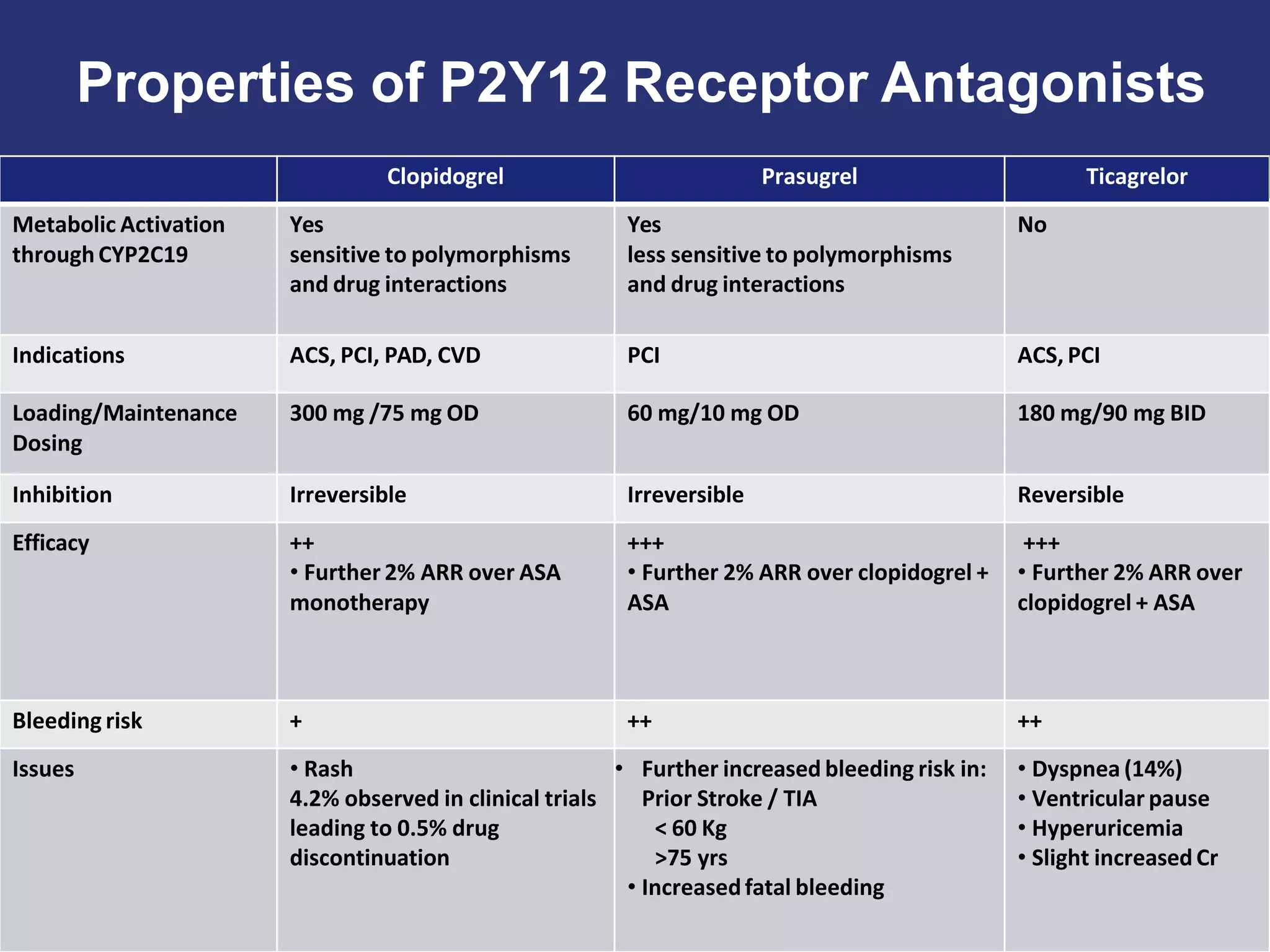
Properties of P2Y12 Receptor Antagonists
Clopidogrel Prasugrel Ticagrelor
Metabolic Activation Yes Yes No
throughCYP2C19 sensitive to polymorphisms less sensitive to polymorphisms
and drug interactions and drug interactions
Indications ACS, PCI, PAD, CVD PCI ACS, PCI
Loading/Maintenance 300 mg /75 mg OD 60 mg/10 mg OD 180 mg/90 mg BID
Dosing
Inhibition Irreversible Irreversible Reversible
Efficacy ++
• Further 2% ARR over ASA
+++
• Further 2% ARR over clopidogrel +
+++
• Further 2% ARR over
monotherapy ASA clopidogrel + ASA
Bleeding risk + ++ ++
Issues • Rash
4.2% observed in clinical trials
leading to 0.5% drug
discontinuation
• Further increased bleeding risk in:
Prior Stroke / TIA
< 60 Kg
>75 yrs
• Increasedfatal bleeding
• Dyspnea (14%)
• Ventricular pause
• Hyperuricemia
• Slight increasedCr
Adverse Effects
>10%
Dyspnoes (13.8&)
Bleeding (Continued…)
1-10%
Dizziness (4.5%)
Ventricular Pauses (6.0%)
Uricemia (2.4%)
Renal Dysfunction (2.1%)
Diarrhoea (3.7%)
Nausea (4.3%)
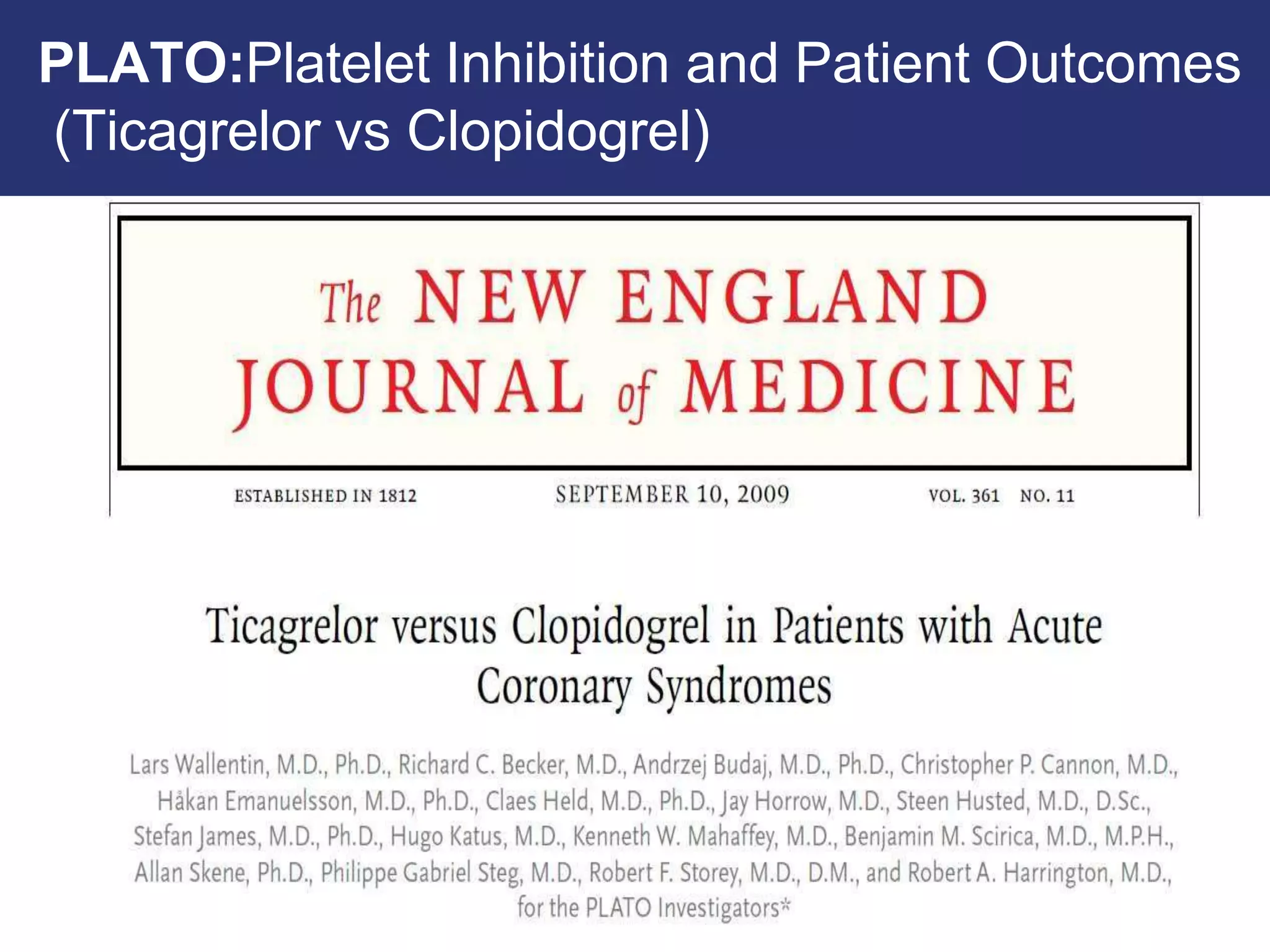
PLATO:Platelet Inhibition and Patient Outcomes
(Ticagrelor vs Clopidogrel)
Study design:
 Patients with high risk ACS(NSTE/STEMI) within 24 hrs.
 All patients received standard therapy, including ASA
 Excluded patients receiving fibrinolytics
 Randomized to ticagrelor 180 mg load followed by 90 mg
bid or clopidogrel 300 mg load followed by 75 mg daily
 n=18,624 (43 countries including India and China)
Wallentin L, et al. N Engl J Med. 2009;361(11):1045-1057.
PLATO inclusion criteria
• Hospitalisation for STEMI or NSTEMI ACS, with onset during the
previous 24 hours
• With STEMI, the following two inclusion criteria were required
 Persistent STEMI or new LBBB
 Primary PCI planned
• With NSTEMI ACS, at least two of the following three were required
 ST-segment changes on ECG indicating ischaemia
 Positive biomarker indicating myocardial necrosis
 One of the following risk indicators
• ≥60 years of age
• Previous MI or CABG
• CAD with ≥50% stenosis in ≥2 vessels
• Previous ischaemic stroke, TIA, carotid stenosis (≥50%)
• Diabetes mellitus
• Peripheral artery disease
• Chronic renal dysfunction (creatinine clearance <60 mL/min)
Endpoints
 Primary endpoint: CV death + MI + Stroke
 Primary safety endpoint: Total major bleeding
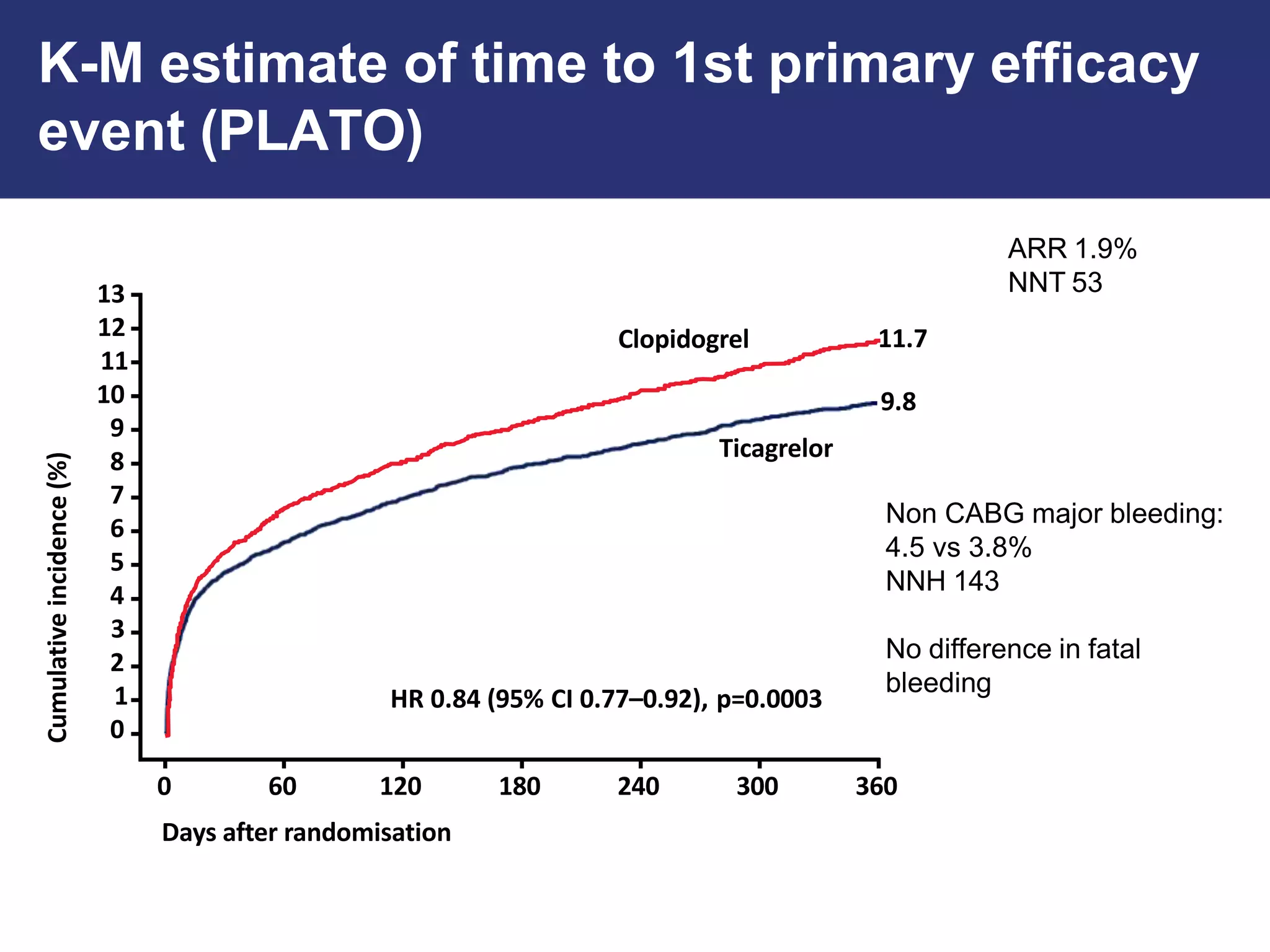
K-M estimate of time to 1st primary efficacy
event (PLATO)
0 60 120
Days after randomisation
180 240 300 360
13
12
11
10
9
8
7
6
5
4
3
2
1
0
Cumulative
incidence
(%)
9.8
11.7
HR 0.84 (95% CI 0.77–0.92), p=0.0003
Clopidogrel
Ticagrelor
ARR 1.9%
NNT 53
Non CABG major bleeding:
4.5 vs 3.8%
NNH 143
No difference in fatal
bleeding
Holter monitoring & Bradycardia related events
Holter monitoring at first week
Ticagrelor
(n=1,451)
Clopidogrel
(n=1,415) p value
Ventricular pauses ≥3 seconds, %
Ventricular pauses ≥5 seconds, %
5.8
2.0
3.6
1.2
0.01
0.10
Holter monitoring at 30 days
Ticagrelor
(n= 985)
Clopidogrel
(n=1,006) p value
Ventricular pauses ≥3 seconds, % 2.1 1.7 0.52
Ventricular pauses ≥5 seconds, % 0.8 0.6 0.60
Bradycardia-related event, %
Ticagrelor
(n=9,235)
Clopidogrel
(n=9,186) p value
Pacemaker Insertion 0.9 0.9 0.87
Syncope 1.1 0.8 0.08
Bradycardia 4.4 4.0 0.21
Heart block 0.7 0.7 1.00
Other findings
All patients
Ticagrelor Clopidogrel
(n=9,235) (n=9,186) p value*
Dyspnoea, %
Any
With discontinuation of study treatment
13.8
0.9
7.8
0.1
<0.001
<0.001
*p values were calculated using Fischer’s exact test
Other findings – laboratory parameters
All patients
Ticagrelor Clopidogrel
(n=9,235) (n=9,186) p value*
% increase in creatinine from baseline
At 1 month
At 12 months
Follow-up visit
10  22
11  22
10  22
8  21
9  22
10  22
<0.001
<0.001
0.59
% increase in uric acid from baseline
At 1 month
At 12 months
Follow-up visit
14  46
15  52
7  43
7  44
7  31
8  48
<0.001
<0.001
0.56
Values are mean %  SD; *p values were calculated using Fisher’s exact test
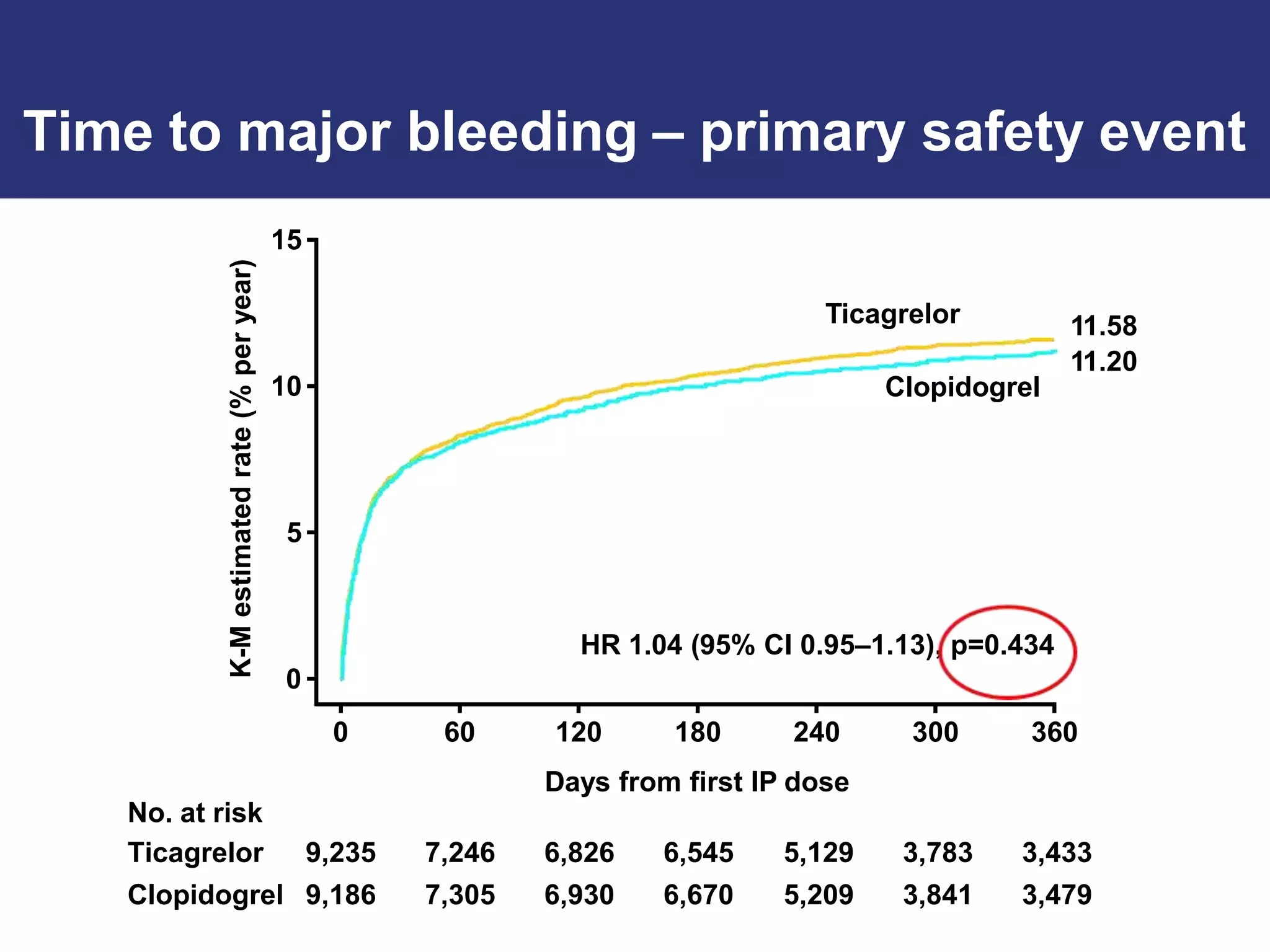
Time to major bleeding – primary safety event
0 60 120 180 240
Days from first IP dose
300 360
10
5
0
15
Clopidogrel
Ticagrelor 11.58
11.20
No. at risk
Ticagrelor 9,235 7,246 6,826 6,545 5,129 3,783 3,433
Clopidogrel 9,186 7,305 6,930 6,670 5,209 3,841 3,479
HR 1.04 (95% CI 0.95–1.13), p=0.434
K-M
estimated
rate
(%
per
year)
Total major bleeding
NS
NS
NS
NS
NS
K-M
estimated
rate
(%
per
year)
PLATO major
bleeding
12
11
10
9
8
7
6
5
4
3
2
1
0
TIMI major
bleeding
Red cell
transfusion*
PLATO life-
threatening/
Fatal bleeding
fatal bleeding
Major bleeding and major or minor bleeding according to TIMI criteria refer to non-adjudicated events analysed with the use of a statistically
programmed analysis in accordance with definition described in Wiviott SD et al. NEJM 2007;357:2001–15;*Proportion of patients (%);
11.6
11.2
7.9
7.7
8.9 8.9
5.8 5.8
0.3 0.3
Ticagrelor
Clopidogrel
Conclusions (PLATO)
• Ticagrelor in comparison with clopidogrel in a
broad population with ST- and non-ST-elevation
ACS provides
 Reduction in myocardial infarction and stent thrombosis
 Reduction in cardiovascular and total mortality
 No change in the overall risk of major bleeding
Ticagrelor is a more effective alternative than clopidogrel for the
continuous prevention of ischaemic events, stent thrombosis and death in
the acute and long-term treatment of patients with ACS
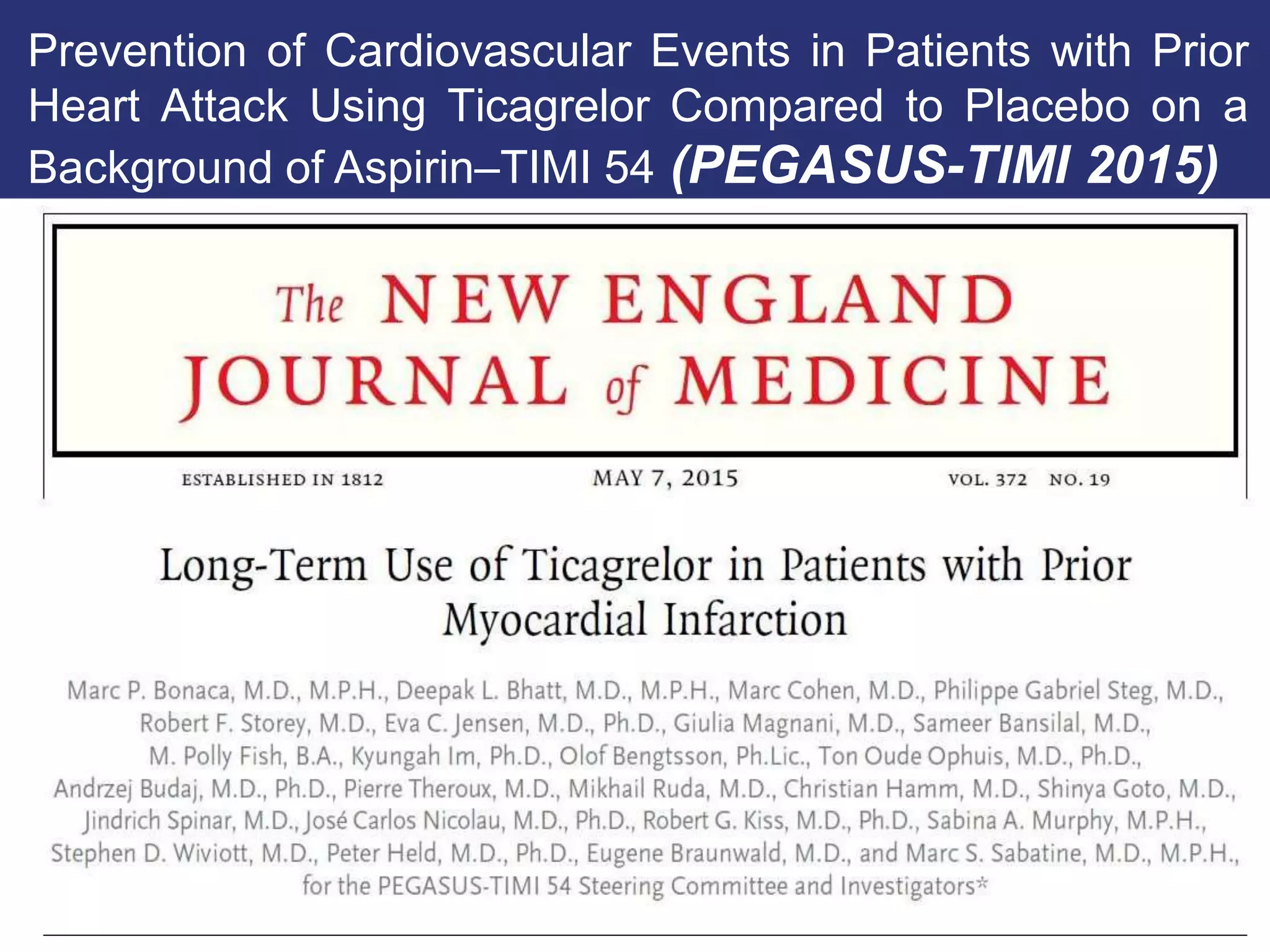
Prevention of Cardiovascular Events in Patients with Prior
Heart Attack Using Ticagrelor Compared to Placebo on a
Background of Aspirin–TIMI 54 (PEGASUS-TIMI 2015)
Design of PEGASUS-TIMI 54
Stable pts with history of MI 1-3 yrs prior
+ 1 additional atherothrombosis risk factor*
Ticagrelor
90 mg bid
Placebo
Follow-up Visits
Q4 mos for 1st yr, then Q6 mos
Planned treatment withASA 75 – 150 mg &
Standard background care
* Age >65 yrs, diabetes, 2nd prior MI,
multivessel CAD, or chronic non-end stage
renal dysfunction (Crcl <60ml/min)
Minimum 1 year follow-up
Event-driven trial
Ticagrelor
60 mg bid
RANDOMIZED
DOUBLE BLIND
N=21,162 (33 countries)
Follow up – 33 months
Exclusion criteria
• Planned use of a P2Y12 receptor antagonist (dipyridamole,
cilostazol) or anticoagulant therapy
• bleeding disorder
• H/o ischemic stroke or intracranial bleeding,
• CNS tumor,
• intracranial vascular abnormality
• GI bleeding within 6 months or
• major surgery within 30 days.
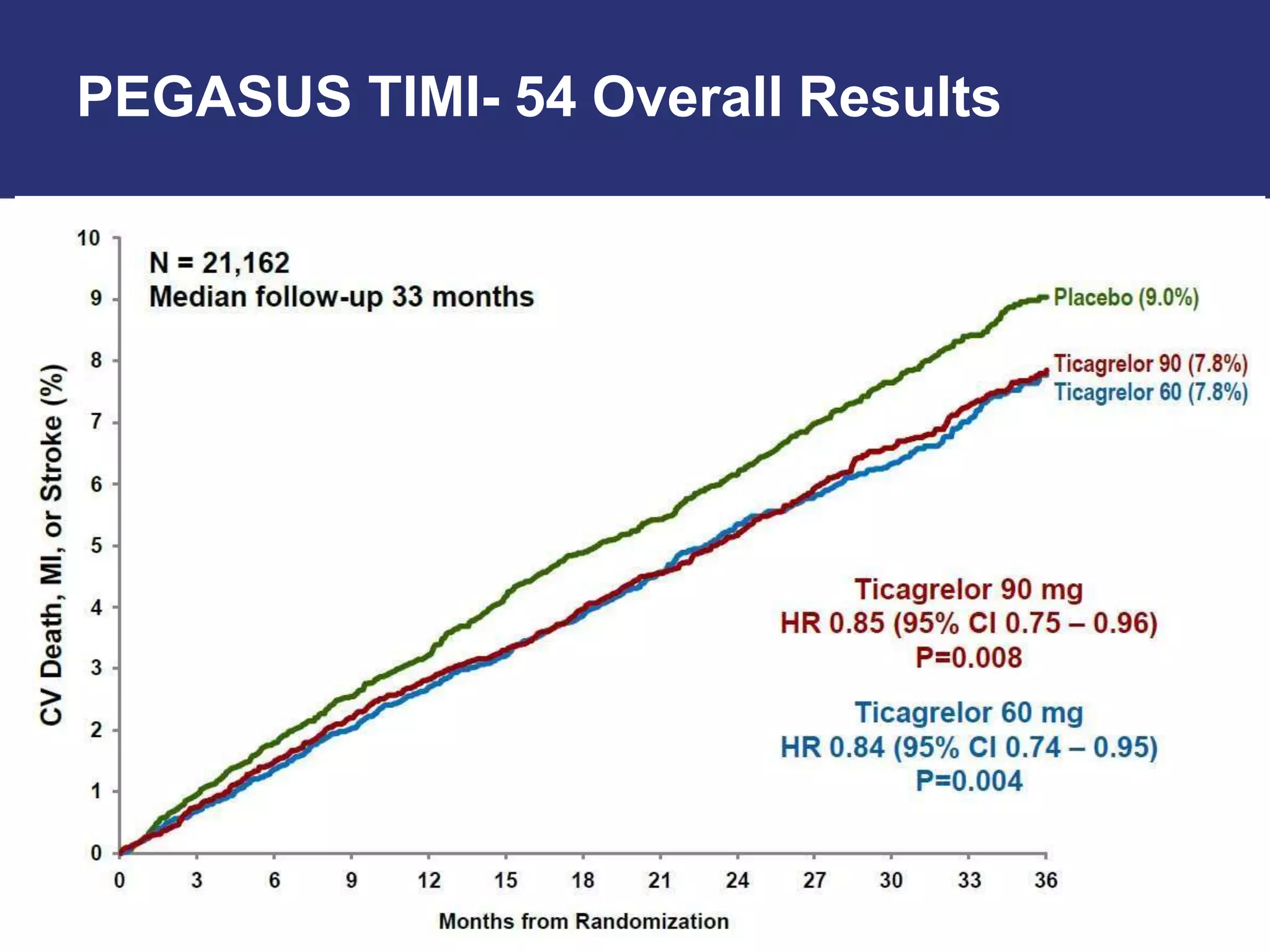
PEGASUS TIMI- 54 Overall Results
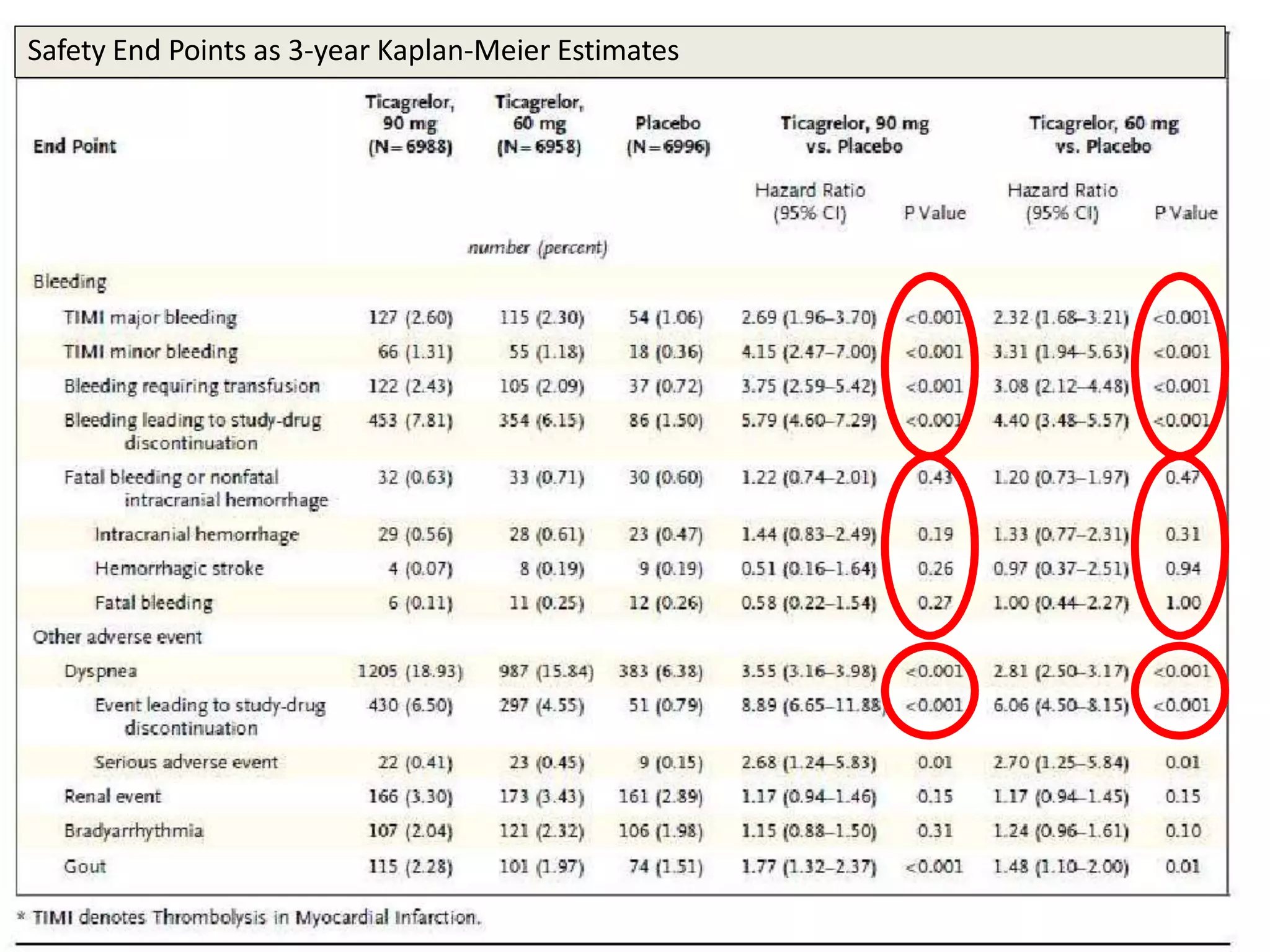
Safety End Points as 3-year Kaplan-Meier Estimates
Addition of ticagrelor, at a dose of 90 mg twice daily or 60
mg twice daily, to low-dose aspirin reduced the risk of
cardiovascular death, myocardial infarction, or stroke and
increased the risk of TIMI major bleeding among patients
who had MI 1 to 3 years earlier.
Conclusion
Examining Use of Ticagrelor in Peripheral
Artery Disease (EUCLID) - 2016
This article was published on November 13, 2016, at NEJM.org.
Basis
 Clopidogrel monotherapy shown to be more effective
than aspirin monotherapy in reducing CV events in
patients with PAD.
Hypothesis
 Monotherapy with ticagrelor would be superior to
clopidogrel in preventing CV events in patients with
symptomatic peripheral artery disease
EUCLID
• CV death, MI, or ischemic stroke:
10.8% - ticagrelor vs 10.6% - clopidogrel (p = 0.65)
• Acute limb ischemia:
1.7% - ticagrelor vs 1.7% with clopidogrel
• Major bleeding:
1.6% with ticagrelor vs. 1.6% with clopidogrel
• Dyspnea resulting in drug discontinuation:
4.8% - ticagrelor vs 0.8% - clopidogrel (p < 0.001)
Trial design: Patients with peripheral arterial disease (PAD) randomized to
ticagrelor 90 mg BID (n = 6,930) vs. clopidogrel 75 mg QD (n = 6,955). (28 countries)
Results
Conclusions
•In patients with symptomatic PAD, ticagrelor was
not superior to clopidogrel in preventing MACE
•Acute limb ischemia and major bleeding were also
similar between treatment groups
Hiatt WR, et al. N Engl J Med 2017;376:32-40
Ticagrelor Clopidogrel
%
(p = 0.65)
10.8 10.6
TREAT: (2018)
Ticagrelor Versus Clopidogrel After
Thrombolytic Therapy In Patients With
St-elevation Myocardial Infarction
Available at jama.com and on The JAMA Network Reader at
mobile.jamanetwork.com
The Writing Committee for the
TREAT Study Group
Ticagrelor vs Clopidogrel After
Fibrinolytic Therapy in Patients With
ST-Elevation Myocardial Infarction:
A Randomized Clinical Trial
Published online March 11, 2018
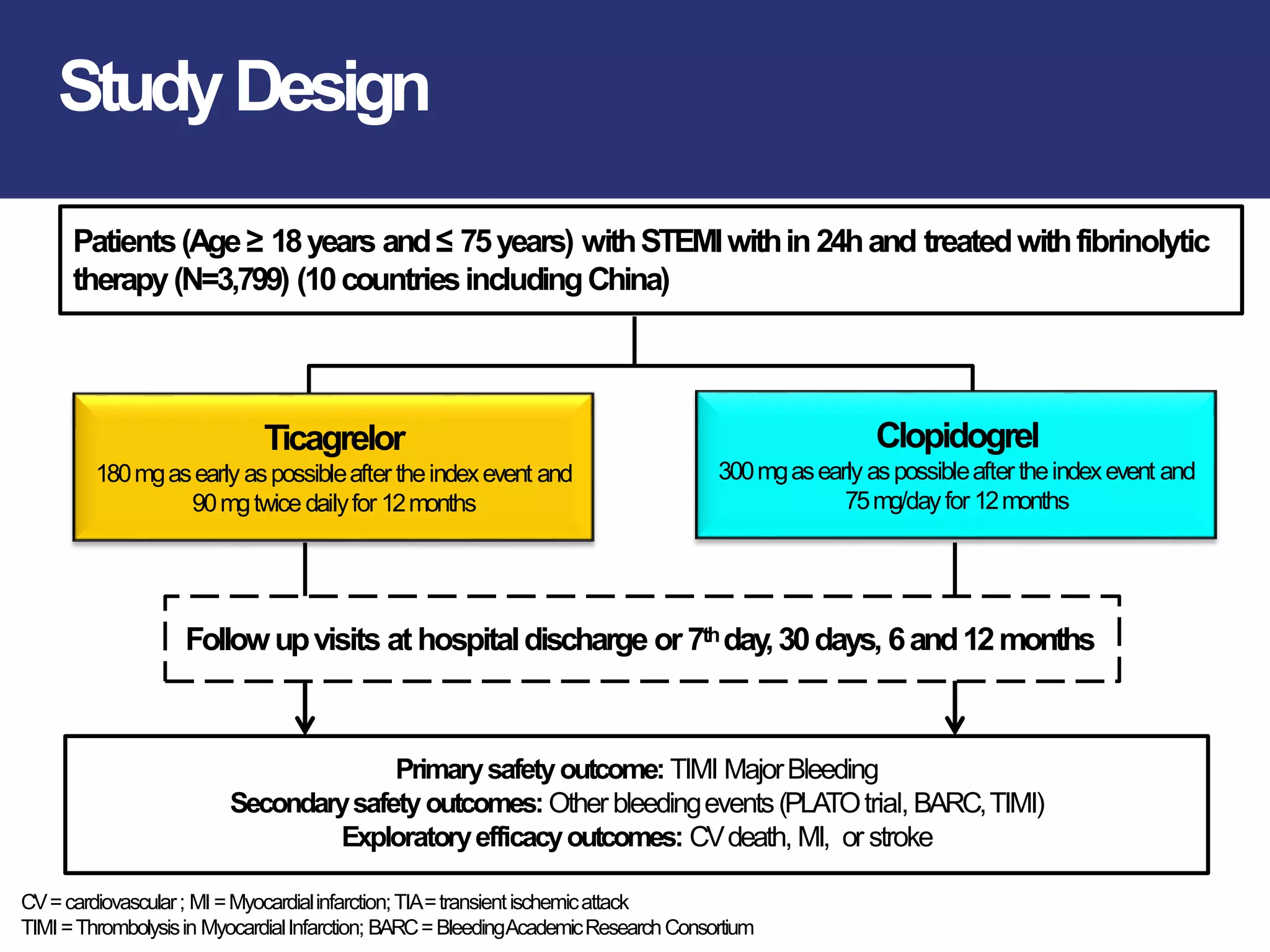
Patients(Age≥ 18years and≤ 75years) withSTEMIwithin 24hand treatedwithfibrinolytic
therapy(N=3,799) (10countriesincludingChina)
Ticagrelor
180mgasearly aspossibleaftertheindexevent and
90mgtwicedailyfor 12months
Clopidogrel
300mgasearly aspossibleaftertheindexevent and
75mg/dayfor 12months
Followupvisits at hospitaldischarge or7thday,30days, 6and12months
Primarysafetyoutcome: TIMI MajorBleeding
Secondarysafetyoutcomes: Other bleedingevents(PLATOtrial, BARC,TIMI)
Exploratoryefficacyoutcomes: CVdeath, MI, or stroke
CV=cardiovascular; MI =Myocardialinfarction;TIA=transientischemicattack
TIMI=Thrombolysisin MyocardialInfarction; BARC=BleedingAcademicResearchConsortium
StudyDesign
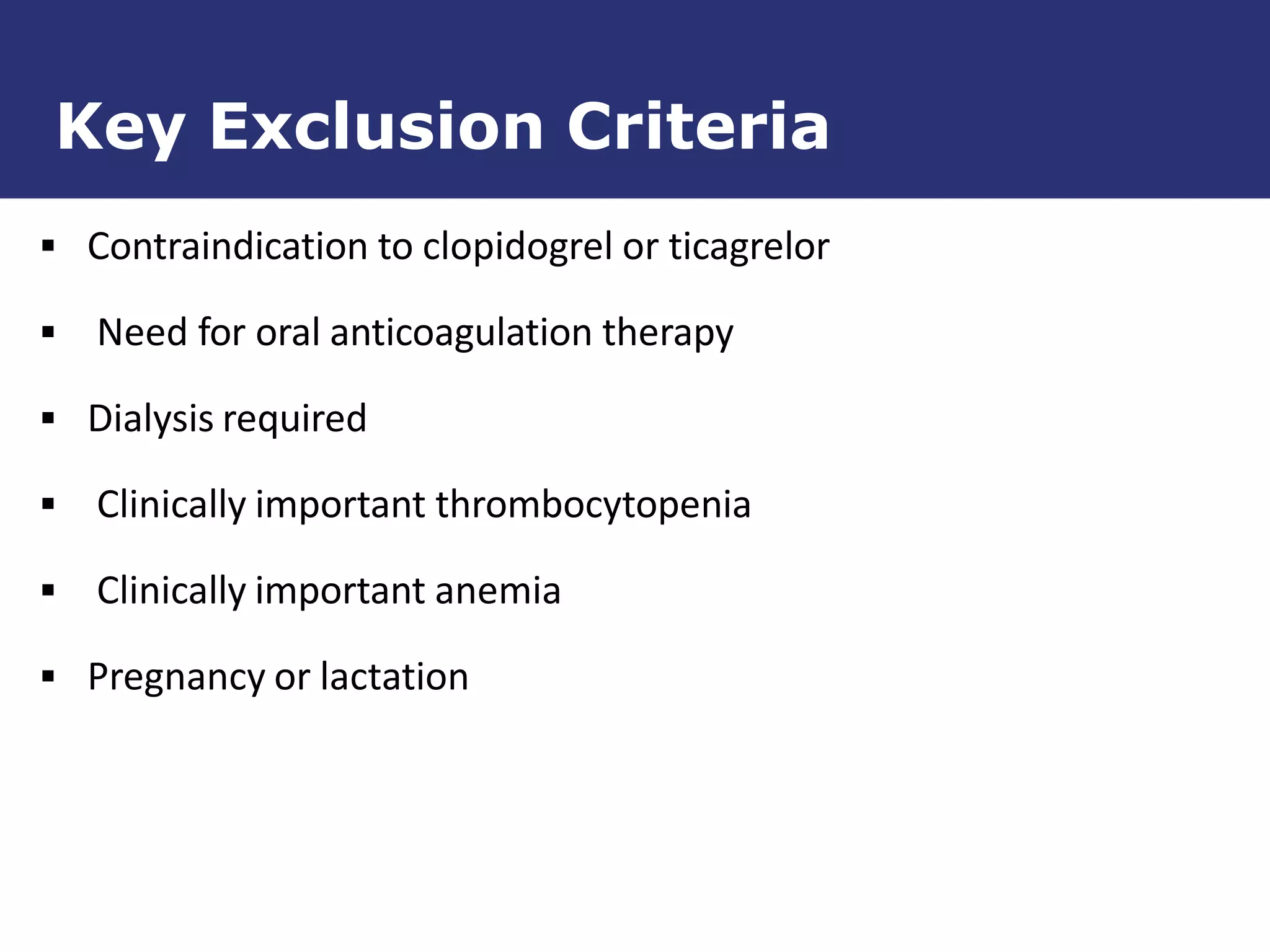
 Contraindication to clopidogrel or ticagrelor
 Need for oral anticoagulation therapy
 Dialysis required
 Clinically important thrombocytopenia
 Clinically important anemia
 Pregnancy or lactation
Key Exclusion Criteria
Outcomesat30days
Ticagrelor Clopidogrel Hazard Ratio
P Value
(n=1,913) (n=1,886) (95% CI)
Death from vascular causes, MI, or
stroke
4.0 4.3 0.91 (0.67 to
1.25)
0.57
Death or MI 3.2 3.6 0.90 (0.63 to
1.27)
0.54
MI or stroke 2.0 2.3 0.85 (0.55 to
1.31)
0.47
Death (from vascular causes) 2.5 2.6 0.95 (0.63 to
1.41)
0.79
Total MI 1.0 1.3 0.79 (0.44 to
1.42)
0.43
Total stroke 0.9 1.1 0.89 (0.47 to
1.68)
0.71
Other arterial thrombotic events 0.1 0.2 0.33 (0.03 to
3.16)
0.34
Death (from any cause) 2.6 2.6 0.99(0.66to 1.47) 0.95
Exploratory Efficacy Outcomes
 Patients aged ≤ 75 yrs with STEMI, administration of ticagrelor after
fibrinolytic therapy was noninferior to clopidogrel for TIMI major
bleeding at 30 days.
 Total bleeding was increased with ticagrelor and there was no
benefit on exploratory efficacy outcomes.
 Ticagrelor is a reasonable option for patients ≤ 75 years who have
received fibrinolytic therapy (and clopidogrel) within the past 24
hours, with comparable safety compared to clopidogrel.
Conclusions and Implications
SETFAST: The Safety and Efficacy of Ticagrelor
for Coronary Stenting Post Thrombolysis Trial.
Patients(Age≥ 18yearsand≤ 75years) withSTEMItreatedwithfibrinolytictherapyand
plannedforPCI
Ticagrelor
180mgasearly aspossibleaftertheindexevent and
90mgtwicedailyfor 12months
Clopidogrel
300mgasearly aspossibleaftertheindexevent and
75mg/dayfor 12months
RESULTS AWAITED
Summary
 Dual antiplatelet therapy improves outcomes for patients
with ACS
 Strong evidence for replacing clopidogrel with ticagrelor in
patients with ACS undergiong PCI comes from PLATO
study.
 The above statement also holds true for Indian population.
 Replacing clopidogrel with either ticagrelor or prasugrel
improves outcomes to similar magnitude BUT at a cost of
increased bleeding
 Patient characteristics and revascularization method affect
drug choice
Thank You..

Ticagrelor PROPERTIES AND TRIALS

  • 1.
  • 2.
    Past...  Clopidogrel remainedthe gold standard along with aspirin for several years of DAPT  Participated in the wide expansion of percutaneous coronary intervention(PCI).
  • 3.
    Why newer P2Y12antagonist were needed
  • 4.
    Why newer P2Y12antagonist were needed  Stent thrombosis continued to occur, leading investigators to suspect clopidogrel "resistance."  Studies showed that clopidogrel, • pro-drug • short-lived active metabolite, • mild potency, • slow onset of action, and • large inter-individual variability.  These limitations were associated with adverse ischemic events including stent thrombosis Postgraduate Medicine, Volume 125, Issue 4, July 2013:1941-9260
  • 5.
    To present! receptor Since then,new P2Y12-ADP antagonists, have been developed • Prasugrel • Ticagrelor and • Cangrelor
  • 6.
    Ticagrelor (AZD 6140): anoral reversible P2Y12 antagonist Ticagrelor is a cyclo-pentyl-triazolo-pyrimidine (CPTP) H O H O O O H N F S H N N N N N F
  • 7.
    Metabolism of P2Y12Receptor Antagonists Schomig A. NEJM. 2009;361(11):1108-1111. Postgraduate Medicine, Volume 125, Issue 4, July 2013:1941-9260 CYP3A4/5 Ketoconazole Clarithromycin Nefazadone ritonavir and atazanavir - P-glycoprotein CYP2C19
  • 8.
     Direct acting •does not require metabolic activation • Rapid onset of inhibitory effect (0.5 – 4 hrs) on the P2Y12 receptor than clopidogrel (2 – 8 hrs) • Greater inhibition of platelet aggregation (90%) than clopidogrel (60%)  Reversibly bound • Degree of inhibition reflects plasma concentration • Faster offset of effect than clopidogrel • Functional recovery of all circulating platelets  Eliminated via hepatic metabolism T1/2 - 7.2 hrs, whereas active metabolite via biliary excretion T1/2 8.5 hours. Circulation. 2017;136:1955–1975. DOI: 10.1161/CIRCULATIONAHA.117.031164 Postgraduate Medicine, Volume 125, Issue 4, July 2013:1941-9260
  • 9.
    Unique characteristic • abilityto increase adenosine levels; it being a precursor of adenosine o anti-inflammatory, o cardioprotective, o cerebroprotective, o antisclerotic, and o antifibrotic properties. o coronary vasodilator. Postgraduate Medicine, Volume 125, Issue 4, July 2013:1941-9260
  • 10.
    Properties of P2Y12Receptor Antagonists Clopidogrel Prasugrel Ticagrelor Metabolic Activation Yes Yes No throughCYP2C19 sensitive to polymorphisms less sensitive to polymorphisms and drug interactions and drug interactions Indications ACS, PCI, PAD, CVD PCI ACS, PCI Loading/Maintenance 300 mg /75 mg OD 60 mg/10 mg OD 180 mg/90 mg BID Dosing Inhibition Irreversible Irreversible Reversible Efficacy ++ • Further 2% ARR over ASA +++ • Further 2% ARR over clopidogrel + +++ • Further 2% ARR over monotherapy ASA clopidogrel + ASA Bleeding risk + ++ ++ Issues • Rash 4.2% observed in clinical trials leading to 0.5% drug discontinuation • Further increased bleeding risk in: Prior Stroke / TIA < 60 Kg >75 yrs • Increasedfatal bleeding • Dyspnea (14%) • Ventricular pause • Hyperuricemia • Slight increasedCr
  • 11.
    Adverse Effects >10% Dyspnoes (13.8&) Bleeding(Continued…) 1-10% Dizziness (4.5%) Ventricular Pauses (6.0%) Uricemia (2.4%) Renal Dysfunction (2.1%) Diarrhoea (3.7%) Nausea (4.3%)
  • 12.
    PLATO:Platelet Inhibition andPatient Outcomes (Ticagrelor vs Clopidogrel)
  • 13.
    Study design:  Patientswith high risk ACS(NSTE/STEMI) within 24 hrs.  All patients received standard therapy, including ASA  Excluded patients receiving fibrinolytics  Randomized to ticagrelor 180 mg load followed by 90 mg bid or clopidogrel 300 mg load followed by 75 mg daily  n=18,624 (43 countries including India and China) Wallentin L, et al. N Engl J Med. 2009;361(11):1045-1057.
  • 14.
    PLATO inclusion criteria •Hospitalisation for STEMI or NSTEMI ACS, with onset during the previous 24 hours • With STEMI, the following two inclusion criteria were required  Persistent STEMI or new LBBB  Primary PCI planned • With NSTEMI ACS, at least two of the following three were required  ST-segment changes on ECG indicating ischaemia  Positive biomarker indicating myocardial necrosis  One of the following risk indicators • ≥60 years of age • Previous MI or CABG • CAD with ≥50% stenosis in ≥2 vessels • Previous ischaemic stroke, TIA, carotid stenosis (≥50%) • Diabetes mellitus • Peripheral artery disease • Chronic renal dysfunction (creatinine clearance <60 mL/min)
  • 15.
    Endpoints  Primary endpoint:CV death + MI + Stroke  Primary safety endpoint: Total major bleeding
  • 16.
    K-M estimate oftime to 1st primary efficacy event (PLATO) 0 60 120 Days after randomisation 180 240 300 360 13 12 11 10 9 8 7 6 5 4 3 2 1 0 Cumulative incidence (%) 9.8 11.7 HR 0.84 (95% CI 0.77–0.92), p=0.0003 Clopidogrel Ticagrelor ARR 1.9% NNT 53 Non CABG major bleeding: 4.5 vs 3.8% NNH 143 No difference in fatal bleeding
  • 17.
    Holter monitoring &Bradycardia related events Holter monitoring at first week Ticagrelor (n=1,451) Clopidogrel (n=1,415) p value Ventricular pauses ≥3 seconds, % Ventricular pauses ≥5 seconds, % 5.8 2.0 3.6 1.2 0.01 0.10 Holter monitoring at 30 days Ticagrelor (n= 985) Clopidogrel (n=1,006) p value Ventricular pauses ≥3 seconds, % 2.1 1.7 0.52 Ventricular pauses ≥5 seconds, % 0.8 0.6 0.60 Bradycardia-related event, % Ticagrelor (n=9,235) Clopidogrel (n=9,186) p value Pacemaker Insertion 0.9 0.9 0.87 Syncope 1.1 0.8 0.08 Bradycardia 4.4 4.0 0.21 Heart block 0.7 0.7 1.00
  • 18.
    Other findings All patients TicagrelorClopidogrel (n=9,235) (n=9,186) p value* Dyspnoea, % Any With discontinuation of study treatment 13.8 0.9 7.8 0.1 <0.001 <0.001 *p values were calculated using Fischer’s exact test
  • 19.
    Other findings –laboratory parameters All patients Ticagrelor Clopidogrel (n=9,235) (n=9,186) p value* % increase in creatinine from baseline At 1 month At 12 months Follow-up visit 10  22 11  22 10  22 8  21 9  22 10  22 <0.001 <0.001 0.59 % increase in uric acid from baseline At 1 month At 12 months Follow-up visit 14  46 15  52 7  43 7  44 7  31 8  48 <0.001 <0.001 0.56 Values are mean %  SD; *p values were calculated using Fisher’s exact test
  • 20.
    Time to majorbleeding – primary safety event 0 60 120 180 240 Days from first IP dose 300 360 10 5 0 15 Clopidogrel Ticagrelor 11.58 11.20 No. at risk Ticagrelor 9,235 7,246 6,826 6,545 5,129 3,783 3,433 Clopidogrel 9,186 7,305 6,930 6,670 5,209 3,841 3,479 HR 1.04 (95% CI 0.95–1.13), p=0.434 K-M estimated rate (% per year)
  • 21.
    Total major bleeding NS NS NS NS NS K-M estimated rate (% per year) PLATOmajor bleeding 12 11 10 9 8 7 6 5 4 3 2 1 0 TIMI major bleeding Red cell transfusion* PLATO life- threatening/ Fatal bleeding fatal bleeding Major bleeding and major or minor bleeding according to TIMI criteria refer to non-adjudicated events analysed with the use of a statistically programmed analysis in accordance with definition described in Wiviott SD et al. NEJM 2007;357:2001–15;*Proportion of patients (%); 11.6 11.2 7.9 7.7 8.9 8.9 5.8 5.8 0.3 0.3 Ticagrelor Clopidogrel
  • 22.
    Conclusions (PLATO) • Ticagrelorin comparison with clopidogrel in a broad population with ST- and non-ST-elevation ACS provides  Reduction in myocardial infarction and stent thrombosis  Reduction in cardiovascular and total mortality  No change in the overall risk of major bleeding Ticagrelor is a more effective alternative than clopidogrel for the continuous prevention of ischaemic events, stent thrombosis and death in the acute and long-term treatment of patients with ACS
  • 23.
    Prevention of CardiovascularEvents in Patients with Prior Heart Attack Using Ticagrelor Compared to Placebo on a Background of Aspirin–TIMI 54 (PEGASUS-TIMI 2015)
  • 24.
    Design of PEGASUS-TIMI54 Stable pts with history of MI 1-3 yrs prior + 1 additional atherothrombosis risk factor* Ticagrelor 90 mg bid Placebo Follow-up Visits Q4 mos for 1st yr, then Q6 mos Planned treatment withASA 75 – 150 mg & Standard background care * Age >65 yrs, diabetes, 2nd prior MI, multivessel CAD, or chronic non-end stage renal dysfunction (Crcl <60ml/min) Minimum 1 year follow-up Event-driven trial Ticagrelor 60 mg bid RANDOMIZED DOUBLE BLIND N=21,162 (33 countries) Follow up – 33 months
  • 25.
    Exclusion criteria • Planneduse of a P2Y12 receptor antagonist (dipyridamole, cilostazol) or anticoagulant therapy • bleeding disorder • H/o ischemic stroke or intracranial bleeding, • CNS tumor, • intracranial vascular abnormality • GI bleeding within 6 months or • major surgery within 30 days.
  • 26.
    PEGASUS TIMI- 54Overall Results
  • 27.
    Safety End Pointsas 3-year Kaplan-Meier Estimates
  • 28.
    Addition of ticagrelor,at a dose of 90 mg twice daily or 60 mg twice daily, to low-dose aspirin reduced the risk of cardiovascular death, myocardial infarction, or stroke and increased the risk of TIMI major bleeding among patients who had MI 1 to 3 years earlier. Conclusion
  • 29.
    Examining Use ofTicagrelor in Peripheral Artery Disease (EUCLID) - 2016 This article was published on November 13, 2016, at NEJM.org.
  • 30.
    Basis  Clopidogrel monotherapyshown to be more effective than aspirin monotherapy in reducing CV events in patients with PAD. Hypothesis  Monotherapy with ticagrelor would be superior to clopidogrel in preventing CV events in patients with symptomatic peripheral artery disease
  • 31.
    EUCLID • CV death,MI, or ischemic stroke: 10.8% - ticagrelor vs 10.6% - clopidogrel (p = 0.65) • Acute limb ischemia: 1.7% - ticagrelor vs 1.7% with clopidogrel • Major bleeding: 1.6% with ticagrelor vs. 1.6% with clopidogrel • Dyspnea resulting in drug discontinuation: 4.8% - ticagrelor vs 0.8% - clopidogrel (p < 0.001) Trial design: Patients with peripheral arterial disease (PAD) randomized to ticagrelor 90 mg BID (n = 6,930) vs. clopidogrel 75 mg QD (n = 6,955). (28 countries) Results Conclusions •In patients with symptomatic PAD, ticagrelor was not superior to clopidogrel in preventing MACE •Acute limb ischemia and major bleeding were also similar between treatment groups Hiatt WR, et al. N Engl J Med 2017;376:32-40 Ticagrelor Clopidogrel % (p = 0.65) 10.8 10.6
  • 32.
    TREAT: (2018) Ticagrelor VersusClopidogrel After Thrombolytic Therapy In Patients With St-elevation Myocardial Infarction
  • 33.
    Available at jama.comand on The JAMA Network Reader at mobile.jamanetwork.com The Writing Committee for the TREAT Study Group Ticagrelor vs Clopidogrel After Fibrinolytic Therapy in Patients With ST-Elevation Myocardial Infarction: A Randomized Clinical Trial Published online March 11, 2018
  • 34.
    Patients(Age≥ 18years and≤75years) withSTEMIwithin 24hand treatedwithfibrinolytic therapy(N=3,799) (10countriesincludingChina) Ticagrelor 180mgasearly aspossibleaftertheindexevent and 90mgtwicedailyfor 12months Clopidogrel 300mgasearly aspossibleaftertheindexevent and 75mg/dayfor 12months Followupvisits at hospitaldischarge or7thday,30days, 6and12months Primarysafetyoutcome: TIMI MajorBleeding Secondarysafetyoutcomes: Other bleedingevents(PLATOtrial, BARC,TIMI) Exploratoryefficacyoutcomes: CVdeath, MI, or stroke CV=cardiovascular; MI =Myocardialinfarction;TIA=transientischemicattack TIMI=Thrombolysisin MyocardialInfarction; BARC=BleedingAcademicResearchConsortium StudyDesign
  • 35.
     Contraindication toclopidogrel or ticagrelor  Need for oral anticoagulation therapy  Dialysis required  Clinically important thrombocytopenia  Clinically important anemia  Pregnancy or lactation Key Exclusion Criteria
  • 36.
    Outcomesat30days Ticagrelor Clopidogrel HazardRatio P Value (n=1,913) (n=1,886) (95% CI) Death from vascular causes, MI, or stroke 4.0 4.3 0.91 (0.67 to 1.25) 0.57 Death or MI 3.2 3.6 0.90 (0.63 to 1.27) 0.54 MI or stroke 2.0 2.3 0.85 (0.55 to 1.31) 0.47 Death (from vascular causes) 2.5 2.6 0.95 (0.63 to 1.41) 0.79 Total MI 1.0 1.3 0.79 (0.44 to 1.42) 0.43 Total stroke 0.9 1.1 0.89 (0.47 to 1.68) 0.71 Other arterial thrombotic events 0.1 0.2 0.33 (0.03 to 3.16) 0.34 Death (from any cause) 2.6 2.6 0.99(0.66to 1.47) 0.95 Exploratory Efficacy Outcomes
  • 37.
     Patients aged≤ 75 yrs with STEMI, administration of ticagrelor after fibrinolytic therapy was noninferior to clopidogrel for TIMI major bleeding at 30 days.  Total bleeding was increased with ticagrelor and there was no benefit on exploratory efficacy outcomes.  Ticagrelor is a reasonable option for patients ≤ 75 years who have received fibrinolytic therapy (and clopidogrel) within the past 24 hours, with comparable safety compared to clopidogrel. Conclusions and Implications
  • 38.
    SETFAST: The Safetyand Efficacy of Ticagrelor for Coronary Stenting Post Thrombolysis Trial. Patients(Age≥ 18yearsand≤ 75years) withSTEMItreatedwithfibrinolytictherapyand plannedforPCI Ticagrelor 180mgasearly aspossibleaftertheindexevent and 90mgtwicedailyfor 12months Clopidogrel 300mgasearly aspossibleaftertheindexevent and 75mg/dayfor 12months RESULTS AWAITED
  • 39.
    Summary  Dual antiplatelettherapy improves outcomes for patients with ACS  Strong evidence for replacing clopidogrel with ticagrelor in patients with ACS undergiong PCI comes from PLATO study.  The above statement also holds true for Indian population.  Replacing clopidogrel with either ticagrelor or prasugrel improves outcomes to similar magnitude BUT at a cost of increased bleeding  Patient characteristics and revascularization method affect drug choice
  • 40.