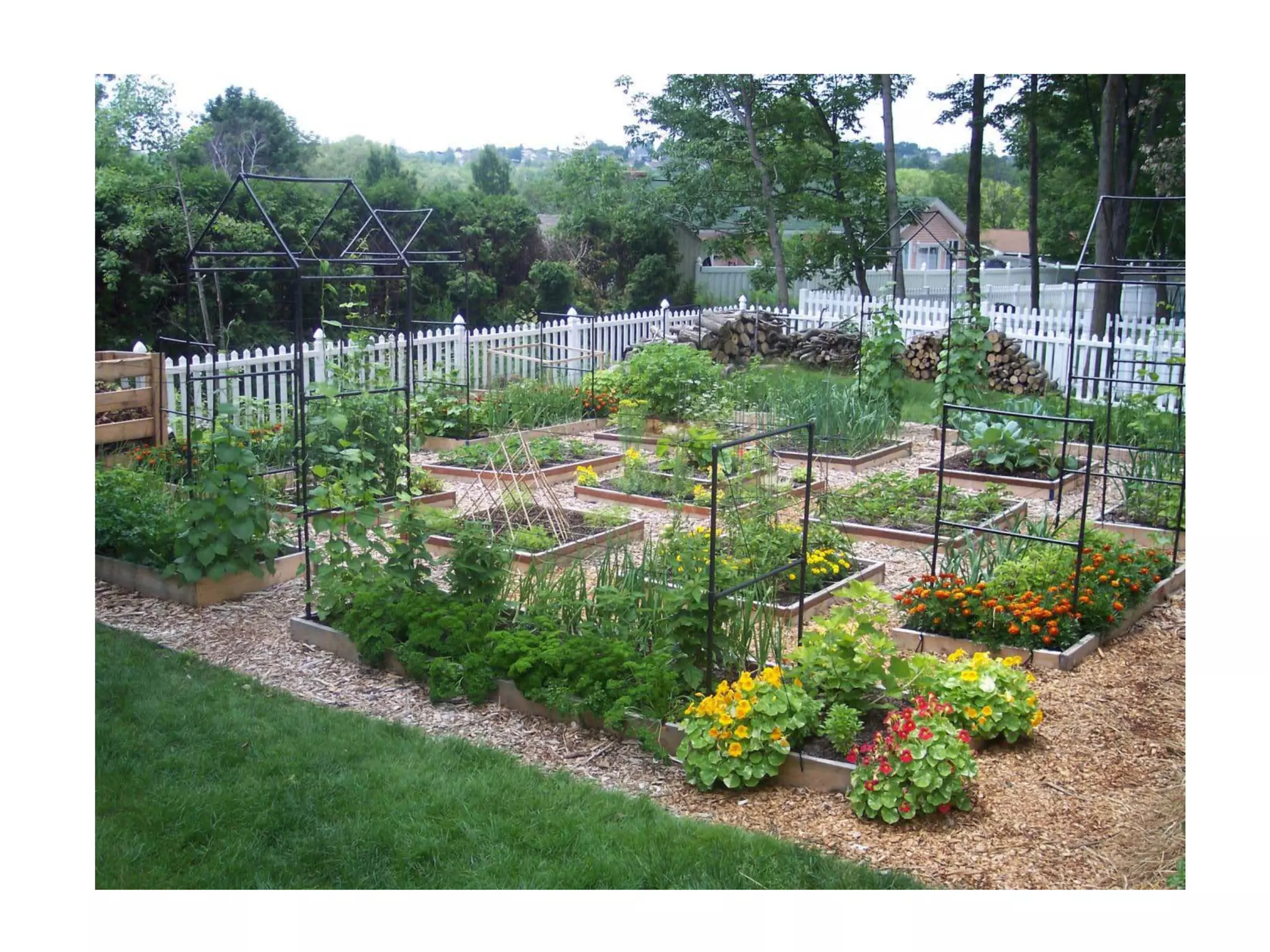
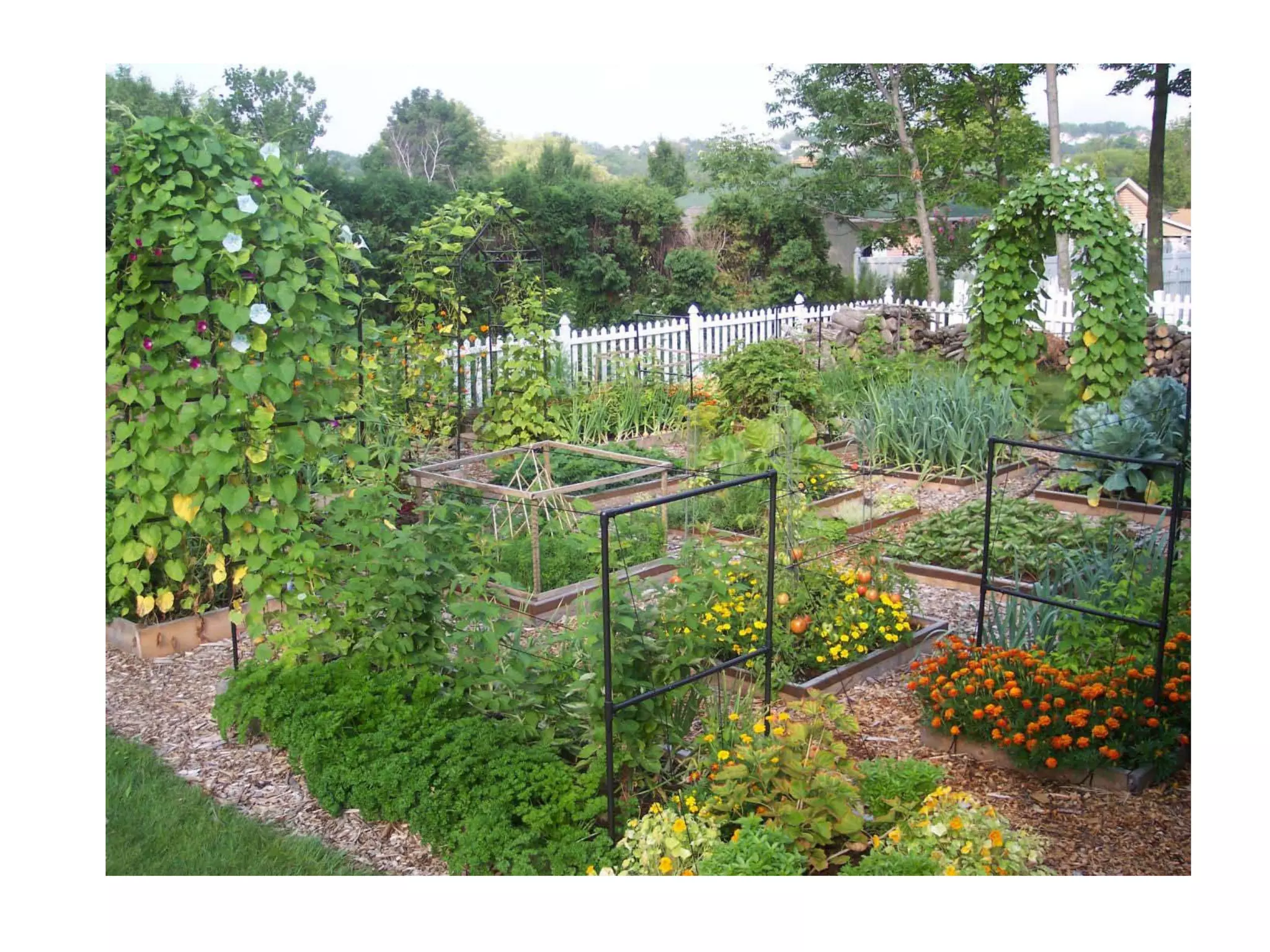
SQUARE FOOT
GARDENING FOUNDATION
        Presented by
        Carol Knepp
       March 24, 2010
      FOR MORE INFORMATION
    www.squarefootgardening.com
                or
           Carol Knepp
       kneppster@gmail.com
LOCATION
• Pick an area that gets 6-9 hours of sunshine
  daily.
• Stay clear of trees/shrubs where
  roots/shade may interfere.
• Have it close to the house for convenience
  and protection.
• Existing soil is not really important. You
  won’t be using it.
• Area must not puddle after a heavy rain.
The Ten Basics of
     Square Foot Gardening
1.   Layout        6. Care
2.   Boxes         7. Select
3.   Aisles        8. Plant
4.   Soil          9. Water
5.   Grid          10.Harvest
The Ten Basics of SFG
               1 - LAYOUT
Think in Squares – Not in Rows
Average garden size
  – 20’ X 35’=700 square feet
  – To grow the same amount, a SFG only
    needs 140 square feet to accomplish the
    same
The Ten Basics of SFG
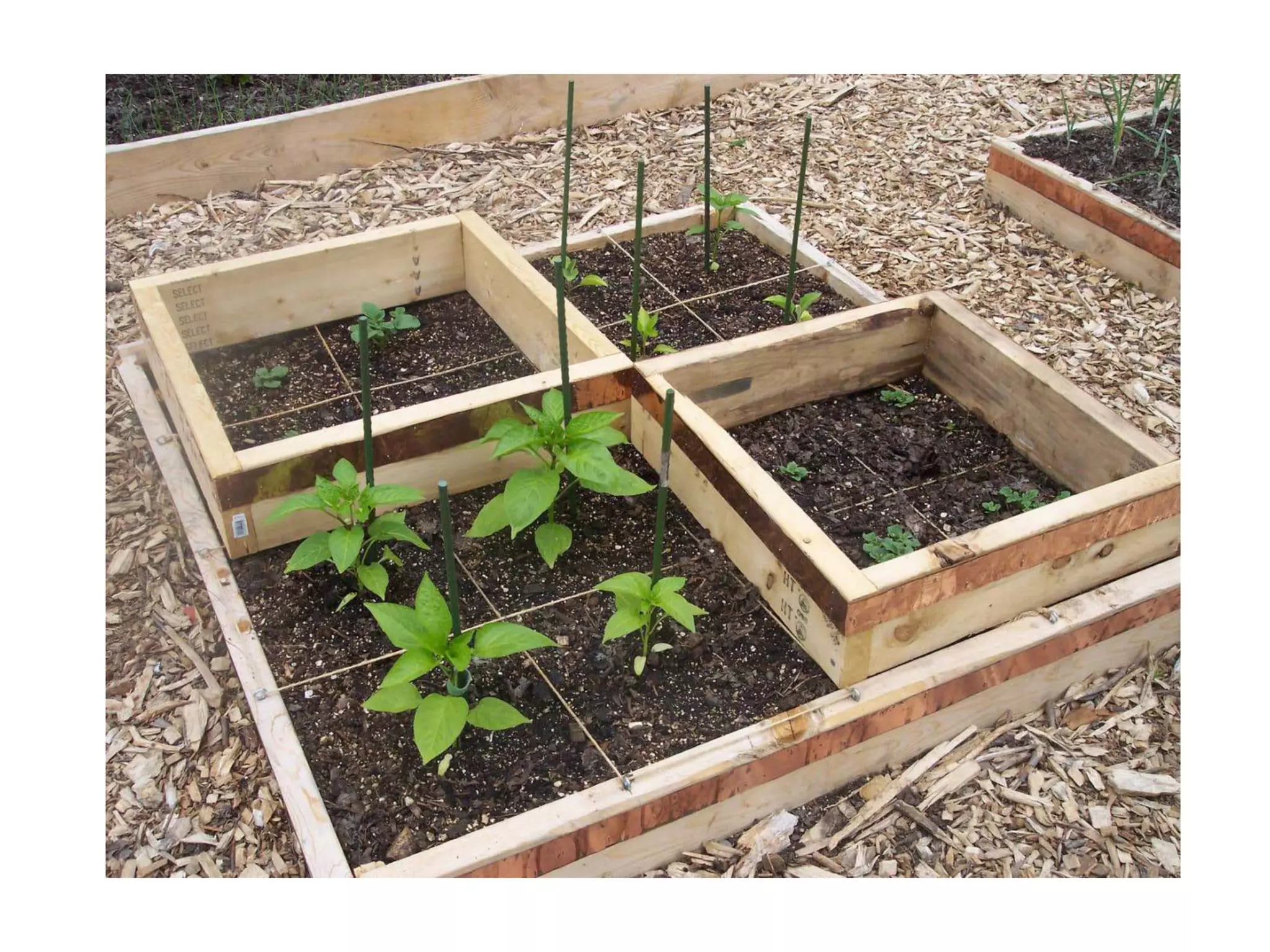
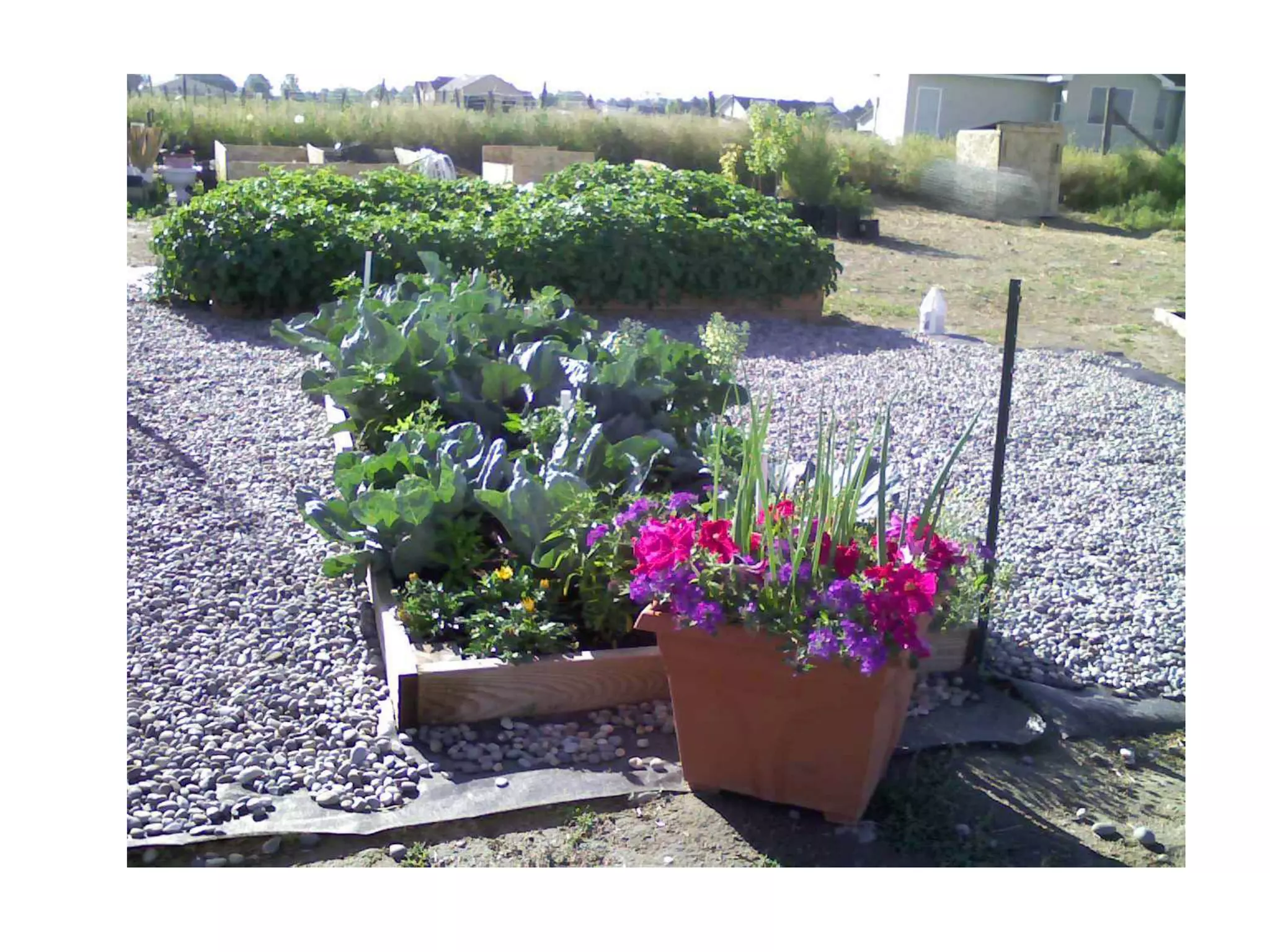
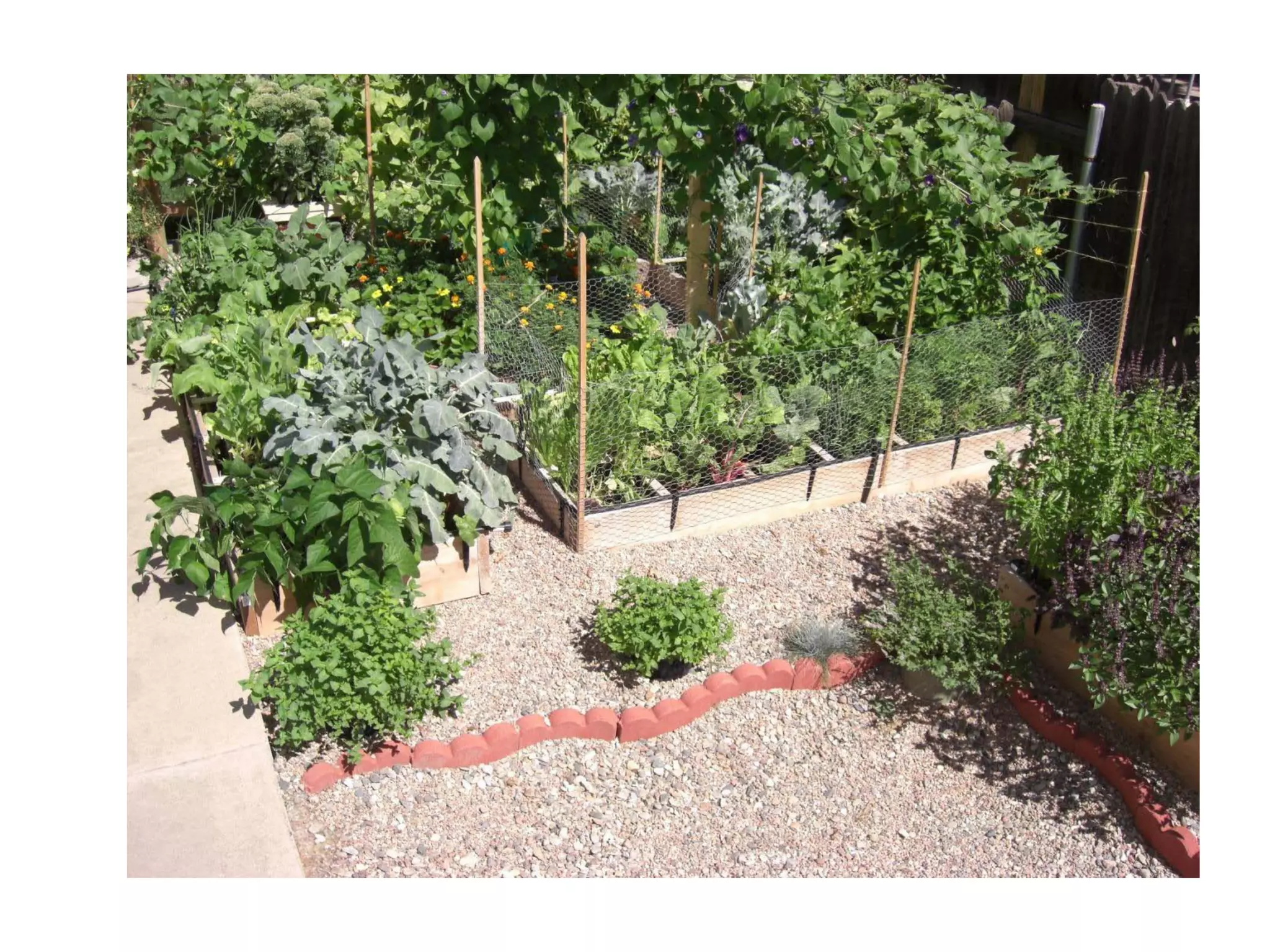
           2 – BOXES

  Build Square or Rectangular Boxes
to Hold a New Soil Mix Above Ground
       »Wood
       »Brick or Blocks
       »Vinyl
       »Stone
       »Bamboo
HOW MANY BOXES?
• Start Small - One or Two Boxes
• One 4 X 4 Box
  – Salad fixings for 1 person for the entire growing
    season
• Second 4 X 4 Box
  – Supply supper vegetables for 1-2 people for the
    entire growing season
• Third 4 X 4 Box
  – Supply vegetables for 1 person for storing,
    preserving or giving away
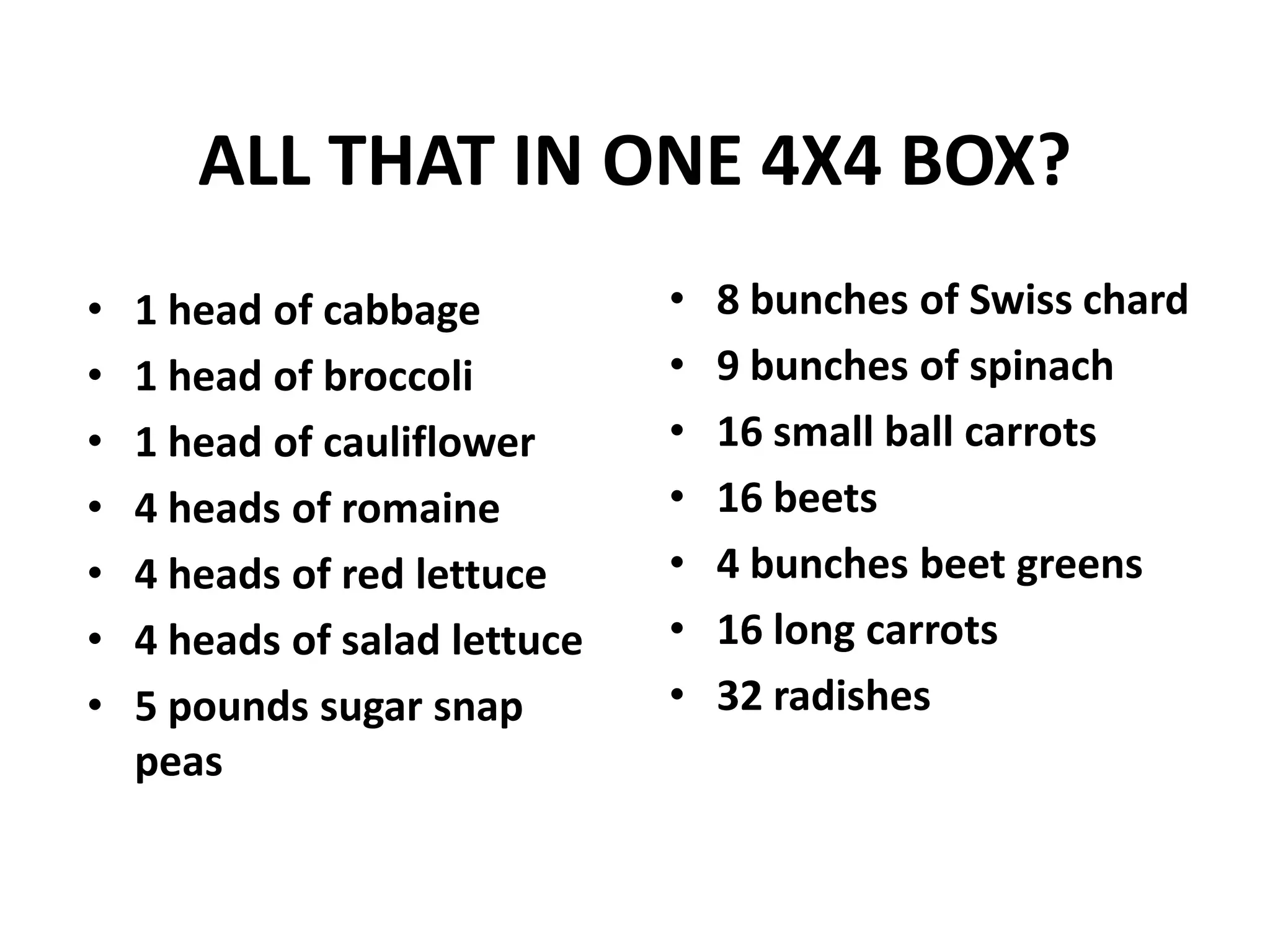
ALL THAT IN ONE 4X4 BOX?
•   1 head of cabbage          •   8 bunches of Swiss chard
•   1 head of broccoli         •   9 bunches of spinach
•   1 head of cauliflower      •   16 small ball carrots
•   4 heads of romaine         •   16 beets
•   4 heads of red lettuce     •   4 bunches beet greens
•   4 heads of salad lettuce   •   16 long carrots
•   5 pounds sugar snap        •   32 radishes
    peas
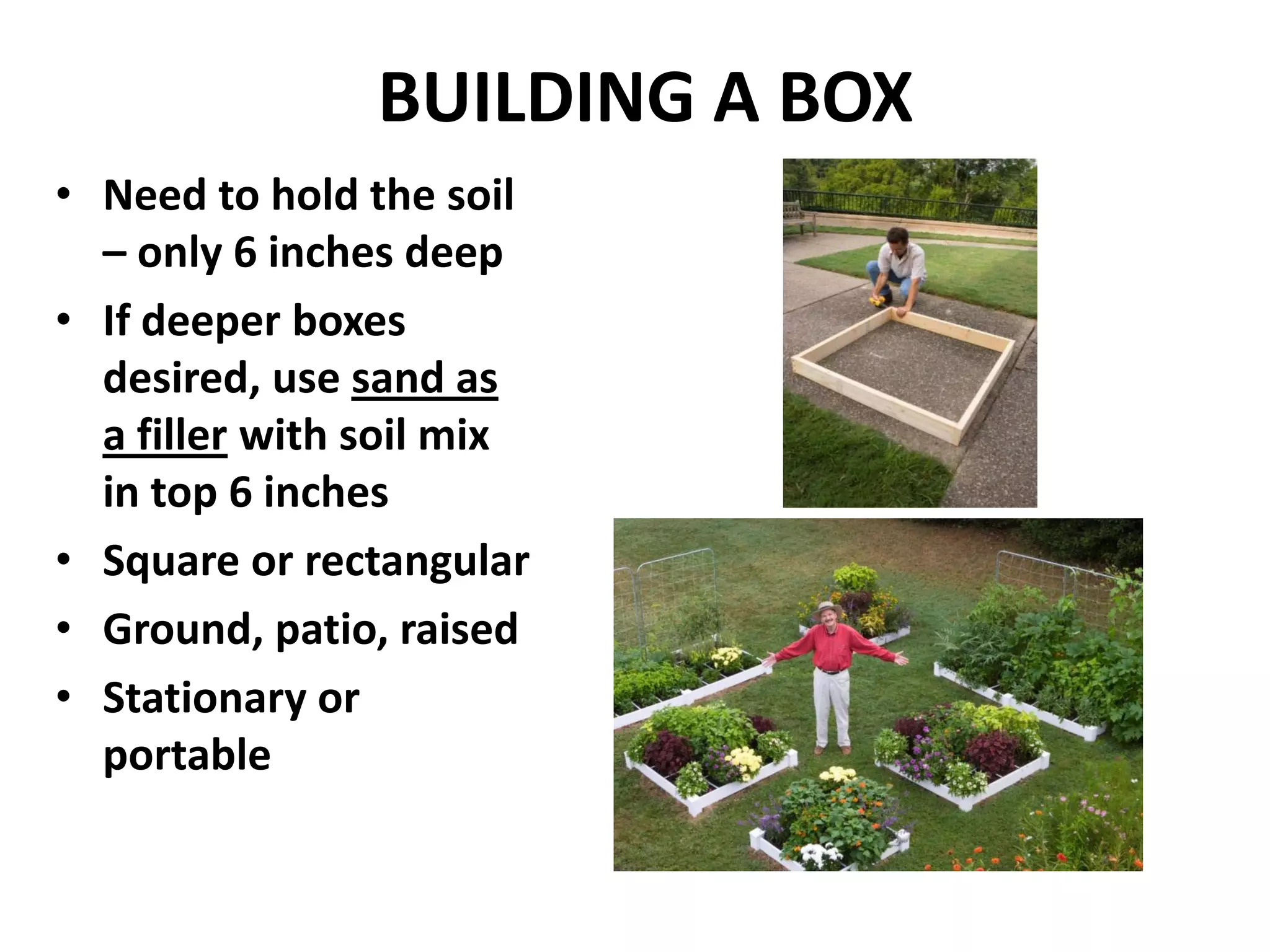
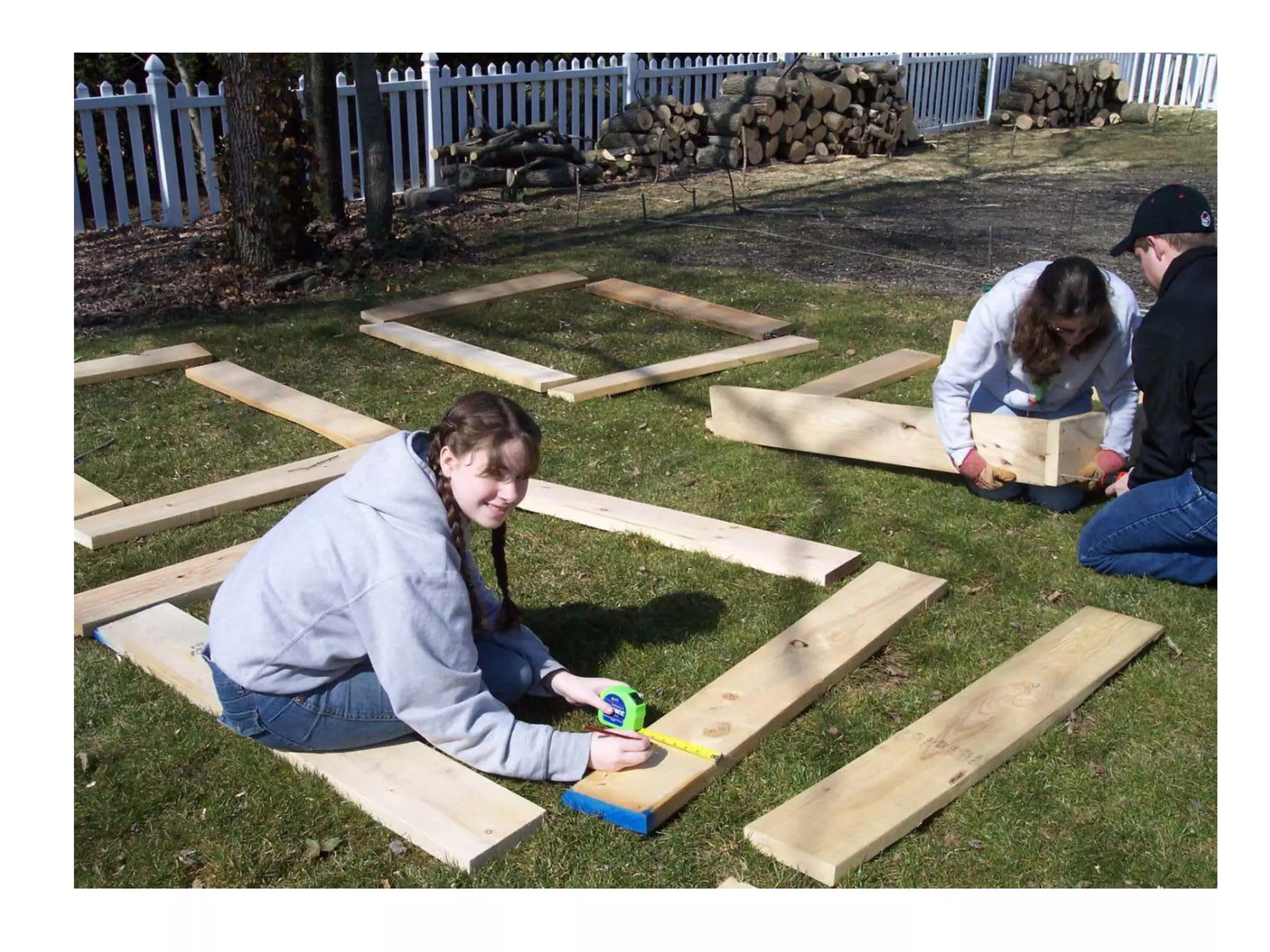
BUILDING A BOX
• Need to hold the soil
  – only 6 inches deep
• If deeper boxes
  desired, use sand as
  a filler with soil mix
  in top 6 inches
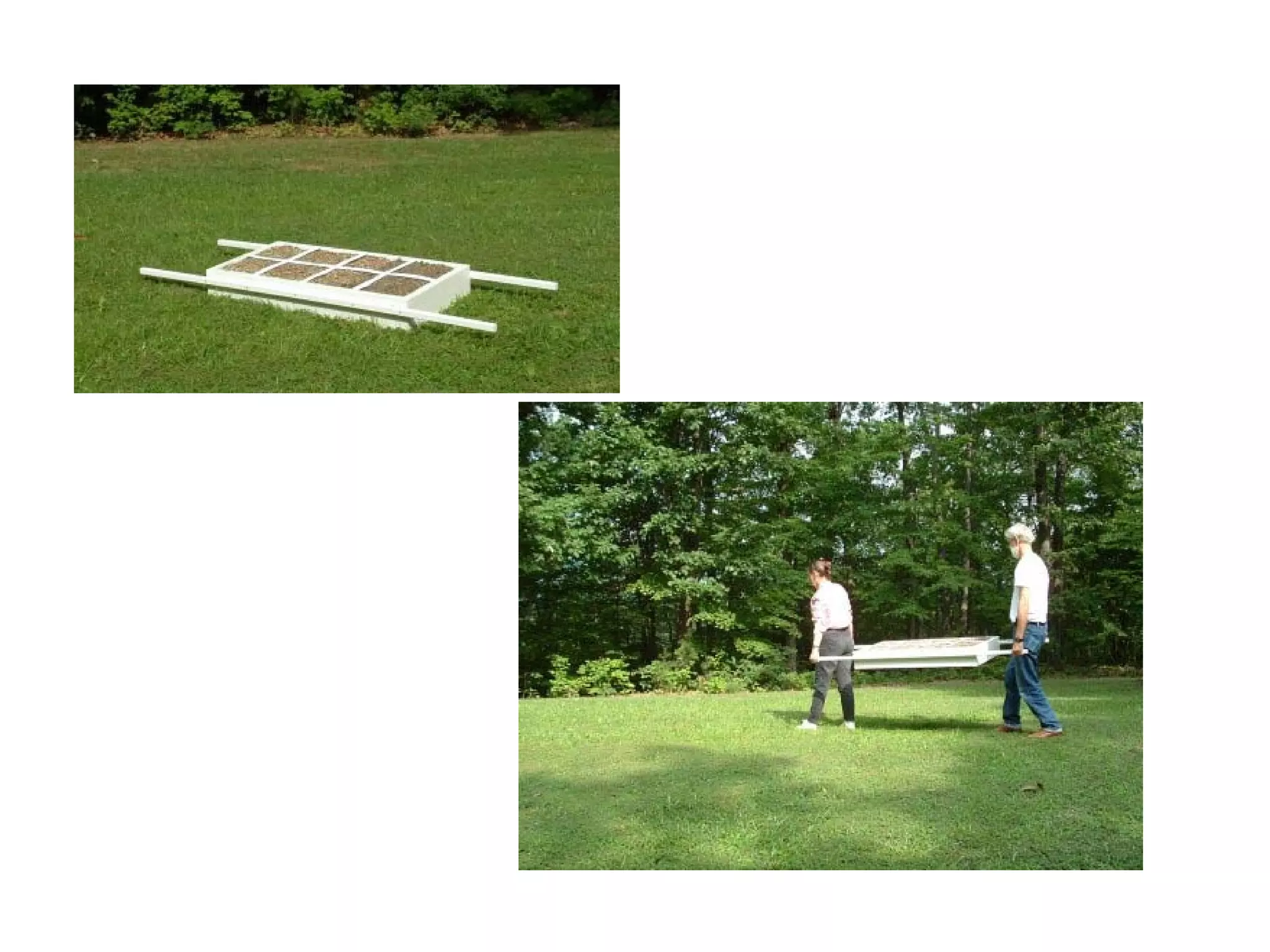
• Square or rectangular
• Ground, patio, raised
• Stationary or
  portable
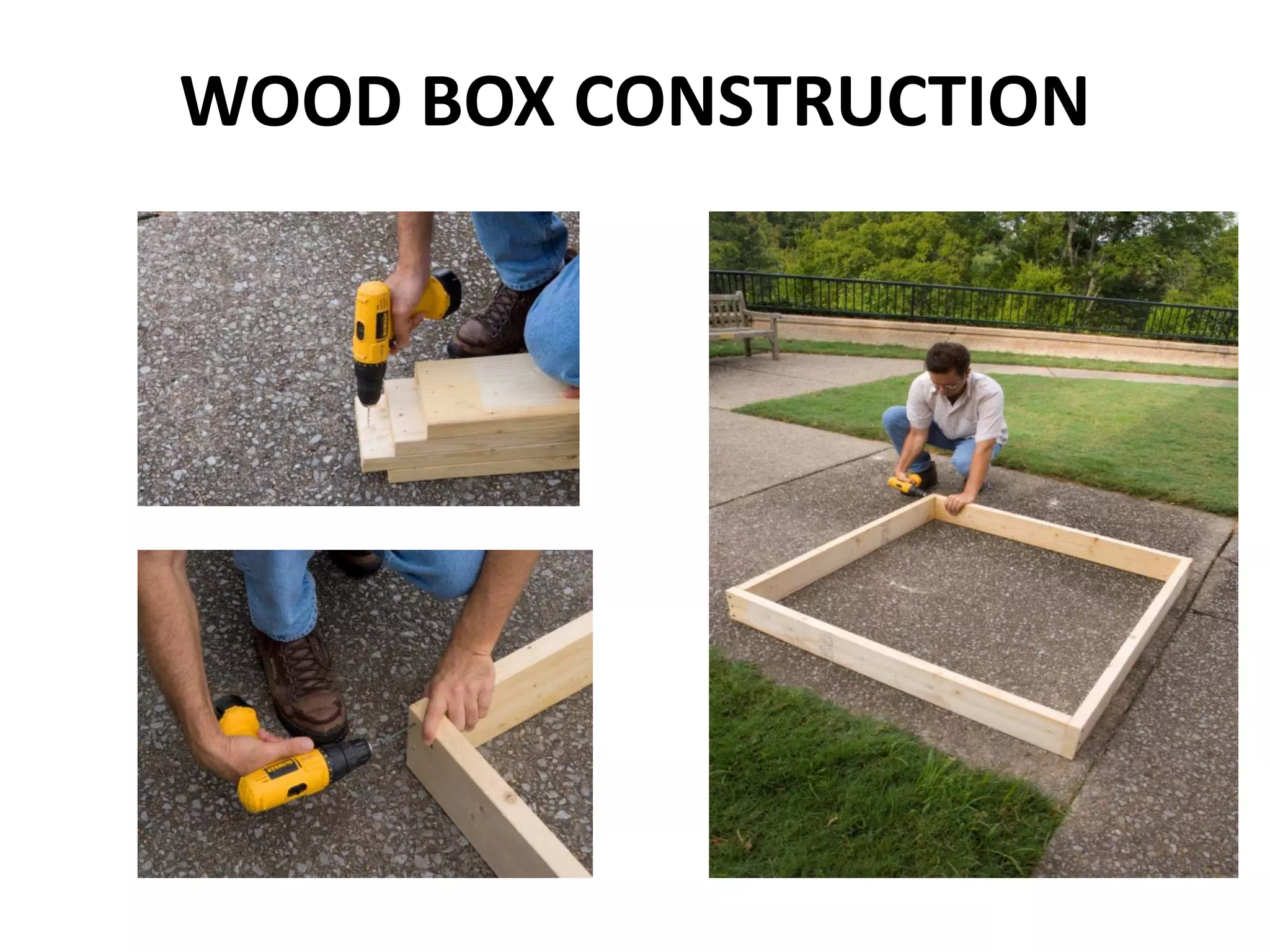
WOOD BOX CONSTRUCTION
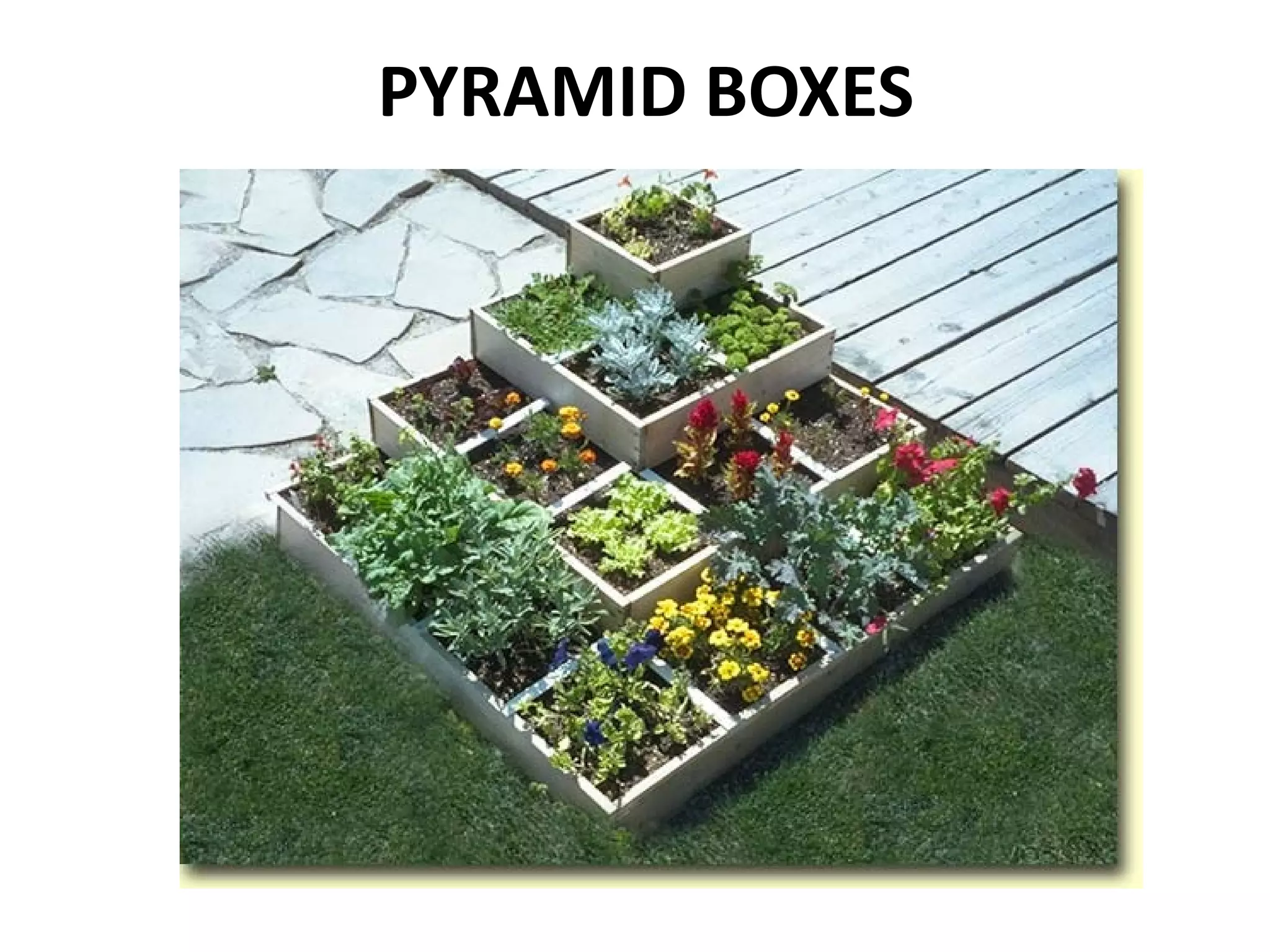
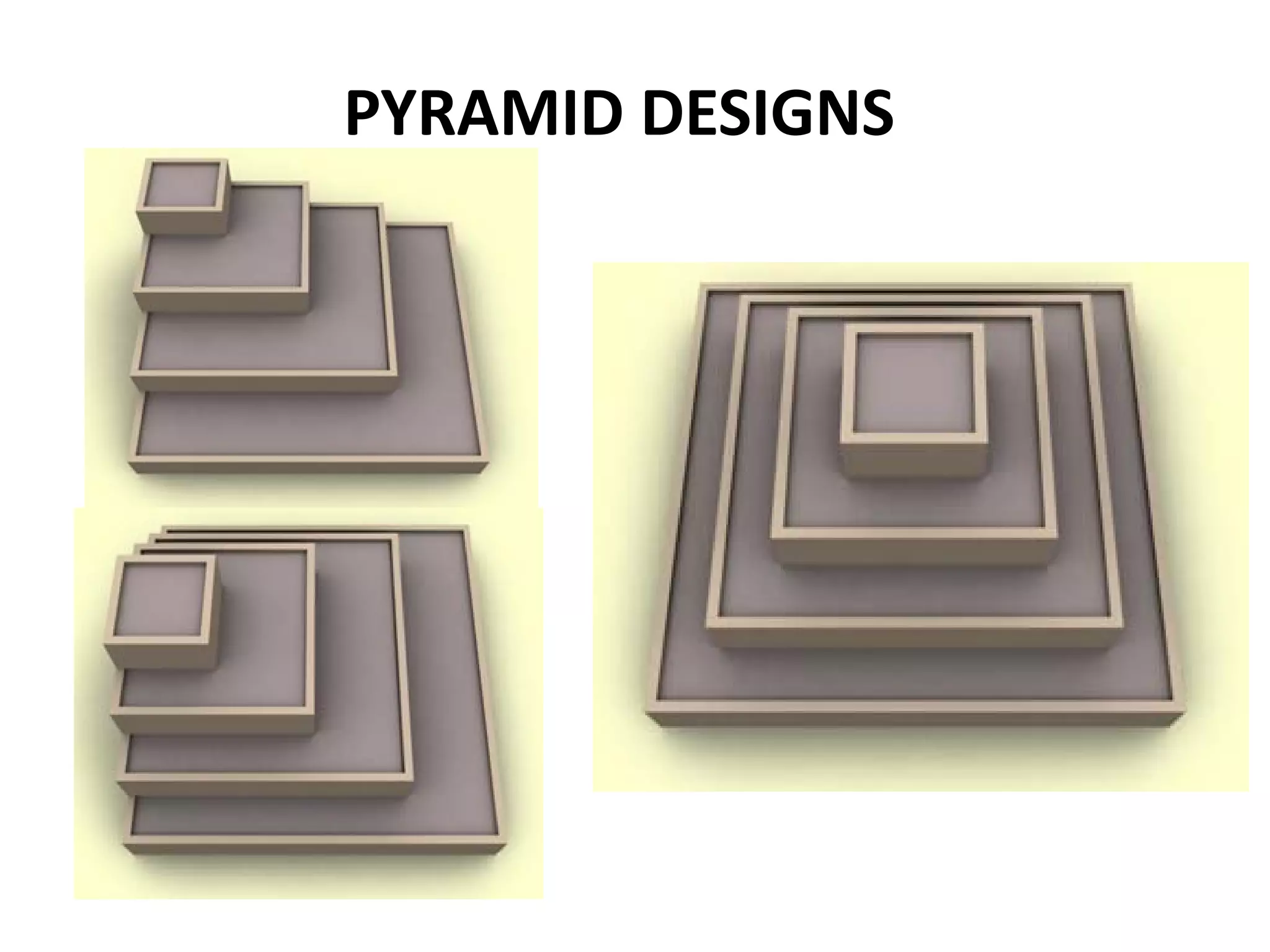
PYRAMID BOXES
PYRAMID DESIGNS
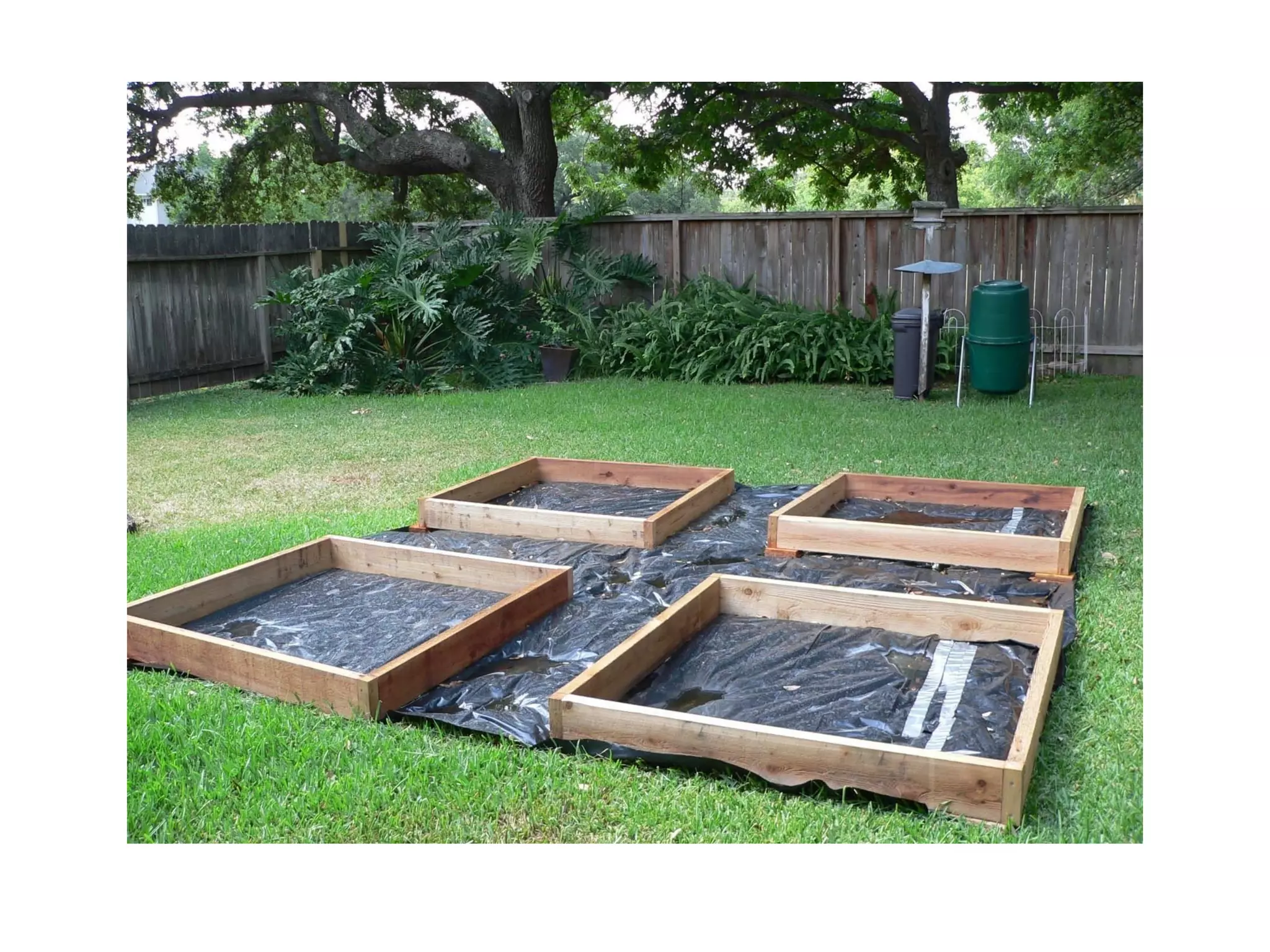
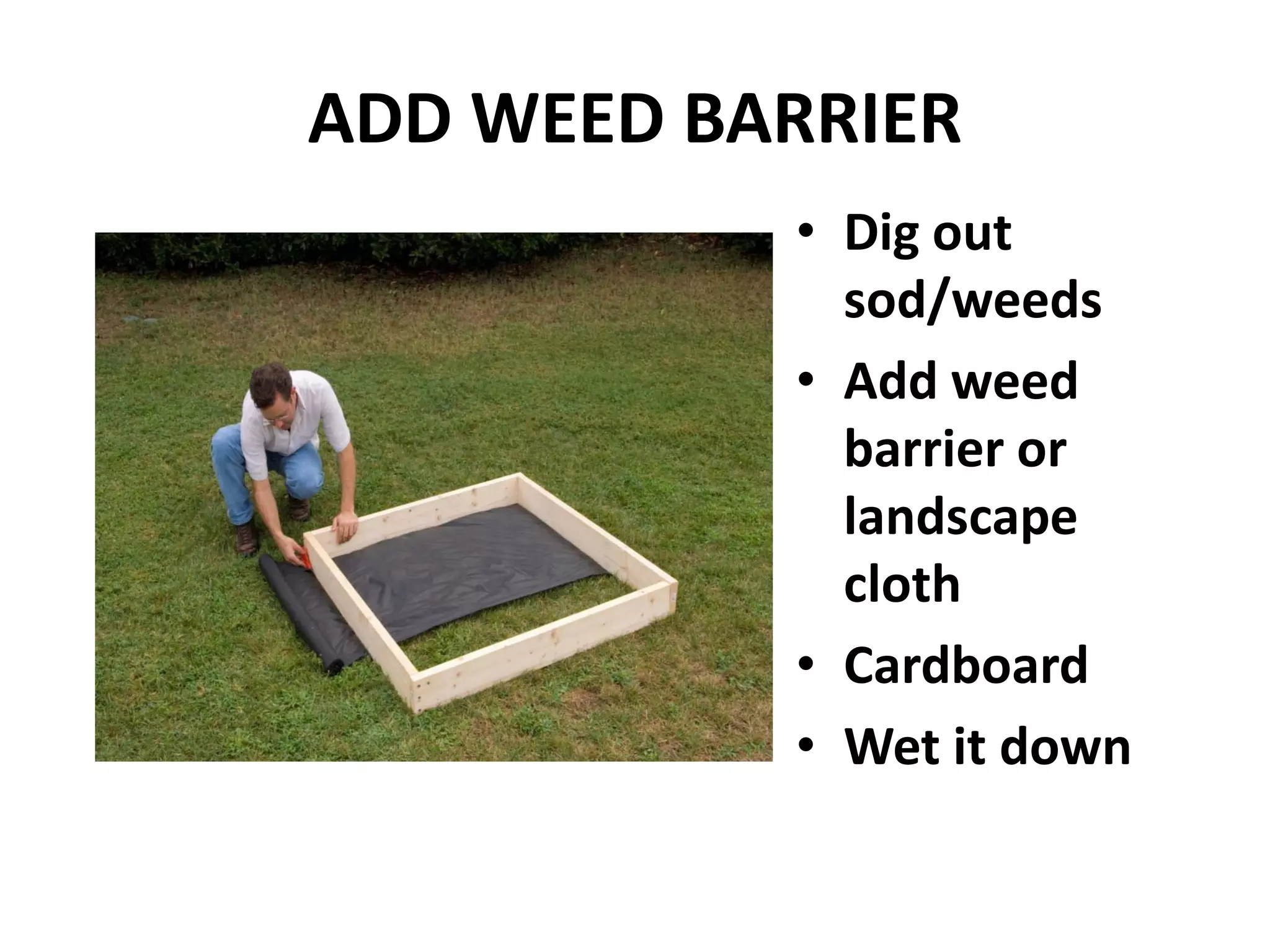
ADD WEED BARRIER
           • Dig out
             sod/weeds
           • Add weed
             barrier or
             landscape
             cloth
           • Cardboard
           • Wet it down
The Ten Basics of SFG
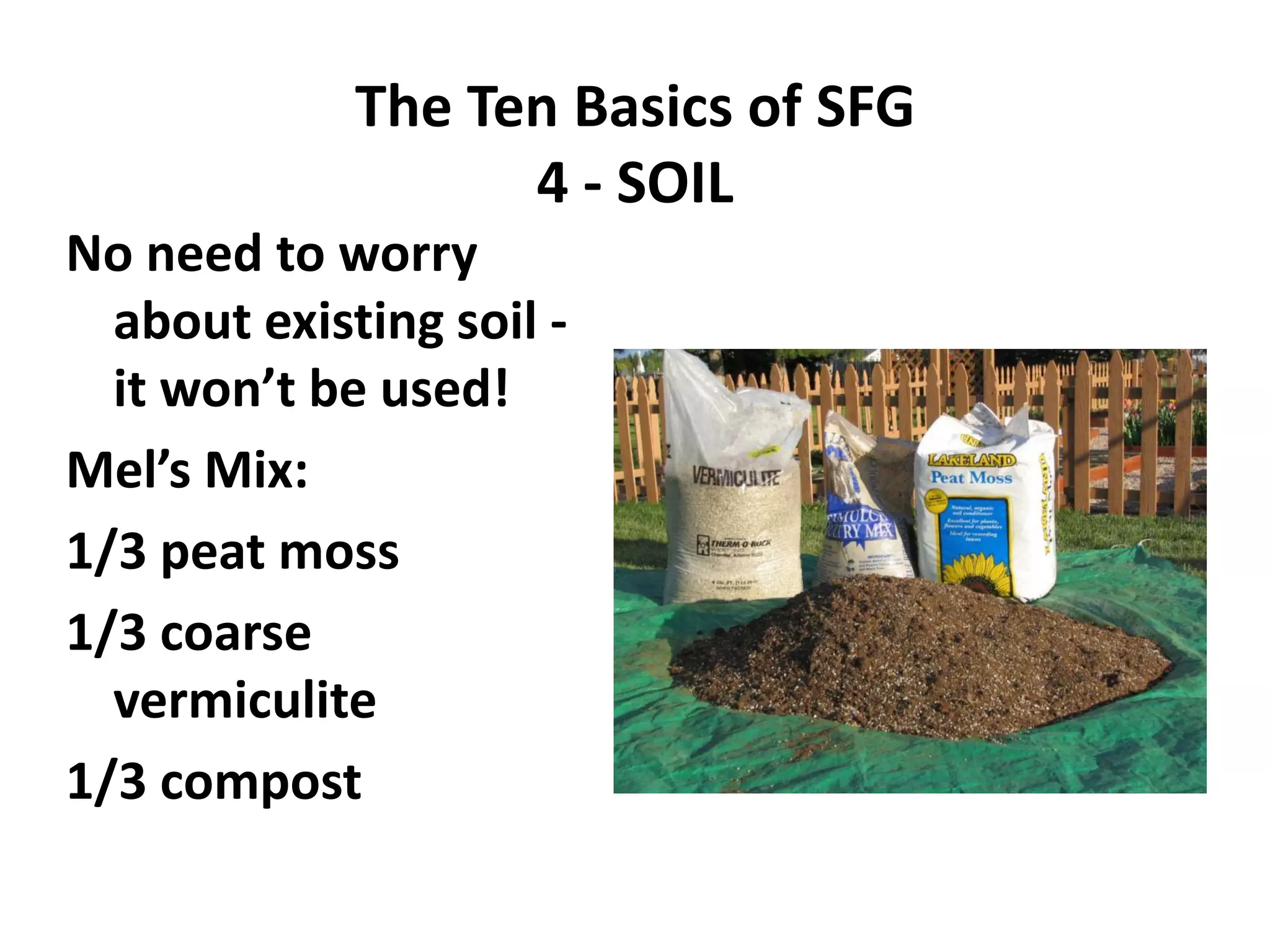
                   4 - SOIL
No need to worry
  about existing soil -
  it won’t be used!
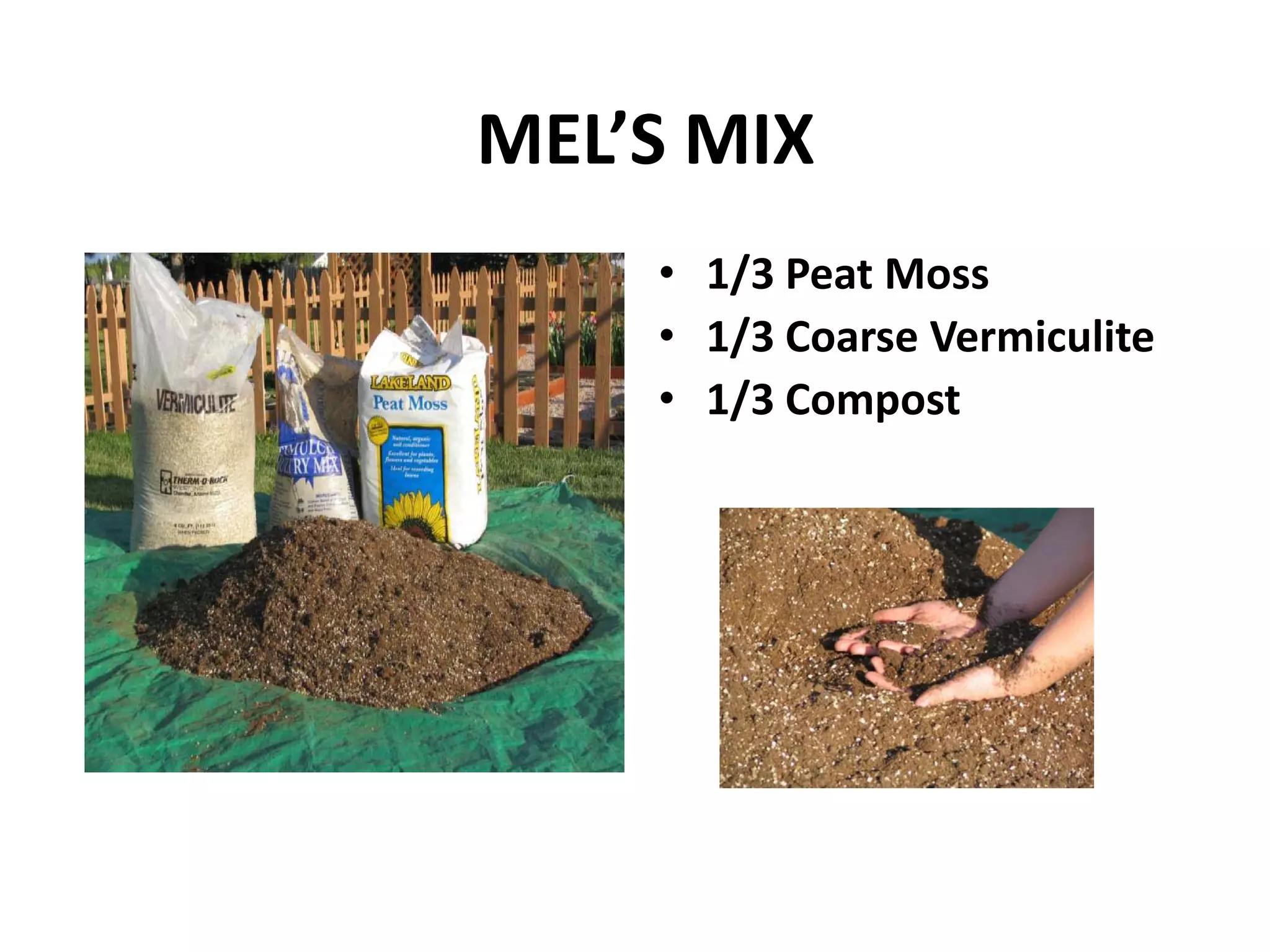
Mel’s Mix:
1/3 peat moss
1/3 coarse
  vermiculite
1/3 compost
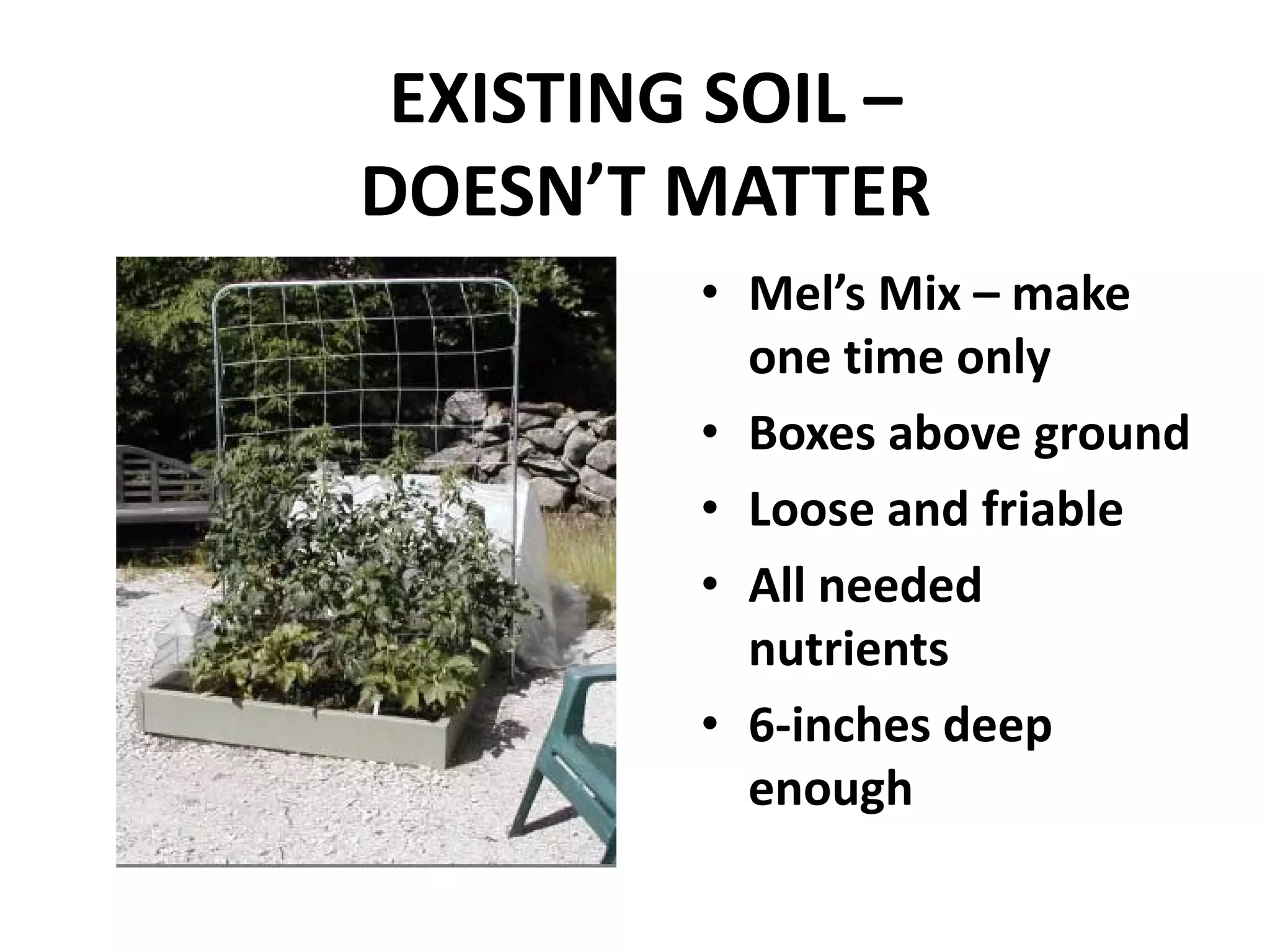
EXISTING SOIL –
DOESN’T MATTER
         • Mel’s Mix – make
           one time only
         • Boxes above ground
         • Loose and friable
         • All needed
           nutrients
         • 6-inches deep
           enough
MEL’S MIX
    • 1/3 Peat Moss
    • 1/3 Coarse Vermiculite
    • 1/3 Compost
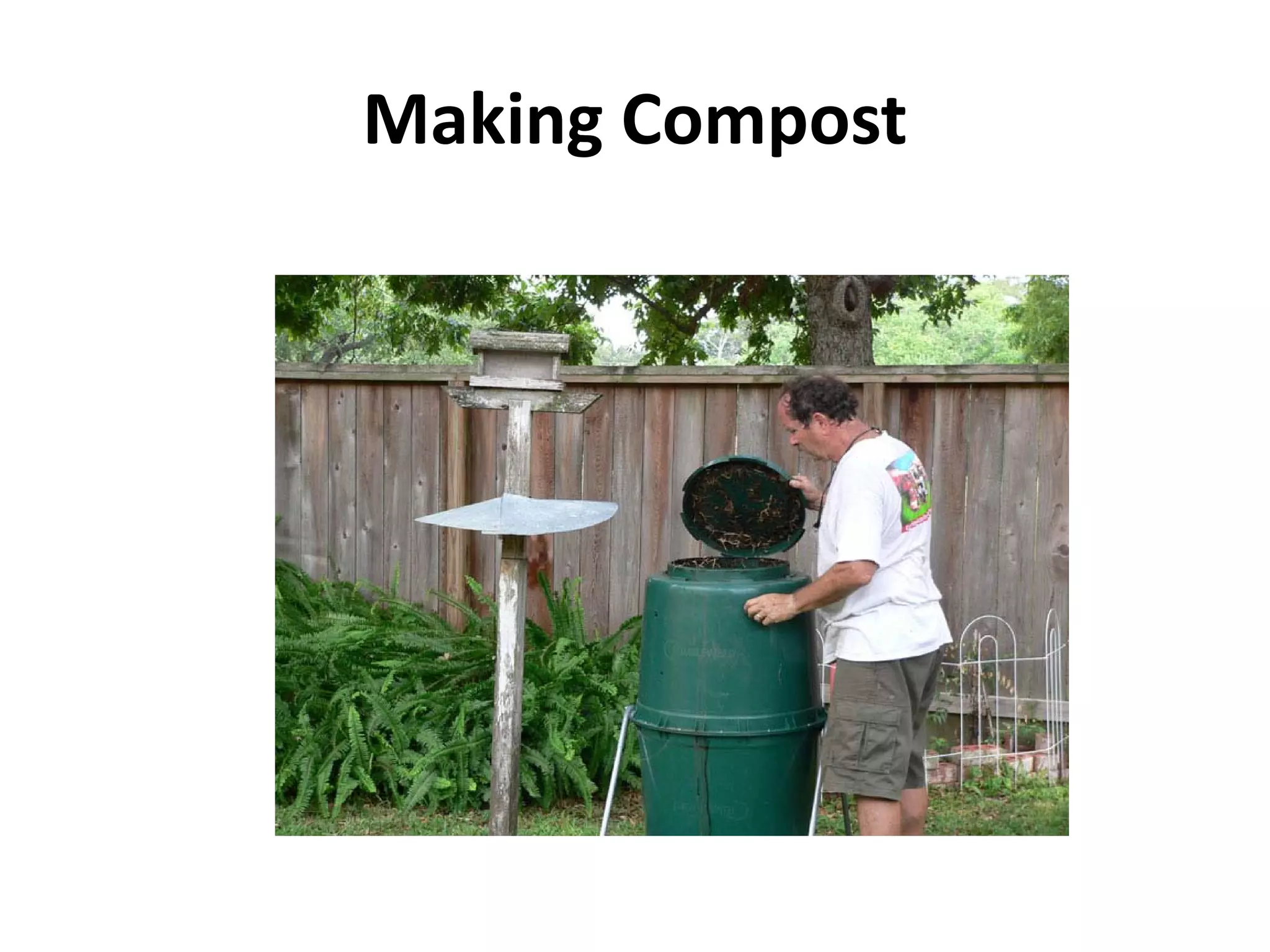
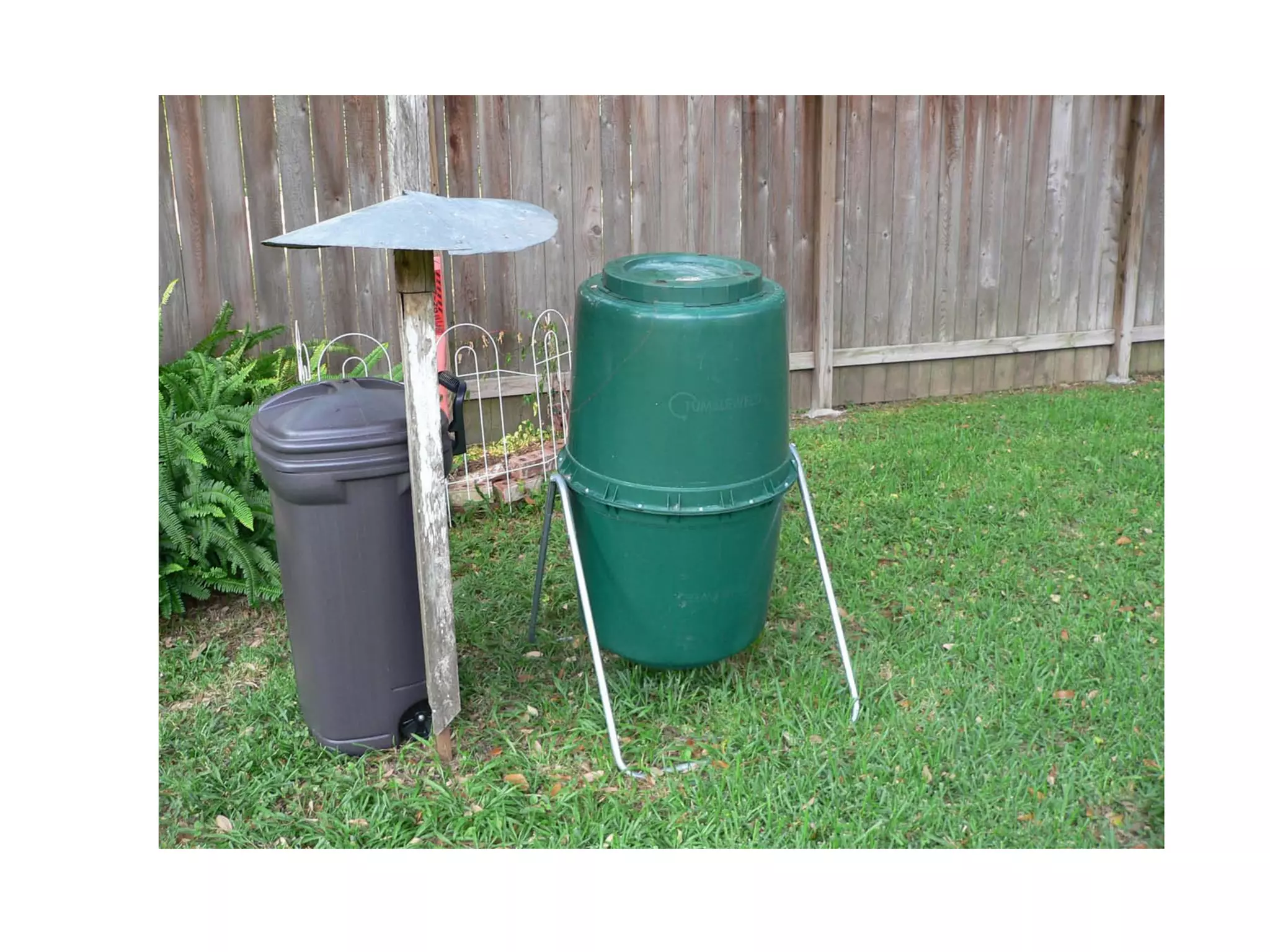
Making Compost
The Ten Basics of SFG
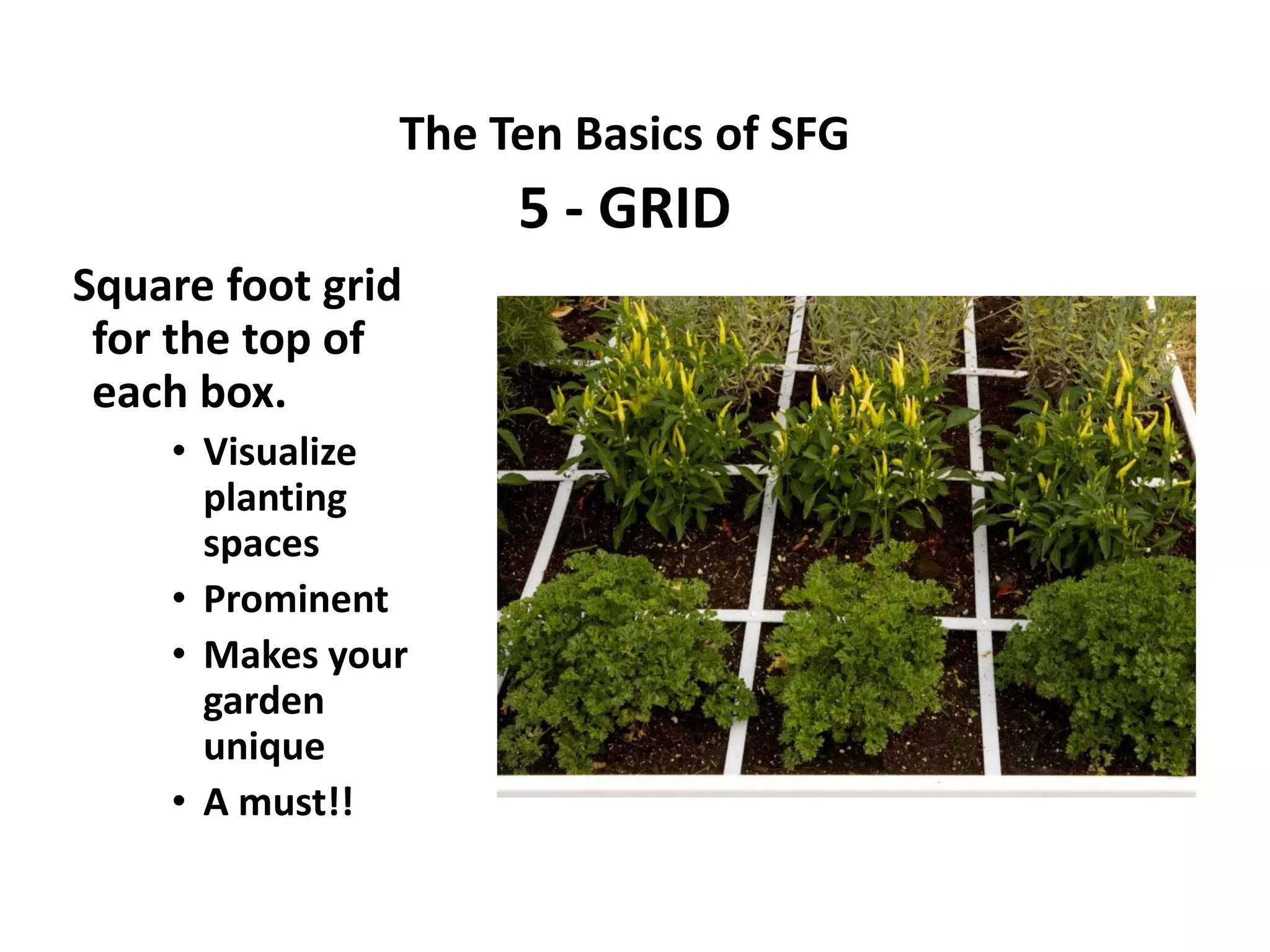
                    5 - GRID
Square foot grid
 for the top of
 each box.
    • Visualize
      planting
      spaces
    • Prominent
    • Makes your
      garden
      unique
    • A must!!
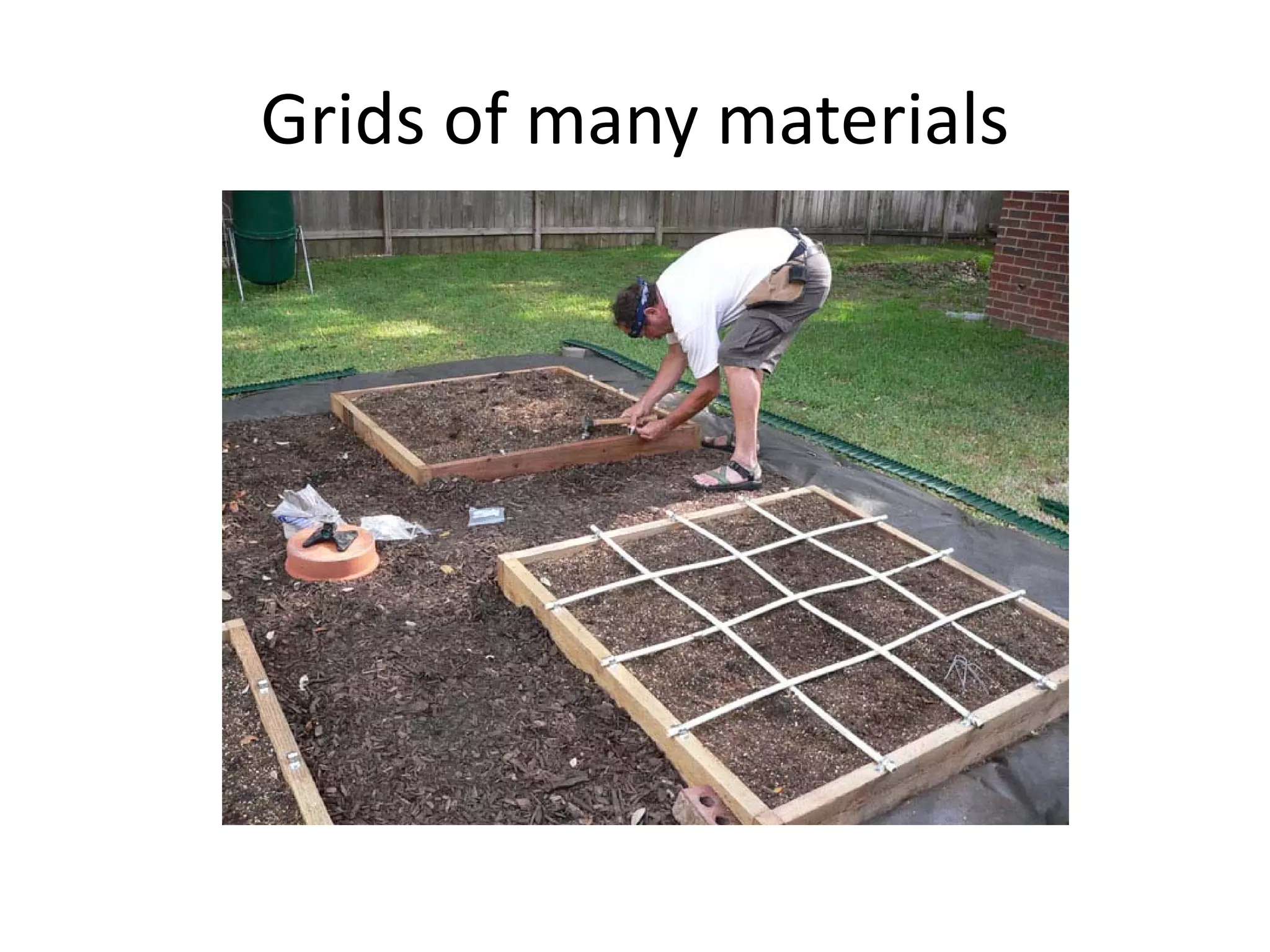
Grids of many materials
The Ten Basics of SFG
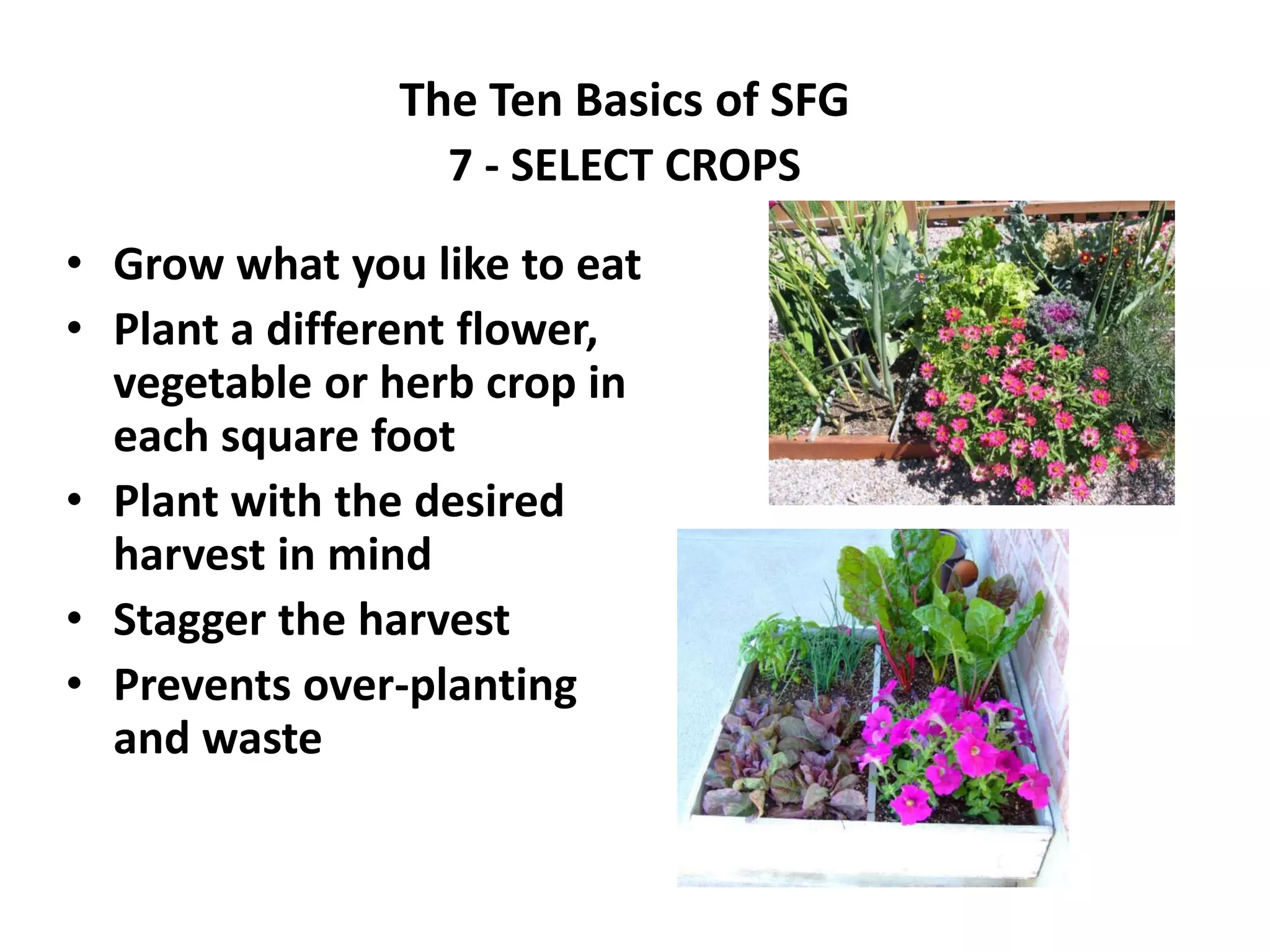
                 7 - SELECT CROPS

• Grow what you like to eat
• Plant a different flower,
  vegetable or herb crop in
  each square foot
• Plant with the desired
  harvest in mind
• Stagger the harvest
• Prevents over-planting
  and waste
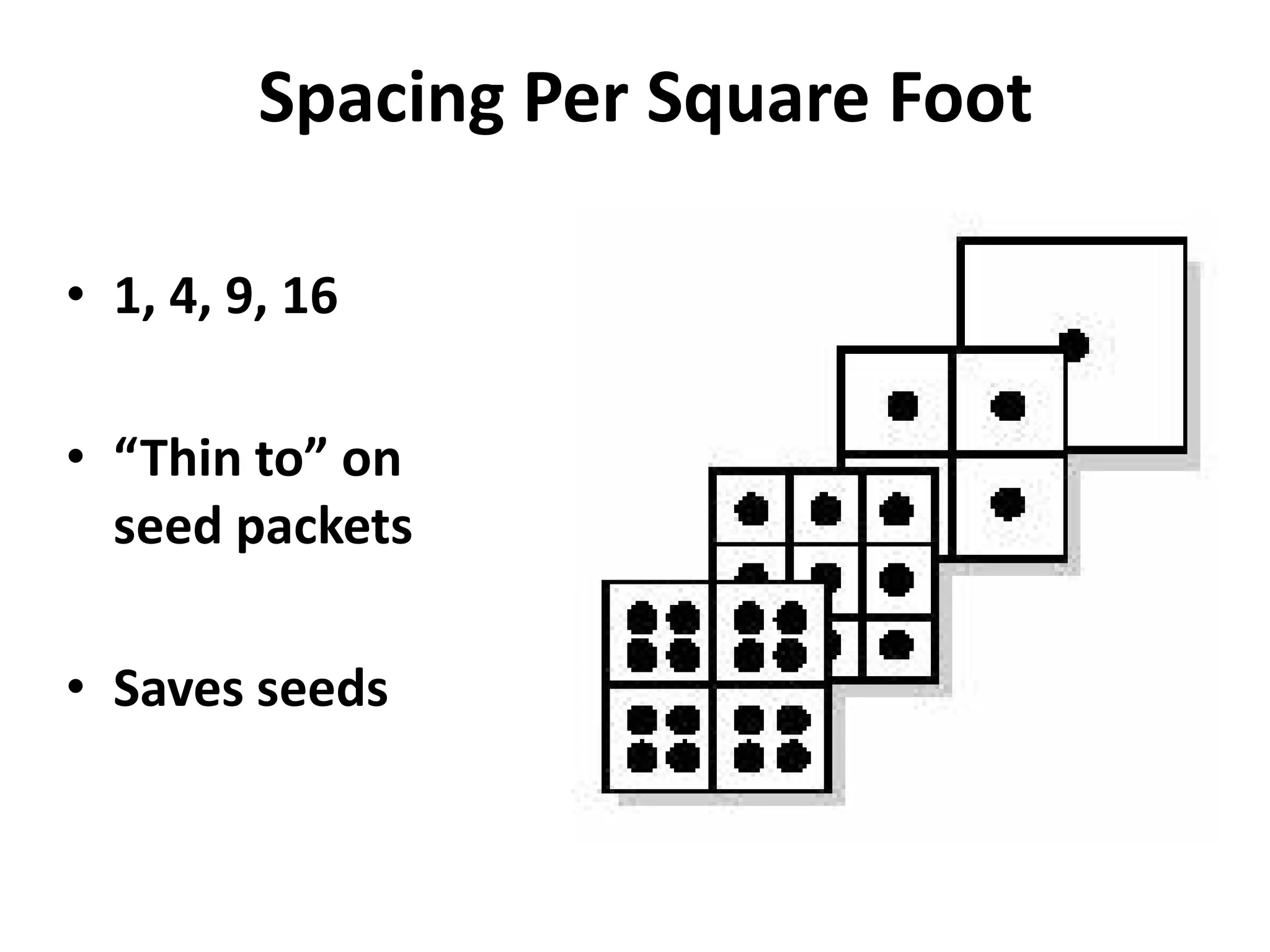
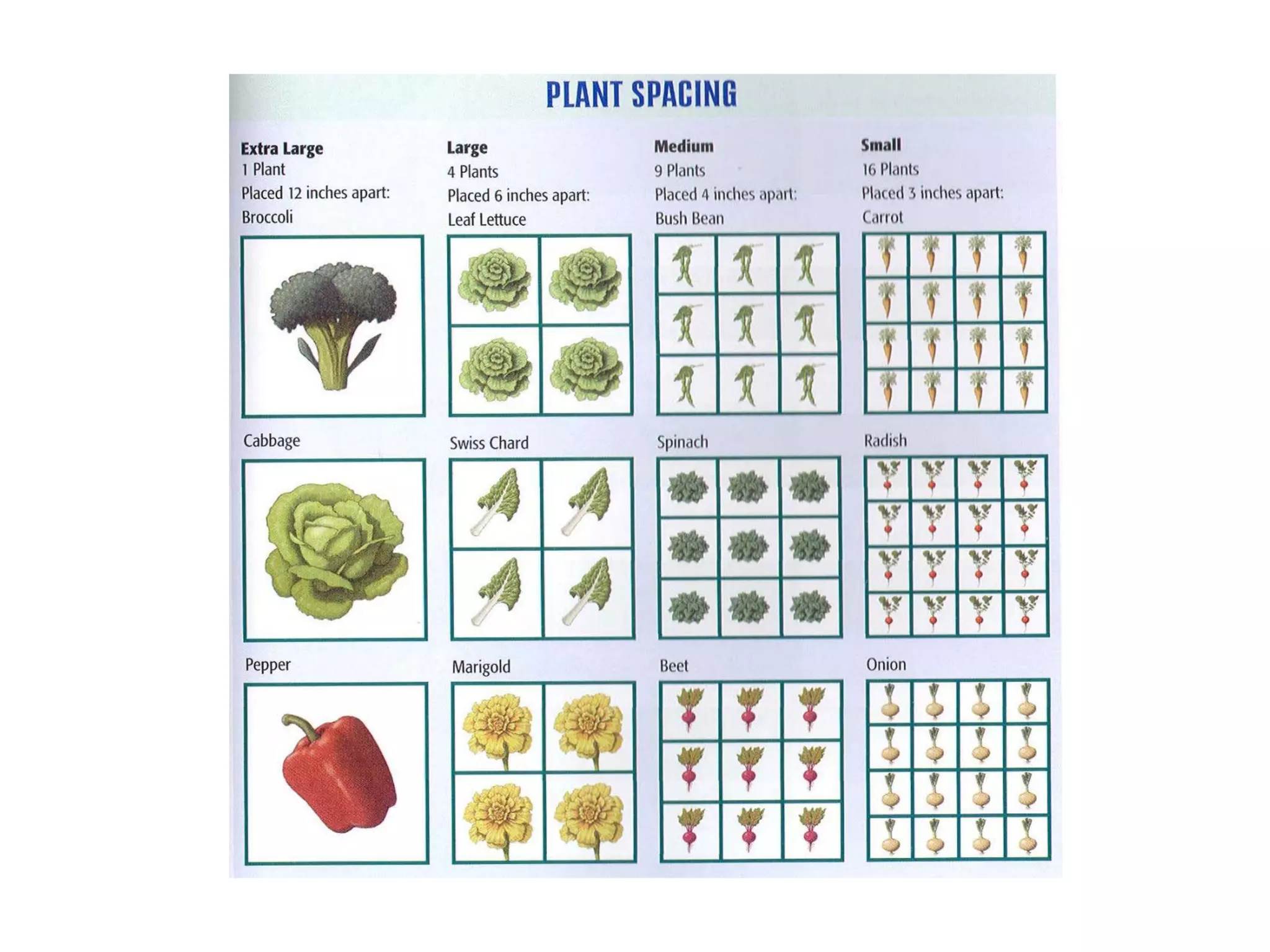
Spacing Per Square Foot

• 1, 4, 9, 16

• “Thin to” on
  seed packets

• Saves seeds
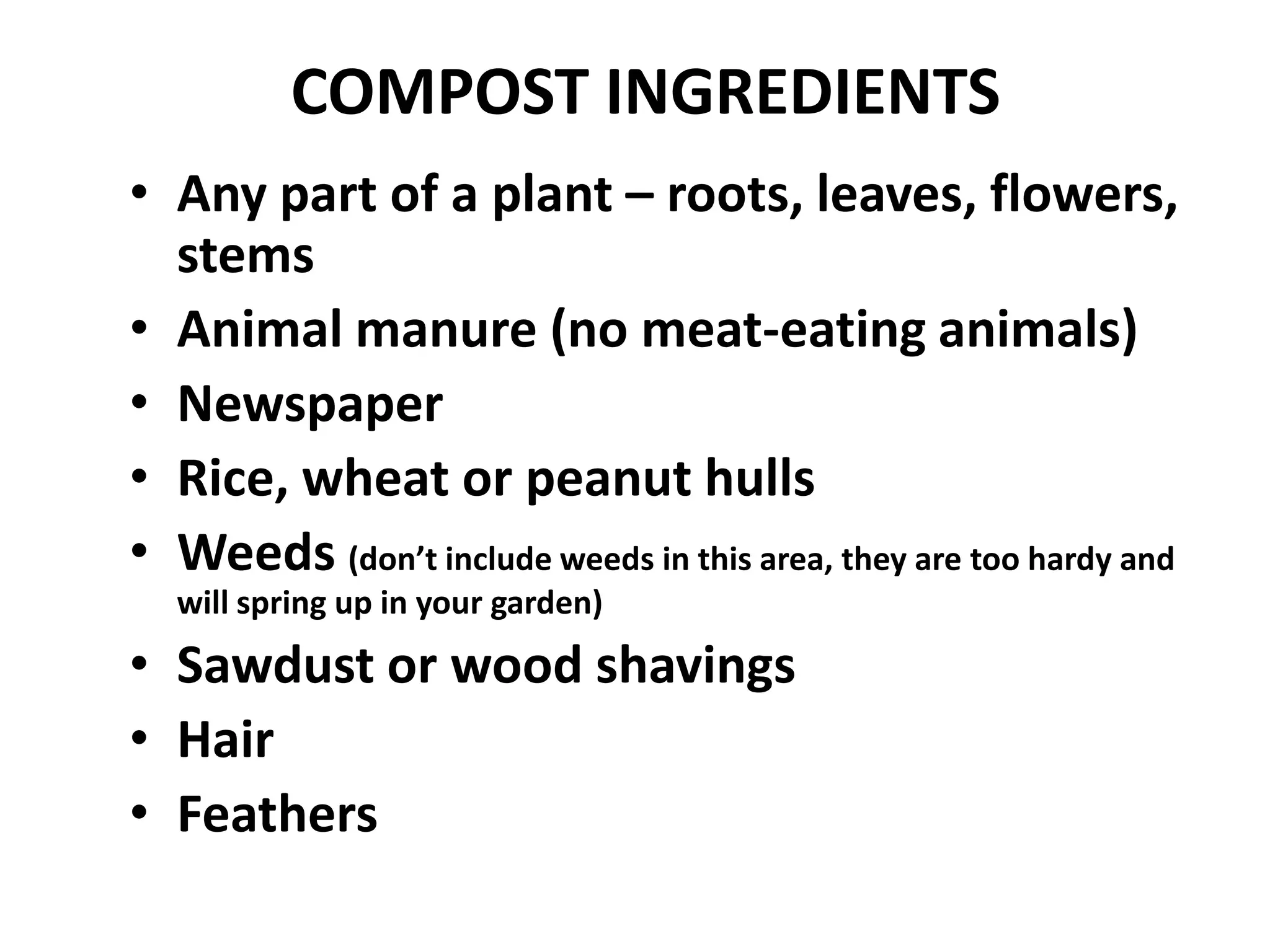
COMPOST INGREDIENTS
• Any part of a plant – roots, leaves, flowers,
  stems
• Animal manure (no meat-eating animals)
• Newspaper
• Rice, wheat or peanut hulls
• Weeds (don’t include weeds in this area, they are too hardy and
  will spring up in your garden)
• Sawdust or wood shavings
• Hair
• Feathers
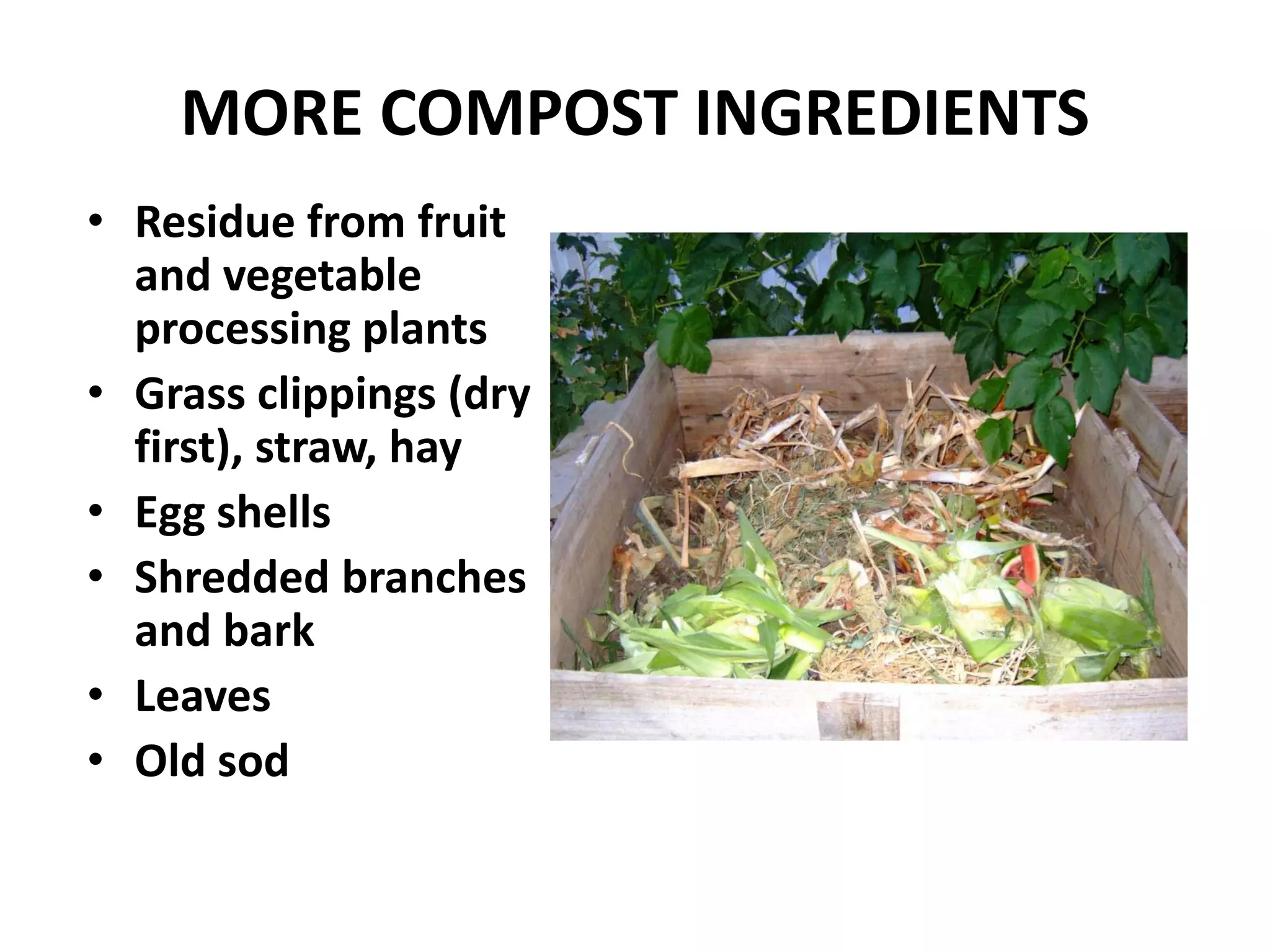
MORE COMPOST INGREDIENTS
• Residue from fruit
  and vegetable
  processing plants
• Grass clippings (dry
  first), straw, hay
• Egg shells
• Shredded branches
  and bark
• Leaves
• Old sod
DO NOT ADD
•   Animal fat, bones, meat, skin
•   Dairy Products
•   Bread and baked goods
•   Dog, cat or human manure
•   Large, woody stems or branches
QUICK COMPOST
Remember the 4 M’s
    •   Mix
    •   Mash
    •   Moisten
    •   Move
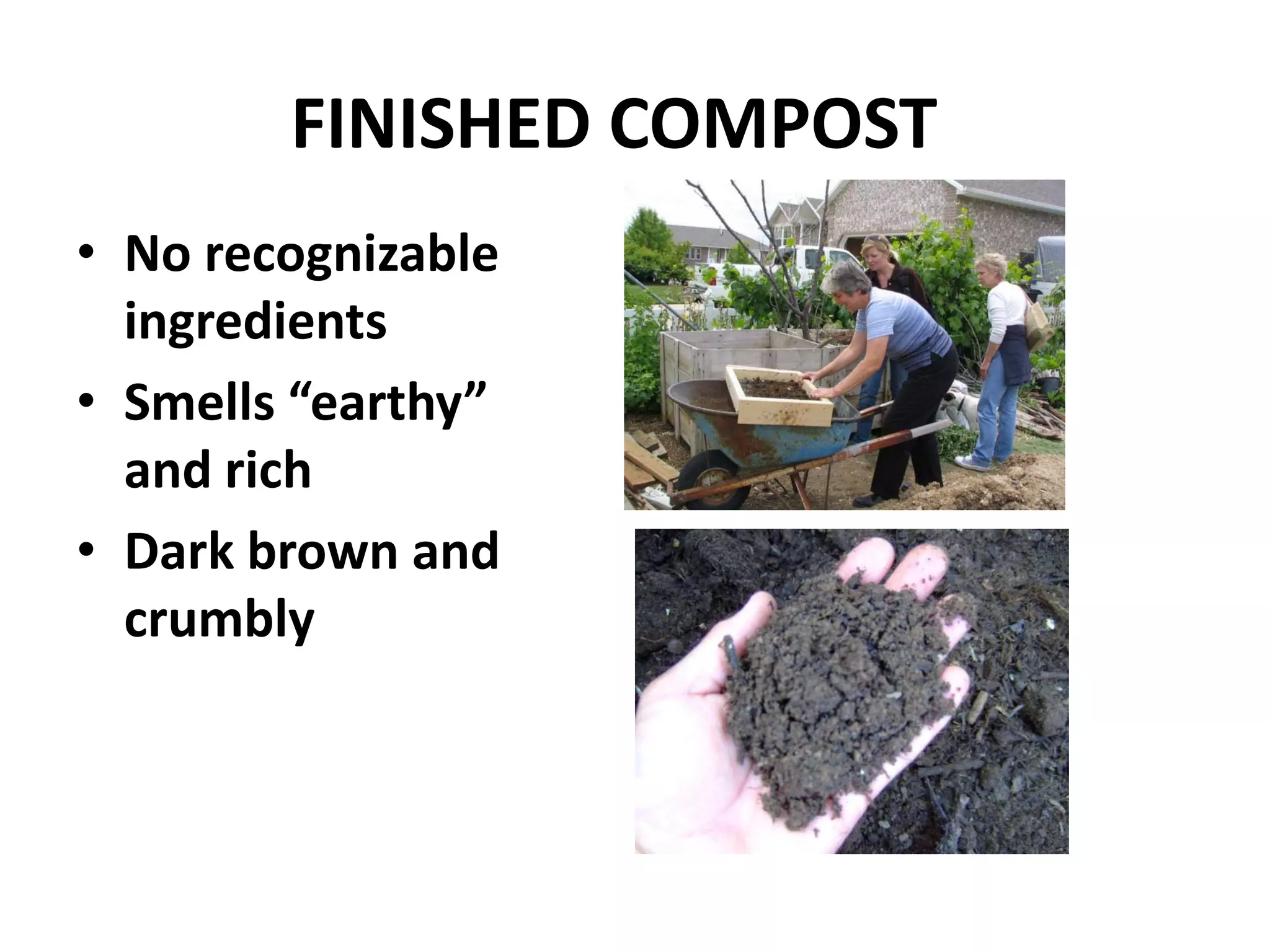
FINISHED COMPOST
• No recognizable
  ingredients
• Smells “earthy”
  and rich
• Dark brown and
  crumbly
COMPOST AMOUNTS
• The more variety of ingredients
  – the more nutrients
• No more than 20% of one
  ingredient in the pile
• Best compost made from many
  (& mini) ingredients
DON’T WANT TO MAKE COMPOST?

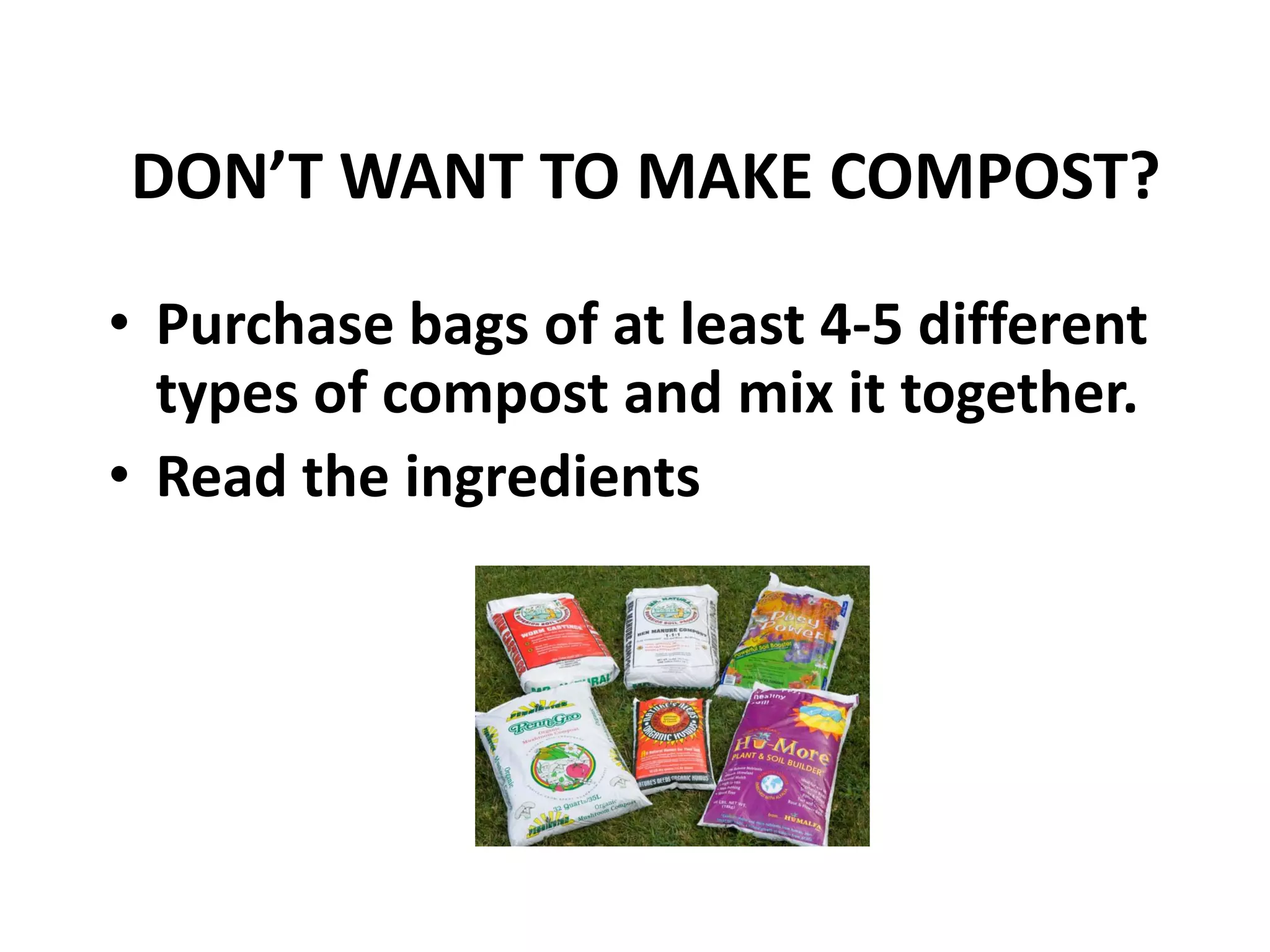
• Purchase bags of at least 4-5 different
  types of compost and mix it together.
• Read the ingredients
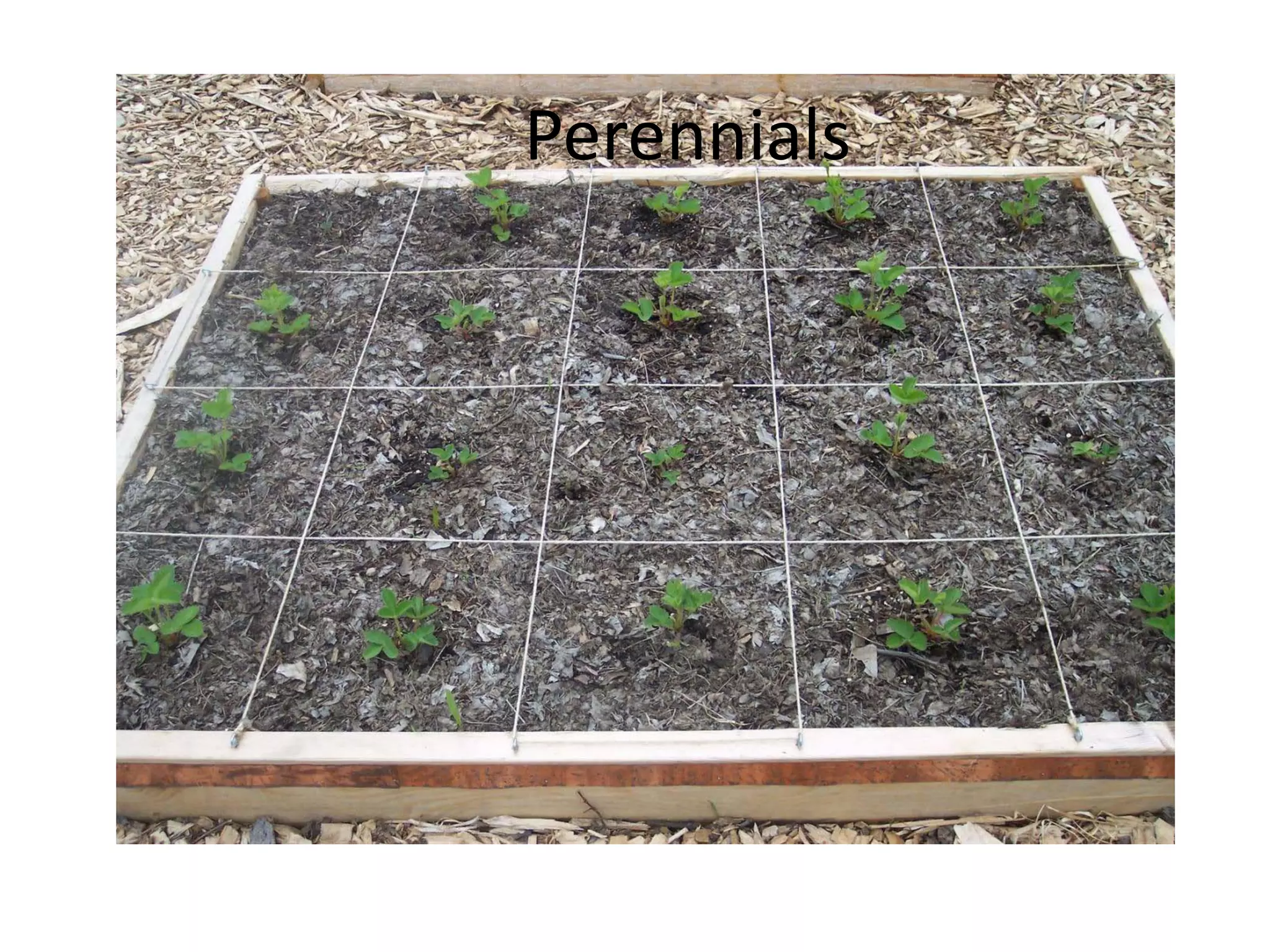
Perennials
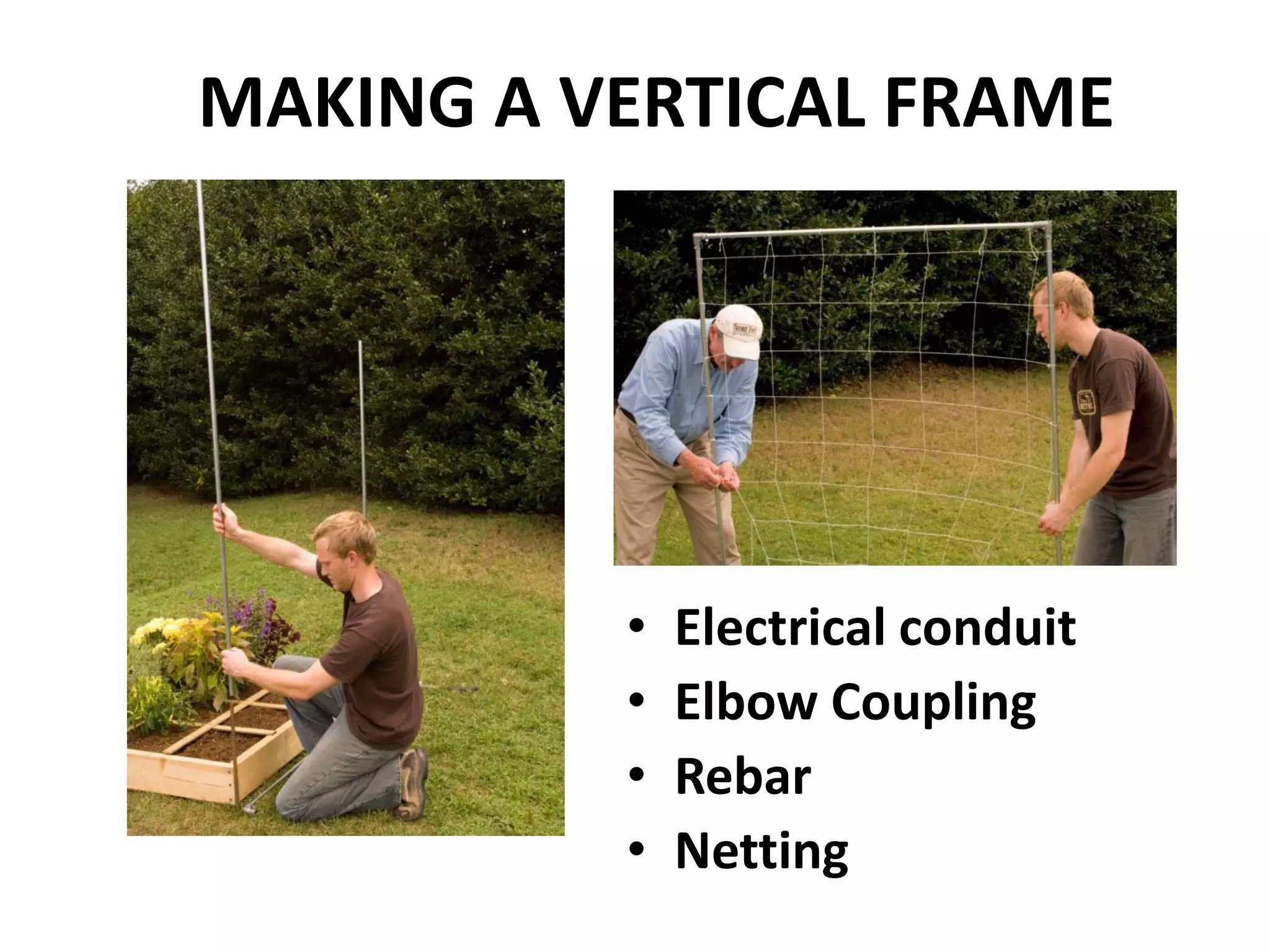
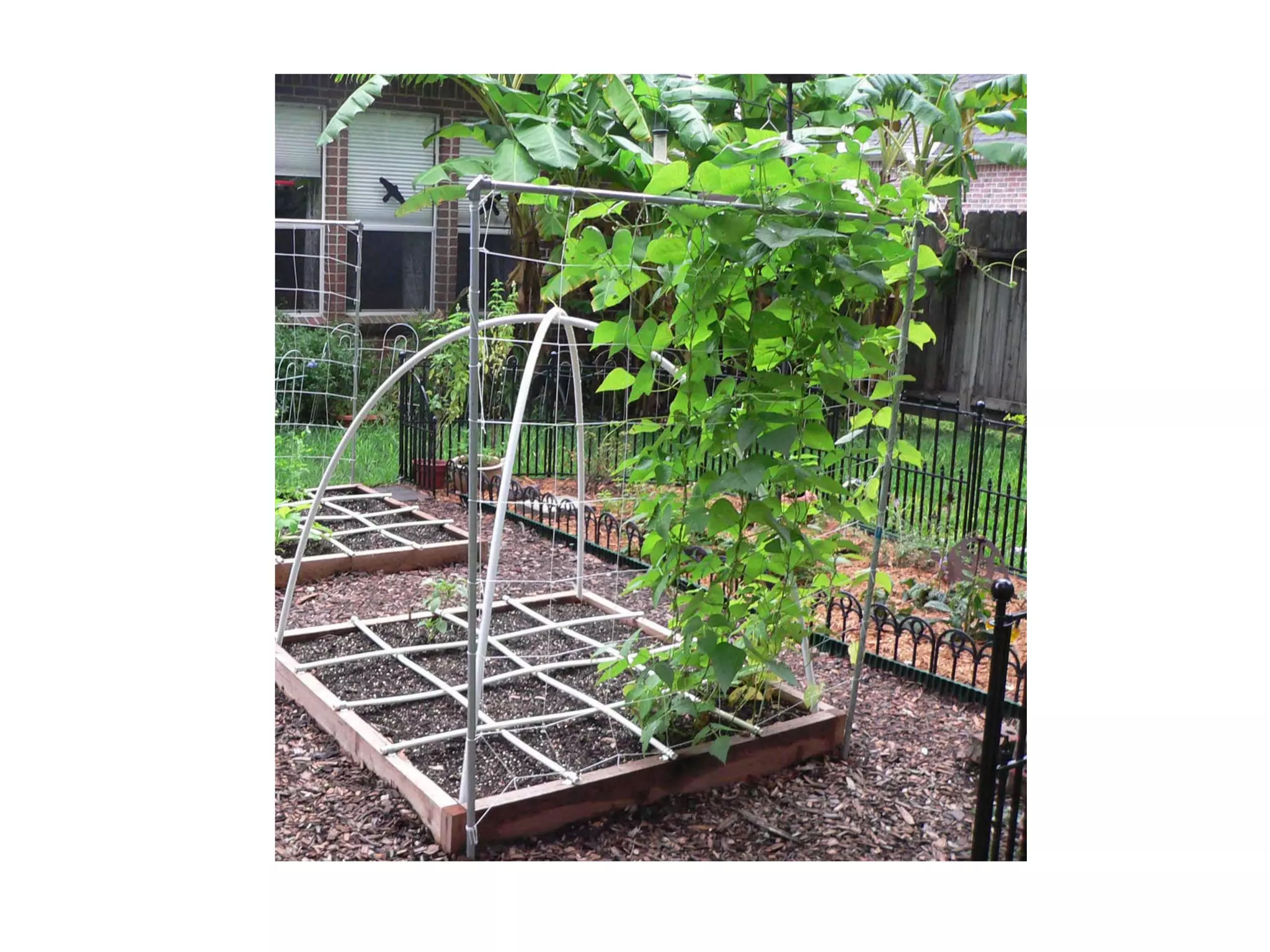
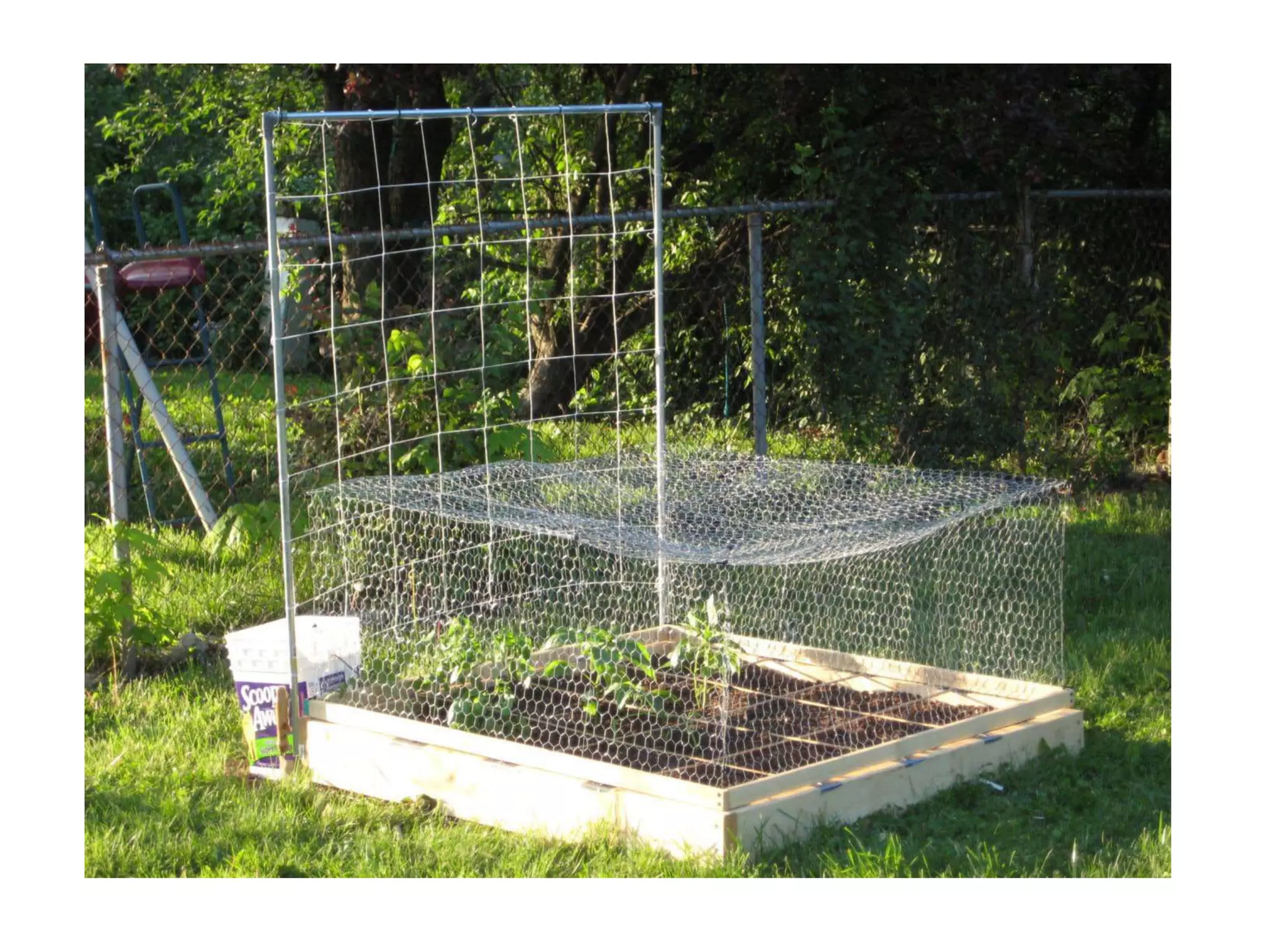
MAKING A VERTICAL FRAME


          •   Electrical conduit
          •   Elbow Coupling
          •   Rebar
          •   Netting
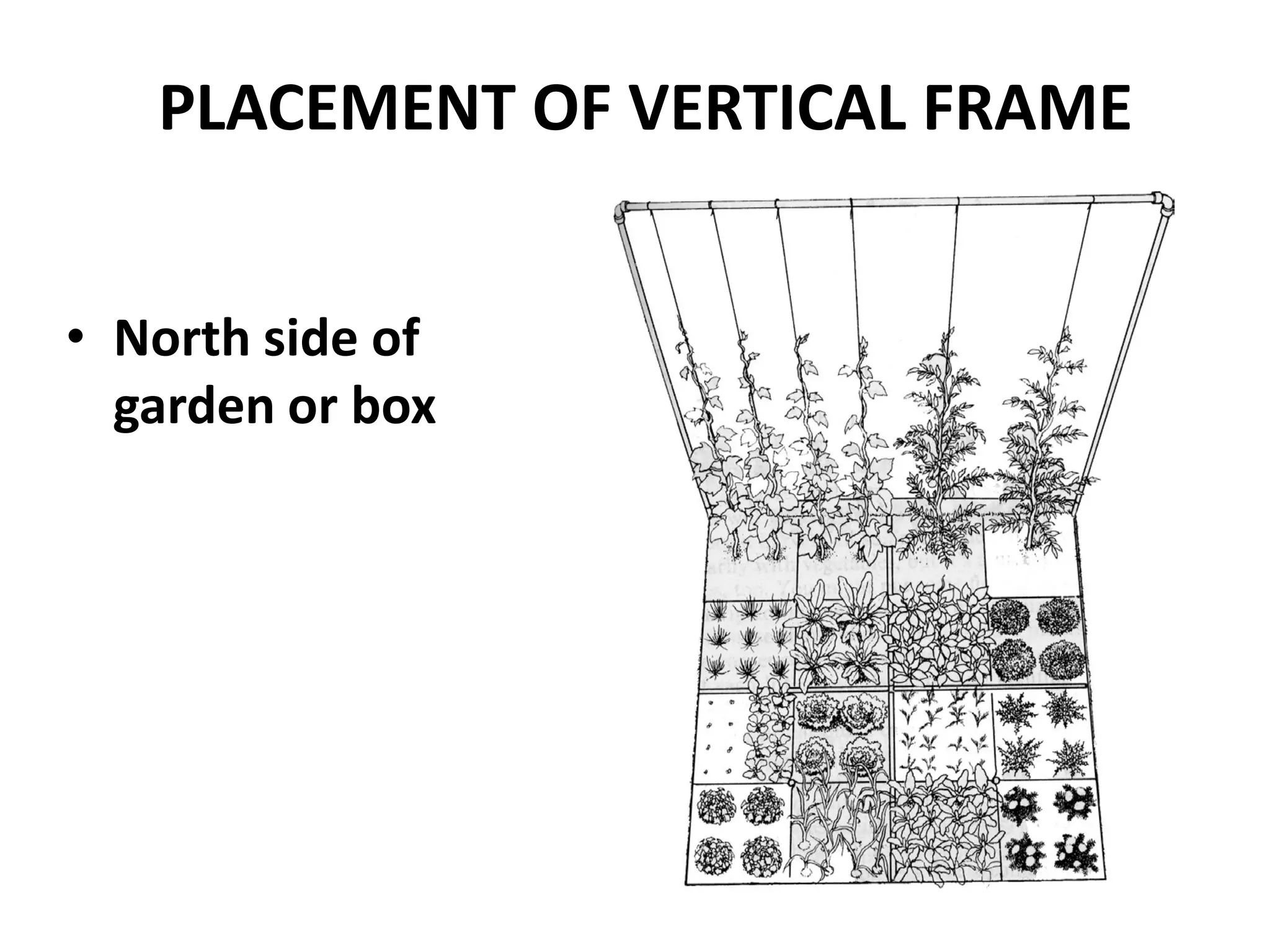
PLACEMENT OF VERTICAL FRAME


• North side of
  garden or box
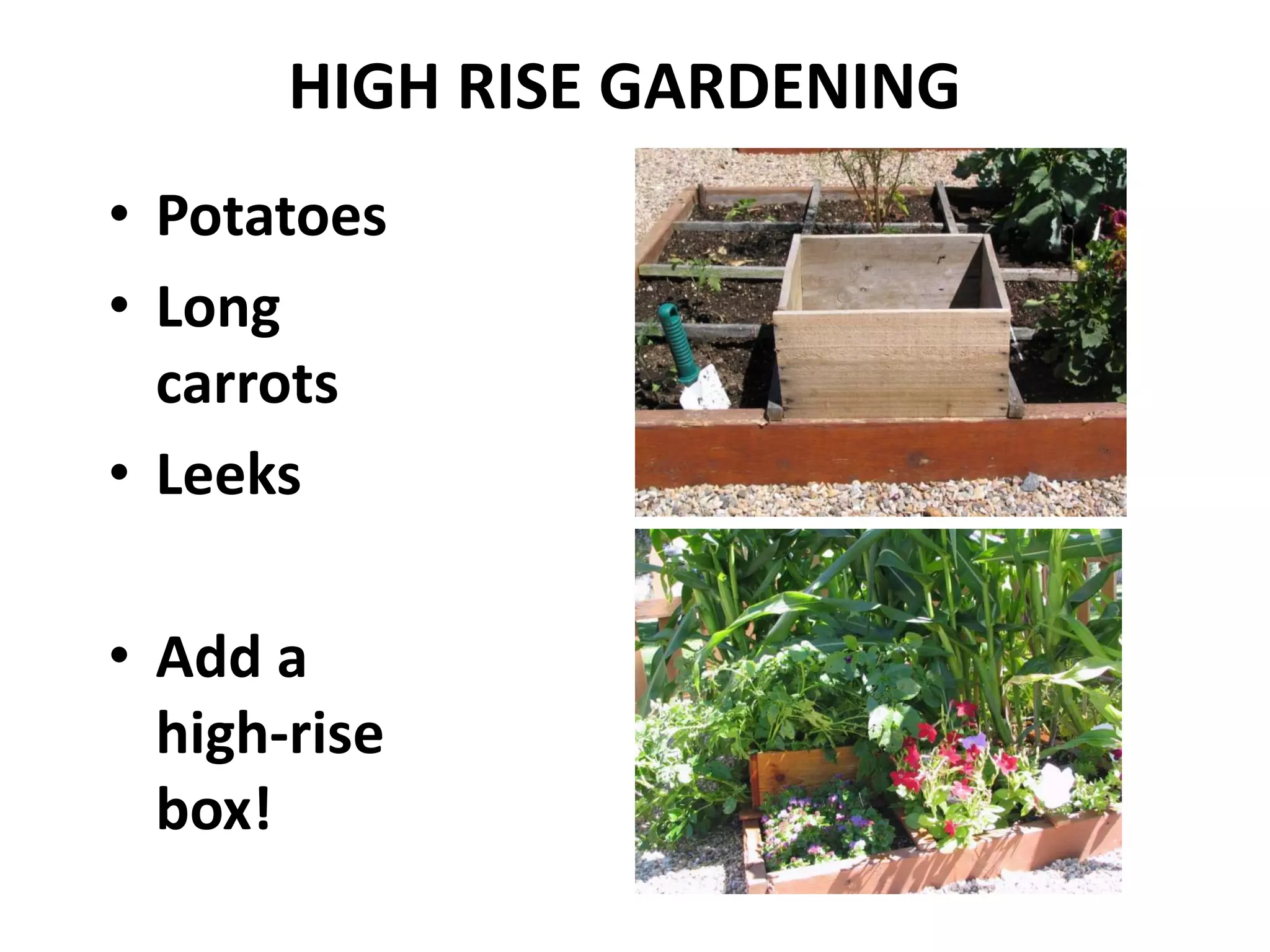
HIGH RISE GARDENING
• Potatoes
• Long
  carrots
• Leeks

• Add a
  high-rise
  box!
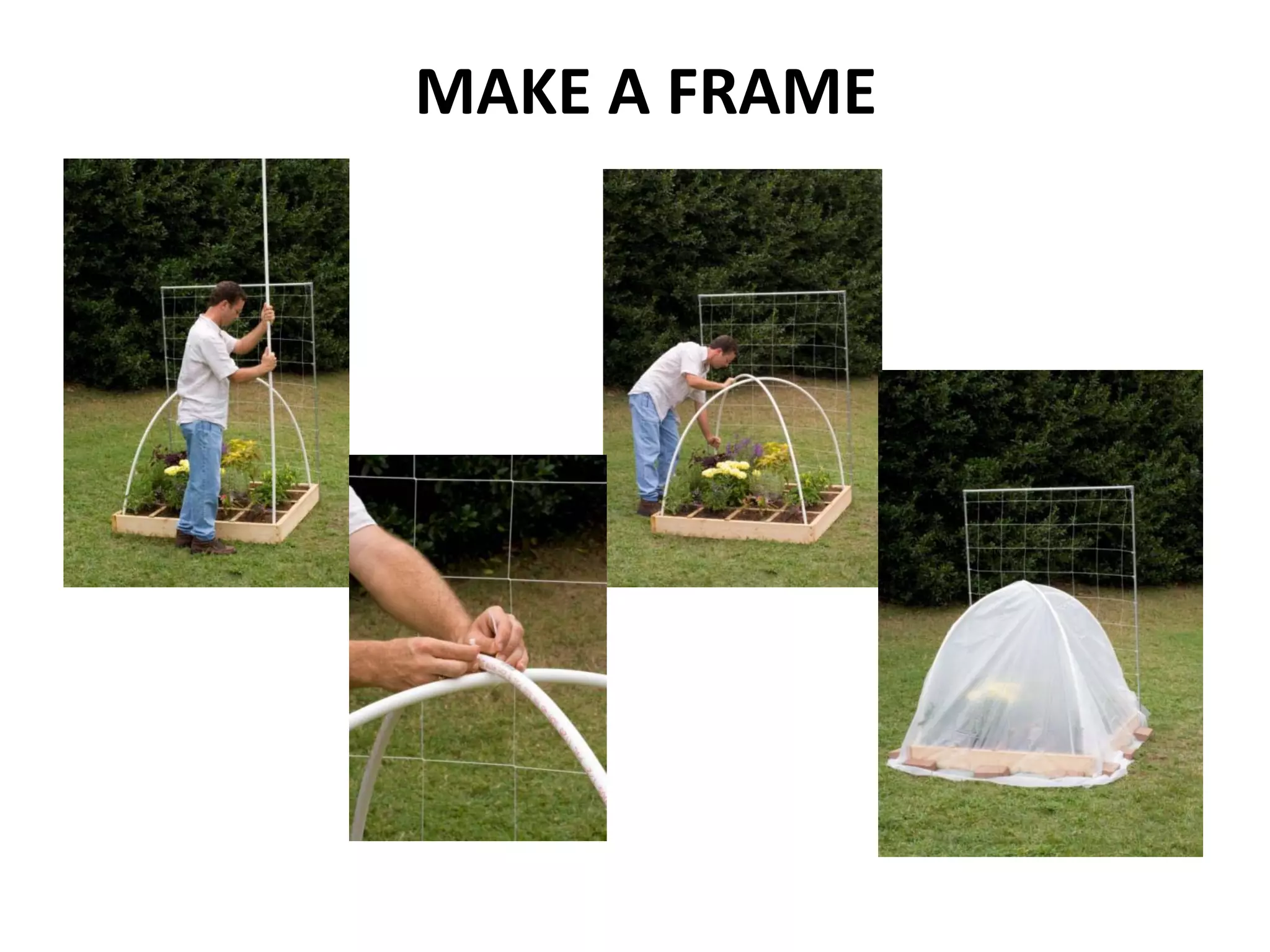
MAKE A FRAME
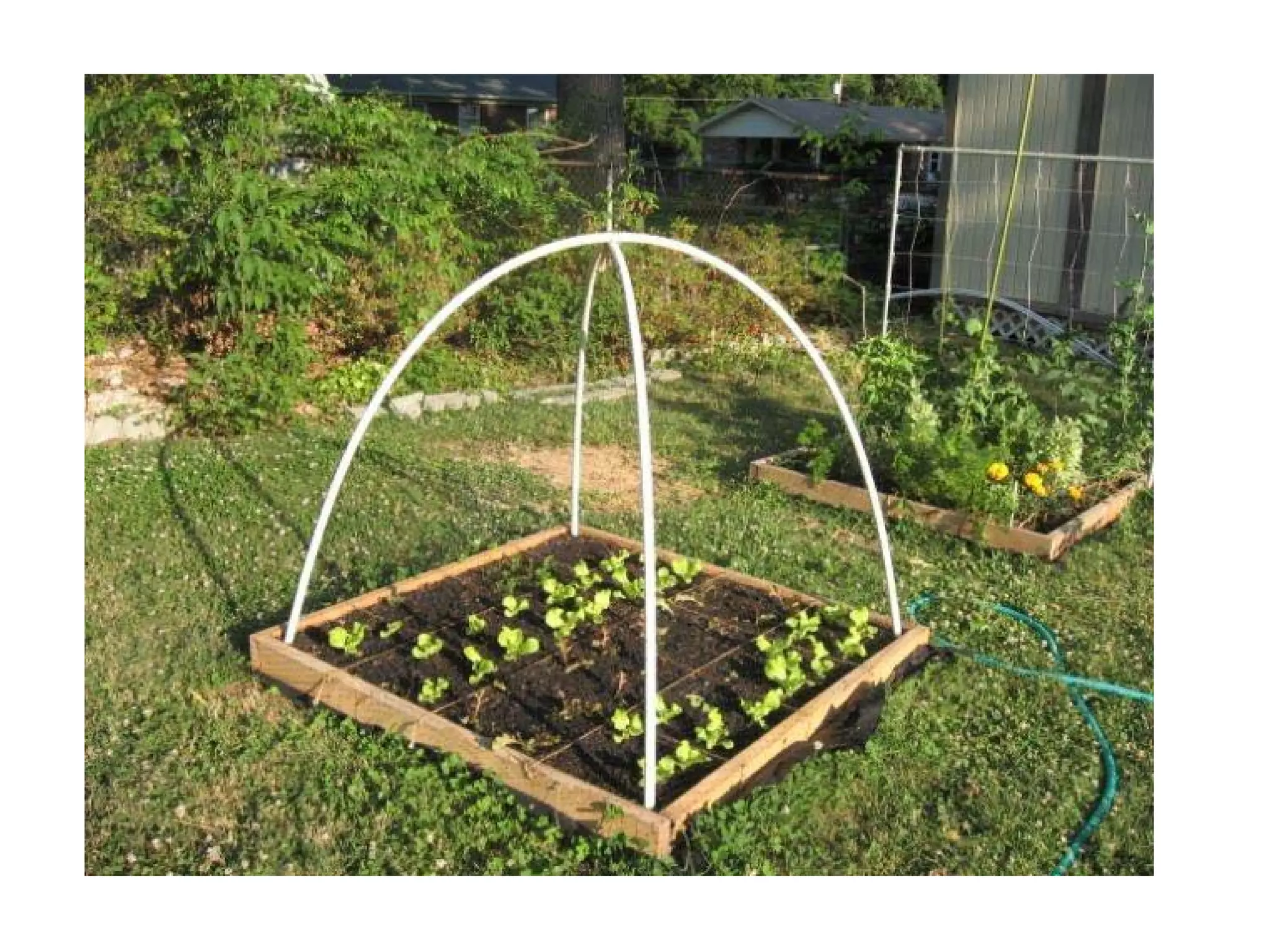
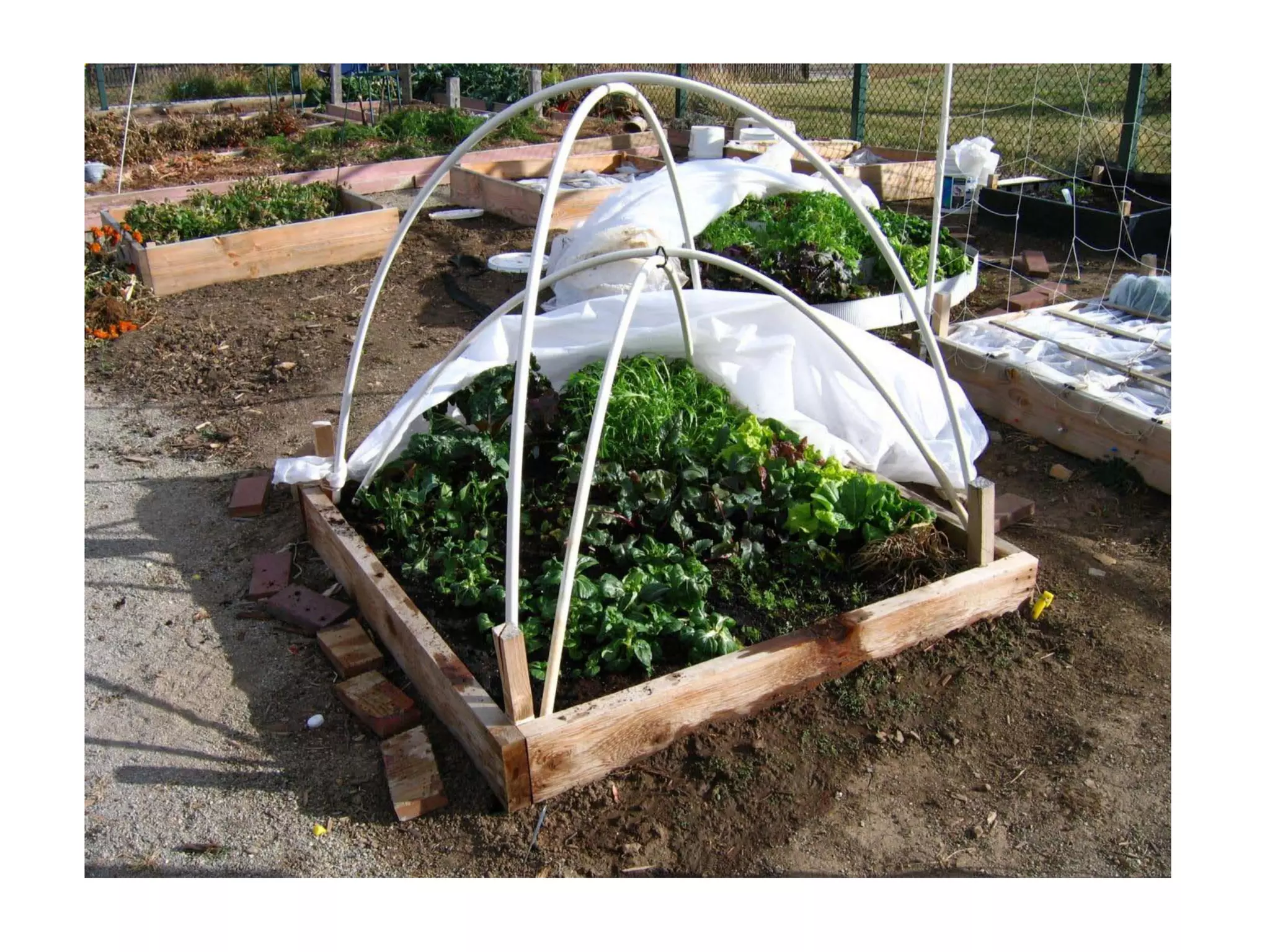
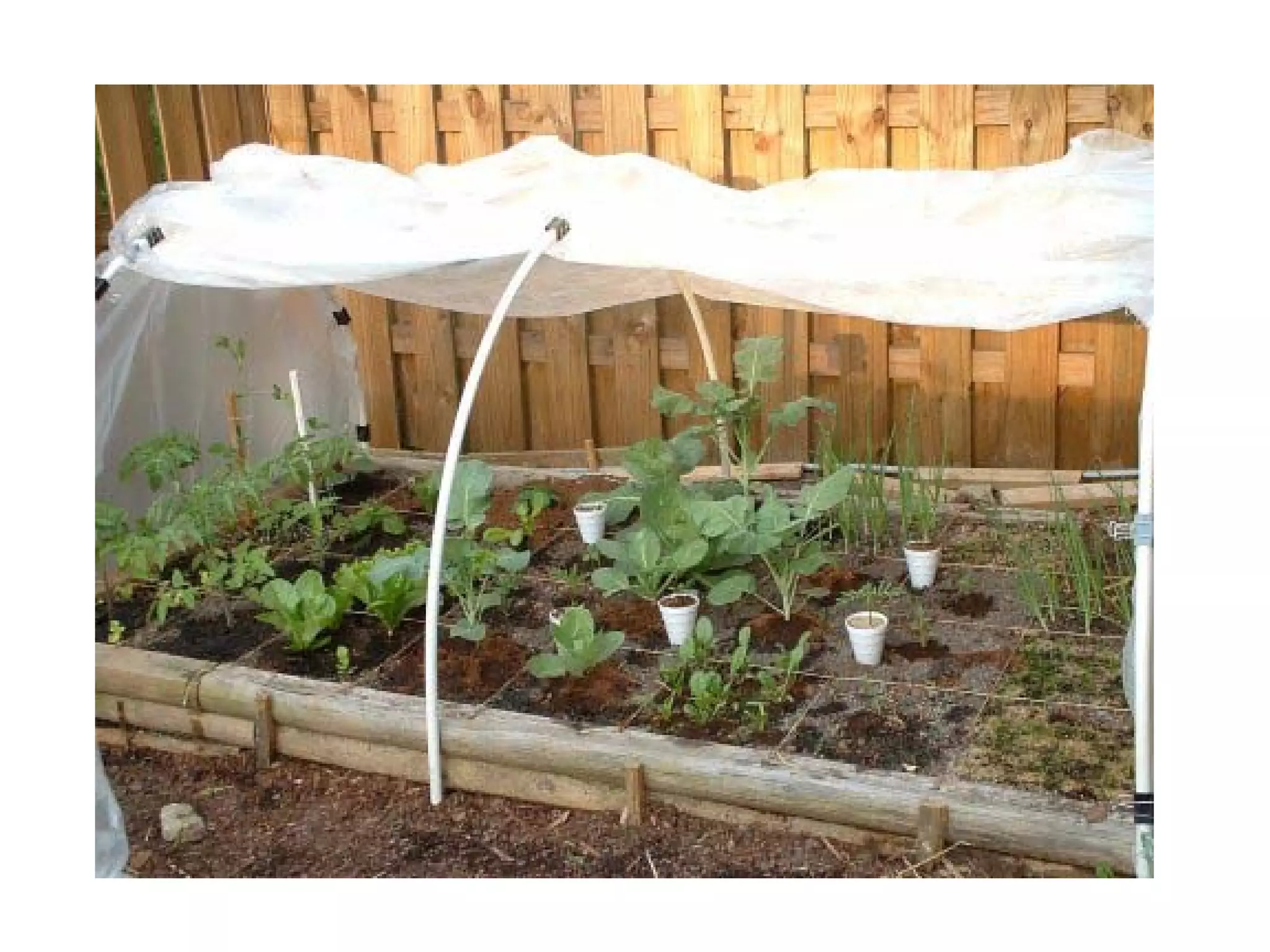
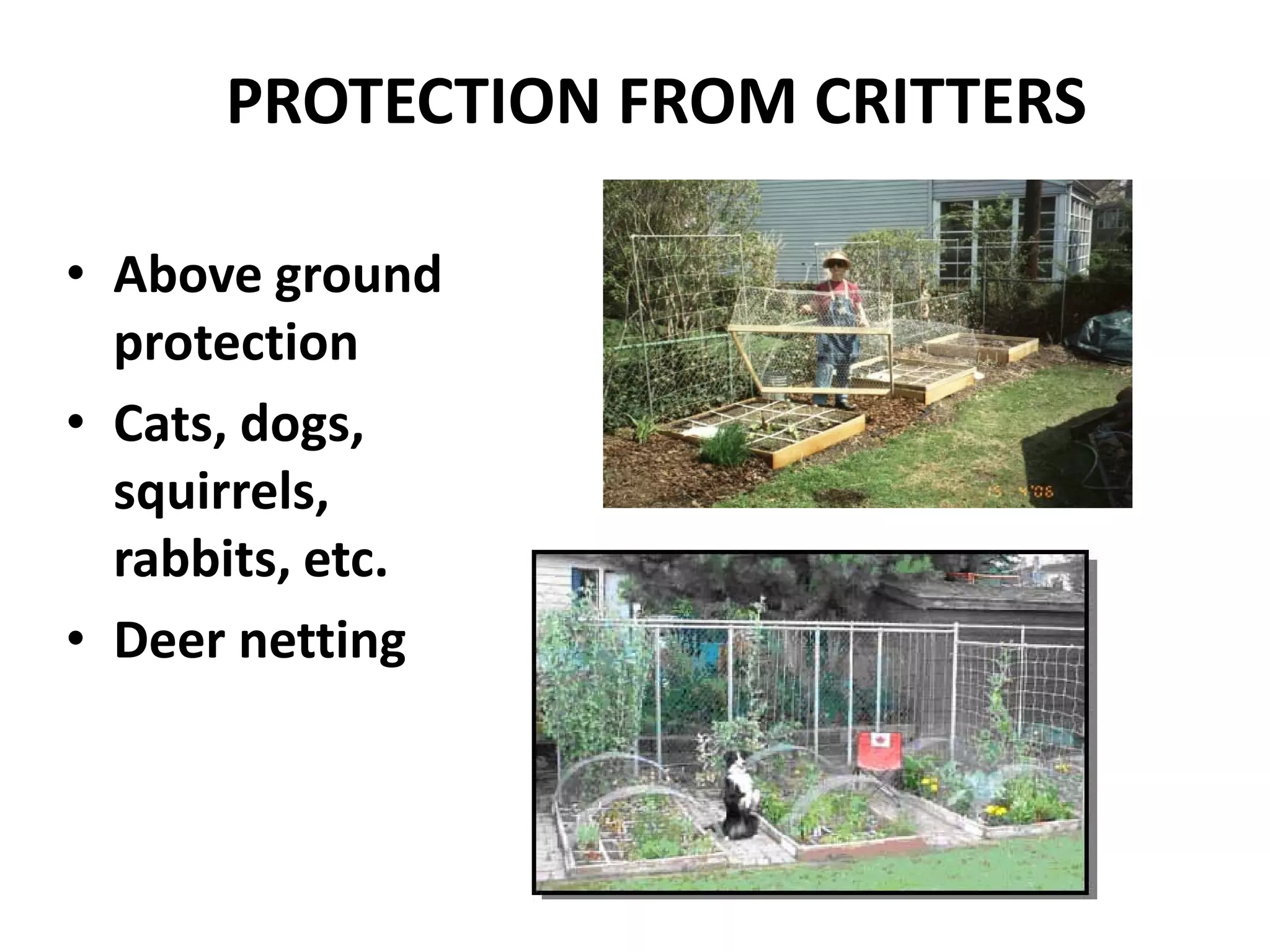
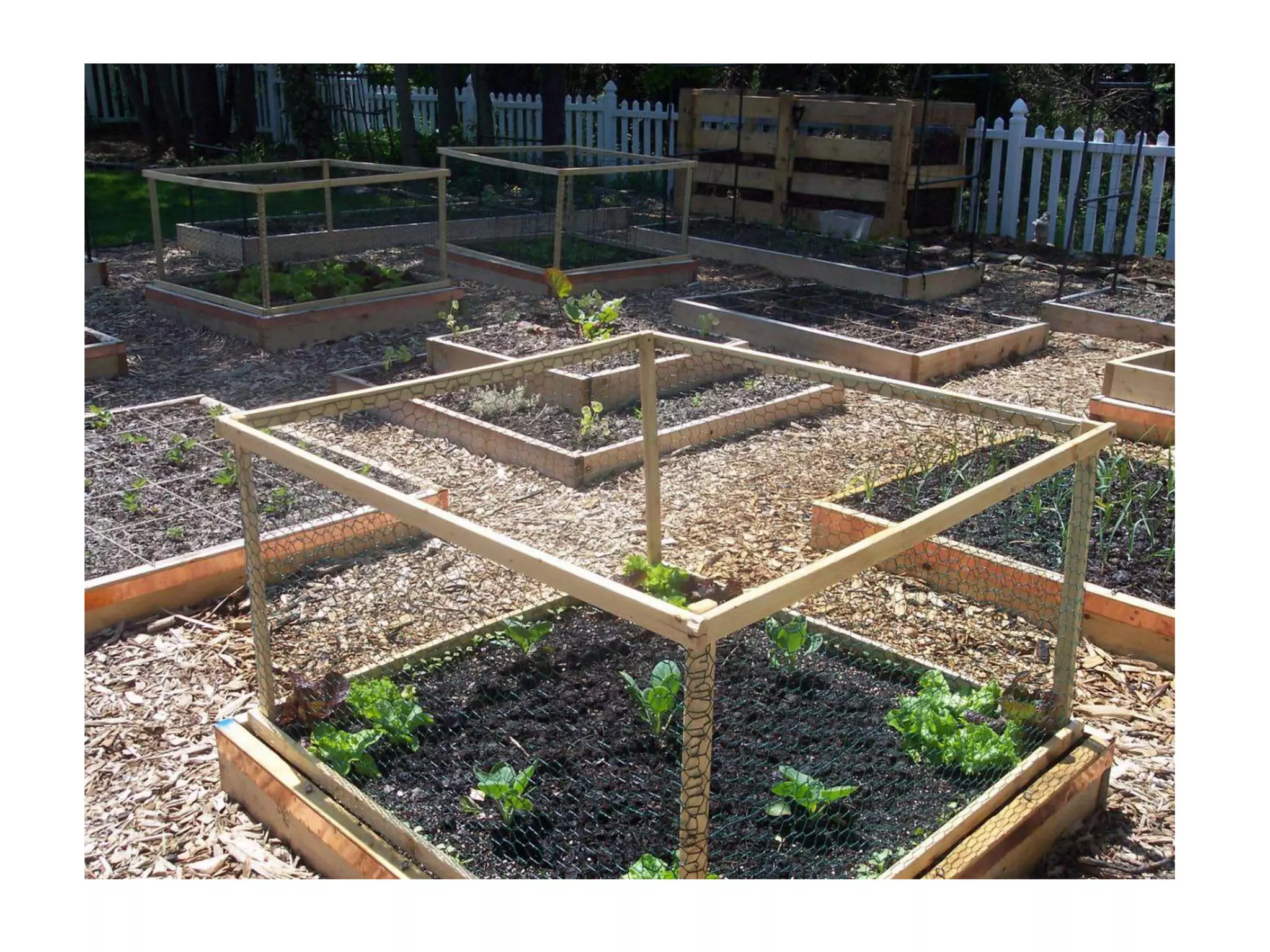
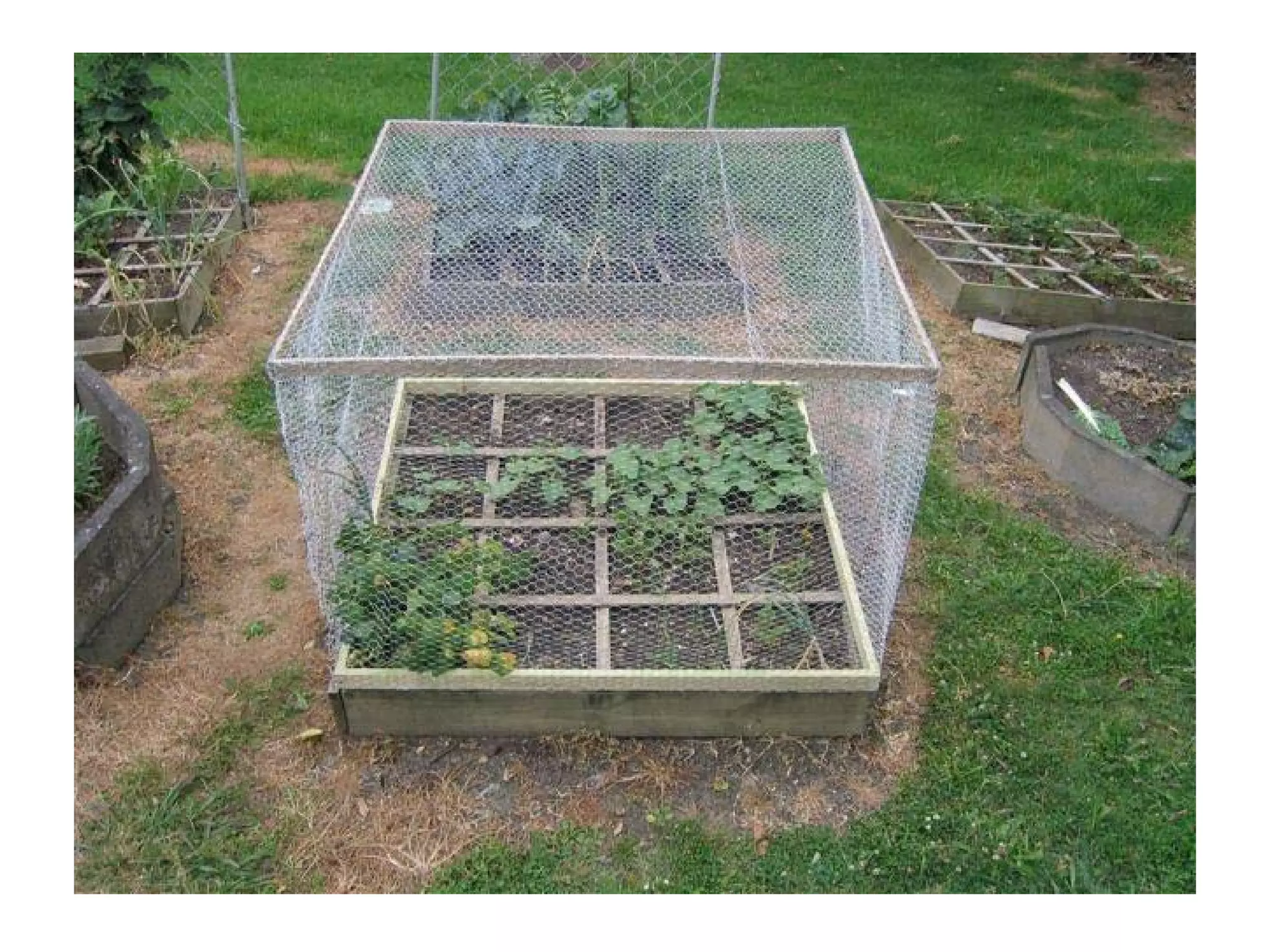
PROTECTION FROM CRITTERS

• Above ground
  protection
• Cats, dogs,
  squirrels,
  rabbits, etc.
• Deer netting
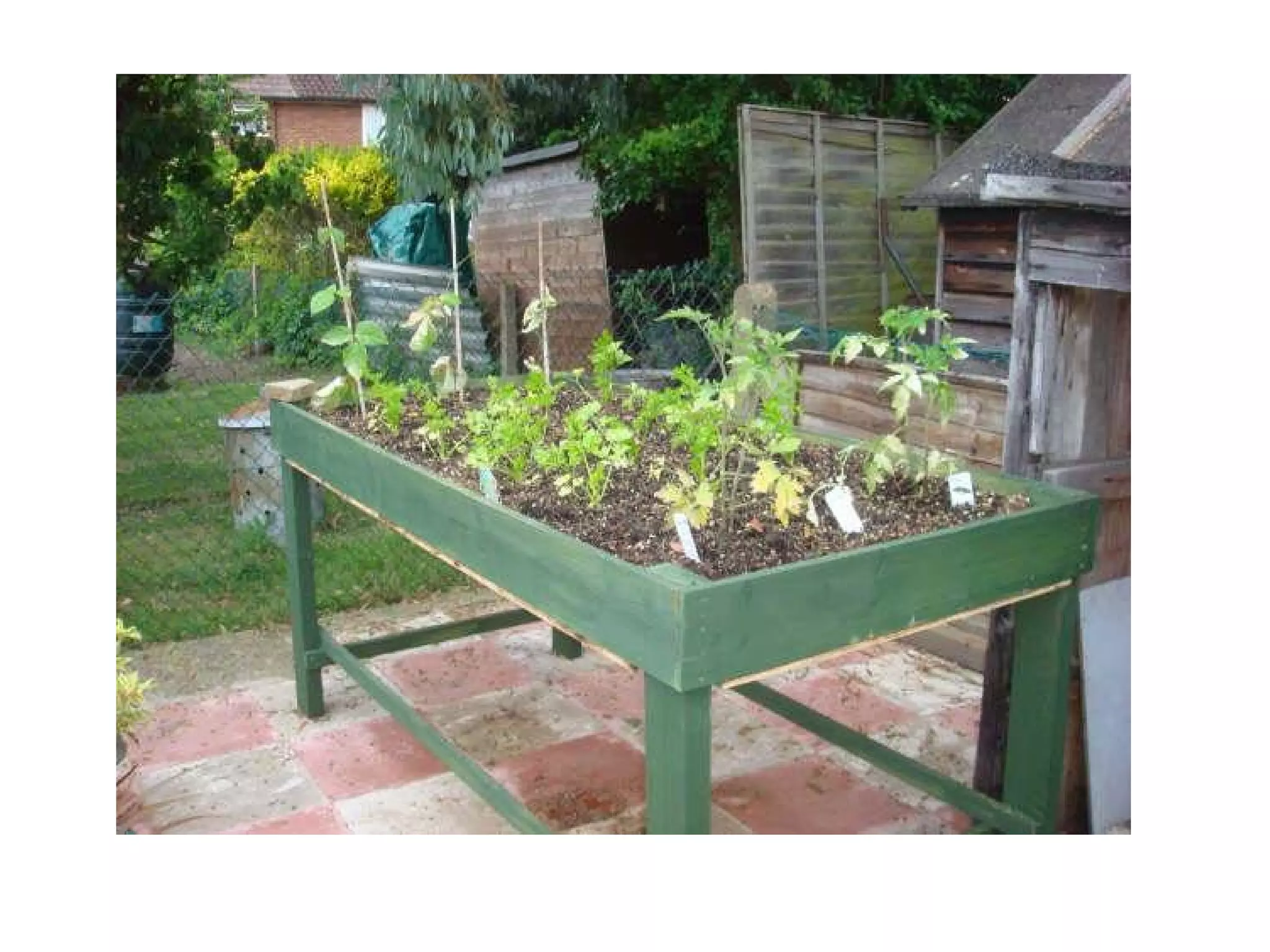
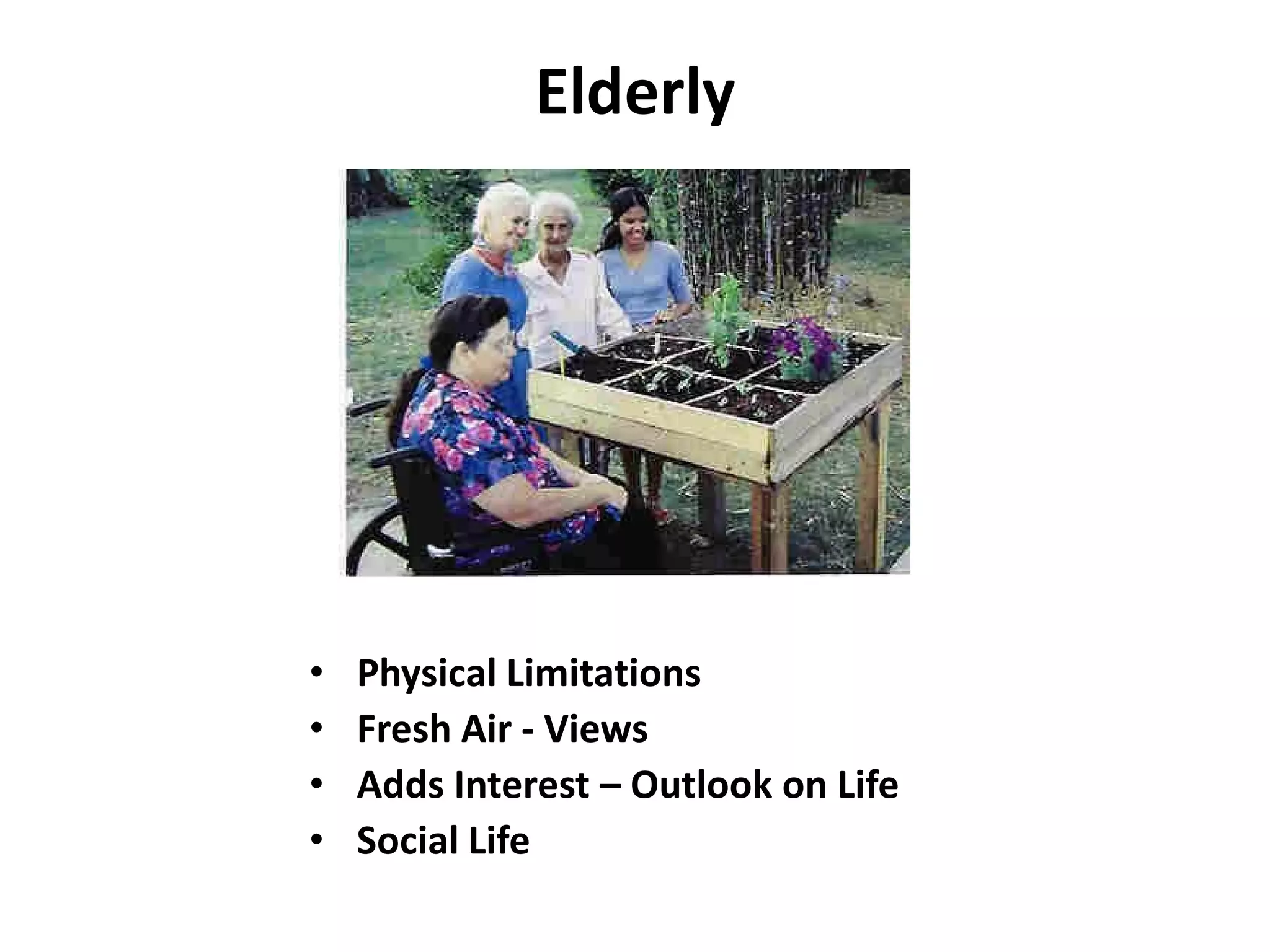
Elderly


•   Physical Limitations
•   Fresh Air - Views
•   Adds Interest – Outlook on Life
•   Social Life
SQUARE FOOT
GARDENING FOUNDATION

   FOR MORE INFORMATION
 www.squarefootgardening.com
             or
        Carol Knepp
    kneppster@gmail.com

Presentation No Background

  • 1.
    SQUARE FOOT GARDENING FOUNDATION Presented by Carol Knepp March 24, 2010 FOR MORE INFORMATION www.squarefootgardening.com or Carol Knepp kneppster@gmail.com
  • 2.
    LOCATION • Pick anarea that gets 6-9 hours of sunshine daily. • Stay clear of trees/shrubs where roots/shade may interfere. • Have it close to the house for convenience and protection. • Existing soil is not really important. You won’t be using it. • Area must not puddle after a heavy rain.
  • 4.
    The Ten Basicsof Square Foot Gardening 1. Layout 6. Care 2. Boxes 7. Select 3. Aisles 8. Plant 4. Soil 9. Water 5. Grid 10.Harvest
  • 5.
    The Ten Basicsof SFG 1 - LAYOUT Think in Squares – Not in Rows Average garden size – 20’ X 35’=700 square feet – To grow the same amount, a SFG only needs 140 square feet to accomplish the same
  • 6.
    The Ten Basicsof SFG 2 – BOXES Build Square or Rectangular Boxes to Hold a New Soil Mix Above Ground »Wood »Brick or Blocks »Vinyl »Stone »Bamboo
  • 7.
    HOW MANY BOXES? •Start Small - One or Two Boxes • One 4 X 4 Box – Salad fixings for 1 person for the entire growing season • Second 4 X 4 Box – Supply supper vegetables for 1-2 people for the entire growing season • Third 4 X 4 Box – Supply vegetables for 1 person for storing, preserving or giving away
  • 8.
    ALL THAT INONE 4X4 BOX? • 1 head of cabbage • 8 bunches of Swiss chard • 1 head of broccoli • 9 bunches of spinach • 1 head of cauliflower • 16 small ball carrots • 4 heads of romaine • 16 beets • 4 heads of red lettuce • 4 bunches beet greens • 4 heads of salad lettuce • 16 long carrots • 5 pounds sugar snap • 32 radishes peas
  • 9.
    BUILDING A BOX •Need to hold the soil – only 6 inches deep • If deeper boxes desired, use sand as a filler with soil mix in top 6 inches • Square or rectangular • Ground, patio, raised • Stationary or portable
  • 11.
  • 12.
  • 13.
  • 14.
    ADD WEED BARRIER • Dig out sod/weeds • Add weed barrier or landscape cloth • Cardboard • Wet it down
  • 15.
    The Ten Basicsof SFG 4 - SOIL No need to worry about existing soil - it won’t be used! Mel’s Mix: 1/3 peat moss 1/3 coarse vermiculite 1/3 compost
  • 16.
    EXISTING SOIL – DOESN’TMATTER • Mel’s Mix – make one time only • Boxes above ground • Loose and friable • All needed nutrients • 6-inches deep enough
  • 17.
    MEL’S MIX • 1/3 Peat Moss • 1/3 Coarse Vermiculite • 1/3 Compost
  • 18.
  • 19.
    The Ten Basicsof SFG 5 - GRID Square foot grid for the top of each box. • Visualize planting spaces • Prominent • Makes your garden unique • A must!!
  • 20.
    Grids of manymaterials
  • 21.
    The Ten Basicsof SFG 7 - SELECT CROPS • Grow what you like to eat • Plant a different flower, vegetable or herb crop in each square foot • Plant with the desired harvest in mind • Stagger the harvest • Prevents over-planting and waste
  • 22.
    Spacing Per SquareFoot • 1, 4, 9, 16 • “Thin to” on seed packets • Saves seeds
  • 28.
    COMPOST INGREDIENTS • Anypart of a plant – roots, leaves, flowers, stems • Animal manure (no meat-eating animals) • Newspaper • Rice, wheat or peanut hulls • Weeds (don’t include weeds in this area, they are too hardy and will spring up in your garden) • Sawdust or wood shavings • Hair • Feathers
  • 29.
    MORE COMPOST INGREDIENTS •Residue from fruit and vegetable processing plants • Grass clippings (dry first), straw, hay • Egg shells • Shredded branches and bark • Leaves • Old sod
  • 30.
    DO NOT ADD • Animal fat, bones, meat, skin • Dairy Products • Bread and baked goods • Dog, cat or human manure • Large, woody stems or branches
  • 31.
    QUICK COMPOST Remember the4 M’s • Mix • Mash • Moisten • Move
  • 32.
    FINISHED COMPOST • Norecognizable ingredients • Smells “earthy” and rich • Dark brown and crumbly
  • 33.
    COMPOST AMOUNTS • Themore variety of ingredients – the more nutrients • No more than 20% of one ingredient in the pile • Best compost made from many (& mini) ingredients
  • 34.
    DON’T WANT TOMAKE COMPOST? • Purchase bags of at least 4-5 different types of compost and mix it together. • Read the ingredients
  • 35.
  • 37.
    MAKING A VERTICALFRAME • Electrical conduit • Elbow Coupling • Rebar • Netting
  • 38.
    PLACEMENT OF VERTICALFRAME • North side of garden or box
  • 40.
    HIGH RISE GARDENING •Potatoes • Long carrots • Leeks • Add a high-rise box!
  • 42.
  • 46.
    PROTECTION FROM CRITTERS •Above ground protection • Cats, dogs, squirrels, rabbits, etc. • Deer netting
  • 53.
    Elderly • Physical Limitations • Fresh Air - Views • Adds Interest – Outlook on Life • Social Life
  • 54.
    SQUARE FOOT GARDENING FOUNDATION FOR MORE INFORMATION www.squarefootgardening.com or Carol Knepp kneppster@gmail.com